

El Taller Raíz
Filters
Filters
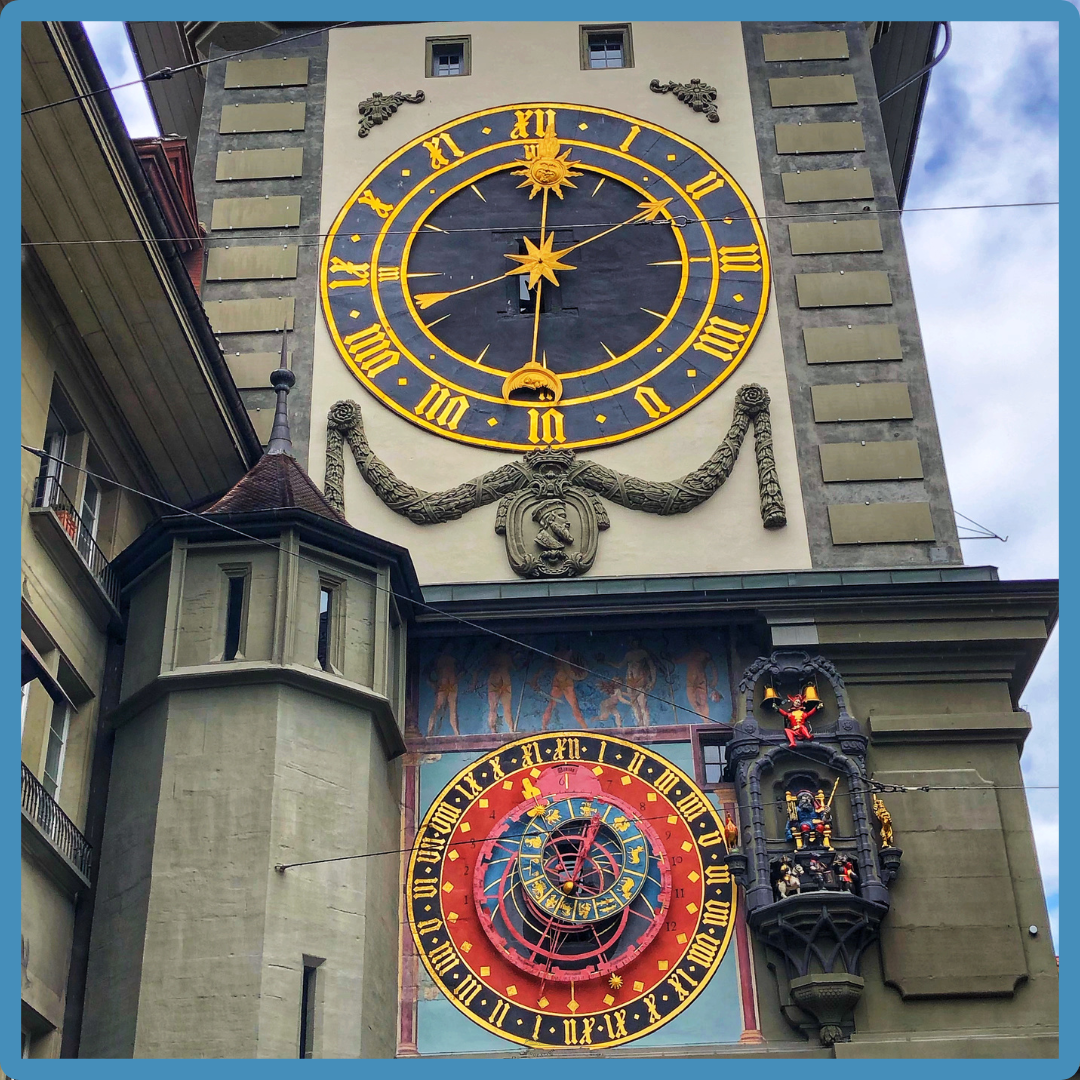
Spanish 'mediodía' means noon. It also means the south, and the reason for that is standing outside at midday and looking up.
Where this word comes from
'Mediodía' is two words joined: 'medio' ('middle') and 'día' ('day'). Both come straight out of Latin - 'medius' for the middle of a thing, 'dies' for a day. Put together, the compound says exactly what it means. The second sense is the one that catches people. Seen from Spain, and from most of Europe, the noon sun stands in the southern half of the sky, so the word for the middle of the day became a word for that direction as well. French did the same with 'midi' and Italian with 'mezzogiorno', and both still carry both meanings. The 'south' sense of 'mediodía' is the less usual one in Spanish now, but it's recorded, and it explains a word that otherwise looks like it's doing two unconnected jobs.
What's included
Eight large cards, plus a single reference sheet holding the whole word:
• the etymology comic - illustrated stage panels, one idea to a page, each with a short caption a learner can read on its own
• the word-history breakdown, reconstructed Proto-Indo-European through Latin to modern Spanish, with the compound set out in its two parts
• the cross-language panel, showing French 'midi' and Italian 'mezzogiorno' doing the same double work
• the family panel, which puts 'medianoche' on the same branch and is honest that English 'middle' is a distant cousin rather than a descendant
• the sources page, naming every reference the content is built from
• a short how-to-use guide for the adult
How it prints
The PDF prints two ways. The large cards - one idea to a page - are for laminating and clipping onto a binder ring, so a child can handle the deck, turn cards over, and lay the stages out in order. You do that assembly yourself; there's no ready-made deck. The single sheet at the end holds the whole word on one page, needs no laminating and no cutting, and is the version to print for the middle of a lesson. You'll need a printer either way, and a laminator and a ring if you want the deck. The finished deck goes in a bag or on the table, not a pocket.
For personal use in home education and tutoring only.
Who it's for
Made first for tutoring students, but it suits a wider range:
• KS3 and KS4 learners meeting Spanish time and daily-routine vocabulary
• home-educated children learning Spanish
• learners with dyslexia or working-memory difficulties who find word lists hard to hold
• anyone who likes word origins, whether or not they speak Spanish
• parents working alongside a child, including those picking the Spanish up as they go
• adults coming back to Spanish after school
This isn't for a learner at the very start of Spanish. The cards assume the reader already knows 'día' and can read a joined-up Spanish word aloud - 'mediodía', 'medianoche' - even if they couldn't yet tell you what either one means.
Why this exists
Time vocabulary arrives early in Spanish and then keeps arriving: the school day, meal times, opening hours, timetables. 'Mediodía' turns up across all of it, and a learner who has memorised it as five syllables has nothing to fall back on the week it slips. Seeing that it's 'medio' plus 'día' hands them two words they already have and a compound they can rebuild from the parts. The 'south' sense gives a second handhold - a child who has worked out why noon and south are the same word tends not to lose either one.
A linguistic quirk
Spanish does the same trick at the other end of the day, but the ending shifts: 'medianoche' is 'media' plus 'noche', because 'noche' is feminine. 'Día' takes the masculine 'medio' despite ending in '-a', which is one of the small oddities Spanish learners meet early and rarely get explained.
Related resources
In El Taller Raíz, the words that sit alongside this one on the same topic are 'día', 'buenos días', 'hoy' and 'jornada' - 'jornada' is the free sample, so it's the cheapest way to see whether the format suits your learner.
On the same root: 'día', 'jornada' and 'jornal' all descend from Latin 'dies', so 'mediodía' is carrying half its ancestry in common with the whole of that group.
Across the shops: the direct cousins are French 'midi' and Italian 'mezzogiorno', which do the same double duty of noon and south.
Available now as a PDF download.
A Spanish 'jornal' is a day's pay. An English journal is a diary. They're the same word, and they parted company somewhere in the Middle Ages.
'Jornal' is a borrowing rather than an inheritance, and Spanish has the inherited form too: 'día', straight from 'dies'. So the language holds two descendants of one Latin word that reached it by different routes and no longer look related. The giveaway is the 'j' - a sound Spanish took over with the Occitan word rather than developing itself.
Where this word comes from
Latin 'dies' ('day') produced the adjective 'diurnus' ('of the day, daily'), and from that came the Late Latin 'diurnalis'. That '-alis' ending is the '-al' still visible on the end of 'jornal' and on the end of English 'journal'. Spanish didn't inherit the word directly, though. It borrowed it in the medieval period from Occitan, spoken just over the Pyrenees, where 'jornal' already meant a day's work or the wage paid for it. Spanish kept the wage. English, coming at the same Late Latin word by a different road, kept the writing - the daily record. One Latin family, two entirely reasonable outcomes.
What's included
Eight large cards, plus a single reference sheet holding the whole word:
• the etymology comic - illustrated stage panels, one idea to a page, with short captions
• the word-history breakdown, Latin through Late Latin and Occitan to modern Spanish, with a date at each stage the record allows
• the borrowing panel, showing the word crossing from Occitania into Spain rather than descending directly
• the land-measure panel, on 'jornal' as an area of ground - as much as a day's work would cover
• the English-links section, setting 'journal' beside 'jornal' and naming the point where the two senses split
• the family panel, tying Spanish 'jornal' and 'jornada' to French 'jour', Italian 'giorno' and English 'journal'
• the sources page, and a short how-to-use guide for the adult
How it prints
Two forms come out of the one PDF. Print the large cards single-sided, laminate them, trim, punch the top-left corner and thread them onto a binder ring - that's the deck, and the cards are numbered so a loose one goes back where it belongs. You build it yourself; it doesn't arrive assembled. The last page is the single sheet, the whole word laid out at once, which needs nothing but a printer and is the one to reach for mid-lesson. A laminator and a ring are only needed for the deck. The deck is a bag-and-table object rather than a pocket one.
For personal use in home education and tutoring only.
Who it's for
Made first for tutoring students, but it suits a wider range:
• KS3 and KS4 learners working on Spanish vocabulary for work, money and daily life
• home-educated children learning Spanish
• learners with dyslexia or working-memory difficulties
• learners who already meet English cognates and want to know why they only half-match
• parents and adults studying alongside a child
This one asks a little more of the reader than the everyday words in the shop. 'Jornal' is not high-frequency Spanish, and the pack is most use to a learner who already has 'día' and 'jornada' and can hold two related words apart without them collapsing into each other. If that's still hard, start with 'jornada' - it's free.
Why this exists
English cognates are usually taught as a gift: the word looks familiar, so you already know it. 'Jornal' and 'journal' show what happens when that's only half true. A learner who assumes 'jornal' means a diary has been let down by a strategy that normally works, and the useful lesson isn't that cognates are unreliable - it's that a shared root guarantees a shared origin, not a shared meaning. Working through where the wage and the diary parted gives a learner something to do with a near-miss instead of simply being wrong.
Related resources
In El Taller Raíz, the neighbours on this topic are 'jornada' (free), 'día', 'buenos días', 'hoy' and 'mediodía'.
On the same root: 'jornada' is the closest of all - the same Occitan borrowing with a different ending, and the pack that explains the day's-march sense. 'Día' is the inherited cousin, and 'mediodía' carries 'día' inside it.
Across the shops: Italian 'giornata' and 'giornale' come off the same Latin branch in L'Officina Radice, and French 'jour' is the same word again in L'atelier des mots.
Available now as a PDF download.

'Día' is the Spanish for 'day' - and it breaks one of the first rules a learner is taught. Words ending in '-a' are usually feminine, but it's 'el día', masculine.
Where 'día' comes from
There's a reason 'día' keeps a masculine gender it seems to have no right to, and it goes back a very long way. The cards follow that story, clear up why 'día' looks like the English 'day' without being related to it, and turn up a surprising distant cousin along the way.
What's included
• An illustrated black-and-white word-history in comic form - stage panels, one idea to each, following 'día' back to its Latin root, gender and all
• The word-history breakdown, Latin to modern Spanish, with a date at each stage the record allows
• A sources page listing where every claim comes from
• A short guide for the adult on how to use the cards
How it prints
The PDF prints two ways, and you choose which suits you. The large cards - one idea to a page - are made to be laminated and clipped onto a single binder ring, so a child can handle them, turn them over and lay them out in order. You print, laminate, trim and bind these yourself; the cards are numbered, so a loose deck goes back in sequence. The single sheet at the end holds the whole word on one page - print it and it's ready, no laminating or cutting - for the pencil case or the middle of a lesson. You'll need a printer; a laminator and a ring are needed only for the deck.
Coming back to it
Because the large cards come apart, there's more to do with them than read. Rebuild the timeline in order, and stop on the card that explains the gender. Put 'día' and the English 'day' next to each other and talk through why they look alike but aren't related. Hunt for the distant cousin the cards turn up. Hold up the English-cousin cards and sort them back to the root. If you own more than one word from El Taller Raíz, clip the shared cards onto one ring and put the day-words together. It's the same cards, talked through and handled differently - adult-led, a few minutes at a time, never a drill.
Why this exists
'Día' trips learners twice - it's masculine despite its '-a', and it looks like the English 'day' but isn't related to it. Both are the kind of exception that makes a learner distrust the rules they've just been taught. Rather than hide them, the cards explain them - each oddity has a reason a child can hold onto.
Who it's for
Made for secondary Spanish learners at Key Stages 3 and 4, but it suits a wider range:
• Anyone who likes where words come from
• Spanish learners in Key Stages 3 and 4, and GCSE students meeting 'día' and noun gender
• Home-educated children
• Learners who find vocabulary hard to hold when it's taught as isolated words - including dyslexic and working-memory profiles
• Parents brushing up their own Spanish, or studying alongside a child
• Adults coming back to Spanish after school
This isn't a first step into Spanish. A learner should already be meeting 'día' and 'el/la' gender in lessons - the cards explain a word, and an exception, a child is already running into. If a child hasn't started Spanish at all yet, this will come too early.
Related resources
• In El Taller Raíz: 'hoy' and 'buenos días' are the nearest neighbours - 'hoy' hides the same 'día' inside it, and 'buenos días' is 'día' made plural.
• For anyone who likes the links across languages: Italian 'oggi' and French 'aujourd'hui' carry the same Latin 'day' behind them; the 'jour' and 'giorno' words are the daylight branch of the family.
• In the Compendium: the post on why word origins help dyslexic learners with modern languages.
• Free in The Wordhord: the English cousins from the 'dies' root - 'diary', 'diurnal' and 'dismal'.
For personal use in home education and tutoring only.
Available now as a PDF download.

'Buenos días' is how Spanish says 'good morning' - except, word for word, it's 'good days', plural, for a single morning. That plural is a small mystery.
Where 'buenos días' comes from
Two ordinary words - 'good' and 'day' - and one odd thing: the plural, where French, Italian and English all stay singular. Nobody is quite sure why Spanish does it, and the cards lay out the two honest theories side by side rather than pretend there's a settled answer.
What's included
• An illustrated black-and-white word-history in comic form - stage panels, one idea to each, following 'buenos días' back to its Latin roots, plural and all
• The word-history breakdown, Latin to modern Spanish, with a date at each stage the record allows
• A sources page listing where every claim comes from
• A short guide for the adult on how to use the cards
How it prints
The PDF prints two ways, and you choose which suits you. The large cards - one idea to a page - are made to be laminated and clipped onto a single binder ring, so a child can handle them, turn them over and lay them out in order. You print, laminate, trim and bind these yourself; the cards are numbered, so a loose deck goes back in sequence. The single sheet at the end holds the whole word on one page - print it and it's ready, no laminating or cutting - for the pencil case or the middle of a lesson. You'll need a printer; a laminator and a ring are needed only for the deck.
Coming back to it
Because the large cards come apart, there's more to do with them than read. Rebuild the timeline in order. Lay the two theories for the plural side by side and ask which one your child finds more convincing - there's no wrong answer, because the sources don't settle it either. Hold up the English-cousin cards and sort them back to their half. If you own more than one word from El Taller Raíz, clip the shared cards onto one ring and put the day-words together. It's the same cards, talked through and handled differently - adult-led, a few minutes at a time, never a drill.
Why this exists
'Buenos días' is easy to say and easy to get slightly wrong, because it doesn't behave the way a beginner expects - a plural for one morning. Rather than smooth that over, the cards make the oddity the point: two honest theories for the plural, laid side by side, and the two ordinary words - 'good' and 'day' - underneath it.
Who it's for
Made for secondary Spanish learners at Key Stages 3 and 4, but it suits a wider range:
• Anyone who likes where words come from
• Spanish learners in Key Stages 3 and 4, and GCSE students meeting 'buenos días'
• Home-educated children
• Learners who find vocabulary hard to hold when it's taught as isolated words - including dyslexic and working-memory profiles
• Parents brushing up their own Spanish, or studying alongside a child
• Adults coming back to Spanish after school
This isn't a first step into Spanish. A learner should already be meeting 'buenos días' in lessons - the cards explain a greeting a child is already saying, they don't introduce the language from scratch. If a child hasn't started Spanish at all, this will come too early.
Related resources
• In El Taller Raíz: 'día' and 'hoy' are the nearest neighbours - 'días' here is the plural of 'día', and 'hoy' comes from the same day-family.
• For anyone who likes the links across languages: 'buongiorno' (Italian, L'Officina Radice) pairs the same 'good' and 'day', but keeps the greeting singular.
• In the Compendium: the post on why word origins help dyslexic learners with modern languages.
• Free in The Wordhord: the English cousins from the two roots - 'bonus' and 'bounty' from 'buenos', 'diary' and 'diurnal' from 'días'.
For personal use in home education and tutoring only.
Available now as a PDF download.
'Hoy' is the Spanish for 'today', and it carries a silent letter with nothing to do - a written 'h' that isn't sounded, and never was.
Where 'hoy' comes from
Take the 'h' off and you're close to where 'hoy' began - the same short Latin phrase that gave Italian 'oggi' its shape. The cards trace how it wore down to 'hoy', explain where that silent 'h' came from, and point out a small word for 'day' hiding inside it that a learner already knows.
What's included
• An illustrated black-and-white word-history in comic form - stage panels, one idea to each, following 'hoy' back through its worn-down forms to the Latin phrase behind it
• The word-history breakdown, Latin to modern Spanish, with a date at each stage the record allows
• A sources page listing where every claim comes from
• A short guide for the adult on how to use the cards
How it prints
The PDF prints two ways, and you choose which suits you. The large cards - one idea to a page - are made to be laminated and clipped onto a single binder ring, so a child can handle them, turn them over and lay them out in order. You print, laminate, trim and bind these yourself; the cards are numbered, so a loose deck goes back in sequence. The single sheet at the end holds the whole word on one page - print it and it's ready, no laminating or cutting - for the pencil case or the middle of a lesson. You'll need a printer; a laminator and a ring are needed only for the deck.
Coming back to it
Because the large cards come apart, there's more to do with them than read. Rebuild the timeline in order, and stop on the card where the silent 'h' appears. Put 'hoy' and 'día' side by side and find what they share. Set 'hoy' against French 'aujourd'hui' and count how many times each language says 'day'. Hold up the English-cousin cards and sort them back to the root. If you own more than one word from El Taller Raíz, clip the shared cards onto one ring and put the day-words together. It's the same cards, talked through and handled differently - adult-led, a few minutes at a time, never a drill.
Why this exists
'Hoy' is short and irregular - a silent 'h', a spelling that doesn't match its sound - and that's exactly the kind of word a learner mis-writes. Tracing it back explains every oddity - where the 'h' came from, why it's silent, and how a word the learner already knows is hiding inside it.
Who it's for
Made for secondary Spanish learners at Key Stages 3 and 4, but it suits a wider range:
• Anyone who likes where words come from
• Spanish learners in Key Stages 3 and 4, and GCSE students meeting 'hoy'
• Home-educated children
• Learners who find vocabulary hard to hold when it's taught as isolated words - including dyslexic and working-memory profiles
• Parents brushing up their own Spanish, or studying alongside a child
• Adults coming back to Spanish after school
This isn't a first step into Spanish. A learner should already be meeting 'hoy' in lessons or reading - the cards explain a word a child is encountering, not the language from scratch. If a child hasn't met it at all yet, this will come too early.
Related resources
• In El Taller Raíz: 'día' and 'buenos días' are the nearest neighbours - 'hoy' hides the same 'día' inside it, and 'buenos días' is that word made plural.
• For anyone who likes the links across languages: Italian 'oggi' and French 'aujourd'hui' come from the same Latin phrase as 'hoy'.
• In the Compendium: the post on why word origins help dyslexic learners with modern languages.
• Free in The Wordhord: the English cousins from the 'dies' root - 'diary' and 'diurnal'.
For personal use in home education and tutoring only.
Available now as a PDF download.
Spanish already has a word for 'day' - 'día'. 'jornada' is its cousin: same Latin root, a different road into Spanish, and a wider meaning that carries a day's work and the distance you can cover on foot in a day.
Where the word comes from
The story starts with Latin 'dies', 'day'. From it came the adjective 'diurnus', 'daily', and then the noun 'diurnum', 'a day' - the same word used for a daily ration and for the day-book that recorded the day's business. Spanish took two branches of this one family. 'día' comes straight down from 'dies'. 'jornada' arrived by a longer route: the Real Academia Española says 'perhaps' through Occitan 'jornada', from 'jorn' 'day', itself from 'diurnus'. Same Latin origin, two different roads, two Spanish words that no longer look alike.
'jornada' holds three senses at once: a day, the working day, and a day's travel - which is why a day's march was 'una jornada'. Its close relatives 'jornal' (a day's wage) and 'jornalero' (a day-labourer) come from the same root.
What's included
The etymology comic - illustrated black-and-white panels, one idea to a panel, with short captions: the Latin day-family, the family tree, the split between 'día' and 'jornada', and the panel showing how 'jornada' came to hold its three senses
The word-history summary, Latin through Occitan to Spanish, laid out plainly
The same-family section, naming the Spanish relatives 'jornal' and 'jornalero' and the English cousins 'journal' and 'journey'
The sources page
The short how-to-use guide for the adult
How it prints
This prints into two forms, and you choose which suits you. The large panels - one idea to a page - are made to be laminated and clipped onto a binder ring, so a child can handle the deck, turn the cards over, and lay the stages out in order. The single sheet at the end holds the whole word on one page, ready to print for the pencil case or the middle of a lesson, with no laminating or cutting. You laminate and bind the deck yourself - there's no ready-made deck - so you'll need a printer, and a laminator and a ring for the card form. Because the cards come apart, they can be reordered, matched, and sorted rather than only read.
For personal use in home education and tutoring only.
Who it's for
Built first for tutoring students, but it suits a wider range:
Learners taking Spanish at KS3 and KS4, including GCSE
Anyone who likes etymology or the Romance languages
Home-educated children
Specialist tuition students, including dyslexic and working-memory profiles
Parents working through it alongside a child
Adults returning to Spanish from school
This isn't built for a learner meeting Spanish for the first time. It assumes the reader has already come across 'jornada' or 'día' in a lesson or a text and wants to understand why the word means what it means, rather than learning the vocabulary cold.
Why this exists
Vocabulary that arrives as a list of words to memorise is hard to hold onto, and harder still for a learner with dyslexia. A word that comes with a reason behind it tends to stick better. 'jornada' is a good example: once a learner sees that it means a day, a day's work, and the distance you can cover in a day, and that it shares a root with 'journal' and 'journey', it stops being an arbitrary string of letters and starts to make sense.
Related resources
The same root runs through the other shops - French 'jour' in L'atelier des mots and Italian 'giorno' in L'Officina Radice
The English cousins have their own free Wordhord cards: 'journey', 'journal', and 'diurnal' (the English form of the Latin 'diurnus' at the heart of this word)
The Compendium post on why word origins help with modern languages
Available now as a PDF download.
If you already know French ‘prendre’ or Italian ‘prendere’, Spanish ‘prender’ looks like an old friend - but it has gone its own way. In Spanish, everyday ‘taking’ belongs to ‘tomar’ and ‘coger’, and ‘prender’ came to mean to fasten, to arrest, to light a fire, to take root. This resource traces it from the shared Latin root.
Where the root comes from
‘prender’ comes from Latin ‘prehendere’ ‘to seize, grasp’ - ‘prae-’ ‘before’ plus ‘-hendere’ ‘to grasp’ - exactly like its French and Italian cousins. What changed is the meaning, not the origin.
What’s included
• The etymology comic - illustrated stage cards, one idea each, with short captions
• The word history, Latin to modern Spanish, dated at each stage the record allows
• A present-tense conjugation card at KS3 and KS4 level
• A card on the wider family - ‘preso’ (prisoner) and English ‘prison’ - with the meaning divergence stated plainly
• A sources page
• A short how-to-use guide for the adult
For personal use in home education and tutoring only.
Who it’s for
Designed first for secondary MFL learners (KS3 and KS4), but it suits a wider range: anyone who likes word origins, learners taking Spanish alongside French or Italian who want to see how cognates drift apart, home-educated children, specialist tuition students including dyslexic and working-memory profiles, and adults brushing up Spanish alongside a child.
It isn’t for an absolute beginner who hasn’t met present-tense verbs. The card assumes a learner who can read a short Spanish sentence and is ready to think about why a familiar-looking word means something different.
Why this exists
Cognates that look the same but mean different things are a real trap for a learner working across two Romance languages. ‘prender’ is a clean worked example: same Latin root as ‘prendre’ and ‘prendere’, but you cannot use it for everyday ‘taking’. Naming that openly is more useful than pretending the three words are interchangeable.
Linguistic quirk: the ‘light a fire’ sense is the old grasping image in disguise - fire ‘catching’ the wood, closing on it. From there, across much of Latin America, ‘prender’ became the everyday verb for switching on a light or a device: ‘prende la tele’, turn on the TV. The closing hand has become a switch.
Available now as a PDF download.
Related resources
Same root, other languages: ‘prendre’ in L’atelier des mots and ‘prendere’ in L’Officina Radice trace the same Latin verb - and show how ‘prender’ drifted away from everyday ‘taking’.
Why word origins help with modern languages: the Compendium post on teaching words through structure .
Free in The Wordhord - the English cousins of this root: ‘comprehend’, ‘apprehend’ and ‘prison’.
‘Propio' is a small word a Spanish learner meets early - 'mi propio', my own. It carries more history than its size suggests.
Where this comes from:
'Propio' has meant 'one's own' for as long as Spanish has been written. The word also carries a clue about how Spanish itself was shaped, and why it looks a little different from its Latin parent. It shares a root with several everyday English words too. This resource follows the history stage by stage, with a date where the record gives one, and shows where the Spanish form parted from its French and Italian cousins.
What's included
An etymological breakdown - the historical forms in order
Black-line comic panels for each stage, ready to display or print
An English-links section showing the English words that share the root
A references list
For personal use in home education and tutoring only.
Who it's for
Designed first for a secondary learner, but it suits a wider range:
anyone interested in word origins and how the Romance languages connect
learners working towards GCSE Spanish, and KS3 students building vocabulary
home-educated children studying Spanish
learners using apps who want to understand why words mean what they do
specialist tuition students, including those with dyslexia or a weak working memory
parents working through Spanish alongside a child
adults returning to Spanish from school
This isn't designed for a complete beginner still meeting basic Spanish spelling. It assumes the learner can already read short Spanish words aloud.
Why this exists
Vocabulary that arrives as a bare list is hard to hold, especially for a learner with a weak working memory. 'Propio' is easier to keep when you can see that it means 'one's own', that English cousins share its root, and that its very shape records a change in the language. This resource gives a learner those handholds rather than one more word to memorise.
Related resources
The same root runs through French 'propre' and Italian 'proprio', each its own resource in L'atelier des mots and L'Officina Radice. For why word origins help with modern languages, see my post on morphology and MFL for dyslexic learners in the compendium. The English cousins - 'proper', 'property' and 'appropriate' - have free word cards in The Wordhord.
Available now as a PDF download.
No results found
No results match your search. Try removing a few filters.
Curious to try my resources? Start here.
This little set of ‘test’ themed resources is a gentle way to try out how I teach spelling, morphology and vocabulary, without committing to full price.
Each one is 75% off for a limited time and works well as a standalone activity or as a taster before diving into the other packs.
Ideal for: home educators, 11+ candidates and anyone wanting a low cost starting point.

This downloadable pack explores the root ‘test’ (from Latin testari, meaning to witness or affirm). It includes a clear set of printable word cards designed for spelling, reading, and vocabulary practice – with a focus on how words are built.
All words in this set contain the root ‘test’ (e.g. attest, protestation, testimony, untestable), and are organised for ease of printing. These cards are not flashcards in the traditional sense – they’re designed to be used within play-based, sensory-rich tasks. Check out a scroll-through of the resource.
Included in the pack:
✅ 36 word cards featuring the root ‘test’
✅ A simple tracker to monitor blending and reading fluency
✅ 40+ activity suggestions using tactile, oral, visual, and movement-based approaches
Examples include:
• Writing with window pens or tracing in salt
• Playing Snakes and Ladders with a word per turn
• Echo reading, silly sentences, and morpheme matching
• Body spelling, hopscotch games, and torchlight hunts
These activities are especially supportive for learners who benefit from movement, repetition, and meaning-driven reading. The tracking sheet allows you to note when a word can be blended or read automatically – helpful for both planning and celebrating progress.

Decode big words like ‘testament’ and ‘protester’ — morpheme by morpheme.
This downloadable literacy pack helps children explore the morpheme ‘test’ (meaning to witness or to examine), using a Structured Word Inquiry (SWI) approach. Through colour-coded cards, clear explanations, and hands-on activities, learners discover how complex words are built — and what they really mean.
Inside the pack:
A complete set of morpheme cards (in both colour-coded and neutral green versions)
A parent guide that explains word parts clearly — including what a linking vowel is and when to drop the ‘e’
A progress tracking table for blending and reading
10+ multi-sensory word-building games and puzzles
Examples of real ‘test’ word families (e.g. testify, protest, testimony, untested, countertestimony)
Check out a scroll-through video of the resource.
Activities include:
Missing morpheme puzzles
Snap! word family edition
Build-your-own definition games
Word wall creation
Card sorting and classification
Designed by a qualified dyslexia and literacy specialist, this pack supports:
Home educators
Learners who thrive on pattern and logic
Spelling confidence through morphology
Older learners revisiting tricky words with purpose

📎 Part of the How Words Workcollection | ✏️ 75% Off | 🎞️ Scroll-through video included
This sample resource introdu ces learners to vocabulary built from the Latin root “testari”, meaning to bear witness. It’s part of my wider How Words Work: Root Study & Vocabulary collection — a series of tools for building spelling confidence and deeper word understanding.
This pack includes structured grids for exploring words like testify, protest, attest, and testimonial, using:
Clear definitions
Synonyms
Sentence prompts
Etymology (word origins)
The word contest is fully modelled as an example, and suggested answers are provided at the end to support independent learning. Illustrating the words is encouraged, particularly for visual memory or neurodivergent learners.
This sample is ideal for:
🟊 Home educators exploring root-based learning
🟊 Children preparing for 11+ exams
🟊 Learners who benefit from structured vocabulary work
🟊 Anyone curious about how words connect
🎞️ A scroll-through video shows the full resource before purchase
💸 Download it for 75% off as part of the test word collection
📄 Pairs well with my Test spelling sheets and word cards
A ready-to-use set of spelling and decoding grids exploring the root test (to bear witness or show evidence).
From test and attest to testimony, protest, and intestacy, this pack offers structured practice with over 30 derived words — all carefully segmented for reading, spelling, and meaning.
Each sheet supports multi-sensory learning, encouraging children to:
▪️ Explore the sounds
▪️ Create the word
▪️ Read, Spell, and Use it in a sentence
Also includes a page of hands-on activity ideas — from tracing and air-writing to chalk play and morpheme sorting.
Perfect for learners exploring morphemes, building vocabulary, or strengthening reading and spelling fluency.
🟩 You’ll get:
• Three printable spelling grids
• Word lists split by morpheme
• Sentence-writing prompts
• Multi-sensory activity suggestions
• Colour-coded versions to support visual memory
Check out the resource on this video.
Designed for home learning or 1:1 support.
Pairs well with the matching “test” jigsaw word cards.