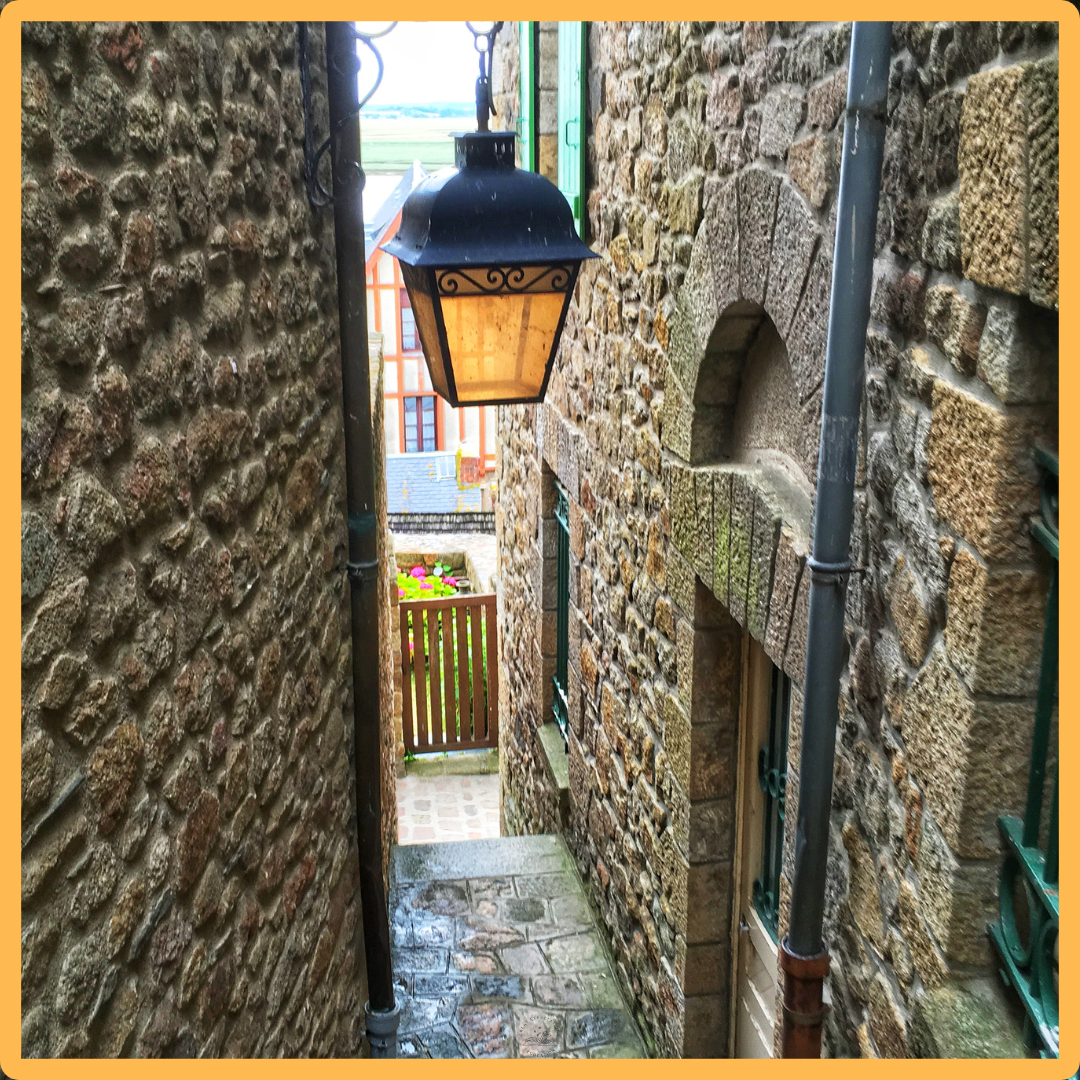
Most rooms in a house have an 'abat-jour' in them. It's the French word for a lampshade - and, taken apart, it's an instruction: 'knock the daylight down'. English borrowed 'abat-jour' too, but took it mainly in the skylight and reflector senses rather than the everyday lampshade.
What's included
The etymology comic - illustrated stage cards, one idea each, with short captions a KS3/4 learner can read
The word-history breakdown, Latin to modern French, with a date at each stage the record allows
The two senses of 'jour' explained plainly - the day, and the daylight
The English-links section - the everyday English words that share the root
The sources page
A short how-to-use guide for the adult
For personal use in home education and tutoring only.
Who it's for
It suits KS3 and KS4 French learners, anyone who likes seeing how a word is built, home-educated children, specialist tuition students including those with dyslexia or a weak working memory, and parents working alongside a child. 'Abat-jour' is an everyday French word, so it earns its place in ordinary vocabulary as well as being a good story.
It isn't an early-reader resource, and it isn't a grammar drill. It assumes the learner can already read a French word aloud and is ready to think about where it comes from, rather than meeting French for the first time.
Why this exists
Vocabulary taught as a flat list of words to memorise is hard to hold on to, particularly for a dyslexic learner. A word that comes apart into two ideas you can picture - 'knock' and 'daylight' - is easier to keep, because it stops being arbitrary. 'Abat-jour' is a clean example: once a child sees the lampshade knocking the light down, the word has a reason to be the shape it is.
I first made these for my dyslexic son.
Related resources
Same topic, in L'atelier des mots: the other 'jour' words in the shop - 'bonjour', 'journee', 'sejour', 'journal', 'ajourner' - and its two light-family cousins here, 'contre-jour' and 'ajoure'.
Same root: everything above is built on 'jour', from Latin 'diurnum'. The light-sense words ('abat-jour', 'contre-jour', 'ajoure') use 'jour' as the light; the day-sense words ('bonjour', 'journee') use it as the day.
The other shops: the same root runs through Italian 'giorno' (L'Officina Radice) and Spanish and beyond, though the light-sense compounds are French.
Free in the Wordhord: the English cousins 'journey' and 'journal'. And the Compendium post on why word origins help so much with modern languages, dyslexic learners especially.
Available now as a PDF download.
How it prints - two forms
This PDF prints into two forms, and you choose which suits you.
The large cards - one idea to a page - are made to be laminated and clipped onto a binder ring. Print single-sided, laminate, trim, and punch a hole in the top-left corner, then hold them together with one ring. The cards are numbered, so a loose deck goes back in order. Once they're on the ring a child can handle them, turn them over and lay them out - which is where a lot of the understanding happens. The deck is a bag or dinner-table object: something a child picks up and works through at the table, not a pencil-case card.
The single sheet at the end holds the whole word on one page. Print it and it's ready - no laminating, no cutting. It's the print-and-go form, for the fridge or the middle of a lesson, when you want the whole story in front of you at once. You assemble the deck yourself; there's no ready-made deck in the box. You'll need a printer, and a laminator and a ring for the deck. Neither form is homework and neither is a test.
About this resource
This is an educational support material. It isn't a diagnostic, assessment or therapeutic tool, and it doesn't replace specialist assessment or intervention. Outcomes vary by learner. It's built to be revisited over time rather than worked through in one go, and it isn't a complete teaching programme or a substitute for formal instruction.
Most rooms in a house have an 'abat-jour' in them. It's the French word for a lampshade - and, taken apart, it's an instruction: 'knock the daylight down'. English borrowed 'abat-jour' too, but took it mainly in the skylight and reflector senses rather than the everyday lampshade.
What's included
The etymology comic - illustrated stage cards, one idea each, with short captions a KS3/4 learner can read
The word-history breakdown, Latin to modern French, with a date at each stage the record allows
The two senses of 'jour' explained plainly - the day, and the daylight
The English-links section - the everyday English words that share the root
The sources page
A short how-to-use guide for the adult
For personal use in home education and tutoring only.
Who it's for
It suits KS3 and KS4 French learners, anyone who likes seeing how a word is built, home-educated children, specialist tuition students including those with dyslexia or a weak working memory, and parents working alongside a child. 'Abat-jour' is an everyday French word, so it earns its place in ordinary vocabulary as well as being a good story.
It isn't an early-reader resource, and it isn't a grammar drill. It assumes the learner can already read a French word aloud and is ready to think about where it comes from, rather than meeting French for the first time.
Why this exists
Vocabulary taught as a flat list of words to memorise is hard to hold on to, particularly for a dyslexic learner. A word that comes apart into two ideas you can picture - 'knock' and 'daylight' - is easier to keep, because it stops being arbitrary. 'Abat-jour' is a clean example: once a child sees the lampshade knocking the light down, the word has a reason to be the shape it is.
I first made these for my dyslexic son.
Related resources
Same topic, in L'atelier des mots: the other 'jour' words in the shop - 'bonjour', 'journee', 'sejour', 'journal', 'ajourner' - and its two light-family cousins here, 'contre-jour' and 'ajoure'.
Same root: everything above is built on 'jour', from Latin 'diurnum'. The light-sense words ('abat-jour', 'contre-jour', 'ajoure') use 'jour' as the light; the day-sense words ('bonjour', 'journee') use it as the day.
The other shops: the same root runs through Italian 'giorno' (L'Officina Radice) and Spanish and beyond, though the light-sense compounds are French.
Free in the Wordhord: the English cousins 'journey' and 'journal'. And the Compendium post on why word origins help so much with modern languages, dyslexic learners especially.
Available now as a PDF download.
How it prints - two forms
This PDF prints into two forms, and you choose which suits you.
The large cards - one idea to a page - are made to be laminated and clipped onto a binder ring. Print single-sided, laminate, trim, and punch a hole in the top-left corner, then hold them together with one ring. The cards are numbered, so a loose deck goes back in order. Once they're on the ring a child can handle them, turn them over and lay them out - which is where a lot of the understanding happens. The deck is a bag or dinner-table object: something a child picks up and works through at the table, not a pencil-case card.
The single sheet at the end holds the whole word on one page. Print it and it's ready - no laminating, no cutting. It's the print-and-go form, for the fridge or the middle of a lesson, when you want the whole story in front of you at once. You assemble the deck yourself; there's no ready-made deck in the box. You'll need a printer, and a laminator and a ring for the deck. Neither form is homework and neither is a test.
About this resource
This is an educational support material. It isn't a diagnostic, assessment or therapeutic tool, and it doesn't replace specialist assessment or intervention. Outcomes vary by learner. It's built to be revisited over time rather than worked through in one go, and it isn't a complete teaching programme or a substitute for formal instruction.