'eine Weile' is German for 'a while'. The word goes back to a root that meant rest, and Swedish, a cousin language, still uses its relative 'vila' for 'rest'.
This is an illustrated black-and-white word history of 'die Weile': 13 numbered cards, plus a summary version that shows every card in miniature on two pages. Print the cards as a deck to laminate, punch and clip on a ring, or print the summary pages and use them as they are.
'die Weile' means 'a while': a stretch of time with no fixed length, usually a short one. German builds everyday phrases and two proverbs around it, and the cards picture the most common.
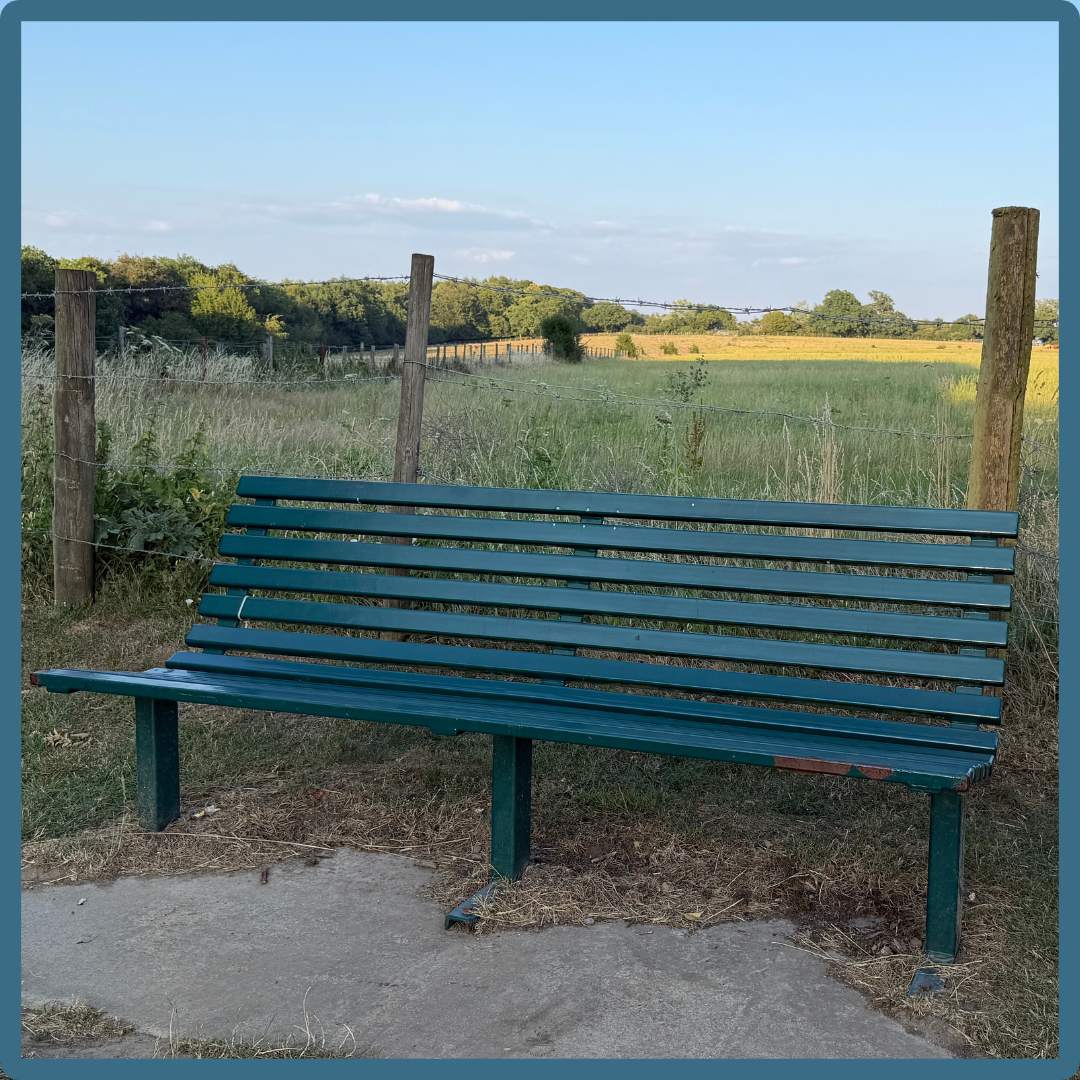
- Eight illustrated cards, each with one picture and a short caption: a girl waiting at a tram stop, a walker resting on a bench for the word's oldest meaning, a fishing trip for 'nach einer Weile', a finished jigsaw for 'es dauerte eine gute Weile', a grandmother's photo album for 'vor einer ganzen Weile', two waiters for 'Eile mit Weile', an apple tree for 'Gut Ding muss Weile haben', and a map with English 'while' beside German 'Weile'
- A pronunciation guide beside every German word in the captions, and a pronunciation page at the back
- A gender card explaining why it is 'die Weile', and why 'das Weilchen' takes 'das'
- The word-history breakdown, from Indo-European to modern German, dated where the record allows (the 8th century for the oldest written German form)
- A short reading card that tells the whole story in plain sentences
- A sources page and a guide for the adult on using the cards
For personal use in home education and tutoring only.
The cards are full-page, one idea to each, so they print large. Print single-sided, laminate, trim and punch a hole in the top-left corner, then clip them on a ring; you put the deck together yourself, and it is a set to use at the table or carry in a bag. The summary pages need no laminating. You need a printer, and a laminator and a binder ring if you are making the deck.
It suits:
- Pupils in Years 7 to 11 meeting 'eine Weile' or 'nach einer Weile' in German
- Anyone who enjoys finding out where words come from
- Home-educated children learning German
- Learners in specialist tuition, including those with dyslexia or weak working memory
- Parents learning alongside their child, and adults picking German up again
Phrases like 'nach einer Weile' and 'Eile mit Weile' are usually learnt as strings of words with nothing to hold them. Here each phrase has its own picture, and every card goes back to the same small word, so a learner meets one word in several places rather than five separate phrases.
More time words in Die Wortwerkbank: 'Abend' (evening), 'Jahr' (year) and 'Wann' (when).
The rest of this family has its own cards in the same shop: 'weil' (because), 'Langeweile' with 'langweilig' and 'langweilen', and 'derweil' with 'mittlerweile'.
The free Wordhord card on English 'while' tells the English side of the story, and the Compendium post on why word origins help with modern languages explains the thinking behind these resources.
Available now as a PDF download.