

The Wordcrafter's Bench
Filters
Filters

The four core 'sol-' 'sun' 'helio-' resources together, each taking a different angle on the same set of sun words. Buy them as a set and the saving comes built in.
Where these word-parts come from
Three word-parts in this set all mean 'sun', and they come into English from three different languages. 'sun' is the home-grown one, from Old English 'sunne'. 'sol-' is the Latin one, from 'sol' 'the sun'. 'helio-' is the Greek one, from 'hēlios' 'the sun'. Three languages, three forms, one idea - the star at the centre of our sky.
Here is the part worth knowing. Go back far enough and the three are the same word. Latin 'sol', Old English 'sunne' and Greek 'hēlios' all descend from a single Proto-Indo-European root, *sawel-, meaning 'the sun'. (Proto-Indo-European is the reconstructed ancestor of English, Latin, Greek, Sanskrit and most European languages - the deepest layer of word history we can sensibly trace. The asterisk marks it as reconstructed rather than written down anywhere.) The root had two shapes very early on, and that split is why English ended up with both an '-l-' form ('sol-') and an '-n-' form ('sun'). The Greek 'hēlios' belongs to the same family.
From the Latin side, 'solaris' 'of the sun' gave English 'solar' in the mid-15th century. 'solstitium' - 'sol' plus 'sistere' 'to stand still' - gave 'solstice' in the mid-13th century, the point where the sun seems to halt before turning back. 'solarium' first meant a sundial or sun-terrace in Latin, and its sense drifted to the glass sun-room we mean today. 'parasol' arrives by a different route, from Italian 'parare' 'to shield' plus 'sole' 'sun' (itself from Latin 'sol'): literally a shield against the sun.
From the Greek side, 'helio-' builds the science words. 'heliotrope' - 'hēlios' plus 'tropos' 'a turn' - came into English in the 1620s for a plant that turns its flowers to the sun; in Greek the same word first meant a sundial. 'heliocentric' puts the sun at the centre. 'helium' was coined in 1868, named for the sun because the gas was first detected in sunlight, before it was ever found on Earth in 1895.
From the Old English side, 'sunne' simply joins onto other words: 'sunflower', 'sunrise', 'sunlight', 'sunburn', 'sunny'. 'Sunday' is older and stranger - Old English 'Sunnandæg', a direct copy of Latin 'dies Solis' 'day of the sun'. One small thing ties the strands together neatly: 'solstice', 'heliotrope' and 'solarium' all began life connected to the sundial - the sun standing still, the sun turning, the sun's shadow marking the hour.
What's included
• Reading and Spelling Cards - a card per word, with a two-stage progress sheet
• Spelling Sheets - each word pre-segmented, with a five-step explore-create-write-read-practise routine
• Vocabulary Grids - each word taken from four sides: meaning, synonyms, sentence, etymology
• Activities - build, match, sort, spot-the-impostor, cloze, wordsearch and sentence tasks, with answer keys
• All four as printable PDFs
For personal use in home education and tutoring only.
Who it's for
Designed first for my own children, but they suit a wider range:
• Anyone who loves etymology and wants to see English words through their history rather than memorise them cold
• 11 Plus learners building academic vocabulary
• Children working through morphology in upper KS2, KS3 or KS4
• Home-educated children working through structured spelling and vocabulary independently
• Specialist tuition students, including those with dyslexia or poor working memory
• Parents working alongside their children
• Adults brushing up their own vocabulary, or studying alongside a child
This isn't designed for early readers still working on letter-sound basics. The bundle assumes the learner can already segment and blend single-syllable words; they then apply that skill to longer 'sol-', 'sun-' and 'helio-' words across the four resources.
Why this exists
The four resources in this bundle each take a different angle on the same words. The Reading and Spelling Cards anchor the words for multi-sensory practice - useful at the start of a teaching sequence, when a learner is still meeting the words and finding them in different fonts, sizes and contexts. The Spelling Sheets break each word into sounds for blending and writing. The Vocabulary Grids slow down on each word's meaning, synonyms, sentence use and etymology - one word at a time, with structured prompts. The Activities pack brings everything together, testing whether the learner can recognise the word-parts in cloze passages, wordsearches, definitions and connected prose. Together, these are four ways of meeting the same set of words - and a learner who has worked through them tends to know the words more securely than one who has met them in only one format.
Prefer to buy separately?
Each resource is available on its own: the Reading and Spelling Cards (£4), the Activities pack (£4), the Vocabulary Grids (£3) and the Spelling Sheets (£3). The Independent Booklet (£3) - the work-alone resource that teaches the word-parts from scratch - is sold separately and is not part of this bundle.
Bundles, and resources in each of these formats, are available for other roots in The Wordcrafter's Bench. For more reading on where everyday English words come from, The Wordhord gathers free word-history posts.
Available now as a PDF download.

'sol-' 'sun' 'helio-' - Spelling Sheets
A long word like 'heliocentric' looks like one thing on the page. Broken into 'h-e-l-i-o-c-e-n-t-r-i-c', it becomes a string of steps a learner can actually do. These sheets make that move for every word in the 'sol-' 'sun' 'helio-' set, then ask the learner to build it, write it, read it, and spell it from memory.
Where these word-parts come from
Three word-parts in this set all mean 'sun', and they come into English from three different languages. 'sun' is the home-grown one, from Old English 'sunne'. 'sol-' is the Latin one, from 'sol' 'the sun'. 'helio-' is the Greek one, from 'hēlios' 'the sun'. Three languages, three forms, one idea - the star at the centre of our sky.
Here is the part worth knowing. Go back far enough and the three are the same word. Latin 'sol', Old English 'sunne' and Greek 'hēlios' all descend from a single Proto-Indo-European root, *sawel-, meaning 'the sun'. (Proto-Indo-European is the reconstructed ancestor of English, Latin, Greek, Sanskrit and most European languages - the deepest layer of word history we can sensibly trace. The asterisk marks it as reconstructed rather than written down anywhere.) The root had two shapes very early on, and that split is why English ended up with both an '-l-' form ('sol-') and an '-n-' form ('sun'). The Greek 'hēlios' belongs to the same family.
From the Latin side, 'solaris' 'of the sun' gave English 'solar' in the mid-15th century. 'solstitium' - 'sol' plus 'sistere' 'to stand still' - gave 'solstice' in the mid-13th century, the point where the sun seems to halt before turning back. 'solarium' first meant a sundial or sun-terrace in Latin, and its sense drifted to the glass sun-room we mean today. 'parasol' arrives by a different route, from Italian 'parare' 'to shield' plus 'sole' 'sun' (itself from Latin 'sol'): literally a shield against the sun.
From the Greek side, 'helio-' builds the science words. 'heliotrope' - 'hēlios' plus 'tropos' 'a turn' - came into English in the 1620s for a plant that turns its flowers to the sun; in Greek the same word first meant a sundial. 'heliocentric' puts the sun at the centre. 'helium' was coined in 1868, named for the sun because the gas was first detected in sunlight, before it was ever found on Earth in 1895.
From the Old English side, 'sunne' simply joins onto other words: 'sunflower', 'sunrise', 'sunlight', 'sunburn', 'sunny'. 'Sunday' is older and stranger - Old English 'Sunnandæg', a direct copy of Latin 'dies Solis' 'day of the sun'. One small thing ties the strands together neatly: 'solstice', 'heliotrope' and 'solarium' all began life connected to the sundial - the sun standing still, the sun turning, the sun's shadow marking the hour.
What's included
• A row for each word in the set, with five steps running left to right: Explore (segment the sounds and blend), Create (make the word with dough or magnetic letters), Write (write it out or use it in a sentence), Read (read it back), Practise (cover and spell from memory)
• Each word pre-segmented into its sounds, with two letters together standing for one sound where that happens
• The full set across all three branches - 'sol' words, 'sun' words, 'helio' words
• A short how-to-use guide
• Printable PDF
For personal use in home education and tutoring only.
Who it's for
Designed first for tutoring students, but they suit a wider range:
• Anyone who loves etymology and wants to see English words through their history rather than memorise them cold
• 11 Plus learners building academic vocabulary
• Children working through morphology in upper KS2, KS3 or KS4
• Home-educated children working through structured spelling and vocabulary independently
• Specialist tuition students, including those with dyslexia or poor working memory
• Parents working alongside their children
• Adults brushing up their own vocabulary, or studying alongside a child
This isn't designed for early readers still working on letter-sound basics. The sheets assume the learner can already segment and blend single-syllable words; they then apply that skill to longer 'sol-', 'sun-' and 'helio-' words.
Why this exists
A long word like 'heliocentric' looks like one thing on the page. Broken into its sounds, it becomes a set of steps a learner can do one at a time. That's the move these sheets are built to make. The segmenting is already done for the learner - the work is in blending the sounds back into the whole word, then making the word physically with dough or magnetic letters, then writing a sentence that uses it, then reading it aloud, then trying to spell it from memory. Five different ways into the same word, on the same page. The pattern repeats across the set, so the learner builds a routine they can apply to any long word they meet next.
Originally created to support one of my own children's learning once the school day had ended.
Related resources
The other 'sol-' 'sun' 'helio-' resources work alongside these sheets. The Reading and Spelling Cards anchor the words for multi-sensory practice; the Vocabulary Grids slow down on meaning, synonyms, sentence use and etymology; the Activities pack tests recognition across several formats. For all four core resources together at a saving, see the 'sol-' 'sun' 'helio-' Bundle.
Spelling sheets in the same format are available for other roots in The Wordcrafter's Bench - 'civ-', 'naut-', 'dem-', 'chron-', 'quadr-' and 'sign'.
For more reading on where everyday English words come from, The Wordhord gathers free word-history posts.
Available now as a PDF download.

A printable card for each word in the set - 'solar', 'heliocentric', 'sunflower', 'solstice' and the rest. These aren't flashcards for quick recognition. They're for decoding and spelling practice, folded inside something a learner is actually doing with their hands.
Where these word-parts come from
Three word-parts in this set all mean 'sun', and they come into English from three different languages. 'sun' is the home-grown one, from Old English 'sunne'. 'sol-' is the Latin one, from 'sol' 'the sun'. 'helio-' is the Greek one, from 'hēlios' 'the sun'. Three languages, three forms, one idea - the star at the centre of our sky.
Here is the part worth knowing. Go back far enough and the three are the same word. Latin 'sol', Old English 'sunne' and Greek 'hēlios' all descend from a single Proto-Indo-European root, *sawel-, meaning 'the sun'. (Proto-Indo-European is the reconstructed ancestor of English, Latin, Greek, Sanskrit and most European languages - the deepest layer of word history we can sensibly trace. The asterisk marks it as reconstructed rather than written down anywhere.) The root had two shapes very early on, and that split is why English ended up with both an '-l-' form ('sol-') and an '-n-' form ('sun'). The Greek 'hēlios' belongs to the same family.
From the Latin side, 'solaris' 'of the sun' gave English 'solar' in the mid-15th century. 'solstitium' - 'sol' plus 'sistere' 'to stand still' - gave 'solstice' in the mid-13th century, the point where the sun seems to halt before turning back. 'solarium' first meant a sundial or sun-terrace in Latin, and its sense drifted to the glass sun-room we mean today. 'parasol' arrives by a different route, from Italian 'parare' 'to shield' plus 'sole' 'sun' (itself from Latin 'sol'): literally a shield against the sun.
From the Greek side, 'helio-' builds the science words. 'heliotrope' - 'hēlios' plus 'tropos' 'a turn' - came into English in the 1620s for a plant that turns its flowers to the sun; in Greek the same word first meant a sundial. 'heliocentric' puts the sun at the centre. 'helium' was coined in 1868, named for the sun because the gas was first detected in sunlight, before it was ever found on Earth in 1895.
From the Old English side, 'sunne' simply joins onto other words: 'sunflower', 'sunrise', 'sunlight', 'sunburn', 'sunny'. 'Sunday' is older and stranger - Old English 'Sunnandæg', a direct copy of Latin 'dies Solis' 'day of the sun'. One small thing ties the strands together neatly: 'solstice', 'heliotrope' and 'solarium' all began life connected to the sundial - the sun standing still, the sun turning, the sun's shadow marking the hour.
What's included
• A word card for each word in the set, with an illustration
• The full set spanning all three branches: Old English 'sun' words, Latin 'sol' words, Greek 'helio' words
• A progress sheet at the back, with a 'blend' box and an 'automaticity' box for each word, plus a notes column
• A short how-to-use guide explaining the difference between blending and automaticity, and how to use the cards multi-sensorily rather than as flashcards
• Printable PDF, suitable for laminating within the licensed scope
For personal use in home education and tutoring only.
Who it's for
Designed first for tutoring students, but they suit a wider range:
• Anyone who loves etymology and wants to see English words through their history rather than memorise them cold
• 11 Plus learners building academic vocabulary
• Children working through morphology in upper KS2, KS3 or KS4
• Home-educated children working through structured spelling and vocabulary independently
• Specialist tuition students, including those with dyslexia or poor working memory
• Parents working alongside their children
• Adults brushing up their own vocabulary, or studying alongside a child
This isn't designed for early readers still working on letter-sound basics. The cards assume the learner can already decode multi-syllable words, even if they don't yet know what they mean.
Why this exists
These aren't flashcards. Flashcards train recognition; these cards train decoding and spelling through doing something else. A child writes a word with a window pen on glass, says it as they write, and then wipes it off. A child reads a card on each go in a game of Snakes and Ladders, the reading folded inside the play. A child traces the letters of 'heliocentric' in cinnamon salt. The card is the prompt; the activity is what makes the word stick. The progress sheet at the back tracks two stages of fluency - first that a learner can blend the sounds and decode the word, then that they can do it rapidly and without obvious effort.
Related resources
The other 'sol-' 'sun' 'helio-' resources build on the same words. The Spelling Sheets break each word into sounds for blending and writing; the Vocabulary Grids slow down on meaning, synonyms, sentence use and etymology; the Activities pack tests recognition across several formats. For all four core resources together at a saving, see the 'sol-' 'sun' 'helio-' Bundle.
Reading and Spelling Cards in the same format are available for other roots in The Wordcrafter's Bench - 'civ-', 'naut-', 'dem-', 'chron-', 'quadr-' and 'sign'.
For more reading on where everyday English words come from, The Wordhord gathers free word-history posts.
Available now as a PDF download.

'sol-' 'sun' 'helio-' - Independent Booklet
Most of the 'sol-' 'sun' 'helio-' resources work alongside teaching. This one is different - it's the one a learner can pick up alone. It teaches the three word-parts that mean 'sun', then puts that learning to work without an adult needing to sit alongside.
Where these word-parts come from
Three word-parts in this set all mean 'sun', and they come into English from three different languages. 'sun' is the home-grown one, from Old English 'sunne'. 'sol-' is the Latin one, from 'sol' 'the sun'. 'helio-' is the Greek one, from 'hēlios' 'the sun'. Three languages, three forms, one idea - the star at the centre of our sky.
Here is the part worth knowing. Go back far enough and the three are the same word. Latin 'sol', Old English 'sunne' and Greek 'hēlios' all descend from a single Proto-Indo-European root, *sawel-, meaning 'the sun'. (Proto-Indo-European is the reconstructed ancestor of English, Latin, Greek, Sanskrit and most European languages - the deepest layer of word history we can sensibly trace. The asterisk marks it as reconstructed rather than written down anywhere.) The root had two shapes very early on, and that split is why English ended up with both an '-l-' form ('sol-') and an '-n-' form ('sun'). The Greek 'hēlios' belongs to the same family.
From the Latin side, 'solaris' 'of the sun' gave English 'solar' in the mid-15th century. 'solstitium' - 'sol' plus 'sistere' 'to stand still' - gave 'solstice' in the mid-13th century, the point where the sun seems to halt before turning back. 'solarium' first meant a sundial or sun-terrace in Latin, and its sense drifted to the glass sun-room we mean today. 'parasol' arrives by a different route, from Italian 'parare' 'to shield' plus 'sole' 'sun' (itself from Latin 'sol'): literally a shield against the sun.
From the Greek side, 'helio-' builds the science words. 'heliotrope' - 'hēlios' plus 'tropos' 'a turn' - came into English in the 1620s for a plant that turns its flowers to the sun; in Greek the same word first meant a sundial. 'heliocentric' puts the sun at the centre. 'helium' was coined in 1868, named for the sun because the gas was first detected in sunlight, before it was ever found on Earth in 1895.
From the Old English side, 'sunne' simply joins onto other words: 'sunflower', 'sunrise', 'sunlight', 'sunburn', 'sunny'. 'Sunday' is older and stranger - Old English 'Sunnandæg', a direct copy of Latin 'dies Solis' 'day of the sun'. One small thing ties the strands together neatly: 'solstice', 'heliotrope' and 'solarium' all began life connected to the sundial - the sun standing still, the sun turning, the sun's shadow marking the hour.
What's included
• A teaching page that explains what 'sol-', 'sun' and 'helio-' mean, where each came from, and how they behave when other word-parts are added
• A series of activity pages putting that learning to work in different ways - building words, sorting by branch, telling real relatives from look-alikes, and using the words in sentences
• A full answer key, with model answers and notes where more than one response is acceptable
• Printable PDF
For personal use in home education and tutoring only.
Who it's for
Designed first for tutoring students, but they suit a wider range:
• Anyone who loves etymology and wants to see English words through their history rather than memorise them cold
• 11 Plus learners building academic vocabulary
• Children working through morphology in upper KS2, KS3 or KS4
• Home-educated children working through structured spelling and vocabulary independently
• Specialist tuition students, including those with dyslexia or poor working memory
• Parents working alongside their children
• Adults brushing up their own vocabulary, or studying alongside a child
This isn't designed for early readers still working on letter-sound basics. The booklet assumes the learner can already read multi-syllable words like 'heliocentric' and 'solstice' aloud, even if they don't yet know what they mean.
Why this exists
Most of the 'sol-' 'sun' 'helio-' resources work alongside teaching. This one is the resource a learner can work through alone. The first page does the teaching: it explains what the three word-parts mean, where they came from, and how each behaves when suffixes and other parts are added. The pages that follow put that learning to work in several different ways, and the answer key is full, with model answers and notes where more than one response is acceptable. A child can work through the whole booklet without an adult present and come out the other side knowing the word-parts, the word family, and how to use the words in sentences. Useful for a home educator setting independent work, a tutor giving a student something to do between sessions, or a parent who wants to leave a child to it for half an hour.
Related resources
The Independent Booklet is the standalone, work-alone resource and is not part of the Bundle. The Bundle's four resources - Reading and Spelling Cards, Spelling Sheets, Vocabulary Grids and Activities - are designed to work alongside teaching rather than to replace it; the Independent Booklet is the one that does the teaching itself.
An Independent Booklet in the same format is available for other roots in The Wordcrafter's Bench - 'civ-' and 'imper'.
For more reading on where everyday English words come from, The Wordhord gathers free word-history posts.
Available now as a PDF download.

Three word-parts that all mean 'sun' - 'sol-' from Latin, 'sun' from Old English, 'helio-' from Greek - and a set of short tasks that ask a learner to do something with them. Build the words, match them to meanings, sort them by language of origin, spot the imposters, and write sentences. The same idea, met from several directions in one sitting.
Where these word-parts come from
Three word-parts in this set all mean 'sun', and they come into English from three different languages. 'sun' is the home-grown one, from Old English 'sunne'. 'sol-' is the Latin one, from 'sol' 'the sun'. 'helio-' is the Greek one, from 'hēlios' 'the sun'. Three languages, three forms, one idea - the star at the centre of our sky.
Here is the part worth knowing. Go back far enough and the three are the same word. Latin 'sol', Old English 'sunne' and Greek 'hēlios' all descend from a single Proto-Indo-European root, *sawel-, meaning 'the sun'. (Proto-Indo-European is the reconstructed ancestor of English, Latin, Greek, Sanskrit and most European languages - the deepest layer of word history we can sensibly trace. The asterisk marks it as reconstructed rather than written down anywhere.) The root had two shapes very early on, and that split is why English ended up with both an '-l-' form ('sol-') and an '-n-' form ('sun'). The Greek 'hēlios' belongs to the same family.
From the Latin side, 'solaris' 'of the sun' gave English 'solar' in the mid-15th century. 'solstitium' - 'sol' plus 'sistere' 'to stand still' - gave 'solstice' in the mid-13th century, the point where the sun seems to halt before turning back. 'solarium' first meant a sundial or sun-terrace in Latin, and its sense drifted to the glass sun-room we mean today. 'parasol' arrives by a different route, from Italian 'parare' 'to shield' plus 'sole' 'sun' (itself from Latin 'sol'): literally a shield against the sun.
From the Greek side, 'helio-' builds the science words. 'heliotrope' - 'hēlios' plus 'tropos' 'a turn' - came into English in the 1620s for a plant that turns its flowers to the sun; in Greek the same word first meant a sundial. 'heliocentric' puts the sun at the centre. 'helium' was coined in 1868, named for the sun because the gas was first detected in sunlight, before it was ever found on Earth in 1895.
From the Old English side, 'sunne' simply joins onto other words: 'sunflower', 'sunrise', 'sunlight', 'sunburn', 'sunny'. 'Sunday' is older and stranger - Old English 'Sunnandæg', a direct copy of Latin 'dies Solis' 'day of the sun'. One small thing ties the strands together neatly: 'solstice', 'heliotrope' and 'solarium' all began life connected to the sundial - the sun standing still, the sun turning, the sun's shadow marking the hour.
What's included
• Build the words - combining word-parts to make 'solar', 'parasol', 'heliocentric', 'perihelion'
• Meaning match - drawing a line from each word to its definition
• Sort by branch - sorting words into Old English 'sun', Latin 'sol' and Greek 'helio'
• Real relative or look-alike? - spotting the imposters ('solo' from Latin 'solus' 'alone'; 'helicopter' from 'helix' 'spiral' plus 'pteron' 'wing')
• Sentence writing with appositives - adding an explaining phrase set off in commas, with a worked first example
• A wordsearch on the full set of words, with a solution
• True or false, cloze, and odd-one-out tasks, each with answers
• A full answer key
• Printable PDF
For personal use in home education and tutoring only.
Who it's for
Designed first for my own children, but they suit a wider range:
• Anyone who loves etymology and wants to see English words through their history rather than memorise them cold
• 11 Plus learners building academic vocabulary
• Children working through morphology in upper KS2, KS3 or KS4
• Home-educated children working through structured spelling and vocabulary independently
• Specialist tuition students, including those with dyslexia or poor working memory
• Parents working alongside their children
• Adults brushing up their own vocabulary, or studying alongside a child
This isn't designed for early readers still working on letter-sound basics. The activities assume the learner can already read multi-syllable words like 'solstice' and 'heliotrope' aloud, even if they don't yet know what they mean.
Why this exists
A vocabulary grid asks a learner to slow down on one word at a time. The activities ask them to do something different - to recognise the same word-parts across different tasks, in different forms. The cloze tests whether they can pick the right word for a context. The wordsearches train the eye to spot the morpheme inside a longer letter string. The 'real relative or look-alike?' task does something the others don't: it asks the learner to tell a genuine 'sun' word from a convincing impostor, which is where the morphology actually has to be understood rather than guessed. A learner who has worked through these tends to know the words more securely than one who has only met them on flashcards.
Related resources
The other 'sol-' 'sun' 'helio-' resources approach the same words from other directions. The Vocabulary Grids slow down on each word's meaning, synonyms, sentence use and etymology; the Spelling Sheets break each word into sounds for blending and writing; the Reading and Spelling Cards anchor the words for multi-sensory practice. For all four core resources together at a saving, see the 'sol-' 'sun' 'helio-' Bundle.
Activity packs in the same format are available for other roots in The Wordcrafter's Bench - 'civ-', 'naut-' and 'quadr-'.
For more reading on where everyday English words come from, The Wordhord gathers free word-history posts.
Available now as a PDF download.

Three word-parts, one meaning. 'sol-' from Latin, 'sun' from Old English, 'helio-' from Greek all carry the idea of the sun, and they turn up across everyday English: 'solar', 'sunflower', 'helium', 'solstice'. Once a learner sees the three forms for what they are, a whole cluster of words - science words, weather words, garden words - lines up behind a single idea.
Where these word-parts come from
Three word-parts in this set all mean 'sun', and they come into English from three different languages. 'sun' is the home-grown one, from Old English 'sunne'. 'sol-' is the Latin one, from 'sol' 'the sun'. 'helio-' is the Greek one, from 'hēlios' 'the sun'. Three languages, three forms, one idea - the star at the centre of our sky.
Here is the part worth knowing. Go back far enough and the three are the same word. Latin 'sol', Old English 'sunne' and Greek 'hēlios' all descend from a single Proto-Indo-European root, *sawel-, meaning 'the sun'. (Proto-Indo-European is the reconstructed ancestor of English, Latin, Greek, Sanskrit and most European languages - the deepest layer of word history we can sensibly trace. The asterisk marks it as reconstructed rather than written down anywhere.) The root had two shapes very early on, and that split is why English ended up with both an '-l-' form ('sol-') and an '-n-' form ('sun'). The Greek 'hēlios' belongs to the same family.
From the Latin side, 'solaris' 'of the sun' gave English 'solar' in the mid-15th century. 'solstitium' - 'sol' plus 'sistere' 'to stand still' - gave 'solstice' in the mid-13th century, the point where the sun seems to halt before turning back. 'solarium' first meant a sundial or sun-terrace in Latin, and its sense drifted to the glass sun-room we mean today. 'parasol' arrives by a different route, from Italian 'parare' 'to shield' plus 'sole' 'sun' (itself from Latin 'sol'): literally a shield against the sun.
From the Greek side, 'helio-' builds the science words. 'heliotrope' - 'hēlios' plus 'tropos' 'a turn' - came into English in the 1620s for a plant that turns its flowers to the sun; in Greek the same word first meant a sundial. 'heliocentric' puts the sun at the centre. 'helium' was coined in 1868, named for the sun because the gas was first detected in sunlight, before it was ever found on Earth in 1895.
From the Old English side, 'sunne' simply joins onto other words: 'sunflower', 'sunrise', 'sunlight', 'sunburn', 'sunny'. 'Sunday' is older and stranger - Old English 'Sunnandæg', a direct copy of Latin 'dies Solis' 'day of the sun'. One small thing ties the strands together neatly: 'solstice', 'heliotrope' and 'solarium' all began life connected to the sundial - the sun standing still, the sun turning, the sun's shadow marking the hour.
What's included
• A vocabulary grid for each word in the set, each looking at one word from four sides: what it means, words close to it (synonyms), the word used in a sentence, and where it comes from (etymology)
• A worked first grid, completed as an example, so the learner sees what good answers look like before tackling the rest
• A glossary of suggested answers at the end, for checking or for the learner to research themselves
• Words range from the everyday ('solar', 'sunrise', 'sunlight') to the less familiar ('heliocentric', 'perihelion', 'solstice')
• Printable PDF
For personal use in home education and tutoring only.
Who it's for
Designed first for my own children, but they suit a wider range:
• Anyone who loves etymology and wants to see English words through their history rather than memorise them cold
• 11 Plus learners building academic vocabulary
• Children working through morphology in upper KS2, KS3 or KS4
• Home-educated children working through structured spelling and vocabulary independently
• Specialist tuition students, including those with dyslexia or poor working memory
• Parents working alongside their children
• Adults brushing up their own vocabulary, or studying alongside a child
This isn't designed for early readers still working on letter-sound basics. The grids assume the learner can already read multi-syllable words like 'heliocentric' and 'solstice' aloud, even if they don't yet know what they mean.
Why this exists
A vocabulary grid asks a learner to slow down on one word at a time. Meaning. Synonyms. Sentence. Etymology. Four prompts, one word, one structured space to think. Taking a word from four sides like this gives it more than one way to stick: the synonyms tie a new word to ones the learner already has, writing a sentence moves it from a word they recognise to one they can use, and the etymology box shows the root - so words from the same root start to connect, and a familiar part can help anchor an unfamiliar one. The first grid is completed as a worked example, so the learner sees what good answers look like before tackling the rest.
Related resources
The other 'sol-' 'sun' 'helio-' resources take different angles on the same set of words. The Reading and Spelling Cards anchor the words for multi-sensory practice; the Spelling Sheets break each word into sounds for blending and writing; the Activities pack tests recognition across cloze, wordsearches and sorting tasks. For all four core resources together at a saving, see the 'sol-' 'sun' 'helio-' Bundle.
Vocabulary grids in the same format are available for other roots in The Wordcrafter's Bench - 'civ-', 'naut-', 'dem-', 'chron-', 'quadr-' and 'sign' - and once a learner has worked through one, the next becomes faster.
For more reading on where everyday English words come from, The Wordhord gathers free word-history posts - flowers, food, French objects, biblical and seasonal words.
Available now as a PDF download.
The Latin root 'civ-' appears across everyday English: 'civilian', 'civic', 'civility', 'uncivilised'. Once a learner sees it, dozens of words become readable at a glance. The meaning starts to make sense too, once they know 'civ-' carries the idea of a citizen living among others.
This bundle gathers four 'civ-' resources into a single download — the four that work together as a teaching sequence, from first encounter to consolidation.
Where the root comes from
The root 'civ-' comes from Latin 'civis', meaning citizen — but the story goes further back. 'Civis' traces to a Proto-Indo-European root, *ḱey-, meaning "to settle" or "to lie down." (Proto-Indo-European is the reconstructed ancestor of English, Latin, Greek, Sanskrit and most European languages — the deepest layer of word history we can sensibly trace.) The earliest sense of 'civis' was something like a fellow settler, a member of the same household, a person living under the same roof. From there came the Latin 'civitas', the body of citizens. The verb 'civilise' entered English around 1600, borrowed from French. The noun 'civilisation', in its modern sense, entered English around 1772, also from French. The 'civ-' words gathered here all carry traces of that older meaning: a person settled among others, sharing a community.
What's included
Four resources combined in a single PDF download:
Reading and Spelling Cards — twelve word cards plus instructions and a progress-tracking sheet for blend and automaticity
Spelling sheets — thirteen 'civ-' words segmented for blending, with five working columns per word (segment, build, write a sentence, read, practise)
Vocabulary grids — nine grids covering the meaning, synonyms, sentence use and etymology of related 'civ-' words, with one worked example
Activity pack — five activities including cloze, write and match, two wordsearches with answer-shaded versions, true or false statements, and a Roman Forum comprehension passage with questions
All with full instructions and answer keys
Designed to be printed and written on, or completed digitally
Words covered range from common ('civilian', 'civic') to less familiar ('incivility', 'civilly')
For personal use in home education and tutoring only.
Who it's for
Designed first for tutoring students, but they suit a wider range:
Anyone who loves etymology and wants to see English words through their history rather than memorise them cold
11 Plus learners building academic vocabulary
Children working through morphology in upper KS2, KS3 or KS4
Home-educated children working through structured spelling and vocabulary independently
Specialist tuition students, including those with dyslexia or poor working memory
Parents working alongside their children
Adults brushing up their own vocabulary, or studying alongside a child
This isn't designed for early readers still working on letter-sound basics. The bundle assumes the learner can already segment and blend single-syllable words; they then apply that skill to longer 'civ-' words across the four resources.
Why this exists
The four resources in this bundle each take a different angle on the same root. The Reading and Spelling Cards anchor twelve words for multi-sensory practice — useful at the start of a teaching sequence, when a learner is still meeting the words and finding them in different fonts, sizes, and contexts. The spelling sheets break each word into sounds for blending and writing. The vocabulary grids slow down on each word's meaning, synonyms, sentence use and etymology — one word at a time, with structured prompts. The activity pack brings everything together in five different formats, testing whether the learner can recognise the root in cloze passages, wordsearches, definitions and connected prose. Together, these are four ways of meeting the same twelve or thirteen words — and a learner who has worked through them tends to know the words more securely than one who has met them in only one format.
Originally created to support my students' learning once the lesson had ended.
Bought separately, or other 'civ-' resources
If you'd prefer to buy the resources individually rather than as a bundle:
For a self-contained teaching unit a learner can work through on their own, see the 'civ-' Independent Booklet at £3 — designed for independent use, not part of this bundle.
For more reading on where everyday English words come from, The Wordhord gathers free word-history posts — flowers, food, French objects, biblical and seasonal words.
Available now as a PDF download.
The Latin root 'civ-' appears across everyday English: 'civilian', 'civic', 'civility', 'uncivilised'. Once a learner sees it, dozens of words become readable at a glance. The meaning starts to make sense too, once they know 'civ-' carries the idea of a citizen living among others.
Where the root comes from
The root 'civ-' comes from Latin 'civis', meaning citizen — but the story goes further back. 'Civis' traces to a Proto-Indo-European root, *ḱey-, meaning "to settle" or "to lie down." (Proto-Indo-European is the reconstructed ancestor of English, Latin, Greek, Sanskrit and most European languages — the deepest layer of word history we can sensibly trace.) The earliest sense of 'civis' was something like a fellow settler, a member of the same household, a person living under the same roof. From there came the Latin 'civitas', the body of citizens. The verb 'civilise' entered English around 1600, borrowed from French. The noun 'civilisation', in its modern sense, entered English around 1772, also from French. The 'civ-' words gathered here all carry traces of that older meaning: a person settled among others, sharing a community.
What's included
5-page printable PDF designed for independent use
A morpheme explainer page introducing 'civ-' and how it changes when suffixes are added (the 'civ-' / 'civil-' alternation, the silent 'e' rule)
Word Sum Matrix showing how the root combines with prefixes and suffixes to build real English words
Word Sum Gap Fill — eight word sums to complete using a word bank
Cloze sentences — five sentences with a word bank ('civic', 'civilian', 'civilisation', 'incivility', 'civilly')
Word Sort — thirteen 'civ-' words to classify as nouns, verbs, adjectives or adverbs
Etymology Snapshot — short passage on the Latin origin and its connection to the word 'city', followed by five comprehension questions
Full answer key with model answers and notes on alternative correct responses
Designed to be printed and written on, or completed digitally
For personal use in home education and tutoring only.
Who it's for
Designed first for tutoring students, but they suit a wider range:
Anyone who loves etymology and wants to see English words through their history rather than memorise them cold
11 Plus learners building academic vocabulary
Children working through morphology in upper KS2, KS3 or KS4
Home-educated children working through structured spelling and vocabulary independently
Specialist tuition students, including those with dyslexia or poor working memory
Parents working alongside their children
Adults brushing up their own vocabulary, or studying alongside a child
This isn't designed for early readers still working on letter-sound basics. The booklet assumes the learner can already read multi-syllable words like 'civilian' and 'civility' aloud, even if they don't yet know what they mean.
Why this exists
Most of the 'civ-' resources work alongside teaching. This one is different — it's the one a learner can pick up alone. The first page does the teaching: it explains what 'civ-' means, where it came from, and how the root behaves when suffixes are added. The next four pages put that learning to work in five different ways — word sums, cloze, word sort, comprehension. The answer key is full, with model answers and notes where more than one response is acceptable. A child can work through the whole booklet without an adult present and come out the other side knowing the root, the word family, and how to use the words in sentences. Useful for a home educator setting independent work, a tutor giving a student something to do between sessions, or a parent who wants to leave a child to it for half an hour.
Originally created to support my students' learning once the lesson had ended.
Other 'civ-' resources, and other independent booklets
If the learner needs more practice on each individual word's meaning, 'civ-' vocabulary grids cover nine related words at £3. 'civ-' Reading and Spelling Cards at £4 work alongside multi-sensory activities. The 'civ-' activity pack at £4 brings the words together across cloze, wordsearch and comprehension formats designed to be worked through with support. 'civ-' spelling sheets at £3 break each word into its component sounds for blending and spelling practice.
For another root in the same independent format, see 'imper' Independent Booklet in The Wordcrafter's Bench.
For more reading on where everyday English words come from, The Wordhord gathers free word-history posts — flowers, food, French objects, biblical and seasonal words.
Available now as a PDF download.
The Latin root 'civ-' appears across everyday English: 'civilian', 'civic', 'civility', 'uncivilised'. Once a learner sees it, dozens of words become readable at a glance. The meaning starts to make sense too, once they know 'civ-' carries the idea of a citizen living among others.
Where the root comes from
The root 'civ-' comes from Latin 'civis', meaning citizen — but the story goes further back. 'Civis' traces to a Proto-Indo-European root, *ḱey-, meaning "to settle" or "to lie down." (Proto-Indo-European is the reconstructed ancestor of English, Latin, Greek, Sanskrit and most European languages — the deepest layer of word history we can sensibly trace.) The earliest sense of 'civis' was something like a fellow settler, a member of the same household, a person living under the same roof. From there came the Latin 'civitas', the body of citizens. The verb 'civilise' entered English around 1600, borrowed from French. The noun 'civilisation', in its modern sense, entered English around 1772, also from French. The 'civ-' words gathered here all carry traces of that older meaning: a person settled among others, sharing a community.
What's included
3-page printable PDF
Thirteen 'civ-' words with each one segmented into its sounds for blending practice: 'civil', 'civic', 'civics', 'civilian', 'civility', 'civilise', 'civilised', 'civilising', 'civilisation', 'incivility', 'civilly', 'uncivil', 'uncivilised'
Five working columns per word: segment and blend, build the word with dough or magnetic letters, write a sentence using it, read the whole word, practise the spelling
Words range from common ('civil', 'civic') to less familiar ('incivility', 'civilly')
Designed to be printed and written on, or completed digitally
For personal use in home education and tutoring only.
Who it's for
Designed first for tutoring students, but they suit a wider range:
Anyone who loves etymology and wants to see English words through their history rather than memorise them cold
11 Plus learners building academic vocabulary
Children working through morphology in upper KS2, KS3 or KS4
Home-educated children working through structured spelling and vocabulary independently
Specialist tuition students, including those with dyslexia or poor working memory
Parents working alongside their children
Adults brushing up their own vocabulary, or studying alongside a child
This isn't designed for early readers still working on letter-sound basics. The sheets assume the learner can already segment and blend single-syllable words; they then apply that skill to longer 'civ-' words.
Why this exists
A long word like 'civilisation' looks like one thing on the page. Broken into 'c i v i l i s a tio n', it becomes seven steps a learner can actually do. That's the move these sheets are designed to make. The segmenting is already done for the learner — the work is in blending the sounds back into the whole word, then making the word physically with dough or magnetic letters, then writing a sentence that uses it, then reading it aloud, then trying to spell it from memory. Five different ways into the same word, on the same page. The pattern repeats across thirteen words, so the learner builds a routine they can apply to any word they meet next.
Originally created to support my students' learning once the lesson had ended.
Other 'civ-' resources, and spelling sheets for other roots
If you'd like to slow down on each word's meaning rather than its spelling, 'civ-' vocabulary grids cover nine related words at £3. 'civ-' Reading and Spelling Cards at £4 work alongside multi-sensory activities like window pens or dough. The 'civ-' activity pack at £4 brings the words together across cloze, wordsearch and comprehension formats.
Spelling sheets in the same format are also available for other roots in The Wordcrafter's Bench — 'quadr-', 'chron-', 'dem-' and 'sign' all run on the same five-column pattern, and once a learner has worked through one, the next becomes faster.
For more reading on where everyday English words come from, The Wordhord gathers free word-history posts — flowers, food, French objects, biblical and seasonal words.
Available now as a PDF download.
The Latin root 'civ-' appears across everyday English: 'civilian', 'civic', 'civility', 'uncivilised'. Once a learner sees it, dozens of words become readable at a glance. The meaning starts to make sense too, once they know 'civ-' carries the idea of a citizen living among others.
Where the root comes from
The root 'civ-' comes from Latin 'civis', meaning citizen — but the story goes further back. 'Civis' traces to a Proto-Indo-European root, *ḱey-, meaning "to settle" or "to lie down." (Proto-Indo-European is the reconstructed ancestor of English, Latin, Greek, Sanskrit and most European languages — the deepest layer of word history we can sensibly trace.) The earliest sense of 'civis' was something like a fellow settler, a member of the same household, a person living under the same roof. From there came the Latin 'civitas', the body of citizens. The verb 'civilise' entered English around 1600, borrowed from French. The noun 'civilisation', in its modern sense, entered English around 1772, also from French. The 'civ-' words gathered here all carry traces of that older meaning: a person settled among others, sharing a community.
What's included
4-page printable PDF
Instructions page on how the cards are used
Twelve word cards: 'civil', 'civic', 'civilly', 'civilian', 'civility', 'civilise', 'civilised', 'civilising', 'civilisation', 'incivility', 'uncivil', 'uncivilised'
Words range from common ('civilian', 'civic') to less familiar ('incivility', 'civilly')
Progress-tracking sheet with columns for blend, automaticity and notes
Designed to be cut out, printed and used in multi-sensory activities, or kept whole on a tablet
For personal use in home education and tutoring only.
Who it's for
Designed first for tutoring students, but they suit a wider range:
Anyone who loves etymology and wants to see English words through their history rather than memorise them cold
11 Plus learners building academic vocabulary
Children working through morphology in upper KS2, KS3 or KS4
Home-educated children working through structured spelling and vocabulary independently
Specialist tuition students, including those with dyslexia or poor working memory
Parents working alongside their children
Adults brushing up their own vocabulary, or studying alongside a child
This isn't designed for early readers still working on letter-sound basics. The cards assume the learner can already decode multi-syllable words, even if they don't yet know what they mean.
Why this exists
These aren't flashcards. Flashcards train recognition; these cards train decoding and spelling through doing something else. A child writes a word with a window pen on glass, says it as they write, and then wipes it off. A child reads a card on each go in a game of Snakes and Ladders, the reading folded inside the play. A child traces the letters of 'civilisation' in cinnamon salt. The card is the prompt; the activity is what makes the word stick. The progress sheet at the back tracks two stages of fluency — first that a learner can blend the sounds and decode the word, then that they can do it rapidly and without obvious effort. Two stages, twelve words, one root.
Originally created to support my students' learning once the lesson had ended.
Other 'civ-' resources, and reading and spelling cards for other roots
If you'd prefer a slower, single-word format, 'civ-' vocabulary grids cover nine related words in a structured grid format at £3. For five activities applying the root across different formats — cloze, wordsearch, comprehension and more — see the 'civ-' activity pack at £4.
Reading and spelling cards in the same format are also available for other roots in The Wordcrafter's Bench — 'naut-', 'dem-', 'chron-', 'quadr-' and 'sign' all run on the same pattern, and once a learner has worked through one, the next becomes faster.
For more reading on where everyday English words come from, The Wordhord gathers free word-history posts — flowers, food, French objects, biblical and seasonal words.
Available now as a PDF download.
The Latin root 'civ-' appears across everyday English: 'civilian', 'civic', 'civility', 'uncivilised'. Once a learner sees it, dozens of words become readable at a glance. The meaning starts to make sense too, once they know 'civ-' carries the idea of a citizen living among others.
Where the root comes from
The root 'civ-' comes from Latin 'civis', meaning citizen — but the story goes further back. 'Civis' traces to a Proto-Indo-European root, *ḱey-, meaning "to settle" or "to lie down." (Proto-Indo-European is the reconstructed ancestor of English, Latin, Greek, Sanskrit and most European languages — the deepest layer of word history we can sensibly trace.) The earliest sense of 'civis' was something like a fellow settler, a member of the same household, a person living under the same roof. From there came the Latin 'civitas', the body of citizens. The verb 'civilise' entered English around 1600, borrowed from French. The noun 'civilisation', in its modern sense, entered English around 1772, also from French. The 'civ-' words gathered here all carry traces of that older meaning: a person settled among others, sharing a community.
What's included
14-page printable PDF
Instructions page explaining how the grids are used
One completed example grid for 'civilisation' showing what a finished grid looks like
Nine blank grids covering: 'civil', 'civic', 'civilian', 'civility', 'civilise', 'civilised', 'incivility', 'uncivilised', 'civilly'
Words range from common ('civilian', 'civic') to less familiar ('incivility', 'civilly')
Each grid prompts the learner to record the word's meaning, synonyms, an example sentence, and its etymology
Suggested answers section at the end
Designed to be printed and written on, or completed digitally
For personal use in home education and tutoring only.
Who it's for
Designed first for tutoring students, but they suit a wider range:
Anyone who loves etymology and wants to see English words through their history rather than memorise them cold
11 Plus learners building academic vocabulary
Children working through morphology in upper KS2, KS3 or KS4
Home-educated children working through structured spelling and vocabulary independently
Specialist tuition students, including those with dyslexia or poor working memory
Parents working alongside their children
Adults brushing up their own vocabulary, or studying alongside a child
This isn't designed for early readers still working on letter-sound basics. The grids assume the learner can already read multi-syllable words like 'civilian' and 'civility' aloud, even if they don't yet know what they mean.
Why this exists
Vocabulary work in a tutoring session can move quickly. A learner meets a new word, sees the connection — and then the lesson ends and they have nowhere structured to follow up what they've just worked out. These grids exist for that gap. Each one slows a single word down: meaning, synonyms, a sentence the learner has worked out themselves, and a brief look at where the word came from. The pattern is the same on every grid, so once a learner has done one, they know what to do with the next. They work without a lesson behind them too — a parent and child can sit down with a single grid, or an older learner can work through them alone. For a learner meeting these words for the first time, the grids do the same job — one word at a time, with the same prompts and the same structure.
Originally created to support my students' learning once the lesson had ended.
Other roots, same format
If 'civ-' works for the learner you have in mind, similar packs exist for other Latin and Greek roots in The Wordcrafter's Bench in the same vocabulary grids format — and each new root becomes quicker to work through than the last.
For more reading on where everyday English words come from, The Wordhord gathers free word-history posts — flowers, food, French objects, biblical and seasonal words.
Available now as a PDF download.
The Latin root 'civ-' appears across everyday English: 'civilian', 'civic', 'civility', 'uncivilised'. Once a learner sees it, dozens of words become readable at a glance. The meaning starts to make sense too, once they know 'civ-' carries the idea of a citizen living among others.
Where the root comes from
The root 'civ-' comes from Latin 'civis', meaning citizen — but the story goes further back. 'Civis' traces to a Proto-Indo-European root, *ḱey-, meaning "to settle" or "to lie down." (Proto-Indo-European is the reconstructed ancestor of English, Latin, Greek, Sanskrit and most European languages — the deepest layer of word history we can sensibly trace.) The earliest sense of 'civis' was something like a fellow settler, a member of the same household, a person living under the same roof. From there came the Latin 'civitas', the body of citizens. The verb 'civilise' entered English around 1600, borrowed from French. The noun 'civilisation', in its modern sense, entered English around 1772, also from French. The 'civ-' words gathered here all carry traces of that older meaning: a person settled among others, sharing a community.
What's included
11-page printable PDF with five distinct activities
Cloze passage — five sentences with a word bank ('civic', 'civilise', 'incivility', 'civilian', 'civilisation')
Write and Match — copy each word and match it to its meaning
Two wordsearches covering twelve 'civ-' words between them, with answer-shaded versions provided
True or False — thirteen statements mixing serious definitions with deliberately silly distractors (a civilian is not a tropical insect)
Comprehension passage on the Roman Forum, with five questions ranging from literal recall to interpretive reasoning
Full answer key at the end
Designed to be printed and written on, or completed digitally
For personal use in home education and tutoring only.
Who it's for
Designed first for tutoring students, but they suit a wider range:
Anyone who loves etymology and wants to see English words through their history rather than memorise them cold
11 Plus learners building academic vocabulary
Children working through morphology in upper KS2, KS3 or KS4
Home-educated children working through structured spelling and vocabulary independently
Specialist tuition students, including those with dyslexia or poor working memory
Parents working alongside their children
Adults brushing up their own vocabulary, or studying alongside a child
This isn't designed for early readers still working on letter-sound basics. The activities assume the learner can already read multi-syllable words like 'civilian' and 'civility' aloud, even if they don't yet know what they mean.
Why this exists
A vocabulary grid asks a learner to slow down on one word at a time. An activity pack asks them to do something different — to recognise the same root across different tasks, in different forms. The cloze tests whether they can pick the right 'civ-' word for a context. The wordsearches train the eye to spot the morpheme inside longer letter strings. The True or False section makes them commit to a definition and notice when something has been distorted. The comprehension passage shows the words doing real work in real prose, with the Roman Forum as the setting. Together, these are five different angles on the same root — and a learner who has worked through them tends to know the words more securely than one who has only met them on flashcards.
Originally created to support my students' learning once the lesson had ended.
Other 'civ-' resources, and activity packs for other roots
If you'd prefer the slower, single-word format, 'civ-' vocabulary grids covers nine related words in a structured grid format — meaning, synonyms, sentence, etymology — at £3.
Activity packs in the same format are also available for other roots in The Wordcrafter's Bench. 'naut-' and 'quadr-' both have full activity packs, and once a learner has worked through one, the next becomes faster.
For more reading on where everyday English words come from, The Wordhord gathers free word-history posts — flowers, food, French objects, biblical and seasonal words.
Available now as a PDF download.

Most morphology resources assume someone has already taught the prefix. This one doesn't - the explanation is built in, so a learner can pick it up and work through it independently, and a parent or tutor doesn't need to prepare the teaching beforehand.
The resource opens with a clear introduction to 'para-' - what it means (beside, beyond, alongside), where it comes from (Ancient Greek), and whether it changes spelling (it doesn't). A word sum matrix shows which bases combine with 'para-' to form real English words, and a short cross-language section notes that 'para-' travelled from Greek into French and Spanish, though German tends to build its own compound words instead (a parachute becomes 'Fallschirm' - fall-shield). Six practice sections follow: word sum gap fill, odd one out, cloze sentences, a 'morpheme in the wild' passage where learners hunt for 'para-' in running text, and tiered sentence writing with three levels of support. A full answer key is included, with model answers for the open-ended tasks.
What makes it different:
Designed for independent use - the teaching is built in, so no prior instruction is needed
Odd one out activity includes words that look like 'para-' words but aren't (parent, paradise, parrot), which teaches learners to check rather than assume
'Morpheme in the wild' section asks learners to find the prefix in running text, not just in isolated words
Sentence writing is tiered, so the same activity supports different levels of confidence
Who it's for:
Upper KS2 and KS3 learners, including dyslexic learners and those in structured literacy programmes where explicit morphology is part of the approach. Particularly useful for home educators and tutors who want the teaching and practice in one document. The tiered sentence writing also makes this a good fit where a single resource needs to stretch across different levels of ability.
How to use:
Work through the introduction first - this is the teaching, so it's worth reading properly rather than skimming. Some learners will prefer to do this aloud with an adult, others will read it independently. The practice sections can be done in one session or spread across several, depending on the learner. The odd-one-out activity is a good one to sit with the learner for, because the reasoning is as important as the answer - why parent doesn't belong (Latin, not Greek) is the sort of detail that tends to stick if it's discussed rather than just marked. This resource pairs well with the other 'para-' items in the family, though it also stands alone as a single-session introduction to the prefix.
For personal use in home education and tutoring only.
Browse the full collection at The Forge, or head to The Wordcrafter's Bench for more morphology resources. If the etymology side is what draws you in, there's more over at The Wordhord.
Once a learner can decode and spell 'para-' words, the next question is whether they can actually use them - and whether they'd spot a sentence that uses one incorrectly. This pack is designed for that stage.
Five different activities work through the 'para-' family in different ways: cloze sentences for contextual use, a write-and-match task pairing words with definitions, analogy completion, two wordsearches for decoding practice, and a true/false comprehension activity. The true/false section deliberately includes some statements that look plausible but aren't - for example, the idea that 'para-' comes from Latin and means 'after' (it actually comes from Greek and means beside, beyond, or alongside). An answer key is provided at the end.
What makes it different:
Five distinct activity types in one pack - so learners aren't doing the same kind of task repeatedly
The analogy activity pushes learners beyond definitions into conceptual relationships between words
True/false statements are designed to challenge assumptions, not just test recall
Wordsearches are structured for decoding practice, with answer overlays included
Who it's for:
Learners in upper KS2 through KS3 who are ready to apply 'para-' vocabulary rather than simply recognise it. Useful for dyslexic learners, learners in structured literacy programmes, and children being supported at home or in tuition. The variety of activity types makes this a good fit where a learner needs to revisit the same word family across several sessions without the work feeling repetitive.
How to use:
Short sessions work best - pick one or two activities at a time rather than working through the whole pack in one go. The cloze and write-and-match activities tend to be more accessible and are a good starting point. The analogy completion is harder, so it's worth sitting with the learner for that one, talking through the first couple together before letting them attempt the rest independently. The true/false section is a useful way to check understanding at the end, and can spark a conversation about why the false statements are wrong. This pack works particularly well alongside the para- Word Cards and Vocabulary Grids, which cover decoding and meaning in more depth.
For personal use in home education and tutoring only.
Browse the full collection at The Forge, or head to The Wordcrafter's Bench for more morphology resources.

Longer words like 'parallelogram', 'paralysis' and 'paramilitary' are often where learners stop segmenting and start guessing. These sheets slow that process down and give learners an explicit way to work through each sound in turn.
Twenty 'para-' words are laid out across a five-column format: segmenting the sounds, making the word with dough or magnetic letters, writing a sentence, reading the word, and practising the spelling independently. The segmenting column shows each word broken into graphemes (p a r a ch u te, p a r a l y m p i c, p a r e n th e s i s), so learners can see exactly how the sounds map onto the letters. The word set runs from more everyday vocabulary (parachute, parasol, paramedic) through to more abstract words (paradigm, paradox, parenthesis), which makes the sheets useful across a broad age range.
What makes it different:
Each word is pre-segmented into graphemes, so learners aren't left to guess where the sounds divide
Multi-sensory 'create' step is built into every word - not an optional extra
Read and spell practice sits on the same row as the segmenting, which helps the link between decoding and encoding
The word set crosses everyday and academic vocabulary, so the same resource stretches over time
Who it's for:
Learners in upper KS2 through KS3 working on multi-syllable spelling and decoding. Particularly useful for dyslexic learners and those in structured literacy programmes - the segmenting column maps onto the way multi-sensory phonics approaches tend to teach longer words. Also suitable for parents, tutors and home educators wanting a ready-made spelling resource that doesn't rely on rote copying.
How to use:
Short, focused sessions work best - pick two or three words at a time rather than attempting the whole sheet in one sitting. Work across the row: segment and blend first, then build the word using dough, magnetic letters or whatever your learner likes working with, then move on to sentence writing, reading and independent spelling. Return to the same words across several sessions until the spellings feel secure. The sheets pair well with the para- Word Cards for decoding practice and the para- Vocabulary Grids for meaning work - together they cover the word family from three different angles.
For personal use in home education and tutoring only.
Browse the full collection at The Forge, or head to The Soundsmith's Workshop for more phonics and spelling resources.
The prefix 'para-' turns up across an unusually wide range of subjects - maths, biology, English, sport, psychology - which means learners who understand it once tend to benefit across the curriculum. These grids give them a way to work out what 'para-' is actually doing inside each word.
Each grid focuses on one 'para-' word and asks the learner to investigate its meaning, synonyms, an example sentence, and its etymology. The first grid (parasite) is completed as a worked example - the etymology note explains that the word comes from Greek parasitos, meaning 'one who eats at another's table', which is the sort of detail that tends to make the word stick. Nineteen further words follow, ranging from everyday (parachute, parasol, paramedic) through to more abstract vocabulary (paradigm, paradox, parenthesis, paramilitary). A suggested answer bank is provided at the end, covering definitions, 'in my own words' explanations, subject connections, synonyms and antonyms, and word origins.
What makes it different:
Built around a single prefix, so learners meet 'para-' in its different senses (beside, alongside, beyond, against) across one resource
Combines active vocabulary work with etymology - not just definitions
Includes suggested answers, so parents and tutors can use it without needing an etymology background themselves
The word set crosses subject areas, which makes it useful for general vocabulary development rather than only literacy lessons
Who it's for:
Learners in upper KS2 through KS4 who are building active vocabulary, including learners preparing for the more demanding reading and writing expected at secondary school. Useful for dyslexic learners and those in structured literacy programmes, where explicit morphology work tends to be particularly effective. Also suitable for home educators and tutors looking for a resource that can be used over several sessions with older learners.
How to use:
Work through one or two grids at a time rather than attempting the whole set in one sitting. Some learners will want to complete the grids independently; others will get more out of doing them alongside an adult, discussing the etymology and synonyms as they go. An etymology dictionary or etymonline.com is useful, though the answer bank covers everything if you'd rather not look things up. A dictionary and a thesaurus are also helpful. Some learners like to draw an illustration under each word - this can help the meaning stick, particularly for more abstract vocabulary.
For personal use in home education and tutoring only.
Browse the full collection at The Forge, or head to The Wordcrafter's Bench for more morphology resources. If the etymology side is what interests you, there's more over at The Wordhord.
The prefix 'para-' turns up in more everyday words than most learners realise - parachute, paramedic, parasol, paragraph, parallel. Once a learner can spot it, a whole set of longer words becomes much less intimidating to read.
These cards give learners a focused set of 'para-' words to work with during multi-sensory spelling and decoding activities. They aren't flashcards in the traditional sense - they're designed to be used alongside practical activities like window pens, board games, or sorting tasks. The word list moves from concrete vocabulary (parachute, parasol, paramedic) through to more abstract and academic words (paradigm, paradox, parenthesis), so the same prefix carries a learner from familiar territory into more challenging vocabulary. A progress-tracking table is included at the back to record blending and automaticity for each word.
What makes it different:
Built around a single prefix, so learners meet 'para-' repeatedly across a broad vocabulary range
Designed for multi-sensory use, not rote flashcard drills
Includes a tracking table for blending and automaticity - useful for tutors, parents and interventions
Moves deliberately from concrete to abstract vocabulary within the same prefix family
Who it's for:
Learners working on decoding multi-syllable words, particularly those who find longer or more abstract vocabulary daunting. Useful for dyslexic learners, learners in structured literacy programmes, and children being supported at home or in one-to-one tuition. Works well from upper KS2 through KS3, though the more abstract words (paradigm, paradox, parameter) stretch comfortably into older learners too.
How to use:
Short, guided sessions work best - pick a handful of cards rather than working through the whole set at once. Use them with window pens, sorting activities, or games like Snakes and Ladders where the learner reads a word with each turn. The tracking table is there to use over time, not to complete quickly. Return to the cards across several sessions and you'll see automaticity build with the prefix itself, which then transfers to other 'para-' words encountered in reading.
For personal use in home education and tutoring only.
Browse the full collection at The Forge, or head to The Wordcrafter's Bench for more morphology resources.
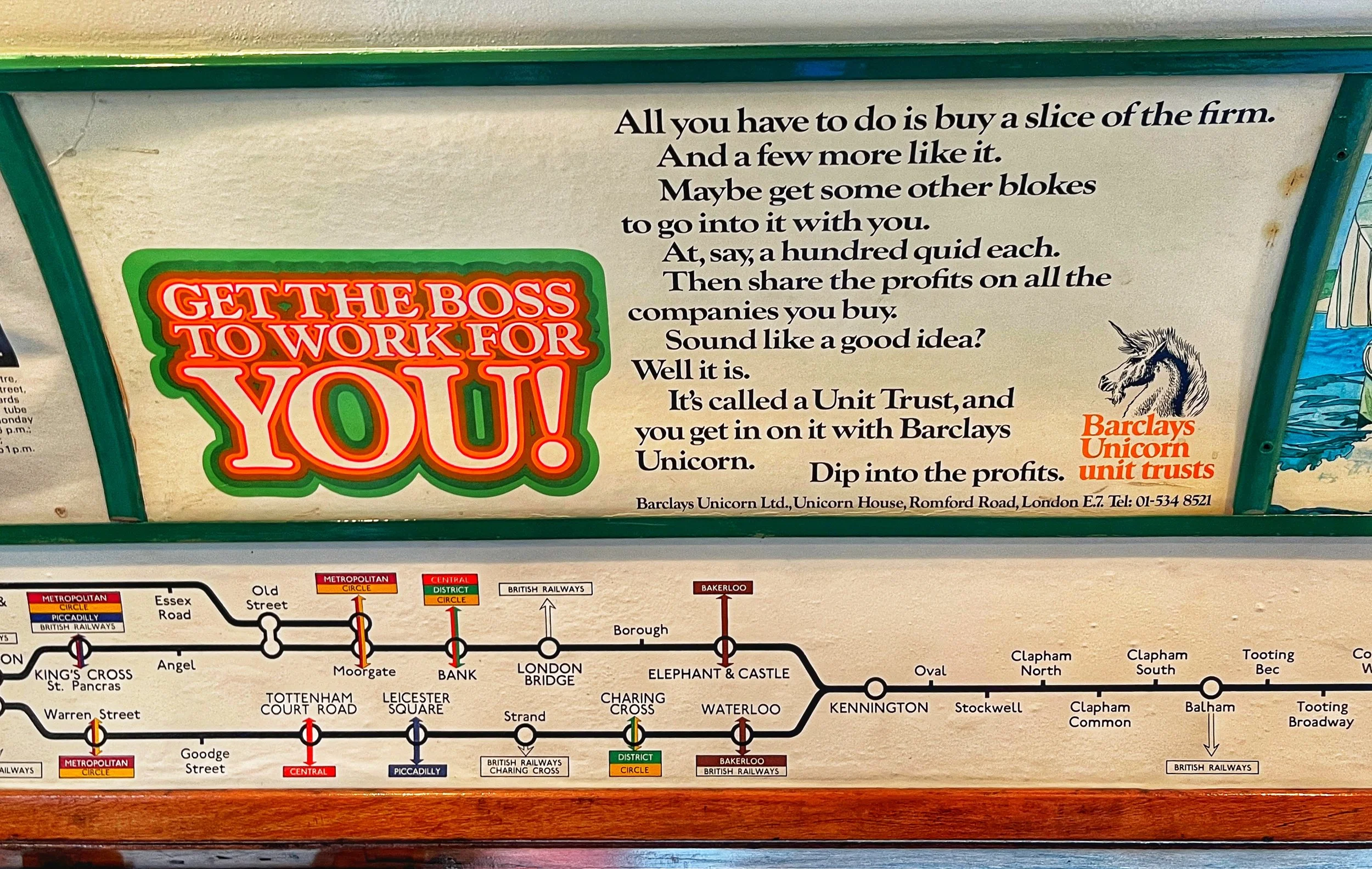
Understand imperative verbs and command words through real language you can see.
This downloadable resource uses a Structured Word Inquiry approach to help learners understand how the morpheme ‘imper’ links vocabulary and grammar through the idea of command and authority.
The accompanying image shows a real historical advertisement photographed inside an old Metropolitan line train carriage. Its headline is written as an imperative sentence, giving a clear, real-world example of how language is used to instruct, persuade, and impose an idea.
Rather than memorising grammar rules, learners explore how meaning develops from Latin into modern English, and how this meaning still shapes how sentences work today.
This pack includes:
A structured worksheet introducing the morpheme ‘imper’ through clear, step-by-step explanation
Explicit teaching of the Latin base ‘parāre’ and how meaning changes when prefixes are added
Guided activities linking the morpheme ‘imper’ to words such as ‘imperative’, ‘imperial’, ‘emperor’, and ‘empire’
Sentence-level work identifying and rewriting imperative sentences
A full answer key for checking and consolidation
This pack is ideal for:
Home educators
Learners in late Key Stage 2 and early Key Stage 3
Parents of dyslexic or neurodivergent learners
Families using Structured Word Inquiry
Teachers supporting grammar through meaning and structure
Designed by a qualified dyslexia specialist, this resource makes an abstract grammar concept concrete by anchoring it in real language, real history, and visible examples of command.

A ready-to-use set of spelling and decoding grids exploring the root test (to bear witness or show evidence).
From test and attest to testimony, protest, and intestacy, this pack offers structured practice with over 30 derived words — all carefully segmented for reading, spelling, and meaning.
Each sheet supports multi-sensory learning, encouraging children to:
▪️ Explore the sounds
▪️ Create the word
▪️ Read, Spell, and Use it in a sentence
Also includes a page of hands-on activity ideas — from tracing and air-writing to chalk play and morpheme sorting.
Perfect for learners exploring morphemes, building vocabulary, or strengthening reading and spelling fluency.
🟩 You’ll get:
• Three printable spelling grids
• Word lists split by morpheme
• Sentence-writing prompts
• Multi-sensory activity suggestions
• Colour-coded versions to support visual memory
Check out the resource on this video.
Designed for home learning or 1:1 support.
Pairs well with the matching “test” jigsaw word cards.

This downloadable pack explores the root ‘test’ (from Latin testari, meaning to witness or affirm). It includes a clear set of printable word cards designed for spelling, reading, and vocabulary practice – with a focus on how words are built.
All words in this set contain the root ‘test’ (e.g. attest, protestation, testimony, untestable), and are organised for ease of printing. These cards are not flashcards in the traditional sense – they’re designed to be used within play-based, sensory-rich tasks. Check out a scroll-through of the resource.
Included in the pack:
✅ 36 word cards featuring the root ‘test’
✅ A simple tracker to monitor blending and reading fluency
✅ 40+ activity suggestions using tactile, oral, visual, and movement-based approaches
Examples include:
• Writing with window pens or tracing in salt
• Playing Snakes and Ladders with a word per turn
• Echo reading, silly sentences, and morpheme matching
• Body spelling, hopscotch games, and torchlight hunts
These activities are especially supportive for learners who benefit from movement, repetition, and meaning-driven reading. The tracking sheet allows you to note when a word can be blended or read automatically – helpful for both planning and celebrating progress.

Decode big words like ‘testament’ and ‘protester’ — morpheme by morpheme.
This downloadable literacy pack helps children explore the morpheme ‘test’ (meaning to witness or to examine), using a Structured Word Inquiry (SWI) approach. Through colour-coded cards, clear explanations, and hands-on activities, learners discover how complex words are built — and what they really mean.
Inside the pack:
A complete set of morpheme cards (in both colour-coded and neutral green versions)
A parent guide that explains word parts clearly — including what a linking vowel is and when to drop the ‘e’
A progress tracking table for blending and reading
10+ multi-sensory word-building games and puzzles
Examples of real ‘test’ word families (e.g. testify, protest, testimony, untested, countertestimony)
Check out a scroll-through video of the resource.
Activities include:
Missing morpheme puzzles
Snap! word family edition
Build-your-own definition games
Word wall creation
Card sorting and classification
Designed by a qualified dyslexia and literacy specialist, this pack supports:
Home educators
Learners who thrive on pattern and logic
Spelling confidence through morphology
Older learners revisiting tricky words with purpose

📎 Part of the How Words Workcollection | ✏️ 75% Off | 🎞️ Scroll-through video included
This sample resource introdu ces learners to vocabulary built from the Latin root “testari”, meaning to bear witness. It’s part of my wider How Words Work: Root Study & Vocabulary collection — a series of tools for building spelling confidence and deeper word understanding.
This pack includes structured grids for exploring words like testify, protest, attest, and testimonial, using:
Clear definitions
Synonyms
Sentence prompts
Etymology (word origins)
The word contest is fully modelled as an example, and suggested answers are provided at the end to support independent learning. Illustrating the words is encouraged, particularly for visual memory or neurodivergent learners.
This sample is ideal for:
🟊 Home educators exploring root-based learning
🟊 Children preparing for 11+ exams
🟊 Learners who benefit from structured vocabulary work
🟊 Anyone curious about how words connect
🎞️ A scroll-through video shows the full resource before purchase
💸 Download it for 75% off as part of the test word collection
📄 Pairs well with my Test spelling sheets and word cards

Explore the fascinating world of ‘naut’ with this engaging activity pack, designed to help children deepen their understanding of this morpheme through a range of literacy-rich, dyslexia-friendly activities.
Created by a specialist teacher, this downloadable pack includes four cloze-style comprehension tasks, a creative 4x4 Challenge Board, and a rich collection of ‘naut’-based words like astronaut, aquanaut, cosmonaut, and more. Each task is clearly scaffolded to support children with processing or literacy difficulties, with multisensory prompts, sentence-level thinking, and opportunities for creativity and vocabulary exploration.
Perfect for home learning, tutoring, or classroom extension work, this pack supports Structured Word Inquiry (SWI) principles while building curiosity about language and meaning.
Looking for more ‘naut’-themed resources? Pair this with my spelling sheets or reading and spelling cards in the same series.

Unpack big words like ‘astronaut’ and ‘aquanaut’ — one morpheme at a time.
This downloadable resource uses a Structured Word Inquiry (SWI) approach to help children build, decode and understand words containing the morpheme ‘naut’ (meaning sailor or traveller).
The pack includes:
A full set of colour-coded morpheme cards, ready to print, cut and use in spelling and decoding games
A clear parent guide explaining how to use the cards and what each morpheme means
A progress tracking sheet to note when your child can blend and read words automatically
A selection of multi-sensory games and activity ideas, including word races, silly word creation, card sorting, and household scavenger hunts
Examples of real word breakdowns (e.g. astronaut = astr + o + naut)
This pack is ideal for:
Home educators
Students studying for the 11+ exams
Parents of dyslexic or neurodivergent learners
Families using Structured Word Inquiry
Teachers supporting spelling beyond phonics
Designed by a qualified dyslexia specialist, this pack turns long, tricky words into logical and engaging spelling experiences.

Naut Vocabulary Grids – Explore the Language of Sailors, Scientists & Space
This printable resource introduces learners to rich vocabulary built from the root “naut” (sailor, voyager), used in words from aeronaut and astronaut to aquanaut and Nautilus.
Each word is explored through a structured grid with space for learners to record:
Meaning
Synonyms
A sentence using the word
Etymology
The first word (aeronaut) is fully modelled to support learners in completing the remaining vocabulary grids either independently or with an adult. Suggested answers are included at the end for ease of marking or scaffolding.
Designed by a dyslexia specialist, this resource encourages curiosity about language structure, etymology, and meaning — ideal for learners who benefit from visual clarity and morpheme-based learning. Children can also choose to illustrate the words to strengthen meaning and memory.
🟊 16 naut words including: astronaut, aquanaut, cosmonaut, nautical, Octonauts
🟊 Supports Structured Word Inquiry (SWI) and linguistic phonics
🟊 Includes a completed example and suggested answers
🟊 Great for home educators, parents, and tutors
🟊 Suitable for ages 9–14 and neurodivergent learners
For multi-sensory activity ideas using these words, visit @greatexpectationseducation on social media — and browse my other naut-based resources to build a full word study experience.

These printable spelling sheets explore the morpheme ‘naut’, meaning sailor or traveller, through structured practice that supports both decoding and vocabulary development.
Each sheet helps learners segment and spell compound words such as astronaut, aquanaut, and cosmonaut, while reinforcing the meaning of the morpheme through repetition and context. The sheets include guided spelling activities, sentence writing prompts, and space for multi-sensory extensions at home or in 1:1 support.
As a dyslexia specialist, I’ve designed these sheets to move beyond rote memorisation - supporting learners to understand how English spelling reflects both sound and meaning.
🖍️ Clear layout for dyslexic learners
🌊 Great for children interested in space, oceans, or exploration
🎯 Ideal for home learning, interventions, or specialist tuition

Step into the world of explorers, adventurers, and voyagers with this engaging spelling and reading card pack based on the morpheme ‘naut’, meaning sailor or traveller. Designed by a qualified dyslexia and literacy specialist, this pack supports decoding, vocabulary growth, and morphemic understanding through a hands-on, multisensory approach.
Learners explore a rich set of words including astronaut, cosmonaut, aquanaut, aeronaut, and more—ideal for students curious about space, sea, and science. The cards come in two formats: one version with morphemes clearly colour-coded or highlighted for structured analysis, and a second version for fluency and recall.
A wide range of suggested activities is included, covering writing, movement, visual creativity, and oral games, so children can see, say, feel, and understand each word in action. Perfect for home educators, tutors, and parents supporting children with dyslexia, slow processing, or curiosity about how words work.

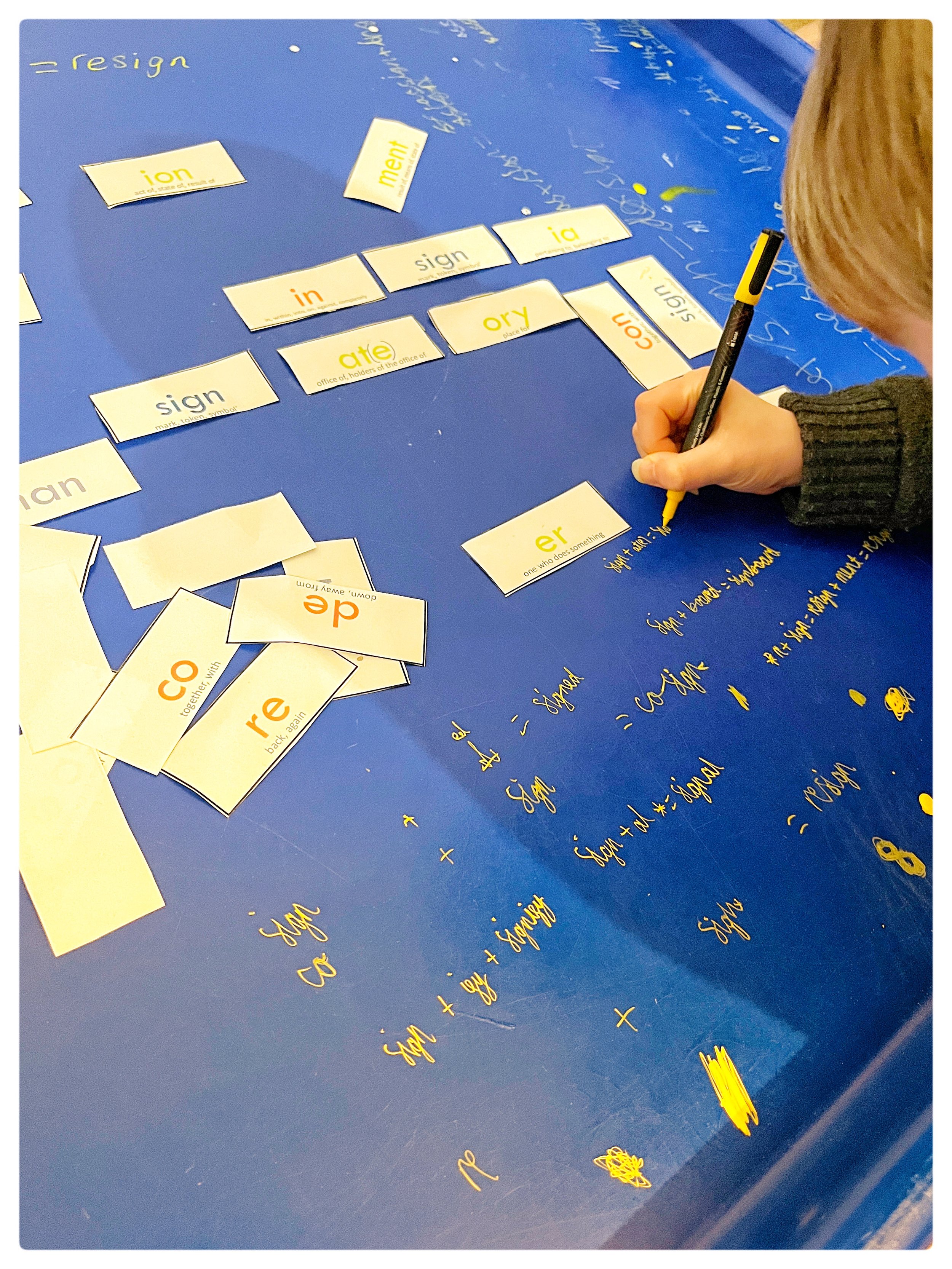
This is an essential tool designed to enhance literacy skills for learners of all ages. This comprehensive resource includes a carefully curated set of morphemes linked to the root ‘sign’, enabling users to create a variety of words while practising their spelling and decoding abilities. Developed by a specialist in dyslexia, this resource is thoughtfully crafted to meet the diverse needs of learners, making it an invaluable addition to any classroom or home learning environment.
By integrating these morphemes into your teaching, you can foster a deeper understanding of word formation and enhance vocabulary retention among your learners. Moreover, I encourage you to explore my social media platforms, where I share a plethora of multi-sensory ideas and innovative strategies for utilising this resource effectively.
Don’t forget to browse my range of other 'sign' resources, tailored to promote literacy and support students with various learning profiles. Equip your learners with the skills they need to succeed, while embracing a fun and interactive approach to education.


This carefully crafted set of reading and spelling cards redefines the way you approach spelling and decoding, making learning both enjoyable and effective. These 'sign' cards not only enable students to recognise and create words like 'signature', 'design', and 'significant', but they also immerse learners in the dynamics of language through hands-on practice. Unlike traditional flashcards, these cards come alive during multi-sensory activities. Whether you're practising spellings with window pens or enjoying a game of Snakes and Ladders—reading a word like 'signal' or 'assignment' with each turn—there’s endless potential for creativity in your teaching.
As a dyslexia specialist, I understand the importance of diverse learning methods to cater to each student’s needs. At the end of this document, you will find a progress tracking table to monitor your learner’s improvements over time. To further enrich your teaching experience, I encourage you to explore my social media platforms, where you’ll discover a wealth of multi-sensory ideas for integrating these resources into your lessons.
Additionally, don't forget to browse for other resources related to the word 'sign'; together, we can nurture strong spelling and decoding skills in a fun and interactive manner.


This unique set of sheets is designed not merely as traditional spelling and decoding exercises, but as an invitation to explore words through multi-sensory practice. As a dyslexia specialist, I aim to transform the way you engage with language, making it an enjoyable and effective learning experience.
These carefully crafted sheets encourage you to use a variety of methods that tap into visual, auditory, and kinaesthetic modalities, enhancing your spelling skills while fostering a deeper understanding of the word's meaning and application. I believe that by incorporating different sensory experiences, learners can build confidence and lasting connections to their spelling work.
I highly recommend visiting my social media platforms, where you'll find a plethora of multi-sensory ideas for utilising this resource effectively. Additionally, don’t forget to explore my other sign-related materials that further support your learning journey.


Make sense of big words – one morpheme at a time.
This comprehensive resource pack focuses on the morpheme ‘quadr’ (meaning four), and is designed to help children confidently build, decode and understand words like quadrilateral, quadruped, and quadrillion.
It includes:
60+ colour-coded morpheme cards, covering base words, suffixes, and linking vowels
A clear, jargon-free Parent Guide explaining how words are built using Structured Word Inquiry (SWI) principles
A wide range of example word sums
A helpful explanation of suffix meanings, linking vowels, and when to drop the ‘e’
10+ multisensory activities to engage learners and support spelling and vocabulary development
Created by a Level 7 specialist dyslexia teacher, this resource is ideal for:
Home educators
Parents of neurodivergent learners
Teachers exploring morphology or SWI
Families wanting to move beyond rote spelling lists
Perfect for learners who benefit from structure, colour, and clarity.

This activity pack explores the root “quadr”, meaning four, through a range of engaging and accessible tasks. Designed by a dyslexia specialist, these activities offer multiple ways to consolidate vocabulary and decoding skills — all with a focus on meaningful, structured practice.
Inside, you’ll find:
Word searches featuring rich ‘quadr’ vocabulary
Cloze paragraphs that develop reading fluency and word meaning
A dice-based challenge grid encouraging flexible use of target words
Tasks that include visual, kinaesthetic and sentence-level activities
Extension ideas to deepen understanding of both spelling and morphology
Whether you’re supporting learning at home or planning a small group session, these sheets provide ready-to-go tasks that build confidence and word knowledge—without requiring acting, handwriting volume, or peer interaction.
⭐ Ideal for dyslexic learners, home educators, and parents seeking high-quality support materials
🧠 Rooted in research and multisensory practice
✏️ Designed for flexible, low-prep use with clear, decodeable instructions
Looking for more multi-sensory ideas? Check out my social media for creative suggestions.
Don’t forget to explore the full range of morpheme packs in my shop for more roots like graph, hydr, chron and more!

Dive into the world of quadr- words with this structured, multisensory spelling pack—created especially for dyslexic and neurodivergent learners. Each page guides learners to explore the structure and meaning of words like quadrilateral, quadrant, and quadruped through segmenting, blending, and active decoding.
As a specialist teacher, I’ve designed these spelling sheets to be used flexibly: on their own, or alongside hands-on activities like salt tray spelling, rainbow writing, or morpheme building games. You’ll find repeated opportunities for pattern spotting, pronunciation support, and confidence-boosting recall tasks.
To spark ideas for multisensory learning, be sure to check out my social media where I share creative ways to use these sheets at home. And don’t forget to explore my other root word packs for more language adventures.

This set of ‘quadr’ Reading and Spelling cards is designed to bring vocabulary learning to life through multi-sensory spelling and decoding practice.
Instead of traditional flashcard drills, these cards are perfect for use during hands-on, movement-rich activities that engage the senses – think spelling with window pens, or reading words aloud during board games like Snakes and Ladders. Each card features a word with the Latin root ‘quadr’, helping learners make lasting connections between spelling, structure, and meaning.
At the back of the pack, you’ll find a simple progress tracker to help you monitor when a word is successfully blended and when it becomes automatic. It’s a gentle way to celebrate growth, especially helpful for dyslexic and neurodivergent learners.
Made by a dyslexia specialist, this resource fits beautifully into a home education routine or personalised learning plan. I highly recommend checking my social media for extra ideas on how to use the cards in creative, sensory-friendly ways.

Explore the power of word roots with this vocabulary-building pack based on the morpheme “quadr” — meaning four.
This printable resource includes a set of structured grids that guide learners through the meaning, synonyms, sentence usage, and etymology of words such as quadrant, quadruplet, quadruped, and more. The first word is fully modelled (quad) to help learners get started, and suggested answers are included for support.
Perfect for home educators, tutors, or parents looking to build deeper vocabulary knowledge in a dyslexia-friendly way, this resource helps children see connections between words, understand spelling patterns, and enjoy the logic of English.
As a dyslexia specialist, I’ve designed this to be visually clear and accessible for independent or supported use. Some learners may even wish to illustrate each word, adding a creative element to reinforce meaning.
🟊 Includes 15 “quadr” words
🟊 Encourages word study through etymology
🟊 Ideal for neurodivergent learners, including those with dyslexia or slow processing
🟊 Answers included
🟊 Works well alongside other “quadr” activities in the shop
For multi-sensory ideas and vocabulary games using these grids, check out my social media @greatexpectationseducation.

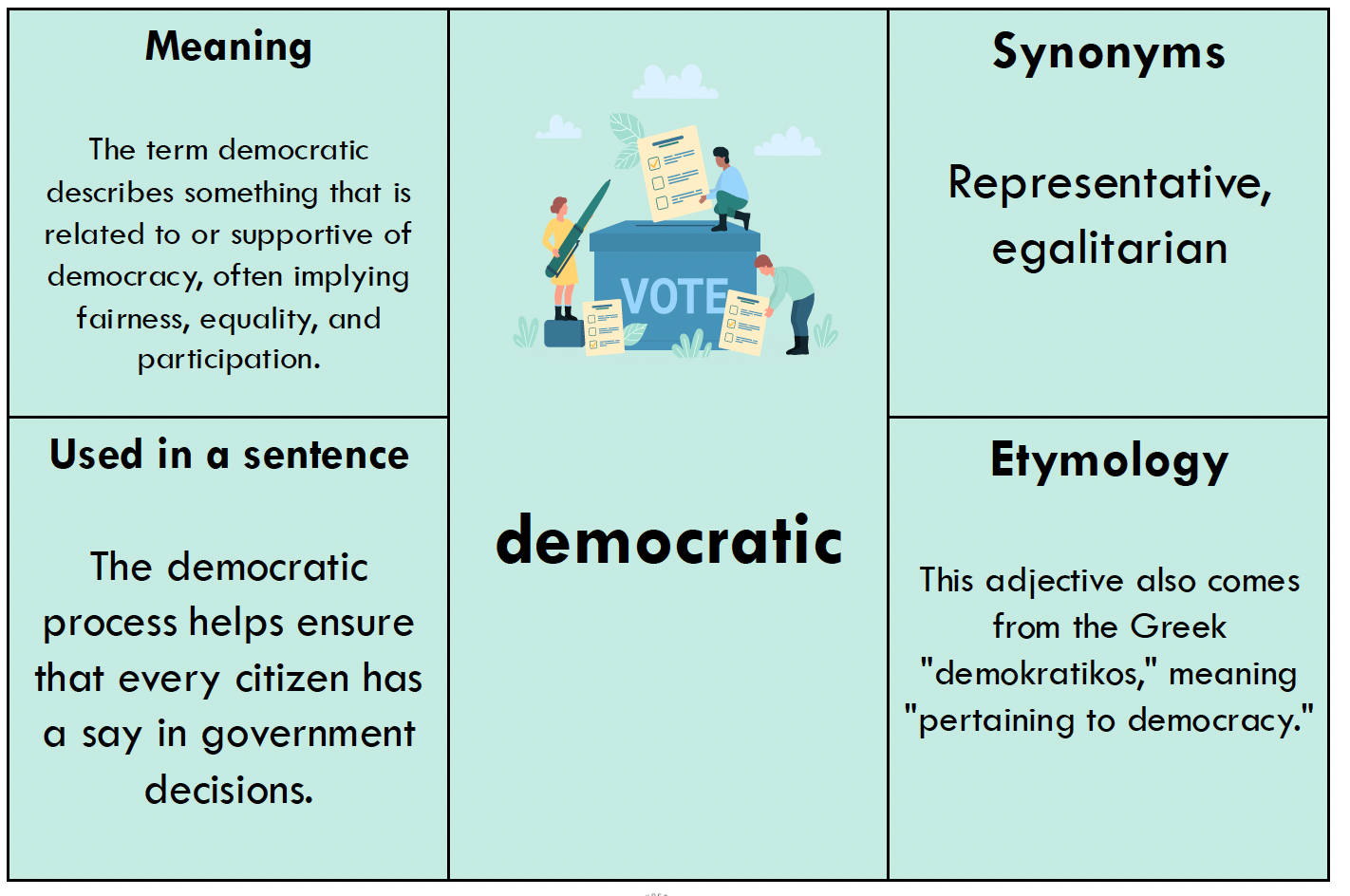
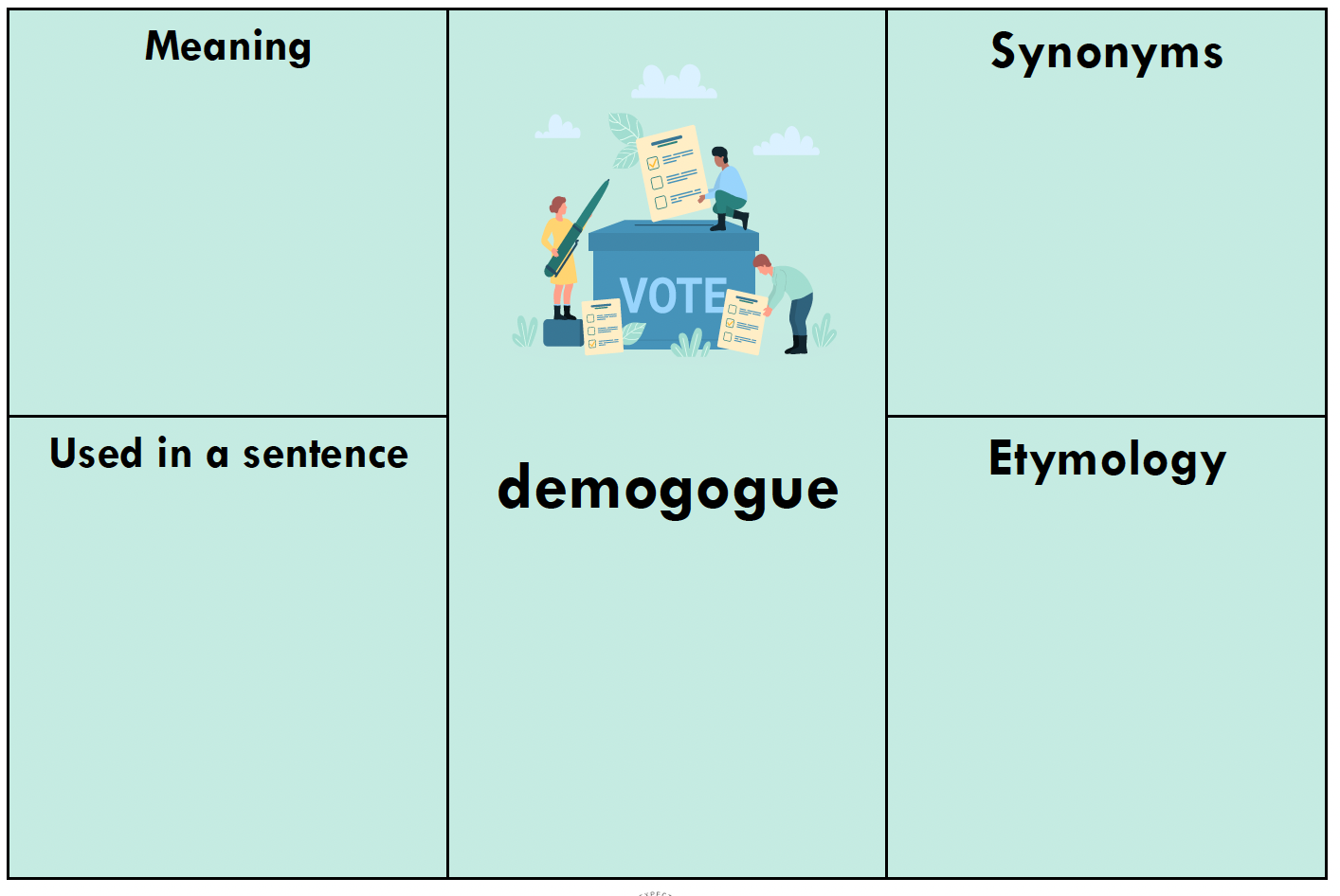
This vocabulary practice pack for the root word 'dem' offers a structured yet flexible way to explore and understand words linked to 'people', such as 'democracy', 'epidemic', and 'demographic'. As a dyslexia specialist, I have designed these sheets to support learners in unpacking word meanings, exploring etymology, and building confidence with decoding and comprehension. Each activity is supported by clear answer sheets, making them suitable for independent learners or for use with a parent, teacher, or tutor.
I encourage you to visit my social media pages, where I regularly share multi-sensory strategies for bringing these sheets to life—whether that's using movement, colour, or sound to embed learning more effectively. You might also like to browse my other root word resources, including my 'sign' packs, which can be combined with 'dem' for even richer vocabulary exploration.

This versatile set of activities is designed to complement my existing 'dem' resources, giving you extra ways to consolidate understanding of words linked to this root. Inside, you’ll find wordsearches, a cloze exercise, true/false puzzles, and a matching activity—ideal for reinforcing vocabulary, spelling, and comprehension skills in a structured but engaging way.
As a dyslexia specialist, I’ve created these activities with flexibility in mind, so you can use them at home, in tutoring sessions, or as independent practice. I encourage you to visit my social media channels for multi-sensory ideas that bring these activities to life and help deepen understanding. You might also like to explore my other resources focused on the 'dem' root and other 'sign' word collections to build a wider toolkit for word study.

This set of reading and spelling cards offers a flexible, multi-sensory approach to exploring the root word 'dem'. Featuring key vocabulary such as 'democracy', 'demographic', and 'pandemic', these cards are designed to support spelling, decoding, and word comprehension in an engaging and accessible way.
As a dyslexia specialist, I understand the importance of providing learners with structured yet adaptable resources that promote active, hands-on learning. These cards go beyond traditional flashcards—ideal for use with a range of creative activities that reinforce spelling and word structure, from tracing and tapping to integrating into games and everyday routines.
You’ll also find inspiration for multi-sensory activities on my social media platforms, where I regularly share practical ideas for using these and other resources. I recommend exploring my wider range of 'sign' resources, which complement this set and further support the development of confident, independent spellers.
Cover image @gettysignature (Canva)


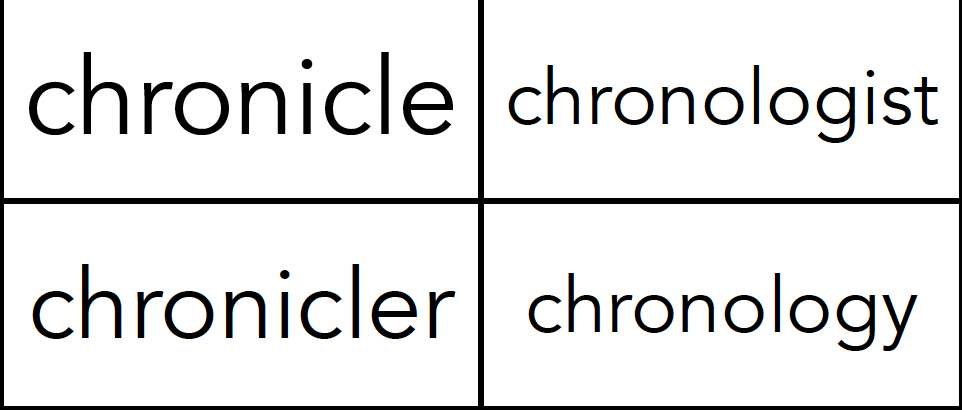
These cards can be used for spelling and decoding activities.
These cards are not intended to be used as traditional flashcards – rather, they are to be used during multi-sensory activities – e.g. practising spellings using ‘window pens’ or playing Snakes and Ladders and reading a word with each go. Please check through this album of ideas.
At the end of the document, there is a table to enable you to record your learner’s progress.



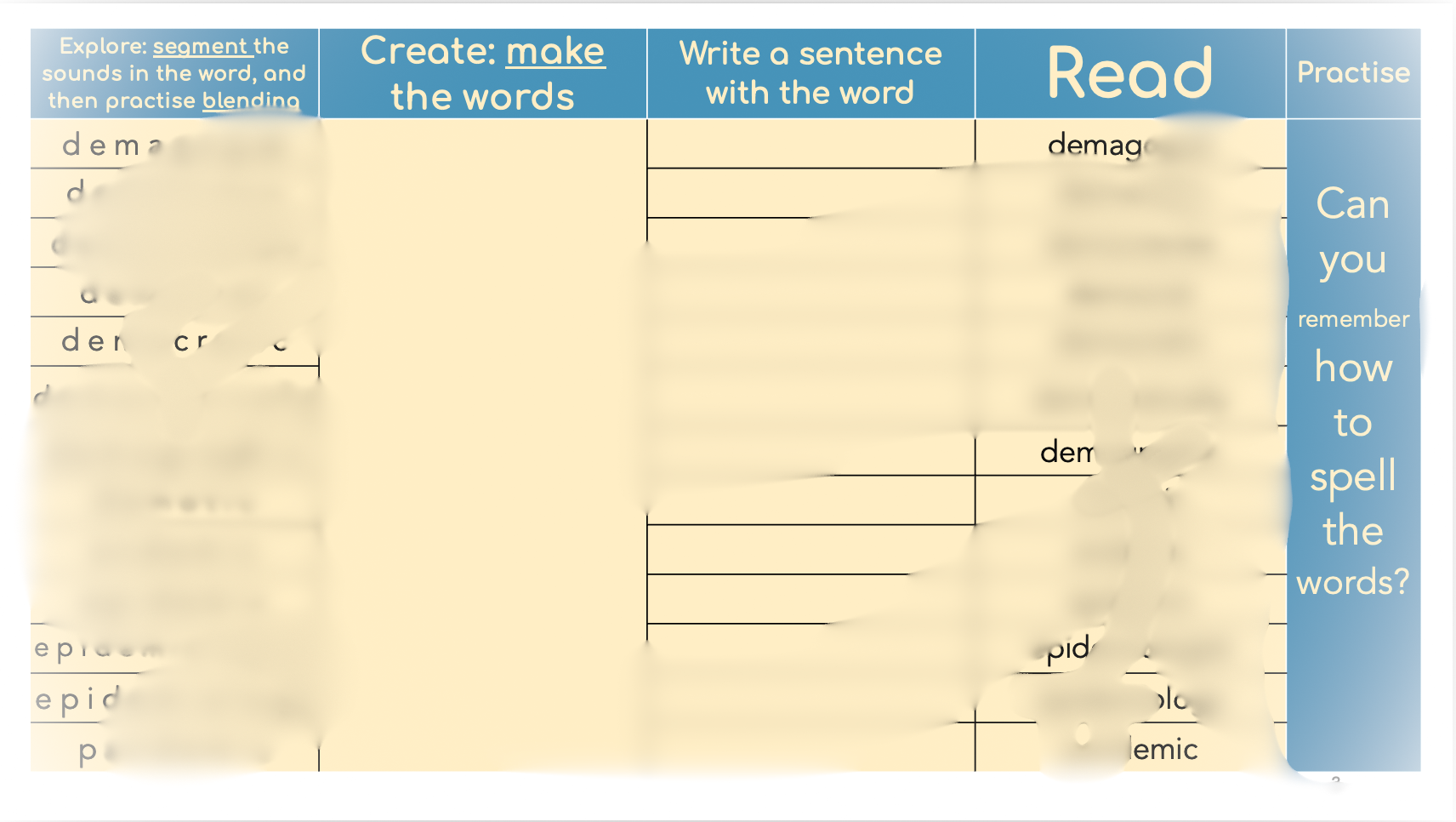
No results found
No results match your search. Try removing a few filters.
Curious to try my resources? Start here.
This little set of ‘test’ themed resources is a gentle way to try out how I teach spelling, morphology and vocabulary, without committing to full price.
Each one is 75% off for a limited time and works well as a standalone activity or as a taster before diving into the other packs.
Ideal for: home educators, 11+ candidates and anyone wanting a low cost starting point.
This downloadable pack explores the root ‘test’ (from Latin testari, meaning to witness or affirm). It includes a clear set of printable word cards designed for spelling, reading, and vocabulary practice – with a focus on how words are built.
All words in this set contain the root ‘test’ (e.g. attest, protestation, testimony, untestable), and are organised for ease of printing. These cards are not flashcards in the traditional sense – they’re designed to be used within play-based, sensory-rich tasks. Check out a scroll-through of the resource.
Included in the pack:
✅ 36 word cards featuring the root ‘test’
✅ A simple tracker to monitor blending and reading fluency
✅ 40+ activity suggestions using tactile, oral, visual, and movement-based approaches
Examples include:
• Writing with window pens or tracing in salt
• Playing Snakes and Ladders with a word per turn
• Echo reading, silly sentences, and morpheme matching
• Body spelling, hopscotch games, and torchlight hunts
These activities are especially supportive for learners who benefit from movement, repetition, and meaning-driven reading. The tracking sheet allows you to note when a word can be blended or read automatically – helpful for both planning and celebrating progress.
Decode big words like ‘testament’ and ‘protester’ — morpheme by morpheme.
This downloadable literacy pack helps children explore the morpheme ‘test’ (meaning to witness or to examine), using a Structured Word Inquiry (SWI) approach. Through colour-coded cards, clear explanations, and hands-on activities, learners discover how complex words are built — and what they really mean.
Inside the pack:
A complete set of morpheme cards (in both colour-coded and neutral green versions)
A parent guide that explains word parts clearly — including what a linking vowel is and when to drop the ‘e’
A progress tracking table for blending and reading
10+ multi-sensory word-building games and puzzles
Examples of real ‘test’ word families (e.g. testify, protest, testimony, untested, countertestimony)
Check out a scroll-through video of the resource.
Activities include:
Missing morpheme puzzles
Snap! word family edition
Build-your-own definition games
Word wall creation
Card sorting and classification
Designed by a qualified dyslexia and literacy specialist, this pack supports:
Home educators
Learners who thrive on pattern and logic
Spelling confidence through morphology
Older learners revisiting tricky words with purpose
📎 Part of the How Words Workcollection | ✏️ 75% Off | 🎞️ Scroll-through video included
This sample resource introdu ces learners to vocabulary built from the Latin root “testari”, meaning to bear witness. It’s part of my wider How Words Work: Root Study & Vocabulary collection — a series of tools for building spelling confidence and deeper word understanding.
This pack includes structured grids for exploring words like testify, protest, attest, and testimonial, using:
Clear definitions
Synonyms
Sentence prompts
Etymology (word origins)
The word contest is fully modelled as an example, and suggested answers are provided at the end to support independent learning. Illustrating the words is encouraged, particularly for visual memory or neurodivergent learners.
This sample is ideal for:
🟊 Home educators exploring root-based learning
🟊 Children preparing for 11+ exams
🟊 Learners who benefit from structured vocabulary work
🟊 Anyone curious about how words connect
🎞️ A scroll-through video shows the full resource before purchase
💸 Download it for 75% off as part of the test word collection
📄 Pairs well with my Test spelling sheets and word cards
A ready-to-use set of spelling and decoding grids exploring the root test (to bear witness or show evidence).
From test and attest to testimony, protest, and intestacy, this pack offers structured practice with over 30 derived words — all carefully segmented for reading, spelling, and meaning.
Each sheet supports multi-sensory learning, encouraging children to:
▪️ Explore the sounds
▪️ Create the word
▪️ Read, Spell, and Use it in a sentence
Also includes a page of hands-on activity ideas — from tracing and air-writing to chalk play and morpheme sorting.
Perfect for learners exploring morphemes, building vocabulary, or strengthening reading and spelling fluency.
🟩 You’ll get:
• Three printable spelling grids
• Word lists split by morpheme
• Sentence-writing prompts
• Multi-sensory activity suggestions
• Colour-coded versions to support visual memory
Check out the resource on this video.
Designed for home learning or 1:1 support.
Pairs well with the matching “test” jigsaw word cards.