jeune (French) – Structured Vocabulary Support
£2.00
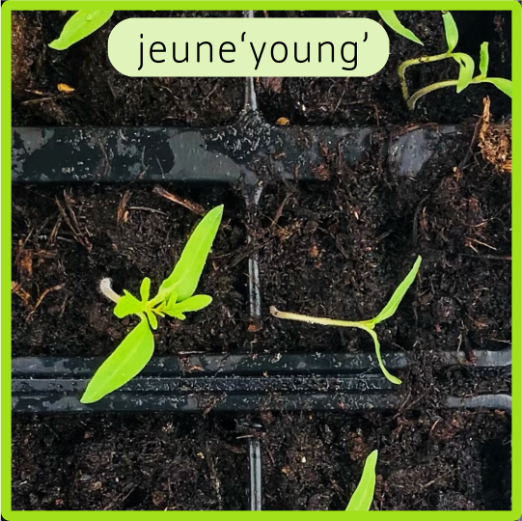
'jeune' is a word French learners meet very early — usually translated as 'young' and left at that.
But the word carries more than its modern translation suggests. It has a long history, and that history connects it to words English speakers already know. Once a learner sees where it comes from, 'jeune' is easier to hold on to.
'Jeune' comes from Latin, by way of Old French, and its meaning has shifted across the centuries. The resource traces the word through four historical stages and shows how it connects to two familiar English words.
6-panel etymology comic in PDF format
Title panel, four historical-stage panels, and a sources panel
Black-line illustrations, designed to print clearly in black and white
Wrapper page with guidance on how to use the resource and what success looks like
Full sources list, drawn from CNRTL, the Dictionnaire de l'Académie française, Littré, and other standard French etymology references
For personal use in home education and tutoring only.
Designed first for tutoring students, but it suits a wider range:
Anyone who loves etymology and the way words travel between languages
KS3 French learners meeting 'jeune' for the first time in lessons or reading
GCSE French learners wanting to understand the word's range of meaning beyond 'young'
Home-educated children working through French at their own pace
Specialist tuition students, including those with dyslexia or working memory profiles
Parents working alongside their children, whether or not they have French themselves
Adults brushing up their own French, or studying alongside a child
This isn't designed for early French learners still building confidence with French at word level. The resource assumes the learner has met the word 'jeune' in some context — a lesson, a textbook, a French children's book — and is ready to look more closely at what it carries.
Vocabulary taught as isolated items rarely sticks for learners who struggle with retention — particularly those with dyslexia. Knowing where a word comes from gives the learner anchors that make it more retrievable when they meet it again. The resource is short by design. Six panels, revisited over time in 5-10 minute sessions, work better than a long explanation a learner reads once and forgets.
Originally created to support one of my own children's learning once the school day had ended.
Other words in L'atelier des mots that sit close to 'jeune' include 'vieux, vieil, vieille' (the direct semantic opposite), 'âge' (the conceptual neighbour), and 'an / ans' (age in years).
For the older end of the same semantic field, 'ancien' has its own etymological depth. And for a related sense — new, fresh, at an early stage — 'neuf' is a useful pairing.
For more on where everyday French words come from, The Wordhord gathers free word-history posts on French and English vocabulary.
Available now as a PDF download
'jeune' is a word French learners meet very early — usually translated as 'young' and left at that.
But the word carries more than its modern translation suggests. It has a long history, and that history connects it to words English speakers already know. Once a learner sees where it comes from, 'jeune' is easier to hold on to.
'Jeune' comes from Latin, by way of Old French, and its meaning has shifted across the centuries. The resource traces the word through four historical stages and shows how it connects to two familiar English words.
6-panel etymology comic in PDF format
Title panel, four historical-stage panels, and a sources panel
Black-line illustrations, designed to print clearly in black and white
Wrapper page with guidance on how to use the resource and what success looks like
Full sources list, drawn from CNRTL, the Dictionnaire de l'Académie française, Littré, and other standard French etymology references
For personal use in home education and tutoring only.
Designed first for tutoring students, but it suits a wider range:
Anyone who loves etymology and the way words travel between languages
KS3 French learners meeting 'jeune' for the first time in lessons or reading
GCSE French learners wanting to understand the word's range of meaning beyond 'young'
Home-educated children working through French at their own pace
Specialist tuition students, including those with dyslexia or working memory profiles
Parents working alongside their children, whether or not they have French themselves
Adults brushing up their own French, or studying alongside a child
This isn't designed for early French learners still building confidence with French at word level. The resource assumes the learner has met the word 'jeune' in some context — a lesson, a textbook, a French children's book — and is ready to look more closely at what it carries.
Vocabulary taught as isolated items rarely sticks for learners who struggle with retention — particularly those with dyslexia. Knowing where a word comes from gives the learner anchors that make it more retrievable when they meet it again. The resource is short by design. Six panels, revisited over time in 5-10 minute sessions, work better than a long explanation a learner reads once and forgets.
Originally created to support one of my own children's learning once the school day had ended.
Other words in L'atelier des mots that sit close to 'jeune' include 'vieux, vieil, vieille' (the direct semantic opposite), 'âge' (the conceptual neighbour), and 'an / ans' (age in years).
For the older end of the same semantic field, 'ancien' has its own etymological depth. And for a related sense — new, fresh, at an early stage — 'neuf' is a useful pairing.
For more on where everyday French words come from, The Wordhord gathers free word-history posts on French and English vocabulary.
Available now as a PDF download