


L'Officina Radice
Structured Italian vocabulary for KS3-KS4 learners who find words hard to hold on to
Most vocabulary gets taught as a list of words to learn for a test. For a lot of learners, particularly those who find reading hard, that list is gone by the following week - and what's left is the sense that the language is one more thing they're not good at. There's another way in. Instead of asking a learner to memorise whole words as isolated items, you can show how a word is built - its roots, the patterns it shares with other words, and the connections that tie it to language the learner already knows. Once a word has parts a learner recognises, it stops being a string of letters that won't behave and becomes something with a structure they can hold on to.
This is the approach behind The Wordcrafter's Bench and its sibling shops for French and German. It works across the Romance languages, because they share so much of their structure - the same Latin roots, the same families of words, surfacing again and again. Italian completes that set, and L'Officina Radice is where the Italian packs live.
How the packs work
Each pack takes one common Italian word and makes its structure visible - meaning, roots, and the connections that tie it to other words, to its Romance relatives, and often to English. The panels are laid out to keep the page uncluttered, so a learner isn't fighting the format as well as the language. L'Officina Radice is the Italian branch of The Wordcrafter's Bench, applying the same approach to Italian - teaching language explicitly and in a clear order, the method known as structured literacy.
How the packs print
Each pack is a PDF that prints into two forms. The large cards - one idea to a page - are made to laminate and clip onto a binder ring, so the deck can be handled, turned over and laid out in order. The single sheet at the end holds the whole word on one page, ready to print for the pencil case or the middle of a lesson. You'll need a printer, and a laminator and a ring if you want the deck; the single sheet needs neither. Full instructions are inside each pack.
Browse the packs below. Each is £2. Click any one to see what's inside.
A free word to try - 'giorno'
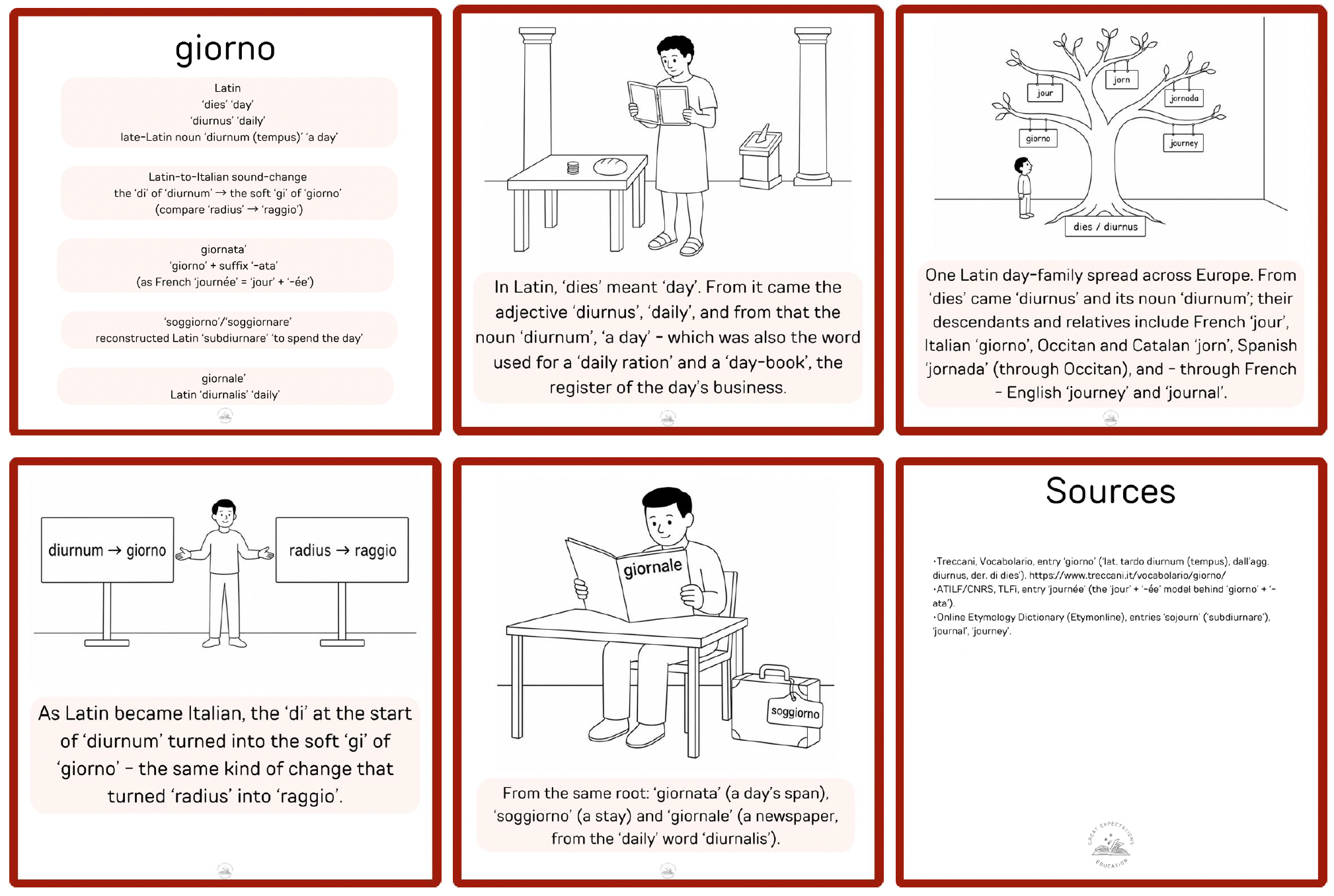
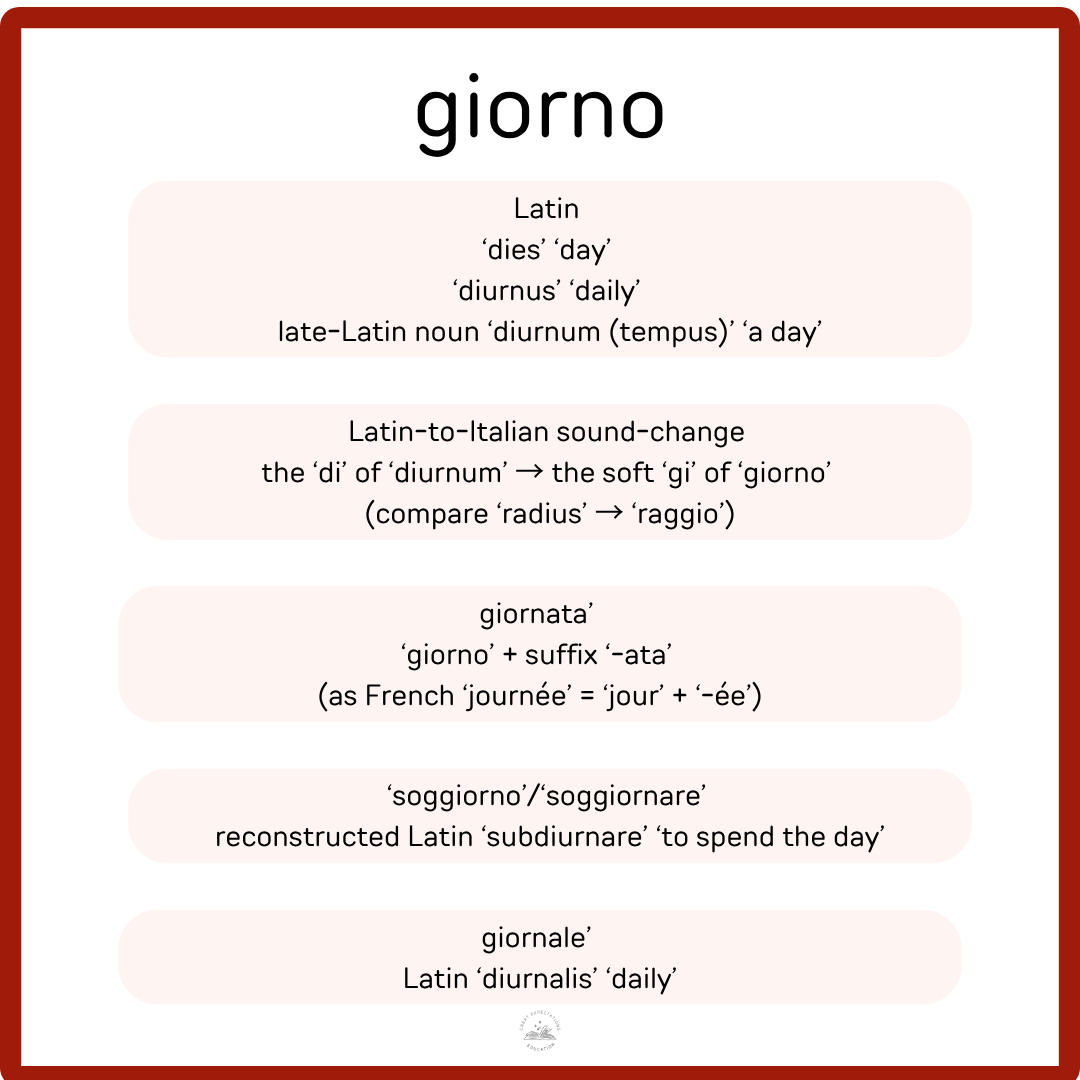
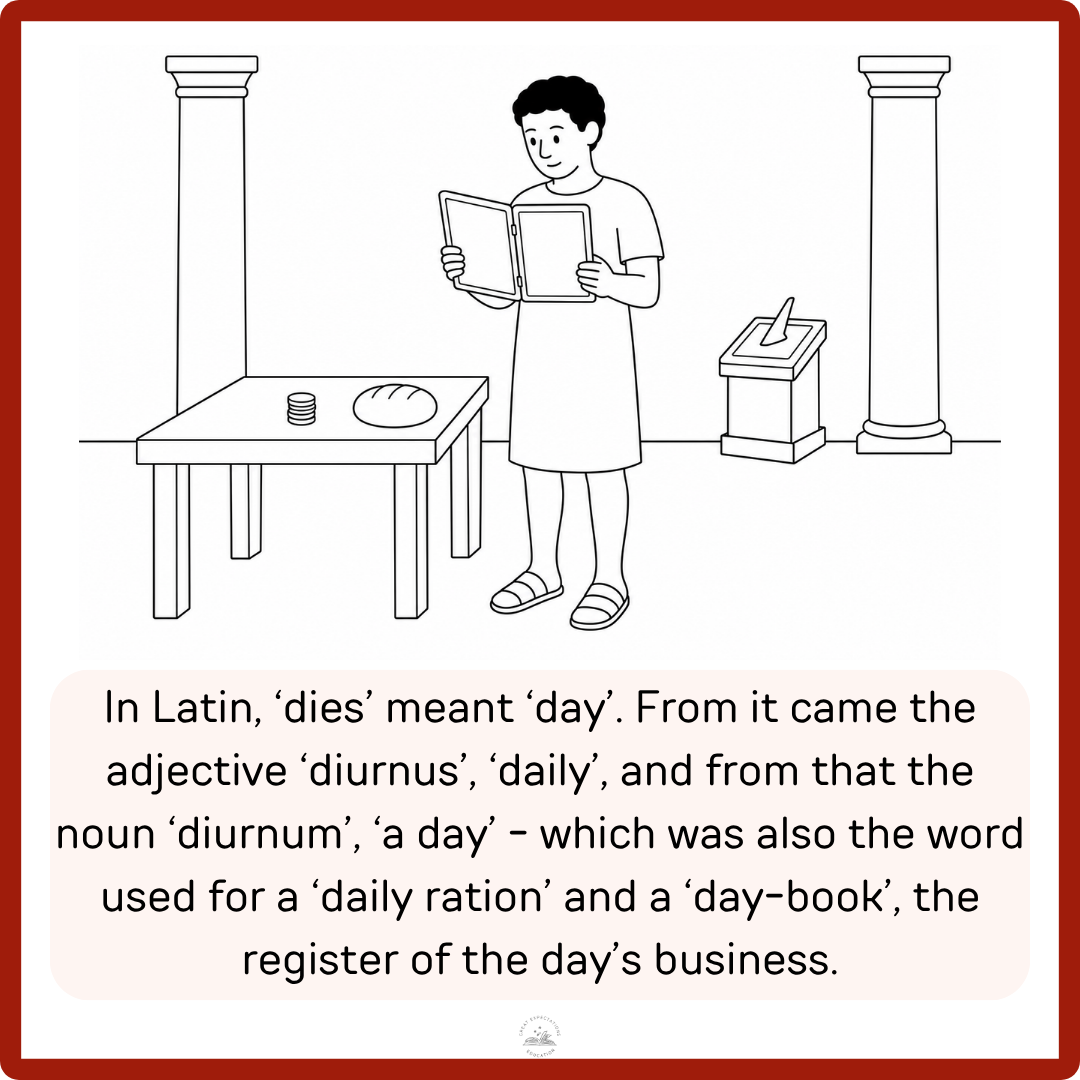
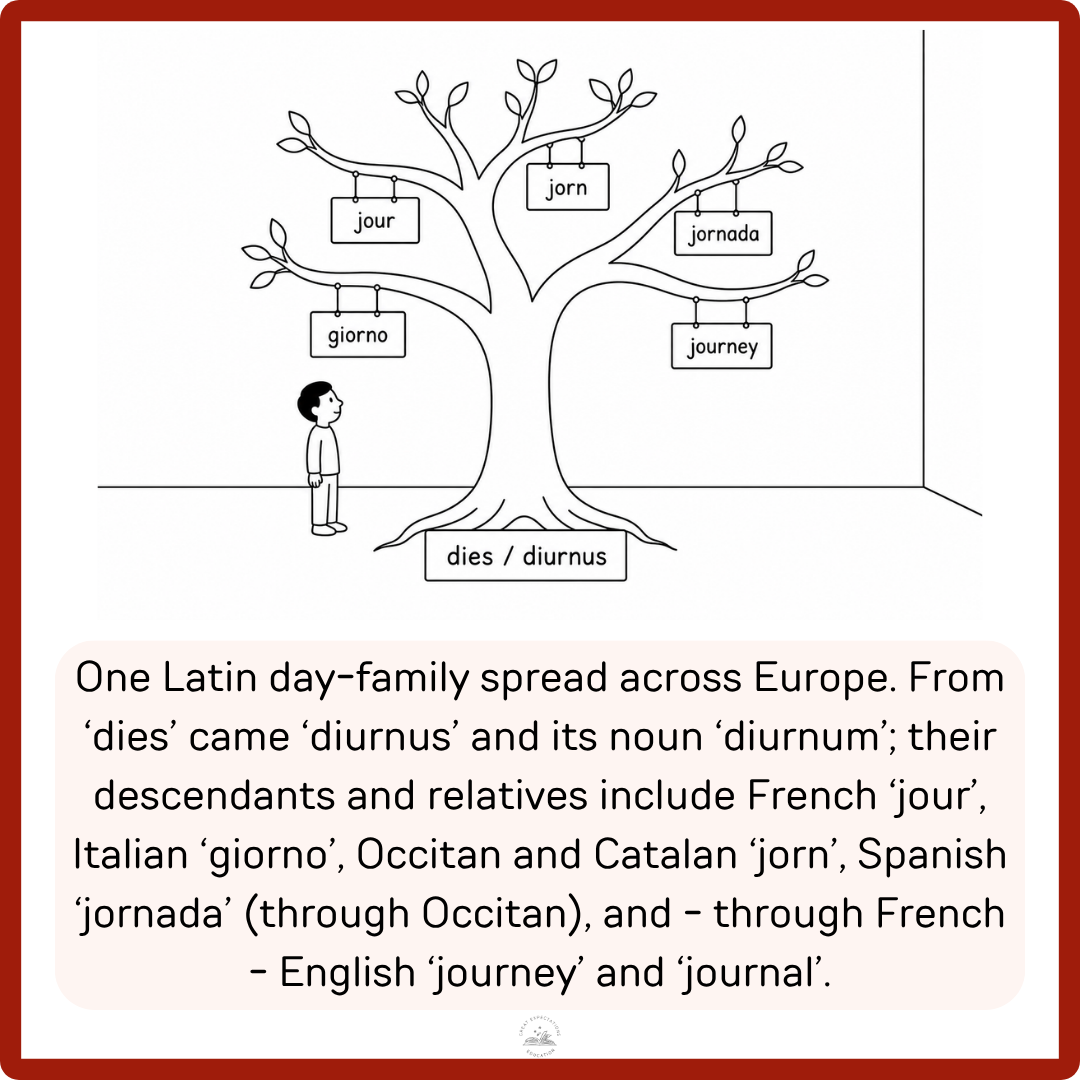
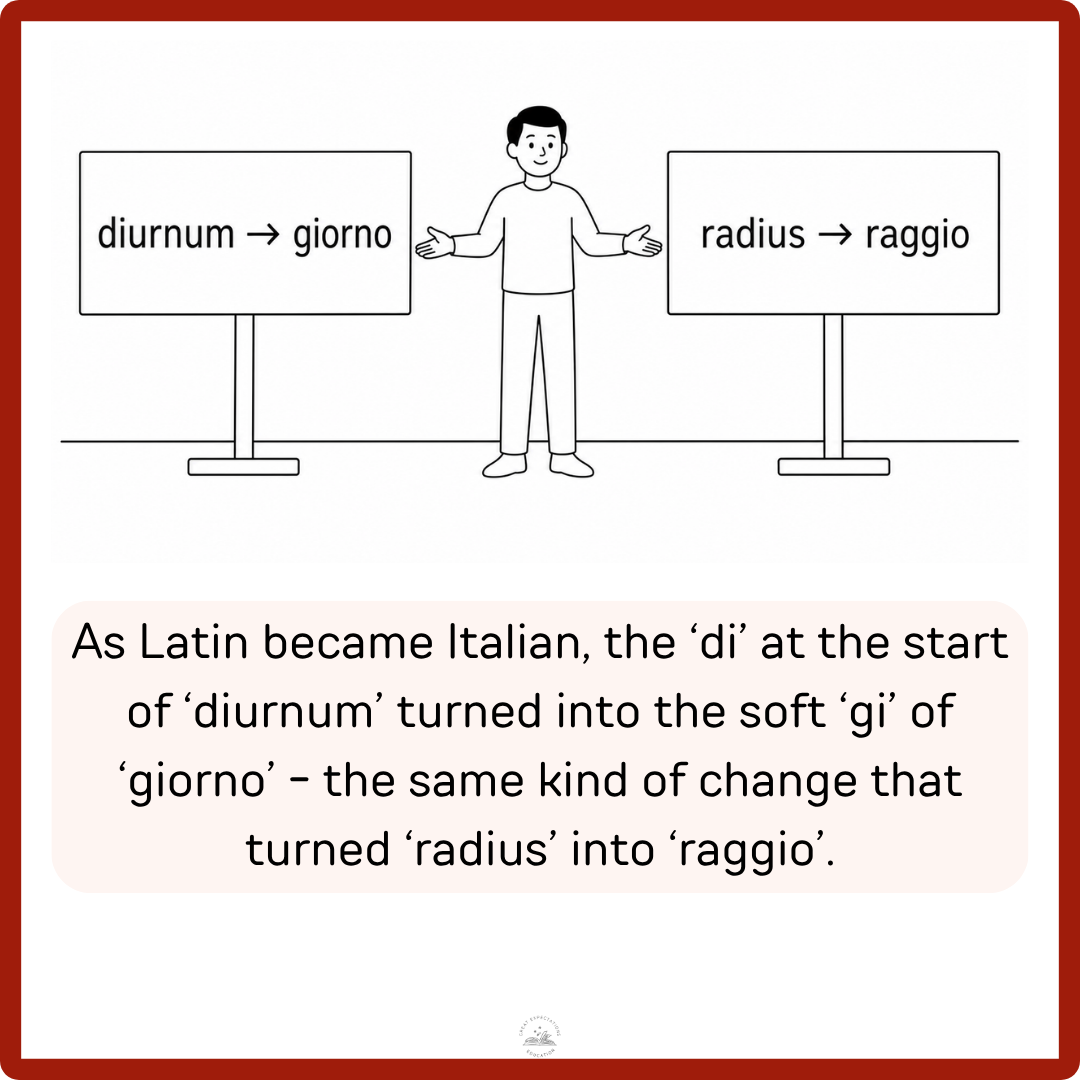
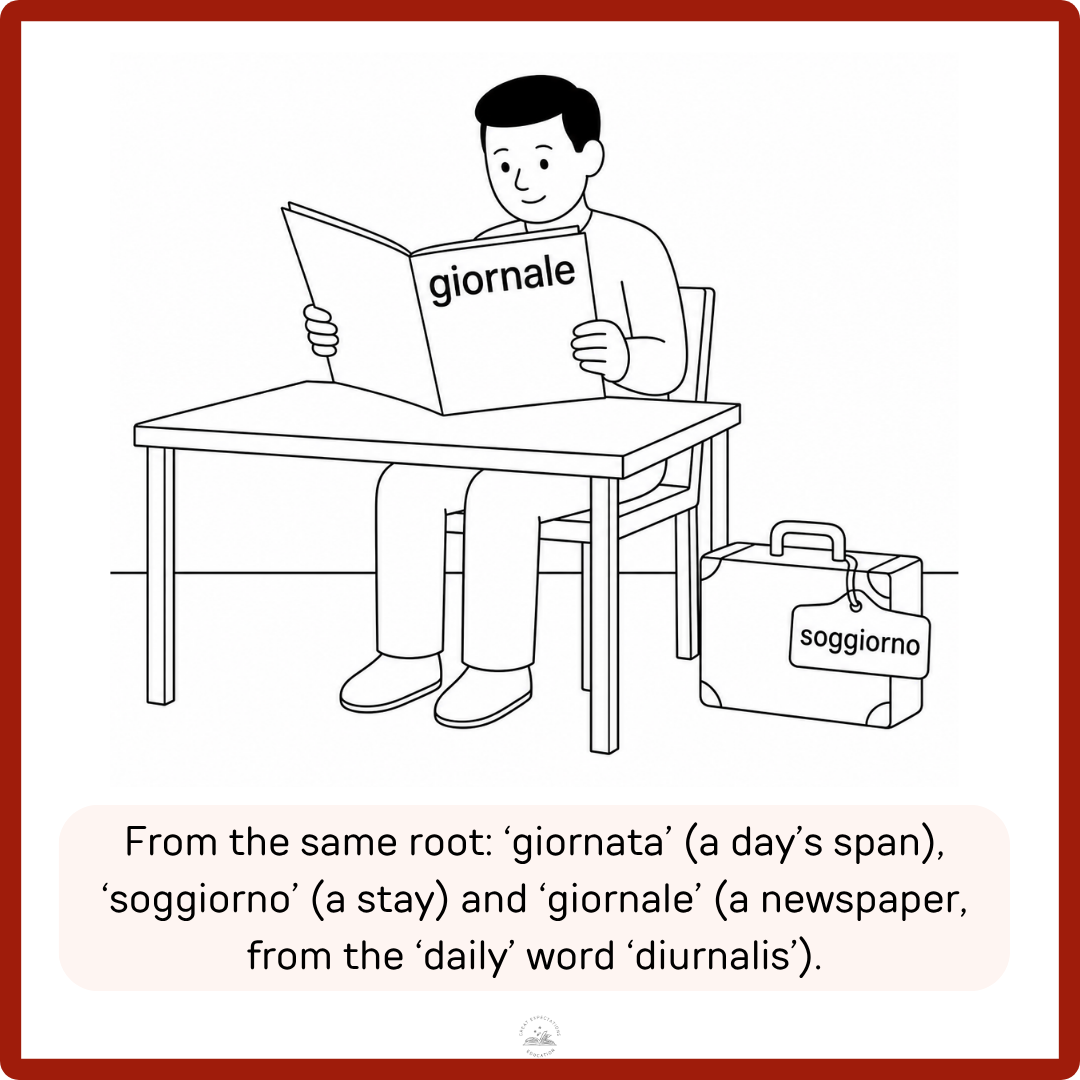
'giorno' is the Italian for 'day', and it carries a sound-change worth seeing. It comes from the Latin 'diurnum', 'a day', and as Latin turned into Italian the 'di' at the start hardened into the soft 'gi' you say now - the same shift that turned 'radius' into 'raggio'. This free pack takes the word apart and follows it back, picking up the family it belongs to along the way: 'giornata' (a day's worth), 'soggiorno' (a stay), 'giornale' (a newspaper), and its French cousin 'jour', with English 'journey' a more distant relative. Same as the paid packs, printed the same two ways. Download it, print it, see if the approach suits your learner before buying anything.
[Download 'giorno' free (PDF)]

Frequently asked questions
-
Yes. The packs cover common vocabulary that KS3 and KS4 learners meet right through to GCSE, and they're useful for reinforcing words that need to come back quickly under exam conditions.
-
Yes. Each one is a downloadable PDF. It prints two ways - large cards to laminate and ring-bind into a deck, or a single reference sheet.
-
No. Whether your child is learning Italian at school or you're teaching it at home, the packs work the same way - they make the structure of each word clear enough to use without a language-teaching background.
-
No. They support whatever Italian teaching is already happening, at school or at home - strengthening understanding and helping vocabulary stay put.
Free Word Histories
Alongside the packs, there are free posts over on The Wordhord exploring individual Italian words in depth - how a word developed, how its form carries meaning, and how it connects to related vocabulary. They use the same approach as the paid materials: patterns, not just translations.


A 'giornale' is a newspaper. Before that it was a diary, and before that it was just an adjective meaning daily.
The 'gi' at the front is a sound-change, not a spelling choice. Latin 'di' before a vowel came out as the soft Italian 'gi', which is the same change that turned 'radius' into 'raggio' and 'diurnum' into 'giorno'. Once a learner has spotted it, a handful of other Italian words stop looking arbitrary.
Where this word comes from
Latin 'dies' gave 'diurnus' ('of the day'), and 'diurnus' gave 'diurnalis' ('daily'). Italian took that adjective and made a noun of it. What the noun named kept changing as the thing itself changed. First it was a daybook - a diary, where the day's business went down. By the eighteenth century it was being used of periodicals, particularly literary and learned ones that came out on a schedule. Then, as printed news settled into a daily habit, 'giornale' became the newspaper, and it has stayed there. Two further words came off it and are still in constant use: 'giornalista' and 'giornalismo'.
What's included
Eight large cards, plus a single reference sheet holding the whole word:
• the etymology comic - illustrated stage panels, one idea to a page, with short captions
• the word-history breakdown, Latin 'dies', 'diurnus' and 'diurnalis' through to modern Italian, with the shift from diary to newspaper set out as separate stages
• a sound-change note on the Latin 'di' becoming the soft Italian 'gi', with 'radius' becoming 'raggio' as a second example of the same change
• the three-way panel, setting Italian 'giornale' against English 'journal' and Spanish 'jornal'
• the derivatives panel on 'giornalista' and 'giornalismo'
• the sources page, and a short how-to-use guide for the adult
How it prints
The file gives you a deck and a sheet. For the deck, print the large cards single-sided, laminate them, trim, punch a hole in the top-left corner and hold them on one binder ring; the numbering keeps the order if it comes loose. That assembly is yours to do. The sheet is the last page - the whole word on one side of paper, ready the moment it leaves the printer, and the form to use when you want everything visible at once rather than a deck to work through. Printer for both; laminator and ring for the deck only. Think bag or dinner table for the deck, not pocket.
For personal use in home education and tutoring only.
Who it's for
Made first for tutoring students, but it suits a wider range:
• KS3 and KS4 learners meeting Italian vocabulary for media, reading and free time
• home-educated children learning Italian
• learners with dyslexia or working-memory difficulties
• learners who already know English 'journal' and 'journalist' and can be shown where the overlap holds and where it doesn't
• anyone who likes word origins, and parents or adults studying alongside a child
The sound-change card is the demanding part. It asks a reader to hold a Latin spelling and an Italian one side by side and notice what changed between them, which is a step up from recognising a root. If that's beyond the learner for now, use the other cards and leave that one on the ring for later.
Why this exists
'Giornale' is a word learners guess wrong in a specific way: it looks like 'journal', so they read it as a diary and then meet it in a sentence about the news. Setting the two next to each other, with Spanish 'jornal' as a third, turns a false-friend problem into something a learner can reason about - one Latin family, three languages, three different jobs. The word is also a straightforward win for anyone building media and free-time vocabulary, because 'giornalista' and 'giornalismo' come free once the base is understood.
Related resources
In L'Officina Radice, 'giornata' is the closest relative and comes off the same Latin branch - one describes a day, the other names what gets printed daily. 'Prendere' and 'proprio' are also stocked, on unrelated roots.
Across the shops: Spanish 'jornal' in El Taller Raíz is the same Late Latin word taking a third path, and 'jornada' there is free to download. French 'jour' is the same root again in L'atelier des mots.
Available now as a PDF download.