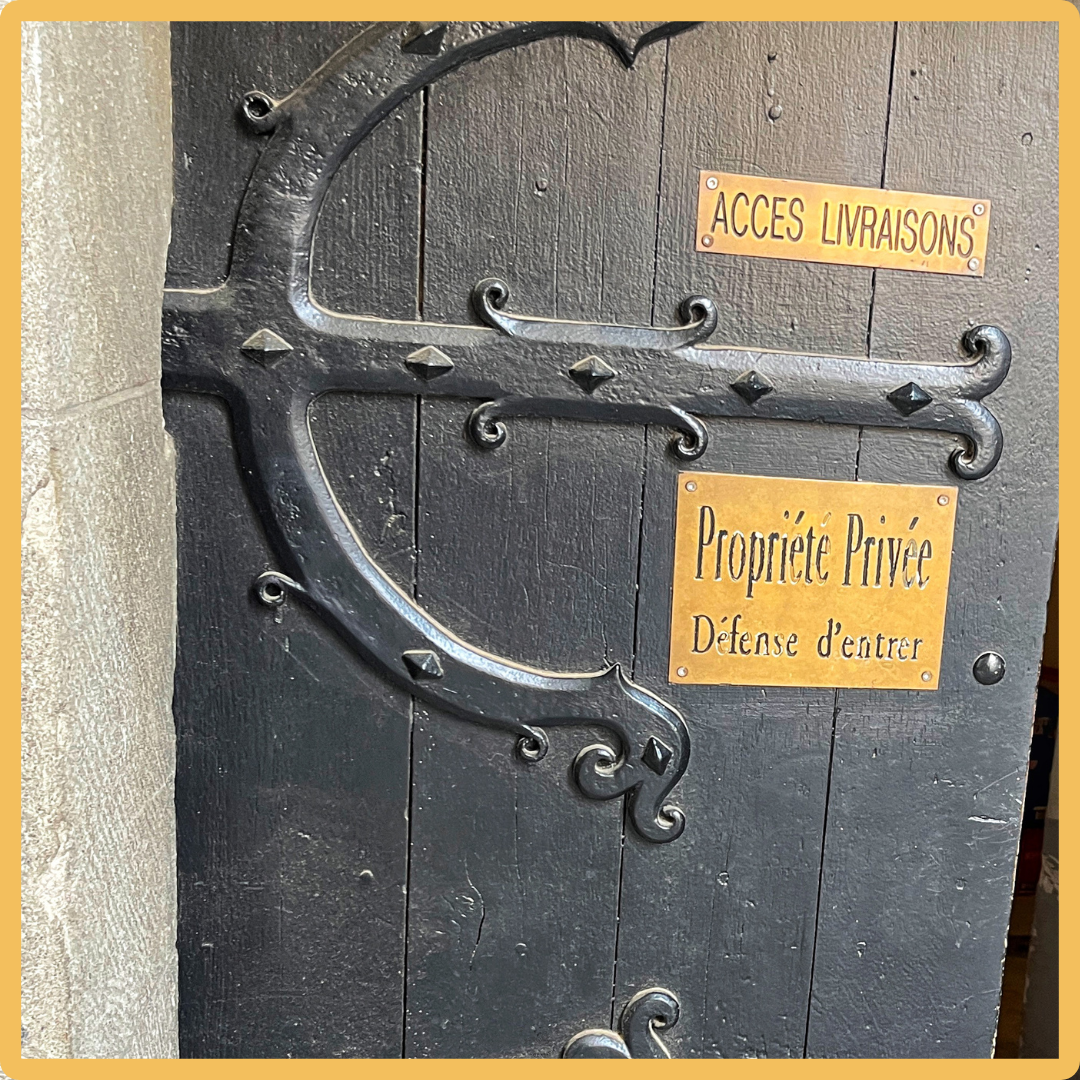
Knock on a French door and the word that comes back through it is ‘Entrez !’. It is a command, and most learners use it long before anyone tells them they are using the imperative.
Where the word comes from
It is the ‘vous’ form of ‘entrer’ with the ‘vous’ taken off. ‘Vous entrez’ is you go in; drop the pronoun and you have the order. To a friend or a child you would say ‘Entre !’ instead. To a stranger, a teacher, or more than one person, it is ‘Entrez !’. Behind both of them is Latin ‘intrare’, to go into, itself built on ‘intra’, meaning inside - a word that was not a verb at all until the Romans made one out of it. French had ‘entrer’ by the 900s.
What’s included
• The etymology comic - nine illustrated stage cards taking the word from Latin ‘intra’ to a knock at a door in a French flat.
• The word-history breakdown, Proto-Indo-European to modern French, dated at each stage the record allows.
• The command card: how the imperative is made, shown rather than explained - ‘vous entrez’ with the pronoun struck out.
• The register card: ‘Entre !’ to a friend or a child, ‘Entrez !’ to a teacher, a stranger, or a group.
• The homophone card: ‘Entrez’, ‘entrer’, ‘entrée’ and ‘entré’ all said the same way, with the accent distinguishing them on the page and the surrounding grammar distinguishing them in speech.
• The sources page and the how-to-use guide for the adult.
• Pronunciation respellings on every French and Latin form.
For personal use in home education and tutoring only.
Who it’s for
• KS3 and KS4 French learners meeting the imperative for the first time.
• Learners who can say ‘Entrez !’ but couldn’t tell you why it ends that way.
• Home educators covering French grammar without a textbook sequence to lean on.
• Dyslexic learners who lose the difference between ‘entrer’, ‘entrez’ and ‘entrée’ because all three sound identical.
• Parents and adults learning alongside a child.
• Anyone who likes the small mechanics of a language.
This one won’t help a learner who hasn’t yet met ‘vous’ and ‘tu’ as two different ways of addressing someone. The register card assumes that distinction is already there, even loosely. Without it, the whole point of the product goes past.
Why this exists
The four-way homophone is a genuine problem, and it is a spelling problem rather than a speaking one. A learner hears one sound and has to choose between four spellings, and the usual advice - learn the endings - asks the working memory to hold four abstract rules at once. This deck does it the other way round. It puts each form in a scene of its own, so the spelling attaches to a situation rather than to a rule.
How it prints
The nine large cards are made to come apart. Print single-sided, laminate, trim, punch the top-left corner and run them onto one binder ring; the numbering means a dropped deck goes back together. With this word in particular, hold up two cards side by side and ask which one you would say to a teacher.
The single sheet at the back puts all nine on one page for the middle of a lesson. No laminating and no cutting for that one. A printer is needed either way, plus a laminator and a ring if you want the deck.
Related resources
If you’re working on doors and going in, the rest of that group in L’atelier des mots is ‘entrer’ (the infinitive this command is made from), ‘entrée’ (the way in, and the first course of a meal) and the four ‘r-’ words: ‘rentrer’, ‘rentré’, ‘rentrée’ and ‘prérentrée’.
‘Entrer’ is the one to pair this with. Two decks, one root, and the homophone card in each pointing at the other.
The free English card on ‘la rentrée’ in the Wordhord comes off the same Latin verb and is worth reading first if you want the wider picture.
Available now as a PDF download.
Knock on a French door and the word that comes back through it is ‘Entrez !’. It is a command, and most learners use it long before anyone tells them they are using the imperative.
Where the word comes from
It is the ‘vous’ form of ‘entrer’ with the ‘vous’ taken off. ‘Vous entrez’ is you go in; drop the pronoun and you have the order. To a friend or a child you would say ‘Entre !’ instead. To a stranger, a teacher, or more than one person, it is ‘Entrez !’. Behind both of them is Latin ‘intrare’, to go into, itself built on ‘intra’, meaning inside - a word that was not a verb at all until the Romans made one out of it. French had ‘entrer’ by the 900s.
What’s included
• The etymology comic - nine illustrated stage cards taking the word from Latin ‘intra’ to a knock at a door in a French flat.
• The word-history breakdown, Proto-Indo-European to modern French, dated at each stage the record allows.
• The command card: how the imperative is made, shown rather than explained - ‘vous entrez’ with the pronoun struck out.
• The register card: ‘Entre !’ to a friend or a child, ‘Entrez !’ to a teacher, a stranger, or a group.
• The homophone card: ‘Entrez’, ‘entrer’, ‘entrée’ and ‘entré’ all said the same way, with the accent distinguishing them on the page and the surrounding grammar distinguishing them in speech.
• The sources page and the how-to-use guide for the adult.
• Pronunciation respellings on every French and Latin form.
For personal use in home education and tutoring only.
Who it’s for
• KS3 and KS4 French learners meeting the imperative for the first time.
• Learners who can say ‘Entrez !’ but couldn’t tell you why it ends that way.
• Home educators covering French grammar without a textbook sequence to lean on.
• Dyslexic learners who lose the difference between ‘entrer’, ‘entrez’ and ‘entrée’ because all three sound identical.
• Parents and adults learning alongside a child.
• Anyone who likes the small mechanics of a language.
This one won’t help a learner who hasn’t yet met ‘vous’ and ‘tu’ as two different ways of addressing someone. The register card assumes that distinction is already there, even loosely. Without it, the whole point of the product goes past.
Why this exists
The four-way homophone is a genuine problem, and it is a spelling problem rather than a speaking one. A learner hears one sound and has to choose between four spellings, and the usual advice - learn the endings - asks the working memory to hold four abstract rules at once. This deck does it the other way round. It puts each form in a scene of its own, so the spelling attaches to a situation rather than to a rule.
How it prints
The nine large cards are made to come apart. Print single-sided, laminate, trim, punch the top-left corner and run them onto one binder ring; the numbering means a dropped deck goes back together. With this word in particular, hold up two cards side by side and ask which one you would say to a teacher.
The single sheet at the back puts all nine on one page for the middle of a lesson. No laminating and no cutting for that one. A printer is needed either way, plus a laminator and a ring if you want the deck.
Related resources
If you’re working on doors and going in, the rest of that group in L’atelier des mots is ‘entrer’ (the infinitive this command is made from), ‘entrée’ (the way in, and the first course of a meal) and the four ‘r-’ words: ‘rentrer’, ‘rentré’, ‘rentrée’ and ‘prérentrée’.
‘Entrer’ is the one to pair this with. Two decks, one root, and the homophone card in each pointing at the other.
The free English card on ‘la rentrée’ in the Wordhord comes off the same Latin verb and is worth reading first if you want the wider picture.
Available now as a PDF download.