Schlange (German) – Structured Vocabulary Support
£2.00
View a free sample of this approach:
Salut (French) – Structured Vocabulary Support (Free Sample)
A structured vocabulary resource designed to support learners who find German vocabulary harder to retain when words are taught as isolated items to memorise. This resource focuses on the high-frequency German word Schlange, explaining what it means in modern German and how its meaning developed over time.
Rather than relying on simple translation, the resource shows how Schlange is connected to earlier ideas of winding, looping, and curving. Earlier forms included in the resource are linguistic reconstructions used by scholars to model how the word is thought to have developed. They are not recorded quotations and are included only where they help make the modern meaning clearer and more logical.
Where helpful, links are made to familiar patterns in English, such as words connected to looping, coiling, or bending. This allows learners to anchor the German word in existing knowledge and supports cross-linguistic transfer, rather than treating vocabulary as arbitrary.
Each panel draws attention to one clear idea at a time, such as shape or movement, without requiring learners to memorise historical detail. Learners are not expected to remember dates, language stages, or technical terminology. Panels can be explored in order or revisited independently over time, reducing working-memory load and supporting flexible use in short sessions.
The resource is designed with dyslexic and neurodivergent learners in mind, particularly those who benefit from explicit structure, reduced verbal load, and visual anchoring. It supports recognition, confidence, and longer-term vocabulary retention when learners encounter Schlange again in lessons or reading.
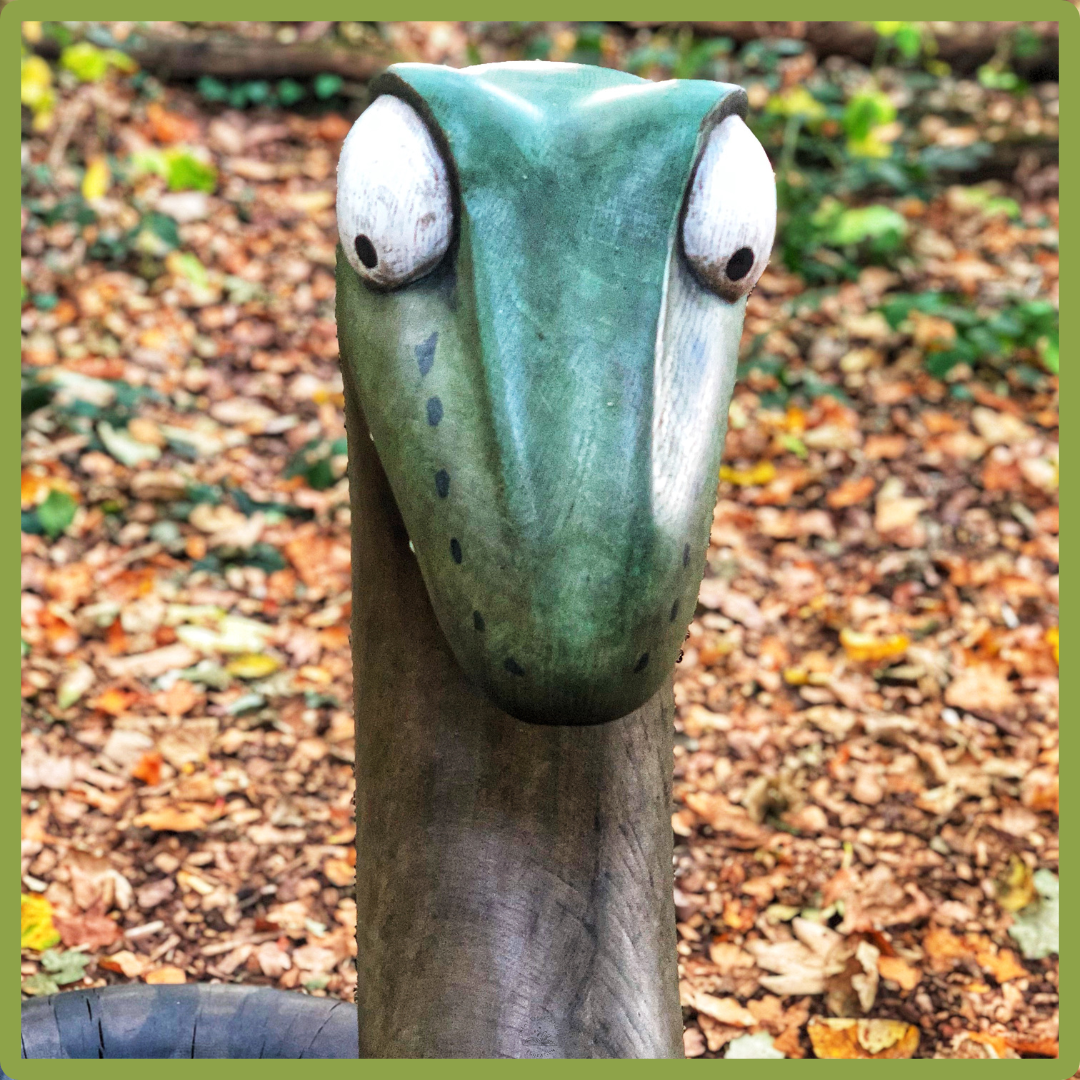
The accompanying photograph of a snake, taken at Westonbirt Arboretum, provides a real-world visual anchor to reinforce the idea of winding shape and movement.
• A clear visual explanation of how Schlange developed and what it means in modern German
• Explicit clarification of the core meaning and how it extends to related uses
• Simple black-and-white illustrations designed to anchor meaning and reduce verbal explanation
• Support for understanding semantic development without requiring memorisation of history
Best used in short sessions (5–10 minutes), revisited over time. Start with what Schlange means today, then use the panels to support discussion and understanding. Panels do not need to be used all at once or in strict order. An adult guides use and decides when to stop.
This resource supports classroom learning, tutoring, and home education, but does not replace teaching or practice.
• Dyslexic learners studying German
• KS3–KS4 pupils who struggle with vocabulary retention
• Parents, tutors, and intervention teachers
• Learners who benefit from explicit, structured language explanation
© Great Expectations Education
For personal use in home education and tutoring only.
View a free sample of this approach:
Salut (French) – Structured Vocabulary Support (Free Sample)
A structured vocabulary resource designed to support learners who find German vocabulary harder to retain when words are taught as isolated items to memorise. This resource focuses on the high-frequency German word Schlange, explaining what it means in modern German and how its meaning developed over time.
Rather than relying on simple translation, the resource shows how Schlange is connected to earlier ideas of winding, looping, and curving. Earlier forms included in the resource are linguistic reconstructions used by scholars to model how the word is thought to have developed. They are not recorded quotations and are included only where they help make the modern meaning clearer and more logical.
Where helpful, links are made to familiar patterns in English, such as words connected to looping, coiling, or bending. This allows learners to anchor the German word in existing knowledge and supports cross-linguistic transfer, rather than treating vocabulary as arbitrary.
Each panel draws attention to one clear idea at a time, such as shape or movement, without requiring learners to memorise historical detail. Learners are not expected to remember dates, language stages, or technical terminology. Panels can be explored in order or revisited independently over time, reducing working-memory load and supporting flexible use in short sessions.
The resource is designed with dyslexic and neurodivergent learners in mind, particularly those who benefit from explicit structure, reduced verbal load, and visual anchoring. It supports recognition, confidence, and longer-term vocabulary retention when learners encounter Schlange again in lessons or reading.
The accompanying photograph of a snake, taken at Westonbirt Arboretum, provides a real-world visual anchor to reinforce the idea of winding shape and movement.
• A clear visual explanation of how Schlange developed and what it means in modern German
• Explicit clarification of the core meaning and how it extends to related uses
• Simple black-and-white illustrations designed to anchor meaning and reduce verbal explanation
• Support for understanding semantic development without requiring memorisation of history
Best used in short sessions (5–10 minutes), revisited over time. Start with what Schlange means today, then use the panels to support discussion and understanding. Panels do not need to be used all at once or in strict order. An adult guides use and decides when to stop.
This resource supports classroom learning, tutoring, and home education, but does not replace teaching or practice.
• Dyslexic learners studying German
• KS3–KS4 pupils who struggle with vocabulary retention
• Parents, tutors, and intervention teachers
• Learners who benefit from explicit, structured language explanation
© Great Expectations Education
For personal use in home education and tutoring only.