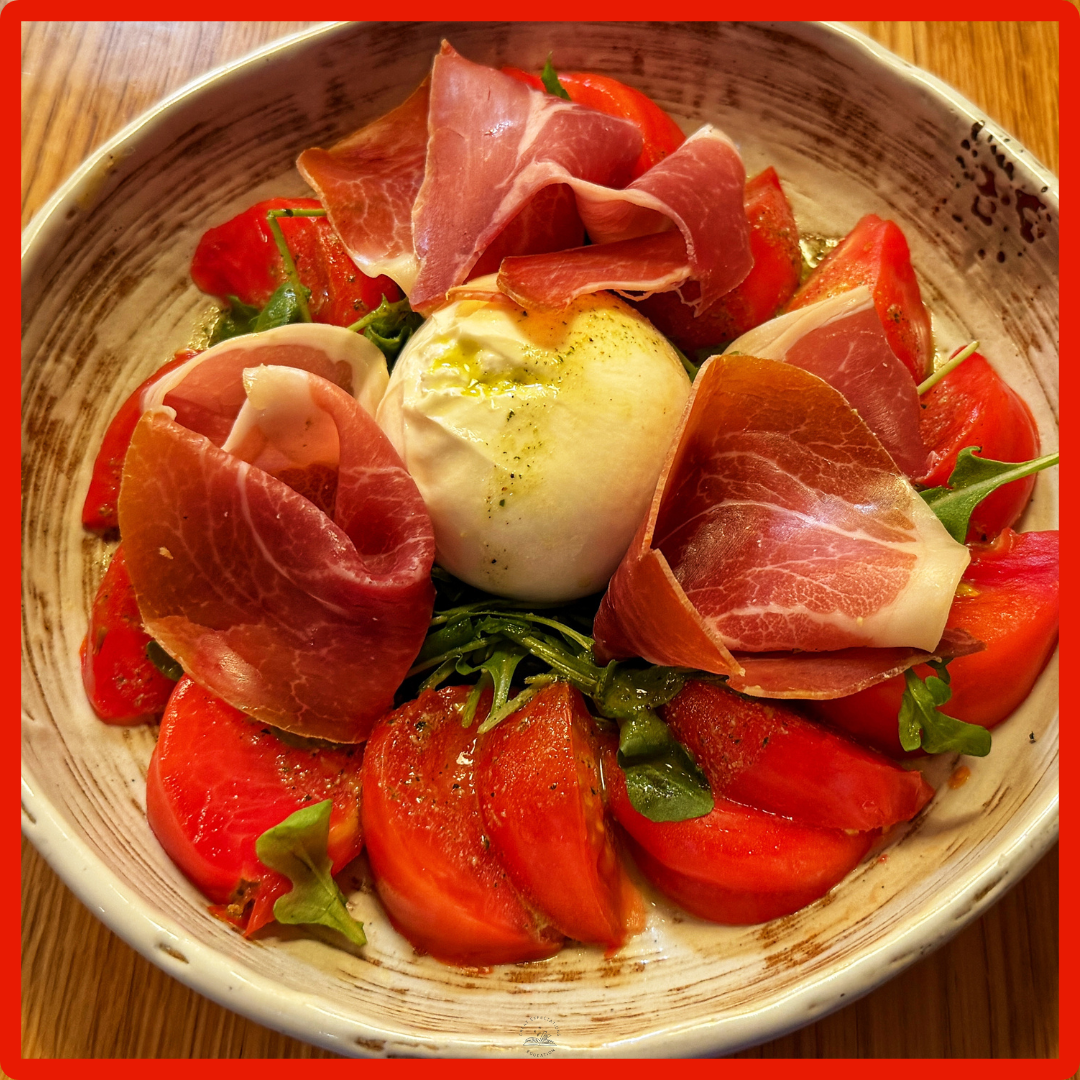
Tomatoes, burrata and ham, put down in front of you before the main course. In France that plate is the ‘entrée’ - the way in to the meal.
Where the word comes from
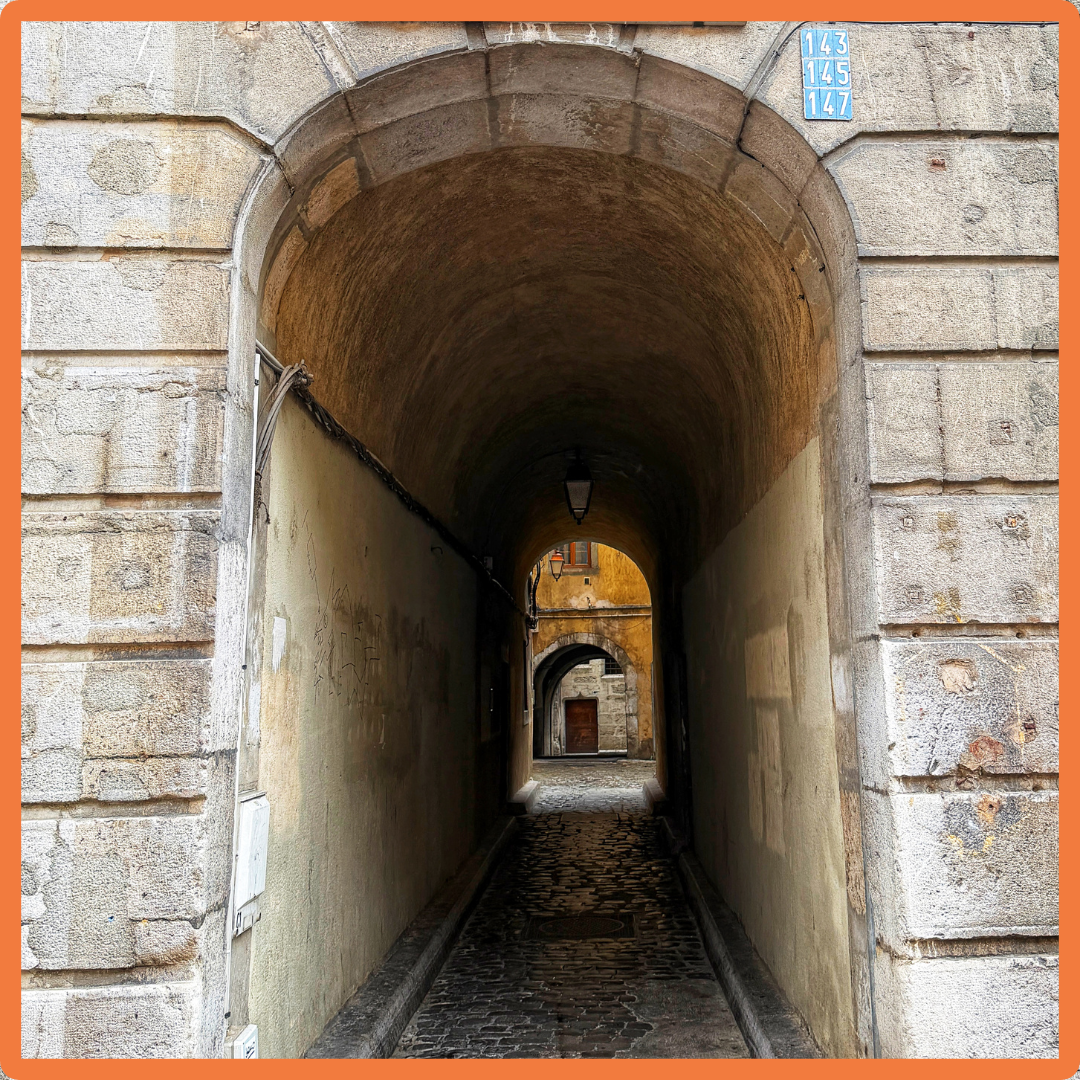
‘Entrée’ started as part of the verb. It is the feminine past participle of ‘entrer’, the bit you would use in ‘has entered’, and French turned it into a noun in the 1100s. From there it took on jobs. It is the act of entering. It is the way in, and ‘l’entrée de l’immeuble’ is the front of a block of flats. It is the little hall inside a French flat where the coats go. It is a ticket - the Académie was recording ‘entrées gratuites’ and ‘entrées payantes’ in 1935. It is an entrance on stage, in ballet, in the circus and in music. And it is the first course, which it has been since about 1536, when the opening stage of a meal was called the ‘entrée de table’.
What’s included
• The etymology comic - illustrated stage cards covering the Latin origin and then each living sense in turn: the way in, the ticket, the hallway, the first course.
• The word-history breakdown, from Proto-Indo-European through Latin ‘intrare’ and Old French to the modern noun, dated where the record allows.
• The senses card listing the full range the Académie records, including the ones a learner will not meet for years.
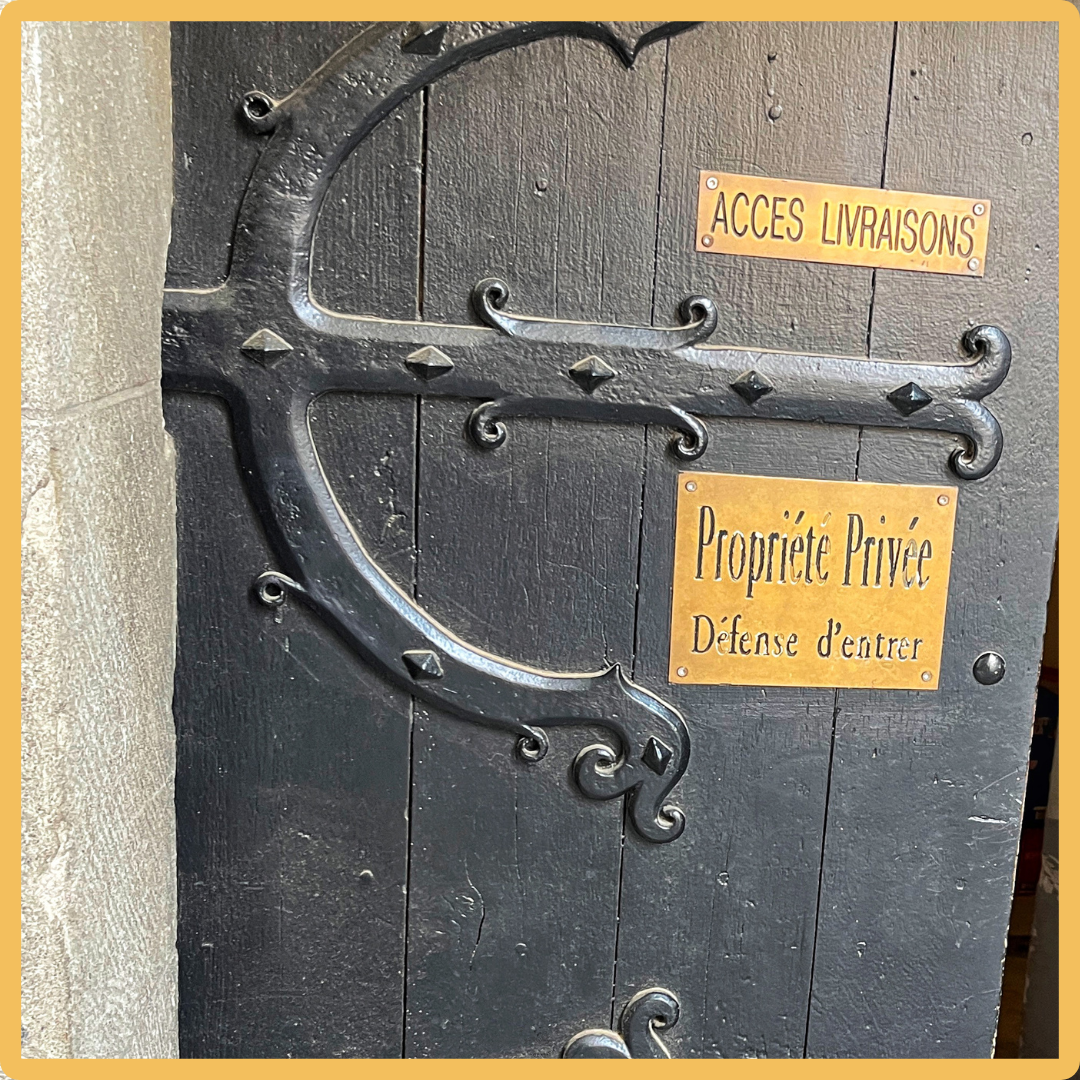
• Two phrase cards: ‘entrée libre’ (come in for nothing) and ‘entrée interdite’ (do not come in at all), plus ‘avoir ses entrées chez quelqu’un’, which once meant the right to enter the King’s bedchamber.
• The sources page and the how-to-use guide for the adult.
• Pronunciation respellings on every French and Latin form.
For personal use in home education and tutoring only.
Who it’s for
• KS3 and KS4 French learners, particularly around food, eating out and the town.
• Learners who have met ‘entrée’ on a menu in English and assume it means the same thing.
• Home-educated children building French vocabulary in topics rather than lists.
• Dyslexic learners, and anyone who holds a word better when it comes with a picture and a reason.
• Parents working through it alongside a child.
• Adults who read menus in France and would like to know what they are reading.
It won’t suit a learner who is still working out that French nouns carry a gender. The cards use ‘l’entrée’ and ‘une entrée’ without stopping to explain the article, so if ‘le’ and ‘la’ are still new, this will add a layer rather than take one away.
Why this exists
This is a word with five jobs and a learner usually meets three of them in different lessons months apart, as though they were unrelated. A hallway, a ticket and a starter have nothing obvious in common. Put the root back under them and they line up: all three are a way in. That is one idea to hold instead of three, and it is the kind of thing a child remembers a week later because it made sense rather than because they practised it.
A footnote on the English borrowing
English borrowed this word twice. The early borrowing turned into ‘entry’ and stopped looking French. The later one - 1653 by one dictionary’s reckoning, 1724 by two others - kept its accent and its spelling, and that is the ‘entrée’ on an English menu.
How it prints
The large cards print one to a page and are meant to be laminated, trimmed, punched and clipped onto a ring. With this word there is a specific thing to do: lay the sense cards out on the table, and a child can see four apparently unrelated meanings arranged round one idea. That is much harder to do down a list.
The single sheet at the end carries the whole word on one page, ready to print with nothing else to do to it. A printer for either; a laminator and one binder ring if you want the deck, which you assemble yourself.
Related resources
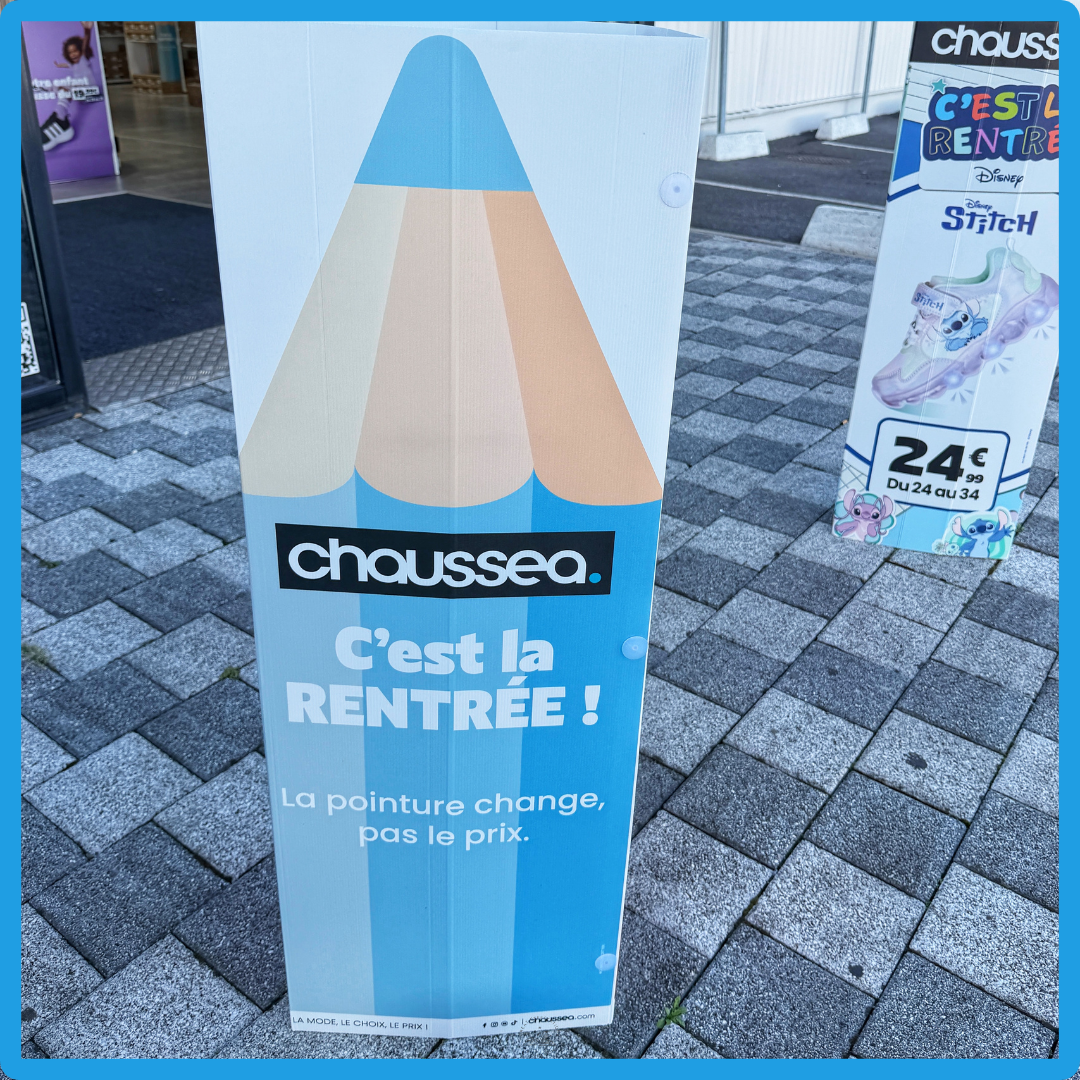
Same corner of the shop, same everyday territory: ‘entrer’ and ‘entrez’ for the verb and the command it is built from, and then ‘rentrer’, ‘rentré’, ‘rentrée’ and ‘prérentrée’ for what happens when French puts ‘r-’ on the front and makes it about going back.
The closest pairing is ‘rentrée’. The two words are made the same way - a past participle pressed into service as a noun - a century apart, and reading them together is the clearest demonstration in the shop of how French builds nouns out of verbs.
The free Wordhord card on ‘la rentrée’ covers the English side of the family.
Available now as a PDF download.
Tomatoes, burrata and ham, put down in front of you before the main course. In France that plate is the ‘entrée’ - the way in to the meal.
Where the word comes from
‘Entrée’ started as part of the verb. It is the feminine past participle of ‘entrer’, the bit you would use in ‘has entered’, and French turned it into a noun in the 1100s. From there it took on jobs. It is the act of entering. It is the way in, and ‘l’entrée de l’immeuble’ is the front of a block of flats. It is the little hall inside a French flat where the coats go. It is a ticket - the Académie was recording ‘entrées gratuites’ and ‘entrées payantes’ in 1935. It is an entrance on stage, in ballet, in the circus and in music. And it is the first course, which it has been since about 1536, when the opening stage of a meal was called the ‘entrée de table’.
What’s included
• The etymology comic - illustrated stage cards covering the Latin origin and then each living sense in turn: the way in, the ticket, the hallway, the first course.
• The word-history breakdown, from Proto-Indo-European through Latin ‘intrare’ and Old French to the modern noun, dated where the record allows.
• The senses card listing the full range the Académie records, including the ones a learner will not meet for years.
• Two phrase cards: ‘entrée libre’ (come in for nothing) and ‘entrée interdite’ (do not come in at all), plus ‘avoir ses entrées chez quelqu’un’, which once meant the right to enter the King’s bedchamber.
• The sources page and the how-to-use guide for the adult.
• Pronunciation respellings on every French and Latin form.
For personal use in home education and tutoring only.
Who it’s for
• KS3 and KS4 French learners, particularly around food, eating out and the town.
• Learners who have met ‘entrée’ on a menu in English and assume it means the same thing.
• Home-educated children building French vocabulary in topics rather than lists.
• Dyslexic learners, and anyone who holds a word better when it comes with a picture and a reason.
• Parents working through it alongside a child.
• Adults who read menus in France and would like to know what they are reading.
It won’t suit a learner who is still working out that French nouns carry a gender. The cards use ‘l’entrée’ and ‘une entrée’ without stopping to explain the article, so if ‘le’ and ‘la’ are still new, this will add a layer rather than take one away.
Why this exists
This is a word with five jobs and a learner usually meets three of them in different lessons months apart, as though they were unrelated. A hallway, a ticket and a starter have nothing obvious in common. Put the root back under them and they line up: all three are a way in. That is one idea to hold instead of three, and it is the kind of thing a child remembers a week later because it made sense rather than because they practised it.
A footnote on the English borrowing
English borrowed this word twice. The early borrowing turned into ‘entry’ and stopped looking French. The later one - 1653 by one dictionary’s reckoning, 1724 by two others - kept its accent and its spelling, and that is the ‘entrée’ on an English menu.
How it prints
The large cards print one to a page and are meant to be laminated, trimmed, punched and clipped onto a ring. With this word there is a specific thing to do: lay the sense cards out on the table, and a child can see four apparently unrelated meanings arranged round one idea. That is much harder to do down a list.
The single sheet at the end carries the whole word on one page, ready to print with nothing else to do to it. A printer for either; a laminator and one binder ring if you want the deck, which you assemble yourself.
Related resources
Same corner of the shop, same everyday territory: ‘entrer’ and ‘entrez’ for the verb and the command it is built from, and then ‘rentrer’, ‘rentré’, ‘rentrée’ and ‘prérentrée’ for what happens when French puts ‘r-’ on the front and makes it about going back.
The closest pairing is ‘rentrée’. The two words are made the same way - a past participle pressed into service as a noun - a century apart, and reading them together is the clearest demonstration in the shop of how French builds nouns out of verbs.
The free Wordhord card on ‘la rentrée’ covers the English side of the family.
Available now as a PDF download.