

Shop
Filters
Filters
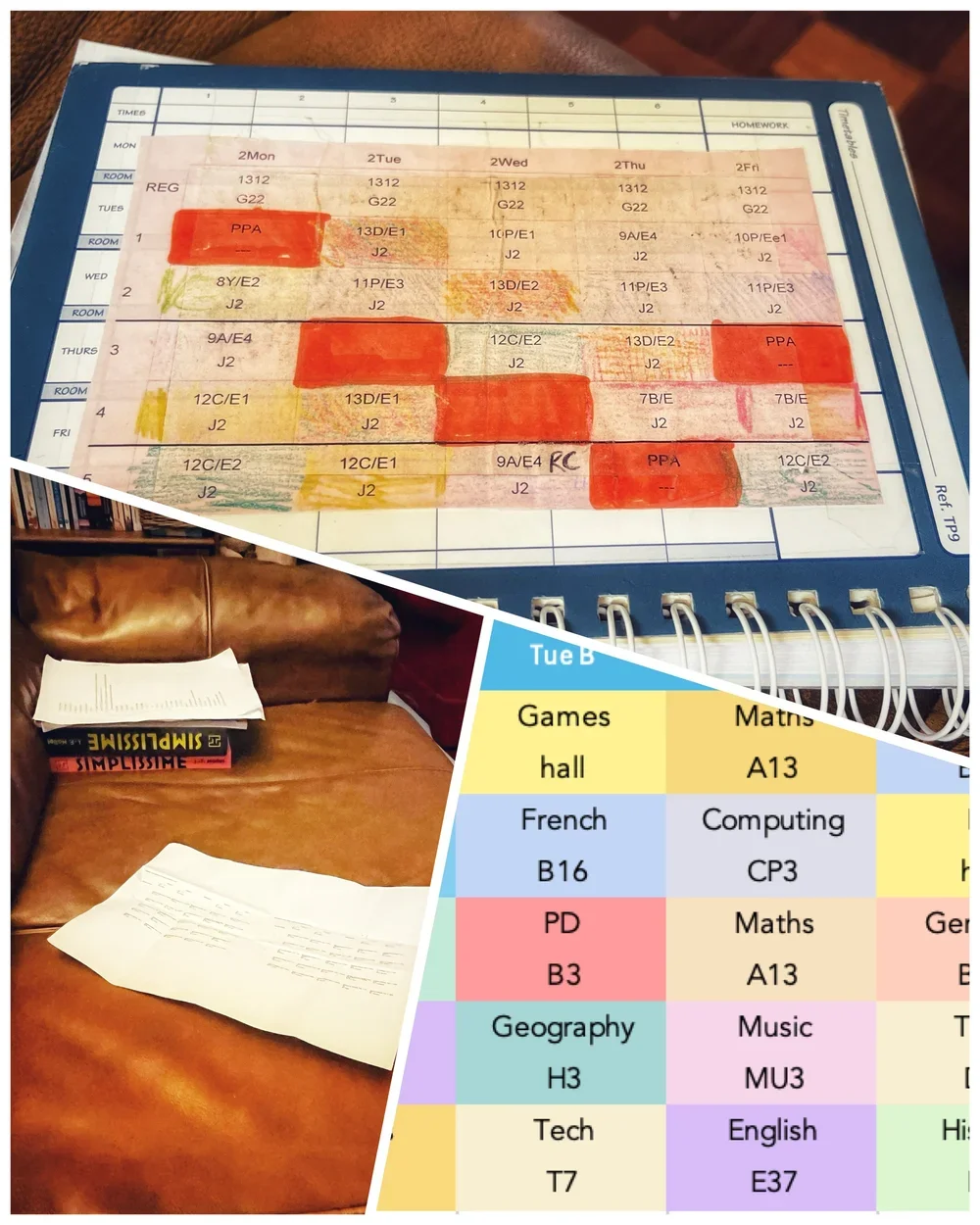
My son's Year 7 timetable came home in a print size we had to enlarge on a laptop before either of us could read it. Both weeks were squeezed into one small block, with most of the page left blank around it.
He was then asked to copy it into his planner by hand. His handwriting is already hard to read, so what he ended up with was a timetable he couldn't use on a Monday morning. It reminded me of my own teaching days in a secondary school, where the timetables we handed out weren't pretty - mine had my wobbly colouring-in all over it - but they used the whole sheet of A4, and a child could read one at arm's length. So I rebuilt his in Excel over a weekend, and made a blank version any family can fill in.
What's included
One Excel file (.xlsx) with two sheets.
• The full-page version. Week A and Week B side by side, five periods a day, with a second line under each subject for the room number. Day headings and period labels are set at 22pt and the subject entries at 12pt.
• A mini version. The same two weeks stacked one above the other in a compact grid, for printing small.
• A subject key alongside the full-page grid: fifteen colour-filled rows, with space next to each for the teacher's name.
• One entry filled in as an example - 'English', with the room 'E37' on the line below. Everything else is blank.
• The colours are ordinary cell fills, so you can change any of them, and add or remove subjects.
Both sheets are set up for A4 portrait.
For personal and family use only.
Who it's for
I made it for a Year 7 with a two-week timetable, but it suits any year group:
• families whose child has come home with a timetable too small to read
• children who have been asked to copy a timetable into a planner by hand
• dyslexic learners, and anyone who finds a dense grid hard to hold in mind
• anyone who wants the week somewhere the whole household can see it - a fridge, a planner, a bag
• home educators keeping a repeating two-week pattern written down
• students who would rather have their own version than the school's
It won't suit every school. The grid is fixed at five periods a day across five days, on a two-week A and B pattern - if your school runs six periods, or a three-week rotation, you'll be adding rows and columns in Excel yourself. You'll also need Excel, or another program that opens .xlsx files. This isn't a PDF, because the whole point of it is that you type into it.
Why this exists
I first made this for my dyslexic son. The school's version wasn't badly made. It was printed at a size that assumed the reader has no trouble with small dense print, and then given to a child who does. Copying it out by hand made it worse rather than better, because the copy was in his own handwriting.
The template doesn't do anything complicated. A bigger grid, one colour per subject, and room for the teacher's name. The difference is whether a child can check for himself what's next, without having to ask.
Ways to use it
• Glue a printed copy straight into a planner.
• Print a smaller laminated version, hole-punch it, and keep it on a key ring.
• Use the extra space to record teacher names in a matching colour-coded list.
Available now as a free download.

'Lieb' is one of the first German words a learner meets and one of the last they finish understanding. It is dear, kind, good - and in 'Es ist mir lieb' it means something closer to 'that suits me', which no beginner sees coming.
Where the word comes from
'Lieb' goes back through Middle High German 'liep' and Old High German 'liob', around the year 800, to an Indo-European root associated with caring for, desiring and loving. The range was already wide at the start: dear, pleasant, welcome, beloved. English kept the same word as 'lief', now rare, and the root also gives 'love'.
The company it keeps in German is the surprise. 'Glauben' to believe, 'loben' to praise and 'erlauben' to allow are all distant relatives on that root, later branch developments rather than the old core sense - and through 'erlauben' comes 'Urlaub', a holiday.
What's included
· The etymology comic - illustrated stage cards, one idea to a page, with short learner captions and pronunciation respellings on every German form
· The word-history breakdown, Indo-European to modern German, with a date at each stage the record allows
· A grammar page on adjective endings, with 'ein liebes Kind' against 'das Kind ist lieb'
· The sources page
· A short how-to-use guide for the adult
For personal use in home education and tutoring only.
Who it's for
The word turns up from the first term of German onward, so the range is wide:
· Anyone who enjoys word origins
· KS3 and KS4 German learners
· Home-educated children working through German
· Learners with dyslexia or weak working memory
· Parents keeping half a step ahead of a child
· Adults returning to German after school
It is not a first-lesson resource. It assumes the learner can already read a short German sentence aloud and knows what an adjective is, even if they could not define one.
Why this exists
Learners are told 'lieb' means 'dear' and then meet it meaning 'good' about a child and 'welcome' in a fixed phrase, and conclude the word is slippery. It is not. The senses hang together once the old meaning is visible, and seeing them laid out in order is what stops the word feeling like three words wearing one coat.
How it prints
The pages print two ways. Printed single-sided and laminated, they trim into large cards - one idea each - that punch and clip onto a binder ring, so the stages can be laid out on a table and put back in order. The last page holds the whole word on one sheet: print it and it is ready, no laminating. You will need a printer, and a laminator and a ring for the deck.
One more thing
The false friend to know: 'der Leib' means the body, and has nothing to do with 'lieb'. Duden takes it back to Middle High German 'līp', related to 'leben', to live.
I first made these for my dyslexic son before a test.
Available now as a PDF download.
Many learners meet 'mögen' as a row in a table. It goes in for the vocabulary test and it is gone by the following term.
'Mögen' has not meant 'to like' for most of its life. It meant something quite different for around nine hundred years, and the modern sense arrived by a route nobody would predict. The deck walks that change one stage at a time.
What's included
The single sheet: the whole word on one page, ready to print.
The etymology comic: nine illustrated cards, one idea to a page, each with a short learner caption. Two are conjugation panels, at KS3 and KS4. There is a panel on 'mochte' and 'möchte' - a single umlaut, two entirely different meanings, and the mistake almost every learner makes. A cognate map puts the same verb beside its English, Dutch and Swedish relatives. And one card is the near-miss: 'machen' looks like it belongs to this family and does not.
Then the word-history breakdown from Indo-European to modern German, the English-links section, a sources page, and a short how-to-use guide for the adult.
How it prints
Two ways, both the same content.
The quick way: print the single sheet at the end. The whole word is on one page and it needs nothing doing to it. This is the one I use most.
The other way: print single-sided, laminate and trim the large cards and put them on a binder ring. Same material, more preparation, and worth it if you would rather have one idea in front of the child at a time than a whole sheet at once. The cards are numbered so a loose deck goes back together. You will need a laminator and a ring, and you assemble it yourself; there is no ready-made deck.
For personal use in home education and tutoring only.
Who it's for
Parents helping a child revise German; German learners at KS3 and KS4; home-educated children; anyone who likes word histories; dyslexic learners and those with weak working memory; adults picking German back up.
It is not for a learner who has not yet met the German present tense. The conjugation panels assume the learner can already read 'ich', 'du' and 'er', and knows that German verbs change their endings, even if they have not learned this one.
Why this exists
Modal verbs are taught as a table to memorise, and a memorised table is the first thing to go.
'Mögen' has a history attached, and knowing it gives a learner something to hang the word on besides repetition. When 'ich mag' comes round again there is something behind it.
I first made these for my dyslexic son.
Available now as a PDF download.
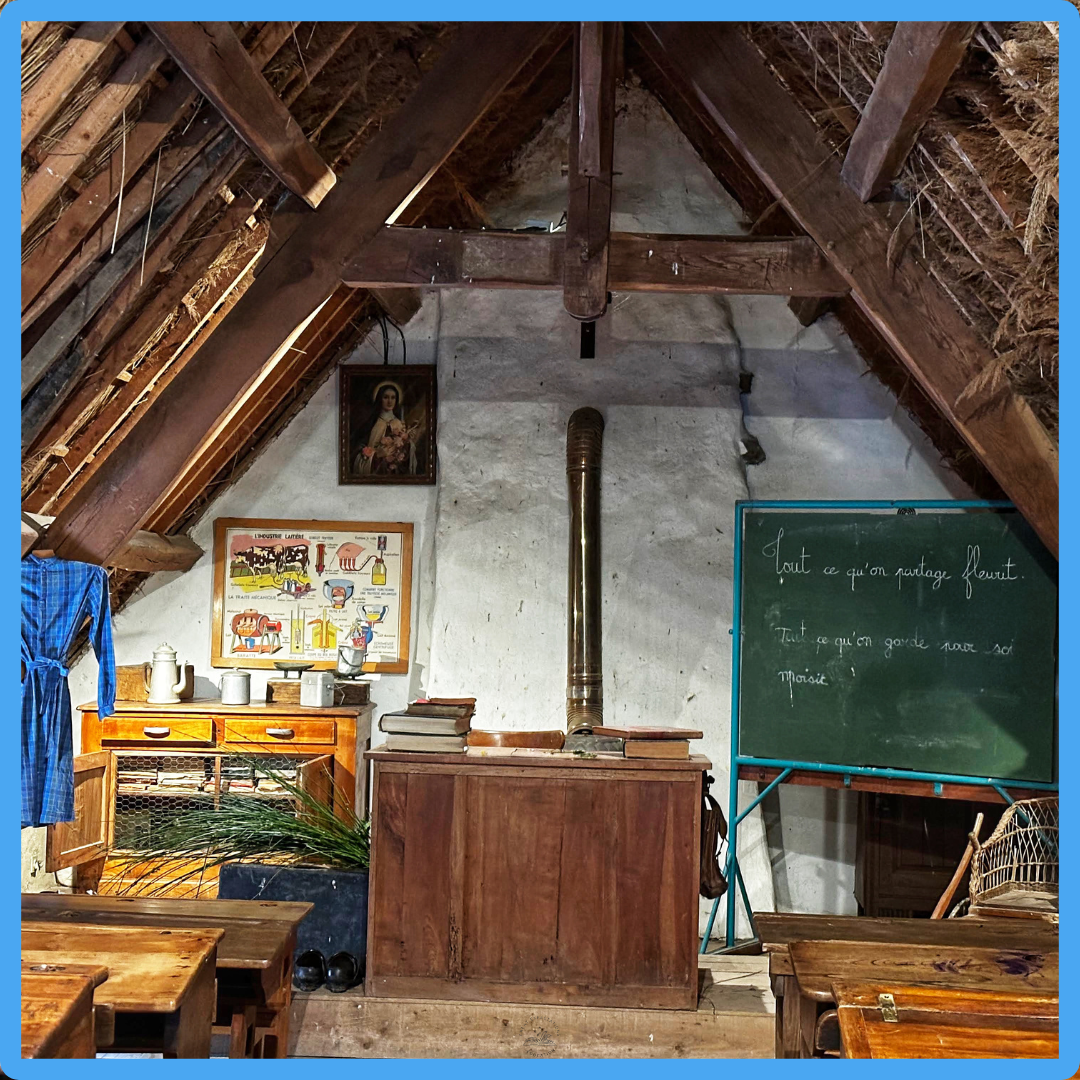
An empty French classroom with the chairs still upside down on the desks and the board wiped clean. A day before the children come back, the teachers go in. That day has its own word.
Where the word comes from
Three bits stuck together, and it is one of the tidiest word sums in French. ‘Entrer’ is to go in, from Latin ‘intrare’. Put ‘r-’ on the front, around 1140, and you get ‘rentrer’, to go in again. Change the ending and you get ‘la rentrée’, the going back, recorded from the 1200s. Put ‘pré-’ on the front of that, meaning before, and you have ‘la prérentrée’ - the going-back-again that happens before the going-back-again. In 2026 it fell on Monday 31 August, with the children returning on Tuesday 1 September.
What’s included
• The etymology comic - large illustrated cards, one idea to a card, from Latin ‘intra’ through to teachers putting the chairs down in an empty room.
• The word-history breakdown, Proto-Indo-European to modern French, dated at each stage the record allows.
• Pronunciation respellings on every French and Latin form.
For personal use in home education and tutoring only.
Who it’s for
• KS3 and KS4 French learners meeting prefixes as a way of building words rather than a list to learn.
• Learners who already have ‘rentrée’ and are ready to see what French does next with it.
• Home educators who like a word that shows its own construction.
• Dyslexic learners working on morphology, where a long word made of three known pieces is a good deal easier than a long word made of nothing.
• Parents and adults who want to know what French teachers do in the last week of August.
• Anyone teaching prefixes in English who wants a clean parallel from another language.
The learner needs ‘rentrer’ first, or at least ‘rentrée’. The whole product turns on seeing one word inside another, so if the middle piece is missing the word is just five syllables. Buy it last of the seven.
Why this exists
This is the clearest morphology lesson in the French shop and it happens to be about something real. A learner can watch a word being assembled in front of them - go in, go in again, the going-in-again, the one before the going-in-again - and every stage is a word French actually uses. That is what morphology teaching is meant to look like, and few words come apart this cleanly.
How it prints
The large cards print one to a page, single-sided, and go onto a ring after laminating, trimming and punching. For this word the deck has a specific use: deal out the four stage cards in the wrong order and ask a child to rebuild the word.
The single sheet at the end holds the whole thing on one page, print-and-go, no laminating. Printer needed for both; laminator and one binder ring if you want the deck.
Related resources
The rest of the school-year group in L’atelier des mots: ‘rentrée’ first of all, then ‘rentrer’, ‘rentré’, and back before the prefix, ‘entrer’, ‘entrez’ and ‘entrée’.
Bought with ‘rentrée’ this makes a two-deck set on the French school year - the teachers’ day and the children’s day, in that order. All seven decks together run one Latin verb from ‘intra’ to a French classroom in September. No other word family in the shop runs that far.
The free Wordhord card on ‘la rentrée’ mentions the prérentrée and gives the English-language background.
Available now as a PDF download.
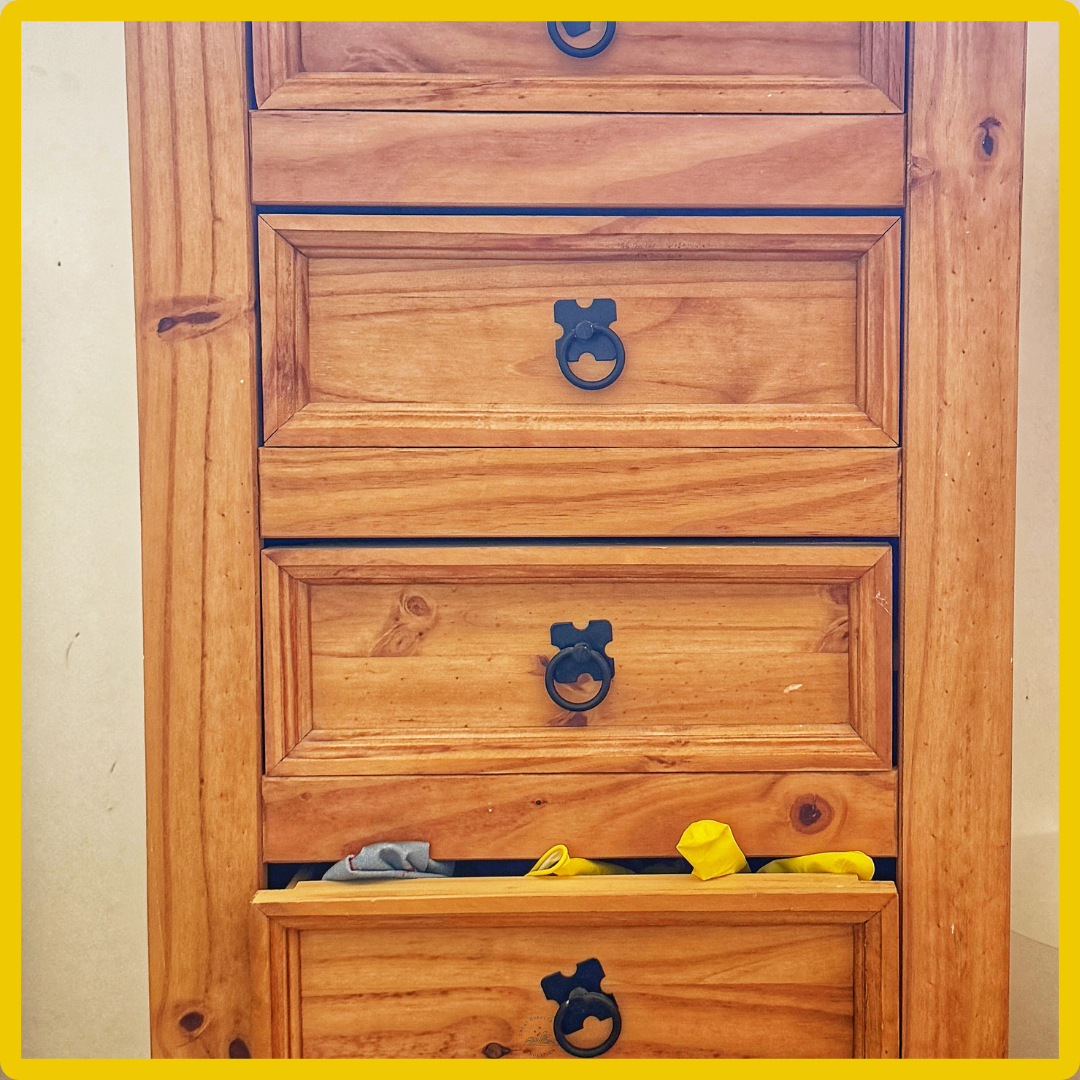
A chest of drawers with one drawer not quite shut, a corner of yellow cloth still showing where something has been pushed back in and hasn’t gone all the way. ‘Rentré’ is that word - what has been put back inside and kept there.
Where the word comes from
It is the past participle of ‘rentrer’, working as a describing word, and French has had it in that job since the 1600s. That is a gap of four hundred years: the same participle had already become a noun, ‘rentrée’, back in the 1200s. Four hundred years between one use and the other, from the same form. Behind both is ‘entrer’, from Latin ‘intrare’, to go into, with ‘r-’ stuck on the front around 1140 to mean going in again.
What’s included
• The etymology comic - large illustrated cards, one idea to a card, from Latin ‘intra’ through to the two living senses.
• The word-history breakdown, Proto-Indo-European to modern French, with the noun and the adjective dated separately.
• The two sense cards: ‘des joues rentrées’, sunken cheeks, cheeks gone inwards; and ‘une colère rentrée’, anger pushed back inside and not shown.
• The card that ties the two together: something that could have come out was pushed back in and kept there.
• An accent card - ‘rentré’, ‘rentrée’ and ‘rentrer’ all end on the same sound, and ‘rentre’ doesn’t.
• The sources page and the how-to-use guide for the adult.
• Pronunciation respellings on every French and Latin form.
For personal use in home education and tutoring only.
Who it’s for
• KS4 French learners, and KS3 learners who are ahead of the group.
• Anyone who has met past participles as verb endings and not yet as adjectives.
• Home-educated learners going deeper into a word family than a textbook would.
• Dyslexic learners who keep losing the accent on ‘rentré’ because it makes no difference to the sound.
• Readers of French fiction, where ‘une colère rentrée’ turns up and a dictionary is no help at all.
• Adults and parents working through the family together.
This is the hardest of the seven, and not a starting point. It assumes the reader already knows what a past participle is and has met ‘rentrer’. A learner who hasn’t will get a lot of grammar vocabulary and not much French. Start with ‘rentrer’ and come back to this one.
Why this exists
A past participle used as an adjective is a real hurdle and it usually gets taught as a rule with no picture attached. Here it has two pictures. Sunken cheeks and bottled-up anger are not obviously the same thing, and a learner who works out that they are - that both are something pushed back in and held - has understood the participle, not just memorised it. The bodily sense and the emotional sense running off one word also makes a child stop and think.
How it prints
The large cards print one to a page, single-sided, ready to laminate, trim, punch and clip onto a ring. Numbered so they go back in order. With this word the pair of sense cards is what you want in your hand - the cheeks and the anger, held up together.
The single sheet holds the whole word on one page and needs nothing but a printer. A laminator and a binder ring if you want the deck; you assemble it yourself.
Related resources
The same group in L’atelier des mots covers going in, coming back and going back to school: ‘entrer’, ‘entrez’, ‘entrée’, ‘rentrer’, ‘rentrée’ and ‘prérentrée’.
‘Rentrée’ is the obvious companion and it makes a good lesson: the same participle, one turned into a noun in the 1200s and one into an adjective in the 1600s.
The free Wordhord card on ‘la rentrée’ gives the English reader the wider family.
Available now as a PDF download.
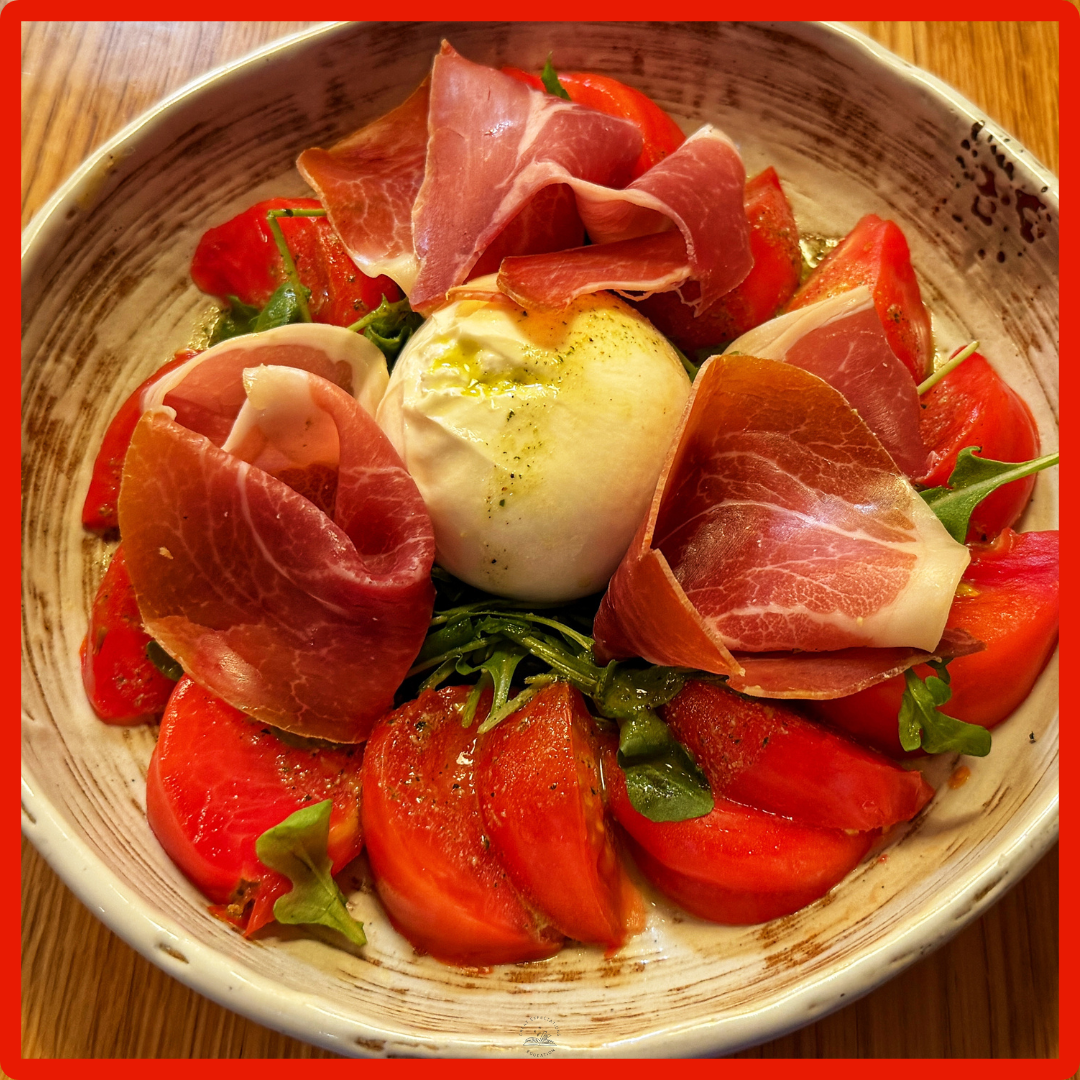
Tomatoes, burrata and ham, put down in front of you before the main course. In France that plate is the ‘entrée’ - the way in to the meal.
Where the word comes from
‘Entrée’ started as part of the verb. It is the feminine past participle of ‘entrer’, the bit you would use in ‘has entered’, and French turned it into a noun in the 1100s. From there it took on jobs. It is the act of entering. It is the way in, and ‘l’entrée de l’immeuble’ is the front of a block of flats. It is the little hall inside a French flat where the coats go. It is a ticket - the Académie was recording ‘entrées gratuites’ and ‘entrées payantes’ in 1935. It is an entrance on stage, in ballet, in the circus and in music. And it is the first course, which it has been since about 1536, when the opening stage of a meal was called the ‘entrée de table’.
What’s included
• The etymology comic - illustrated stage cards covering the Latin origin and then each living sense in turn: the way in, the ticket, the hallway, the first course.
• The word-history breakdown, from Proto-Indo-European through Latin ‘intrare’ and Old French to the modern noun, dated where the record allows.
• The senses card listing the full range the Académie records, including the ones a learner will not meet for years.
• Two phrase cards: ‘entrée libre’ (come in for nothing) and ‘entrée interdite’ (do not come in at all), plus ‘avoir ses entrées chez quelqu’un’, which once meant the right to enter the King’s bedchamber.
• The sources page and the how-to-use guide for the adult.
• Pronunciation respellings on every French and Latin form.
For personal use in home education and tutoring only.
Who it’s for
• KS3 and KS4 French learners, particularly around food, eating out and the town.
• Learners who have met ‘entrée’ on a menu in English and assume it means the same thing.
• Home-educated children building French vocabulary in topics rather than lists.
• Dyslexic learners, and anyone who holds a word better when it comes with a picture and a reason.
• Parents working through it alongside a child.
• Adults who read menus in France and would like to know what they are reading.
It won’t suit a learner who is still working out that French nouns carry a gender. The cards use ‘l’entrée’ and ‘une entrée’ without stopping to explain the article, so if ‘le’ and ‘la’ are still new, this will add a layer rather than take one away.
Why this exists
This is a word with five jobs and a learner usually meets three of them in different lessons months apart, as though they were unrelated. A hallway, a ticket and a starter have nothing obvious in common. Put the root back under them and they line up: all three are a way in. That is one idea to hold instead of three, and it is the kind of thing a child remembers a week later because it made sense rather than because they practised it.
A footnote on the English borrowing
English borrowed this word twice. The early borrowing turned into ‘entry’ and stopped looking French. The later one - 1653 by one dictionary’s reckoning, 1724 by two others - kept its accent and its spelling, and that is the ‘entrée’ on an English menu.
How it prints
The large cards print one to a page and are meant to be laminated, trimmed, punched and clipped onto a ring. With this word there is a specific thing to do: lay the sense cards out on the table, and a child can see four apparently unrelated meanings arranged round one idea. That is much harder to do down a list.
The single sheet at the end carries the whole word on one page, ready to print with nothing else to do to it. A printer for either; a laminator and one binder ring if you want the deck, which you assemble yourself.
Related resources
Same corner of the shop, same everyday territory: ‘entrer’ and ‘entrez’ for the verb and the command it is built from, and then ‘rentrer’, ‘rentré’, ‘rentrée’ and ‘prérentrée’ for what happens when French puts ‘r-’ on the front and makes it about going back.
The closest pairing is ‘rentrée’. The two words are made the same way - a past participle pressed into service as a noun - a century apart, and reading them together is the clearest demonstration in the shop of how French builds nouns out of verbs.
The free Wordhord card on ‘la rentrée’ covers the English side of the family.
Available now as a PDF download.
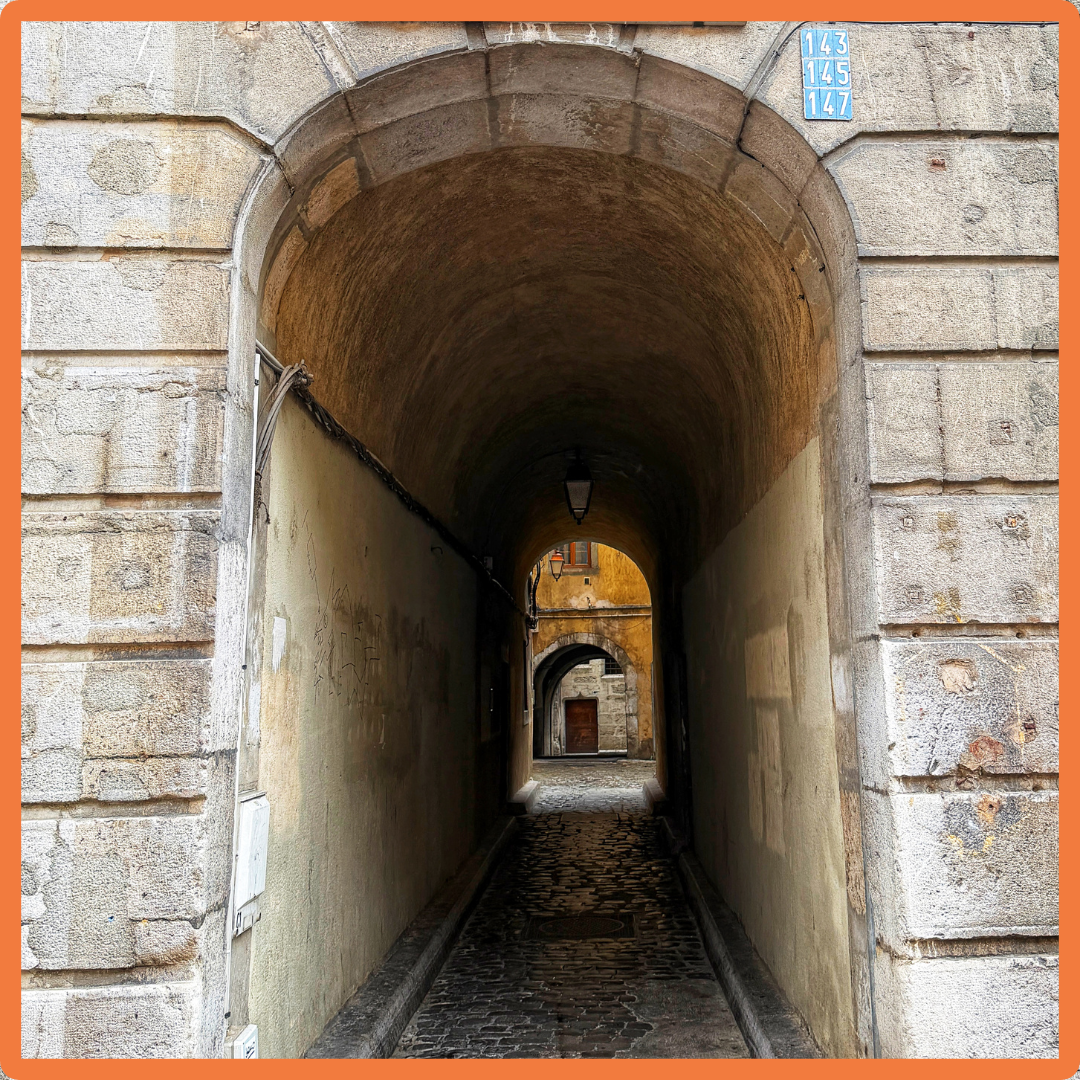
Knock on a French door and the word that comes back through it is ‘Entrez !’. It is a command, and most learners use it long before anyone tells them they are using the imperative.
Where the word comes from
It is the ‘vous’ form of ‘entrer’ with the ‘vous’ taken off. ‘Vous entrez’ is you go in; drop the pronoun and you have the order. To a friend or a child you would say ‘Entre !’ instead. To a stranger, a teacher, or more than one person, it is ‘Entrez !’. Behind both of them is Latin ‘intrare’, to go into, itself built on ‘intra’, meaning inside - a word that was not a verb at all until the Romans made one out of it. French had ‘entrer’ by the 900s.
What’s included
• The etymology comic - nine illustrated stage cards taking the word from Latin ‘intra’ to a knock at a door in a French flat.
• The word-history breakdown, Proto-Indo-European to modern French, dated at each stage the record allows.
• The command card: how the imperative is made, shown rather than explained - ‘vous entrez’ with the pronoun struck out.
• The register card: ‘Entre !’ to a friend or a child, ‘Entrez !’ to a teacher, a stranger, or a group.
• The homophone card: ‘Entrez’, ‘entrer’, ‘entrée’ and ‘entré’ all said the same way, with the accent distinguishing them on the page and the surrounding grammar distinguishing them in speech.
• The sources page and the how-to-use guide for the adult.
• Pronunciation respellings on every French and Latin form.
For personal use in home education and tutoring only.
Who it’s for
• KS3 and KS4 French learners meeting the imperative for the first time.
• Learners who can say ‘Entrez !’ but couldn’t tell you why it ends that way.
• Home educators covering French grammar without a textbook sequence to lean on.
• Dyslexic learners who lose the difference between ‘entrer’, ‘entrez’ and ‘entrée’ because all three sound identical.
• Parents and adults learning alongside a child.
• Anyone who likes the small mechanics of a language.
This one won’t help a learner who hasn’t yet met ‘vous’ and ‘tu’ as two different ways of addressing someone. The register card assumes that distinction is already there, even loosely. Without it, the whole point of the product goes past.
Why this exists
The four-way homophone is a genuine problem, and it is a spelling problem rather than a speaking one. A learner hears one sound and has to choose between four spellings, and the usual advice - learn the endings - asks the working memory to hold four abstract rules at once. This deck does it the other way round. It puts each form in a scene of its own, so the spelling attaches to a situation rather than to a rule.
How it prints
The nine large cards are made to come apart. Print single-sided, laminate, trim, punch the top-left corner and run them onto one binder ring; the numbering means a dropped deck goes back together. With this word in particular, hold up two cards side by side and ask which one you would say to a teacher.
The single sheet at the back puts all nine on one page for the middle of a lesson. No laminating and no cutting for that one. A printer is needed either way, plus a laminator and a ring if you want the deck.
Related resources
If you’re working on doors and going in, the rest of that group in L’atelier des mots is ‘entrer’ (the infinitive this command is made from), ‘entrée’ (the way in, and the first course of a meal) and the four ‘r-’ words: ‘rentrer’, ‘rentré’, ‘rentrée’ and ‘prérentrée’.
‘Entrer’ is the one to pair this with. Two decks, one root, and the homophone card in each pointing at the other.
The free English card on ‘la rentrée’ in the Wordhord comes off the same Latin verb and is worth reading first if you want the wider picture.
Available now as a PDF download.
Where the word comes from
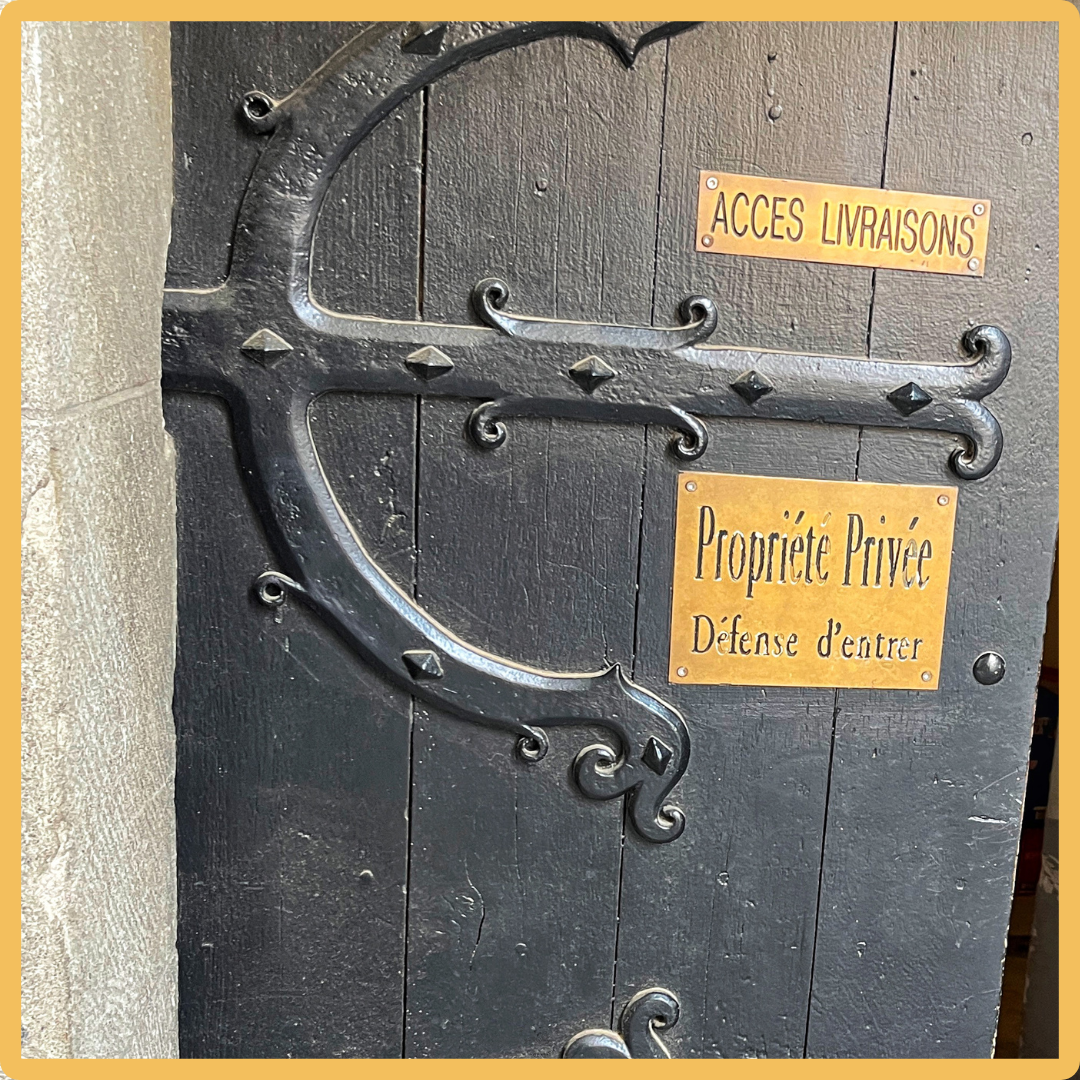
Latin had ‘intra’, meaning ‘within, inside’. It was not a verb. It was the word you used for being inside the walls, and it began life as a case form of an older adjective meaning ‘situated within’. The verb was built on top of it afterwards: ‘intrare’, to go into, to enter. French wore that down. By the 900s speakers were saying ‘entrer’, with an ‘e’ at the front and the Latin ending gone, and that is still the form in use. The same Latin verb travelled south and gave Spanish ‘entrar’ and Italian ‘entrare’. German went a different way entirely and built its own compound, ‘eintreten’.
What’s included
• The etymology comic - eight illustrated stage cards, one idea to a card, with short captions written for a learner rather than a linguist.
• The word-history breakdown, running from Proto-Indo-European through Latin to modern French, with a date at each stage the record allows.
• The English-links card: ‘enter’, ‘entry’, ‘entrance’ and ‘entrée’, all off the same Latin verb.
• The cross-language card, showing Spanish ‘entrar’ and Italian ‘entrare’ alongside the French, and the point where German parts company.
• The sources page, naming every dictionary consulted.
• The how-to-use guide for the adult.
• Pronunciation respellings in plain English letters on every French and Latin form.
For personal use in home education and tutoring only.
Who it’s for
• Anyone who likes knowing where words come from.
• KS3 and KS4 French learners, in school or at home.
• Home-educated children working through French without a class around them.
• Learners with dyslexia or a weak working memory, who find isolated vocabulary hard to hold on to.
• Parents who want to work alongside a child rather than test them.
• Adults picking French back up years after school.
It won’t suit a learner who hasn’t met French verbs yet. The cards assume the reader can already recognise that ‘entrer’ and ‘entrez’ are the same verb in two forms, even if they couldn’t explain the difference. If that isn’t there yet, a noun from the shop is the better place to start.
Why this exists
‘Entrer’ is a word a learner meets in the first fortnight and then stops looking at. It becomes a string of letters and nothing else. Taking it apart puts something underneath it - a Latin word for inside, a verb built on that word, then centuries of French rubbing the ends off. The four English cousins on the last card make the link plain. A child who can see ‘entrance’ inside ‘entrer’ has one word to hold rather than two.
A footnote on the spelling
‘Entrer’, ‘entrez’, ‘entrée’ and ‘entré’ are said exactly the same way. Four spellings, one sound. On the page the accent tells them apart. In speech nothing does, and only the surrounding grammar shows which one you heard.
How it prints
Two forms, and you choose. The eight large cards print single-sided, one idea to a page, ready to laminate, trim and punch so they clip onto a single binder ring. They’re numbered, so a loose deck goes back in order, and once they’re on the ring a child can turn them over and lay the Latin out next to the French. It’s a bag-sized deck, or a dinner-table one - not a pencil case.
The single sheet at the end holds all eight cards on one page. Print it and it’s ready - no laminating, no cutting. That’s the version for the middle of a lesson. You’ll need a printer for either, and a laminator and a ring for the deck; there’s no ready-made deck in the box.
Related resources
The same everyday territory in L’atelier des mots - doors, going in, coming home: ‘entrez’, the command a French speaker shouts through the door; ‘entrée’, the way in and the first course; and the four words built on the ‘r-’ form, ‘rentrer’, ‘rentré’, ‘rentrée’ and ‘prérentrée’.
All six come off this same Latin verb. Most of the shop’s topic sets are held together by subject rather than by root. Bought together they make one deck that runs from ‘intra’ to the first day of the French school year.
Available now as a PDF download.
Where the word comes from
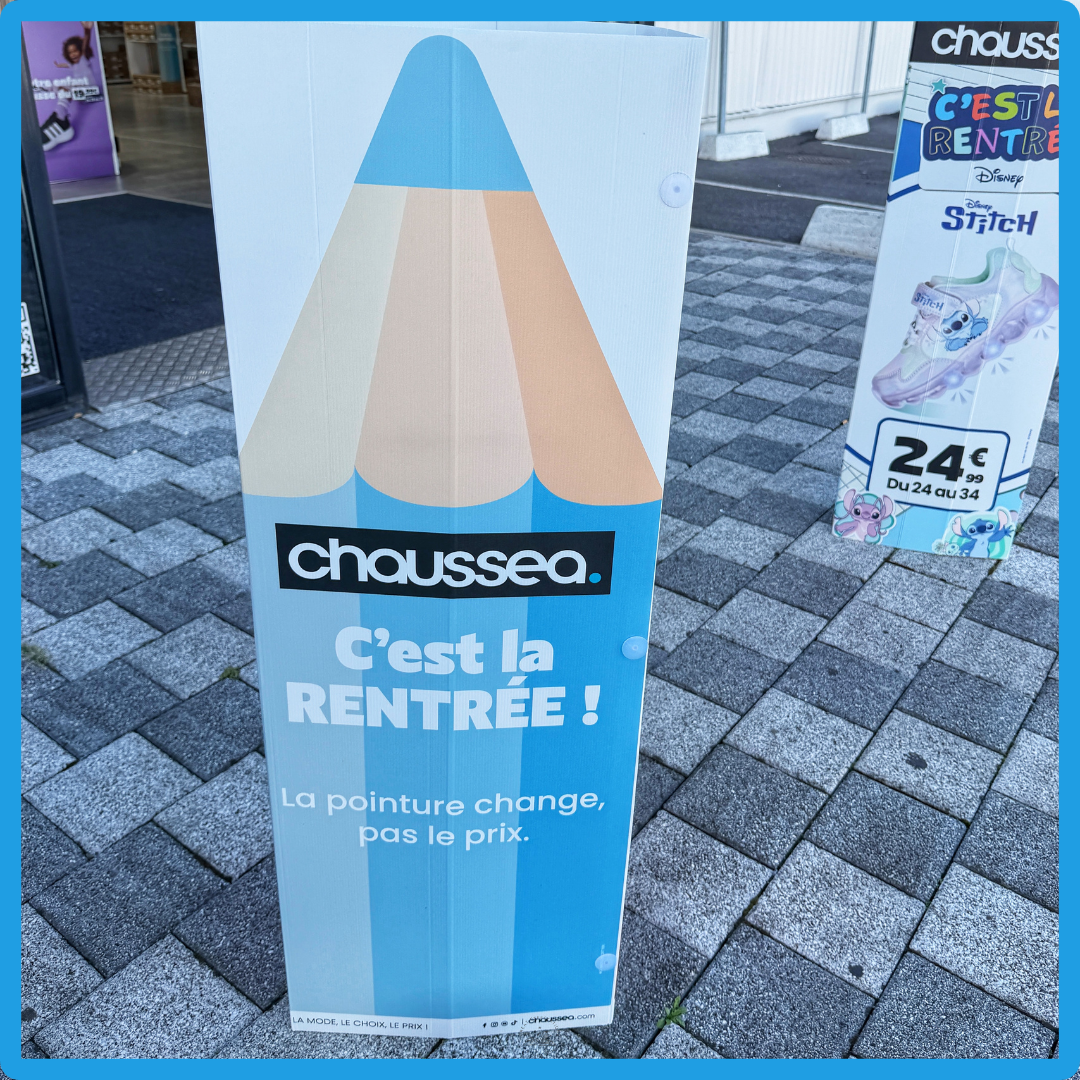
‘Rentrée’ is the feminine past participle of ‘rentrer’ used as a noun, and French has had it since the 1200s - the same move that turned ‘entrer’ into ‘entrée’ a century earlier. Its plain sense is a going-back-in: ‘la rentrée des joueurs’ is the players coming back out after half time. Its second sense is the resumption of activity after a break, and in France almost everything has one. Parliament has a rentrée. The law courts have one. The theatres have one. Publishers hold their new novels back and release them together, and that is ‘la rentrée littéraire’. Used on its own, with nothing after it, ‘la rentrée’ is the whole period: ‘nous verrons cela à la rentrée’ means we’ll deal with that in September.
What’s included
• The etymology comic - large illustrated cards, one idea to a card, from Latin ‘intra’ through to a spacecraft coming back into the atmosphere.
• The word-history breakdown, Proto-Indo-European to modern French, dated at each stage the record allows.
• The senses cards: the plain going-back-in, ‘la rentrée des classes’, the parliamentary and judicial and theatrical rentrées, and ‘la rentrée littéraire’.
• The absolute-use card: ‘à la rentrée’ on its own, meaning in September, when everything starts again.
• The phrase card: ‘la rentrée atmosphérique’, a spacecraft coming back in.
• The sources page and the how-to-use guide for the adult.
• Pronunciation respellings on every French and Latin form.
For personal use in home education and tutoring only.
Who it’s for
• KS3 and KS4 French learners, around school, the calendar and daily life.
• Anyone about to spend late August or September in France and wondering why every shop window says the same thing.
• Home-educating families, who often meet the French school calendar sideways rather than through a textbook.
• Dyslexic learners, and anyone who holds vocabulary better attached to a scene than to a list.
• Parents and adults reading French news, where the word turns up in politics and publishing as much as in schools.
• Learners who like the words a language has and English doesn’t.
It won’t suit a learner who is still at the stage of matching single French words to single English ones. This word doesn’t have a single English match, and the whole product is about that. A learner who needs one-to-one pairs will find it unsettling rather than useful.
Why this exists
French has one noun for a national restart, and English divides the same ground between back to school, the new term, the new academic year, the new season, Parliament returning and getting back to normal. Show a learner that directly and you have the clearest possible demonstration that languages don’t map onto each other word for word. A child who has understood ‘la rentrée’ has understood something about translation as well as about French.
How it prints
The large cards print one to a page and are made to come apart - laminate, trim, punch the corner, one binder ring. Numbered, so they go back in order. Laid out on a table, the sense cards show schools, parliament, courts, theatres and publishers arranged round one word.
The single sheet at the back holds the lot on one page. Print it and it’s done. A printer for either form, a laminator and a ring for the deck, which you build yourself.
Related resources
The same everyday group in L’atelier des mots: ‘prérentrée’ (the teachers’ return, a day earlier), ‘rentrer’ (the verb underneath), ‘rentré’ (the same participle as an adjective), and ‘entrer’, ‘entrez’ and ‘entrée’ for the family before the ‘r-’ went on.
‘Prérentrée’ is the natural second purchase, and the two together give a child the whole first week of the French school year in two decks.
Nothing on this root is stocked in the German, Spanish or Italian shops.
The free English card on ‘la rentrée’ in the Wordhord is the companion piece, written for a curious English reader rather than a French learner. It covers what English has done with the word.
Available now as a PDF download.

Photograph someone facing the light and they come out dark - mostly edge, their detail lost in the brightness behind. Painters and photographers call that 'contre-jour', French for 'against the light'. The word crossed from painting to photography without changing at all - photographers in the nineteenth century simply picked up a painter's term from the seventeenth and carried it across, which is why a 400-year-old art word now lives on camera settings.
What's included
The etymology comic - illustrated stage cards, one idea each, with short KS3/4 captions
The word-history breakdown, Latin to modern French, dated where the record allows
The 1615 painting origin and the move into photography
The English-links section - 'counter', 'contrast', 'contradict' from the same 'contra'
The sources page
A short how-to-use guide for the adult
For personal use in home education and tutoring only.
Who it's for
It suits KS3 and KS4 French learners, students of art and photography, anyone who likes word-building, home-educated children, and specialist tuition students including those with dyslexia. It's a good bridge word - a French term a learner may already have met in an art or photography lesson without knowing it was French.
It's a more specialist word than 'bonjour' or 'journee' - a learner meets it less often, and mainly in art and photography. That's part of its interest, but it isn't core everyday vocabulary, and the resource doesn't pretend otherwise.
Why this exists
A word made of two clear parts - 'against' and 'the light' - is easier to hold than a term learned as a lump. 'Contre-jour' is one where the picture is exact: once a learner sees the figure black against the bright window, the word explains itself, and the shared 'contra' opens a door onto 'contrast' and 'contradict' too.
Originally created for my dyslexic son.
Related resources
Same topic, in L'atelier des mots: its two light-family cousins here, 'abat-jour' and 'ajoure', and the wider 'jour' family - 'bonjour', 'journee', 'sejour', 'journal', 'ajourner'.
Same root: all built on 'jour', from Latin 'diurnum'. 'Contre-jour', 'abat-jour' and 'ajoure' use the light-sense; the rest use the day-sense.
Free in the Wordhord: the English cousins 'journey' and 'journal', and (from the other half of this word) the 'contra' family. And the Compendium post on why word origins help with modern languages, dyslexic learners especially.
Available now as a PDF download.
How it prints - two forms
This PDF prints into two forms, and you choose which suits you.
The large cards - one idea to a page - are made to be laminated and clipped onto a binder ring. Print single-sided, laminate, trim, and punch a hole in the top-left corner, then hold them together with one ring. The cards are numbered, so a loose deck goes back in order. Once they're on the ring a child can handle them, turn them over and lay them out - which is where a lot of the understanding happens. The deck is a bag or dinner-table object: something a child picks up and works through at the table, not a pencil-case card.
The single sheet at the end holds the whole word on one page. Print it and it's ready - no laminating, no cutting. It's the print-and-go form, for the fridge or the middle of a lesson, when you want the whole story in front of you at once. You assemble the deck yourself; there's no ready-made deck in the box. You'll need a printer, and a laminator and a ring for the deck. Neither form is homework and neither is a test.
About this resource
This is an educational support material. It isn't a diagnostic, assessment or therapeutic tool, and it doesn't replace specialist assessment or intervention. Outcomes vary by learner. It's built to be revisited over time rather than worked through in one go, and it isn't a complete teaching programme or a substitute for formal instruction.

French keeps an oddly large crowd of words for the few minutes when it starts to get light - 'l'aube', 'l'aurore', 'le petit jour', 'la pointe du jour'. 'Point du jour' is one of them: daybreak, the coming of the daylight.
The variant 'la pointe du jour' exists alongside 'le point du jour' with the same meaning - the same dawn named with either the masculine 'point' or the feminine 'pointe', a small reminder that fixed phrases don't always settle on one form.
What's included
The etymology comic - illustrated stage cards, one idea each, with short KS3/4 captions
The word-history breakdown, Latin to modern French, dated where the record allows
The light-sense of 'jour' explained - day and daylight in one word
The other French words for dawn - 'l'aube', 'l'aurore', 'le petit jour'
The sources page
A short how-to-use guide for the adult
For personal use in home education and tutoring only.
Who it's for
It suits KS3 and KS4 French learners, anyone who enjoys how one language keeps many words where another keeps one, home-educated children, and specialist tuition students including those with dyslexia. It also opens a small vocabulary set - the several French words for dawn - which a learner can collect together.
'Point du jour' is more literary than everyday - a learner is likelier to meet it in a poem, a song or a place name than in conversation. The resource treats it that way, as a lovely phrase and a clear demonstration of the light-sense of 'jour', rather than as core spoken vocabulary.
Why this exists
This phrase teaches the split inside 'jour' better than almost any other. English uses its word for 'day' to mean a stretch of hours and little else; French 'jour' means that and the daylight. A learner who grasps 'point du jour' - the point where the light appears - has understood the light-sense, and 'abat-jour' and 'contre-jour' fall into place after it.
Originally created for my dyslexic son.
Related resources
Same topic, in L'atelier des mots: the light-sense cousins 'abat-jour', 'contre-jour' and 'ajoure', and the wider 'jour' family - 'bonjour', 'journee', 'sejour', 'journal', 'ajourner'.
Same root: all built on 'jour', from Latin 'diurnum'. 'Point du jour' uses the light-sense, as the light-family words do.
Free in the Wordhord: the English cousins 'journey' and 'journal'. And the Compendium post on why word origins help with modern languages, dyslexic learners especially.
Available now as a PDF download.
How it prints - two forms
This PDF prints into two forms, and you choose which suits you.
The large cards - one idea to a page - are made to be laminated and clipped onto a binder ring. Print single-sided, laminate, trim, and punch a hole in the top-left corner, then hold them together with one ring. The cards are numbered, so a loose deck goes back in order. Once they're on the ring a child can handle them, turn them over and lay them out - which is where a lot of the understanding happens. The deck is a bag or dinner-table object: something a child picks up and works through at the table, not a pencil-case card.
The single sheet at the end holds the whole word on one page. Print it and it's ready - no laminating, no cutting. It's the print-and-go form, for the fridge or the middle of a lesson, when you want the whole story in front of you at once. You assemble the deck yourself; there's no ready-made deck in the box. You'll need a printer, and a laminator and a ring for the deck. Neither form is homework and neither is a test.
About this resource
This is an educational support material. It isn't a diagnostic, assessment or therapeutic tool, and it doesn't replace specialist assessment or intervention. Outcomes vary by learner. It's built to be revisited over time rather than worked through in one go, and it isn't a complete teaching programme or a substitute for formal instruction.
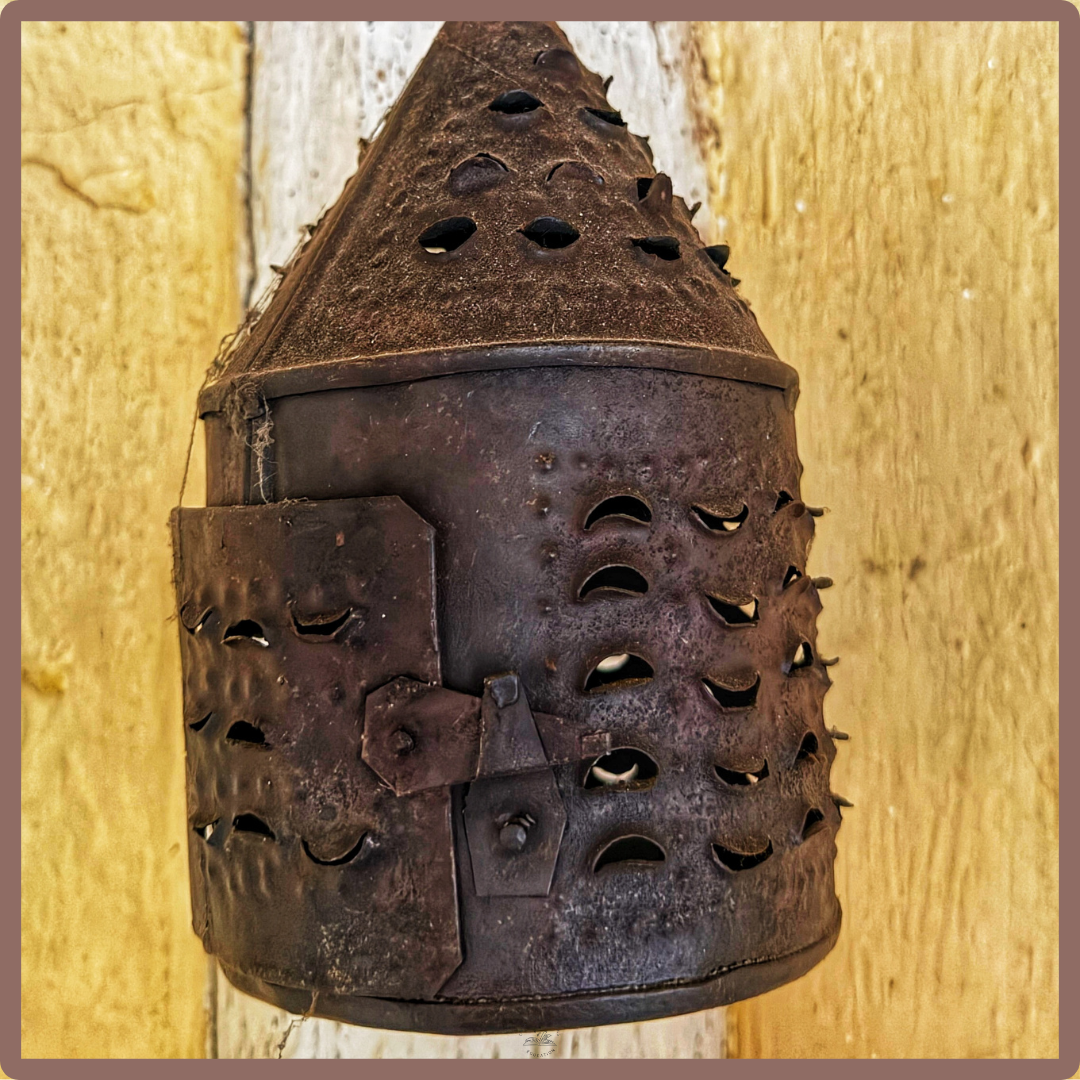
Here's a sense of 'jour' that surprises even good French speakers: a 'jour' can be a hole. Not the day, not the daylight - an actual gap, the opening that lets the light in. 'Ajoure' is the word for anything made that way.
The noun 'ajour' - an opening or perforation - is recorded later than the adjective 'ajoure', so French seems to have had the word for the pierced thing before it had a plain noun for the hole itself.
What's included
The etymology comic - illustrated stage cards, one idea each, with short KS3/4 captions
The word-history breakdown, Latin to modern French, dated where the record allows
The three senses of 'jour' - the day, the daylight, and the opening light passes through
The English-links section - the everyday English words that share the root
The sources page
A short how-to-use guide for the adult
For personal use in home education and tutoring only.
Who it's for
It suits KS3 and KS4 French learners who enjoy how a word shifts its sense, students of art, jewellery and design, home-educated children, and specialist tuition students including those with dyslexia. It's a good word for a curious learner because it shows a root moving one step further than you'd expect.
It's the most specialist of the light-family - a learner meets 'ajoure' mainly in jewellery, heraldry and design, not in everyday French. The resource is honest about that: it's here for its interest and its clean demonstration of how 'jour' shifted, not as core exam vocabulary.
Why this exists
'Ajoure' is a small lesson in how meaning moves. A learner who sees that 'jour' goes from 'day' to 'daylight' to 'the gap the light comes through' has watched a word change under their own eyes - which is exactly the thing that makes vocabulary stop feeling arbitrary and start feeling like it has reasons.
I first made these for my dyslexic son.
Related resources
Same topic, in L'atelier des mots: its two light-family cousins here, 'abat-jour' and 'contre-jour', and the wider 'jour' family - 'bonjour', 'journee', 'sejour', 'journal', 'ajourner'.
Same root: all built on 'jour', from Latin 'diurnum'. 'Ajoure' takes the opening-sense; 'abat-jour' and 'contre-jour' take the light-sense; the rest take the day-sense.
Free in the Wordhord: the English cousins 'journey' and 'journal'. And the Compendium post on why word origins help with modern languages, dyslexic learners especially.
Available now as a PDF download.
How it prints - two forms
This PDF prints into two forms, and you choose which suits you.
The large cards - one idea to a page - are made to be laminated and clipped onto a binder ring. Print single-sided, laminate, trim, and punch a hole in the top-left corner, then hold them together with one ring. The cards are numbered, so a loose deck goes back in order. Once they're on the ring a child can handle them, turn them over and lay them out - which is where a lot of the understanding happens. The deck is a bag or dinner-table object: something a child picks up and works through at the table, not a pencil-case card.
The single sheet at the end holds the whole word on one page. Print it and it's ready - no laminating, no cutting. It's the print-and-go form, for the fridge or the middle of a lesson, when you want the whole story in front of you at once. You assemble the deck yourself; there's no ready-made deck in the box. You'll need a printer, and a laminator and a ring for the deck. Neither form is homework and neither is a test.
About this resource
This is an educational support material. It isn't a diagnostic, assessment or therapeutic tool, and it doesn't replace specialist assessment or intervention. Outcomes vary by learner. It's built to be revisited over time rather than worked through in one go, and it isn't a complete teaching programme or a substitute for formal instruction.
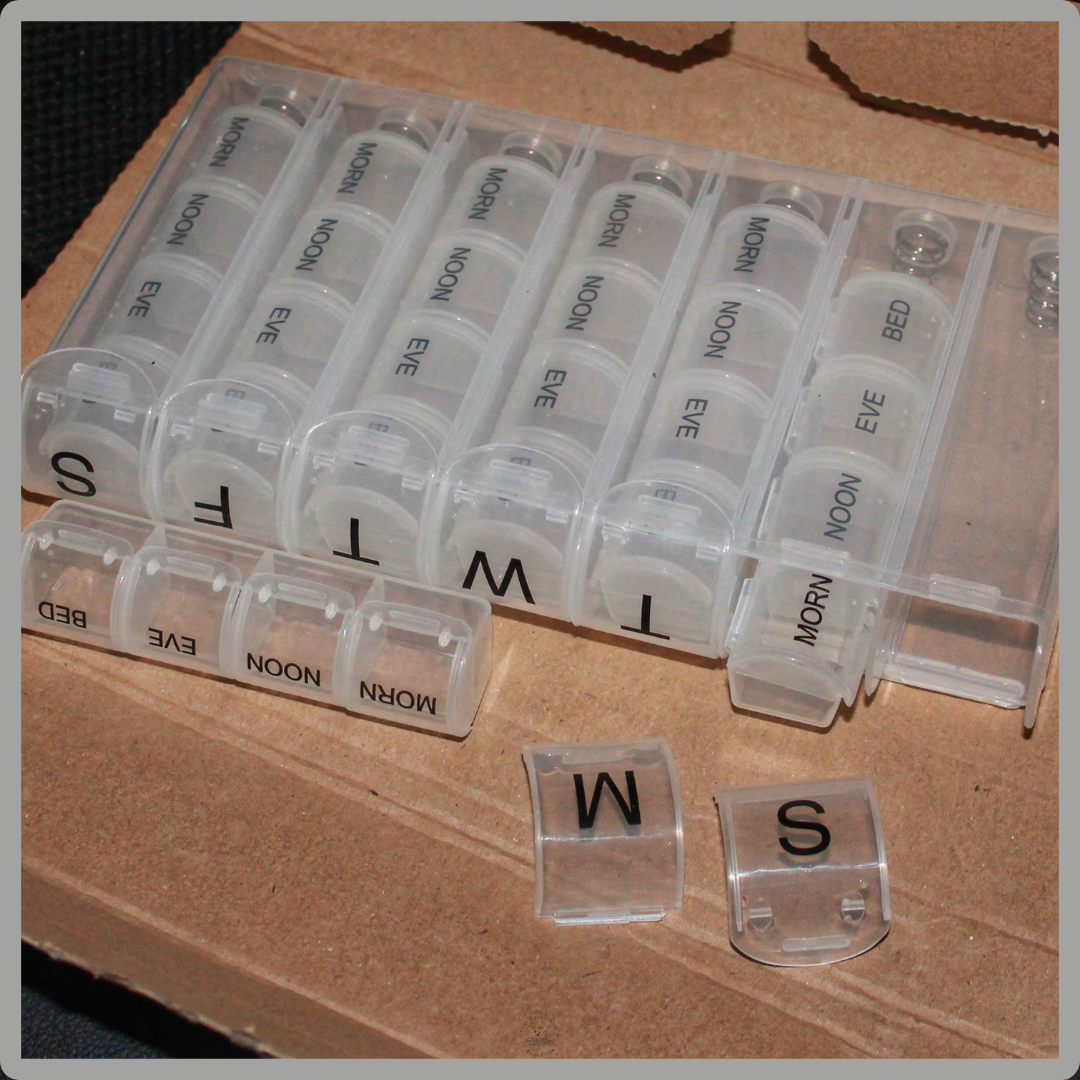
Arrange to meet a French friend 'dans huit jours' and you'll see them in a week. The phrase says eight days; a week has seven. French has counted it that way for centuries, and nobody has established why.
What's included
• The etymology comic - illustrated stage cards, one idea each, with short KS3/4 captions
• The word-history breakdown, Latin to modern French, dated where the record allows
• 'Huit' traced back to Latin 'octo', with the English cousins that came from it
• 'Une huitaine' and 'une quinzaine' - the nouns French built the same way
• The honest answer about why the count is eight, and what the dictionaries will and won't support
• The sources page
• A short how-to-use guide for the adult
For personal use in home education and tutoring only.
Who it's for
It suits KS3 and KS4 French learners, home-educated children, specialist tuition students including those with dyslexia or a weak working memory, and parents working alongside a child. 'Huit jours' is genuinely everyday French, so unlike some of the 'jour' family this one earns its keep in ordinary conversation as well as being a good story.
It isn't a numbers lesson. It assumes the learner already knows 'huit' and 'jour' separately and can read a short French phrase aloud - the work here is on what happens when the two are put together and stop adding up.
Why this exists
A phrase that means something other than the sum of its words is exactly where a careful learner comes unstuck, because doing the sensible thing gets the wrong answer. 'Huit jours' is worth meeting head-on for that reason, and it carries a second lesson with it: the reason for the eight isn't known, the stories that circulate aren't supported, and saying so is more useful to a child than a tidy explanation that isn't true.
I first made these for my dyslexic son.
Related resources
Same topic, in L'atelier des mots: the wider 'jour' family - 'bonjour', 'journée', 'séjour', 'journal', 'ajourner' - and the light-sense words 'abat-jour', 'contre-jour', 'ajouré' and 'point du jour'.
Same root: all built on 'jour', from Latin 'diurnum'. 'Huit jours' uses the day-sense, the one behind English 'journey' and 'journal'; the light-family words use 'jour' as the light itself.
Free in the Wordhord: the English cousins 'journey' and 'journal'. And the Compendium post on why word origins help with modern languages, dyslexic learners especially.
Available now as a PDF download.
How it prints - two forms
This PDF prints into two forms, and you choose which suits you.
The large cards - one idea to a page - are made to be laminated and clipped onto a binder ring. Print single-sided, laminate, trim, and punch a hole in the top-left corner, then hold them together with one ring. The cards are numbered, so a loose deck goes back in order. Once they're on the ring a child can handle them, turn them over and lay them out - which is where a lot of the understanding happens. The deck is a bag or dinner-table object: something a child picks up and works through at the table, not a pencil-case card.
The single sheet at the end holds the whole word on one page. Print it and it's ready - no laminating, no cutting. It's the print-and-go form, for the fridge or the middle of a lesson, when you want the whole story in front of you at once. You assemble the deck yourself; there's no ready-made deck in the box. You'll need a printer, and a laminator and a ring for the deck. Neither form is homework and neither is a test.
About this resource
This is an educational support material. It isn't a diagnostic, assessment or therapeutic tool, and it doesn't replace specialist assessment or intervention. Outcomes vary by learner. It's built to be revisited over time rather than worked through in one go, and it isn't a complete teaching programme or a substitute for formal instruction.
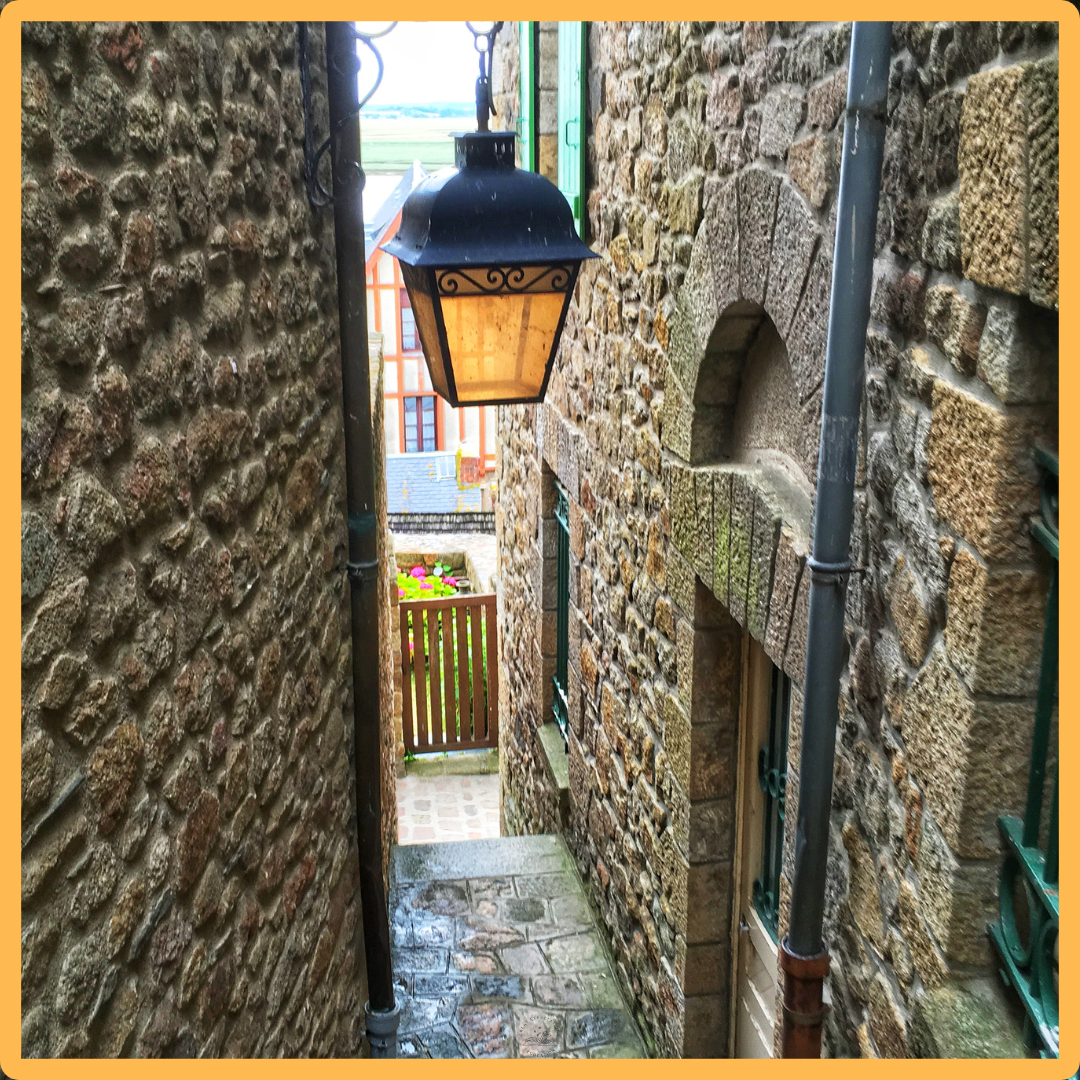
Most rooms in a house have an 'abat-jour' in them. It's the French word for a lampshade - and, taken apart, it's an instruction: 'knock the daylight down'. English borrowed 'abat-jour' too, but took it mainly in the skylight and reflector senses rather than the everyday lampshade.
What's included
The etymology comic - illustrated stage cards, one idea each, with short captions a KS3/4 learner can read
The word-history breakdown, Latin to modern French, with a date at each stage the record allows
The two senses of 'jour' explained plainly - the day, and the daylight
The English-links section - the everyday English words that share the root
The sources page
A short how-to-use guide for the adult
For personal use in home education and tutoring only.
Who it's for
It suits KS3 and KS4 French learners, anyone who likes seeing how a word is built, home-educated children, specialist tuition students including those with dyslexia or a weak working memory, and parents working alongside a child. 'Abat-jour' is an everyday French word, so it earns its place in ordinary vocabulary as well as being a good story.
It isn't an early-reader resource, and it isn't a grammar drill. It assumes the learner can already read a French word aloud and is ready to think about where it comes from, rather than meeting French for the first time.
Why this exists
Vocabulary taught as a flat list of words to memorise is hard to hold on to, particularly for a dyslexic learner. A word that comes apart into two ideas you can picture - 'knock' and 'daylight' - is easier to keep, because it stops being arbitrary. 'Abat-jour' is a clean example: once a child sees the lampshade knocking the light down, the word has a reason to be the shape it is.
I first made these for my dyslexic son.
Related resources
Same topic, in L'atelier des mots: the other 'jour' words in the shop - 'bonjour', 'journee', 'sejour', 'journal', 'ajourner' - and its two light-family cousins here, 'contre-jour' and 'ajoure'.
Same root: everything above is built on 'jour', from Latin 'diurnum'. The light-sense words ('abat-jour', 'contre-jour', 'ajoure') use 'jour' as the light; the day-sense words ('bonjour', 'journee') use it as the day.
The other shops: the same root runs through Italian 'giorno' (L'Officina Radice) and Spanish and beyond, though the light-sense compounds are French.
Free in the Wordhord: the English cousins 'journey' and 'journal'. And the Compendium post on why word origins help so much with modern languages, dyslexic learners especially.
Available now as a PDF download.
How it prints - two forms
This PDF prints into two forms, and you choose which suits you.
The large cards - one idea to a page - are made to be laminated and clipped onto a binder ring. Print single-sided, laminate, trim, and punch a hole in the top-left corner, then hold them together with one ring. The cards are numbered, so a loose deck goes back in order. Once they're on the ring a child can handle them, turn them over and lay them out - which is where a lot of the understanding happens. The deck is a bag or dinner-table object: something a child picks up and works through at the table, not a pencil-case card.
The single sheet at the end holds the whole word on one page. Print it and it's ready - no laminating, no cutting. It's the print-and-go form, for the fridge or the middle of a lesson, when you want the whole story in front of you at once. You assemble the deck yourself; there's no ready-made deck in the box. You'll need a printer, and a laminator and a ring for the deck. Neither form is homework and neither is a test.
About this resource
This is an educational support material. It isn't a diagnostic, assessment or therapeutic tool, and it doesn't replace specialist assessment or intervention. Outcomes vary by learner. It's built to be revisited over time rather than worked through in one go, and it isn't a complete teaching programme or a substitute for formal instruction.
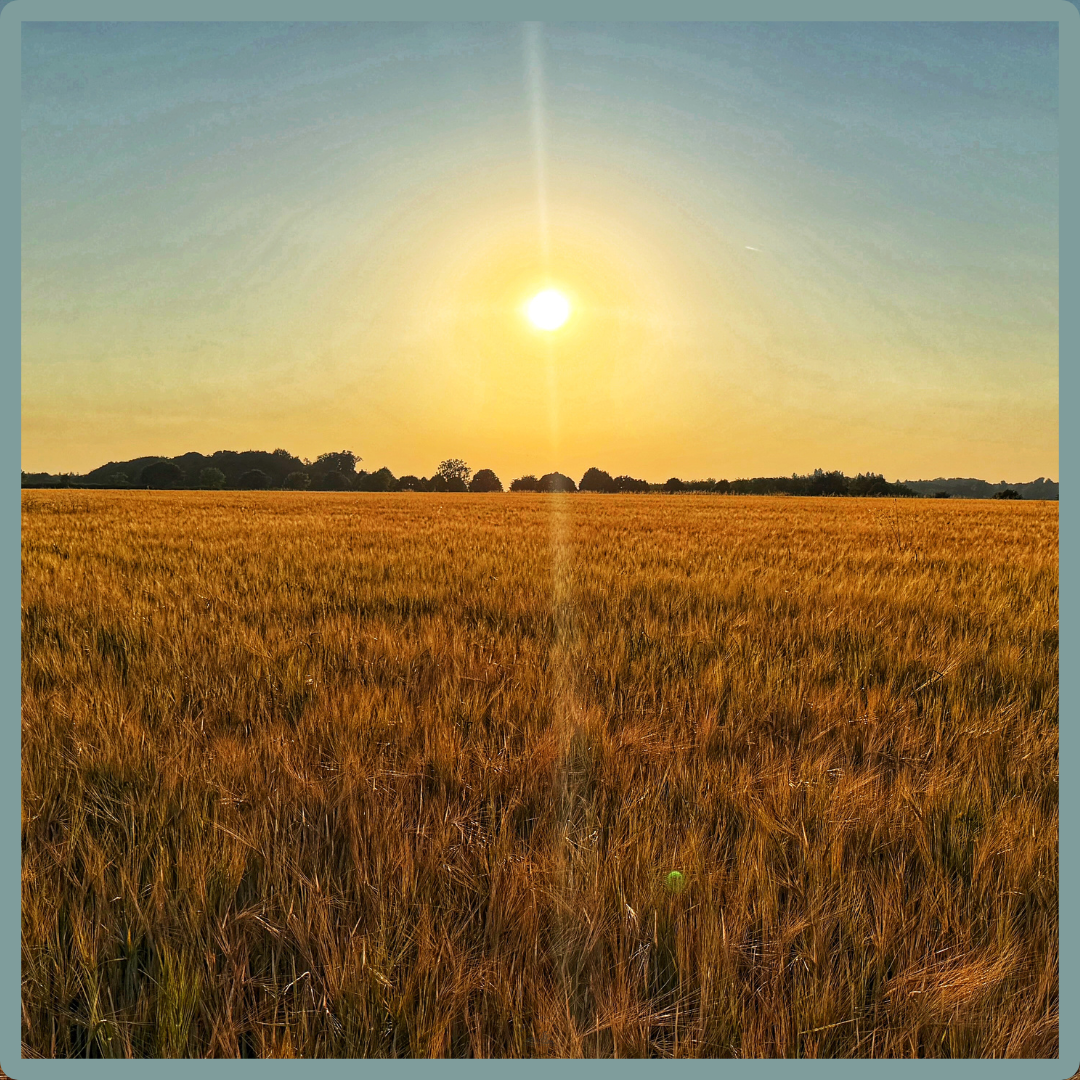
nehmen - the German verb for taking, with deep roots
‘nehmen’ is one of the first verbs a German learner meets and one of the most useful - take the bus, take a seat, take sugar. This resource follows it back to a very old idea: that to take something is to receive the share that is dealt out to you.
Where the root comes from
‘nehmen’ comes straight down through German from the ancient root *nem- ‘to allot, take one’s due’. The same root reached English by other roads, hiding inside ‘numb’, ‘nimble’, ‘number’ and even ‘economy’ - so a learner meets surprising English relatives while working in German.
What’s included
• The etymology comic - illustrated stage cards, one idea each, with short captions
• The word history, Proto-Indo-European to modern German, dated at each stage the record allows
• A present-tense conjugation card showing the vowel change - ‘ich nehme’ but ‘du nimmst’
• An English-links card naming the English cousins of the root.
• A sources page, with the scholarly dispute on the root noted honestly
• A short how-to-use guide for the adult
For personal use in home education and tutoring only.
Who it’s for
Designed first for secondary MFL learners (KS3 and KS4), but it suits a wider range: anyone who likes word origins, learners taking German who want to see its English relatives, home-educated children, specialist tuition students including dyslexic and working-memory profiles, and adults brushing up German alongside a child.
It isn’t for an absolute beginner who hasn’t yet met present-tense verbs. The card assumes a learner who can read a short German sentence and is ready for a strong verb that changes its vowel.
Why this exists
The vowel change in ‘nehmen’ - ‘ich nehme’ but ‘du nimmst’, ‘er nimmt’ - is one of the first strong-verb patterns a German learner has to hold, and it is easy to get wrong. Seeing the verb whole, with its history and its English cousins, gives the pattern a place to live instead of being one more form to memorise.
Linguistic quirk: the ‘h’ in ‘nehmen’ is silent. It is a Dehnungs-h, a ‘lengthening h’ that marks the long vowel but stands for no sound. The older forms had no h at all - Old High German ‘neman’, Middle High German ‘nëmen’. The h is a later spelling habit, not a piece of the word’s sound.
Originally created to support one of my own children’s learning once the school day had ended.
Related resources
The French ‘prendre’, Italian ‘prendere’ and Spanish ‘prender’ resources cover the same idea from a different Latin root, ‘prehendere’; ‘nehmen’ is the Germanic side, on its own root *nem-. See L’atelier des mots, L’Officina Radice and El Taller Raíz.
Why word origins help with modern languages: the Compendium post on teaching words through structure.
Free in The Wordhord - the English cousins of this root: ‘numb’ and ‘nimble’.
A 'giornale' is a newspaper. Before that it was a diary, and before that it was just an adjective meaning daily.
The 'gi' at the front is a sound-change, not a spelling choice. Latin 'di' before a vowel came out as the soft Italian 'gi', which is the same change that turned 'radius' into 'raggio' and 'diurnum' into 'giorno'. Once a learner has spotted it, a handful of other Italian words stop looking arbitrary.
Where this word comes from
Latin 'dies' gave 'diurnus' ('of the day'), and 'diurnus' gave 'diurnalis' ('daily'). Italian took that adjective and made a noun of it. What the noun named kept changing as the thing itself changed. First it was a daybook - a diary, where the day's business went down. By the eighteenth century it was being used of periodicals, particularly literary and learned ones that came out on a schedule. Then, as printed news settled into a daily habit, 'giornale' became the newspaper, and it has stayed there. Two further words came off it and are still in constant use: 'giornalista' and 'giornalismo'.
What's included
Eight large cards, plus a single reference sheet holding the whole word:
• the etymology comic - illustrated stage panels, one idea to a page, with short captions
• the word-history breakdown, Latin 'dies', 'diurnus' and 'diurnalis' through to modern Italian, with the shift from diary to newspaper set out as separate stages
• a sound-change note on the Latin 'di' becoming the soft Italian 'gi', with 'radius' becoming 'raggio' as a second example of the same change
• the three-way panel, setting Italian 'giornale' against English 'journal' and Spanish 'jornal'
• the derivatives panel on 'giornalista' and 'giornalismo'
• the sources page, and a short how-to-use guide for the adult
How it prints
The file gives you a deck and a sheet. For the deck, print the large cards single-sided, laminate them, trim, punch a hole in the top-left corner and hold them on one binder ring; the numbering keeps the order if it comes loose. That assembly is yours to do. The sheet is the last page - the whole word on one side of paper, ready the moment it leaves the printer, and the form to use when you want everything visible at once rather than a deck to work through. Printer for both; laminator and ring for the deck only. Think bag or dinner table for the deck, not pocket.
For personal use in home education and tutoring only.
Who it's for
Made first for tutoring students, but it suits a wider range:
• KS3 and KS4 learners meeting Italian vocabulary for media, reading and free time
• home-educated children learning Italian
• learners with dyslexia or working-memory difficulties
• learners who already know English 'journal' and 'journalist' and can be shown where the overlap holds and where it doesn't
• anyone who likes word origins, and parents or adults studying alongside a child
The sound-change card is the demanding part. It asks a reader to hold a Latin spelling and an Italian one side by side and notice what changed between them, which is a step up from recognising a root. If that's beyond the learner for now, use the other cards and leave that one on the ring for later.
Why this exists
'Giornale' is a word learners guess wrong in a specific way: it looks like 'journal', so they read it as a diary and then meet it in a sentence about the news. Setting the two next to each other, with Spanish 'jornal' as a third, turns a false-friend problem into something a learner can reason about - one Latin family, three languages, three different jobs. The word is also a straightforward win for anyone building media and free-time vocabulary, because 'giornalista' and 'giornalismo' come free once the base is understood.
Related resources
In L'Officina Radice, 'giornata' is the closest relative and comes off the same Latin branch - one describes a day, the other names what gets printed daily. 'Prendere' and 'proprio' are also stocked, on unrelated roots.
Across the shops: Spanish 'jornal' in El Taller Raíz is the same Late Latin word taking a third path, and 'jornada' there is free to download. French 'jour' is the same root again in L'atelier des mots.
Available now as a PDF download.
Italian has two words for a day. 'Giorno' is the day on the calendar. 'Giornata' is the day you actually live through, from getting up to going to bed.
Italian, Spanish and French all built the same word off the same root - 'giornata', 'jornada', 'journée' - and all three mean roughly the day as a span. English took the same word from French and used it for the travelling instead: a 'journey' was originally as far as you could go in a day, which is why an old day's march was a 'giornata' in Italian and a journey in English.
Where this word comes from
Latin 'dies' gave 'diurnum', the daytime, and that became Italian 'giorno'. Italian then added '-ata' to it. That ending does a particular job: it takes a thing and makes a word for how much of something the thing holds or covers. A 'cucchiaio' is a spoon and a 'cucchiaiata' is a spoonful. A 'giorno' is a day and a 'giornata' is a dayful - the whole span of it. From there the word reaches in two directions at once. A 'giornata' is a day's work, as in 'la giornata lavorativa', the working day. It's also a day's travel, as far as you get between one night and the next - which is where English 'journey' comes from, by a different route through French.
What's included
Eight large cards, plus a single reference sheet holding the whole word:
• the etymology comic - illustrated stage panels, one idea to a page, with short captions
• the word-history breakdown, Latin 'dies' and 'diurnus' through to modern Italian, with the suffix shown as a separate step
• the suffix panel, which teaches '-ata' as a pattern rather than as a fact about one word, using 'cucchiaiata' alongside 'giornata'
• panels on both living senses - the working day, and the day's march
• the family panel, putting Italian 'giornata' beside Spanish 'jornada' and French 'journée', with English 'journey' named as a cousin
• the sources page, and a short how-to-use guide for the adult
How it prints
One PDF, two forms. The large cards are made to laminate and clip onto a single binder ring - print single-sided, laminate, trim, punch the top-left corner. They're numbered, so a deck that comes apart goes back together in order. Assembling it is your job rather than something that arrives done. The final page is a single sheet carrying the whole word at once: no laminating, no cutting, print and go. A printer covers the sheet; the deck also wants a laminator and a ring. The deck is sized for a bag or a table rather than a pocket.
For personal use in home education and tutoring only.
Who it's for
Made first for tutoring students, but it suits a wider range:
• KS3 and KS4 learners meeting Italian time and daily-routine vocabulary
• home-educated children learning Italian
• learners with dyslexia or working-memory difficulties
• learners who keep using ‘giorno’ where an Italian speaker would use ‘giornata’
• anyone who likes word origins, and parents or adults studying alongside a child
This assumes the learner already has 'giorno'. The whole pack is built on the contrast between the two, so a reader meeting both words for the first time in the same session has one too many things to hold at once. Teach 'giorno' first, then come back to this.
Why this exists
The 'giorno' and 'giornata' distinction is the kind of thing a textbook mentions once and then expects. A learner is told 'giornata' is the day as an experience, nods, and goes on saying 'giorno' for everything. Showing them the '-ata' ending does more than the explanation does, because it's a pattern they can carry: once you've seen 'cucchiaiata' next to 'giornata', the ending stops being an arbitrary extra bit and starts meaning something. It also gives the learner a reason 'che bella giornata' is the right thing to say about a day that has gone well, and 'che bel giorno' isn't quite.
Related resources
In L'Officina Radice, the closest neighbour on the same root is 'giornale', which takes the same Latin branch to the newspaper. The shop also stocks 'prendere' and 'proprio', on unrelated roots.
Across the shops: Spanish 'jornada' is the direct counterpart and is free to download in El Taller Raíz, with 'jornal', 'día' and 'mediodía' alongside it. French 'jour' is the same word again in L'atelier des mots.
Available now as a PDF download.
Spanish 'mediodía' means noon. It also means the south, and the reason for that is standing outside at midday and looking up.
Where this word comes from
'Mediodía' is two words joined: 'medio' ('middle') and 'día' ('day'). Both come straight out of Latin - 'medius' for the middle of a thing, 'dies' for a day. Put together, the compound says exactly what it means. The second sense is the one that catches people. Seen from Spain, and from most of Europe, the noon sun stands in the southern half of the sky, so the word for the middle of the day became a word for that direction as well. French did the same with 'midi' and Italian with 'mezzogiorno', and both still carry both meanings. The 'south' sense of 'mediodía' is the less usual one in Spanish now, but it's recorded, and it explains a word that otherwise looks like it's doing two unconnected jobs.
What's included
Eight large cards, plus a single reference sheet holding the whole word:
• the etymology comic - illustrated stage panels, one idea to a page, each with a short caption a learner can read on its own
• the word-history breakdown, reconstructed Proto-Indo-European through Latin to modern Spanish, with the compound set out in its two parts
• the cross-language panel, showing French 'midi' and Italian 'mezzogiorno' doing the same double work
• the family panel, which puts 'medianoche' on the same branch and is honest that English 'middle' is a distant cousin rather than a descendant
• the sources page, naming every reference the content is built from
• a short how-to-use guide for the adult
How it prints
The PDF prints two ways. The large cards - one idea to a page - are for laminating and clipping onto a binder ring, so a child can handle the deck, turn cards over, and lay the stages out in order. You do that assembly yourself; there's no ready-made deck. The single sheet at the end holds the whole word on one page, needs no laminating and no cutting, and is the version to print for the middle of a lesson. You'll need a printer either way, and a laminator and a ring if you want the deck. The finished deck goes in a bag or on the table, not a pocket.
For personal use in home education and tutoring only.
Who it's for
Made first for tutoring students, but it suits a wider range:
• KS3 and KS4 learners meeting Spanish time and daily-routine vocabulary
• home-educated children learning Spanish
• learners with dyslexia or working-memory difficulties who find word lists hard to hold
• anyone who likes word origins, whether or not they speak Spanish
• parents working alongside a child, including those picking the Spanish up as they go
• adults coming back to Spanish after school
This isn't for a learner at the very start of Spanish. The cards assume the reader already knows 'día' and can read a joined-up Spanish word aloud - 'mediodía', 'medianoche' - even if they couldn't yet tell you what either one means.
Why this exists
Time vocabulary arrives early in Spanish and then keeps arriving: the school day, meal times, opening hours, timetables. 'Mediodía' turns up across all of it, and a learner who has memorised it as five syllables has nothing to fall back on the week it slips. Seeing that it's 'medio' plus 'día' hands them two words they already have and a compound they can rebuild from the parts. The 'south' sense gives a second handhold - a child who has worked out why noon and south are the same word tends not to lose either one.
A linguistic quirk
Spanish does the same trick at the other end of the day, but the ending shifts: 'medianoche' is 'media' plus 'noche', because 'noche' is feminine. 'Día' takes the masculine 'medio' despite ending in '-a', which is one of the small oddities Spanish learners meet early and rarely get explained.
Related resources
In El Taller Raíz, the words that sit alongside this one on the same topic are 'día', 'buenos días', 'hoy' and 'jornada' - 'jornada' is the free sample, so it's the cheapest way to see whether the format suits your learner.
On the same root: 'día', 'jornada' and 'jornal' all descend from Latin 'dies', so 'mediodía' is carrying half its ancestry in common with the whole of that group.
Across the shops: the direct cousins are French 'midi' and Italian 'mezzogiorno', which do the same double duty of noon and south.
Available now as a PDF download.
A Spanish 'jornal' is a day's pay. An English journal is a diary. They're the same word, and they parted company somewhere in the Middle Ages.
'Jornal' is a borrowing rather than an inheritance, and Spanish has the inherited form too: 'día', straight from 'dies'. So the language holds two descendants of one Latin word that reached it by different routes and no longer look related. The giveaway is the 'j' - a sound Spanish took over with the Occitan word rather than developing itself.
Where this word comes from
Latin 'dies' ('day') produced the adjective 'diurnus' ('of the day, daily'), and from that came the Late Latin 'diurnalis'. That '-alis' ending is the '-al' still visible on the end of 'jornal' and on the end of English 'journal'. Spanish didn't inherit the word directly, though. It borrowed it in the medieval period from Occitan, spoken just over the Pyrenees, where 'jornal' already meant a day's work or the wage paid for it. Spanish kept the wage. English, coming at the same Late Latin word by a different road, kept the writing - the daily record. One Latin family, two entirely reasonable outcomes.
What's included
Eight large cards, plus a single reference sheet holding the whole word:
• the etymology comic - illustrated stage panels, one idea to a page, with short captions
• the word-history breakdown, Latin through Late Latin and Occitan to modern Spanish, with a date at each stage the record allows
• the borrowing panel, showing the word crossing from Occitania into Spain rather than descending directly
• the land-measure panel, on 'jornal' as an area of ground - as much as a day's work would cover
• the English-links section, setting 'journal' beside 'jornal' and naming the point where the two senses split
• the family panel, tying Spanish 'jornal' and 'jornada' to French 'jour', Italian 'giorno' and English 'journal'
• the sources page, and a short how-to-use guide for the adult
How it prints
Two forms come out of the one PDF. Print the large cards single-sided, laminate them, trim, punch the top-left corner and thread them onto a binder ring - that's the deck, and the cards are numbered so a loose one goes back where it belongs. You build it yourself; it doesn't arrive assembled. The last page is the single sheet, the whole word laid out at once, which needs nothing but a printer and is the one to reach for mid-lesson. A laminator and a ring are only needed for the deck. The deck is a bag-and-table object rather than a pocket one.
For personal use in home education and tutoring only.
Who it's for
Made first for tutoring students, but it suits a wider range:
• KS3 and KS4 learners working on Spanish vocabulary for work, money and daily life
• home-educated children learning Spanish
• learners with dyslexia or working-memory difficulties
• learners who already meet English cognates and want to know why they only half-match
• parents and adults studying alongside a child
This one asks a little more of the reader than the everyday words in the shop. 'Jornal' is not high-frequency Spanish, and the pack is most use to a learner who already has 'día' and 'jornada' and can hold two related words apart without them collapsing into each other. If that's still hard, start with 'jornada' - it's free.
Why this exists
English cognates are usually taught as a gift: the word looks familiar, so you already know it. 'Jornal' and 'journal' show what happens when that's only half true. A learner who assumes 'jornal' means a diary has been let down by a strategy that normally works, and the useful lesson isn't that cognates are unreliable - it's that a shared root guarantees a shared origin, not a shared meaning. Working through where the wage and the diary parted gives a learner something to do with a near-miss instead of simply being wrong.
Related resources
In El Taller Raíz, the neighbours on this topic are 'jornada' (free), 'día', 'buenos días', 'hoy' and 'mediodía'.
On the same root: 'jornada' is the closest of all - the same Occitan borrowing with a different ending, and the pack that explains the day's-march sense. 'Día' is the inherited cousin, and 'mediodía' carries 'día' inside it.
Across the shops: Italian 'giornata' and 'giornale' come off the same Latin branch in L'Officina Radice, and French 'jour' is the same word again in L'atelier des mots.
Available now as a PDF download.

'jour' and 'giorno' both start with a soft sound. The Latin word they both came from, 'diurnum', starts with a hard 'd'. Nothing was borrowed and nothing was swapped - the 'd' itself went soft, and it went soft for a reason a learner can follow in about five minutes.
What's included
• Nine illustrated black-and-white panels, one idea to a page, taking the change from Latin 'diurnum' through to French 'jour' and Italian 'giorno'
• Approximate pronunciation respellings on every form, Latin included, so the change can be heard as well as read
• The stressed-versus-unstressed rule set out on a single panel, with Spanish 'día' and Italian 'lunedì' as the contrast
• A panel on 'buongiorno' and 'bonjour', where the same change turns up inside a greeting the learner already uses
• A second worked example - Latin 'radius' to Italian 'raggio' - showing the change isn't a one-off
• A single reference sheet holding all nine panels on one page
• A sources page
• A short how-to-use guide for the adult
How it prints
The PDF prints two ways. Print the large cards single-sided, laminate them, trim, punch the top-left corner and hold them on one binder ring, and you have a deck a child can pick up, turn over and lay out in order - which matters more than usual here, because the whole thing is a sequence. The cards are numbered so a loose deck goes back the right way round. It fits in a bag and works at the dinner table; it isn't a pencil-case object. You'll need a printer, a laminator and a ring, and you assemble the deck yourself - there's no ready-made version.
The single sheet at the end needs none of that. Print it and the whole change is in front of you at once, start to finish, which is the version for the middle of a lesson or the front of the fridge.
For personal use in home education and tutoring only.
Who it's for
Made first for a curious ten-year-old, but it suits a wider range:
• Learners in KS3 and KS4 studying French, Italian or Spanish
• Anyone taking two Romance languages at once who keeps meeting words that nearly match
• Home-educated children working through a modern language
• Specialist tuition students, including dyslexic learners and those with weak working memory
• Parents and adults picking a language back up alongside a child
• Anyone who likes knowing why a word looks the way it does
This isn't an introduction to French. It assumes the learner already recognises 'jour' and can read a word like 'aujourd'hui' aloud, even if they couldn't say what's inside it. A child in their first few weeks of French will get more from a single word than from a sound change running across three languages.
Why this exists
Learners meet 'jour', 'giorno' and 'día' as three separate things to remember. They're one thing, changed by one rule, and the rule is short enough to hold on to. Once a learner has watched it happen, the same pattern turns up again - in 'raggio', in 'lunedì', in the gap between 'bonjour' and 'buongiorno' - and each of those stops being a fresh item to memorise. The panels carry the explanations, so the adult doesn't have to hold the whole account in their head to talk it through.
I first made this because one of my sons wanted to know how 'jour' and 'giorno' were related.
Related resources
More time and daily-routine words in L'atelier des mots: 'jour', 'aujourd'hui' and 'toujours'.
All three are built on the same Latin day-word. 'Toujours' is 'tous les jours' worn down to one word, and 'aujourd'hui' has a day inside it twice - 'au jour d'hui', where 'hui' is itself the old French word for today, from Latin 'hodie'.
Because the comic follows Italian and Spanish alongside French, the matching words are stocked in the other shops too: 'giorno', 'buongiorno', 'mezzogiorno' and 'oggi' in L'Officina Radice, and 'día', 'buenos días', 'jornada' and 'hoy' in El Taller Raíz.
There are free English word cards on the same family in The Wordhord, and a Compendium article on why word origins help with modern languages.
Available now as a free PDF download.

'Aujourd'hui' is one of the first words a French learner writes down, and one of the strangest to spell - an apostrophe in the middle, a silent 'd', a run of letters that don't sound the way they look. There's a reason for every piece of it, and it starts with a small word hidden inside: 'day'.
Where 'aujourd'hui' comes from
'Aujourd'hui' didn't begin as one word. It was built up over time from a short Latin phrase, and by the time it settled, the word for 'day' had ended up inside it more than once. The cards follow how that happened - and why French, alone among its neighbours, made the long version when Spanish and Italian kept theirs short.
What's included
• An illustrated black-and-white word-history in comic form - stage panels, one idea to each, following 'aujourd'hui' back to the short Latin phrase it grew from
• The word-history breakdown, Latin to modern French, with a date at each stage the record allows
• A sources page listing where every claim comes from
• A short guide for the adult on how to use the cards
How it prints
The PDF prints two ways, and you choose which suits you. The large cards - one idea to a page - are made to be laminated and clipped onto a single binder ring, so a child can handle them, turn them over and lay them out in order. You print, laminate, trim and bind these yourself; the cards are numbered, so a loose deck goes back in sequence. The single sheet at the end holds the whole word on one page - print it and it's ready, no laminating or cutting. You'll need a printer; a laminator and a ring are needed only for the deck.
Coming back to it
Because the large cards come apart, there's more to do with them than read. Shuffle the stage cards and rebuild the timeline. Deal them face-down and turn them over one at a time. Hold up the two halves of the word and ask what each one brings to it. Match a Latin stage to the modern French it turned into. If you own more than one word from L'atelier des mots, clip the shared cards onto one ring and line the day-family up together. It's the same cards, talked through and handled differently - adult-led, a few minutes at a time, never a drill.
Why this exists
'Aujourd'hui' is usually learned as a shape - a hard-to-spell block a child copies out and hopes to remember. Learned that way it slips, because nothing holds the letters in place. Shown as a phrase that was built up piece by piece, with a reason behind every part, the spelling stops being arbitrary and starts to make sense.
Who it's for
Designed first for my own son's French, but it suits a wider range:
• Anyone who likes where words come from
• French learners in Key Stages 3 and 4, and GCSE students meeting 'aujourd'hui'
• Home-educated children
• Learners who find vocabulary hard to hold when it's taught as isolated words - including dyslexic and working-memory profiles
• Parents brushing up their own French, or studying alongside a child
• Adults coming back to French after school
This isn't a first step into French. A learner should already be meeting 'aujourd'hui' in lessons or reading - the cards explain a word a child is encountering, they don't introduce the language from scratch. If a child hasn't met it at all yet, this will come too early.
Related resources
• In L'atelier des mots: 'jour' is the nearest neighbour - the same day-word standing on its own.
• For anyone who likes the links across languages: 'oggi' (Italian, L'Officina Radice) and 'hoy' (Spanish, El Taller Raíz) are the same word as the 'hui' buried in 'aujourd'hui' - all three from one Latin phrase.
• In the Compendium: the post on why word origins help dyslexic learners with modern languages.
• Free in The Wordhord: the English cousins from the same family - 'diurnal' and 'journal' - each as its own word card.
For personal use in home education and tutoring only.
Available now as a PDF download.

'Mezzogiorno' is the Italian for midday - 'middle-day', if you take it apart. But the very same word also means 'the south', and there's a reason the two go together.
Where 'mezzogiorno' comes from
One word, two meanings - noon and the south. The cards take 'mezzogiorno' apart, trace each half back to Latin, and explain why noon and the south turned out to share a name - and why French and Spanish do exactly the same thing.
What's included
• An illustrated black-and-white word-history in comic form - stage panels, one idea to each, taking 'mezzogiorno' apart and following both its meanings, noon and the south, to their roots
• The word-history breakdown, Latin to modern Italian, with a date at each stage the record allows
• A sources page listing where every claim comes from
• A short guide for the adult on how to use the cards
How it prints
The PDF prints two ways, and you choose which suits you. The large cards - one idea to a page - are made to be laminated and clipped onto a single binder ring, so a child can handle them, turn them over and lay them out in order. You print, laminate, trim and bind these yourself; the cards are numbered, so a loose deck goes back in sequence. The single sheet at the end holds the whole word on one page - print it and it's ready, no laminating or cutting - for the pencil case or the middle of a lesson. You'll need a printer; a laminator and a ring are needed only for the deck.
Coming back to it
Because the large cards come apart, there's more to do with them than read. Rebuild the timeline in order. Sort the meaning cards into the two senses - noon and the south - and talk through what joins them. Hold up the English-cousin cards and match each to its Latin half. If you own more than one word from L'Officina Radice, clip the shared day-cards onto one ring and put them together. It's the same cards, talked through and handled differently - adult-led, a few minutes at a time, never a drill.
Why this exists
'Mezzogiorno' carries two meanings at once - noon and the south - and a learner who meets only one is caught out by the other. Once a learner can see the two ordinary words inside it, and why noon and the south turned out to share a name, the two meanings stop competing and start to make sense together.
Who it's for
Made for secondary Italian learners at Key Stages 3 and 4, but it suits a wider range:
• Anyone who likes where words come from
• Italian learners in Key Stages 3 and 4, and GCSE students meeting 'mezzogiorno'
• Home-educated children
• Learners who find vocabulary hard to hold when it's taught as isolated words - including dyslexic and working-memory profiles
• Parents brushing up their own Italian, or studying alongside a child
• Adults coming back to Italian after school
This isn't a first step into Italian, and it isn't only about telling the time - 'mezzogiorno' as 'the south' matters for reading and geography too. A learner should already be meeting the word in lessons or reading. If a child hasn't started Italian at all yet, this will come too early.
Related resources
• In L'Officina Radice: 'oggi' and 'buongiorno' are the nearest neighbours - both built on the same 'giorno'.
• For anyone who likes the links across languages: French 'midi' and Spanish 'mediodía' pull the same trick, meaning both noon and the south (neither is sold as its own resource yet).
• In the Compendium: the post on why word origins help dyslexic learners with modern languages.
• Free in The Wordhord: the English cousins - 'medium' and 'median' from 'mezzo', 'diurnal' and 'journal' from 'giorno'.
For personal use in home education and tutoring only.
Available now as a PDF download.

'Oggi' is the Italian for 'today', and it's shorter than it looks like it should be. Two small syllables - with a whole Latin phrase folded up inside them.
Where 'oggi' comes from
'Oggi' is what's left after centuries of wear on a longer Latin phrase, and tucked in the middle of it is one of Italian's two words for 'day' - the old one, not the everyday one. The cards trace how the phrase shrank to 'oggi', and show the shorter cousins the same phrase left behind in Spanish, French and Portuguese.
What's included
• An illustrated black-and-white word-history in comic form - stage panels, one idea to each, following 'oggi' back to the Latin phrase folded up inside it
• The word-history breakdown, Latin to modern Italian, with a date at each stage the record allows
• A sources page listing where every claim comes from
• A short guide for the adult on how to use the cards
How it prints
The PDF prints two ways, and you choose which suits you. The large cards - one idea to a page - are made to be laminated and clipped onto a single binder ring, so a child can handle them, turn them over and lay them out in order. You print, laminate, trim and bind these yourself; the cards are numbered, so a loose deck goes back in sequence. The single sheet at the end holds the whole word on one page - print it and it's ready, no laminating or cutting - for the pencil case or the middle of a lesson. You'll need a printer; a laminator and a ring are needed only for the deck.
Coming back to it
Because the large cards come apart, there's more to do with them than read. Shuffle the stage cards and rebuild the timeline. Deal them face-down and turn them over one at a time. Hold up the English-cousin cards and ask which piece of 'day' each one kept. Find the old word for 'day' hidden in the middle of 'oggi'. If you own more than one word from L'Officina Radice, clip the shared cards onto one ring and sort the cousins back to their roots. It's the same cards, talked through and handled differently - adult-led, a few minutes at a time, never a drill.
Why this exists
'Oggi' looks like a word to take on trust - short, common, no obvious parts. Learned that way it's just a sound to remember. Traced back, it turns out to be a squeezed-down Latin phrase with an old word for 'day' still inside it, and it stops being arbitrary: the doubled 'gg', the vowels, even its family likeness to Spanish 'hoy' and French 'hui' all have a reason behind them.
Who it's for
Made for secondary Italian learners at Key Stages 3 and 4, but it suits a wider range:
• Anyone who likes where words come from
• Italian learners in Key Stages 3 and 4, and GCSE students meeting 'oggi'
• Home-educated children
• Learners who find vocabulary hard to hold when it's taught as isolated words - including dyslexic and working-memory profiles
• Parents brushing up their own Italian, or studying alongside a child
• Adults coming back to Italian after school
This isn't a first step into Italian. A learner should already be meeting 'oggi' in lessons or reading - the cards explain a word a child is encountering, not the language from scratch. If a child hasn't met it at all yet, this will come too early.
Related resources
• In L'Officina Radice: 'buongiorno' and 'mezzogiorno' are the nearest neighbours - both built on 'giorno', the everyday Italian 'day', from the same Latin family as the word hidden in 'oggi'.
• For anyone who likes the links across languages: 'hoy' (Spanish) and 'aujourd'hui' (French) come from the same Latin phrase as 'oggi'.
• In the Compendium: the post on why word origins help dyslexic learners with modern languages.
• Free in The Wordhord: the English cousins from the same root - 'diary', 'diurnal' and 'dismal'.
For personal use in home education and tutoring only.
Available now as a PDF download.

'Día' is the Spanish for 'day' - and it breaks one of the first rules a learner is taught. Words ending in '-a' are usually feminine, but it's 'el día', masculine.
Where 'día' comes from
There's a reason 'día' keeps a masculine gender it seems to have no right to, and it goes back a very long way. The cards follow that story, clear up why 'día' looks like the English 'day' without being related to it, and turn up a surprising distant cousin along the way.
What's included
• An illustrated black-and-white word-history in comic form - stage panels, one idea to each, following 'día' back to its Latin root, gender and all
• The word-history breakdown, Latin to modern Spanish, with a date at each stage the record allows
• A sources page listing where every claim comes from
• A short guide for the adult on how to use the cards
How it prints
The PDF prints two ways, and you choose which suits you. The large cards - one idea to a page - are made to be laminated and clipped onto a single binder ring, so a child can handle them, turn them over and lay them out in order. You print, laminate, trim and bind these yourself; the cards are numbered, so a loose deck goes back in sequence. The single sheet at the end holds the whole word on one page - print it and it's ready, no laminating or cutting - for the pencil case or the middle of a lesson. You'll need a printer; a laminator and a ring are needed only for the deck.
Coming back to it
Because the large cards come apart, there's more to do with them than read. Rebuild the timeline in order, and stop on the card that explains the gender. Put 'día' and the English 'day' next to each other and talk through why they look alike but aren't related. Hunt for the distant cousin the cards turn up. Hold up the English-cousin cards and sort them back to the root. If you own more than one word from El Taller Raíz, clip the shared cards onto one ring and put the day-words together. It's the same cards, talked through and handled differently - adult-led, a few minutes at a time, never a drill.
Why this exists
'Día' trips learners twice - it's masculine despite its '-a', and it looks like the English 'day' but isn't related to it. Both are the kind of exception that makes a learner distrust the rules they've just been taught. Rather than hide them, the cards explain them - each oddity has a reason a child can hold onto.
Who it's for
Made for secondary Spanish learners at Key Stages 3 and 4, but it suits a wider range:
• Anyone who likes where words come from
• Spanish learners in Key Stages 3 and 4, and GCSE students meeting 'día' and noun gender
• Home-educated children
• Learners who find vocabulary hard to hold when it's taught as isolated words - including dyslexic and working-memory profiles
• Parents brushing up their own Spanish, or studying alongside a child
• Adults coming back to Spanish after school
This isn't a first step into Spanish. A learner should already be meeting 'día' and 'el/la' gender in lessons - the cards explain a word, and an exception, a child is already running into. If a child hasn't started Spanish at all yet, this will come too early.
Related resources
• In El Taller Raíz: 'hoy' and 'buenos días' are the nearest neighbours - 'hoy' hides the same 'día' inside it, and 'buenos días' is 'día' made plural.
• For anyone who likes the links across languages: Italian 'oggi' and French 'aujourd'hui' carry the same Latin 'day' behind them; the 'jour' and 'giorno' words are the daylight branch of the family.
• In the Compendium: the post on why word origins help dyslexic learners with modern languages.
• Free in The Wordhord: the English cousins from the 'dies' root - 'diary', 'diurnal' and 'dismal'.
For personal use in home education and tutoring only.
Available now as a PDF download.

'Buenos días' is how Spanish says 'good morning' - except, word for word, it's 'good days', plural, for a single morning. That plural is a small mystery.
Where 'buenos días' comes from
Two ordinary words - 'good' and 'day' - and one odd thing: the plural, where French, Italian and English all stay singular. Nobody is quite sure why Spanish does it, and the cards lay out the two honest theories side by side rather than pretend there's a settled answer.
What's included
• An illustrated black-and-white word-history in comic form - stage panels, one idea to each, following 'buenos días' back to its Latin roots, plural and all
• The word-history breakdown, Latin to modern Spanish, with a date at each stage the record allows
• A sources page listing where every claim comes from
• A short guide for the adult on how to use the cards
How it prints
The PDF prints two ways, and you choose which suits you. The large cards - one idea to a page - are made to be laminated and clipped onto a single binder ring, so a child can handle them, turn them over and lay them out in order. You print, laminate, trim and bind these yourself; the cards are numbered, so a loose deck goes back in sequence. The single sheet at the end holds the whole word on one page - print it and it's ready, no laminating or cutting - for the pencil case or the middle of a lesson. You'll need a printer; a laminator and a ring are needed only for the deck.
Coming back to it
Because the large cards come apart, there's more to do with them than read. Rebuild the timeline in order. Lay the two theories for the plural side by side and ask which one your child finds more convincing - there's no wrong answer, because the sources don't settle it either. Hold up the English-cousin cards and sort them back to their half. If you own more than one word from El Taller Raíz, clip the shared cards onto one ring and put the day-words together. It's the same cards, talked through and handled differently - adult-led, a few minutes at a time, never a drill.
Why this exists
'Buenos días' is easy to say and easy to get slightly wrong, because it doesn't behave the way a beginner expects - a plural for one morning. Rather than smooth that over, the cards make the oddity the point: two honest theories for the plural, laid side by side, and the two ordinary words - 'good' and 'day' - underneath it.
Who it's for
Made for secondary Spanish learners at Key Stages 3 and 4, but it suits a wider range:
• Anyone who likes where words come from
• Spanish learners in Key Stages 3 and 4, and GCSE students meeting 'buenos días'
• Home-educated children
• Learners who find vocabulary hard to hold when it's taught as isolated words - including dyslexic and working-memory profiles
• Parents brushing up their own Spanish, or studying alongside a child
• Adults coming back to Spanish after school
This isn't a first step into Spanish. A learner should already be meeting 'buenos días' in lessons - the cards explain a greeting a child is already saying, they don't introduce the language from scratch. If a child hasn't started Spanish at all, this will come too early.
Related resources
• In El Taller Raíz: 'día' and 'hoy' are the nearest neighbours - 'días' here is the plural of 'día', and 'hoy' comes from the same day-family.
• For anyone who likes the links across languages: 'buongiorno' (Italian, L'Officina Radice) pairs the same 'good' and 'day', but keeps the greeting singular.
• In the Compendium: the post on why word origins help dyslexic learners with modern languages.
• Free in The Wordhord: the English cousins from the two roots - 'bonus' and 'bounty' from 'buenos', 'diary' and 'diurnal' from 'días'.
For personal use in home education and tutoring only.
Available now as a PDF download.

'Hoy' is the Spanish for 'today', and it carries a silent letter with nothing to do - a written 'h' that isn't sounded, and never was.
Where 'hoy' comes from
Take the 'h' off and you're close to where 'hoy' began - the same short Latin phrase that gave Italian 'oggi' its shape. The cards trace how it wore down to 'hoy', explain where that silent 'h' came from, and point out a small word for 'day' hiding inside it that a learner already knows.
What's included
• An illustrated black-and-white word-history in comic form - stage panels, one idea to each, following 'hoy' back through its worn-down forms to the Latin phrase behind it
• The word-history breakdown, Latin to modern Spanish, with a date at each stage the record allows
• A sources page listing where every claim comes from
• A short guide for the adult on how to use the cards
How it prints
The PDF prints two ways, and you choose which suits you. The large cards - one idea to a page - are made to be laminated and clipped onto a single binder ring, so a child can handle them, turn them over and lay them out in order. You print, laminate, trim and bind these yourself; the cards are numbered, so a loose deck goes back in sequence. The single sheet at the end holds the whole word on one page - print it and it's ready, no laminating or cutting - for the pencil case or the middle of a lesson. You'll need a printer; a laminator and a ring are needed only for the deck.
Coming back to it
Because the large cards come apart, there's more to do with them than read. Rebuild the timeline in order, and stop on the card where the silent 'h' appears. Put 'hoy' and 'día' side by side and find what they share. Set 'hoy' against French 'aujourd'hui' and count how many times each language says 'day'. Hold up the English-cousin cards and sort them back to the root. If you own more than one word from El Taller Raíz, clip the shared cards onto one ring and put the day-words together. It's the same cards, talked through and handled differently - adult-led, a few minutes at a time, never a drill.
Why this exists
'Hoy' is short and irregular - a silent 'h', a spelling that doesn't match its sound - and that's exactly the kind of word a learner mis-writes. Tracing it back explains every oddity - where the 'h' came from, why it's silent, and how a word the learner already knows is hiding inside it.
Who it's for
Made for secondary Spanish learners at Key Stages 3 and 4, but it suits a wider range:
• Anyone who likes where words come from
• Spanish learners in Key Stages 3 and 4, and GCSE students meeting 'hoy'
• Home-educated children
• Learners who find vocabulary hard to hold when it's taught as isolated words - including dyslexic and working-memory profiles
• Parents brushing up their own Spanish, or studying alongside a child
• Adults coming back to Spanish after school
This isn't a first step into Spanish. A learner should already be meeting 'hoy' in lessons or reading - the cards explain a word a child is encountering, not the language from scratch. If a child hasn't met it at all yet, this will come too early.
Related resources
• In El Taller Raíz: 'día' and 'buenos días' are the nearest neighbours - 'hoy' hides the same 'día' inside it, and 'buenos días' is that word made plural.
• For anyone who likes the links across languages: Italian 'oggi' and French 'aujourd'hui' come from the same Latin phrase as 'hoy'.
• In the Compendium: the post on why word origins help dyslexic learners with modern languages.
• Free in The Wordhord: the English cousins from the 'dies' root - 'diary' and 'diurnal'.
For personal use in home education and tutoring only.
Available now as a PDF download.

'Buongiorno' is the Italian 'good morning' - and like a lot of greetings, it's really two words holding hands. Pull them apart and each has a long history of its own.
Where 'buongiorno' comes from
Both halves of 'buongiorno' come from Latin, and once a learner can see the join, a whole set of greetings opens up from the same two pieces. The cards take the word apart, follow each half back to its root, and show why Italian keeps the greeting singular where Spanish makes it plural.
What's included
• An illustrated black-and-white word-history in comic form - stage panels, one idea to each, taking 'buongiorno' apart into its two Latin halves and following each one back
• The word-history breakdown, Latin to modern Italian, with a date at each stage the record allows
• A sources page listing where every claim comes from
• A short guide for the adult on how to use the cards
How it prints
The PDF prints two ways, and you choose which suits you. The large cards - one idea to a page - are made to be laminated and clipped onto a single binder ring, so a child can handle them, turn them over and lay them out in order. You print, laminate, trim and bind these yourself; the cards are numbered, so a loose deck goes back in sequence. The single sheet at the end holds the whole word on one page - print it and it's ready, no laminating or cutting - for the pencil case or the middle of a lesson. You'll need a printer; a laminator and a ring are needed only for the deck.
Coming back to it
Because the large cards come apart, there's more to do with them than read. Split the word into its two halves and ask what each one means, then build other greetings the same way. Hold up the English-cousin cards and sort each back to the half it came from. If you own more than one word from L'Officina Radice, clip the shared day-cards onto one ring and lay them side by side. It's the same cards, talked through and handled differently - adult-led, a few minutes at a time, never a drill.
Why this exists
A greeting like 'buongiorno' is usually learned whole, as a single polite noise. That's fine until a learner meets 'buonasera' or 'buon appetito' and has to start again. Seeing that it's just two ordinary words joined - 'good' and 'day' - turns one memorised greeting into a pattern that opens up the rest.
Who it's for
Made for secondary Italian learners at Key Stages 3 and 4, but it suits a wider range:
• Anyone who likes where words come from
• Italian learners in Key Stages 3 and 4, and GCSE students meeting 'buongiorno' and other greetings
• Home-educated children
• Learners who find vocabulary hard to hold when it's taught as isolated words - including dyslexic and working-memory profiles
• Parents brushing up their own Italian, or studying alongside a child
• Adults coming back to Italian after school
This isn't a first step into Italian. A learner should already be meeting 'buongiorno' and other greetings in lessons - the cards open up a word a child is already using, they don't introduce the language from scratch. If a child hasn't started Italian at all, this will come too early.
Related resources
• In L'Officina Radice: 'oggi' and 'mezzogiorno' are the nearest neighbours - 'mezzogiorno' shares the same 'giorno', and 'oggi' comes from the same day-family.
• For anyone who likes the links across languages: 'buenos días' (Spanish, El Taller Raíz) pairs the same two ideas, 'good' and 'day', but makes the greeting plural.
• In the Compendium: the post on why word origins help dyslexic learners with modern languages.
• Free in The Wordhord: the English cousins from the two roots - 'bonus' and 'bounty' from 'buon', 'diurnal' and 'journal' from 'giorno'.
For personal use in home education and tutoring only.
Available now as a PDF download.
Spanish already has a word for 'day' - 'día'. 'jornada' is its cousin: same Latin root, a different road into Spanish, and a wider meaning that carries a day's work and the distance you can cover on foot in a day.
Where the word comes from
The story starts with Latin 'dies', 'day'. From it came the adjective 'diurnus', 'daily', and then the noun 'diurnum', 'a day' - the same word used for a daily ration and for the day-book that recorded the day's business. Spanish took two branches of this one family. 'día' comes straight down from 'dies'. 'jornada' arrived by a longer route: the Real Academia Española says 'perhaps' through Occitan 'jornada', from 'jorn' 'day', itself from 'diurnus'. Same Latin origin, two different roads, two Spanish words that no longer look alike.
'jornada' holds three senses at once: a day, the working day, and a day's travel - which is why a day's march was 'una jornada'. Its close relatives 'jornal' (a day's wage) and 'jornalero' (a day-labourer) come from the same root.
What's included
The etymology comic - illustrated black-and-white panels, one idea to a panel, with short captions: the Latin day-family, the family tree, the split between 'día' and 'jornada', and the panel showing how 'jornada' came to hold its three senses
The word-history summary, Latin through Occitan to Spanish, laid out plainly
The same-family section, naming the Spanish relatives 'jornal' and 'jornalero' and the English cousins 'journal' and 'journey'
The sources page
The short how-to-use guide for the adult
How it prints
This prints into two forms, and you choose which suits you. The large panels - one idea to a page - are made to be laminated and clipped onto a binder ring, so a child can handle the deck, turn the cards over, and lay the stages out in order. The single sheet at the end holds the whole word on one page, ready to print for the pencil case or the middle of a lesson, with no laminating or cutting. You laminate and bind the deck yourself - there's no ready-made deck - so you'll need a printer, and a laminator and a ring for the card form. Because the cards come apart, they can be reordered, matched, and sorted rather than only read.
For personal use in home education and tutoring only.
Who it's for
Built first for tutoring students, but it suits a wider range:
Learners taking Spanish at KS3 and KS4, including GCSE
Anyone who likes etymology or the Romance languages
Home-educated children
Specialist tuition students, including dyslexic and working-memory profiles
Parents working through it alongside a child
Adults returning to Spanish from school
This isn't built for a learner meeting Spanish for the first time. It assumes the reader has already come across 'jornada' or 'día' in a lesson or a text and wants to understand why the word means what it means, rather than learning the vocabulary cold.
Why this exists
Vocabulary that arrives as a list of words to memorise is hard to hold onto, and harder still for a learner with dyslexia. A word that comes with a reason behind it tends to stick better. 'jornada' is a good example: once a learner sees that it means a day, a day's work, and the distance you can cover in a day, and that it shares a root with 'journal' and 'journey', it stops being an arbitrary string of letters and starts to make sense.
Related resources
The same root runs through the other shops - French 'jour' in L'atelier des mots and Italian 'giorno' in L'Officina Radice
The English cousins have their own free Wordhord cards: 'journey', 'journal', and 'diurnal' (the English form of the Latin 'diurnus' at the heart of this word)
The Compendium post on why word origins help with modern languages
Available now as a PDF download.
'Giorno' is the Italian word every learner meets on day one, in 'buongiorno'. What the spelling hides is where that soft 'gi-' came from: it's Latin 'di-', the 'di' of 'day', worn smooth as Latin turned into Italian.
Where 'giorno' comes from
'Giorno' descends from Latin 'dies', 'day'. From 'dies' came the adjective 'diurnus', 'daily', and from that the late-Latin noun 'diurnum (tempus)', 'a day'. As Latin became Italian, the 'di-' at the start softened into the 'gi-' of 'giorno' - the same change that turned Latin 'radius' into Italian 'raggio'. The same root spread across Europe: French 'jour', Occitan and Catalan 'jorn', Spanish 'jornada' (by way of Occitan), and - through French - English 'journey' and 'journal'. So the Italian word for 'day' is cousin to a whole family, even where the spelling has travelled a long way from the Latin.
mezzogiorno' - 'mezzo', 'half' or 'middle', plus 'giorno' - means 'midday', the point where the sun stands highest. From there it came to mean 'south', because south is where that noon sun stands, and 'il Mezzogiorno', with a capital, is the ordinary Italian name for the south of Italy. French does the very same with 'midi', which is both 'midday' and 'le Midi', the south of France.
What's included
An illustrated black-and-white word-history in comic form - stage panels, one idea to each: 'dies' and 'diurnum' in Latin, the day-family tree across Europe, the 'di' to 'gi' sound-change ('diurnum' to 'giorno', beside 'radius' to 'raggio'), and the Italian family that grew from 'giorno' ('giornata', 'soggiorno', 'giornale')
The word-history breakdown, Latin to modern Italian, with a date at each stage the record allows
A sources page listing where every claim comes from
A short guide for the adult on how to use the cards
How it prints
The PDF prints two ways. The large cards - one idea to a page - are made to be laminated and clipped onto a single binder ring, so a child can handle them, turn them over and rebuild the order. You print, laminate, trim and bind these yourself; the cards are numbered, so a loose deck goes back in sequence. The single sheet at the end holds the whole word on one page - print it and it's ready, no laminating or cutting - for the pencil case or the middle of a lesson. You'll need a printer; a laminator and a ring are needed only for the deck.
Coming back to it
Because the large cards come apart, there's more to do with them than read. Shuffle the stage cards and rebuild the order. Deal them face-down and turn the timeline over one at a time. Hold up an English-cousin card - 'journey', 'journal' - and ask which part of the meaning it kept. Match a Latin stage to its Italian word. If you own more than one word from L'Officina Radice, clip the English-cousin cards from several decks onto one ring and sort the cousins back to their roots. It's the same cards, talked through and handled differently - adult-led, a few minutes at a time, never a drill.
Why this exists
Italian vocabulary is often met as a list of separate words to memorise, and for a child with dyslexia or a stretched working memory, a list is the hard way to hold anything. 'Giorno' is a good place to start, because so much grows from it - 'giornata', 'giornale', 'soggiorno', 'buongiorno', 'mezzogiorno' - and because its soft 'gi' has a reason behind it. Once a learner sees the one root under all of them, a page of separate words becomes one connected family, and that is far easier to keep.
Who it's for
Designed for the range of learners who suit it:
Anyone who likes where words come from
Italian learners in Key Stages 3 and 4
Home-educated children
Learners who find vocabulary hard to hold when it's taught as isolated words - including dyslexic and working-memory profiles
Parents brushing up their own Italian, or studying alongside a child
Adults coming back to Italian after school
This isn't a first step into Italian. A learner should already be meeting words like 'giorno', 'buongiorno' and 'giornata' in lessons or reading - the cards explain words a child is encountering, they don't introduce the language from scratch. If a child hasn't met these words at all yet, this will come too early.
Related resources
The same root, in the other shops: 'jour' in L'atelier des mots (French) and 'jornada' in El Taller Raíz (Spanish) - the day-family appears across all three, so the sets belong together.
In the Compendium: the post on why word origins help dyslexic learners with modern languages.
Free in The Wordhord: the English cousins - 'journey', 'journal', 'diurnal', 'sojourn' and 'adjourn' - each as its own word card.
For personal use in home education and tutoring only.
'Jour' is one of the first French words a child meets - it's there in 'bonjour' on the first morning of lessons. What most learners never see is how far it reaches: the same small word is there in 'journée', 'séjour' and 'toujours', hides in the '-di' of 'lundi' and 'mardi', and surfaces in the English 'journey' and 'journal'.
Where 'jour' comes from
'Jour' descends from Latin. From 'dies' ('day') came the adjective 'diurnus' ('daily'), and from that the noun 'diurnum' - 'a day', and also the word for a daily ration and a day-book, the register of the day's business. Old French turned it into 'jorn', then 'jour', attested from the late 10th century, with both 'a day' and 'daylight' present in the Chanson de Roland around 1100. The same Latin root gave Italian 'giorno', Occitan and Catalan 'jorn', and - through Occitan - Spanish 'jornada'. 'Dies' itself never left French: it hides in the '-di' of 'lundi', 'mardi' and 'jeudi', and in the 'di' of 'midi', 'mid-day'.
One small extra, for anyone who likes this sort of thing: the French for 'today', 'aujourd'hui', carries 'day' twice over. It began as 'au jour de hui' - 'on the day of today' - and 'hui' itself came from Latin 'hodie', a squeeze of 'hoc die', 'on this day'. So the everyday word for 'today' has a 'day' on show in 'jour' and another buried inside 'hui'.
What's included
An illustrated black-and-white word-history in comic form - stage panels, one idea to each: 'dies' and 'diurnum' in Latin, the day-family tree spreading across Europe, the hidden '-di' in the French days of the week, the French family ('journée', 'séjour', 'bonjour', 'toujours'), and the English cousins ('journey', 'journal')
The word-history breakdown, Latin to modern French, with a date at each stage the record allows
A sources page listing where every claim comes from
A short guide for the adult on how to use the cards
How it prints
The PDF prints two ways, and you choose which suits you. The large cards - one idea to a page - are made to be laminated and clipped onto a single binder ring, so a child can handle them, turn them over and lay them out in order. You print, laminate, trim and bind these yourself; the cards are numbered, so a loose deck goes back in sequence. The single sheet at the end holds the whole word on one page - print it and it's ready, no laminating or cutting - for the pencil case or the middle of a lesson. You'll need a printer; a laminator and a ring are needed only for the deck.
Coming back to it
Because the large cards come apart, there's more to do with them than read. Shuffle the stage cards and rebuild the order. Deal them face-down and turn the timeline over one at a time. Hold up an English-cousin card - 'journey', 'journal' - and ask which part of the meaning it kept. Match a Latin stage to its modern word. If you own more than one word from L'atelier des mots, clip the English-cousin cards from several decks onto one ring and sort the cousins back to their roots. It's the same cards, talked through and handled differently - adult-led, a few minutes at a time, never a drill.
Why this exists
French vocabulary is often met as a list of separate words to memorise, and for a child with dyslexia or a stretched working memory, a list is the hard way to hold anything. 'Jour' is a good place to start, because it isn't one word - it's a doorway to a dozen. Once a learner sees that 'journée', 'séjour', 'toujours', the days of the week and even English 'journey' all turn on one small Latin root, a page of unrelated words becomes one connected family, and that's far easier to keep.
Who it's for
Designed first for my own son's French, but it suits a wider range:
Anyone who likes where words come from
French learners in Key Stages 3 and 4, and GCSE students meeting 'jour' and its family
Home-educated children
Learners who find vocabulary hard to hold when it's taught as isolated words - including dyslexic and working-memory profiles
Parents brushing up their own French, or studying alongside a child
Adults coming back to French after school
This isn't a first step into French. A learner should already be meeting words like 'jour', 'bonjour' and 'journée' in lessons or reading - the cards explain words a child is encountering, they don't introduce the language from scratch. If a child hasn't met these words at all yet, this will come too early.
Related resources
The same root, in the other shops: 'giorno' in L'Officina Radice (Italian) and 'jornada' in El Taller Raíz (Spanish) - the day-family runs through all three, so the sets belong together.
In the Compendium: the post on why word origins help dyslexic learners with modern languages.
Free in The Wordhord: the English cousins - 'journey', 'journal', 'diurnal', 'sojourn' and 'adjourn' - each as its own word card.
Originally created to support my dyslexic son's learning once the school day had ended.
For personal use in home education and tutoring only.
Available now as a PDF download.
‘toujours’: the ‘all days’ hidden inside ‘always’
Description
‘toujours’ is one of the first French words a learner meets. It means ‘always’, and most people never look inside it. Historically it grew from the words now written ‘tous’ (‘all’) and ‘jours’ (‘days’) - an idea like ‘all days’. In modern French, ‘toujours’ works as one complete adverb, with that old idea folded inside it.
Where this word comes from
By about 1100, Old French already had the joined form ‘tuzjurz’, ‘without cease’, historically formed from the plural of ‘tout’ and ‘jour’ - it turns up in the Chanson de Roland. The two halves trace back to Latin ‘totus’ (‘whole, all’) and ‘diurnum’ (‘a day’). Less well known is the word it replaced: Old French had ‘sempre’ (from Latin ‘semper’) for ‘always’, but its meaning slid toward ‘straight away’; TLFi records that sense as late as 1466, after which it dropped out of standard French. Spanish and Italian kept the older word - ‘siempre’, ‘sempre’ - while French came to use ‘toujours’, historically the ‘all days’ formation, as its standard word for ‘always’.
What’s included
• The etymology comic: seven illustrated black-and-white stage panels, one idea each, with short captions written for a secondary-age reader - from the two Latin words, through the Old French compound, to the modern spelling and the English and cross-language cousins.
• The word-history breakdown: Latin to modern, with a date at each stage the record allows.
• The English-links page: the everyday English words that share the ‘day’ root - ‘journey’, ‘journal’, ‘adjourn’, ‘sojourn’, ‘diurnal’ - and ‘total’, from the ‘all’ root.
• The sources page: the dictionaries the history is built from (TLFi, Etymonline, and the cross-language references).
• A short how-to-use guide for the adult.
How it prints
The PDF prints two ways. Print the large cards single-sided, laminate them and clip them onto a binder ring, and you have a deck a child can hold, turn over and lay out in order - the panels are numbered so a loose deck goes back together. Or print the single reference sheet at the end, which holds the whole word on one page for the pencil case or the middle of a lesson - no laminating needed. You assemble the deck yourself; there is no ready-made deck. You will need a printer, plus a laminator and a ring for the deck.
For personal use in home education and tutoring only.
Who it’s for
Designed first for one dyslexic secondary learner, but it suits a wider range: anyone who likes knowing where words come from; French GCSE students (Key Stages 3 and 4) who want the vocabulary to stick; home-educated learners; children working with a specialist tutor, including those with dyslexia or a weak working memory; parents brushing up their own French alongside a child; and adults returning to the language from school.
It isn’t built for a complete beginner who hasn’t met ‘toujours’ yet, or for a very early reader. It assumes the learner can already read the word aloud and wants to understand it, not decode it for the first time.
Why this exists
Vocabulary that arrives as a flat list - ‘toujours = always’ - tends to slide straight back out again. A learner who can see that ‘toujours’ is ‘all days’, and that its ‘jour’ is the same ‘jour’ inside ‘journey’ and ‘journal’, has something to hold on to. The history isn’t there to be memorised; it’s there to give the word a shape the learner recognises when it turns up again.
A word with more than one job
‘toujours’ doesn’t only mean ‘always’. French also uses it in expressions meaning ‘anyway’ or ‘in any case’ - ‘dis toujours’, ‘go on, tell me anyway’ - and in ‘cause toujours!’ it means something close to ‘talk all you like’ - I’m not listening. (Recorded in the TLFi.)
Related resources
The Wordhord (free): English word cards for the roots inside ‘toujours’ - ‘journey’ and ‘journal’ (the ‘day’ root) and ‘total’ (the ‘all’ root). Built alongside this resource.
The Compendium: the article on why word origins help with modern languages, which sets out why a resource like this is built the way it is.
Originally created to support my dyslexic son’s learning once the school day had ended.
Available now as a PDF download.

The four core 'sol-' 'sun' 'helio-' resources together, each taking a different angle on the same set of sun words. Buy them as a set and the saving comes built in.
Where these word-parts come from
Three word-parts in this set all mean 'sun', and they come into English from three different languages. 'sun' is the home-grown one, from Old English 'sunne'. 'sol-' is the Latin one, from 'sol' 'the sun'. 'helio-' is the Greek one, from 'hēlios' 'the sun'. Three languages, three forms, one idea - the star at the centre of our sky.
Here is the part worth knowing. Go back far enough and the three are the same word. Latin 'sol', Old English 'sunne' and Greek 'hēlios' all descend from a single Proto-Indo-European root, *sawel-, meaning 'the sun'. (Proto-Indo-European is the reconstructed ancestor of English, Latin, Greek, Sanskrit and most European languages - the deepest layer of word history we can sensibly trace. The asterisk marks it as reconstructed rather than written down anywhere.) The root had two shapes very early on, and that split is why English ended up with both an '-l-' form ('sol-') and an '-n-' form ('sun'). The Greek 'hēlios' belongs to the same family.
From the Latin side, 'solaris' 'of the sun' gave English 'solar' in the mid-15th century. 'solstitium' - 'sol' plus 'sistere' 'to stand still' - gave 'solstice' in the mid-13th century, the point where the sun seems to halt before turning back. 'solarium' first meant a sundial or sun-terrace in Latin, and its sense drifted to the glass sun-room we mean today. 'parasol' arrives by a different route, from Italian 'parare' 'to shield' plus 'sole' 'sun' (itself from Latin 'sol'): literally a shield against the sun.
From the Greek side, 'helio-' builds the science words. 'heliotrope' - 'hēlios' plus 'tropos' 'a turn' - came into English in the 1620s for a plant that turns its flowers to the sun; in Greek the same word first meant a sundial. 'heliocentric' puts the sun at the centre. 'helium' was coined in 1868, named for the sun because the gas was first detected in sunlight, before it was ever found on Earth in 1895.
From the Old English side, 'sunne' simply joins onto other words: 'sunflower', 'sunrise', 'sunlight', 'sunburn', 'sunny'. 'Sunday' is older and stranger - Old English 'Sunnandæg', a direct copy of Latin 'dies Solis' 'day of the sun'. One small thing ties the strands together neatly: 'solstice', 'heliotrope' and 'solarium' all began life connected to the sundial - the sun standing still, the sun turning, the sun's shadow marking the hour.
What's included
• Reading and Spelling Cards - a card per word, with a two-stage progress sheet
• Spelling Sheets - each word pre-segmented, with a five-step explore-create-write-read-practise routine
• Vocabulary Grids - each word taken from four sides: meaning, synonyms, sentence, etymology
• Activities - build, match, sort, spot-the-impostor, cloze, wordsearch and sentence tasks, with answer keys
• All four as printable PDFs
For personal use in home education and tutoring only.
Who it's for
Designed first for my own children, but they suit a wider range:
• Anyone who loves etymology and wants to see English words through their history rather than memorise them cold
• 11 Plus learners building academic vocabulary
• Children working through morphology in upper KS2, KS3 or KS4
• Home-educated children working through structured spelling and vocabulary independently
• Specialist tuition students, including those with dyslexia or poor working memory
• Parents working alongside their children
• Adults brushing up their own vocabulary, or studying alongside a child
This isn't designed for early readers still working on letter-sound basics. The bundle assumes the learner can already segment and blend single-syllable words; they then apply that skill to longer 'sol-', 'sun-' and 'helio-' words across the four resources.
Why this exists
The four resources in this bundle each take a different angle on the same words. The Reading and Spelling Cards anchor the words for multi-sensory practice - useful at the start of a teaching sequence, when a learner is still meeting the words and finding them in different fonts, sizes and contexts. The Spelling Sheets break each word into sounds for blending and writing. The Vocabulary Grids slow down on each word's meaning, synonyms, sentence use and etymology - one word at a time, with structured prompts. The Activities pack brings everything together, testing whether the learner can recognise the word-parts in cloze passages, wordsearches, definitions and connected prose. Together, these are four ways of meeting the same set of words - and a learner who has worked through them tends to know the words more securely than one who has met them in only one format.
Prefer to buy separately?
Each resource is available on its own: the Reading and Spelling Cards (£4), the Activities pack (£4), the Vocabulary Grids (£3) and the Spelling Sheets (£3). The Independent Booklet (£3) - the work-alone resource that teaches the word-parts from scratch - is sold separately and is not part of this bundle.
Bundles, and resources in each of these formats, are available for other roots in The Wordcrafter's Bench. For more reading on where everyday English words come from, The Wordhord gathers free word-history posts.
Available now as a PDF download.

'sol-' 'sun' 'helio-' - Spelling Sheets
A long word like 'heliocentric' looks like one thing on the page. Broken into 'h-e-l-i-o-c-e-n-t-r-i-c', it becomes a string of steps a learner can actually do. These sheets make that move for every word in the 'sol-' 'sun' 'helio-' set, then ask the learner to build it, write it, read it, and spell it from memory.
Where these word-parts come from
Three word-parts in this set all mean 'sun', and they come into English from three different languages. 'sun' is the home-grown one, from Old English 'sunne'. 'sol-' is the Latin one, from 'sol' 'the sun'. 'helio-' is the Greek one, from 'hēlios' 'the sun'. Three languages, three forms, one idea - the star at the centre of our sky.
Here is the part worth knowing. Go back far enough and the three are the same word. Latin 'sol', Old English 'sunne' and Greek 'hēlios' all descend from a single Proto-Indo-European root, *sawel-, meaning 'the sun'. (Proto-Indo-European is the reconstructed ancestor of English, Latin, Greek, Sanskrit and most European languages - the deepest layer of word history we can sensibly trace. The asterisk marks it as reconstructed rather than written down anywhere.) The root had two shapes very early on, and that split is why English ended up with both an '-l-' form ('sol-') and an '-n-' form ('sun'). The Greek 'hēlios' belongs to the same family.
From the Latin side, 'solaris' 'of the sun' gave English 'solar' in the mid-15th century. 'solstitium' - 'sol' plus 'sistere' 'to stand still' - gave 'solstice' in the mid-13th century, the point where the sun seems to halt before turning back. 'solarium' first meant a sundial or sun-terrace in Latin, and its sense drifted to the glass sun-room we mean today. 'parasol' arrives by a different route, from Italian 'parare' 'to shield' plus 'sole' 'sun' (itself from Latin 'sol'): literally a shield against the sun.
From the Greek side, 'helio-' builds the science words. 'heliotrope' - 'hēlios' plus 'tropos' 'a turn' - came into English in the 1620s for a plant that turns its flowers to the sun; in Greek the same word first meant a sundial. 'heliocentric' puts the sun at the centre. 'helium' was coined in 1868, named for the sun because the gas was first detected in sunlight, before it was ever found on Earth in 1895.
From the Old English side, 'sunne' simply joins onto other words: 'sunflower', 'sunrise', 'sunlight', 'sunburn', 'sunny'. 'Sunday' is older and stranger - Old English 'Sunnandæg', a direct copy of Latin 'dies Solis' 'day of the sun'. One small thing ties the strands together neatly: 'solstice', 'heliotrope' and 'solarium' all began life connected to the sundial - the sun standing still, the sun turning, the sun's shadow marking the hour.
What's included
• A row for each word in the set, with five steps running left to right: Explore (segment the sounds and blend), Create (make the word with dough or magnetic letters), Write (write it out or use it in a sentence), Read (read it back), Practise (cover and spell from memory)
• Each word pre-segmented into its sounds, with two letters together standing for one sound where that happens
• The full set across all three branches - 'sol' words, 'sun' words, 'helio' words
• A short how-to-use guide
• Printable PDF
For personal use in home education and tutoring only.
Who it's for
Designed first for tutoring students, but they suit a wider range:
• Anyone who loves etymology and wants to see English words through their history rather than memorise them cold
• 11 Plus learners building academic vocabulary
• Children working through morphology in upper KS2, KS3 or KS4
• Home-educated children working through structured spelling and vocabulary independently
• Specialist tuition students, including those with dyslexia or poor working memory
• Parents working alongside their children
• Adults brushing up their own vocabulary, or studying alongside a child
This isn't designed for early readers still working on letter-sound basics. The sheets assume the learner can already segment and blend single-syllable words; they then apply that skill to longer 'sol-', 'sun-' and 'helio-' words.
Why this exists
A long word like 'heliocentric' looks like one thing on the page. Broken into its sounds, it becomes a set of steps a learner can do one at a time. That's the move these sheets are built to make. The segmenting is already done for the learner - the work is in blending the sounds back into the whole word, then making the word physically with dough or magnetic letters, then writing a sentence that uses it, then reading it aloud, then trying to spell it from memory. Five different ways into the same word, on the same page. The pattern repeats across the set, so the learner builds a routine they can apply to any long word they meet next.
Originally created to support one of my own children's learning once the school day had ended.
Related resources
The other 'sol-' 'sun' 'helio-' resources work alongside these sheets. The Reading and Spelling Cards anchor the words for multi-sensory practice; the Vocabulary Grids slow down on meaning, synonyms, sentence use and etymology; the Activities pack tests recognition across several formats. For all four core resources together at a saving, see the 'sol-' 'sun' 'helio-' Bundle.
Spelling sheets in the same format are available for other roots in The Wordcrafter's Bench - 'civ-', 'naut-', 'dem-', 'chron-', 'quadr-' and 'sign'.
For more reading on where everyday English words come from, The Wordhord gathers free word-history posts.
Available now as a PDF download.

A printable card for each word in the set - 'solar', 'heliocentric', 'sunflower', 'solstice' and the rest. These aren't flashcards for quick recognition. They're for decoding and spelling practice, folded inside something a learner is actually doing with their hands.
Where these word-parts come from
Three word-parts in this set all mean 'sun', and they come into English from three different languages. 'sun' is the home-grown one, from Old English 'sunne'. 'sol-' is the Latin one, from 'sol' 'the sun'. 'helio-' is the Greek one, from 'hēlios' 'the sun'. Three languages, three forms, one idea - the star at the centre of our sky.
Here is the part worth knowing. Go back far enough and the three are the same word. Latin 'sol', Old English 'sunne' and Greek 'hēlios' all descend from a single Proto-Indo-European root, *sawel-, meaning 'the sun'. (Proto-Indo-European is the reconstructed ancestor of English, Latin, Greek, Sanskrit and most European languages - the deepest layer of word history we can sensibly trace. The asterisk marks it as reconstructed rather than written down anywhere.) The root had two shapes very early on, and that split is why English ended up with both an '-l-' form ('sol-') and an '-n-' form ('sun'). The Greek 'hēlios' belongs to the same family.
From the Latin side, 'solaris' 'of the sun' gave English 'solar' in the mid-15th century. 'solstitium' - 'sol' plus 'sistere' 'to stand still' - gave 'solstice' in the mid-13th century, the point where the sun seems to halt before turning back. 'solarium' first meant a sundial or sun-terrace in Latin, and its sense drifted to the glass sun-room we mean today. 'parasol' arrives by a different route, from Italian 'parare' 'to shield' plus 'sole' 'sun' (itself from Latin 'sol'): literally a shield against the sun.
From the Greek side, 'helio-' builds the science words. 'heliotrope' - 'hēlios' plus 'tropos' 'a turn' - came into English in the 1620s for a plant that turns its flowers to the sun; in Greek the same word first meant a sundial. 'heliocentric' puts the sun at the centre. 'helium' was coined in 1868, named for the sun because the gas was first detected in sunlight, before it was ever found on Earth in 1895.
From the Old English side, 'sunne' simply joins onto other words: 'sunflower', 'sunrise', 'sunlight', 'sunburn', 'sunny'. 'Sunday' is older and stranger - Old English 'Sunnandæg', a direct copy of Latin 'dies Solis' 'day of the sun'. One small thing ties the strands together neatly: 'solstice', 'heliotrope' and 'solarium' all began life connected to the sundial - the sun standing still, the sun turning, the sun's shadow marking the hour.
What's included
• A word card for each word in the set, with an illustration
• The full set spanning all three branches: Old English 'sun' words, Latin 'sol' words, Greek 'helio' words
• A progress sheet at the back, with a 'blend' box and an 'automaticity' box for each word, plus a notes column
• A short how-to-use guide explaining the difference between blending and automaticity, and how to use the cards multi-sensorily rather than as flashcards
• Printable PDF, suitable for laminating within the licensed scope
For personal use in home education and tutoring only.
Who it's for
Designed first for tutoring students, but they suit a wider range:
• Anyone who loves etymology and wants to see English words through their history rather than memorise them cold
• 11 Plus learners building academic vocabulary
• Children working through morphology in upper KS2, KS3 or KS4
• Home-educated children working through structured spelling and vocabulary independently
• Specialist tuition students, including those with dyslexia or poor working memory
• Parents working alongside their children
• Adults brushing up their own vocabulary, or studying alongside a child
This isn't designed for early readers still working on letter-sound basics. The cards assume the learner can already decode multi-syllable words, even if they don't yet know what they mean.
Why this exists
These aren't flashcards. Flashcards train recognition; these cards train decoding and spelling through doing something else. A child writes a word with a window pen on glass, says it as they write, and then wipes it off. A child reads a card on each go in a game of Snakes and Ladders, the reading folded inside the play. A child traces the letters of 'heliocentric' in cinnamon salt. The card is the prompt; the activity is what makes the word stick. The progress sheet at the back tracks two stages of fluency - first that a learner can blend the sounds and decode the word, then that they can do it rapidly and without obvious effort.
Related resources
The other 'sol-' 'sun' 'helio-' resources build on the same words. The Spelling Sheets break each word into sounds for blending and writing; the Vocabulary Grids slow down on meaning, synonyms, sentence use and etymology; the Activities pack tests recognition across several formats. For all four core resources together at a saving, see the 'sol-' 'sun' 'helio-' Bundle.
Reading and Spelling Cards in the same format are available for other roots in The Wordcrafter's Bench - 'civ-', 'naut-', 'dem-', 'chron-', 'quadr-' and 'sign'.
For more reading on where everyday English words come from, The Wordhord gathers free word-history posts.
Available now as a PDF download.

'sol-' 'sun' 'helio-' - Independent Booklet
Most of the 'sol-' 'sun' 'helio-' resources work alongside teaching. This one is different - it's the one a learner can pick up alone. It teaches the three word-parts that mean 'sun', then puts that learning to work without an adult needing to sit alongside.
Where these word-parts come from
Three word-parts in this set all mean 'sun', and they come into English from three different languages. 'sun' is the home-grown one, from Old English 'sunne'. 'sol-' is the Latin one, from 'sol' 'the sun'. 'helio-' is the Greek one, from 'hēlios' 'the sun'. Three languages, three forms, one idea - the star at the centre of our sky.
Here is the part worth knowing. Go back far enough and the three are the same word. Latin 'sol', Old English 'sunne' and Greek 'hēlios' all descend from a single Proto-Indo-European root, *sawel-, meaning 'the sun'. (Proto-Indo-European is the reconstructed ancestor of English, Latin, Greek, Sanskrit and most European languages - the deepest layer of word history we can sensibly trace. The asterisk marks it as reconstructed rather than written down anywhere.) The root had two shapes very early on, and that split is why English ended up with both an '-l-' form ('sol-') and an '-n-' form ('sun'). The Greek 'hēlios' belongs to the same family.
From the Latin side, 'solaris' 'of the sun' gave English 'solar' in the mid-15th century. 'solstitium' - 'sol' plus 'sistere' 'to stand still' - gave 'solstice' in the mid-13th century, the point where the sun seems to halt before turning back. 'solarium' first meant a sundial or sun-terrace in Latin, and its sense drifted to the glass sun-room we mean today. 'parasol' arrives by a different route, from Italian 'parare' 'to shield' plus 'sole' 'sun' (itself from Latin 'sol'): literally a shield against the sun.
From the Greek side, 'helio-' builds the science words. 'heliotrope' - 'hēlios' plus 'tropos' 'a turn' - came into English in the 1620s for a plant that turns its flowers to the sun; in Greek the same word first meant a sundial. 'heliocentric' puts the sun at the centre. 'helium' was coined in 1868, named for the sun because the gas was first detected in sunlight, before it was ever found on Earth in 1895.
From the Old English side, 'sunne' simply joins onto other words: 'sunflower', 'sunrise', 'sunlight', 'sunburn', 'sunny'. 'Sunday' is older and stranger - Old English 'Sunnandæg', a direct copy of Latin 'dies Solis' 'day of the sun'. One small thing ties the strands together neatly: 'solstice', 'heliotrope' and 'solarium' all began life connected to the sundial - the sun standing still, the sun turning, the sun's shadow marking the hour.
What's included
• A teaching page that explains what 'sol-', 'sun' and 'helio-' mean, where each came from, and how they behave when other word-parts are added
• A series of activity pages putting that learning to work in different ways - building words, sorting by branch, telling real relatives from look-alikes, and using the words in sentences
• A full answer key, with model answers and notes where more than one response is acceptable
• Printable PDF
For personal use in home education and tutoring only.
Who it's for
Designed first for tutoring students, but they suit a wider range:
• Anyone who loves etymology and wants to see English words through their history rather than memorise them cold
• 11 Plus learners building academic vocabulary
• Children working through morphology in upper KS2, KS3 or KS4
• Home-educated children working through structured spelling and vocabulary independently
• Specialist tuition students, including those with dyslexia or poor working memory
• Parents working alongside their children
• Adults brushing up their own vocabulary, or studying alongside a child
This isn't designed for early readers still working on letter-sound basics. The booklet assumes the learner can already read multi-syllable words like 'heliocentric' and 'solstice' aloud, even if they don't yet know what they mean.
Why this exists
Most of the 'sol-' 'sun' 'helio-' resources work alongside teaching. This one is the resource a learner can work through alone. The first page does the teaching: it explains what the three word-parts mean, where they came from, and how each behaves when suffixes and other parts are added. The pages that follow put that learning to work in several different ways, and the answer key is full, with model answers and notes where more than one response is acceptable. A child can work through the whole booklet without an adult present and come out the other side knowing the word-parts, the word family, and how to use the words in sentences. Useful for a home educator setting independent work, a tutor giving a student something to do between sessions, or a parent who wants to leave a child to it for half an hour.
Related resources
The Independent Booklet is the standalone, work-alone resource and is not part of the Bundle. The Bundle's four resources - Reading and Spelling Cards, Spelling Sheets, Vocabulary Grids and Activities - are designed to work alongside teaching rather than to replace it; the Independent Booklet is the one that does the teaching itself.
An Independent Booklet in the same format is available for other roots in The Wordcrafter's Bench - 'civ-' and 'imper'.
For more reading on where everyday English words come from, The Wordhord gathers free word-history posts.
Available now as a PDF download.

Three word-parts that all mean 'sun' - 'sol-' from Latin, 'sun' from Old English, 'helio-' from Greek - and a set of short tasks that ask a learner to do something with them. Build the words, match them to meanings, sort them by language of origin, spot the imposters, and write sentences. The same idea, met from several directions in one sitting.
Where these word-parts come from
Three word-parts in this set all mean 'sun', and they come into English from three different languages. 'sun' is the home-grown one, from Old English 'sunne'. 'sol-' is the Latin one, from 'sol' 'the sun'. 'helio-' is the Greek one, from 'hēlios' 'the sun'. Three languages, three forms, one idea - the star at the centre of our sky.
Here is the part worth knowing. Go back far enough and the three are the same word. Latin 'sol', Old English 'sunne' and Greek 'hēlios' all descend from a single Proto-Indo-European root, *sawel-, meaning 'the sun'. (Proto-Indo-European is the reconstructed ancestor of English, Latin, Greek, Sanskrit and most European languages - the deepest layer of word history we can sensibly trace. The asterisk marks it as reconstructed rather than written down anywhere.) The root had two shapes very early on, and that split is why English ended up with both an '-l-' form ('sol-') and an '-n-' form ('sun'). The Greek 'hēlios' belongs to the same family.
From the Latin side, 'solaris' 'of the sun' gave English 'solar' in the mid-15th century. 'solstitium' - 'sol' plus 'sistere' 'to stand still' - gave 'solstice' in the mid-13th century, the point where the sun seems to halt before turning back. 'solarium' first meant a sundial or sun-terrace in Latin, and its sense drifted to the glass sun-room we mean today. 'parasol' arrives by a different route, from Italian 'parare' 'to shield' plus 'sole' 'sun' (itself from Latin 'sol'): literally a shield against the sun.
From the Greek side, 'helio-' builds the science words. 'heliotrope' - 'hēlios' plus 'tropos' 'a turn' - came into English in the 1620s for a plant that turns its flowers to the sun; in Greek the same word first meant a sundial. 'heliocentric' puts the sun at the centre. 'helium' was coined in 1868, named for the sun because the gas was first detected in sunlight, before it was ever found on Earth in 1895.
From the Old English side, 'sunne' simply joins onto other words: 'sunflower', 'sunrise', 'sunlight', 'sunburn', 'sunny'. 'Sunday' is older and stranger - Old English 'Sunnandæg', a direct copy of Latin 'dies Solis' 'day of the sun'. One small thing ties the strands together neatly: 'solstice', 'heliotrope' and 'solarium' all began life connected to the sundial - the sun standing still, the sun turning, the sun's shadow marking the hour.
What's included
• Build the words - combining word-parts to make 'solar', 'parasol', 'heliocentric', 'perihelion'
• Meaning match - drawing a line from each word to its definition
• Sort by branch - sorting words into Old English 'sun', Latin 'sol' and Greek 'helio'
• Real relative or look-alike? - spotting the imposters ('solo' from Latin 'solus' 'alone'; 'helicopter' from 'helix' 'spiral' plus 'pteron' 'wing')
• Sentence writing with appositives - adding an explaining phrase set off in commas, with a worked first example
• A wordsearch on the full set of words, with a solution
• True or false, cloze, and odd-one-out tasks, each with answers
• A full answer key
• Printable PDF
For personal use in home education and tutoring only.
Who it's for
Designed first for my own children, but they suit a wider range:
• Anyone who loves etymology and wants to see English words through their history rather than memorise them cold
• 11 Plus learners building academic vocabulary
• Children working through morphology in upper KS2, KS3 or KS4
• Home-educated children working through structured spelling and vocabulary independently
• Specialist tuition students, including those with dyslexia or poor working memory
• Parents working alongside their children
• Adults brushing up their own vocabulary, or studying alongside a child
This isn't designed for early readers still working on letter-sound basics. The activities assume the learner can already read multi-syllable words like 'solstice' and 'heliotrope' aloud, even if they don't yet know what they mean.
Why this exists
A vocabulary grid asks a learner to slow down on one word at a time. The activities ask them to do something different - to recognise the same word-parts across different tasks, in different forms. The cloze tests whether they can pick the right word for a context. The wordsearches train the eye to spot the morpheme inside a longer letter string. The 'real relative or look-alike?' task does something the others don't: it asks the learner to tell a genuine 'sun' word from a convincing impostor, which is where the morphology actually has to be understood rather than guessed. A learner who has worked through these tends to know the words more securely than one who has only met them on flashcards.
Related resources
The other 'sol-' 'sun' 'helio-' resources approach the same words from other directions. The Vocabulary Grids slow down on each word's meaning, synonyms, sentence use and etymology; the Spelling Sheets break each word into sounds for blending and writing; the Reading and Spelling Cards anchor the words for multi-sensory practice. For all four core resources together at a saving, see the 'sol-' 'sun' 'helio-' Bundle.
Activity packs in the same format are available for other roots in The Wordcrafter's Bench - 'civ-', 'naut-' and 'quadr-'.
For more reading on where everyday English words come from, The Wordhord gathers free word-history posts.
Available now as a PDF download.

Three word-parts, one meaning. 'sol-' from Latin, 'sun' from Old English, 'helio-' from Greek all carry the idea of the sun, and they turn up across everyday English: 'solar', 'sunflower', 'helium', 'solstice'. Once a learner sees the three forms for what they are, a whole cluster of words - science words, weather words, garden words - lines up behind a single idea.
Where these word-parts come from
Three word-parts in this set all mean 'sun', and they come into English from three different languages. 'sun' is the home-grown one, from Old English 'sunne'. 'sol-' is the Latin one, from 'sol' 'the sun'. 'helio-' is the Greek one, from 'hēlios' 'the sun'. Three languages, three forms, one idea - the star at the centre of our sky.
Here is the part worth knowing. Go back far enough and the three are the same word. Latin 'sol', Old English 'sunne' and Greek 'hēlios' all descend from a single Proto-Indo-European root, *sawel-, meaning 'the sun'. (Proto-Indo-European is the reconstructed ancestor of English, Latin, Greek, Sanskrit and most European languages - the deepest layer of word history we can sensibly trace. The asterisk marks it as reconstructed rather than written down anywhere.) The root had two shapes very early on, and that split is why English ended up with both an '-l-' form ('sol-') and an '-n-' form ('sun'). The Greek 'hēlios' belongs to the same family.
From the Latin side, 'solaris' 'of the sun' gave English 'solar' in the mid-15th century. 'solstitium' - 'sol' plus 'sistere' 'to stand still' - gave 'solstice' in the mid-13th century, the point where the sun seems to halt before turning back. 'solarium' first meant a sundial or sun-terrace in Latin, and its sense drifted to the glass sun-room we mean today. 'parasol' arrives by a different route, from Italian 'parare' 'to shield' plus 'sole' 'sun' (itself from Latin 'sol'): literally a shield against the sun.
From the Greek side, 'helio-' builds the science words. 'heliotrope' - 'hēlios' plus 'tropos' 'a turn' - came into English in the 1620s for a plant that turns its flowers to the sun; in Greek the same word first meant a sundial. 'heliocentric' puts the sun at the centre. 'helium' was coined in 1868, named for the sun because the gas was first detected in sunlight, before it was ever found on Earth in 1895.
From the Old English side, 'sunne' simply joins onto other words: 'sunflower', 'sunrise', 'sunlight', 'sunburn', 'sunny'. 'Sunday' is older and stranger - Old English 'Sunnandæg', a direct copy of Latin 'dies Solis' 'day of the sun'. One small thing ties the strands together neatly: 'solstice', 'heliotrope' and 'solarium' all began life connected to the sundial - the sun standing still, the sun turning, the sun's shadow marking the hour.
What's included
• A vocabulary grid for each word in the set, each looking at one word from four sides: what it means, words close to it (synonyms), the word used in a sentence, and where it comes from (etymology)
• A worked first grid, completed as an example, so the learner sees what good answers look like before tackling the rest
• A glossary of suggested answers at the end, for checking or for the learner to research themselves
• Words range from the everyday ('solar', 'sunrise', 'sunlight') to the less familiar ('heliocentric', 'perihelion', 'solstice')
• Printable PDF
For personal use in home education and tutoring only.
Who it's for
Designed first for my own children, but they suit a wider range:
• Anyone who loves etymology and wants to see English words through their history rather than memorise them cold
• 11 Plus learners building academic vocabulary
• Children working through morphology in upper KS2, KS3 or KS4
• Home-educated children working through structured spelling and vocabulary independently
• Specialist tuition students, including those with dyslexia or poor working memory
• Parents working alongside their children
• Adults brushing up their own vocabulary, or studying alongside a child
This isn't designed for early readers still working on letter-sound basics. The grids assume the learner can already read multi-syllable words like 'heliocentric' and 'solstice' aloud, even if they don't yet know what they mean.
Why this exists
A vocabulary grid asks a learner to slow down on one word at a time. Meaning. Synonyms. Sentence. Etymology. Four prompts, one word, one structured space to think. Taking a word from four sides like this gives it more than one way to stick: the synonyms tie a new word to ones the learner already has, writing a sentence moves it from a word they recognise to one they can use, and the etymology box shows the root - so words from the same root start to connect, and a familiar part can help anchor an unfamiliar one. The first grid is completed as a worked example, so the learner sees what good answers look like before tackling the rest.
Related resources
The other 'sol-' 'sun' 'helio-' resources take different angles on the same set of words. The Reading and Spelling Cards anchor the words for multi-sensory practice; the Spelling Sheets break each word into sounds for blending and writing; the Activities pack tests recognition across cloze, wordsearches and sorting tasks. For all four core resources together at a saving, see the 'sol-' 'sun' 'helio-' Bundle.
Vocabulary grids in the same format are available for other roots in The Wordcrafter's Bench - 'civ-', 'naut-', 'dem-', 'chron-', 'quadr-' and 'sign' - and once a learner has worked through one, the next becomes faster.
For more reading on where everyday English words come from, The Wordhord gathers free word-history posts - flowers, food, French objects, biblical and seasonal words.
Available now as a PDF download.

nehmen - the German verb for taking, with deep roots
‘nehmen’ is one of the first verbs a German learner meets and one of the most useful - take the bus, take a seat, take sugar. This resource follows it back to a very old idea: that to take something is to receive the share that is dealt out to you.
Where the root comes from
‘nehmen’ comes straight down through German from the ancient root *nem- ‘to allot, take one’s due’. The same root reached English by other roads, hiding inside ‘numb’, ‘nimble’, ‘number’ and even ‘economy’ - so a learner meets surprising English relatives while working in German.
What’s included
• The etymology comic - illustrated stage cards, one idea each, with short captions
• The word history, Proto-Indo-European to modern German, dated at each stage the record allows
• A present-tense conjugation card showing the vowel change - ‘ich nehme’ but ‘du nimmst’
• An English-links card naming the English cousins of the root.
• A sources page, with the scholarly dispute on the root noted honestly
• A short how-to-use guide for the adult
For personal use in home education and tutoring only.
Who it’s for
Designed first for secondary MFL learners (KS3 and KS4), but it suits a wider range: anyone who likes word origins, learners taking German who want to see its English relatives, home-educated children, specialist tuition students including dyslexic and working-memory profiles, and adults brushing up German alongside a child.
It isn’t for an absolute beginner who hasn’t yet met present-tense verbs. The card assumes a learner who can read a short German sentence and is ready for a strong verb that changes its vowel.
Why this exists
The vowel change in ‘nehmen’ - ‘ich nehme’ but ‘du nimmst’, ‘er nimmt’ - is one of the first strong-verb patterns a German learner has to hold, and it is easy to get wrong. Seeing the verb whole, with its history and its English cousins, gives the pattern a place to live instead of being one more form to memorise.
Linguistic quirk: the ‘h’ in ‘nehmen’ is silent. It is a Dehnungs-h, a ‘lengthening h’ that marks the long vowel but stands for no sound. The older forms had no h at all - Old High German ‘neman’, Middle High German ‘nëmen’. The h is a later spelling habit, not a piece of the word’s sound.
Originally created to support one of my own children’s learning once the school day had ended.
Related resources
The French ‘prendre’, Italian ‘prendere’ and Spanish ‘prender’ resources cover the same idea from a different Latin root, ‘prehendere’; ‘nehmen’ is the Germanic side, on its own root *nem-. See L’atelier des mots, L’Officina Radice and El Taller Raíz.
Why word origins help with modern languages: the Compendium post on teaching words through structure.
Free in The Wordhord - the English cousins of this root: ‘numb’ and ‘nimble’.
prendre - one verb behind learning and understanding
‘prendre’ is one of the busiest verbs in French - you take a bus, take a photo, take a decision. But it is also the root of two of the most important verbs a learner meets: ‘apprendre’ ‘to learn’ and ‘comprendre’ ‘to understand’. This resource shows why - both are kinds of grasping.
Where the root comes from
French ‘prendre’ comes from Latin ‘prehendere’ ‘to seize, grasp’ - ‘prae-’ ‘before’ plus ‘-hendere’ ‘to grasp’. The same verb gave English ‘apprehend’, ‘comprehend’ and ‘prison’, so a learner meets familiar English shapes while working in French.
What’s included
• The etymology comic - illustrated stage cards, one idea each, with short captions
• The word history, Latin to modern French, dated at each stage the record allows
• A present-tense conjugation card showing the stem shift - ‘je prends’ but ‘nous prenons’
• An English-links card naming the English words from the same root - ‘prehensile’, ‘apprehend’, ‘comprehend’, ‘prison’
• A sources page
• A short how-to-use guide for the adult
For personal use in home education and tutoring only.
Who it’s for
Designed first for secondary MFL learners (KS3 and KS4), but it suits a wider range: anyone who likes word origins, learners taking French alongside Italian or Spanish who want the shared Latin roots, home-educated children, specialist tuition students including dyslexic and working-memory profiles, and adults returning to French alongside a child.
It isn’t for a learner who hasn’t yet met present-tense verbs. The card assumes the learner can read a short French sentence and is ready to see the stem-change pattern.
Why this exists
The stem shift in ‘prendre’ - ‘je prends’ but ‘nous prenons’, ‘ils prennent’ - is one of the first irregular patterns a French learner has to hold, and ‘apprendre’ and ‘comprendre’ inherit it. Seeing all three as one verb, with one root meaning ‘grasp’, makes the pattern one thing to learn instead of three.
Linguistic quirk: ‘apprendre’ and ‘appréhender’ are the same Latin word twice over - both from ‘apprehendere’. The inherited ‘apprendre’ softened into ‘to learn’; the borrowed ‘appréhender’ kept the physical ‘seize’ and even gained ‘to dread’. And ‘apprendre’ itself does double duty: it can mean both ‘to learn’ and ‘to teach’ - both ends of handing knowledge across.
Originally created to support one of my own children’s learning once the school day had ended.
Related resources
Same root, other languages: ‘prendere’ in L’Officina Radice and ‘prender’ in El Taller Raíz trace the same Latin verb across Italian and Spanish.
Why word origins help with modern languages: the Compendium post on teaching words through structure.
Free in The Wordhord - the English cousins of this root: ‘comprehend’, ‘apprehend’ and ‘prison’.
If you already know French ‘prendre’ or Italian ‘prendere’, Spanish ‘prender’ looks like an old friend - but it has gone its own way. In Spanish, everyday ‘taking’ belongs to ‘tomar’ and ‘coger’, and ‘prender’ came to mean to fasten, to arrest, to light a fire, to take root. This resource traces it from the shared Latin root.
Where the root comes from
‘prender’ comes from Latin ‘prehendere’ ‘to seize, grasp’ - ‘prae-’ ‘before’ plus ‘-hendere’ ‘to grasp’ - exactly like its French and Italian cousins. What changed is the meaning, not the origin.
What’s included
• The etymology comic - illustrated stage cards, one idea each, with short captions
• The word history, Latin to modern Spanish, dated at each stage the record allows
• A present-tense conjugation card at KS3 and KS4 level
• A card on the wider family - ‘preso’ (prisoner) and English ‘prison’ - with the meaning divergence stated plainly
• A sources page
• A short how-to-use guide for the adult
For personal use in home education and tutoring only.
Who it’s for
Designed first for secondary MFL learners (KS3 and KS4), but it suits a wider range: anyone who likes word origins, learners taking Spanish alongside French or Italian who want to see how cognates drift apart, home-educated children, specialist tuition students including dyslexic and working-memory profiles, and adults brushing up Spanish alongside a child.
It isn’t for an absolute beginner who hasn’t met present-tense verbs. The card assumes a learner who can read a short Spanish sentence and is ready to think about why a familiar-looking word means something different.
Why this exists
Cognates that look the same but mean different things are a real trap for a learner working across two Romance languages. ‘prender’ is a clean worked example: same Latin root as ‘prendre’ and ‘prendere’, but you cannot use it for everyday ‘taking’. Naming that openly is more useful than pretending the three words are interchangeable.
Linguistic quirk: the ‘light a fire’ sense is the old grasping image in disguise - fire ‘catching’ the wood, closing on it. From there, across much of Latin America, ‘prender’ became the everyday verb for switching on a light or a device: ‘prende la tele’, turn on the TV. The closing hand has become a switch.
Available now as a PDF download.
Related resources
Same root, other languages: ‘prendre’ in L’atelier des mots and ‘prendere’ in L’Officina Radice trace the same Latin verb - and show how ‘prender’ drifted away from everyday ‘taking’.
Why word origins help with modern languages: the Compendium post on teaching words through structure .
Free in The Wordhord - the English cousins of this root: ‘comprehend’, ‘apprehend’ and ‘prison’.
One Italian word does an enormous amount of work. ‘prendere’ is how you take the train, take a coffee, take a photo, take your degree. This resource follows it back to where it starts: a single Latin verb meaning ‘to grasp’, and the closing hand behind every one of those uses.
Where the root comes from
Italian ‘prendere’ comes from Latin ‘prehendere’ ‘to seize, grasp, take’ - built from ‘prae-’ ‘before’ and ‘-hendere’ ‘to grasp’. The same Latin verb gave English ‘apprehend’, ‘comprehend’, ‘prehensile’ and ‘prison’, so a learner meets familiar shapes from English while working in Italian.
What’s included
• The etymology comic - illustrated stage cards, one idea each, with short captions
• The word history, Latin to modern Italian, dated at each stage the record allows
• A present-tense conjugation card at KS3 and KS4 level
• An English-links card naming the English words from the same root - ‘prehensile’, ‘apprehend’, ‘comprehend’, ‘prison’
• A sources page
• A short how-to-use guide for the adult
For personal use in home education and tutoring only.
Who it’s for
Designed first for secondary MFL learners (KS3 and KS4), but it suits a wider range: anyone who likes word origins, learners taking Italian alongside French or Spanish who want to see the shared Latin roots, home-educated children, specialist tuition students including dyslexic and working-memory profiles, and adults brushing up Italian alongside a child.
This isn’t for an absolute beginner who hasn’t yet met present-tense verbs. The card assumes the learner can read a short Italian sentence and is ready to see how one verb branches into many uses.
Why this exists
‘prendere’ is one of the first verbs an Italian learner meets and one of the most over-used, which can make it feel like a list to memorise. Seeing that every sense grows from one physical act - the hand closing on a thing - turns the list into a single idea.
Linguistic quirk: Italian holds this Latin verb twice. ‘prendere’ is the inherited everyday form, worn smooth by centuries of speech; ‘prensile’ (prehensile) is the same Latin verb taken again, much later, straight from the books by scholars - so the ordinary word and the technical one are the same word entering Italian twice, once by mouth and once by pen.
Available now as a PDF download.
Related resources
Same root, other languages: ‘prendre’ in L’atelier des mots and ‘prender’ in El Taller Raíz trace the same Latin verb across French and Spanish.
Why word origins help with modern languages: the Compendium post on teaching words through structure .
Free in The Wordhord - the English cousins of this root: ‘comprehend’, ‘apprehend’ and ‘prison’.

'Propre' is one of the first French words a learner meets. It looks simple - it means 'clean' - but its history runs somewhere unexpected.
Where this comes from
The modern French word for 'clean' did not begin life meaning 'clean' at all. The meaning we use every day is the newest one, and the word arrives there by an unlikely route, through ideas of belonging and fitness that have nothing to do with washing. Along the way it picks up a family of close English relatives - words you already use without realising they are cousins of 'propre'. This resource follows that history stage by stage, with a specific date at each step, so a learner can see exactly how a word about ownership ended up meaning 'clean'.
What's included
A full word card tracing the history of 'propre' with a specific date at every stage
A junior word card, for a younger or dyslexic learner, with short sentences and the meaning first
An etymological breakdown - the historical forms set out in order
A set of black-line comic panels for each stage, ready to display or print
An English-links section showing the everyday English words that share the same root
A references list
For personal use in home education and tutoring only.
Who it's for
Designed first for a secondary learner, but it suits a wider range:
anyone who enjoys word origins and the links between languages
learners working towards GCSE French, and KS3 students building vocabulary
home-educated children studying French
learners who use apps like Duolingo and want a deeper grounding in why words mean what they do
specialist tuition students, including those with dyslexia or a weak working memory, who hold a word better when they understand where it came from
parents working through French alongside a child
adults returning to French from school
This isn't designed for a complete beginner who hasn't met basic French spelling yet. It assumes the learner can already read short French words aloud, even if they don't yet know what they mean.
Why this exists
A learner who only memorises 'propre = clean' has a fact with nothing to hold it in place, and one that is easy to forget. A learner who knows the word once meant 'one's own', and can see how it reached 'clean', has something to anchor it - and three or four English words that suddenly make sense at the same time. This resource was built to give that grip, especially to learners who find rote vocabulary hard to hold.
Originally created to support one of my own children's learning once the school day had ended.
Related resources
The same root runs through Spanish 'propio' and Italian 'proprio', each its own resource in El Taller Raíz and L'Officina Radice. For more on why word origins help with modern languages, see my post on etymology and MFL for dyslexic learners in the Compendium. The English cousins - 'proper', 'property' and 'appropriate' - have free word cards in The Wordhord.
Available now as a PDF download.

'Proprio' is a busy little word in Italian - it can mean 'one's own', and on its own it can mean 'really' or 'exactly'. Its history has a twist most learners never hear.
Where this comes from
'Proprio' has meant 'one's own' since the earliest Italian. But it also picked up a meaning from across the border that it didn't grow itself - a borrowing from a neighbouring language that most speakers would never guess. It shares a root with several everyday English words as well. This resource follows the history stage by stage, with a date at each step, and shows the moment Italian took a meaning ready-made from one of its cousins.
What's included
A word-history breakdown, Latin to modern Italian, with a date at each stage the record allows
A set of illustrated cards, one idea each, with a short caption - covering the meanings of 'proprio' and how it reached them
An English-links section showing the everyday English words that share the root - 'proper', 'property' and 'appropriate'
A sources page
A short guide for the adult on how to use the cards
Delivered as a PDF. Black-and-white printing works fully; colour isn't needed.
For personal use in home education and tutoring only.
Who it's for
Designed first for a secondary learner, but it suits a wider range:
anyone interested in word origins and how languages borrow from one another
learners working towards GCSE Italian, and KS3 students building vocabulary
home-educated children studying Italian
learners using apps who want a deeper grounding in the language
specialist tuition students, including those with dyslexia or a weak working memory
parents working through Italian alongside a child
adults returning to Italian, or coming to it fresh
This isn't designed for a complete beginner still meeting basic Italian spelling. It assumes the learner can already read short Italian words aloud.
Why this exists
A single Italian word that means 'one's own', 'really', and 'exactly' can feel like three words to learn at once. Seeing where those senses come from - and that one of them was borrowed wholesale from a neighbouring language - turns a confusing word into a memorable one. This resource was built to give a learner that thread, especially where rote memory is hard.
[Origin line - still to confirm: own-child, 'my students', or none. Left out for now.]
Related resources
The same root runs through French 'propre' and Spanish 'propio', each its own resource in L'atelier des mots and El Taller Raíz. For why word origins help with modern languages, see my post on etymology and MFL for dyslexic learners: /musings-teaching-and-learning/[slug]. The English cousins - 'proper', 'property' and 'appropriate' - have free word cards in The Wordhord.
Available now as a PDF download.

‘Propio' is a small word a Spanish learner meets early - 'mi propio', my own. It carries more history than its size suggests.
Where this comes from:
'Propio' has meant 'one's own' for as long as Spanish has been written. The word also carries a clue about how Spanish itself was shaped, and why it looks a little different from its Latin parent. It shares a root with several everyday English words too. This resource follows the history stage by stage, with a date where the record gives one, and shows where the Spanish form parted from its French and Italian cousins.
What's included
An etymological breakdown - the historical forms in order
Black-line comic panels for each stage, ready to display or print
An English-links section showing the English words that share the root
A references list
For personal use in home education and tutoring only.
Who it's for
Designed first for a secondary learner, but it suits a wider range:
anyone interested in word origins and how the Romance languages connect
learners working towards GCSE Spanish, and KS3 students building vocabulary
home-educated children studying Spanish
learners using apps who want to understand why words mean what they do
specialist tuition students, including those with dyslexia or a weak working memory
parents working through Spanish alongside a child
adults returning to Spanish from school
This isn't designed for a complete beginner still meeting basic Spanish spelling. It assumes the learner can already read short Spanish words aloud.
Why this exists
Vocabulary that arrives as a bare list is hard to hold, especially for a learner with a weak working memory. 'Propio' is easier to keep when you can see that it means 'one's own', that English cousins share its root, and that its very shape records a change in the language. This resource gives a learner those handholds rather than one more word to memorise.
Related resources
The same root runs through French 'propre' and Italian 'proprio', each its own resource in L'atelier des mots and L'Officina Radice. For why word origins help with modern languages, see my post on morphology and MFL for dyslexic learners in the compendium. The English cousins - 'proper', 'property' and 'appropriate' - have free word cards in The Wordhord.
Available now as a PDF download.
'Soin' is one of the first words a French learner meets when they start talking about looking after people or things - 'prendre soin de', to take care of. What it doesn't show on the surface is that it started out meaning something much closer to worry.
Where the word comes from
This card traces 'soin' through five stages. In Vulgar Latin (the late Roman period, around the 3rd-5th centuries) the form '*sunnia' meant worry, or concern of the mind - the sort of thing that sits in your head. By Old French (9th-11th centuries) 'soin' had shifted to care, concern and watchfulness. Through medieval French (12th-13th centuries) it came to mean care shown by actually helping someone, and in Middle French (14th-16th centuries) care shown through careful, diligent work. By modern French (17th century to today) it settled into the everyday sense we use now - care, treatment, or looking after someone or something.
What's included
A word card showing the full path of 'soin' from Vulgar Latin to modern French, with the meaning at each stage
An illustrated card for each of the five stages, each with a short caption written for the learner
A sources page listing every reference used
A page of guidance on how to use the resource
Format: PDF download. It's designed to work fully in black-and-white printing - colour isn't needed for meaning or accessibility. Laminating is optional.
For personal use in home education and tutoring only.
Who it's for
Designed first for one of my own children, but it suits a wider range:
Anyone who likes knowing where words come from
KS3 French learners (roughly Year 7 upwards) meeting this vocabulary for the first time
Home-educated children learning French
Learners with dyslexia or weaker working memory, who often find isolated vocabulary hard to hold on to
Duolingo or classroom learners who want a bit more grounding under the words
Specialist tuition students
Parents and adults brushing up their own French, or studying alongside a child
This isn't a French course, and it isn't a way to learn the language from scratch. It assumes the learner is already meeting French vocabulary in lessons or reading - 'soin' is a word they'll come across, and this helps it make sense and stick. It's meant to be used with an adult guiding the discussion, not worked through alone.
Why this exists
Vocabulary taught as a list to memorise is hard work for a lot of dyslexic learners - the words don't connect to anything, so they slide straight back out. Knowing that 'soin' once meant worry, and watching it move from a feeling in the head to the everyday act of looking after someone, gives the word something to hang on. It doesn't replace practice or repetition. It makes the repetition land better.
Originally created to support one of my own children's learning once the school day had ended.
Related resources
You'll find more French word cards in L'atelier des mots. If you'd like to try one first, there's a free sample, 'Salut'. And if you want the thinking behind why word origins help dyslexic learners with a foreign language, there's a post on that in the Compendium.
Available now as a PDF download.

'jolie' means 'pretty', and French learners meet it early when they start describing people and things. What almost no one realises is that there's an everyday English word — one you'd never connect to 'pretty' — that started life as the very same word. They split a long time ago and went in different directions. Knowing they're related gives the learner an anchor in English they already have.
A word with history
'jolie' began in early French meaning something quite different from 'pretty', and its meaning shifted over the centuries before settling where it is now. Along the way, English borrowed it — and kept the older meaning, which is why the English relative feels so different today. The resource traces both paths and shows how one word became two.
What's included
6-panel etymology comic in PDF format
Title panel, historical-stage panels tracing the word through early French, medieval usage, the English borrowing, and later French, and a final panel on its meaning today
Black-line illustrations, designed to print clearly in black and white
Wrapper page with guidance on how to use the resource and what success looks like
Full sources list, drawn from standard French and English etymology references
For personal use in home education and tutoring only.
Who it's for
This resource is designed first for newcomers to French who find vocabulary hard to acquire and hold on to — particularly learners with dyslexia, or with the memory and retrieval difficulties that often come with it. It's a supplementary resource. The learner will usually have met 'jolie' already, in a lesson or a textbook, but met isn't the same as retained. The aim is to consolidate that earlier learning by giving the word a story, on the principle that a word with a story attached is easier to remember than a word learnt as an isolated item.
It suits a wider range too:
KS3 French learners building their bank of describing words
GCSE French learners who want their adjectives to feel less arbitrary
Home-educated children working through French at their own pace
Specialist tuition students, including those with dyslexia or poor working memory
Parents working alongside their children, whether or not they have French themselves
Adults brushing up their own French, or studying alongside a child
Anyone who loves etymology and the way words travel between languages
Why this exists
Adjectives like 'jolie' are easy to meet and easy to lose — they pile up quickly when a learner starts describing things, and one looks much like another. Giving 'jolie' a story, and connecting it to a word the learner already knows in English, turns it from one more item on a vocabulary list into a word with a shape they can recognise. For learners who struggle to retain vocabulary, particularly dyslexic learners, that connection is what makes the word stay put. The resource is short by design. Six panels, revisited over time in 5-10 minute sessions, work better than a long explanation a learner reads once and forgets.
Originally created to support one of my own children's learning once the school day had ended.
Related resources
'jolie' is one of a growing set of describing words in L'atelier des mots. Others a learner builds alongside it include 'grand' (big, great) and 'vieux, vieil, vieille' (old). For describing people in particular, there's 'méchant, méchante' (nasty, mean) and 'ennuyeux' (boring) — the kind of adjectives that turn up together in any GCSE description of a person. For more on where everyday French words come from, The Wordhord gathers free word-history posts on French and English vocabulary.
'avoir' means 'to have', and it's one of the two most important verbs in French — you can't get far without it. It's also irregular, and its forms look almost nothing like each other: 'j'ai', 'tu as', 'il a', 'nous avons', 'vous avez', 'ils ont'. Learnt as six unrelated shapes, they're a lot to hold. Knowing where they came from shows why they drifted so far apart — and makes them easier to keep straight.
A word with history
'avoir' comes from Latin, and the reason its forms look so different today is a story about sounds wearing away over centuries. The resource traces the verb from Latin to Modern French, walks through each present-tense form with a clear example.
What's included
9-panel etymology comic in PDF format
Title panel, historical-stage panels tracing the verb from Classical Latin through to Modern French, and a sources panel
A full present-tense conjugation set — 'j'ai', 'tu as', 'il a', 'nous avons', 'vous avez', 'ils ont' — each with a plain example sentence
A panel explaining why the forms look and sound so different from one another
Black-line illustrations, designed to print clearly in black and white
Wrapper page with guidance on how to use the resource and what success looks like
Full sources list, drawn from standard French and Latin etymology references including CNRTL, the Dictionnaire de l'Académie française, Littré, and the Online Etymology Dictionary
For personal use in home education and tutoring only.
Who it's for
This resource is designed first for newcomers to French who find vocabulary hard to acquire and hold on to — often because of memory or retrieval difficulties. It's a supplementary resource. The learner will usually have met 'avoir' already, in a lesson or a textbook, but met isn't the same as retained. The aim is to consolidate that earlier learning by giving the verb a story, on the principle that a word with a story attached is easier to remember than a word learnt as an isolated item.
It suits a wider range too:
KS3 French learners trying to keep the forms of 'avoir' straight
GCSE French learners who need 'avoir' secure for the perfect tense and beyond
Home-educated children working through French at their own pace
Specialist tuition students, including those with dyslexia or working memory profiles
Parents working alongside their children, whether or not they have French themselves
Adults brushing up their own French, or studying alongside a child
Anyone who loves etymology and the way words travel between languages
Why this exists
'avoir' is unavoidable — it's how you say what you have, your age, and (with the perfect tense) half of what happened in the past. But its forms are irregular and look unrelated, which makes them hard to hold for a learner who struggles with retrieval. Showing that the forms all descend from one Latin verb, worn down by centuries of pronunciation change, turns six random shapes into one family with a reason for looking the way it does. For learners who struggle to retain vocabulary, that reason is what makes the forms stick. The resource is short by design. Worked through in short, repeated sessions over time, it does more than a single long explanation read once and forgotten.
Originally created to support one of my own children's learning once the school day had ended.
Related resources
'avoir' is one of the foundation stones of French, and L'atelier des mots is steadily building a collection of the everyday words and verbs learners meet first. Browse the full range to find others. For more on where everyday French words come from, The Wordhord gathers free word-history posts on French and English vocabulary.

'ça va' is one of the most useful phrases in French — it asks 'how are you?' and answers 'I'm fine', depending on how you say it. Learners meet it early and use it constantly, usually without ever wondering why a phrase about going should mean how someone feels. The answer goes back a long way, and it connects 'ça va' to a small group of English words you'd never expect.
A phrase with history
'Ça va' is built from older French words, and behind them sits a Latin verb meaning 'to go'. The resource traces the phrase back to that root and shows how the idea of 'going' came to mean 'how are you' — and how the same root turns up in some surprising English words.
What's included
6-panel etymology comic in PDF format
Title panel, historical-stage panels tracing the phrase from Latin through to Modern French, a panel on its English relatives, and a sources panel
Black-line illustrations, designed to print clearly in black and white
Wrapper page with guidance on how to use the resource and what success looks like
Full sources list, drawn from standard French references including the Dictionnaire de l'Académie française, Larousse, and Wiktionary
For personal use in home education and tutoring only.
Who it's for
This resource is designed first for newcomers to French who find vocabulary hard to acquire and hold on to — often because of memory or retrieval difficulties. It's a supplementary resource. The learner will usually have met 'ça va' already, in a lesson or a textbook, but met isn't the same as retained. The aim is to consolidate that earlier learning by giving the phrase a story, on the principle that a phrase with a story attached is easier to remember than one learnt as an isolated block.
It suits a wider range too:
KS3 French learners who've met 'ça va' and want to understand it rather than just parrot it
GCSE French learners who want the phrase to feel less arbitrary
Home-educated children working through French at their own pace
Specialist tuition students, including those with dyslexia or working memory profiles
Parents working alongside their children, whether or not they have French themselves
Adults brushing up their own French, or studying alongside a child
Anyone who loves etymology and the way phrases are built up over time
Why this exists
'Ça va' is so common that learners use it without thinking — which is fine until they need to understand a reply, or use it in a less familiar way. The phrase makes more sense once you know it's built on the idea of 'going': things going well, going badly, just going. Giving the learner that picture, plus the link to English words they already half-recognise, turns a phrase they've memorised into one they actually understand. For learners who struggle to retain vocabulary, that understanding is what makes it stay. The resource is short by design. Six panels, revisited over time in 5-10 minute sessions, work better than a long explanation a learner reads once and forgets.
Originally created to support one of my own children's learning once the school day had ended.
Related resources
The natural pairing for 'ça va' in L'atelier des mots is 'salut', the everyday French greeting, available as a free sample — between them they cover the first two things you say in any French conversation: hello, and how are you. They sit alongside the everyday courtesy phrases in the range, 's'il vous plaît' and 'merci'. For more on where everyday French words come from, The Wordhord gathers free word-history posts on French and English vocabulary.
Available now as a PDF download.
'merci' is one of the first French words anyone learns — it means 'thank you', and it's used constantly. What most learners never find out is that it didn't start out meaning anything like gratitude. Its history runs from the marketplace through the battlefield before it settled into the polite word it is today. Knowing that story gives the word something to hold onto.
A word with history
'Merci' comes from Latin, and its meaning has travelled a long way — through ideas of payment, favour, and pity before arriving at 'thank you'. The resource traces that journey and shows how it connects to a familiar English word that still carries the older meaning.
What's included
6-panel etymology comic in PDF format
Title panel, historical-stage panels tracing the word from Latin through to Modern French, a panel on its English relative, and a sources panel
Black-line illustrations, designed to print clearly in black and white
Wrapper page with guidance on how to use the resource and what success looks like
Full sources list, drawn from standard French and Latin etymology references including the Dictionnaire d'étymologie du français (Le Robert), de Vaan's Etymological Dictionary of Latin, and Etymonline
For personal use in home education and tutoring only
Who it's for
This resource is designed first for newcomers to French who find vocabulary hard to acquire and hold on to — often because of memory or retrieval difficulties. It's a supplementary resource. The learner will usually have met 'merci' already, in a lesson or a textbook, but met isn't the same as retained. The aim is to consolidate that earlier learning by giving the word a story, on the principle that a word with a story attached is easier to remember than a word learnt as an isolated item.
It suits a wider range too:
KS3 French learners who want 'merci' to stick
GCSE French learners who want the word to feel less arbitrary
Home-educated children working through French at their own pace
Specialist tuition students, including those with dyslexia or working memory profiles
Parents working alongside their children, whether or not they have French themselves
Adults brushing up their own French, or studying alongside a child
Anyone who loves etymology and the way words travel between languages
Why this exists
'Merci' is so common that learners rarely stop to think about it — which is exactly why it can slip away when it's needed. Giving it a story turns it from a small, easily-forgotten word into one with a shape the learner can recognise. The connection to a word they already know in English gives them an extra anchor. For learners who struggle to retain vocabulary, those anchors are what make a word stay put. The resource is short by design. Six panels, revisited over time in 5-10 minute sessions, work better than a long explanation a learner reads once and forgets.
Originally created to support one of my own children's learning once the school day had ended.
Related resources
The natural pair for 'merci' in L'atelier des mots is 's'il vous plaît' — please and thank you, the two courtesy phrases every French learner needs first. Another everyday politeness word in the range is 'salut', the French greeting, available as a free sample. For more on where everyday French words come from, The Wordhord gathers free word-history posts on French and English vocabulary.
Available now as a PDF download.

'trop' is one of those small French words that does a lot of work — it means 'too much', or 'too', and learners meet it early.
It's also easy to muddle with 'très', which looks and feels similar but means something quite different. Knowing where 'trop' comes from helps fix what it actually means — and where it comes from is more surprising than you'd expect.
A word with history
'Trop' came into French from Latin, and further back from Ancient Greek, where it started life meaning something entirely unrelated to 'too much'. The resource traces the word back through those stages and shows how it connects to two English words that look nothing like it at first glance.
What's included
7-panel etymology comic in PDF format
Title panel, historical-stage panels tracing the word from Ancient Greek through to Modern French, panels on its two English relatives, and a sources panel
Black-line illustrations, designed to print clearly in black and white
Wrapper page with guidance on how to use the resource and what success looks like
Full sources list, drawn from standard French and Latin etymology references including CNRTL, the Dictionnaire de l'Académie française, Littré, and Etymonline
For personal use in home education and tutoring only.
Who it's for
This resource is designed first for newcomers to French who find vocabulary hard to acquire and hold on to — often because of memory or retrieval difficulties. It's a supplementary resource. The learner will usually have met 'trop' already, in a lesson or a textbook, but met isn't the same as retained. The aim is to consolidate that earlier learning by giving the word a story, on the principle that a word with a story attached is easier to remember than a word learnt as an isolated item.
It suits a wider range too:
KS3 French learners who keep mixing up 'trop' and 'très'
GCSE French learners who want the word to feel less arbitrary
Home-educated children working through French at their own pace
Specialist tuition students, including those with dyslexia or working memory profiles
Parents working alongside their children, whether or not they have French themselves
Adults brushing up their own French, or studying alongside a child
Anyone who loves etymology and the way words travel between languages
Why this exists
'Trop' and 'très' are a classic mix-up — two short words, similar shapes, both to do with degree, but one means 'too much' and the other means 'very'. Learnt as isolated items, they're easy to confuse. Giving 'trop' a story — where it came from, what it originally meant, how it ended up meaning excess — gives the learner something to hold on to that 'très' doesn't share. For learners who struggle to retain vocabulary, that distinct story is what keeps the two words apart.
The resource is short by design. Seven panels, revisited over time in 5-10 minute sessions, work better than a long explanation a learner reads once and forgets.
Originally created to support one of my own children's learning once the school day had ended.
Related resources
The natural pairing for 'trop' in L'atelier des mots is 'très' — the word it's most often confused with. Working through both together helps fix the difference between 'too much' and 'very'.
For more on where everyday French words come from, The Wordhord gathers free word-history posts on French and English vocabulary.
Available now as a PDF download.
's'il vous plaît' is one of the first things a French learner is taught to say — and almost always learnt as a single block, four little words that mean 'please'.
But it isn't one word. It's a small sentence, and once you can see the pieces inside it, the whole phrase makes more sense — and it's easier to remember why it's spelled the way it is.
A phrase with history
'S'il vous plaît' is built from older French words, and it goes back further still to Latin. The resource takes the phrase apart, shows where each piece came from, and explains how it ended up with its modern spelling — including that small accent that puzzles a lot of learners.
What's included
6-panel etymology comic in PDF format
Title panel, historical-stage panels tracing the phrase from Latin through to Modern French, and a sources panel
A panel breaking the phrase into its parts, showing what each piece means
Black-line illustrations, designed to print clearly in black and white
Wrapper page with guidance on how to use the resource and what success looks like
Full sources list, drawn from standard French and Latin etymology references including the Dictionnaire d'étymologie du français (Le Robert), de Vaan's Etymological Dictionary of Latin, and Etymonline
For personal use in home education and tutoring only.
Who it's for
Designed first for 11-14 year olds, but it suits a wider range:
Anyone who loves etymology and the way phrases are built up over time
KS3 French learners who've met 's'il vous plaît' and want to understand it rather than just memorise it
GCSE French learners who want the phrase to feel less arbitrary
Home-educated children working through French at their own pace
Specialist tuition students, including those with dyslexia or working memory profiles
Parents working alongside their children, whether or not they have French themselves
Adults brushing up their own French, or studying alongside a child
Why this exists
Set phrases like 's'il vous plaît' are usually taught as single blocks to memorise — which works until the learner has to spell them. The apostrophe, the accent, the four separate words crammed together: none of it makes sense if the phrase is just a block of sound. Taking the phrase apart shows the learner that each piece is doing a job, and that the spelling records something real about how the phrase came together. For learners who struggle to retain vocabulary, that logic is what makes the phrase stick.
The resource is short by design. Six panels, revisited over time in 5-10 minute sessions, work better than a long explanation a learner reads once and forgets.
Originally created to support one of my own children's learning once the school day had ended.
Related resources
Another courtesy phrase in L'atelier des mots is 'salut', the everyday French greeting, available as a free sample. And a companion 'merci' resource is on its way — the natural pair to 's'il vous plaît' for any learner building their politeness vocabulary.
For more on where everyday French words come from, The Wordhord gathers free word-history posts on French and English vocabulary.
'jeune' is a word French learners meet very early — usually translated as 'young' and left at that.
But the word carries more than its modern translation suggests. It has a long history, and that history connects it to words English speakers already know. Once a learner sees where it comes from, 'jeune' is easier to hold on to.
A word with history
'Jeune' comes from Latin, by way of Old French, and its meaning has shifted across the centuries. The resource traces the word through four historical stages and shows how it connects to two familiar English words.
What's included
6-panel etymology comic in PDF format
Title panel, four historical-stage panels, and a sources panel
Black-line illustrations, designed to print clearly in black and white
Wrapper page with guidance on how to use the resource and what success looks like
Full sources list, drawn from CNRTL, the Dictionnaire de l'Académie française, Littré, and other standard French etymology references
For personal use in home education and tutoring only.
Who it's for
Designed first for tutoring students, but it suits a wider range:
Anyone who loves etymology and the way words travel between languages
KS3 French learners meeting 'jeune' for the first time in lessons or reading
GCSE French learners wanting to understand the word's range of meaning beyond 'young'
Home-educated children working through French at their own pace
Specialist tuition students, including those with dyslexia or working memory profiles
Parents working alongside their children, whether or not they have French themselves
Adults brushing up their own French, or studying alongside a child
This isn't designed for early French learners still building confidence with French at word level. The resource assumes the learner has met the word 'jeune' in some context — a lesson, a textbook, a French children's book — and is ready to look more closely at what it carries.
Why this exists
Vocabulary taught as isolated items rarely sticks for learners who struggle with retention — particularly those with dyslexia. Knowing where a word comes from gives the learner anchors that make it more retrievable when they meet it again. The resource is short by design. Six panels, revisited over time in 5-10 minute sessions, work better than a long explanation a learner reads once and forgets.
Originally created to support one of my own children's learning once the school day had ended.
Related resources
Other words in L'atelier des mots that sit close to 'jeune' include 'vieux, vieil, vieille' (the direct semantic opposite), 'âge' (the conceptual neighbour), and 'an / ans' (age in years).
For the older end of the same semantic field, 'ancien' has its own etymological depth. And for a related sense — new, fresh, at an early stage — 'neuf' is a useful pairing.
For more on where everyday French words come from, The Wordhord gathers free word-history posts on French and English vocabulary.
Available now as a PDF download
A small group of common English words spell the /uː/ sound with a plain 'o' — 'do', 'to', 'who', 'two', 'move'. They look like they should rhyme with 'go' or 'no', but they don't. This worksheet is designed to be used independently — five activities with all instructions on the page, plus a model answer key for self-marking.
Where this sound-spelling comes from in English
The /uː/ sound is normally spelled 'oo', 'ew', 'u_e', or 'ue'. The plain 'o' spelling is unusual, and there's a reason for it. Most of these words — 'do', 'to', 'who', 'move', 'prove' — were pronounced with a long /oː/ in Middle English, closer to the modern 'o' in 'go'. During the Great Vowel Shift, between roughly 1400 and 1700, that long /oː/ raised further to /uː/. The spelling didn't follow. A handful of words ended up with an 'o' on the page and a /uː/ in the mouth, and they've stayed that way. 'Shoe' and 'tomb' have a slightly different history — 'shoe' from Old English 'sċōh', 'tomb' borrowed from Old French 'tombe' — but they ended up in the same group. These are high-frequency words that turn up early in a child's reading, which makes the spelling pattern worth teaching explicitly rather than leaving it to be picked up.
What's included
• A short "what you need to know" introduction explaining the /uː/ sound spelled with 'o' or 'oe', with examples
• Activity 1 — gap fill, completing eight target words with the missing 'o'
• Activity 2 — choose-the-right-word cloze, using seven words in context from a word bank
• Activity 3 — odd one out, four groups testing whether the learner can hear the /uː/ sound versus other sounds 'o' makes
• Activity 4 — spot the /uː/ sound, underlining the target words in a short passage
• Activity 5 — sentence writing, with model answers for each
• Full answer key with model answers for open-response questions
Who it's for
Designed first for tutoring students, but they suit a wider range:
• Children consolidating phonics in Key Stage 1 or 2, particularly those still working through the more unusual sound-spellings
• Older learners (Key Stage 3 and beyond) who are still meeting these words as awkward exceptions and benefiting from explicit teaching
• Home-educated children working through phonics independently or alongside a parent
• Specialist tuition students, including those with dyslexia or poor working memory
• Children curious about why English spells things the way it does
• Parents working alongside their children
• Adults brushing up their own decoding, or studying alongside a child
This isn't designed for early readers still working on letter-sound basics. The worksheet assumes the learner can already read CVC and short consonant-blend words like 'shop', 'them', and 'fish' confidently, and is ready to work through the activities without an adult guiding every step.
Why this exists
Independent work is its own skill. A learner who can do the activity with an adult sitting next to them isn't always able to do it alone, because the adult is doing some of the cognitive lifting — re-reading the instructions, prompting the next step, catching the misread word. This worksheet is designed for the moments when a tutor needs ten minutes to set up the next activity, or a parent needs to make tea, or a child genuinely benefits from working at their own pace without being watched. The instructions are on the page, the answer key is at the back, and the activities build on each other so a learner who's done the first three has the practice they need for the fourth.
Originally created to support my students' learning once the lesson had ended.
This worksheet works as a standalone activity but pairs well with the rest of the /uː/ - 'o' 'oe' set. The /uː/ - 'o' 'oe' Word Cards cover the same words for decoding fluency, and the /uː/ - 'o' 'oe' Vocabulary Exploration Grids take each word further into meaning and synonyms.
If you'd like the four core /uː/ - 'o' 'oe' resources together, the /uː/ - 'o' 'oe' bundle saves £3 on the components. (The Independent Worksheet is sold separately, not as part of the bundle.)
If your child also struggles with the /əʊ/ sound — the long 'o' in 'go', 'stone', 'toad' — you might find the /əʊ/ collection useful. The two sounds share the 'o' and 'oe' spellings, which is part of what makes them confusing.
Available now as a PDF download.
Licence
For personal use in home education and tutoring only.
A small group of common English words spell the /uː/ sound with a plain 'o' — 'do', 'to', 'who', 'two', 'move'. They look like they should rhyme with 'go' or 'no', but they don't. This sheet checks the learner is using the words for meaning, not just decoding them — true/false statements, gap fills, and a comprehension passage that brings the words together.
Where this sound-spelling comes from in English
The /uː/ sound is normally spelled 'oo', 'ew', 'u_e', or 'ue'. The plain 'o' spelling is unusual, and there's a reason for it. Most of these words — 'do', 'to', 'who', 'move', 'prove' — were pronounced with a long /oː/ in Middle English, closer to the modern 'o' in 'go'. During the Great Vowel Shift, between roughly 1400 and 1700, that long /oː/ raised further to /uː/. The spelling didn't follow. A handful of words ended up with an 'o' on the page and a /uː/ in the mouth, and they've stayed that way. 'Shoe' and 'tomb' have a slightly different history — 'shoe' from Old English 'sċōh', 'tomb' borrowed from Old French 'tombe' — but they ended up in the same group. These are high-frequency words that turn up early in a child's reading, which makes the spelling pattern worth teaching explicitly rather than leaving it to be picked up.
What's included
• Two true/false meaning-check sets — one with literal statements, one with deliberately silly statements that test whether the learner has understood the word
• A cloze activity using five of the target words in context
• A write-and-match exercise pairing four of the target words with their meanings
• A short comprehension passage on the history of shoes, with five questions covering literal recall, vocabulary, inference and phonics
• Answer key for all activities
Who it's for
Designed first for tutoring students, but they suit a wider range:
• Children consolidating phonics in Key Stage 1 or 2, particularly those still working through the more unusual sound-spellings
• Older learners (Key Stage 3 and beyond) who are still meeting these words as awkward exceptions and benefiting from explicit teaching
• Home-educated children working through phonics independently or alongside a parent
• Specialist tuition students, including those with dyslexia or poor working memory
• Children curious about why English spells things the way it does
• Parents working alongside their children
• Adults brushing up their own decoding, or studying alongside a child
This isn't designed for early readers still working on letter-sound basics. The activities assume the learner can already read CVC and short consonant-blend words like 'shop', 'them', and 'fish' confidently, and is ready to work with the target words at sentence and passage level rather than in isolation.
Why this exists
A child who can decode 'tomb' on a flashcard hasn't necessarily understood it, and a child who's understood the word in conversation may still get stuck when it appears in a sentence on a page. The activities here check both jobs are happening. The true/false statements work because the silly version forces the learner to picture what the sentence is saying — "A tomb is the best place to have a birthday party" only fails the test if the child knows what a tomb is. The comprehension passage threads several of the target words through a single short text on the history of shoes, so the learner meets them in context rather than as a list.
Originally created to support my students' learning once the lesson had ended.
If you'd like all four core /uː/ - 'o' 'oe' resources together, the /uː/ - 'o' 'oe' bundle saves £3 on the components.
The sheet works well after the /uː/ - 'o' 'oe' Word Cards and the /uː/ - 'o' 'oe' Vocabulary Exploration Grids, as a check on whether the words are sticking.
If your child also struggles with the /əʊ/ sound — the long 'o' in 'go', 'stone', 'toad' — you might find the /əʊ/ collection useful. The two sounds share the 'o' and 'oe' spellings, which is part of what makes them confusing.
Available now as a PDF download.
Licence
For personal use in home education and tutoring only.
A small group of common English words spell the /uː/ sound with a plain 'o' — 'do', 'to', 'who', 'two', 'move'. They look like they should rhyme with 'go' or 'no', but they don't. This pack works the words through segmenting and blending, building each one sound by sound, with games and activities for using the words once they've been built.
Where this sound-spelling comes from in English
The /uː/ sound is normally spelled 'oo', 'ew', 'u_e', or 'ue'. The plain 'o' spelling is unusual, and there's a reason for it. Most of these words — 'do', 'to', 'who', 'move', 'prove' — were pronounced with a long /oː/ in Middle English, closer to the modern 'o' in 'go'. During the Great Vowel Shift, between roughly 1400 and 1700, that long /oː/ raised further to /uː/. The spelling didn't follow. A handful of words ended up with an 'o' on the page and a /uː/ in the mouth, and they've stayed that way. 'Shoe' and 'tomb' have a slightly different history — 'shoe' from Old English 'sċōh', 'tomb' borrowed from Old French 'tombe' — but they ended up in the same group. These are high-frequency words that turn up early in a child's reading, which makes the spelling pattern worth teaching explicitly rather than leaving it to be picked up.
What's included
• Two segmenting and blending grids, covering all fourteen words ('do', 'who', 'move', 'prove', 'lose', 'shoe', 'to', 'into', 'two', 'tomb', 'womb', 'whom', 'improve', 'undo'), with columns for segmenting, building the word, writing it in a sentence, reading it, and practising the spelling
• Two pages of activity ideas across five categories: Create & Make (magnetic letters, rainbow writing, playdough, chalk and water), Segment & Blend Practice (phoneme tap, robot talk, snap and stretch, air writing), Sentence Work (oral creation, silly sentences, story starters, dictation), Games & Memory (word bingo, memory match, roll and write, hidden word hunts, Jenga), and Visual and Auditory Links (sound buttons, colour-coded morphemes, echo reading, draw the word)
Who it's for
Designed first for tutoring students, but they suit a wider range:
• Children consolidating phonics in Key Stage 1 or 2, particularly those still working through the more unusual sound-spellings
• Older learners (Key Stage 3 and beyond) who are still meeting these words as awkward exceptions and benefiting from explicit teaching
• Home-educated children working through phonics independently or alongside a parent
• Specialist tuition students, including those with dyslexia or poor working memory
• Children curious about why English spells things the way it does
• Parents working alongside their children
• Adults brushing up their own spelling, or studying alongside a child
This isn't designed for early readers still working on letter-sound basics. The activities assume the learner can already read CVC and short consonant-blend words like 'shop', 'them', and 'fish' confidently, and is ready to work on producing words letter by letter, not just reading them.
Why this exists
Reading a word and spelling it are different jobs. A child can read 'shoe' on a card and still get stuck when they try to write it, because spelling production needs the learner to retrieve every grapheme in order without the page giving any of it away. These grids slow the production work down. The learner segments each word into sounds, builds it with playdough or magnetic letters, writes a sentence with it, then reads it back. The activity ideas exist because no child wants to do the same exercise fourteen times in a row. A learner working through 'tomb' on Tuesday and 'improve' on Thursday has a better chance of remembering both.
Originally created to support my students' learning once the lesson had ended.
If you'd like all four core /uː/ - 'o' 'oe' resources together, the /uː/ - 'o' 'oe' bundle saves £3 on the components.
The grid works well alongside the /uː/ - 'o' 'oe' Word Cards for decoding the same words, and the /uː/ - 'o' 'oe' Vocabulary Exploration Grids for meaning depth.
If your child also struggles with the /əʊ/ sound — the long 'o' in 'go', 'stone', 'toad' — you might find the /əʊ/ collection useful. The two sounds share the 'o' and 'oe' spellings, which is part of what makes them confusing.
Available now as a PDF download.
Licence
For personal use in home education and tutoring only.
A small group of common English words spell the /uː/ sound with a plain 'o' — 'do', 'to', 'who', 'two', 'move'. They look like they should rhyme with 'go' or 'no', but they don't. These grids slow each word down — meaning, sentence use, synonyms, and the other ways the /uː/ sound can be spelled — so the learner builds vocabulary depth alongside decoding.
Where this sound-spelling comes from in English
The /uː/ sound is normally spelled 'oo', 'ew', 'u_e', or 'ue'. The plain 'o' spelling is unusual, and there's a reason for it. Most of these words — 'do', 'to', 'who', 'move', 'prove' — were pronounced with a long /oː/ in Middle English, closer to the modern 'o' in 'go'. During the Great Vowel Shift, between roughly 1400 and 1700, that long /oː/ raised further to /uː/. The spelling didn't follow. A handful of words ended up with an 'o' on the page and a /uː/ in the mouth, and they've stayed that way. 'Shoe' and 'tomb' have a slightly different history — 'shoe' from Old English 'sċōh', 'tomb' borrowed from Old French 'tombe' — but they ended up in the same group. These are high-frequency words that turn up early in a child's reading, which makes the spelling pattern worth teaching explicitly rather than leaving it to be picked up.
What's included
• Fourteen vocabulary grids, one per word — covering 'do', 'who', 'move', 'prove', 'lose', 'shoe', 'to', 'into', 'two', 'tomb', 'womb', 'whom', 'improve', and 'undo'
• Each grid prompts the learner to record meaning, other spellings of the /uː/ sound, the word used in a sentence, and synonyms
• One grid completed as a worked example ('tomb')
• Suggested resources for the learner: an etymology dictionary or etymonline.com, a dictionary, a thesaurus
• Suggested answers provided at the end
Who it's for
Designed first for tutoring students, but they suit a wider range:
• Children consolidating phonics in Key Stage 1 or 2, particularly those still working through the more unusual sound-spellings
• Older learners (Key Stage 3 and beyond) who are still meeting these words as awkward exceptions and benefiting from explicit teaching
• Home-educated children working through phonics independently or alongside a parent
• Specialist tuition students, including those with dyslexia or poor working memory
• Children curious about why English spells things the way it does
• Parents working alongside their children
• Adults brushing up their own decoding, or studying alongside a child
This isn't designed for early readers still working on letter-sound basics. The grids assume the learner can already read CVC and short consonant-blend words like 'shop', 'them', and 'fish' confidently, and is ready to think about meaning, synonyms and sentence use rather than just decoding.
Why this exists
Decoding a word and knowing what it means are two different things. A child who can read 'tomb' aloud doesn't necessarily know what a tomb is, and the same goes for 'whom', 'womb' and 'improve'. These grids give each word the time it needs. The learner finds the meaning, writes the word in a sentence, looks up a synonym or two, and notes the other spellings of the /uː/ sound that appear in words they already know. The worked example for 'tomb' shows what a completed grid looks like, but learners can fill the rest in independently or in discussion with an adult.
Originally created to support my students' learning once the lesson had ended.
If you'd like all four core /uː/ - 'o' 'oe' resources together, the /uː/ - 'o' 'oe' bundle saves £3 on the components.
The grids work well alongside the /uː/ - 'o' 'oe' Word Cards for decoding fluency, and the /uː/ - 'o' 'oe' Activities Sheet for applying the words in context.
If your child also struggles with the /əʊ/ sound — the long 'o' in 'go', 'stone', 'toad' — you might find the /əʊ/ collection useful. The two sounds share the 'o' and 'oe' spellings, which is part of what makes them confusing.
Available now as a PDF download.
Licence
For personal use in home education and tutoring only.
A small group of common English words spell the /uː/ sound with a plain 'o' — 'do', 'to', 'who', 'two', 'move'. They look like they should rhyme with 'go' or 'no', but they don't. This pack works through them.
Where this sound-spelling comes from in English
The /uː/ sound is normally spelled 'oo', 'ew', 'u_e', or 'ue'. The plain 'o' spelling is unusual, and there's a reason for it. Most of these words — 'do', 'to', 'who', 'move', 'prove' — were pronounced with a long /oː/ in Middle English, closer to the modern 'o' in 'go'. During the Great Vowel Shift, between roughly 1400 and 1700, that long /oː/ raised further to /uː/. The spelling didn't follow. A handful of words ended up with an 'o' on the page and a /uː/ in the mouth, and they've stayed that way. 'Shoe' and 'tomb' have a slightly different history — 'shoe' from Old English 'sċōh', 'tomb' borrowed from Old French 'tombe' — but they ended up in the same group. These are high-frequency words that turn up early in a child's reading, which makes the spelling pattern worth teaching explicitly rather than leaving it to be picked up.
What's included
This bundle contains four resources for teaching and consolidating the /uː/ - 'o' 'oe' sound-spelling pattern:
• Word Cards and Progress Tracker — fourteen word cards (with both red-highlighted and plain versions), suggested multi-sensory activities, and a tracker for blending and automaticity
• Vocabulary Exploration Grids — fourteen grids exploring meaning, sentence use, synonyms, and other spellings of the /uː/ sound, with one worked example
• Spelling Practice Grid — segmenting and blending tables across two practice grids, plus pages of activity ideas for creative play, segment and blend practice, sentence work, games, and visual or auditory links
• Activities Sheet — true/false meaning checks, cloze sentences, write-and-match, and a comprehension passage on the history of shoes
All resources are PDFs. Words across the bundle range from common high-frequency words ('do', 'to', 'who', 'two') to less familiar ones ('whom', 'womb', 'tomb', 'improve', 'undo').
Who it's for
Designed first for tutoring students, but they suit a wider range:
• Children consolidating phonics in Key Stage 1 or 2, particularly those still working through the more unusual sound-spellings
• Older learners (Key Stage 3 and beyond) who are still meeting these words as awkward exceptions and benefiting from explicit teaching
• Home-educated children working through phonics independently or alongside a parent
• Specialist tuition students, including those with dyslexia or poor working memory
• Children curious about why English spells things the way it does
• Parents working alongside their children
• Adults brushing up their own decoding, or studying alongside a child
This isn't designed for early readers still working on letter-sound basics. The activities assume the learner can already read CVC and short consonant-blend words like 'shop', 'them', and 'fish' confidently, and is ready to meet a small group of words where 'o' makes an unexpected sound.
Why this exists
Most phonics resources skip over the /uː/ sound spelled with 'o', or bundle these words in with sight words to be memorised. But these are high-frequency words — 'do', 'to', 'who', 'two', 'move' — so a child meets them constantly, gets them wrong, and starts to feel that English is just a series of traps. Teaching the pattern explicitly, with the same structured approach used for any other sound-spelling, gives the learner something to hold on to. The four resources in this bundle work the same words across different formats — flashcards for fluency, grids for vocabulary depth, segmenting and blending practice for spelling, and meaning-focused activities for application. A child reads the cards in a game of Snakes and Ladders, writes the words on a window with a window pen, and meets them again in a comprehension passage.
Originally created to support my students' learning once the lesson had ended.
If your child also struggles with the /əʊ/ sound — the long 'o' in 'go', 'stone', 'toad' — you might find the /əʊ/ collection useful. The two sounds share the 'o' and 'oe' spellings, which is part of what makes them confusing. Teaching them as a contrast often helps.
You can browse the rest of The Soundsmith's Workshop for other sound-spellings, or head back to The Forge to look at morphology, handwriting or vocabulary resources.
Available now as a PDF download.
Licence
For personal use in home education and tutoring only.
A small group of common English words spell the /uː/ sound with a plain 'o' — 'do', 'to', 'who', 'two', 'move'. They look like they should rhyme with 'go' or 'no', but they don't. These cards work the words through multi-sensory practice — flashcards, games, window pens — and a tracker keeps a record of which words have been blended and which have been automatised.
Where this sound-spelling comes from in English
The /uː/ sound is normally spelled 'oo', 'ew', 'u_e', or 'ue'. The plain 'o' spelling is unusual, and there's a reason for it. Most of these words — 'do', 'to', 'who', 'move', 'prove' — were pronounced with a long /oː/ in Middle English, closer to the modern 'o' in 'go'. During the Great Vowel Shift, between roughly 1400 and 1700, that long /oː/ raised further to /uː/. The spelling didn't follow. A handful of words ended up with an 'o' on the page and a /uː/ in the mouth, and they've stayed that way. 'Shoe' and 'tomb' have a slightly different history — 'shoe' from Old English 'sċōh', 'tomb' borrowed from Old French 'tombe' — but they ended up in the same group. These are high-frequency words that turn up early in a child's reading, which makes the spelling pattern worth teaching explicitly rather than leaving it to be picked up.
What's included
• Fourteen word cards covering 'do', 'who', 'move', 'prove', 'lose', 'shoe', 'to', 'into', 'two', 'tomb', 'womb', 'whom', 'improve', and 'undo'
• Each word in two versions — one with the target /uː/ - 'o' 'oe' grapheme highlighted in red, one plain
• A page of suggested multi-sensory activities: jumping to read, window pen practice, rainbow writing, Snakes and Ladders reading, dice games, sound walks, and others
• A progress tracker for recording when each word has been successfully blended and when it has been automatised
Who it's for
Designed first for tutoring students, but they suit a wider range:
• Children consolidating phonics in Key Stage 1 or 2, particularly those still working through the more unusual sound-spellings
• Older learners (Key Stage 3 and beyond) who are still meeting these words as awkward exceptions and benefiting from explicit teaching
• Home-educated children working through phonics independently or alongside a parent
• Specialist tuition students, including those with dyslexia or poor working memory
• Children curious about why English spells things the way it does
• Parents working alongside their children
• Adults brushing up their own decoding, or studying alongside a child
This isn't designed for early readers still working on letter-sound basics. The cards assume the learner can already read CVC and short consonant-blend words like 'shop', 'them', and 'fish' confidently, and is ready to meet a small group of words where 'o' makes an unexpected sound.
Why this exists
Word cards are often used as flashcards, but flashcards on their own get tedious quickly. These are designed to be used inside something else. A child reads a card on each turn of Snakes and Ladders. A child traces a word in window pen on a glass door, says it as they write, and wipes it off. A child sorts the cards into "real" and "tricky" piles, then back again on a different day. The progress tracker exists because dyslexic learners often need many more exposures to a word than a non-dyslexic learner does. It's useful to know — for the adult, not the child — which words have been seen often enough to stick.
Originally created to support my students' learning once the lesson had ended.
If you'd like all four core /uː/ - 'o' 'oe' resources together, the /uː/ - 'o' 'oe' bundle saves £3 on the components.
The cards work well alongside the /uː/ - 'o' 'oe' Spelling Practice Grid for spelling production, and the /uː/ - 'o' 'oe' Vocabulary Exploration Grids for meaning depth.
If your child also struggles with the /əʊ/ sound — the long 'o' in 'go', 'stone', 'toad' — you might find the /əʊ/ collection useful. The two sounds share the 'o' and 'oe' spellings, which is part of what makes them confusing.
Available now as a PDF download.
Licence
For personal use in home education and tutoring only.

The Latin root 'civ-' appears across everyday English: 'civilian', 'civic', 'civility', 'uncivilised'. Once a learner sees it, dozens of words become readable at a glance. The meaning starts to make sense too, once they know 'civ-' carries the idea of a citizen living among others.
This bundle gathers four 'civ-' resources into a single download — the four that work together as a teaching sequence, from first encounter to consolidation.
Where the root comes from
The root 'civ-' comes from Latin 'civis', meaning citizen — but the story goes further back. 'Civis' traces to a Proto-Indo-European root, *ḱey-, meaning "to settle" or "to lie down." (Proto-Indo-European is the reconstructed ancestor of English, Latin, Greek, Sanskrit and most European languages — the deepest layer of word history we can sensibly trace.) The earliest sense of 'civis' was something like a fellow settler, a member of the same household, a person living under the same roof. From there came the Latin 'civitas', the body of citizens. The verb 'civilise' entered English around 1600, borrowed from French. The noun 'civilisation', in its modern sense, entered English around 1772, also from French. The 'civ-' words gathered here all carry traces of that older meaning: a person settled among others, sharing a community.
What's included
Four resources combined in a single PDF download:
Reading and Spelling Cards — twelve word cards plus instructions and a progress-tracking sheet for blend and automaticity
Spelling sheets — thirteen 'civ-' words segmented for blending, with five working columns per word (segment, build, write a sentence, read, practise)
Vocabulary grids — nine grids covering the meaning, synonyms, sentence use and etymology of related 'civ-' words, with one worked example
Activity pack — five activities including cloze, write and match, two wordsearches with answer-shaded versions, true or false statements, and a Roman Forum comprehension passage with questions
All with full instructions and answer keys
Designed to be printed and written on, or completed digitally
Words covered range from common ('civilian', 'civic') to less familiar ('incivility', 'civilly')
For personal use in home education and tutoring only.
Who it's for
Designed first for tutoring students, but they suit a wider range:
Anyone who loves etymology and wants to see English words through their history rather than memorise them cold
11 Plus learners building academic vocabulary
Children working through morphology in upper KS2, KS3 or KS4
Home-educated children working through structured spelling and vocabulary independently
Specialist tuition students, including those with dyslexia or poor working memory
Parents working alongside their children
Adults brushing up their own vocabulary, or studying alongside a child
This isn't designed for early readers still working on letter-sound basics. The bundle assumes the learner can already segment and blend single-syllable words; they then apply that skill to longer 'civ-' words across the four resources.
Why this exists
The four resources in this bundle each take a different angle on the same root. The Reading and Spelling Cards anchor twelve words for multi-sensory practice — useful at the start of a teaching sequence, when a learner is still meeting the words and finding them in different fonts, sizes, and contexts. The spelling sheets break each word into sounds for blending and writing. The vocabulary grids slow down on each word's meaning, synonyms, sentence use and etymology — one word at a time, with structured prompts. The activity pack brings everything together in five different formats, testing whether the learner can recognise the root in cloze passages, wordsearches, definitions and connected prose. Together, these are four ways of meeting the same twelve or thirteen words — and a learner who has worked through them tends to know the words more securely than one who has met them in only one format.
Originally created to support my students' learning once the lesson had ended.
Bought separately, or other 'civ-' resources
If you'd prefer to buy the resources individually rather than as a bundle:
For a self-contained teaching unit a learner can work through on their own, see the 'civ-' Independent Booklet at £3 — designed for independent use, not part of this bundle.
For more reading on where everyday English words come from, The Wordhord gathers free word-history posts — flowers, food, French objects, biblical and seasonal words.
Available now as a PDF download.

The Latin root 'civ-' appears across everyday English: 'civilian', 'civic', 'civility', 'uncivilised'. Once a learner sees it, dozens of words become readable at a glance. The meaning starts to make sense too, once they know 'civ-' carries the idea of a citizen living among others.
Where the root comes from
The root 'civ-' comes from Latin 'civis', meaning citizen — but the story goes further back. 'Civis' traces to a Proto-Indo-European root, *ḱey-, meaning "to settle" or "to lie down." (Proto-Indo-European is the reconstructed ancestor of English, Latin, Greek, Sanskrit and most European languages — the deepest layer of word history we can sensibly trace.) The earliest sense of 'civis' was something like a fellow settler, a member of the same household, a person living under the same roof. From there came the Latin 'civitas', the body of citizens. The verb 'civilise' entered English around 1600, borrowed from French. The noun 'civilisation', in its modern sense, entered English around 1772, also from French. The 'civ-' words gathered here all carry traces of that older meaning: a person settled among others, sharing a community.
What's included
5-page printable PDF designed for independent use
A morpheme explainer page introducing 'civ-' and how it changes when suffixes are added (the 'civ-' / 'civil-' alternation, the silent 'e' rule)
Word Sum Matrix showing how the root combines with prefixes and suffixes to build real English words
Word Sum Gap Fill — eight word sums to complete using a word bank
Cloze sentences — five sentences with a word bank ('civic', 'civilian', 'civilisation', 'incivility', 'civilly')
Word Sort — thirteen 'civ-' words to classify as nouns, verbs, adjectives or adverbs
Etymology Snapshot — short passage on the Latin origin and its connection to the word 'city', followed by five comprehension questions
Full answer key with model answers and notes on alternative correct responses
Designed to be printed and written on, or completed digitally
For personal use in home education and tutoring only.
Who it's for
Designed first for tutoring students, but they suit a wider range:
Anyone who loves etymology and wants to see English words through their history rather than memorise them cold
11 Plus learners building academic vocabulary
Children working through morphology in upper KS2, KS3 or KS4
Home-educated children working through structured spelling and vocabulary independently
Specialist tuition students, including those with dyslexia or poor working memory
Parents working alongside their children
Adults brushing up their own vocabulary, or studying alongside a child
This isn't designed for early readers still working on letter-sound basics. The booklet assumes the learner can already read multi-syllable words like 'civilian' and 'civility' aloud, even if they don't yet know what they mean.
Why this exists
Most of the 'civ-' resources work alongside teaching. This one is different — it's the one a learner can pick up alone. The first page does the teaching: it explains what 'civ-' means, where it came from, and how the root behaves when suffixes are added. The next four pages put that learning to work in five different ways — word sums, cloze, word sort, comprehension. The answer key is full, with model answers and notes where more than one response is acceptable. A child can work through the whole booklet without an adult present and come out the other side knowing the root, the word family, and how to use the words in sentences. Useful for a home educator setting independent work, a tutor giving a student something to do between sessions, or a parent who wants to leave a child to it for half an hour.
Originally created to support my students' learning once the lesson had ended.
Other 'civ-' resources, and other independent booklets
If the learner needs more practice on each individual word's meaning, 'civ-' vocabulary grids cover nine related words at £3. 'civ-' Reading and Spelling Cards at £4 work alongside multi-sensory activities. The 'civ-' activity pack at £4 brings the words together across cloze, wordsearch and comprehension formats designed to be worked through with support. 'civ-' spelling sheets at £3 break each word into its component sounds for blending and spelling practice.
For another root in the same independent format, see 'imper' Independent Booklet in The Wordcrafter's Bench.
For more reading on where everyday English words come from, The Wordhord gathers free word-history posts — flowers, food, French objects, biblical and seasonal words.
Available now as a PDF download.

The Latin root 'civ-' appears across everyday English: 'civilian', 'civic', 'civility', 'uncivilised'. Once a learner sees it, dozens of words become readable at a glance. The meaning starts to make sense too, once they know 'civ-' carries the idea of a citizen living among others.
Where the root comes from
The root 'civ-' comes from Latin 'civis', meaning citizen — but the story goes further back. 'Civis' traces to a Proto-Indo-European root, *ḱey-, meaning "to settle" or "to lie down." (Proto-Indo-European is the reconstructed ancestor of English, Latin, Greek, Sanskrit and most European languages — the deepest layer of word history we can sensibly trace.) The earliest sense of 'civis' was something like a fellow settler, a member of the same household, a person living under the same roof. From there came the Latin 'civitas', the body of citizens. The verb 'civilise' entered English around 1600, borrowed from French. The noun 'civilisation', in its modern sense, entered English around 1772, also from French. The 'civ-' words gathered here all carry traces of that older meaning: a person settled among others, sharing a community.
What's included
3-page printable PDF
Thirteen 'civ-' words with each one segmented into its sounds for blending practice: 'civil', 'civic', 'civics', 'civilian', 'civility', 'civilise', 'civilised', 'civilising', 'civilisation', 'incivility', 'civilly', 'uncivil', 'uncivilised'
Five working columns per word: segment and blend, build the word with dough or magnetic letters, write a sentence using it, read the whole word, practise the spelling
Words range from common ('civil', 'civic') to less familiar ('incivility', 'civilly')
Designed to be printed and written on, or completed digitally
For personal use in home education and tutoring only.
Who it's for
Designed first for tutoring students, but they suit a wider range:
Anyone who loves etymology and wants to see English words through their history rather than memorise them cold
11 Plus learners building academic vocabulary
Children working through morphology in upper KS2, KS3 or KS4
Home-educated children working through structured spelling and vocabulary independently
Specialist tuition students, including those with dyslexia or poor working memory
Parents working alongside their children
Adults brushing up their own vocabulary, or studying alongside a child
This isn't designed for early readers still working on letter-sound basics. The sheets assume the learner can already segment and blend single-syllable words; they then apply that skill to longer 'civ-' words.
Why this exists
A long word like 'civilisation' looks like one thing on the page. Broken into 'c i v i l i s a tio n', it becomes seven steps a learner can actually do. That's the move these sheets are designed to make. The segmenting is already done for the learner — the work is in blending the sounds back into the whole word, then making the word physically with dough or magnetic letters, then writing a sentence that uses it, then reading it aloud, then trying to spell it from memory. Five different ways into the same word, on the same page. The pattern repeats across thirteen words, so the learner builds a routine they can apply to any word they meet next.
Originally created to support my students' learning once the lesson had ended.
Other 'civ-' resources, and spelling sheets for other roots
If you'd like to slow down on each word's meaning rather than its spelling, 'civ-' vocabulary grids cover nine related words at £3. 'civ-' Reading and Spelling Cards at £4 work alongside multi-sensory activities like window pens or dough. The 'civ-' activity pack at £4 brings the words together across cloze, wordsearch and comprehension formats.
Spelling sheets in the same format are also available for other roots in The Wordcrafter's Bench — 'quadr-', 'chron-', 'dem-' and 'sign' all run on the same five-column pattern, and once a learner has worked through one, the next becomes faster.
For more reading on where everyday English words come from, The Wordhord gathers free word-history posts — flowers, food, French objects, biblical and seasonal words.
Available now as a PDF download.

The Latin root 'civ-' appears across everyday English: 'civilian', 'civic', 'civility', 'uncivilised'. Once a learner sees it, dozens of words become readable at a glance. The meaning starts to make sense too, once they know 'civ-' carries the idea of a citizen living among others.
Where the root comes from
The root 'civ-' comes from Latin 'civis', meaning citizen — but the story goes further back. 'Civis' traces to a Proto-Indo-European root, *ḱey-, meaning "to settle" or "to lie down." (Proto-Indo-European is the reconstructed ancestor of English, Latin, Greek, Sanskrit and most European languages — the deepest layer of word history we can sensibly trace.) The earliest sense of 'civis' was something like a fellow settler, a member of the same household, a person living under the same roof. From there came the Latin 'civitas', the body of citizens. The verb 'civilise' entered English around 1600, borrowed from French. The noun 'civilisation', in its modern sense, entered English around 1772, also from French. The 'civ-' words gathered here all carry traces of that older meaning: a person settled among others, sharing a community.
What's included
4-page printable PDF
Instructions page on how the cards are used
Twelve word cards: 'civil', 'civic', 'civilly', 'civilian', 'civility', 'civilise', 'civilised', 'civilising', 'civilisation', 'incivility', 'uncivil', 'uncivilised'
Words range from common ('civilian', 'civic') to less familiar ('incivility', 'civilly')
Progress-tracking sheet with columns for blend, automaticity and notes
Designed to be cut out, printed and used in multi-sensory activities, or kept whole on a tablet
For personal use in home education and tutoring only.
Who it's for
Designed first for tutoring students, but they suit a wider range:
Anyone who loves etymology and wants to see English words through their history rather than memorise them cold
11 Plus learners building academic vocabulary
Children working through morphology in upper KS2, KS3 or KS4
Home-educated children working through structured spelling and vocabulary independently
Specialist tuition students, including those with dyslexia or poor working memory
Parents working alongside their children
Adults brushing up their own vocabulary, or studying alongside a child
This isn't designed for early readers still working on letter-sound basics. The cards assume the learner can already decode multi-syllable words, even if they don't yet know what they mean.
Why this exists
These aren't flashcards. Flashcards train recognition; these cards train decoding and spelling through doing something else. A child writes a word with a window pen on glass, says it as they write, and then wipes it off. A child reads a card on each go in a game of Snakes and Ladders, the reading folded inside the play. A child traces the letters of 'civilisation' in cinnamon salt. The card is the prompt; the activity is what makes the word stick. The progress sheet at the back tracks two stages of fluency — first that a learner can blend the sounds and decode the word, then that they can do it rapidly and without obvious effort. Two stages, twelve words, one root.
Originally created to support my students' learning once the lesson had ended.
Other 'civ-' resources, and reading and spelling cards for other roots
If you'd prefer a slower, single-word format, 'civ-' vocabulary grids cover nine related words in a structured grid format at £3. For five activities applying the root across different formats — cloze, wordsearch, comprehension and more — see the 'civ-' activity pack at £4.
Reading and spelling cards in the same format are also available for other roots in The Wordcrafter's Bench — 'naut-', 'dem-', 'chron-', 'quadr-' and 'sign' all run on the same pattern, and once a learner has worked through one, the next becomes faster.
For more reading on where everyday English words come from, The Wordhord gathers free word-history posts — flowers, food, French objects, biblical and seasonal words.
Available now as a PDF download.

The Latin root 'civ-' appears across everyday English: 'civilian', 'civic', 'civility', 'uncivilised'. Once a learner sees it, dozens of words become readable at a glance. The meaning starts to make sense too, once they know 'civ-' carries the idea of a citizen living among others.
Where the root comes from
The root 'civ-' comes from Latin 'civis', meaning citizen — but the story goes further back. 'Civis' traces to a Proto-Indo-European root, *ḱey-, meaning "to settle" or "to lie down." (Proto-Indo-European is the reconstructed ancestor of English, Latin, Greek, Sanskrit and most European languages — the deepest layer of word history we can sensibly trace.) The earliest sense of 'civis' was something like a fellow settler, a member of the same household, a person living under the same roof. From there came the Latin 'civitas', the body of citizens. The verb 'civilise' entered English around 1600, borrowed from French. The noun 'civilisation', in its modern sense, entered English around 1772, also from French. The 'civ-' words gathered here all carry traces of that older meaning: a person settled among others, sharing a community.
What's included
14-page printable PDF
Instructions page explaining how the grids are used
One completed example grid for 'civilisation' showing what a finished grid looks like
Nine blank grids covering: 'civil', 'civic', 'civilian', 'civility', 'civilise', 'civilised', 'incivility', 'uncivilised', 'civilly'
Words range from common ('civilian', 'civic') to less familiar ('incivility', 'civilly')
Each grid prompts the learner to record the word's meaning, synonyms, an example sentence, and its etymology
Suggested answers section at the end
Designed to be printed and written on, or completed digitally
For personal use in home education and tutoring only.
Who it's for
Designed first for tutoring students, but they suit a wider range:
Anyone who loves etymology and wants to see English words through their history rather than memorise them cold
11 Plus learners building academic vocabulary
Children working through morphology in upper KS2, KS3 or KS4
Home-educated children working through structured spelling and vocabulary independently
Specialist tuition students, including those with dyslexia or poor working memory
Parents working alongside their children
Adults brushing up their own vocabulary, or studying alongside a child
This isn't designed for early readers still working on letter-sound basics. The grids assume the learner can already read multi-syllable words like 'civilian' and 'civility' aloud, even if they don't yet know what they mean.
Why this exists
Vocabulary work in a tutoring session can move quickly. A learner meets a new word, sees the connection — and then the lesson ends and they have nowhere structured to follow up what they've just worked out. These grids exist for that gap. Each one slows a single word down: meaning, synonyms, a sentence the learner has worked out themselves, and a brief look at where the word came from. The pattern is the same on every grid, so once a learner has done one, they know what to do with the next. They work without a lesson behind them too — a parent and child can sit down with a single grid, or an older learner can work through them alone. For a learner meeting these words for the first time, the grids do the same job — one word at a time, with the same prompts and the same structure.
Originally created to support my students' learning once the lesson had ended.
Other roots, same format
If 'civ-' works for the learner you have in mind, similar packs exist for other Latin and Greek roots in The Wordcrafter's Bench in the same vocabulary grids format — and each new root becomes quicker to work through than the last.
For more reading on where everyday English words come from, The Wordhord gathers free word-history posts — flowers, food, French objects, biblical and seasonal words.
Available now as a PDF download.

The Latin root 'civ-' appears across everyday English: 'civilian', 'civic', 'civility', 'uncivilised'. Once a learner sees it, dozens of words become readable at a glance. The meaning starts to make sense too, once they know 'civ-' carries the idea of a citizen living among others.
Where the root comes from
The root 'civ-' comes from Latin 'civis', meaning citizen — but the story goes further back. 'Civis' traces to a Proto-Indo-European root, *ḱey-, meaning "to settle" or "to lie down." (Proto-Indo-European is the reconstructed ancestor of English, Latin, Greek, Sanskrit and most European languages — the deepest layer of word history we can sensibly trace.) The earliest sense of 'civis' was something like a fellow settler, a member of the same household, a person living under the same roof. From there came the Latin 'civitas', the body of citizens. The verb 'civilise' entered English around 1600, borrowed from French. The noun 'civilisation', in its modern sense, entered English around 1772, also from French. The 'civ-' words gathered here all carry traces of that older meaning: a person settled among others, sharing a community.
What's included
11-page printable PDF with five distinct activities
Cloze passage — five sentences with a word bank ('civic', 'civilise', 'incivility', 'civilian', 'civilisation')
Write and Match — copy each word and match it to its meaning
Two wordsearches covering twelve 'civ-' words between them, with answer-shaded versions provided
True or False — thirteen statements mixing serious definitions with deliberately silly distractors (a civilian is not a tropical insect)
Comprehension passage on the Roman Forum, with five questions ranging from literal recall to interpretive reasoning
Full answer key at the end
Designed to be printed and written on, or completed digitally
For personal use in home education and tutoring only.
Who it's for
Designed first for tutoring students, but they suit a wider range:
Anyone who loves etymology and wants to see English words through their history rather than memorise them cold
11 Plus learners building academic vocabulary
Children working through morphology in upper KS2, KS3 or KS4
Home-educated children working through structured spelling and vocabulary independently
Specialist tuition students, including those with dyslexia or poor working memory
Parents working alongside their children
Adults brushing up their own vocabulary, or studying alongside a child
This isn't designed for early readers still working on letter-sound basics. The activities assume the learner can already read multi-syllable words like 'civilian' and 'civility' aloud, even if they don't yet know what they mean.
Why this exists
A vocabulary grid asks a learner to slow down on one word at a time. An activity pack asks them to do something different — to recognise the same root across different tasks, in different forms. The cloze tests whether they can pick the right 'civ-' word for a context. The wordsearches train the eye to spot the morpheme inside longer letter strings. The True or False section makes them commit to a definition and notice when something has been distorted. The comprehension passage shows the words doing real work in real prose, with the Roman Forum as the setting. Together, these are five different angles on the same root — and a learner who has worked through them tends to know the words more securely than one who has only met them on flashcards.
Originally created to support my students' learning once the lesson had ended.
Other 'civ-' resources, and activity packs for other roots
If you'd prefer the slower, single-word format, 'civ-' vocabulary grids covers nine related words in a structured grid format — meaning, synonyms, sentence, etymology — at £3.
Activity packs in the same format are also available for other roots in The Wordcrafter's Bench. 'naut-' and 'quadr-' both have full activity packs, and once a learner has worked through one, the next becomes faster.
For more reading on where everyday English words come from, The Wordhord gathers free word-history posts — flowers, food, French objects, biblical and seasonal words.
Available now as a PDF download.

Most morphology resources assume someone has already taught the prefix. This one doesn't - the explanation is built in, so a learner can pick it up and work through it independently, and a parent or tutor doesn't need to prepare the teaching beforehand.
The resource opens with a clear introduction to 'para-' - what it means (beside, beyond, alongside), where it comes from (Ancient Greek), and whether it changes spelling (it doesn't). A word sum matrix shows which bases combine with 'para-' to form real English words, and a short cross-language section notes that 'para-' travelled from Greek into French and Spanish, though German tends to build its own compound words instead (a parachute becomes 'Fallschirm' - fall-shield). Six practice sections follow: word sum gap fill, odd one out, cloze sentences, a 'morpheme in the wild' passage where learners hunt for 'para-' in running text, and tiered sentence writing with three levels of support. A full answer key is included, with model answers for the open-ended tasks.
What makes it different:
Designed for independent use - the teaching is built in, so no prior instruction is needed
Odd one out activity includes words that look like 'para-' words but aren't (parent, paradise, parrot), which teaches learners to check rather than assume
'Morpheme in the wild' section asks learners to find the prefix in running text, not just in isolated words
Sentence writing is tiered, so the same activity supports different levels of confidence
Who it's for:
Upper KS2 and KS3 learners, including dyslexic learners and those in structured literacy programmes where explicit morphology is part of the approach. Particularly useful for home educators and tutors who want the teaching and practice in one document. The tiered sentence writing also makes this a good fit where a single resource needs to stretch across different levels of ability.
How to use:
Work through the introduction first - this is the teaching, so it's worth reading properly rather than skimming. Some learners will prefer to do this aloud with an adult, others will read it independently. The practice sections can be done in one session or spread across several, depending on the learner. The odd-one-out activity is a good one to sit with the learner for, because the reasoning is as important as the answer - why parent doesn't belong (Latin, not Greek) is the sort of detail that tends to stick if it's discussed rather than just marked. This resource pairs well with the other 'para-' items in the family, though it also stands alone as a single-session introduction to the prefix.
For personal use in home education and tutoring only.
Browse the full collection at The Forge, or head to The Wordcrafter's Bench for more morphology resources. If the etymology side is what draws you in, there's more over at The Wordhord.

Once a learner can decode and spell 'para-' words, the next question is whether they can actually use them - and whether they'd spot a sentence that uses one incorrectly. This pack is designed for that stage.
Five different activities work through the 'para-' family in different ways: cloze sentences for contextual use, a write-and-match task pairing words with definitions, analogy completion, two wordsearches for decoding practice, and a true/false comprehension activity. The true/false section deliberately includes some statements that look plausible but aren't - for example, the idea that 'para-' comes from Latin and means 'after' (it actually comes from Greek and means beside, beyond, or alongside). An answer key is provided at the end.
What makes it different:
Five distinct activity types in one pack - so learners aren't doing the same kind of task repeatedly
The analogy activity pushes learners beyond definitions into conceptual relationships between words
True/false statements are designed to challenge assumptions, not just test recall
Wordsearches are structured for decoding practice, with answer overlays included
Who it's for:
Learners in upper KS2 through KS3 who are ready to apply 'para-' vocabulary rather than simply recognise it. Useful for dyslexic learners, learners in structured literacy programmes, and children being supported at home or in tuition. The variety of activity types makes this a good fit where a learner needs to revisit the same word family across several sessions without the work feeling repetitive.
How to use:
Short sessions work best - pick one or two activities at a time rather than working through the whole pack in one go. The cloze and write-and-match activities tend to be more accessible and are a good starting point. The analogy completion is harder, so it's worth sitting with the learner for that one, talking through the first couple together before letting them attempt the rest independently. The true/false section is a useful way to check understanding at the end, and can spark a conversation about why the false statements are wrong. This pack works particularly well alongside the para- Word Cards and Vocabulary Grids, which cover decoding and meaning in more depth.
For personal use in home education and tutoring only.
Browse the full collection at The Forge, or head to The Wordcrafter's Bench for more morphology resources.

Longer words like 'parallelogram', 'paralysis' and 'paramilitary' are often where learners stop segmenting and start guessing. These sheets slow that process down and give learners an explicit way to work through each sound in turn.
Twenty 'para-' words are laid out across a five-column format: segmenting the sounds, making the word with dough or magnetic letters, writing a sentence, reading the word, and practising the spelling independently. The segmenting column shows each word broken into graphemes (p a r a ch u te, p a r a l y m p i c, p a r e n th e s i s), so learners can see exactly how the sounds map onto the letters. The word set runs from more everyday vocabulary (parachute, parasol, paramedic) through to more abstract words (paradigm, paradox, parenthesis), which makes the sheets useful across a broad age range.
What makes it different:
Each word is pre-segmented into graphemes, so learners aren't left to guess where the sounds divide
Multi-sensory 'create' step is built into every word - not an optional extra
Read and spell practice sits on the same row as the segmenting, which helps the link between decoding and encoding
The word set crosses everyday and academic vocabulary, so the same resource stretches over time
Who it's for:
Learners in upper KS2 through KS3 working on multi-syllable spelling and decoding. Particularly useful for dyslexic learners and those in structured literacy programmes - the segmenting column maps onto the way multi-sensory phonics approaches tend to teach longer words. Also suitable for parents, tutors and home educators wanting a ready-made spelling resource that doesn't rely on rote copying.
How to use:
Short, focused sessions work best - pick two or three words at a time rather than attempting the whole sheet in one sitting. Work across the row: segment and blend first, then build the word using dough, magnetic letters or whatever your learner likes working with, then move on to sentence writing, reading and independent spelling. Return to the same words across several sessions until the spellings feel secure. The sheets pair well with the para- Word Cards for decoding practice and the para- Vocabulary Grids for meaning work - together they cover the word family from three different angles.
For personal use in home education and tutoring only.
Browse the full collection at The Forge, or head to The Soundsmith's Workshop for more phonics and spelling resources.

The prefix 'para-' turns up across an unusually wide range of subjects - maths, biology, English, sport, psychology - which means learners who understand it once tend to benefit across the curriculum. These grids give them a way to work out what 'para-' is actually doing inside each word.
Each grid focuses on one 'para-' word and asks the learner to investigate its meaning, synonyms, an example sentence, and its etymology. The first grid (parasite) is completed as a worked example - the etymology note explains that the word comes from Greek parasitos, meaning 'one who eats at another's table', which is the sort of detail that tends to make the word stick. Nineteen further words follow, ranging from everyday (parachute, parasol, paramedic) through to more abstract vocabulary (paradigm, paradox, parenthesis, paramilitary). A suggested answer bank is provided at the end, covering definitions, 'in my own words' explanations, subject connections, synonyms and antonyms, and word origins.
What makes it different:
Built around a single prefix, so learners meet 'para-' in its different senses (beside, alongside, beyond, against) across one resource
Combines active vocabulary work with etymology - not just definitions
Includes suggested answers, so parents and tutors can use it without needing an etymology background themselves
The word set crosses subject areas, which makes it useful for general vocabulary development rather than only literacy lessons
Who it's for:
Learners in upper KS2 through KS4 who are building active vocabulary, including learners preparing for the more demanding reading and writing expected at secondary school. Useful for dyslexic learners and those in structured literacy programmes, where explicit morphology work tends to be particularly effective. Also suitable for home educators and tutors looking for a resource that can be used over several sessions with older learners.
How to use:
Work through one or two grids at a time rather than attempting the whole set in one sitting. Some learners will want to complete the grids independently; others will get more out of doing them alongside an adult, discussing the etymology and synonyms as they go. An etymology dictionary or etymonline.com is useful, though the answer bank covers everything if you'd rather not look things up. A dictionary and a thesaurus are also helpful. Some learners like to draw an illustration under each word - this can help the meaning stick, particularly for more abstract vocabulary.
For personal use in home education and tutoring only.
Browse the full collection at The Forge, or head to The Wordcrafter's Bench for more morphology resources. If the etymology side is what interests you, there's more over at The Wordhord.

The prefix 'para-' turns up in more everyday words than most learners realise - parachute, paramedic, parasol, paragraph, parallel. Once a learner can spot it, a whole set of longer words becomes much less intimidating to read.
These cards give learners a focused set of 'para-' words to work with during multi-sensory spelling and decoding activities. They aren't flashcards in the traditional sense - they're designed to be used alongside practical activities like window pens, board games, or sorting tasks. The word list moves from concrete vocabulary (parachute, parasol, paramedic) through to more abstract and academic words (paradigm, paradox, parenthesis), so the same prefix carries a learner from familiar territory into more challenging vocabulary. A progress-tracking table is included at the back to record blending and automaticity for each word.
What makes it different:
Built around a single prefix, so learners meet 'para-' repeatedly across a broad vocabulary range
Designed for multi-sensory use, not rote flashcard drills
Includes a tracking table for blending and automaticity - useful for tutors, parents and interventions
Moves deliberately from concrete to abstract vocabulary within the same prefix family
Who it's for:
Learners working on decoding multi-syllable words, particularly those who find longer or more abstract vocabulary daunting. Useful for dyslexic learners, learners in structured literacy programmes, and children being supported at home or in one-to-one tuition. Works well from upper KS2 through KS3, though the more abstract words (paradigm, paradox, parameter) stretch comfortably into older learners too.
How to use:
Short, guided sessions work best - pick a handful of cards rather than working through the whole set at once. Use them with window pens, sorting activities, or games like Snakes and Ladders where the learner reads a word with each turn. The tracking table is there to use over time, not to complete quickly. Return to the cards across several sessions and you'll see automaticity build with the prefix itself, which then transfers to other 'para-' words encountered in reading.
For personal use in home education and tutoring only.
Browse the full collection at The Forge, or head to The Wordcrafter's Bench for more morphology resources.

‘Lapin’ is a simple word, but its history shows how French vocabulary can change over time. This resource makes that shift clear.
View a free sample of this approach:
Salut (French) – Structured Vocabulary Support (Free Sample)
What It Does
This resource helps learners understand the French word ‘lapin’ and how it became the standard word for ‘rabbit’. It explains how Old French used ‘conin’, and how ‘lapin’ emerged and replaced it, possibly influenced by ‘lapereau’ (a young rabbit). Visuals support clear understanding, helping learners connect meaning with real-world reference.
What Makes It Different
• Shows how words can replace each other over time
• Connects ‘lapin’ with related forms like ‘lapereau’
• Uses etymology to make vocabulary more memorable
• Designed for short, repeatable learning sessions
Originally created to support my own child’s vocabulary retention.
Who It’s For
KS3 learners building core French vocabulary, particularly those who benefit from concrete, image-based learning.
How To Use
Use in short sessions of 5–10 minutes. Start with meaning, then explore the word’s development. Revisit regularly to reinforce recognition.
You May Also Like
âge (French) – Structured Vocabulary Support
très (French) – Structured Vocabulary Support
vieux (French) – Structured Vocabulary Support
bien (French) – Structured Vocabulary Support
Explore more structured vocabulary support in The Forge, and see how meaning connects across languages in The Wordcrafter’s Bench.
© Great Expectations Education
For personal use in home education and tutoring only.
‘Pas’ is one of the most important words in French, but its meaning is not obvious. This resource makes the structure behind it clear.
View a free sample of this approach:
Salut (French) – Structured Vocabulary Support (Free Sample)
What It Does
This resource helps learners understand how ‘pas’ works in French negation. It explains how the word originally meant ‘a step’ and became part of the structure ‘ne … pas’, meaning ‘not even a step’. Over time, ‘pas’ became the strongest part of the negative and is now often used on its own in spoken French. Visuals and examples support learners in recognising and using negative structures accurately.
What Makes It Different
• Explains negation through meaning, not just sentence rules
• Shows how ‘pas’ moved from ‘step’ to ‘not’
• Connects spoken and written French clearly
• Designed for repeated, low-load exposure to support retention
Originally created to support my own child’s vocabulary retention.
Who It’s For
KS3 learners beginning to form negative sentences in French, particularly those who find multi-part structures difficult to remember.
How To Use
Use in short sessions of 5–10 minutes. Start with the core meaning, then explore sentence examples. Revisit regularly to build familiarity.
You May Also Like
âge (French) – Structured Vocabulary Support
très (French) – Structured Vocabulary Support
vieux (French) – Structured Vocabulary Support
bien (French) – Structured Vocabulary Support
Explore more structured vocabulary support in The Forge, and see how meaning connects across languages in The Wordcrafter’s Bench.
© Great Expectations Education
For personal use in home education and tutoring only.

‘Bien’ looks simple, but it carries more than one meaning. This resource makes those meanings clear and connected.
View a free sample of this approach:
Salut (French) – Structured Vocabulary Support (Free Sample)
What It Does
This resource helps learners understand how ‘bien’ works in French as both ‘well’ and ‘good’. It explains its origin from Latin ‘bene’, meaning ‘well’ or ‘in the right way’, and shows how the meaning developed into moral goodness and material value. Visuals and examples support learners in recognising when ‘bien’ is describing actions and when it refers to things of value.
What Makes It Different
• Clarifies the dual role of ‘bien’ as both adverb and noun
• Anchors meaning in the core idea of ‘doing well’
• Uses etymology to connect meanings rather than separate them
• Designed for repeated, low-load exposure to support retention
Originally created to support my own child’s vocabulary retention.
Who It’s For
KS3 learners encountering high-frequency French vocabulary, particularly those who struggle when one word carries multiple meanings.
How To Use
Use in short sessions of 5–10 minutes. Start with the core meaning, then explore examples in context. Revisit regularly to build familiarity.
You May Also Like
âge (French) – Structured Vocabulary Support
très (French) – Structured Vocabulary Support
vieux (French) – Structured Vocabulary Support
anniversaire (French) – Structured Vocabulary Support
Explore more structured vocabulary support in The Forge, and see how meaning connects across languages in The Wordcrafter’s Bench.
© Great Expectations Education
For personal use in home education and tutoring only.
‘Anniversaire’ is familiar, but the meaning behind it explains how French handles time and repetition. This resource makes that structure clear.
View a free sample of this approach:
Salut (French) – Structured Vocabulary Support (Free Sample)
What It Does
This resource helps learners understand the meaning and structure of ‘anniversaire’. It explains how the word comes from Latin ‘annus’ (‘year’) and ‘versus’ (‘turned’), giving the idea of something that returns each year. It also clarifies the difference between ‘an’ and ‘année’, helping learners avoid a common source of confusion. Visuals and examples support clear understanding and long-term recall.
What Makes It Different
• Explains ‘birthday’ through the idea of yearly return, not just translation
• Clarifies ‘an’ vs ‘année’ within the same resource
• Uses etymology to anchor meaning and reduce confusion
• Designed for short, repeatable use to support retention
Originally created to support my own child’s vocabulary retention.
Who It’s For
KS3 learners learning to talk about dates, birthdays, and time, particularly those who struggle with abstract vocabulary or similar-looking forms.
How To Use
Use in short sessions of 5–10 minutes. Start with meaning, then explore how the word is built. Revisit regularly alongside simple spoken examples.
Internal Links
Explore more structured vocabulary support in The Forge, and see how word meaning develops across languages in The Wordcrafter’s Bench.
You May Also Like
• bonjour (French) – Structured Vocabulary Support
• âge (French) – Structured Vocabulary Support
• très (French) – Structured Vocabulary Support
• vieux (French) – Structured Vocabulary Support
© Great Expectations Education
For personal use in home education and tutoring only.
‘Old’ in French is not one word. This resource makes the pattern behind ‘vieux’, ‘vieil’, and ‘vieille’ clear and usable.
View a free sample of this approach:
Salut (French) – Structured Vocabulary Support (Free Sample)
What It Does
This resource helps learners understand how the French word for ‘old’ changes depending on gender and sound. It explains the forms ‘vieux’, ‘vieil’, and ‘vieille’, showing when and why each is used. The etymology links back to Latin ‘vetus’ and ‘vetulus’, reinforcing the stable meaning while clarifying how the forms developed. Visuals and examples support learners in recognising patterns rather than memorising isolated rules.
What Makes It Different
• Explains form changes through sound and structure, not memorised rules
• Connects all three forms into one clear system
• Uses etymology to anchor meaning and reduce confusion
• Designed for repeated, low-load exposure rather than overload
Originally created to support my own child’s vocabulary retention.
Who It’s For
KS3 learners who are beginning to encounter adjective agreement in French, particularly those who find multiple forms difficult to retain.
How To Use
Use in short, guided sessions of 5–10 minutes. Start with meaning, then explore each form through examples. Revisit regularly to build automatic recognition.
Internal Links
Explore more structured vocabulary support in The Forge, and see how word structure connects across languages in The Wordcrafter’s Bench.
You May Also Like
• bonjour (French) – Structured Vocabulary Support
• âge (French) – Structured Vocabulary Support
• très (French) – Structured Vocabulary Support
• maison (French) – Structured Vocabulary Support
© Great Expectations Education
For personal use in home education and tutoring only.
‘Très’ appears simple, but it sits at the centre of how meaning is intensified in French. This resource makes that shift in meaning clear and usable.
View a free sample of this approach:
Salut (French) – Structured Vocabulary Support (Free Sample)
What It Does
This resource helps learners understand how ‘très’ works as an intensifier in French. It explains how the word developed from Latin ‘trans’, meaning ‘across’ or ‘beyond’, into the modern idea of ‘very’. The visuals and examples show how ‘très’ strengthens meaning in everyday phrases such as ‘très bon’. This supports learners in recognising and using the word accurately across different contexts.
What Makes It Different
• Connects ‘very’ to the idea of going ‘beyond’, making the meaning logical
• Shows how intensifiers work, not just what they translate to
• Uses etymology to support long-term retention and understanding
• Built for short, repeatable use rather than memorisation-heavy learning
Originally created to support my own child’s vocabulary retention.
Who It’s For
KS3 learners beginning French, particularly those who need support understanding how words modify meaning rather than simply translating them.
How To Use
Use in short sessions of 5–10 minutes. Start with the meaning, then explore how ‘très’ changes other words. Revisit regularly using simple spoken examples.
Internal Links
Explore more structured vocabulary support in The Forge, and see how word meaning develops across languages in The Wordcrafter’s Bench.
You May Also Like
• bonjour (French) – Structured Vocabulary Support
• âge (French) – Structured Vocabulary Support
• maison (French) – Structured Vocabulary Support
• école (French) – Structured Vocabulary Support
© Great Expectations Education
For personal use in home education and tutoring only.
Talking about age in French looks simple, but the structure is different enough to cause confusion. This resource makes that structure clear and memorable.
View a free sample of this approach:
Salut (French) – Structured Vocabulary Support (Free Sample)
What It Does
This resource helps learners understand and retain the French word ‘âge’ and how it is actually used in real sentences. It focuses on the key structure ‘j’ai … ans’, showing clearly why French uses ‘have’ instead of ‘am’. The etymology connects ‘âge’ to Latin ‘aetas’, helping learners see links to English words like ‘age’ and ‘aged’. Visual support and short explanations reduce overload and support recall over time.
What Makes It Different
• Explains the structure ‘j’ai … ans’ clearly rather than expecting memorisation
• Uses etymology to anchor meaning and connect to known English vocabulary
• Designed for short, repeatable sessions rather than one-off learning
• Visual-first approach to reduce verbal load and support retention
Originally created to support my own child’s vocabulary retention.
Who It’s For
KS3 learners beginning French, particularly those who struggle to retain vocabulary when it is taught as isolated items. Suitable for dyslexic learners, tutors, and home-educating families.
How To Use
Use in short, guided sessions of 5–10 minutes. Start with the meaning, then explore the structure through the image and examples. Revisit regularly rather than completing in one sitting.
Internal Links
Explore more structured vocabulary support in The Forge, and see how word meaning connects across languages in The Wordcrafter’s Bench.
You May Also Like
• bonjour (French) – Structured Vocabulary Support
• chat (French) – Structured Vocabulary Support
• maison (French) – Structured Vocabulary Support
• école (French) – Structured Vocabulary Support
© Great Expectations Education
For personal use in home education and tutoring only.
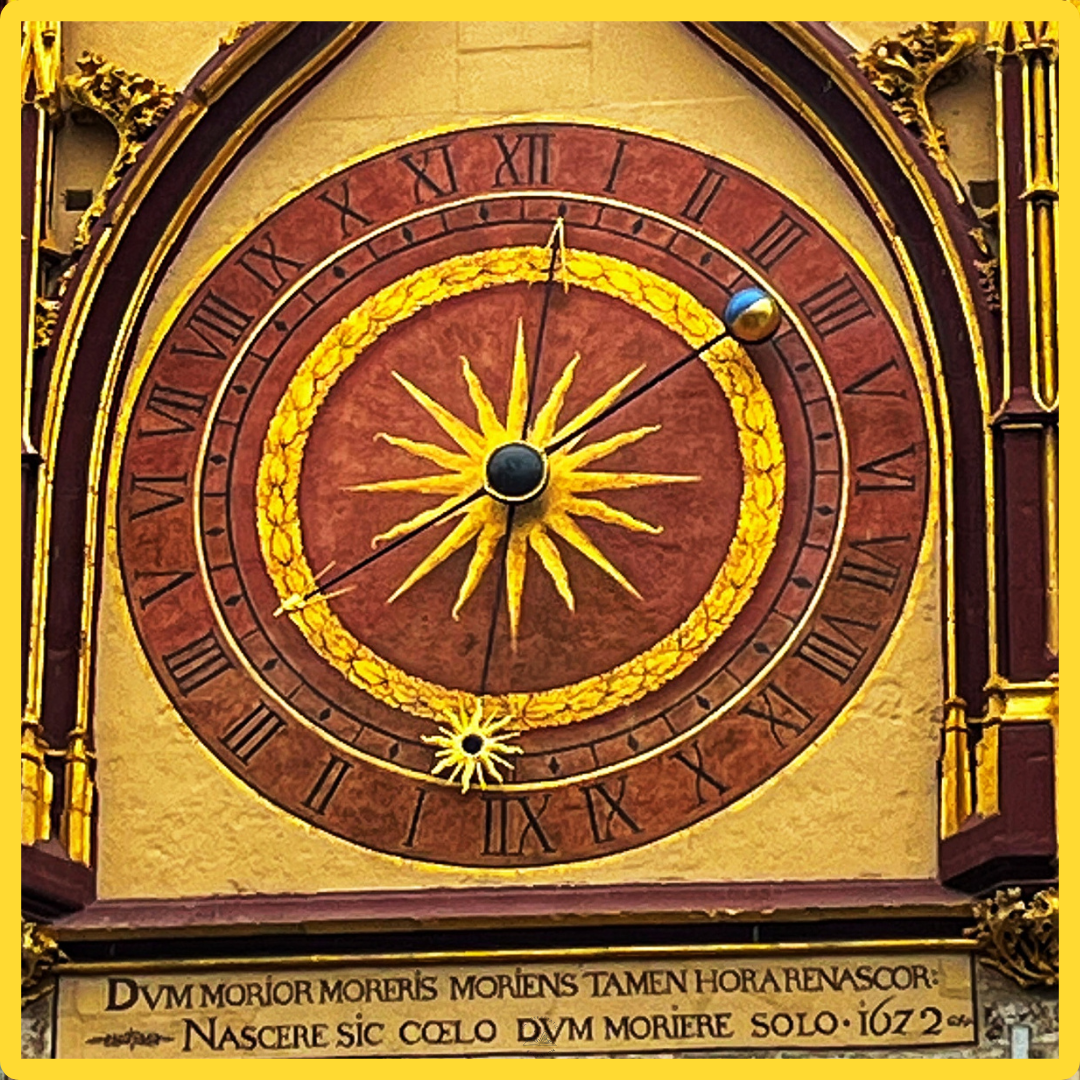
Learning how to talk about age and time in French often breaks down at this word. This resource makes ‘an / ans’ clear, memorable, and usable from the start.
View a free sample of this approach:
Salut (French) – Structured Vocabulary Support (Free Sample)
What It Does
This resource teaches the meaning and use of ‘an / ans’ through clear explanation, simple visuals, and structured context. It shows how the word is used to count years and say age, and why it appears in key phrases like ‘j’ai 10 ans’. The historical link to Latin ‘annus’ is used to support understanding, not as content to memorise. Learners see how the word connects to familiar English words like ‘annual’ and ‘anniversary’, helping meaning stick over time.
What Makes It Different
• Focuses on meaning first, not memorisation
• Uses visuals to reduce verbal overload and support recall
• Explains the difference between ‘an’ and ‘année’ clearly
• Links to familiar English words to strengthen understanding
Originally created to support my own child’s vocabulary retention.
Who It’s For
Suitable for KS2–KS3 learners, especially those who find vocabulary hard to retain, including dyslexic and neurodivergent learners. Also useful for parents and tutors supporting French at home.
How To Use
Use in short, guided sessions (5–10 minutes). Start with meaning, then use the images to support discussion. Revisit regularly over time rather than completing in one sitting.
Internal Links
Explore more structured vocabulary resources in The Forge, and deepen understanding through The Wordcrafter’s Bench.
More in this French Vocabulary Series
• ‘année’ – understanding duration vs counted time
• ‘anniversaire’ – yearly return and meaning
• ‘salut’ – everyday greeting (free sample)
• ‘jour’ – day and time vocabulary
© Great Expectations Education
For personal use in home education and tutoring only.
A simple, carefully structured resource designed to help learners understand and remember the French verb jouer.
View a free sample of this approach:
Salut (French) – Structured Vocabulary Support (Free Sample)
This is not a worksheet. It is a short, visual sequence that builds meaning gradually, using clear images and small steps.
Learners begin with what jouer means today, then see how that meaning developed over time. This helps the word feel logical, not arbitrary.
What this resource does
Supports understanding of jouer (‘to play’) in a clear, concrete way
Uses images to reduce verbal load and support recall
Shows how meanings connect (play, music, performance)
Helps learners recognise the word when they meet it again
How it works
Each page presents one small idea
Images anchor meaning before explanation
Historical context is used to support understanding, not to be memorised
Designed for short, guided use (5–10 minutes at a time)
This approach is particularly helpful for learners who find isolated vocabulary difficult to retain.
Who it is for
KS3 French learners (especially early stages)
Dyslexic and neurodivergent learners
Parents and tutors supporting vocabulary at home
An adult guides the discussion. There is no expectation to memorise explanations or retell history.
What makes this different
Meaning comes first
History is used carefully to clarify, not overload
Images are deliberately simple and purposeful
Designed for revisiting over time, not one-off completion
Format
Printable PDF
Black and white (fully accessible without colour)
Suitable for home or tutoring use
© Great Expectations Education
For personal use in home education and tutoring only.

Understanding ‘grand’ shouldn’t rely on memorising one meaning. This resource helps learners grasp how ‘grand’ works across real contexts, so it sticks.
View a free sample of this approach:
Salut (French) – Structured Vocabulary Support (Free Sample)
What It Does
This resource builds a clear, connected understanding of the French word ‘grand’. Learners explore how it means ‘big’, ‘tall’, ‘older’, and ‘important’, supported by simple visuals and concise explanations. It introduces the wider word family, including ‘grandeur’, ‘agrandir’, and ‘grandiose’, helping learners recognise patterns rather than memorising isolated forms. The focus is on meaning first, with etymology used to support understanding, not as content to learn.
What Makes It Different
• Links multiple meanings of a high-frequency word into one coherent idea
• Uses etymology to support retention without overloading memory
• Builds awareness of word families (‘grand’, ‘grandeur’, ‘agrandir’)
• Designed for short, repeatable sessions rather than one-off teaching
Originally created to support my own child’s vocabulary retention.
Who It’s For
KS2–KS3 learners, particularly those who struggle to retain vocabulary when taught as isolated words. Suitable for parents, tutors, and teachers supporting dyslexic or neurodivergent learners.
How To Use
Use in short, guided sessions (5–10 minutes). Start with the meaning of ‘grand’ in context, then use the visuals to anchor understanding. Revisit over time rather than completing in one sitting.
Explore more structured vocabulary resources in The Forge, and deepen word understanding through The Wordcrafter’s Bench.
More in this series
‘près de’ (French)
‘habite’ (French)
‘salut’ (French)
‘bonjour’ (French)
© Great Expectations Education
For personal use in home education and tutoring only.
Understanding German question words can feel harder than it should. This resource makes ‘wo’ clear, memorable, and connected so learners can use it with confidence.
View a free sample of this approach: Salut (French) – Structured Vocabulary Support (Free Sample)
This structured vocabulary resource supports learners in understanding and retaining the German word ‘wo’ (where) through clear meaning, simple visuals, and carefully selected historical context. It is designed to reduce cognitive overload and make vocabulary feel logical rather than arbitrary.
What It Does
This resource helps learners understand ‘wo’ as a core question word about place. It connects modern usage to earlier forms such as Proto-Germanic ‘hwō’ and Old High German ‘wā’, showing how meaning has stayed stable over time. The structured layout supports recognition, recall, and confidence when encountering the word in reading or lessons.
What Makes It Different
• Focuses on meaning first, not memorisation or testing
• Uses etymology to support understanding, not as content to learn
• Visual structure reduces verbal load and supports dyslexic learners
• Designed for short, repeatable use rather than one-off completion
Originally created to support my own child’s vocabulary retention.
Who It’s For
KS3 learners, particularly those who find vocabulary difficult to retain, including dyslexic learners. Also suitable for parents and tutors supporting German at home.
How To Use
Use in short, guided sessions of 5–10 minutes. Begin with the meaning, then use the images to prompt discussion. Revisit over time rather than completing in one sitting.
Internal Links
Explore more structured literacy resources in The Forge, and deepen word understanding through morphology in The Wordcrafter’s Bench.
More in this German series
• ‘wer’ (who) – Structured Vocabulary Support
• ‘was’ (what) – Structured Vocabulary Support
• ‘wann’ (when) – Structured Vocabulary Support
• ‘warum’ (why) – Structured Vocabulary Support
Learning German vocabulary can feel difficult when words are taught as isolated items to memorise. This resource helps learners understand and retain ‘traurig’ by showing how its meaning connects across time and related words.
View a free sample of this approach: Salut (French) – Structured Vocabulary Support (Free Sample)
What It Does
This resource explains the German word ‘traurig’ (‘sad’) through clear meaning, simple visuals, and historically grounded context. It shows how ‘Trauer’ (‘grief’) developed into ‘traurig’, meaning ‘full of grief’, and links this to related forms like ‘Traurigkeit’. The aim is not to teach history, but to make the word more logical and easier to remember.
What Makes It Different
• Focuses on meaning first, not memorisation
• Uses visual anchors to support recall and reduce cognitive load
• Builds connections across related words (‘Trauer’, ‘trauern’, ‘Traurigkeit’)
• Designed for short, repeatable sessions rather than one-off teaching
Originally created to support my own child’s vocabulary retention.
Who It’s For
KS3 learners, especially those who find vocabulary hard to retain
Dyslexic and neurodivergent learners
Parents and tutors supporting German at home
How To Use
Use in short, guided sessions (5–10 minutes). Start with the modern meaning (‘sad’), then explore the images and connections. Revisit occasionally over time rather than completing in one sitting. This supports recognition and confidence rather than memorisation.
Explore more structured vocabulary resources in The Forge, and deepen understanding of word structure in The Wordcrafter’s Bench.
You may also find these helpful:

Understanding ‘près de’ often breaks down because it is abstract, frequent, and easy to confuse. This resource makes it concrete, visual, and memorable.
View a free sample of this approach:
Salut (French) – Structured Vocabulary Support (Free Sample)
What It Does
This resource supports learners in understanding and retaining the French structure ‘près de’ (‘near to’). It uses clear visuals, simple explanation, and a carefully structured etymological pathway to show how the meaning develops from physical closeness into spatial and figurative use. The aim is not memorisation, but recognition and long-term understanding.
What Makes It Different
• Builds meaning through visual proximity, not translation
• Connects ‘near’ and ‘almost’ through one clear semantic pathway
• Reduces cognitive load by limiting explanation and focusing on one idea
• Designed for short, repeatable use rather than one-off completion
Originally created to support my own child’s vocabulary retention.
Who It’s For
KS3 learners learning core French vocabulary
Dyslexic learners who struggle with abstract or relational language
Parents and tutors supporting vocabulary outside the classroom
How To Use
Use in short, guided sessions (5–10 minutes). Start with the meaning today, then use the images to anchor understanding. Revisit over time rather than completing in one sitting. Avoid testing or requiring explanation recall.
Internal Links
Explore the full system via The Forge, and deepen understanding through The Wordcrafter’s Bench.
Related French Vocabulary Resources
• grand / grande (size and scale)
• habiter (living and location)
• ville (places and environment)
• maison (home and setting)
© Great Expectations Education
For personal use in home education and tutoring only.
Many learners can say ‘j’habite…’ but don’t retain or connect the word beyond that moment. This resource makes ‘habiter’ stick by linking meaning, form and word family.
View a free sample of this approach:
Salut (French) – Structured Vocabulary Support (Free Sample)
What It Does
This resource introduces ‘habiter’ through its core meaning, ‘to live somewhere’, and builds understanding through clear explanation, simple visuals, and a structured word pathway. It connects the verb to related English words such as ‘inhabit’, ‘habitation’, ‘habitat’ and ‘habit’, helping learners see vocabulary as part of a system rather than isolated items. The focus is on recognition, recall and confidence over time.
What Makes It Different
• Meaning-first approach before history or explanation
• Carefully controlled etymology to support memory, not overload it
• Visual sequence designed to anchor understanding without distraction
• Links to familiar English vocabulary to strengthen retention
Originally created to support my own child’s vocabulary retention.
Who It’s For
KS3 learners, particularly those who struggle to retain vocabulary, including dyslexic and neurodivergent learners. Also suitable for tutors and parents supporting French at home.
How To Use
Use in short, guided sessions of 5–10 minutes. Start with the modern meaning, then explore the visuals. Revisit regularly over time rather than completing in one sitting.
Explore more structured vocabulary resources in The Forge, and connect word learning to morphology through The Wordcrafter’s Bench.
You may also be interested in:
• Salut (French) – Structured Vocabulary Support (Free Sample)
• Grand (French) – Structured Vocabulary Support
• Près de (French) – Structured Vocabulary Support
• Chez (French) – Structured Vocabulary Support
© Great Expectations Education
For personal use in home education and tutoring only.
Image: taken in Abbatiale on holiday
The clock is the Tour de l'Horloge in Auxerre. The mechanism has been running since 1483.
Before German had a word for 'year' as a unit of time, it had a word for something returning. That Proto-Indo-European root, yer-, is where both 'Jahr' and the English 'year' begin. They've been travelling in parallel ever since.
View a free sample of this approach: Salut (French) – Structured Vocabulary Support (Free Sample)
The resource
The pack traces 'Jahr' from its earliest reconstructed root through to modern German, with an illustration at each stage. The connection to English 'year' is made explicit — once a learner sees it, the word tends to stop feeling arbitrary.
It prints in two formats. The early pages are designed as double panels — cut along the yellow borders, laminate back to back, and fasten with a binding ring. Different words can be grouped together this way; free Wordhord cards can be added in too. The last page is a comic strip layout, which covers the same content in a single sheet. That's the one I tend to reach for — it's quicker.
The etymological information is drawn from established sources, cited at the end of the resource. As with all historical linguistics, some reconstructions involve a degree of scholarly interpretation — but the connections shown here are well-attested. Etymology is my specialist subject; I have a linguistics degree and spent years teaching Language Change at A-Level, though I'd always encourage checking.
The approach
Traces the word through meaning and origin rather than repetition — useful for any child who finds vocabulary lists hard to retain
Connects 'Jahr' explicitly to the English 'year', so the relationship feels logical rather than arbitrary
Useful where working memory is a factor — the etymology gives the word somewhere to anchor
Each historical stage is illustrated simply, to reduce cognitive load
Short sessions of 5–10 minutes, revisited over time
I made this for my son, who is dyslexic. Repeating words until they stuck wasn't working. Understanding where a word came from made more difference than more practice. My interest in German word origins grew out of summers camping across Europe — the kind of etymological curiosity that starts with a word on a sign and doesn't quite stop.
The learner
Any child who finds rote vocabulary memorisation hard going — whether that's due to dyslexia, a different learning profile, or simply the way their memory works. Your child might be following a school German programme, working through a home education curriculum, or just curious about words. Each pack works independently, so there's no set order and no need to start at the beginning. Particularly useful for KS3 learners, parents supporting German at home, tutors, and MFL teachers looking for a short pre-teaching or consolidation tool.
Some children pick it up themselves — the illustrations are designed to be self-explanatory enough to browse without guidance. I tend to leave it on the kitchen table; my son looks through it over breakfast. It doesn't feel like school work.
How to use
No preparation needed — open the first page and see what happens. You might begin with what the word means today, keeping that part brief. You might just look at the pictures together and see what they notice. The child can lead. It works equally well as a short teaching aid or a pre-teaching tool before a new vocabulary unit, and for consolidation later. Print it, use it in a session, and leave it with your child to refer back to.
It works even if the response is minimal. Looking at the illustrations is enough to start with. There's no schedule to keep.
The Wordhord has a free entry on September — it covers some of the same calendar territory, the Roman year and month names as fossils of older counting systems. Worth a look alongside this. If you're also exploring the French strand, Ancien is a related starting point.
Explore the full collection in The Forge, or find more German vocabulary packs in Die Wortwerkbank. Buying a few packs at once — use code BUNDLEBUY3EMW at checkout for 15% off orders over £16.
These resources are created using AI tools under my direction. My first priority is accuracy — I supply the sources, check each draft, and redraft until I'm satisfied. Each resource typically takes several hours to produce. My son uses these resources, so getting them right matters to me personally.
Other packs in this series: Was, Wann Wer Leben.
For personal use in home education and tutoring only. For school or institutional licensing, do get in touch.
View a free sample of this approach:
Salut (French) – Structured Vocabulary Support (Free Sample)
German vocabulary is often taught as isolated words to memorise. This short guided resource helps learners understand and remember spielen by connecting meaning, imagery, and word history.
What It Does
This resource helps learners understand the German verb spielen (‘to play’) through clear explanation and visual anchors. It shows how the word developed from earlier German forms linked to games, music, and lively activity, helping learners see why the modern meanings make sense.
The historical context is included only to support understanding. Learners are not expected to memorise dates or linguistic stages. The goal is simply to make the word feel more logical and easier to remember when it appears again.
What Makes It Different
• Explains the meaning of spielen through clear visual scenes (games, music, performance)
• Uses historically informed context to make vocabulary more memorable
• Designed for short discussion-based sessions rather than memorisation
• Supports dyslexic and neurodivergent learners through structured explanation
Originally created to support my own child’s vocabulary retention.
Who It’s For
KS3 German learners, home-educating families, tutors, and parents supporting vocabulary retention. Particularly useful for learners who find isolated word lists difficult to remember.
How To Use
Use in short guided sessions of around 5–10 minutes. Start with the modern meaning, discuss the illustrations, and revisit the resource occasionally over time.
The aim is recognition and confidence with the word when it appears again, not memorisation of historical detail.
Explore the full structured vocabulary collection in The Forge, and see how vocabulary explanation connects to wider word-learning through The Wordcrafter’s Bench.
Related German Vocabulary Resources in Die Wortwerkbank
• gehen – Structured Vocabulary Support
• sehen – Structured Vocabulary Support
• machen – Structured Vocabulary Support
• haben – Structured Vocabulary Support
© Great Expectations Education
For personal use in home education and tutoring only.
View a free sample of this approach:
Salut (French) – Structured Vocabulary Support (Free Sample)
German learners often encounter ‘was’ very early, but it can still feel like an arbitrary word to memorise. This resource explains the meaning of was clearly and shows where the word comes from, helping learners understand why it looks familiar to English speakers.
What It Does
This short structured resource supports learners in understanding and remembering the German word ‘was’, meaning ‘what’.
Using simple visuals and historically informed explanation, the resource shows how the word developed from early Indo-European language through Proto-Germanic and Old High German before becoming the modern German was. Learners see how it connects directly to the English word ‘what’, making the vocabulary easier to recognise and recall.
The focus is understanding, not memorising history. The historical pathway simply helps the word make sense.
What Makes It Different
• Explains vocabulary through meaning and language history, not memorisation
• Uses clear imagery to anchor understanding for dyslexic learners
• Connects German vocabulary to familiar English words where relevant
• Designed for short guided discussions rather than worksheets
Originally created to support my own child’s vocabulary retention.
Who It’s For
This resource is particularly helpful for:
• KS3 German learners
• Dyslexic or neurodivergent learners who struggle with isolated vocabulary lists
• Parents supporting homework
• Tutors running short vocabulary consolidation sessions
How To Use
Use the resource in short 5–10 minute guided sessions.
Start with the modern meaning of the word. Use the illustrations to discuss what the learner can see. Return to the resource occasionally over several weeks rather than completing it all at once. The aim is recognition and confidence when the word appears again.
Explore the full structured literacy resource hub in The Forge, or see how morphology and word families connect across languages in The Wordcrafter’s Bench.
Related French Structured Vocabulary Resources
• German wer – meaning ‘who’
• German wie – meaning ‘how’
• German wann – meaning ‘when’
• German wo – meaning ‘where’
© Great Expectations Education
For personal use in home education and tutoring only.

View a free sample of this approach:
Salut (French) – Structured Vocabulary Support (Free Sample)
German vocabulary can be difficult to retain when words are presented as isolated items to memorise. This short guided resource helps learners understand the meaning of ‘wann’, the German word for ‘when’, through clear explanation, simple visuals, and historical context.
View a free sample of this approach:
Salut (French) – Structured Vocabulary Support (Free Sample)
What It Does
This short resource supports learners in understanding and remembering the German question word ‘wann’, used to ask about time. Instead of relying only on memorisation, it explains how the word developed and how it connects to familiar English vocabulary such as ‘when’. The illustrations provide visual anchors that support discussion and reinforce meaning. Sessions are designed to be short and revisited over time.
What Makes It Different
• focuses on understanding meaning rather than memorising vocabulary lists
• uses simple visual prompts to support dyslexic and visual learners
• explains vocabulary through historically informed context
• designed for short, guided consolidation sessions
Originally created to support my own child’s vocabulary retention.
Who It’s For
This resource is designed for:
• KS3 German learners
• dyslexic learners who benefit from structured vocabulary explanation
• tutors and parents supporting German vocabulary retention
• students encountering German question words such as wann, wer, and was
How To Use
Use in short adult-guided sessions of around 5–10 minutes.
Start with the modern meaning of the word. Use the illustrations to prompt discussion about what the learner notices. The historical explanation supports understanding but is not intended to be memorised. The resource works best when revisited occasionally over several weeks.
Explore More
You can explore the wider structured literacy resource hub in The Forge, and the morphology pathway in The Wordcrafter’s Bench.
More German Vocabulary in This Series
• Was — Structured Vocabulary Support
• Wer — Structured Vocabulary Support
• Wie — Structured Vocabulary Support
• Wo — Structured Vocabulary Support
© Great Expectations Education
For personal use in home education and tutoring only.

View a free sample of this approach:
Salut (French) – Structured Vocabulary Support (Free Sample)
‘Warum’ is a small word with a heavy workload.
This structured mini-lesson helps learners understand not just that warum means “why”, but how the word developed — and why that history strengthens retention.
What It Does
This printable resource supports deeper consolidation of the German question word warum. Instead of memorising it as an isolated translation, learners see how its meaning evolved from “about what” to “for what reason” to modern “why”.
The structured timeline, clear explanation panels, and visual anchors help learners build a logical pathway. It supports understanding first, memorisation second.
Designed for short, guided sessions that can be revisited over time.
What Makes It Different
• Chronological etymology pathway from Proto Germanic to Modern German
• Explicit explanation of semantic shift (“about what” → “for what reason” → “why”)
• Visual scaffolding to reduce cognitive load
• Clear adult guidance to prevent over-teaching or memorisation pressure
Originally created to support my own child’s vocabulary retention.
Who It’s For
KS3 learners, home-educating families, tutors, and dyslexia-aware parents supporting German vocabulary retention.
Especially useful for learners who struggle to retain high-frequency question words when taught as single translation pairs.
How To Use
Use in 5–10 minute adult-guided sessions.
Start with the modern meaning.
Use the illustrations to prompt discussion.
Revisit occasionally across weeks.
This is a consolidation tool, not a full teaching programme and not a test resource.
Part of the structured vocabulary strand within The Forge.
This approach sits within the wider morphology-informed pathway at The Wordcrafter’s Bench.
Related German Question Words in This Series
• Wer (who) – Structured German Vocabulary Support
• Was (what) – Structured German Vocabulary Support
• Wieso (why / how so) – Structured German Vocabulary Support
• Weshalb (why / for what reason) – Structured German Vocabulary Support
© Great Expectations Education
For personal use in home education and tutoring only.

Confident French vocabulary isn’t built through memorising lists.
This resource helps learners understand what ‘adorer’ really means — and why it feels stronger than ‘aimer’.
View a free sample of this approach:
Salut (French) – Structured Vocabulary Support (Free Sample)
What It Does
This printable resource supports consolidation of the French verb ‘adorer’. It explains the word’s modern meaning clearly, then shows how its meaning developed over time. Historical context is used to clarify meaning — not as content to memorise.
Designed for short, guided sessions, it strengthens retention through explanation, imagery, and structured discussion.
What Makes It Different
• Focuses on understanding, not memorising
• Clarifies the intensity difference between ‘adorer’ and ‘aimer’
• Uses word history to support meaning, not test recall
• Structured for dyslexic and neurodivergent learners
Originally created to support my own child’s vocabulary retention
Who It’s For
KS3 French learners, GCSE students needing consolidation, tutors, and parents supporting vocabulary at home — particularly helpful for dyslexic and neurodivergent learners.
How To Use
Use in short 5–10 minute guided sessions.
Start with modern meaning. Use the illustrations to prompt discussion. Revisit occasionally over several weeks. This is a consolidation tool, not a teaching-ahead resource.
Explore the full collection in The Forge, or see how this fits within The Wordcrafter’s Bench morphology pathway.
© Great Expectations Education
For personal use in home education and tutoring only.

View a free sample of this approach:
Salut (French) – Structured Vocabulary Support (Free Sample)
This structured vocabulary resource is designed to support learners who find German vocabulary harder to retain when words are taught as isolated items to memorise. It focuses on the high-frequency German question word wer, explaining what it means in modern German and how its meaning has remained stable over time.
Rather than relying on simple translation, the resource shows how wer fits into a wider system of meaning: how it is used to ask about people, how it contrasts with other German question words, and why it does not mean the same thing as words like wo. Earlier forms included in the resource are linguistic reconstructions used by scholars to model how the word is understood to have developed. These are not recorded quotations and are included only where they help make the modern meaning clearer and more logical.
Where helpful, links are made to familiar patterns in English, such as the relationship between wer and who. This allows learners to anchor the German word in existing knowledge and supports cross-linguistic transfer, helping vocabulary feel less arbitrary and more connected.
Each panel draws attention to one clear idea at a time, such as continuity of meaning or differences between person-questions and place-questions, without requiring learners to memorise historical detail. Learners are not expected to remember dates, language stages, or technical terminology. Panels can be explored in order or revisited independently over time, reducing working-memory load and supporting flexible use in short sessions.
This resource is designed with dyslexic and neurodivergent learners in mind, particularly those who benefit from explicit structure, reduced verbal load, and visual anchoring. It supports recognition, confidence, and longer-term vocabulary retention when learners encounter wer again in lessons or reading. It does not replace teaching, practice, or repetition, but helps make repeated exposure more meaningful and effective.
The approach is grounded in evidence-based literacy practice and structured language explanation. Meaning is prioritised throughout, with historical context used only where it helps learners understand how the word works in present-day German .
What’s included
• A clear visual explanation of what wer means in modern German
• Explicit clarification that wer is used to ask about people
• Support for distinguishing wer from other German question words
• Simple black-and-white illustrations designed to anchor meaning and reduce verbal explanation
• Historically informed context used only to support understanding, not memorisation
How to use
Best used in short sessions (5–10 minutes), revisited over time. Start with what wer means today, then use the panels to support discussion and understanding. Panels do not need to be used all at once or in a fixed order. An adult guides use and decides when to stop.
This resource supports classroom learning, tutoring, and home education, but does not replace teaching or practice .
Who it’s for
• Dyslexic learners studying German
• KS3–KS4 pupils who struggle with vocabulary retention
• Parents, tutors, and intervention teachers
• Learners who benefit from explicit, structured language explanation
© Great Expectations Education
For personal use in home education and tutoring only.

View a free sample of this approach:
Salut (French) – Structured Vocabulary Support (Free Sample)
A structured vocabulary resource designed to support learners who find German vocabulary harder to retain when words are taught as isolated items to memorise. This resource focuses on the high-frequency German word Kaninchen, explaining what it means in modern German and how its meaning developed over time.
Rather than relying on simple translation, the resource shows how Kaninchen is connected to earlier naming patterns for animals and to ideas of classification and familiarity. Earlier forms included in the resource are linguistic reconstructions used by scholars to model how the word is thought to have developed. They are not recorded quotations and are included only where they help make the modern meaning clearer and more logical.
Where helpful, links are made to familiar patterns in English, including how animal names can shift in form and usage over time. This allows learners to anchor the German word in existing knowledge and supports cross-linguistic transfer, rather than treating vocabulary as arbitrary.
Each panel draws attention to one clear idea at a time, such as naming, form, or continuity of meaning, without requiring learners to memorise historical detail. Learners are not expected to remember dates, language stages, or technical terminology. Panels can be explored in order or revisited independently over time, reducing working-memory load and supporting flexible use in short sessions.
The resource is designed with dyslexic and neurodivergent learners in mind, particularly those who benefit from explicit structure, reduced verbal load, and visual anchoring. It supports recognition, confidence, and longer-term vocabulary retention when learners encounter Kaninchen again in lessons or reading.
The accompanying photograph of a rabbit provides a clear, real-world visual anchor, reinforcing the modern meaning of Kaninchen as a concrete, living animal rather than an abstract vocabulary item.
What’s included
• A clear visual explanation of how Kaninchen developed and what it means in modern German
• Explicit clarification of meaning without relying on rote memorisation
• Simple black-and-white illustrations designed to anchor understanding and reduce verbal explanation
• Support for understanding semantic development without requiring memorisation of history
How to use
Best used in short sessions (5–10 minutes), revisited over time. Start with what Kaninchen means today, then use the panels to support discussion and understanding. Panels do not need to be used all at once or in strict order. An adult guides use and decides when to stop.
This resource supports classroom learning, tutoring, and home education, but does not replace teaching or practice.
Who it’s for
• Dyslexic learners studying German
• KS3–KS4 pupils who struggle with vocabulary retention
• Parents, tutors, and intervention teachers
• Learners who benefit from explicit, structured language explanation
© Great Expectations Education
For personal use in home education and tutoring only.

View a free sample of this approach:
Salut (French) – Structured Vocabulary Support (Free Sample)
A structured vocabulary resource designed to support learners who find German vocabulary harder to retain when words are taught as isolated items to memorise. This resource focuses on the high-frequency German word Pferd, explaining what it means in modern German and how its meaning developed over time.
Rather than relying on simple translation, the resource shows how Pferd is connected to earlier ideas of riding, transport, and everyday use. Earlier forms included in the resource are linguistic reconstructions used by scholars to model how the word is thought to have developed. They are not recorded quotations and are included only where they help make the modern meaning clearer and more logical.
Where helpful, links are made to familiar patterns in English, such as older or regional words for ‘horse’, and to related ideas of travel and riding. This allows learners to anchor the German word in existing knowledge and supports cross-linguistic transfer, rather than treating vocabulary as arbitrary.
Each panel draws attention to one clear idea at a time, such as continuity of meaning or change in form, without requiring learners to memorise historical detail. Learners are not expected to remember dates, language stages, or technical terminology. Panels can be explored in order or revisited independently over time, reducing working-memory load and supporting flexible use in short sessions.
The resource is designed with dyslexic and neurodivergent learners in mind, particularly those who benefit from explicit structure, reduced verbal load, and visual anchoring. It supports recognition, confidence, and longer-term vocabulary retention when learners encounter Pferd again in lessons or reading.
What’s included
• A clear visual explanation of how Pferd developed and what it means in modern German
• Explicit clarification of meaning without relying on rote memorisation
• Simple black-and-white illustrations designed to anchor understanding and reduce verbal explanation
• Support for understanding semantic development without requiring memorisation of history
How to use
Best used in short sessions (5–10 minutes), revisited over time. Start with what Pferd means today, then use the panels to support discussion and understanding. Panels do not need to be used all at once or in strict order. An adult guides use and decides when to stop.
This resource supports classroom learning, tutoring, and home education, but does not replace teaching or practice.
Who it’s for
• Dyslexic learners studying German
• KS3–KS4 pupils who struggle with vocabulary retention
• Parents, tutors, and intervention teachers
• Learners who benefit from explicit, structured language explanation
Photograph taken on a high mountain pasture above Andorra.
© Great Expectations Education
For personal use in home education and tutoring only.
View a free sample of this approach:
Salut (French) – Structured Vocabulary Support (Free Sample)
A structured vocabulary resource designed to support learners who find German vocabulary harder to retain when words are taught as isolated items to memorise. This resource focuses on the high-frequency German word Schlange, explaining what it means in modern German and how its meaning developed over time.
Rather than relying on simple translation, the resource shows how Schlange is connected to earlier ideas of winding, looping, and curving. Earlier forms included in the resource are linguistic reconstructions used by scholars to model how the word is thought to have developed. They are not recorded quotations and are included only where they help make the modern meaning clearer and more logical.
Where helpful, links are made to familiar patterns in English, such as words connected to looping, coiling, or bending. This allows learners to anchor the German word in existing knowledge and supports cross-linguistic transfer, rather than treating vocabulary as arbitrary.
Each panel draws attention to one clear idea at a time, such as shape or movement, without requiring learners to memorise historical detail. Learners are not expected to remember dates, language stages, or technical terminology. Panels can be explored in order or revisited independently over time, reducing working-memory load and supporting flexible use in short sessions.
The resource is designed with dyslexic and neurodivergent learners in mind, particularly those who benefit from explicit structure, reduced verbal load, and visual anchoring. It supports recognition, confidence, and longer-term vocabulary retention when learners encounter Schlange again in lessons or reading.
The accompanying photograph of a snake, taken at Westonbirt Arboretum, provides a real-world visual anchor to reinforce the idea of winding shape and movement.
What’s included
• A clear visual explanation of how Schlange developed and what it means in modern German
• Explicit clarification of the core meaning and how it extends to related uses
• Simple black-and-white illustrations designed to anchor meaning and reduce verbal explanation
• Support for understanding semantic development without requiring memorisation of history
How to use
Best used in short sessions (5–10 minutes), revisited over time. Start with what Schlange means today, then use the panels to support discussion and understanding. Panels do not need to be used all at once or in strict order. An adult guides use and decides when to stop.
This resource supports classroom learning, tutoring, and home education, but does not replace teaching or practice.
Who it’s for
• Dyslexic learners studying German
• KS3–KS4 pupils who struggle with vocabulary retention
• Parents, tutors, and intervention teachers
• Learners who benefit from explicit, structured language explanation
© Great Expectations Education
For personal use in home education and tutoring only.

View a free sample of this approach:
Salut (French) – Structured Vocabulary Support (Free Sample)
This structured vocabulary resource supports learners who find German vocabulary difficult to retain when words are taught as isolated items to memorise. It focuses on the high-frequency German word auch, explaining what it means in modern German and how its meaning developed over time.
Rather than relying on direct translation alone, the resource shows how auch is rooted in the idea of adding or including something more. Earlier forms are introduced only where they help make the modern meaning clearer and more logical. These earlier forms are linguistic reconstructions, used by scholars as explanatory models. They are not recorded quotations and are not treated as facts to be learned.
Where helpful, links are made to familiar patterns in English, including the connection between German auch and the English phrase to eke out, which still carries the older idea of adding or stretching something. This supports cross-linguistic transfer and helps learners see vocabulary as meaningful rather than arbitrary.
Each panel focuses on one clear idea at a time, such as inclusion, confirmation, or emphasis, without requiring learners to memorise historical detail. Learners are not expected to remember dates, language stages, or terminology. Panels can be explored in order or revisited independently, reducing working-memory load and supporting flexible use in short sessions.
The resource is designed with dyslexic and neurodivergent learners in mind. It prioritises explicit structure, reduced verbal load, and visual anchoring. It does not replace teaching or practice, but helps make repeated exposure more meaningful and effective over time.
The approach is grounded in evidence-based literacy practice and structured language explanation. Meaning comes first; historical context is used only where it supports understanding of how the word works in present-day German .
What’s included
• A clear visual explanation of what auch means in modern German
• Support for understanding auch as ‘also’, ‘too’, and as a word that confirms or adds emphasis
• Simple black-and-white illustrations designed to anchor meaning and reduce verbal explanation
• Careful links to English where they support understanding, without overloading learners
• Support for semantic understanding without requiring memorisation of history
How to use
Best used in short sessions (5–10 minutes), revisited over time. Start with what auch means today, then use the panels to support discussion and understanding. Panels do not need to be used all at once or in strict order. An adult guides use and decides when to stop.
This resource supports classroom learning, tutoring, and home education, but does not replace teaching or practice.
Who it’s for
• Dyslexic learners studying German
• KS3–KS4 pupils who struggle with vocabulary retention
• Parents, tutors, and intervention teachers
• Learners who benefit from explicit, structured language explanation
Photograph taken from a window in Schloss Thun, looking out over Thun.
© Great Expectations Education
For personal use in home education and tutoring only.
This resource provides a core German vocabulary set focused on describing yourself, members of your family, and animals or pets. It includes the key words learners need to respond to common speaking and short writing tasks, such as personal descriptions, family descriptions, and simple questions about pets and birthdays.
I originally created this resource for my son while he was revising for a German speaking test. He understood the language content, but the combination of listening to a question, recalling vocabulary, planning a sentence, and speaking accurately at the same time created unnecessary difficulty. Making the vocabulary visible during revision changed the task from one of memory under pressure to one of language use.
This resource reduces cognitive load by separating vocabulary retrieval from sentence construction. Instead of needing to recall every word from memory, learners can see the vocabulary while practising. This allows them to focus their attention on the essential aspects of language production: structure, meaning, and accuracy.
For many neurodivergent learners, including those who are dyslexic or autistic, word retrieval under pressure can be a significant barrier. Difficulty finding a word does not mean the word is not known, but it can interrupt thinking, increase anxiety, and lead to disengagement. By removing the requirement to retrieve vocabulary at the same time as forming sentences, this resource helps prevent that breakdown.
Keeping the vocabulary visible also increases predictability and control. Learners can see the full set of expected words, select a manageable subset, rehearse responses repeatedly, and check accuracy independently. This supports learners who benefit from clear structure, reduced uncertainty, and consistent routines.
The vocabulary can be used as:
a word bank for speaking or writing
support when rehearsing likely assessment questions
a planning tool before writing
a reference for checking accuracy after producing spoken or written answers
a way to select and practise a small, personal vocabulary set
This approach supports confident, accurate communication in German. The emphasis is on successful language use, not rote memorisation or recall under pressure, allowing learners to demonstrate what they know and build fluency through supported practice.

View a free sample of this approach:
Salut (French) – Structured Vocabulary Support (Free Sample)
A structured vocabulary resource designed to support learners who find German vocabulary harder to retain when words are taught as isolated items to memorise. This resource focuses on the high-frequency German word Leben, explaining what it means in modern German and how its meaning developed over time.
Rather than relying on simple translation, the resource shows how Leben is connected to earlier ideas of staying, continuing, and remaining. Earlier forms included in the resource are linguistic reconstructions used by scholars to model how the word is thought to have developed. They are not recorded quotations and are included only where they help make the modern meaning clearer and more logical.
Where helpful, links are made to familiar patterns in English, such as the relationship between life and live, and older uses connected to continuing or remaining. This allows learners to anchor the German word in existing knowledge and supports cross-linguistic transfer, rather than treating German vocabulary as arbitrary.
Each panel draws attention to one clear idea at a time, such as continuity of form or a shift in meaning, without requiring learners to memorise historical detail. Learners are not expected to remember dates, language stages, or technical terminology. Panels can be explored in order or revisited independently over time, reducing working-memory load and supporting flexible use in short sessions.
This resource was designed with dyslexic and neurodivergent learners in mind, particularly those who benefit from explicit structure, reduced verbal load, and visual anchoring. It supports recognition, confidence, and longer-term vocabulary retention when learners encounter Leben again in lessons or reading. It does not replace teaching, practice, or repetition, but helps make repeated exposure more meaningful and effective.
The approach is grounded in evidence-based literacy practice and structured language explanation. Meaning is prioritised first, with historical context used only where it helps learners understand how the word works in present-day German.
What’s included
• A clear visual explanation of how Leben developed and what it means in modern German
• Explicit clarification of how Leben functions as both a noun (‘life’) and a verb (‘to live’)
• Simple black-and-white illustrations designed to anchor meaning and reduce verbal explanation
• Support for understanding semantic development without requiring memorisation of history
How to use
Best used in short sessions (5–10 minutes), revisited over time. Start with what Leben means today, then use the panels to support discussion and understanding. Panels do not need to be used all at once or in strict order. An adult guides use and decides when to stop.
This resource supports classroom learning, tutoring, and home education, but does not replace teaching or practice.
Who it’s for
• Dyslexic learners studying German
• KS3–KS4 pupils who struggle with vocabulary retention
• Parents, tutors, and intervention teachers
• Learners who benefit from explicit, structured language explanation
© Great Expectations Education
For personal use in home education and tutoring only.
Understand imperative verbs and command words through real language you can see.
This downloadable resource uses a Structured Word Inquiry approach to help learners understand how the morpheme ‘imper’ links vocabulary and grammar through the idea of command and authority.
The accompanying image shows a real historical advertisement photographed inside an old Metropolitan line train carriage. Its headline is written as an imperative sentence, giving a clear, real-world example of how language is used to instruct, persuade, and impose an idea.
Rather than memorising grammar rules, learners explore how meaning develops from Latin into modern English, and how this meaning still shapes how sentences work today.
This pack includes:
A structured worksheet introducing the morpheme ‘imper’ through clear, step-by-step explanation
Explicit teaching of the Latin base ‘parāre’ and how meaning changes when prefixes are added
Guided activities linking the morpheme ‘imper’ to words such as ‘imperative’, ‘imperial’, ‘emperor’, and ‘empire’
Sentence-level work identifying and rewriting imperative sentences
A full answer key for checking and consolidation
This pack is ideal for:
Home educators
Learners in late Key Stage 2 and early Key Stage 3
Parents of dyslexic or neurodivergent learners
Families using Structured Word Inquiry
Teachers supporting grammar through meaning and structure
Designed by a qualified dyslexia specialist, this resource makes an abstract grammar concept concrete by anchoring it in real language, real history, and visible examples of command.

View a free sample of this approach:
Salut (French) – Structured Vocabulary Support (Free Sample)
A structured vocabulary resource designed to support learners who find French vocabulary harder to retain when words are taught as isolated items to memorise. This resource focuses on the common French adjective ‘méchant’, explaining how its meaning developed and how it is used in modern French.
Rather than relying on simple English translation, this resource shows how ‘méchant’ developed from earlier meanings connected to misfortune and harm, and how its meaning gradually shifted over time. This helps learners understand why ‘méchant’ does not map neatly onto a single English equivalent such as ‘mean’ or ‘nasty’, and how it functions in present-day French.
Historical information is included only where it clarifies meaning. Learners are not expected to remember dates, language stages, or historical terminology. The resource does not ask learners to memorise explanations or retell the history. History functions purely as a support for understanding how the word works today.
This resource was designed with dyslexic and neurodivergent learners in mind, particularly those who benefit from explicit structure, reduced verbal load, and visual anchoring. It supports recognition, confidence, and longer-term vocabulary retention when learners encounter méchant again in lessons or reading. It does not replace teaching, practice, or repetition, but helps make repeated exposure more effective over time.
The approach is grounded in evidence-based literacy practice and structured language explanation. Meaning is prioritised first, with historical context used only where it makes the word more logical and easier to retain.
What’s included
A clear visual explanation of how ‘méchant’ developed and what it means in modern French
Explicit clarification of how ‘méchant’ differs from simple English translations
Simple black-and-white illustrations designed to anchor meaning and reduce verbal explanation
Support for understanding semantic change without requiring memorisation of history
How to use
Best used in short sessions (5–10 minutes), revisited over time. Start with what ‘méchant’ means today, then use the images to support discussion. An adult guides use and decides when to stop. This resource supports classroom learning, tutoring, and home education, but does not replace teaching or practice.
Who it’s for
Dyslexic learners studying French
KS3–KS4 pupils who struggle with vocabulary retention
Parents, tutors, and intervention teachers
Learners who benefit from explicit, structured language explanation
Format
Printable PDF
Black-and-white printing fully supported
Laminating optional
© Great Expectations Education
For personal use in home education and tutoring only.
This resource provides four-in-a-row word-grid games for practising reading and spelling words containing the /θ/ sound.
The sound in this set is /θ/. The phonetic symbol /θ/ is part of the International Phonetic Alphabet. In English, this sound is most commonly written as ‘th’, as in thin and thick.
The words are organised by sound, rather than by spelling pattern or word type. Across the grids, words progress from shorter, more transparent items to longer or more complex words, allowing adults to choose an appropriate level for the learner.
How the game works: 4 in a row
Players take turns choosing a word and marking it on the grid.
The aim is to be the first to mark four words in a straight line (across, down, or diagonally).
Unlike the commercial version of this game, learners may start anywhere on the grid.
They do not have to begin at the bottom.
A word can only be marked if it is read or spelled accurately, depending on how the activity is being used.
All grids use the same four-in-a-row format, so learners can focus on the words rather than learning new game rules.
Sound contrast: ‘th’ and ‘f’
One grid in this pack is designed specifically for learners who find it difficult to distinguish between the sounds /θ/ (‘th’) and /f/.
This grid includes contrast words that differ only by the target sound, allowing learners to practise hearing and producing the difference between ‘th’ and ‘f’ while playing the same game.
The focus in this grid is sound discrimination, rather than spelling rules.
High-frequency and curriculum words
Some grids include longer or less transparent words that learners may encounter frequently in real reading, even if they are not yet confident readers.
For example, a learner who struggles with reading may still meet words such as ‘thousand’ in mathematics, particularly if they are more advanced in this area. Including these words allows learners to practise recognising and reading them within a supported, sound-focused activity, rather than encountering them only under pressure.
These words are included deliberately and sparingly, and are intended for guided use, not as first-attempt decoding targets.
What this resource is (and is not)
This resource is a set of word-grid games designed for repeated practice with the /θ/ sound.
It is intended for:
guided reading or spelling practice
targeted sound discrimination work
short, repeatable phonics activities
It is not intended to function as a standalone assessment or tracking tool.
View a free sample of this approach:
Salut (French) – Structured Vocabulary Support (Free Sample)
View a free sample of this approach:
Salut (French) – Structured Vocabulary Support (Free Sample)
A structured vocabulary resource designed to support learners who find French vocabulary harder to retain when words are taught as isolated items to memorise. This resource focuses on the common French adjective ennuyeux, explaining how its meaning developed and why it is used to describe boredom in modern French.
Rather than relying on simple translation, this resource shows how ennuyeux developed from earlier meanings connected to irritation and emotional burden, and how its meaning gradually shifted over time. This helps learners understand why ennuyeux does not map neatly onto English equivalents such as boring or annoying, and how it functions in present-day French.
Historical information is included only where it clarifies meaning. Learners are not expected to remember dates, language stages, or historical terminology. The resource does not ask learners to memorise explanations or retell the history. History functions purely as a support for understanding how the word works today.
This resource was designed with dyslexic and neurodivergent learners in mind, particularly those who benefit from explicit structure, reduced verbal load, and visual anchoring. It supports recognition, confidence, and longer-term vocabulary retention when learners encounter ennuyeux again in lessons or reading. It does not replace teaching, practice, or repetition, but helps make repeated exposure more effective over time.
The approach is grounded in evidence-based literacy practice and structured language explanation. Meaning is prioritised first, with historical context used only where it makes the word more logical and easier to retain.
What’s included
A clear visual explanation of how ennuyeux developed and what it means in modern French
Explicit clarification of how ennuyeux differs from simple English translations
Simple black-and-white illustrations designed to anchor meaning and reduce verbal explanation
Support for understanding semantic change without requiring memorisation of history
How to use
Best used in short sessions (5–10 minutes), revisited over time. Start with what ennuyeux means today, then use the images to support discussion. An adult guides use and decides when to stop. This resource supports classroom learning, tutoring, and home education, but does not replace teaching or practice.
Who it’s for
Dyslexic learners studying French
KS3–KS4 pupils who struggle with vocabulary retention
Parents, tutors, and intervention teachers
Learners who benefit from explicit, structured language explanation
Format
Printable PDF
Black-and-white printing fully supported
Laminating optional
© Great Expectations Education
For personal use in home education and tutoring only.
View a free sample of this approach:
Salut (French) – Structured Vocabulary Support (Free Sample)
A structured vocabulary resource designed to support learners who find French vocabulary harder to retain when words are taught as isolated items to memorise. This resource focuses on the common French adjective moderne, explaining what it means, where it comes from, and how it is used to contrast the present with what came before.
Rather than treating moderne as a simple synonym for ‘new’, this resource shows how the word developed from Latin forms meaning ‘just now’ and ‘belonging to the present time’. Over centuries, moderne came to describe people, ideas, buildings, art, and ways of living that belong to the present age, often explicitly contrasted with earlier periods. This helps learners understand that moderne is about time and perspective, not novelty alone.
Historical information is included only where it clarifies meaning. Learners are not expected to remember dates, historical periods, or language stages. The resource does not ask learners to memorise explanations or retell the history. History functions as a support for understanding how the word operates in modern French, not as content in its own right.
This resource was designed with dyslexic and neurodivergent learners in mind, particularly those who benefit from explicit structure, reduced verbal load, and visual anchoring. It supports recognition, confidence, and longer-term vocabulary retention when learners encounter moderne again in lessons or reading. It does not replace teaching, practice, or repetition, but helps make repeated exposure more effective over time.
The approach is grounded in evidence-based literacy practice and structured language explanation. Meaning is prioritised first, with historical context used only where it makes the word more logical and easier to retain.
What’s included?
A clear visual timeline showing how moderne developed from Latin into Modern French
Explicit explanation of how moderne contrasts the present with earlier periods
Simple black-and-white illustrations designed to anchor meaning and reduce verbal explanation
Support for understanding moderne as a time-based adjective rather than a translation shortcut
How to use
Best used in short sessions (5–10 minutes), revisited over time. Start with what moderne means today, then use the images to support discussion. An adult guides use and decides when to stop. This resource supports classroom learning, tutoring, and home education, but does not replace teaching or practice.
Who it’s for?
Dyslexic learners studying French
KS3–KS4 pupils who struggle with vocabulary retention
Parents, tutors, and intervention teachers
Learners who benefit from explicit, structured language explanation
Format
Printable PDF
Black-and-white printing fully supported
Laminating optional
© Great Expectations Education
For personal use in home education and tutoring only.

Free downloadable sample resource
This resource introduces the French word salut using a structured, meaning-first approach designed to support vocabulary understanding and retention. It is offered as a free sample so that parents and tutors can see exactly how the approach works before choosing other French resources in the range.
Rather than asking learners to memorise isolated words, this resource explains where a word comes from and how its meaning has developed over time. This can help vocabulary feel more logical and connected, particularly for learners who struggle with rote memorisation. Historical information is used only to explain meaning and is not content to be learned or recalled.
This resource is a complete item in its own right and also a representative example of the design principles used across the wider French structured vocabulary collection.
What’s included
A clear, visual timeline showing how salut developed from Latin to Modern French
Simple illustrations to anchor meaning and reduce verbal explanation
Links to related English forms where helpful
Guidance designed to support recognition, understanding, and confidence
How to use
Best used in short sessions (around 5–10 minutes), revisited over time. An adult guides discussion and decides when to stop. This resource supports learning but does not replace teaching or practice.
It should not be used to teach ahead of school, to test a child, or to require memorisation of explanations or history. Turning the content into a quiz or recall task is likely to reduce its effectiveness.
Who it’s for
Dyslexic learners studying French
Secondary-age learners who find vocabulary retention difficult
Parents, tutors, and intervention teachers supporting French learning
Learners who benefit from explicit, structured language explanation
What this resource is not
Not a self-teaching programme
Not a replacement for French lessons or tutoring
Not designed for unsupervised independent study
Not intended for testing, quizzing, or memorisation
What success looks like
Success at this stage means recognising the word when it appears again, understanding that words can change meaning over time, and feeling more confident around vocabulary. Understanding word history supports recognition and understanding, but it does not automatically improve spelling or writing accuracy.
Format
Printable PDF
Black-and-white printing supported
Laminating optional
Why this resource is free
This item is provided as a free sample so you can see the structure, tone, and boundaries of the wider French structured vocabulary range before choosing other resources.

View a free sample of this approach:
Salut (French) – Structured Vocabulary Support (Free Sample)
A structured vocabulary resource designed to support learners who find French vocabulary harder to retain when words are taught as isolated items to memorise. This resource focuses on the common French adjective neuf, explaining how its meaning of ‘new’ developed and why it does not always behave in the same way as the English word new.
Rather than relying on simple translation, this resource shows how neuf developed from earlier ideas of freshness, recentness, and renewal, and how its meaning has remained closely tied to condition rather than age. This helps learners understand why neuf is used for something newly made or unused, while other French words may be used to describe something recent or young.
Historical information is included only where it clarifies meaning. Learners are not expected to remember dates, language stages, or historical terminology. The resource does not ask learners to memorise explanations or retell the history. History functions purely as a support for understanding how the word works today.
This resource was designed with dyslexic and neurodivergent learners in mind, particularly those who benefit from explicit structure, reduced verbal load, and visual anchoring. It supports recognition, confidence, and longer-term vocabulary retention when learners encounter neuf again in lessons or reading. It does not replace teaching, practice, or repetition, but helps make repeated exposure more effective over time.
The approach is grounded in evidence-based literacy practice and structured language explanation. Meaning is prioritised first, with historical context used only where it makes the word more logical and easier to retain.
What’s included
A clear visual explanation of how neuf developed and what it means in modern French
Explicit clarification of how neuf differs from English new in everyday use
Simple black-and-white illustrations designed to anchor meaning and reduce verbal explanation
Support for understanding condition-based meaning rather than relying on translation alone
How to use
Best used in short sessions (5–10 minutes), revisited over time. Start with what neuf means today, then use the images to support discussion. An adult guides use and decides when to stop. This resource supports classroom learning, tutoring, and home education, but does not replace teaching or practice.
Who it’s for
Dyslexic learners studying French
KS3–KS4 pupils who struggle with vocabulary retention
Parents, tutors, and intervention teachers
Learners who benefit from explicit, structured language explanation
Format
Printable PDF
Black-and-white printing fully supported
Laminating optional
© Great Expectations Education
For personal use in home education and tutoring only.
View a free sample of this approach:
Salut (French) – Structured Vocabulary Support (Free Sample)
A structured vocabulary resource designed to support learners who find French vocabulary harder to retain when words are taught as isolated items to memorise. This resource focuses on the high-frequency French word bâtiment, explaining how its meaning developed from the idea of building or constructing into the modern sense of a building or structure.
Rather than focusing on definition alone, this resource shows how bâtiment is built from an earlier verb meaning ‘to build’ and how the noun ending transforms an action into the thing that results from it. This helps learners understand why the word means what it does today, rather than relying on recall alone.
Historical information is included only to clarify meaning. Learners are not expected to remember dates, language stages, or historical terminology. The resource does not ask learners to retell the history or memorise explanations. History functions as a support for understanding, not as an outcome in itself.
This resource was designed with dyslexic and neurodivergent learners in mind, particularly those who benefit from explicit structure, reduced verbal load, and visual anchoring. It supports recognition, confidence, and longer-term vocabulary retention when learners encounter the word again in lessons or reading. It does not replace teaching, practice, or repetition, but can make repeated exposure more effective over time.
The approach is grounded in evidence-based literacy practice and structured language explanation. Meaning is prioritised first, with historical context used only where it makes the word more logical and easier to retain.
What’s included
A clear visual timeline showing how bâtiment developed from early building verbs into a modern noun
Explicit explanation of how the action of building became the name for the thing built
Simple black-and-white illustrations designed to anchor meaning and reduce verbal explanation
Links to related words and meanings that help learners see patterns rather than isolated facts
How to use
Best used in short sessions (5–10 minutes), revisited over time. Start with what bâtiment means in modern French, then use the images to support discussion. An adult guides use and decides when to stop. This resource supports classroom learning, tutoring, and home education, but does not replace teaching or practice.
Who it’s for
Dyslexic learners studying French
KS3–KS4 pupils who struggle with vocabulary retention
Parents, tutors, and intervention teachers
Learners who benefit from explicit, structured language explanation
Format
Printable PDF
Black-and-white printing fully supported
Laminating optional
© Great Expectations Education
For personal use in home education and tutoring only.
View a free sample of this approach:
Salut (French) – Structured Vocabulary Support (Free Sample)
A structured vocabulary resource designed to support learners who find French vocabulary harder to retain when words are taught as isolated items to memorise. This resource focuses on the high-frequency French word maison, showing how its meaning developed over time and how it connects to related forms in English, including mansion.
Rather than relying on definition-only teaching, this resource makes meaning more stable by showing how maison grew from earlier ideas of staying, dwelling, and household. Historical information is used as an explanatory tool to support understanding, not as content to be learned or recalled. Learners are not expected to remember dates, language stages, or historical detail.
This resource was designed with dyslexic and neurodivergent learners in mind, particularly those who benefit from explicit structure, reduced verbal load, and visual anchoring. It supports recognition, confidence, and sense-making around vocabulary encountered in lessons or reading. It does not replace practice, repetition, or formal teaching, but can make repeated exposure more effective over time.
The approach is grounded in evidence-based literacy practice and structured language explanation. Meaning is prioritised first, with history used only where it clarifies why the word behaves as it does.
What’s included
A clear visual timeline showing how maison developed from Latin to Modern French
Parallel reference to the English word mansion to highlight shared origins and semantic change
Simple black-and-white illustrations designed to anchor meaning and reduce verbal explanation
Guidance on how meanings broadened or narrowed over time without requiring memorisation
How to use
Best used in short sessions (5–10 minutes), revisited over time. Begin with the modern meaning, use the images to support discussion, and stop before cognitive load increases. An adult guides use and decides when to pause. This resource supports classroom learning and home education but does not replace teaching or practice.
Who it’s for
Dyslexic learners studying French
KS3–KS4 pupils who struggle with vocabulary retention
Parents, tutors, and intervention teachers
Learners who benefit from explicit, structured language explanation
Format
Printable PDF
Black-and-white printing fully supported
Laminating optional
© Great Expectations Education
For personal use in home education and tutoring only.
View a free sample of this approach:
Salut (French) – Structured Vocabulary Support (Free Sample)
A structured resource designed to support dyslexic learners who find French vocabulary hard to retain when words are taught as isolated items to memorise.
Rather than focusing on definitions alone, this resource shows how the word ancien is built, where it comes from, and how its meaning has developed over time in French — with links to English where this supports understanding. By making structure and meaning visible, the resource helps learners approach vocabulary with greater confidence and less reliance on rote memorisation.
The historical information is included to explain meaning, not as content to be learned or memorised. Learners are not expected to remember dates, terminology, or stages of language history.
This approach is grounded in evidence-based literacy practice and was originally developed for my own dyslexic son to support his experience of learning French in school. It has been refined through real use, focusing on what reduces cognitive load and helps words “stick” over time.
What’s included
A clear visual timeline showing how ancien developed from Latin to Modern French
Simple illustrations to anchor meaning and reduce verbal explanation
Links to related English forms where helpful
Guidance designed to support recognition, understanding, and confidence
How to use
Best used in short sessions (5–10 minutes), revisited over time. An adult guides discussion and decides when to stop. This resource supports classroom learning but does not replace teaching or practice.
Who it’s for
Dyslexic learners studying French
KS3–KS4 pupils who struggle with vocabulary retention
Parents, tutors, and intervention teachers
Learners who benefit from explicit, structured language explanation
Format
Printable PDF
Black-and-white printing supported
Laminating optional
© Great Expectations Education
For personal use in home education and tutoring only.

🧠 Multi-sensory decoding with longer ‘ir’ words
This printable resource targets the /ɜː/ phoneme with the spelling ‘ir’, using high-utility words with 5–7 sounds. It’s designed to stretch decoding skills while supporting memory, attention and motor learning. Each tile features a single word — ideal for use in multi-sensory games, spelling practice, or movement-based reading tasks. Use on a nature walk, with window pens, or as part of a word hunt — activity suggestions included.
Suitable for home learning, tutoring, or specialist literacy intervention.
🧩 Words included:
circuit, swirling, birthday + 40 others (e.g. thirsty, circling, whirlwind, squirted, virtual, skirmish, chirping, dirtier, firmly, birthplace)
✅ Learning focus:
• Supports blending and sound–symbol mapping
• Strengthens fluency with 5–7 sound words
• Builds confidence through repetition and variation
• Reinforces memory and attention through sensory activity
• Can be adapted for movement-based or visual learners
🖨 What’s included:
• 48 printable word tiles
• Progress tracker (blend/automaticity/notes)
• Extensive multi-sensory activity suggestions
• Terms of use and guidance
Recommended age:
KS2–KS3, or any learner working on extended /ɜː/ words with the ‘ir’ spelling
Format:
PDF download – black-on-white word tiles + colour activity pages
Use:
Phonics practice, tutoring, home learning, or intervention settings
Licensing:
For personal/single-teacher use only. Please do not share, adapt or upload.
Copyright: Joanna Whale, Great Expectations Education.

This printable resource delivers 30+ ‘ur’ word tiles for learners tackling complex spellings of the /ɜː/ sound — perfect for multisyllabic vocabulary, Latinate forms, and subject-specific terms. Use the tiles in any of the included activity ideas (tactile tracing, flash-card races, story builders, and more). Each tile encourages reading, blending, and discussion.
Use in 1:1 tutoring, small groups, whole-class multisensory sessions, or independent practice.
🧩 Words included
furnace, nurture, surgeon + 28 others
✅ Learning focus
• Reinforces decoding and reading fluency
• Builds word recognition and confidence
• Strengthens morphological awareness
• Encourages creativity, focus, and collaborative play
🖨 What’s included
• 1 printable PDF of 30+ ‘ur’ word tiles
• Progress-tracking sheets (blend & automaticity)
• Detailed multi-sensory activity ideas and clear setup instructions
• Zero extra prep beyond printing and cutting
Recommended age:
KS2–KS3, or any learner working on advanced /ɜː/ representations
Format:
PDF download – colour word tiles
Use:
Phonics revision, tutoring, home learning, SEND intervention, literacy warm-ups
Licensing:
For personal/single-teacher use only. Please don’t share, adapt, or upload.
Copyright: Joanna Whale, Great Expectations Education.
A versatile resource for beginning readers of /ɜː/ words
This printable word-tile set focuses on the ur spelling of the /ɜː/ sound — ideal for learners who are developing reading skills and tackling single-syllable words. Designed to accompany multi-sensory activities, these cards add a tactile and visual component to phonics lessons.
Use in 1:1 tutoring, at home, or as a warm-up in structured intervention sessions.
🧩 Words included:
curve, blurb, spurt + 20+ others
✅ Learning focus:
• Reinforces decoding accuracy and automaticity
• Builds word recognition and reading confidence
• Strengthens phonological awareness through focused practice
• Encourages engagement through multi-sensory learning
🖨 What’s included:
• 1 printable PDF of 30+ word cards
• Clear instructions and suggested activities
• Ready to print — no extra prep required
Recommended age:
KS1–KS2, or any learner beginning to read /ɜː/ words
Format:
PDF download – colour word cards
Use:
Phonics revision, flashcard drills, home learning, SEND intervention, or multi-sensory classroom activities
Licensing:
For personal/single-teacher use only. Please do not share, adapt, or upload.
Copyright: Joanna Whale, Great Expectations Education.
A strategic decoding game for advanced /ɜː/ words
This printable phonics game focuses on complex and less frequent spellings of the /ɜː/ sound — ideal for learners exploring multisyllabic vocabulary, Latinate forms, and subject-specific terms. Players take turns choosing words and aiming to claim four in a row.
Use in 1:1 tutoring, at home, or as a warm-up in structured intervention sessions.
🧩 Words included:
furnace, hurtling, murmur and 20+ others
✅ Learning focus:
Reinforces decoding and fluency
Builds word recognition and confidence
Strengthens morphological awareness
Encourages strategic thinking and collaboration
🖨 What’s included:
1 printable PDF game board
Clear instructions for play
No extra prep or printing required
Recommended age:
KS2–KS3, or any learner working on advanced /ɜː/ representations
Format:
PDF download – colour game grid
Use:
Phonics revision, tutoring, home learning, or SEND intervention
Licensing:
For personal/single-teacher use. Please don’t share, adapt or upload.
Copyright: Joanna Whale, Great Expectations Education.
A strategic reading game for phonics, vocabulary and morphological fluency
This Four in a Row game targets the /ɜː/ sound spelled ‘ur’, using real multisyllabic and morphologically rich words. Learners take turns reading words aloud and claiming squares in an effort to connect four — across, down, or diagonally. Word knowledge, decoding fluency and pattern recognition all in one easy-to-print game.
Designed for 1:1 tutoring, home learning or small group use.
🧩 Words included:
Includes curtail, cursor, blurted, and 20+ other ‘ur’ words with real-world spelling patterns and rich vocabulary links.
✅ Learning focus:
Reinforces decoding of /ɜː/ words with the ‘ur’ spelling
Builds vocabulary and morphological awareness
Encourages collaborative play and strategic thinking
Flexible for use in reading warm-ups or fluency intervention
🖨 What’s included:
1 printable Four-in-a-Row board (PDF)
Clear instructions for how to play
Easy to use with counters, highlighters, or annotation tools
No additional setup required
Recommended age:
KS1–KS2 (or any learner working on the /ɜː/ phoneme)
Format:
PDF download – colour game board
Use:
Home education, tutoring, phonics warm-up, spelling intervention
Licensing notice:
This product is licensed for individual or single-teacher use only. No redistribution or uploading allowed.
Copyright: Joanna Whale, Great Expectations Education.

A strategic decoding game for advanced /ɜː/ words
This printable phonics game focuses on complex and less frequent spellings of the /ɜː/ sound — ideal for learners exploring multisyllabic vocabulary, Latinate forms, and subject-specific terms. Players take turns drawing lines and reading each word aloud. Complete a box? It’s yours.
Use in 1:1 tutoring, at home, or as a warm-up in structured intervention sessions.
🧩 Words included:
submerge, verbatim, vertical, terminal, verbose
…plus others like Sherlock, serving, thermal, superb, vermin
Spellings explored include ‘er’, ‘ir’, ‘ur’, ‘or’, ‘ear’, and endings like -al, -ous, -um, -us, -ic.
✅ Learning focus:
Supports decoding of longer, less familiar /ɜː/ spellings
Reinforces phoneme–grapheme mapping in subject vocabulary
Builds fluency through structured repetition
Encourages concentration, turn-taking, and spoken rehearsal
🖨 What’s included:
1 full-colour printable Dots and Lines grid (PDF)
Instructions for play
Ideal for annotation or printing
No prep beyond the download
Recommended age:
KS2–KS3, or any learner working on advanced /ɜː/ representations
Format:
PDF download – colour game grid
Use:
Phonics revision, tutoring, home learning, or SEND intervention
Licensing:
For personal/single-teacher use. Please don’t share, adapt or upload.
Copyright: Joanna Whale, Great Expectations Education.

A strategic decoding game for phonics practice at home or in tutoring sessions
This printable Dots and Lines phonics game helps learners focus on the /ɜː/ sound (as in her, nurse, turn), exploring a wide range of spellings and word types. Designed for one-to-one or home use, the game builds fluency through strategic play. Players take turns drawing lines and reading words aloud — claiming boxes as they complete them.
🧩 Words included:
exert, avert, internal, concern, herbal, assert, convert, expert, alert, eternal
…plus 20+ others with the /ɜː/ sound
✅ Learning focus:
Strengthens phoneme–grapheme mapping for /ɜː/
Builds word recognition through repetition and exposure
Supports strategic thinking and turn-taking
Ideal for fluency games in tutoring, intervention or home education
🖨 What’s included:
1 full-colour printable grid (PDF)
Simple gameplay instructions
Designed for pencil, pen or on-screen annotation
No additional prep or printing needed
Recommended age:
KS1–KS2 or any learner working on /ɜː/ spellings
Format:
PDF download — colour game board
Use:
Phonics intervention, home learning, literacy warm-up
Licensing:
Single-user or single-teacher licence. Please do not copy, share, or upload. Copyright: Joanna Whale, Great Expectations Education.

A home-friendly phonics game to support reading fluency and decoding of words with the /ɜː/ sound (as in ‘her’). This printable Dots and Lines activity invites learners to practise mixed spellings of /ɜː/ while playing strategically against a parent, tutor or peer. Ideal for 1:1 literacy support, with an easy-to-follow structure that encourages turn-taking, decoding aloud, and visual pattern spotting.
This resource contains complex words such as ‘curtain’, ‘herbal’, ‘emerge’, ‘fertile’ and ‘clergy’.

Four in a Row – ‘ir’ Sound (/ɜː/)
A fun way to practise reading words with the /ɜː/ sound, as in bird and shirt. This printable game helps children strengthen decoding skills while playing against a parent, sibling, or friend.
Each player chooses a colour, takes turns reading a word aloud, and claims that space on the board. The goal is to make four in a row — across, down, or diagonally. Every word read correctly reinforces confidence, accuracy, and fluency.
How it helps
Builds confidence reading ‘ir’ words aloud
Supports clear pronunciation and fluency
Encourages turn-taking, focus, and strategy
What’s included
Printable game board (colour and blackline)
Easy-to-follow instructions
All words aligned with the /ɜː/ sound spelt ‘ir’
Format
PDF for home printing or tablet use
Best for
Parents supporting children at home, home-educating families, and tutors working with early readers.


Make phonics practice engaging with Dots and Lines – ‘ir’ Sound (ɜː). This printable word game helps home-educated learners and parents practise decoding while playing. Take turns drawing lines between dots, saying each word aloud as you go. Complete a box to claim it – the player with the most boxes wins!
Designed for 1-to-1 learning at home, this activity strengthens reading fluency, supports sound–spelling links, and builds confidence through play. Perfect for literacy sessions, interventions, or family learning time.

A ready-to-use set of spelling and decoding grids exploring the root test (to bear witness or show evidence).
From test and attest to testimony, protest, and intestacy, this pack offers structured practice with over 30 derived words — all carefully segmented for reading, spelling, and meaning.
Each sheet supports multi-sensory learning, encouraging children to:
▪️ Explore the sounds
▪️ Create the word
▪️ Read, Spell, and Use it in a sentence
Also includes a page of hands-on activity ideas — from tracing and air-writing to chalk play and morpheme sorting.
Perfect for learners exploring morphemes, building vocabulary, or strengthening reading and spelling fluency.
🟩 You’ll get:
• Three printable spelling grids
• Word lists split by morpheme
• Sentence-writing prompts
• Multi-sensory activity suggestions
• Colour-coded versions to support visual memory
Check out the resource on this video.
Designed for home learning or 1:1 support.
Pairs well with the matching “test” jigsaw word cards.

This downloadable pack explores the root ‘test’ (from Latin testari, meaning to witness or affirm). It includes a clear set of printable word cards designed for spelling, reading, and vocabulary practice – with a focus on how words are built.
All words in this set contain the root ‘test’ (e.g. attest, protestation, testimony, untestable), and are organised for ease of printing. These cards are not flashcards in the traditional sense – they’re designed to be used within play-based, sensory-rich tasks. Check out a scroll-through of the resource.
Included in the pack:
✅ 36 word cards featuring the root ‘test’
✅ A simple tracker to monitor blending and reading fluency
✅ 40+ activity suggestions using tactile, oral, visual, and movement-based approaches
Examples include:
• Writing with window pens or tracing in salt
• Playing Snakes and Ladders with a word per turn
• Echo reading, silly sentences, and morpheme matching
• Body spelling, hopscotch games, and torchlight hunts
These activities are especially supportive for learners who benefit from movement, repetition, and meaning-driven reading. The tracking sheet allows you to note when a word can be blended or read automatically – helpful for both planning and celebrating progress.

Decode big words like ‘testament’ and ‘protester’ — morpheme by morpheme.
This downloadable literacy pack helps children explore the morpheme ‘test’ (meaning to witness or to examine), using a Structured Word Inquiry (SWI) approach. Through colour-coded cards, clear explanations, and hands-on activities, learners discover how complex words are built — and what they really mean.
Inside the pack:
A complete set of morpheme cards (in both colour-coded and neutral green versions)
A parent guide that explains word parts clearly — including what a linking vowel is and when to drop the ‘e’
A progress tracking table for blending and reading
10+ multi-sensory word-building games and puzzles
Examples of real ‘test’ word families (e.g. testify, protest, testimony, untested, countertestimony)
Check out a scroll-through video of the resource.
Activities include:
Missing morpheme puzzles
Snap! word family edition
Build-your-own definition games
Word wall creation
Card sorting and classification
Designed by a qualified dyslexia and literacy specialist, this pack supports:
Home educators
Learners who thrive on pattern and logic
Spelling confidence through morphology
Older learners revisiting tricky words with purpose

📎 Part of the How Words Workcollection | ✏️ 75% Off | 🎞️ Scroll-through video included
This sample resource introdu ces learners to vocabulary built from the Latin root “testari”, meaning to bear witness. It’s part of my wider How Words Work: Root Study & Vocabulary collection — a series of tools for building spelling confidence and deeper word understanding.
This pack includes structured grids for exploring words like testify, protest, attest, and testimonial, using:
Clear definitions
Synonyms
Sentence prompts
Etymology (word origins)
The word contest is fully modelled as an example, and suggested answers are provided at the end to support independent learning. Illustrating the words is encouraged, particularly for visual memory or neurodivergent learners.
This sample is ideal for:
🟊 Home educators exploring root-based learning
🟊 Children preparing for 11+ exams
🟊 Learners who benefit from structured vocabulary work
🟊 Anyone curious about how words connect
🎞️ A scroll-through video shows the full resource before purchase
💸 Download it for 75% off as part of the test word collection
📄 Pairs well with my Test spelling sheets and word cards

Words like dough, although, and furlough can be tricky to spell and decode—especially when the letters ‘ough’ make the /əʊ/ sound. This reading and spelling card pack is designed to help.
Created by a qualified dyslexia specialist, this set supports your child to notice patterns, explore word meanings, and practise spelling with confidence. The pack includes two sets of word cards—one with the ‘ough’ spelling highlighted in red, and one without—plus a progress tracker and suggestions for multi-sensory activities.
These cards aren’t flashcards in the traditional sense. They’re designed for use during active, hands-on learning. Think play-dough word shaping, silly sentence building, or a kitchen scavenger hunt for ‘ough’ words. Each idea builds confidence, curiosity, and familiarity with this less common but important spelling pattern.
Suitable for children with dyslexia, slow processing, or simply those who enjoy learning through play.

Support your child’s spelling and decoding skills with this engaging, multi-sensory pack focused on the /əʊ/ sound spelled using the letter ‘o’. Designed by a Level 7 qualified dyslexia specialist, these cards are ideal for learners working on vowel spellings and reading fluency.
Use the cards in a variety of interactive ways—from window writing and memory games to echo reading and snakes-and-ladders-style spelling. The target sound is clearly highlighted in red on one version of the cards, with a duplicate set in plain black for additional flexibility.
Also included is a tracking sheet to help monitor your child’s blending and automatic reading over time.
Whether you’re a home educator, tutor, or parent supporting a struggling reader, this pack is designed to bring confidence and clarity to learning tricky spelling patterns—without relying on rote memorisation.

/əʊ/ Spelling & Reading Cards – ‘oe’ Pattern
This downloadable set helps your child practise reading and spelling words containing the /əʊ/ sound spelled ‘oe’, using proven, multi-sensory strategies.
Designed by a dyslexia specialist, these cards support learners who benefit from seeing, saying, hearing and moving as they learn. Each word card is provided in two versions: one with the ‘oe’ spelling pattern clearly highlighted in red, and one without – making it easier to tailor support as your child grows in confidence.
This set includes:
Carefully selected /əʊ/ words like toe, oboe, potatoes, roe
A wide range of multi-sensory activity ideas, from jumping games and silly sentence building to spelling with window pens
A simple progress tracker to help you note when words are blended and read automatically
The cards can be used at home alongside your usual phonics scheme or as part of a structured intervention. They’re ideal for supporting children with dyslexia, slow processing speed, or those who need lots of overlearning and movement-rich practice.
For extra ideas and video examples of ways to use this resource, check out my social media pages or blog. You can also browse the shop for other resources exploring different /əʊ/ spellings or root words.

Explore the fascinating world of ‘naut’ with this engaging activity pack, designed to help children deepen their understanding of this morpheme through a range of literacy-rich, dyslexia-friendly activities.
Created by a specialist teacher, this downloadable pack includes four cloze-style comprehension tasks, a creative 4x4 Challenge Board, and a rich collection of ‘naut’-based words like astronaut, aquanaut, cosmonaut, and more. Each task is clearly scaffolded to support children with processing or literacy difficulties, with multisensory prompts, sentence-level thinking, and opportunities for creativity and vocabulary exploration.
Perfect for home learning, tutoring, or classroom extension work, this pack supports Structured Word Inquiry (SWI) principles while building curiosity about language and meaning.
Looking for more ‘naut’-themed resources? Pair this with my spelling sheets or reading and spelling cards in the same series.

Unpack big words like ‘astronaut’ and ‘aquanaut’ — one morpheme at a time.
This downloadable resource uses a Structured Word Inquiry (SWI) approach to help children build, decode and understand words containing the morpheme ‘naut’ (meaning sailor or traveller).
The pack includes:
A full set of colour-coded morpheme cards, ready to print, cut and use in spelling and decoding games
A clear parent guide explaining how to use the cards and what each morpheme means
A progress tracking sheet to note when your child can blend and read words automatically
A selection of multi-sensory games and activity ideas, including word races, silly word creation, card sorting, and household scavenger hunts
Examples of real word breakdowns (e.g. astronaut = astr + o + naut)
This pack is ideal for:
Home educators
Students studying for the 11+ exams
Parents of dyslexic or neurodivergent learners
Families using Structured Word Inquiry
Teachers supporting spelling beyond phonics
Designed by a qualified dyslexia specialist, this pack turns long, tricky words into logical and engaging spelling experiences.

Naut Vocabulary Grids – Explore the Language of Sailors, Scientists & Space
This printable resource introduces learners to rich vocabulary built from the root “naut” (sailor, voyager), used in words from aeronaut and astronaut to aquanaut and Nautilus.
Each word is explored through a structured grid with space for learners to record:
Meaning
Synonyms
A sentence using the word
Etymology
The first word (aeronaut) is fully modelled to support learners in completing the remaining vocabulary grids either independently or with an adult. Suggested answers are included at the end for ease of marking or scaffolding.
Designed by a dyslexia specialist, this resource encourages curiosity about language structure, etymology, and meaning — ideal for learners who benefit from visual clarity and morpheme-based learning. Children can also choose to illustrate the words to strengthen meaning and memory.
🟊 16 naut words including: astronaut, aquanaut, cosmonaut, nautical, Octonauts
🟊 Supports Structured Word Inquiry (SWI) and linguistic phonics
🟊 Includes a completed example and suggested answers
🟊 Great for home educators, parents, and tutors
🟊 Suitable for ages 9–14 and neurodivergent learners
For multi-sensory activity ideas using these words, visit @greatexpectationseducation on social media — and browse my other naut-based resources to build a full word study experience.

These printable spelling sheets explore the morpheme ‘naut’, meaning sailor or traveller, through structured practice that supports both decoding and vocabulary development.
Each sheet helps learners segment and spell compound words such as astronaut, aquanaut, and cosmonaut, while reinforcing the meaning of the morpheme through repetition and context. The sheets include guided spelling activities, sentence writing prompts, and space for multi-sensory extensions at home or in 1:1 support.
As a dyslexia specialist, I’ve designed these sheets to move beyond rote memorisation - supporting learners to understand how English spelling reflects both sound and meaning.
🖍️ Clear layout for dyslexic learners
🌊 Great for children interested in space, oceans, or exploration
🎯 Ideal for home learning, interventions, or specialist tuition

Step into the world of explorers, adventurers, and voyagers with this engaging spelling and reading card pack based on the morpheme ‘naut’, meaning sailor or traveller. Designed by a qualified dyslexia and literacy specialist, this pack supports decoding, vocabulary growth, and morphemic understanding through a hands-on, multisensory approach.
Learners explore a rich set of words including astronaut, cosmonaut, aquanaut, aeronaut, and more—ideal for students curious about space, sea, and science. The cards come in two formats: one version with morphemes clearly colour-coded or highlighted for structured analysis, and a second version for fluency and recall.
A wide range of suggested activities is included, covering writing, movement, visual creativity, and oral games, so children can see, say, feel, and understand each word in action. Perfect for home educators, tutors, and parents supporting children with dyslexia, slow processing, or curiosity about how words work.

Help your child grow confident with the /əʊ/ sound – as in banjo, metro, and only – using this structured, dyslexia-friendly activity pack.
Created by a dyslexia specialist teacher, this downloadable resource supports children who need extra help with spelling and decoding. Each activity is designed to reinforce the /əʊ/ sound at home.
You’ll find:
Carefully designed wordsearches with and without support
Cloze sentence sheets with simple sentence structures
Ideal for home education, spelling practice, or revision at home.
🎯 Especially helpful for children with dyslexia or slow processing
📥 Instant download – no prep needed
For more ideas on how to use the activities in multi-sensory ways, follow Great Expectations Education on social media.

This interactive resource explores the sound /əʊ/ spelt with the letter ‘o’, through a collection of reading and spelling cards, sentence work, and multi-sensory activities designed for dyslexic and neurodivergent learners.
The words in this set—such as gecko, memo, bonus, and over—are grouped by shared spelling patterns to support phoneme-grapheme mapping, blending, and confident word construction. Learners are invited to build the words, read them aloud, and use them in context through sentence-writing prompts.
As a dyslexia specialist, I’ve included a wide range of practical, multi-sensory activity suggestions that go far beyond basic flashcard drills. From Jenga word games to chalk writing and silly sentence prompts, this resource encourages exploration of sound, structure, and meaning in a way that’s both engaging and evidence-informed.
👂 Suitable for home and 1:1 use
🧠 Structured for learners who benefit from repetition, pattern spotting and hands-on practice
🎯 Includes ideas for visual, auditory, and kinaesthetic learners
✍️ Encourages sentence-level fluency, not just decoding
📚 Use alongside other morpheme and sound packs for cumulative learning
👉 Check my Instagram or Facebook for photos and extra ideas for using these cards in creative, multisensory ways.

Make sense of big words – one morpheme at a time.
This comprehensive resource pack focuses on the morpheme ‘quadr’ (meaning four), and is designed to help children confidently build, decode and understand words like quadrilateral, quadruped, and quadrillion.
It includes:
60+ colour-coded morpheme cards, covering base words, suffixes, and linking vowels
A clear, jargon-free Parent Guide explaining how words are built using Structured Word Inquiry (SWI) principles
A wide range of example word sums
A helpful explanation of suffix meanings, linking vowels, and when to drop the ‘e’
10+ multisensory activities to engage learners and support spelling and vocabulary development
Created by a Level 7 specialist dyslexia teacher, this resource is ideal for:
Home educators
Parents of neurodivergent learners
Teachers exploring morphology or SWI
Families wanting to move beyond rote spelling lists
Perfect for learners who benefit from structure, colour, and clarity.

This activity pack explores the root “quadr”, meaning four, through a range of engaging and accessible tasks. Designed by a dyslexia specialist, these activities offer multiple ways to consolidate vocabulary and decoding skills — all with a focus on meaningful, structured practice.
Inside, you’ll find:
Word searches featuring rich ‘quadr’ vocabulary
Cloze paragraphs that develop reading fluency and word meaning
A dice-based challenge grid encouraging flexible use of target words
Tasks that include visual, kinaesthetic and sentence-level activities
Extension ideas to deepen understanding of both spelling and morphology
Whether you’re supporting learning at home or planning a small group session, these sheets provide ready-to-go tasks that build confidence and word knowledge—without requiring acting, handwriting volume, or peer interaction.
⭐ Ideal for dyslexic learners, home educators, and parents seeking high-quality support materials
🧠 Rooted in research and multisensory practice
✏️ Designed for flexible, low-prep use with clear, decodeable instructions
Looking for more multi-sensory ideas? Check out my social media for creative suggestions.
Don’t forget to explore the full range of morpheme packs in my shop for more roots like graph, hydr, chron and more!

Dive into the world of quadr- words with this structured, multisensory spelling pack—created especially for dyslexic and neurodivergent learners. Each page guides learners to explore the structure and meaning of words like quadrilateral, quadrant, and quadruped through segmenting, blending, and active decoding.
As a specialist teacher, I’ve designed these spelling sheets to be used flexibly: on their own, or alongside hands-on activities like salt tray spelling, rainbow writing, or morpheme building games. You’ll find repeated opportunities for pattern spotting, pronunciation support, and confidence-boosting recall tasks.
To spark ideas for multisensory learning, be sure to check out my social media where I share creative ways to use these sheets at home. And don’t forget to explore my other root word packs for more language adventures.

Explore the power of word roots with this vocabulary-building pack based on the morpheme “quadr” — meaning four.
This printable resource includes a set of structured grids that guide learners through the meaning, synonyms, sentence usage, and etymology of words such as quadrant, quadruplet, quadruped, and more. The first word is fully modelled (quad) to help learners get started, and suggested answers are included for support.
Perfect for home educators, tutors, or parents looking to build deeper vocabulary knowledge in a dyslexia-friendly way, this resource helps children see connections between words, understand spelling patterns, and enjoy the logic of English.
As a dyslexia specialist, I’ve designed this to be visually clear and accessible for independent or supported use. Some learners may even wish to illustrate each word, adding a creative element to reinforce meaning.
🟊 Includes 15 “quadr” words
🟊 Encourages word study through etymology
🟊 Ideal for neurodivergent learners, including those with dyslexia or slow processing
🟊 Answers included
🟊 Works well alongside other “quadr” activities in the shop
For multi-sensory ideas and vocabulary games using these grids, check out my social media @greatexpectationseducation.

This set of ‘quadr’ Reading and Spelling cards is designed to bring vocabulary learning to life through multi-sensory spelling and decoding practice.
Instead of traditional flashcard drills, these cards are perfect for use during hands-on, movement-rich activities that engage the senses – think spelling with window pens, or reading words aloud during board games like Snakes and Ladders. Each card features a word with the Latin root ‘quadr’, helping learners make lasting connections between spelling, structure, and meaning.
At the back of the pack, you’ll find a simple progress tracker to help you monitor when a word is successfully blended and when it becomes automatic. It’s a gentle way to celebrate growth, especially helpful for dyslexic and neurodivergent learners.
Made by a dyslexia specialist, this resource fits beautifully into a home education routine or personalised learning plan. I highly recommend checking my social media for extra ideas on how to use the cards in creative, sensory-friendly ways.

This versatile set of activities is designed to complement my existing 'dem' resources, giving you extra ways to consolidate understanding of words linked to this root. Inside, you’ll find wordsearches, a cloze exercise, true/false puzzles, and a matching activity—ideal for reinforcing vocabulary, spelling, and comprehension skills in a structured but engaging way.
As a dyslexia specialist, I’ve created these activities with flexibility in mind, so you can use them at home, in tutoring sessions, or as independent practice. I encourage you to visit my social media channels for multi-sensory ideas that bring these activities to life and help deepen understanding. You might also like to explore my other resources focused on the 'dem' root and other 'sign' word collections to build a wider toolkit for word study.

This vocabulary practice pack for the root word 'dem' offers a structured yet flexible way to explore and understand words linked to 'people', such as 'democracy', 'epidemic', and 'demographic'. As a dyslexia specialist, I have designed these sheets to support learners in unpacking word meanings, exploring etymology, and building confidence with decoding and comprehension. Each activity is supported by clear answer sheets, making them suitable for independent learners or for use with a parent, teacher, or tutor.
I encourage you to visit my social media pages, where I regularly share multi-sensory strategies for bringing these sheets to life—whether that's using movement, colour, or sound to embed learning more effectively. You might also like to browse my other root word resources, including my 'sign' packs, which can be combined with 'dem' for even richer vocabulary exploration.

This set of reading and spelling cards offers a flexible, multi-sensory approach to exploring the root word 'dem'. Featuring key vocabulary such as 'democracy', 'demographic', and 'pandemic', these cards are designed to support spelling, decoding, and word comprehension in an engaging and accessible way.
As a dyslexia specialist, I understand the importance of providing learners with structured yet adaptable resources that promote active, hands-on learning. These cards go beyond traditional flashcards—ideal for use with a range of creative activities that reinforce spelling and word structure, from tracing and tapping to integrating into games and everyday routines.
You’ll also find inspiration for multi-sensory activities on my social media platforms, where I regularly share practical ideas for using these and other resources. I recommend exploring my wider range of 'sign' resources, which complement this set and further support the development of confident, independent spellers.
Cover image @gettysignature (Canva)



This unique set of sheets is designed not merely as traditional spelling and decoding exercises, but as an invitation to explore words through multi-sensory practice. As a dyslexia specialist, I aim to transform the way you engage with language, making it an enjoyable and effective learning experience.
These carefully crafted sheets encourage you to use a variety of methods that tap into visual, auditory, and kinaesthetic modalities, enhancing your spelling skills while fostering a deeper understanding of the word's meaning and application. I believe that by incorporating different sensory experiences, learners can build confidence and lasting connections to their spelling work.
I highly recommend visiting my social media platforms, where you'll find a plethora of multi-sensory ideas for utilising this resource effectively. Additionally, don’t forget to explore my other sign-related materials that further support your learning journey.


This carefully crafted set of reading and spelling cards redefines the way you approach spelling and decoding, making learning both enjoyable and effective. These 'sign' cards not only enable students to recognise and create words like 'signature', 'design', and 'significant', but they also immerse learners in the dynamics of language through hands-on practice. Unlike traditional flashcards, these cards come alive during multi-sensory activities. Whether you're practising spellings with window pens or enjoying a game of Snakes and Ladders—reading a word like 'signal' or 'assignment' with each turn—there’s endless potential for creativity in your teaching.
As a dyslexia specialist, I understand the importance of diverse learning methods to cater to each student’s needs. At the end of this document, you will find a progress tracking table to monitor your learner’s improvements over time. To further enrich your teaching experience, I encourage you to explore my social media platforms, where you’ll discover a wealth of multi-sensory ideas for integrating these resources into your lessons.
Additionally, don't forget to browse for other resources related to the word 'sign'; together, we can nurture strong spelling and decoding skills in a fun and interactive manner.

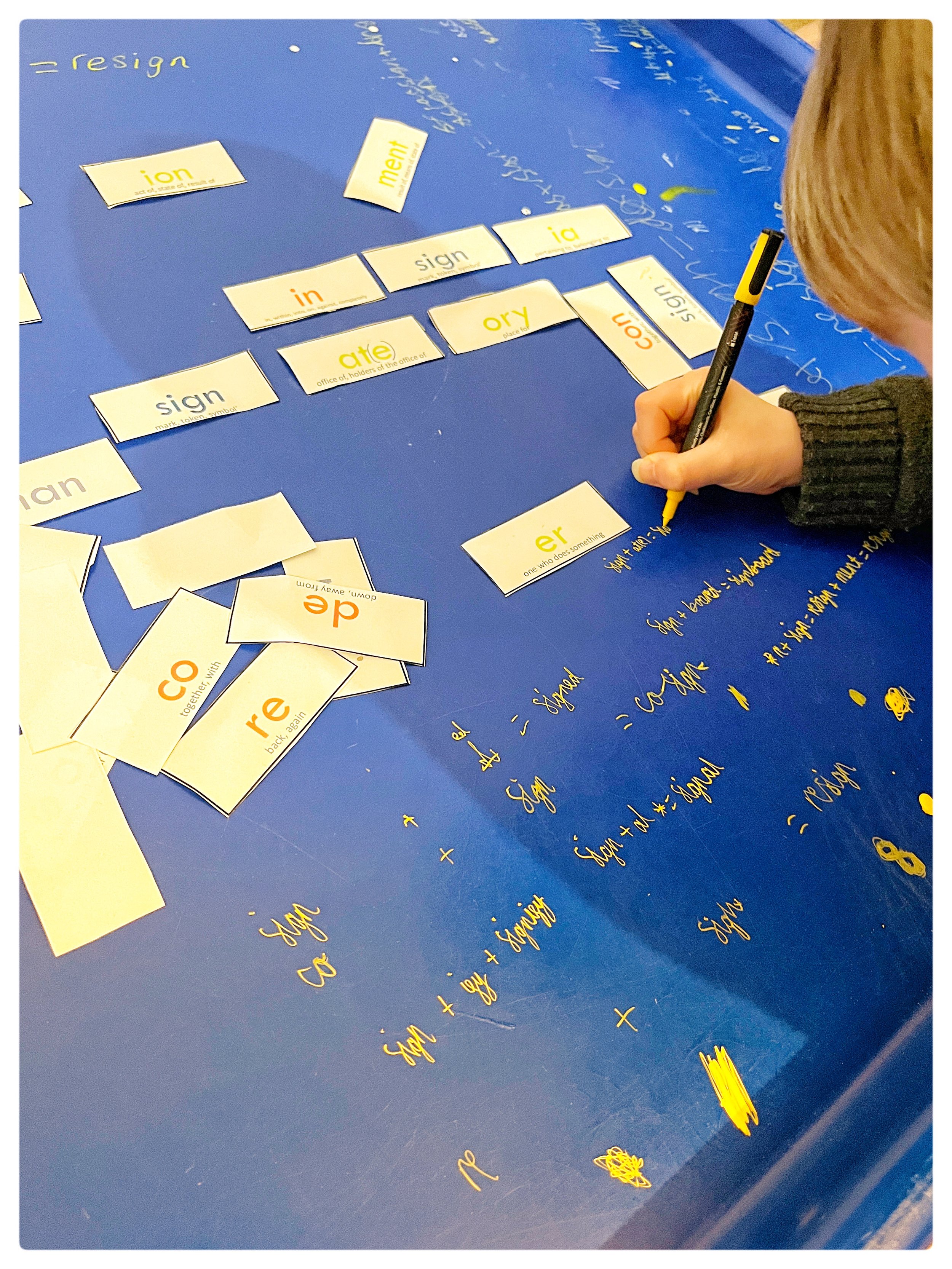
This is an essential tool designed to enhance literacy skills for learners of all ages. This comprehensive resource includes a carefully curated set of morphemes linked to the root ‘sign’, enabling users to create a variety of words while practising their spelling and decoding abilities. Developed by a specialist in dyslexia, this resource is thoughtfully crafted to meet the diverse needs of learners, making it an invaluable addition to any classroom or home learning environment.
By integrating these morphemes into your teaching, you can foster a deeper understanding of word formation and enhance vocabulary retention among your learners. Moreover, I encourage you to explore my social media platforms, where I share a plethora of multi-sensory ideas and innovative strategies for utilising this resource effectively.
Don’t forget to browse my range of other 'sign' resources, tailored to promote literacy and support students with various learning profiles. Equip your learners with the skills they need to succeed, while embracing a fun and interactive approach to education.


These CVCC word cards can be used for spelling and decoding activities.
These cards are not intended to be used as traditional flashcards – rather, they are to be used during multi-sensory activities – e.g. practising spellings using ‘window pens’ or playing Snakes and Ladders and reading a word with each go. Please check through this album of ideas.
Strictly speaking, ‘nd’ is a ‘consonant blend’ or ‘consonant cluster’. This is where two or three consonants appear in a syllable without being separated by vowels, and they are usually found at the end of words. More traditional phonics programmes require learners to ‘learn’ a blend much in the same way as they would a single grapheme. However, this strategy puts a burden on working memory, and effectively means that learners have to learn a much greater number of letter-sound correspondances.
This resource targets ‘nd’ ending words. However, learners should be taught to decode and blend each letter-sound correspondance in the word.
At the end of the document, there is a table to enable you to record your learner’s progress.

These CVCC word cards can be used for spelling and decoding activities.
These cards are not intended to be used as traditional flashcards – rather, they are to be used during multi-sensory activities – e.g. practising spellings using ‘window pens’ or playing Snakes and Ladders and reading a word with each go. Please check through this album of ideas.
Strictly speaking, ‘nd’ is a ‘consonant blend’ or ‘consonant cluster’. This is where two or three consonants appear in a syllable without being separated by vowels, and they are usually found at the end of words. More traditional phonics programmes require learners to ‘learn’ a blend much in the same way as they would a single grapheme. However, this strategy puts a burden on working memory, and effectively means that learners have to learn a much greater number of letter-sound correspondances.
This resource targets ‘nd’ ending words. However, learners should be taught to decode and blend each letter-sound correspondance in the word.
At the end of the document, there is a table to enable you to record your learner’s progress.

‘Restaurant’ is such a ubiquitous word. Nearly every European language has a version that is similar in structure.
I took out my etymology dictionaries (my pile is growing: French, Swedish, German) to find its root. It turns out it springs from a Latin root (unsurprisingly) ultimately meaning ‘to restore’.
The outliers are the Celtic languages … now, if I could just get my hands on a Welsh etymology dictionary …
You can download (for free) a summary of the etymology, translations of the word in different Indo-European languages, and a list of related words to support vocabulary expansion.

Three wordseaches to help consolidate fluency when reading CVCC words.
All of the words in my wordseaches read ‘Left to Right’, as you would find in a book. None of the words will be diagonal, backwards or vertical.
Strictly speaking, ‘nd’ is a ‘consonant blend’ or ‘consonant cluster’. This is where two or three consonants appear in a syllable without being separated by vowels, and they are usually found at the end of words. More traditional phonics programmes require learners to ‘learn’ a blend much in the same way as they would a single grapheme. However, this strategy puts a burden on working memory, and effectively means that learners have to learn a much greater number of letter-sound correspondances.
This resource targets ‘nd’ ending words. However, learners should be taught to decode and blend each letter-sound correspondance in the word.


These VCC word cards can be used for spelling and decoding activities.
These cards are not intended to be used as traditional flashcards – rather, they are to be used during multi-sensory activities – e.g. practising spellings using ‘window pens’ or playing Snakes and Ladders and reading a word with each go. Please check through this album of ideas.
At the end of the document, there is a table to enable you to record your learner’s progress.


I’ve recently taken a trip to Sweden where many of the baked goods contain cinnamon, saffron and cardamon. We particularly liked the Pepparkakor Ginger thins.
Inspired by the smells and sights of Sweden, I started looking into the etymology of some of the spice related words.
This resource explores the following spices: cinnamon, ginger, cardamon, saffron and cloves.
The resource includes:
1 - a card exploring the etymology of each word listed above. Some learners may prefer to read this for themselves, but it could also be used as a teaching aid for an adult.
2 - a card summarising the information in card 1. Some learners may find this more accessible, and it can be used alongside the fuller explanation.
3 - Each word translated into other Indo-European languages. It’s interested to trace the word across the continent, and learners can be encouraged to look at the differences and similarities between the way the words are rendered in different languages.
5 - For each word listed above, a further list of words that are related (etymologically). Learners might be encouraged to look the words up in a dictionary, and to explore how and why they're related to the source word, or to create sentences using these words.


These cards can be used for spelling and decoding activities.
These cards are not intended to be used as traditional flashcards – rather, they are to be used during multi-sensory activities – e.g. practising spellings using ‘window pens’ or playing Snakes and Ladders and reading a word with each go. Please check through this album of ideas.
At the end of the document, there is a table to enable you to record your learner’s progress.


These /l/ - ‘il’ resources can be used for spelling and decoding activities.
The sound in this set is /l/. These symbols (bit.ly/40fNja3) are part of the International Phonetic Alphabet. In English, this sound can be written in a number of ways.
These /l/ - ‘il’ spelling sheets can be used for spelling and decoding activities.
The sound in this set is /l/. These symbols (bit.ly/40fNja3) are part of the International Phonetic Alphabet. In English, this sound can be written in a number of ways.
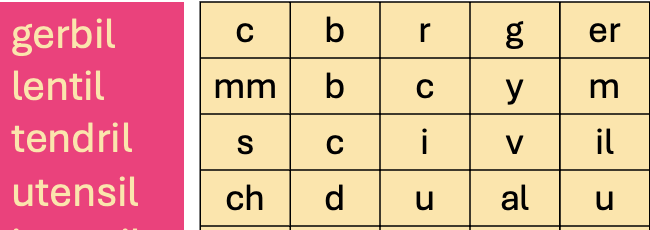
These /l/ - ‘il’ wordsearches can be used for spelling and decoding activities.
The sound in this set is /l/. These symbols (bit.ly/40fNja3) are part of the International Phonetic Alphabet. In English, this sound can be written in a number of ways.
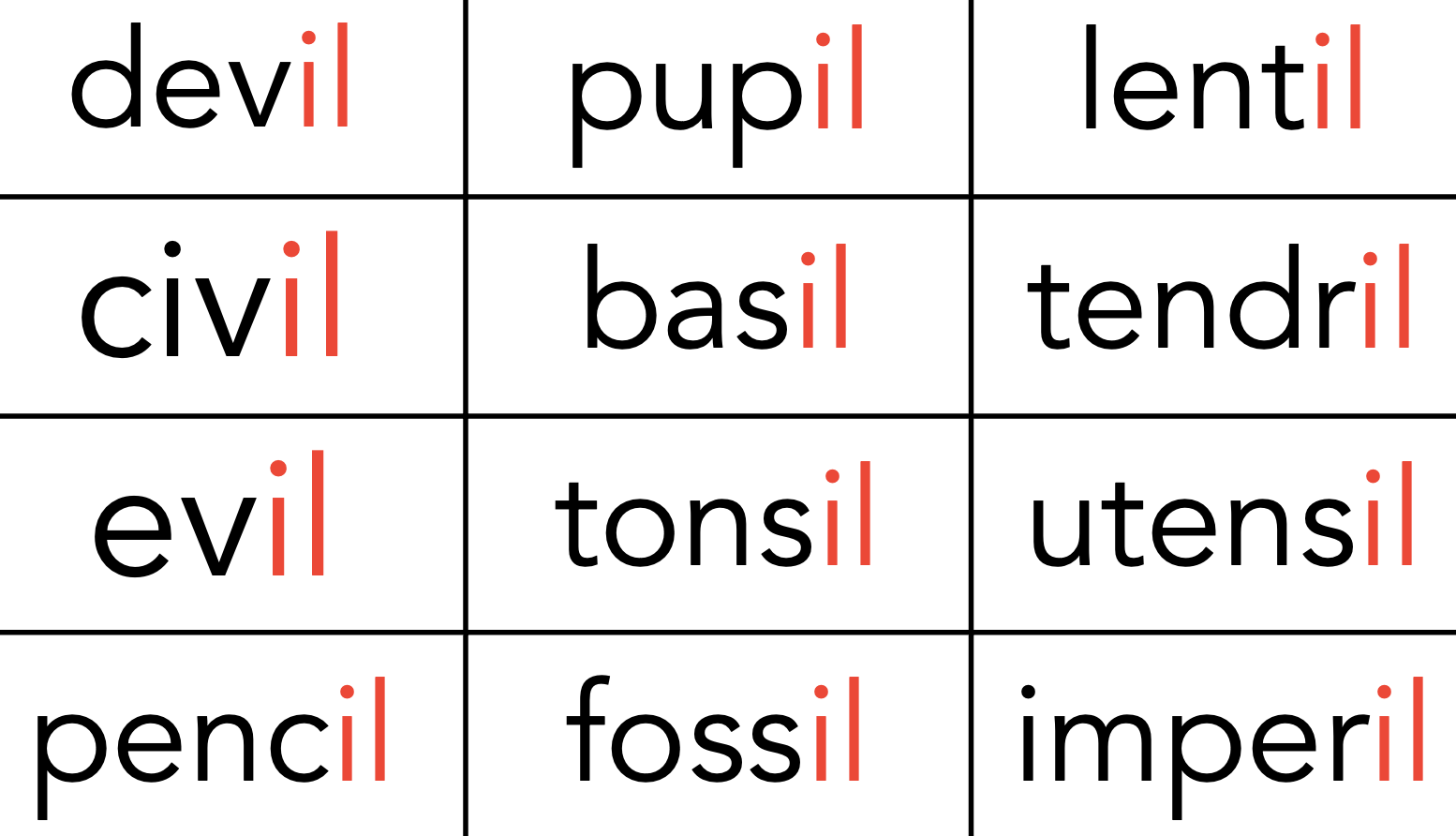
These /l/ - ‘il’ word cards can be used for spelling and decoding activities.
The sound in this set is /ɔɪ/. These symbols (bit.ly/40fNja3) are part of the International Phonetic Alphabet. In English, this sound can be written in a number of ways.
These cards are not intended to be used as traditional flashcards – rather, they are to be used during multi-sensory activities – e.g. practising spellings using ‘window pens’ or playing Snakes and Ladders and reading a word with each go. Please check through this album of ideas.
At the end of the document, there is a table to enable you to record your learner’s progress.

These ɔɪ - ‘oy’ and 'oi' word cards can be used for spelling and decoding activities.
The sound in this set is /ɔɪ/. These symbols (bit.ly/40fNja3) are part of the International Phonetic Alphabet. In English, this sound can be written in a number of ways, including - ‘oy’ and ‘oi’.
These cards are not intended to be used as traditional flashcards – rather, they are to be used during multi-sensory activities – e.g. practising spellings using ‘window pens’ or playing Snakes and Ladders and reading a word with each go. Please check through this album of ideas.
At the end of the document, there is a table to enable you to record your learner’s progress.

This resource reveals the meaning behind the phrase 'Expecto Patronus'.
If your learner isn't a fan of the 'Harry Potter' novels, there's no reference to them in the resource, so they can still be used.
The resource examines the morphemes 'ex', 'spic', 'spec' and 'patr'. It includes:
1 - an exploration of the target morpheme. Some learners may prefer to read this for themselves, but it could also be used as a teaching aid for an adult.
2 - a diagram summarising the information in section 1. Some learners may find this more accessible, and it can be used alongside the fuller explanation.
3 - Activities examining the words linked to the target morphemes.
4 - Activities designed to support spelling.
123 pages
3 morphemes: ex, spec (spice, spect) and patr (pater-, patri-, patro-, patr-, -patria)

On many a visit to France, I'd noticed that the bookshops shared the same label as the place where we borrow books in English. This resource explores why there is this difference between 'library' in English, and 'librairie' in French, and many other Indo-European languages. The resource includes:
1 - a card exploring the etymology of the word library. Some learners may prefer to read this for themselves, but it could also be used as a teaching aid for an adult.
2 - a card summarising the information in card 1. Some learners may find this more accessible, and it can be used alongside the fuller explanation.
3 - 'Library' translated into other Indo-European languages
4 - 'Bookshop' tanslated into other Indo-European languages.
Learners can be encouraged to look at the differences and similarities between the way the words are rendered in different languages.
5 - A list of words that are related (etymologically) to 'library'. Learners might be encouraged to look the words up in a dictionary, and to explore how and why they're related to the source word, or to create sentences using these words.
**Unlock Maths Vocabulary with my Word Origin Cards!**
Enhance your students' understanding of place value with this innovative set of etymology cards! Perfect for educators and learners alike, this unique tool delves into the origins and meanings of key mathematical terms. Each card breaks down the etymology of words related to place value, transforming complex vocabulary into easily digestible concepts. Boost comprehension and retention as students connect with the rich linguistic history behind essential math terms. Make learning more engaging and effective with our etymology cards – a must-have resource for mastering math vocabulary!
The words included in this pack are listed in the image shown.
No results found
No results match your search. Try removing a few filters.
Curious to try my resources? Start here.
This little set of ‘test’ themed resources is a gentle way to try out how I teach spelling, morphology and vocabulary, without committing to full price.
Each one is 75% off for a limited time and works well as a standalone activity or as a taster before diving into the other packs.
Ideal for: home educators, 11+ candidates and anyone wanting a low cost starting point.
This downloadable pack explores the root ‘test’ (from Latin testari, meaning to witness or affirm). It includes a clear set of printable word cards designed for spelling, reading, and vocabulary practice – with a focus on how words are built.
All words in this set contain the root ‘test’ (e.g. attest, protestation, testimony, untestable), and are organised for ease of printing. These cards are not flashcards in the traditional sense – they’re designed to be used within play-based, sensory-rich tasks. Check out a scroll-through of the resource.
Included in the pack:
✅ 36 word cards featuring the root ‘test’
✅ A simple tracker to monitor blending and reading fluency
✅ 40+ activity suggestions using tactile, oral, visual, and movement-based approaches
Examples include:
• Writing with window pens or tracing in salt
• Playing Snakes and Ladders with a word per turn
• Echo reading, silly sentences, and morpheme matching
• Body spelling, hopscotch games, and torchlight hunts
These activities are especially supportive for learners who benefit from movement, repetition, and meaning-driven reading. The tracking sheet allows you to note when a word can be blended or read automatically – helpful for both planning and celebrating progress.
Decode big words like ‘testament’ and ‘protester’ — morpheme by morpheme.
This downloadable literacy pack helps children explore the morpheme ‘test’ (meaning to witness or to examine), using a Structured Word Inquiry (SWI) approach. Through colour-coded cards, clear explanations, and hands-on activities, learners discover how complex words are built — and what they really mean.
Inside the pack:
A complete set of morpheme cards (in both colour-coded and neutral green versions)
A parent guide that explains word parts clearly — including what a linking vowel is and when to drop the ‘e’
A progress tracking table for blending and reading
10+ multi-sensory word-building games and puzzles
Examples of real ‘test’ word families (e.g. testify, protest, testimony, untested, countertestimony)
Check out a scroll-through video of the resource.
Activities include:
Missing morpheme puzzles
Snap! word family edition
Build-your-own definition games
Word wall creation
Card sorting and classification
Designed by a qualified dyslexia and literacy specialist, this pack supports:
Home educators
Learners who thrive on pattern and logic
Spelling confidence through morphology
Older learners revisiting tricky words with purpose
📎 Part of the How Words Workcollection | ✏️ 75% Off | 🎞️ Scroll-through video included
This sample resource introdu ces learners to vocabulary built from the Latin root “testari”, meaning to bear witness. It’s part of my wider How Words Work: Root Study & Vocabulary collection — a series of tools for building spelling confidence and deeper word understanding.
This pack includes structured grids for exploring words like testify, protest, attest, and testimonial, using:
Clear definitions
Synonyms
Sentence prompts
Etymology (word origins)
The word contest is fully modelled as an example, and suggested answers are provided at the end to support independent learning. Illustrating the words is encouraged, particularly for visual memory or neurodivergent learners.
This sample is ideal for:
🟊 Home educators exploring root-based learning
🟊 Children preparing for 11+ exams
🟊 Learners who benefit from structured vocabulary work
🟊 Anyone curious about how words connect
🎞️ A scroll-through video shows the full resource before purchase
💸 Download it for 75% off as part of the test word collection
📄 Pairs well with my Test spelling sheets and word cards
A ready-to-use set of spelling and decoding grids exploring the root test (to bear witness or show evidence).
From test and attest to testimony, protest, and intestacy, this pack offers structured practice with over 30 derived words — all carefully segmented for reading, spelling, and meaning.
Each sheet supports multi-sensory learning, encouraging children to:
▪️ Explore the sounds
▪️ Create the word
▪️ Read, Spell, and Use it in a sentence
Also includes a page of hands-on activity ideas — from tracing and air-writing to chalk play and morpheme sorting.
Perfect for learners exploring morphemes, building vocabulary, or strengthening reading and spelling fluency.
🟩 You’ll get:
• Three printable spelling grids
• Word lists split by morpheme
• Sentence-writing prompts
• Multi-sensory activity suggestions
• Colour-coded versions to support visual memory
Check out the resource on this video.
Designed for home learning or 1:1 support.
Pairs well with the matching “test” jigsaw word cards.