

High Frequency French Function Words
Filters
Filters
Arrange to meet a French friend 'dans huit jours' and you'll see them in a week. The phrase says eight days; a week has seven. French has counted it that way for centuries, and nobody has established why.
What's included
• The etymology comic - illustrated stage cards, one idea each, with short KS3/4 captions
• The word-history breakdown, Latin to modern French, dated where the record allows
• 'Huit' traced back to Latin 'octo', with the English cousins that came from it
• 'Une huitaine' and 'une quinzaine' - the nouns French built the same way
• The honest answer about why the count is eight, and what the dictionaries will and won't support
• The sources page
• A short how-to-use guide for the adult
For personal use in home education and tutoring only.
Who it's for
It suits KS3 and KS4 French learners, home-educated children, specialist tuition students including those with dyslexia or a weak working memory, and parents working alongside a child. 'Huit jours' is genuinely everyday French, so unlike some of the 'jour' family this one earns its keep in ordinary conversation as well as being a good story.
It isn't a numbers lesson. It assumes the learner already knows 'huit' and 'jour' separately and can read a short French phrase aloud - the work here is on what happens when the two are put together and stop adding up.
Why this exists
A phrase that means something other than the sum of its words is exactly where a careful learner comes unstuck, because doing the sensible thing gets the wrong answer. 'Huit jours' is worth meeting head-on for that reason, and it carries a second lesson with it: the reason for the eight isn't known, the stories that circulate aren't supported, and saying so is more useful to a child than a tidy explanation that isn't true.
I first made these for my dyslexic son.
Related resources
Same topic, in L'atelier des mots: the wider 'jour' family - 'bonjour', 'journée', 'séjour', 'journal', 'ajourner' - and the light-sense words 'abat-jour', 'contre-jour', 'ajouré' and 'point du jour'.
Same root: all built on 'jour', from Latin 'diurnum'. 'Huit jours' uses the day-sense, the one behind English 'journey' and 'journal'; the light-family words use 'jour' as the light itself.
Free in the Wordhord: the English cousins 'journey' and 'journal'. And the Compendium post on why word origins help with modern languages, dyslexic learners especially.
Available now as a PDF download.
How it prints - two forms
This PDF prints into two forms, and you choose which suits you.
The large cards - one idea to a page - are made to be laminated and clipped onto a binder ring. Print single-sided, laminate, trim, and punch a hole in the top-left corner, then hold them together with one ring. The cards are numbered, so a loose deck goes back in order. Once they're on the ring a child can handle them, turn them over and lay them out - which is where a lot of the understanding happens. The deck is a bag or dinner-table object: something a child picks up and works through at the table, not a pencil-case card.
The single sheet at the end holds the whole word on one page. Print it and it's ready - no laminating, no cutting. It's the print-and-go form, for the fridge or the middle of a lesson, when you want the whole story in front of you at once. You assemble the deck yourself; there's no ready-made deck in the box. You'll need a printer, and a laminator and a ring for the deck. Neither form is homework and neither is a test.
About this resource
This is an educational support material. It isn't a diagnostic, assessment or therapeutic tool, and it doesn't replace specialist assessment or intervention. Outcomes vary by learner. It's built to be revisited over time rather than worked through in one go, and it isn't a complete teaching programme or a substitute for formal instruction.
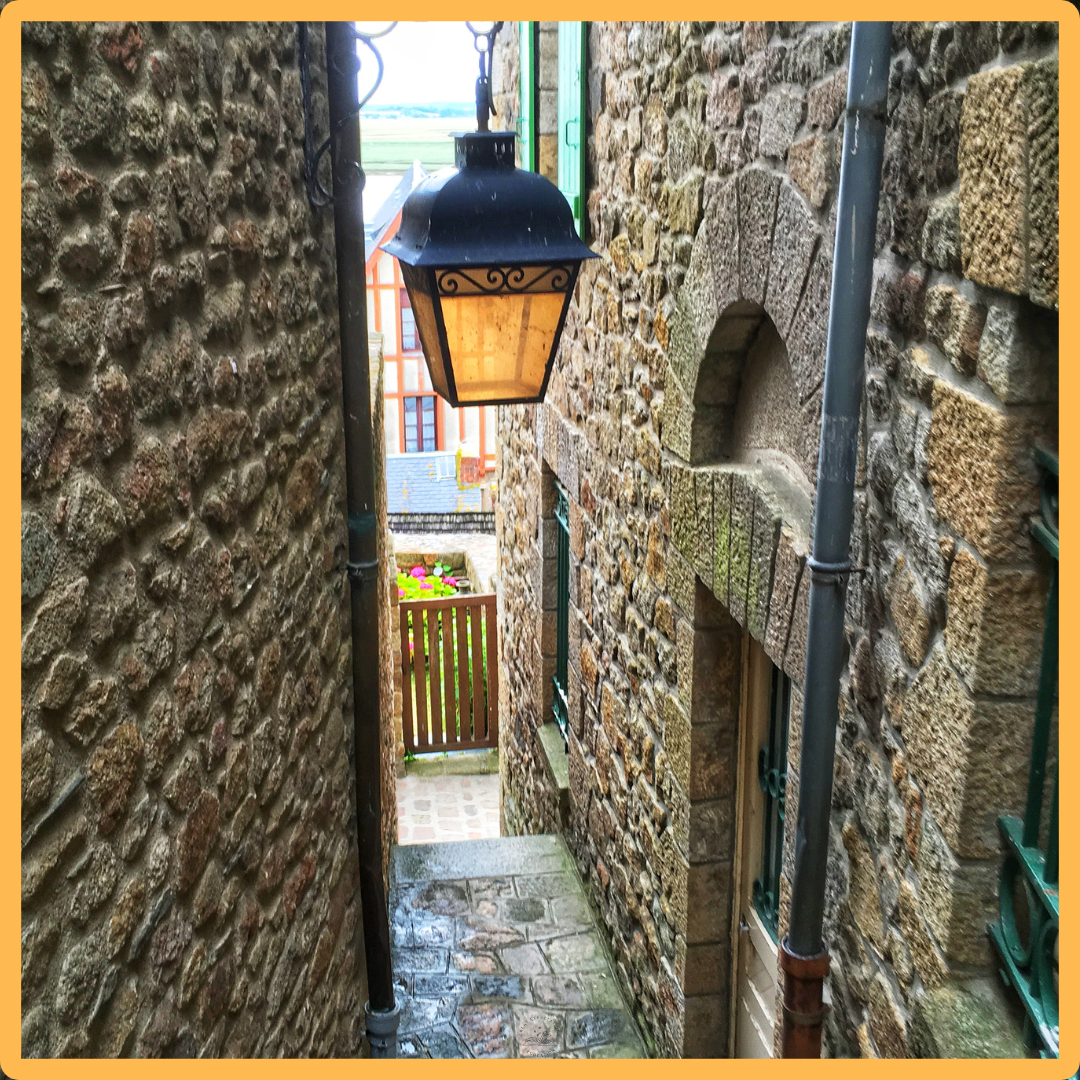
Most rooms in a house have an 'abat-jour' in them. It's the French word for a lampshade - and, taken apart, it's an instruction: 'knock the daylight down'. English borrowed 'abat-jour' too, but took it mainly in the skylight and reflector senses rather than the everyday lampshade.
What's included
The etymology comic - illustrated stage cards, one idea each, with short captions a KS3/4 learner can read
The word-history breakdown, Latin to modern French, with a date at each stage the record allows
The two senses of 'jour' explained plainly - the day, and the daylight
The English-links section - the everyday English words that share the root
The sources page
A short how-to-use guide for the adult
For personal use in home education and tutoring only.
Who it's for
It suits KS3 and KS4 French learners, anyone who likes seeing how a word is built, home-educated children, specialist tuition students including those with dyslexia or a weak working memory, and parents working alongside a child. 'Abat-jour' is an everyday French word, so it earns its place in ordinary vocabulary as well as being a good story.
It isn't an early-reader resource, and it isn't a grammar drill. It assumes the learner can already read a French word aloud and is ready to think about where it comes from, rather than meeting French for the first time.
Why this exists
Vocabulary taught as a flat list of words to memorise is hard to hold on to, particularly for a dyslexic learner. A word that comes apart into two ideas you can picture - 'knock' and 'daylight' - is easier to keep, because it stops being arbitrary. 'Abat-jour' is a clean example: once a child sees the lampshade knocking the light down, the word has a reason to be the shape it is.
I first made these for my dyslexic son.
Related resources
Same topic, in L'atelier des mots: the other 'jour' words in the shop - 'bonjour', 'journee', 'sejour', 'journal', 'ajourner' - and its two light-family cousins here, 'contre-jour' and 'ajoure'.
Same root: everything above is built on 'jour', from Latin 'diurnum'. The light-sense words ('abat-jour', 'contre-jour', 'ajoure') use 'jour' as the light; the day-sense words ('bonjour', 'journee') use it as the day.
The other shops: the same root runs through Italian 'giorno' (L'Officina Radice) and Spanish and beyond, though the light-sense compounds are French.
Free in the Wordhord: the English cousins 'journey' and 'journal'. And the Compendium post on why word origins help so much with modern languages, dyslexic learners especially.
Available now as a PDF download.
How it prints - two forms
This PDF prints into two forms, and you choose which suits you.
The large cards - one idea to a page - are made to be laminated and clipped onto a binder ring. Print single-sided, laminate, trim, and punch a hole in the top-left corner, then hold them together with one ring. The cards are numbered, so a loose deck goes back in order. Once they're on the ring a child can handle them, turn them over and lay them out - which is where a lot of the understanding happens. The deck is a bag or dinner-table object: something a child picks up and works through at the table, not a pencil-case card.
The single sheet at the end holds the whole word on one page. Print it and it's ready - no laminating, no cutting. It's the print-and-go form, for the fridge or the middle of a lesson, when you want the whole story in front of you at once. You assemble the deck yourself; there's no ready-made deck in the box. You'll need a printer, and a laminator and a ring for the deck. Neither form is homework and neither is a test.
About this resource
This is an educational support material. It isn't a diagnostic, assessment or therapeutic tool, and it doesn't replace specialist assessment or intervention. Outcomes vary by learner. It's built to be revisited over time rather than worked through in one go, and it isn't a complete teaching programme or a substitute for formal instruction.

'jour' and 'giorno' both start with a soft sound. The Latin word they both came from, 'diurnum', starts with a hard 'd'. Nothing was borrowed and nothing was swapped - the 'd' itself went soft, and it went soft for a reason a learner can follow in about five minutes.
What's included
• Nine illustrated black-and-white panels, one idea to a page, taking the change from Latin 'diurnum' through to French 'jour' and Italian 'giorno'
• Approximate pronunciation respellings on every form, Latin included, so the change can be heard as well as read
• The stressed-versus-unstressed rule set out on a single panel, with Spanish 'día' and Italian 'lunedì' as the contrast
• A panel on 'buongiorno' and 'bonjour', where the same change turns up inside a greeting the learner already uses
• A second worked example - Latin 'radius' to Italian 'raggio' - showing the change isn't a one-off
• A single reference sheet holding all nine panels on one page
• A sources page
• A short how-to-use guide for the adult
How it prints
The PDF prints two ways. Print the large cards single-sided, laminate them, trim, punch the top-left corner and hold them on one binder ring, and you have a deck a child can pick up, turn over and lay out in order - which matters more than usual here, because the whole thing is a sequence. The cards are numbered so a loose deck goes back the right way round. It fits in a bag and works at the dinner table; it isn't a pencil-case object. You'll need a printer, a laminator and a ring, and you assemble the deck yourself - there's no ready-made version.
The single sheet at the end needs none of that. Print it and the whole change is in front of you at once, start to finish, which is the version for the middle of a lesson or the front of the fridge.
For personal use in home education and tutoring only.
Who it's for
Made first for a curious ten-year-old, but it suits a wider range:
• Learners in KS3 and KS4 studying French, Italian or Spanish
• Anyone taking two Romance languages at once who keeps meeting words that nearly match
• Home-educated children working through a modern language
• Specialist tuition students, including dyslexic learners and those with weak working memory
• Parents and adults picking a language back up alongside a child
• Anyone who likes knowing why a word looks the way it does
This isn't an introduction to French. It assumes the learner already recognises 'jour' and can read a word like 'aujourd'hui' aloud, even if they couldn't say what's inside it. A child in their first few weeks of French will get more from a single word than from a sound change running across three languages.
Why this exists
Learners meet 'jour', 'giorno' and 'día' as three separate things to remember. They're one thing, changed by one rule, and the rule is short enough to hold on to. Once a learner has watched it happen, the same pattern turns up again - in 'raggio', in 'lunedì', in the gap between 'bonjour' and 'buongiorno' - and each of those stops being a fresh item to memorise. The panels carry the explanations, so the adult doesn't have to hold the whole account in their head to talk it through.
I first made this because one of my sons wanted to know how 'jour' and 'giorno' were related.
Related resources
More time and daily-routine words in L'atelier des mots: 'jour', 'aujourd'hui' and 'toujours'.
All three are built on the same Latin day-word. 'Toujours' is 'tous les jours' worn down to one word, and 'aujourd'hui' has a day inside it twice - 'au jour d'hui', where 'hui' is itself the old French word for today, from Latin 'hodie'.
Because the comic follows Italian and Spanish alongside French, the matching words are stocked in the other shops too: 'giorno', 'buongiorno', 'mezzogiorno' and 'oggi' in L'Officina Radice, and 'día', 'buenos días', 'jornada' and 'hoy' in El Taller Raíz.
There are free English word cards on the same family in The Wordhord, and a Compendium article on why word origins help with modern languages.
Available now as a free PDF download.

'Aujourd'hui' is one of the first words a French learner writes down, and one of the strangest to spell - an apostrophe in the middle, a silent 'd', a run of letters that don't sound the way they look. There's a reason for every piece of it, and it starts with a small word hidden inside: 'day'.
Where 'aujourd'hui' comes from
'Aujourd'hui' didn't begin as one word. It was built up over time from a short Latin phrase, and by the time it settled, the word for 'day' had ended up inside it more than once. The cards follow how that happened - and why French, alone among its neighbours, made the long version when Spanish and Italian kept theirs short.
What's included
• An illustrated black-and-white word-history in comic form - stage panels, one idea to each, following 'aujourd'hui' back to the short Latin phrase it grew from
• The word-history breakdown, Latin to modern French, with a date at each stage the record allows
• A sources page listing where every claim comes from
• A short guide for the adult on how to use the cards
How it prints
The PDF prints two ways, and you choose which suits you. The large cards - one idea to a page - are made to be laminated and clipped onto a single binder ring, so a child can handle them, turn them over and lay them out in order. You print, laminate, trim and bind these yourself; the cards are numbered, so a loose deck goes back in sequence. The single sheet at the end holds the whole word on one page - print it and it's ready, no laminating or cutting. You'll need a printer; a laminator and a ring are needed only for the deck.
Coming back to it
Because the large cards come apart, there's more to do with them than read. Shuffle the stage cards and rebuild the timeline. Deal them face-down and turn them over one at a time. Hold up the two halves of the word and ask what each one brings to it. Match a Latin stage to the modern French it turned into. If you own more than one word from L'atelier des mots, clip the shared cards onto one ring and line the day-family up together. It's the same cards, talked through and handled differently - adult-led, a few minutes at a time, never a drill.
Why this exists
'Aujourd'hui' is usually learned as a shape - a hard-to-spell block a child copies out and hopes to remember. Learned that way it slips, because nothing holds the letters in place. Shown as a phrase that was built up piece by piece, with a reason behind every part, the spelling stops being arbitrary and starts to make sense.
Who it's for
Designed first for my own son's French, but it suits a wider range:
• Anyone who likes where words come from
• French learners in Key Stages 3 and 4, and GCSE students meeting 'aujourd'hui'
• Home-educated children
• Learners who find vocabulary hard to hold when it's taught as isolated words - including dyslexic and working-memory profiles
• Parents brushing up their own French, or studying alongside a child
• Adults coming back to French after school
This isn't a first step into French. A learner should already be meeting 'aujourd'hui' in lessons or reading - the cards explain a word a child is encountering, they don't introduce the language from scratch. If a child hasn't met it at all yet, this will come too early.
Related resources
• In L'atelier des mots: 'jour' is the nearest neighbour - the same day-word standing on its own.
• For anyone who likes the links across languages: 'oggi' (Italian, L'Officina Radice) and 'hoy' (Spanish, El Taller Raíz) are the same word as the 'hui' buried in 'aujourd'hui' - all three from one Latin phrase.
• In the Compendium: the post on why word origins help dyslexic learners with modern languages.
• Free in The Wordhord: the English cousins from the same family - 'diurnal' and 'journal' - each as its own word card.
For personal use in home education and tutoring only.
Available now as a PDF download.
'Jour' is one of the first French words a child meets - it's there in 'bonjour' on the first morning of lessons. What most learners never see is how far it reaches: the same small word is there in 'journée', 'séjour' and 'toujours', hides in the '-di' of 'lundi' and 'mardi', and surfaces in the English 'journey' and 'journal'.
Where 'jour' comes from
'Jour' descends from Latin. From 'dies' ('day') came the adjective 'diurnus' ('daily'), and from that the noun 'diurnum' - 'a day', and also the word for a daily ration and a day-book, the register of the day's business. Old French turned it into 'jorn', then 'jour', attested from the late 10th century, with both 'a day' and 'daylight' present in the Chanson de Roland around 1100. The same Latin root gave Italian 'giorno', Occitan and Catalan 'jorn', and - through Occitan - Spanish 'jornada'. 'Dies' itself never left French: it hides in the '-di' of 'lundi', 'mardi' and 'jeudi', and in the 'di' of 'midi', 'mid-day'.
One small extra, for anyone who likes this sort of thing: the French for 'today', 'aujourd'hui', carries 'day' twice over. It began as 'au jour de hui' - 'on the day of today' - and 'hui' itself came from Latin 'hodie', a squeeze of 'hoc die', 'on this day'. So the everyday word for 'today' has a 'day' on show in 'jour' and another buried inside 'hui'.
What's included
An illustrated black-and-white word-history in comic form - stage panels, one idea to each: 'dies' and 'diurnum' in Latin, the day-family tree spreading across Europe, the hidden '-di' in the French days of the week, the French family ('journée', 'séjour', 'bonjour', 'toujours'), and the English cousins ('journey', 'journal')
The word-history breakdown, Latin to modern French, with a date at each stage the record allows
A sources page listing where every claim comes from
A short guide for the adult on how to use the cards
How it prints
The PDF prints two ways, and you choose which suits you. The large cards - one idea to a page - are made to be laminated and clipped onto a single binder ring, so a child can handle them, turn them over and lay them out in order. You print, laminate, trim and bind these yourself; the cards are numbered, so a loose deck goes back in sequence. The single sheet at the end holds the whole word on one page - print it and it's ready, no laminating or cutting - for the pencil case or the middle of a lesson. You'll need a printer; a laminator and a ring are needed only for the deck.
Coming back to it
Because the large cards come apart, there's more to do with them than read. Shuffle the stage cards and rebuild the order. Deal them face-down and turn the timeline over one at a time. Hold up an English-cousin card - 'journey', 'journal' - and ask which part of the meaning it kept. Match a Latin stage to its modern word. If you own more than one word from L'atelier des mots, clip the English-cousin cards from several decks onto one ring and sort the cousins back to their roots. It's the same cards, talked through and handled differently - adult-led, a few minutes at a time, never a drill.
Why this exists
French vocabulary is often met as a list of separate words to memorise, and for a child with dyslexia or a stretched working memory, a list is the hard way to hold anything. 'Jour' is a good place to start, because it isn't one word - it's a doorway to a dozen. Once a learner sees that 'journée', 'séjour', 'toujours', the days of the week and even English 'journey' all turn on one small Latin root, a page of unrelated words becomes one connected family, and that's far easier to keep.
Who it's for
Designed first for my own son's French, but it suits a wider range:
Anyone who likes where words come from
French learners in Key Stages 3 and 4, and GCSE students meeting 'jour' and its family
Home-educated children
Learners who find vocabulary hard to hold when it's taught as isolated words - including dyslexic and working-memory profiles
Parents brushing up their own French, or studying alongside a child
Adults coming back to French after school
This isn't a first step into French. A learner should already be meeting words like 'jour', 'bonjour' and 'journée' in lessons or reading - the cards explain words a child is encountering, they don't introduce the language from scratch. If a child hasn't met these words at all yet, this will come too early.
Related resources
The same root, in the other shops: 'giorno' in L'Officina Radice (Italian) and 'jornada' in El Taller Raíz (Spanish) - the day-family runs through all three, so the sets belong together.
In the Compendium: the post on why word origins help dyslexic learners with modern languages.
Free in The Wordhord: the English cousins - 'journey', 'journal', 'diurnal', 'sojourn' and 'adjourn' - each as its own word card.
Originally created to support my dyslexic son's learning once the school day had ended.
For personal use in home education and tutoring only.
Available now as a PDF download.
‘toujours’: the ‘all days’ hidden inside ‘always’
Description
‘toujours’ is one of the first French words a learner meets. It means ‘always’, and most people never look inside it. Historically it grew from the words now written ‘tous’ (‘all’) and ‘jours’ (‘days’) - an idea like ‘all days’. In modern French, ‘toujours’ works as one complete adverb, with that old idea folded inside it.
Where this word comes from
By about 1100, Old French already had the joined form ‘tuzjurz’, ‘without cease’, historically formed from the plural of ‘tout’ and ‘jour’ - it turns up in the Chanson de Roland. The two halves trace back to Latin ‘totus’ (‘whole, all’) and ‘diurnum’ (‘a day’). Less well known is the word it replaced: Old French had ‘sempre’ (from Latin ‘semper’) for ‘always’, but its meaning slid toward ‘straight away’; TLFi records that sense as late as 1466, after which it dropped out of standard French. Spanish and Italian kept the older word - ‘siempre’, ‘sempre’ - while French came to use ‘toujours’, historically the ‘all days’ formation, as its standard word for ‘always’.
What’s included
• The etymology comic: seven illustrated black-and-white stage panels, one idea each, with short captions written for a secondary-age reader - from the two Latin words, through the Old French compound, to the modern spelling and the English and cross-language cousins.
• The word-history breakdown: Latin to modern, with a date at each stage the record allows.
• The English-links page: the everyday English words that share the ‘day’ root - ‘journey’, ‘journal’, ‘adjourn’, ‘sojourn’, ‘diurnal’ - and ‘total’, from the ‘all’ root.
• The sources page: the dictionaries the history is built from (TLFi, Etymonline, and the cross-language references).
• A short how-to-use guide for the adult.
How it prints
The PDF prints two ways. Print the large cards single-sided, laminate them and clip them onto a binder ring, and you have a deck a child can hold, turn over and lay out in order - the panels are numbered so a loose deck goes back together. Or print the single reference sheet at the end, which holds the whole word on one page for the pencil case or the middle of a lesson - no laminating needed. You assemble the deck yourself; there is no ready-made deck. You will need a printer, plus a laminator and a ring for the deck.
For personal use in home education and tutoring only.
Who it’s for
Designed first for one dyslexic secondary learner, but it suits a wider range: anyone who likes knowing where words come from; French GCSE students (Key Stages 3 and 4) who want the vocabulary to stick; home-educated learners; children working with a specialist tutor, including those with dyslexia or a weak working memory; parents brushing up their own French alongside a child; and adults returning to the language from school.
It isn’t built for a complete beginner who hasn’t met ‘toujours’ yet, or for a very early reader. It assumes the learner can already read the word aloud and wants to understand it, not decode it for the first time.
Why this exists
Vocabulary that arrives as a flat list - ‘toujours = always’ - tends to slide straight back out again. A learner who can see that ‘toujours’ is ‘all days’, and that its ‘jour’ is the same ‘jour’ inside ‘journey’ and ‘journal’, has something to hold on to. The history isn’t there to be memorised; it’s there to give the word a shape the learner recognises when it turns up again.
A word with more than one job
‘toujours’ doesn’t only mean ‘always’. French also uses it in expressions meaning ‘anyway’ or ‘in any case’ - ‘dis toujours’, ‘go on, tell me anyway’ - and in ‘cause toujours!’ it means something close to ‘talk all you like’ - I’m not listening. (Recorded in the TLFi.)
Related resources
The Wordhord (free): English word cards for the roots inside ‘toujours’ - ‘journey’ and ‘journal’ (the ‘day’ root) and ‘total’ (the ‘all’ root). Built alongside this resource.
The Compendium: the article on why word origins help with modern languages, which sets out why a resource like this is built the way it is.
Originally created to support my dyslexic son’s learning once the school day had ended.
Available now as a PDF download.
prendre - one verb behind learning and understanding
‘prendre’ is one of the busiest verbs in French - you take a bus, take a photo, take a decision. But it is also the root of two of the most important verbs a learner meets: ‘apprendre’ ‘to learn’ and ‘comprendre’ ‘to understand’. This resource shows why - both are kinds of grasping.
Where the root comes from
French ‘prendre’ comes from Latin ‘prehendere’ ‘to seize, grasp’ - ‘prae-’ ‘before’ plus ‘-hendere’ ‘to grasp’. The same verb gave English ‘apprehend’, ‘comprehend’ and ‘prison’, so a learner meets familiar English shapes while working in French.
What’s included
• The etymology comic - illustrated stage cards, one idea each, with short captions
• The word history, Latin to modern French, dated at each stage the record allows
• A present-tense conjugation card showing the stem shift - ‘je prends’ but ‘nous prenons’
• An English-links card naming the English words from the same root - ‘prehensile’, ‘apprehend’, ‘comprehend’, ‘prison’
• A sources page
• A short how-to-use guide for the adult
For personal use in home education and tutoring only.
Who it’s for
Designed first for secondary MFL learners (KS3 and KS4), but it suits a wider range: anyone who likes word origins, learners taking French alongside Italian or Spanish who want the shared Latin roots, home-educated children, specialist tuition students including dyslexic and working-memory profiles, and adults returning to French alongside a child.
It isn’t for a learner who hasn’t yet met present-tense verbs. The card assumes the learner can read a short French sentence and is ready to see the stem-change pattern.
Why this exists
The stem shift in ‘prendre’ - ‘je prends’ but ‘nous prenons’, ‘ils prennent’ - is one of the first irregular patterns a French learner has to hold, and ‘apprendre’ and ‘comprendre’ inherit it. Seeing all three as one verb, with one root meaning ‘grasp’, makes the pattern one thing to learn instead of three.
Linguistic quirk: ‘apprendre’ and ‘appréhender’ are the same Latin word twice over - both from ‘apprehendere’. The inherited ‘apprendre’ softened into ‘to learn’; the borrowed ‘appréhender’ kept the physical ‘seize’ and even gained ‘to dread’. And ‘apprendre’ itself does double duty: it can mean both ‘to learn’ and ‘to teach’ - both ends of handing knowledge across.
Originally created to support one of my own children’s learning once the school day had ended.
Related resources
Same root, other languages: ‘prendere’ in L’Officina Radice and ‘prender’ in El Taller Raíz trace the same Latin verb across Italian and Spanish.
Why word origins help with modern languages: the Compendium post on teaching words through structure.
Free in The Wordhord - the English cousins of this root: ‘comprehend’, ‘apprehend’ and ‘prison’.

'Propre' is one of the first French words a learner meets. It looks simple - it means 'clean' - but its history runs somewhere unexpected.
Where this comes from
The modern French word for 'clean' did not begin life meaning 'clean' at all. The meaning we use every day is the newest one, and the word arrives there by an unlikely route, through ideas of belonging and fitness that have nothing to do with washing. Along the way it picks up a family of close English relatives - words you already use without realising they are cousins of 'propre'. This resource follows that history stage by stage, with a specific date at each step, so a learner can see exactly how a word about ownership ended up meaning 'clean'.
What's included
A full word card tracing the history of 'propre' with a specific date at every stage
A junior word card, for a younger or dyslexic learner, with short sentences and the meaning first
An etymological breakdown - the historical forms set out in order
A set of black-line comic panels for each stage, ready to display or print
An English-links section showing the everyday English words that share the same root
A references list
For personal use in home education and tutoring only.
Who it's for
Designed first for a secondary learner, but it suits a wider range:
anyone who enjoys word origins and the links between languages
learners working towards GCSE French, and KS3 students building vocabulary
home-educated children studying French
learners who use apps like Duolingo and want a deeper grounding in why words mean what they do
specialist tuition students, including those with dyslexia or a weak working memory, who hold a word better when they understand where it came from
parents working through French alongside a child
adults returning to French from school
This isn't designed for a complete beginner who hasn't met basic French spelling yet. It assumes the learner can already read short French words aloud, even if they don't yet know what they mean.
Why this exists
A learner who only memorises 'propre = clean' has a fact with nothing to hold it in place, and one that is easy to forget. A learner who knows the word once meant 'one's own', and can see how it reached 'clean', has something to anchor it - and three or four English words that suddenly make sense at the same time. This resource was built to give that grip, especially to learners who find rote vocabulary hard to hold.
Originally created to support one of my own children's learning once the school day had ended.
Related resources
The same root runs through Spanish 'propio' and Italian 'proprio', each its own resource in El Taller Raíz and L'Officina Radice. For more on why word origins help with modern languages, see my post on etymology and MFL for dyslexic learners in the Compendium. The English cousins - 'proper', 'property' and 'appropriate' - have free word cards in The Wordhord.
Available now as a PDF download.
'Soin' is one of the first words a French learner meets when they start talking about looking after people or things - 'prendre soin de', to take care of. What it doesn't show on the surface is that it started out meaning something much closer to worry.
Where the word comes from
This card traces 'soin' through five stages. In Vulgar Latin (the late Roman period, around the 3rd-5th centuries) the form '*sunnia' meant worry, or concern of the mind - the sort of thing that sits in your head. By Old French (9th-11th centuries) 'soin' had shifted to care, concern and watchfulness. Through medieval French (12th-13th centuries) it came to mean care shown by actually helping someone, and in Middle French (14th-16th centuries) care shown through careful, diligent work. By modern French (17th century to today) it settled into the everyday sense we use now - care, treatment, or looking after someone or something.
What's included
A word card showing the full path of 'soin' from Vulgar Latin to modern French, with the meaning at each stage
An illustrated card for each of the five stages, each with a short caption written for the learner
A sources page listing every reference used
A page of guidance on how to use the resource
Format: PDF download. It's designed to work fully in black-and-white printing - colour isn't needed for meaning or accessibility. Laminating is optional.
For personal use in home education and tutoring only.
Who it's for
Designed first for one of my own children, but it suits a wider range:
Anyone who likes knowing where words come from
KS3 French learners (roughly Year 7 upwards) meeting this vocabulary for the first time
Home-educated children learning French
Learners with dyslexia or weaker working memory, who often find isolated vocabulary hard to hold on to
Duolingo or classroom learners who want a bit more grounding under the words
Specialist tuition students
Parents and adults brushing up their own French, or studying alongside a child
This isn't a French course, and it isn't a way to learn the language from scratch. It assumes the learner is already meeting French vocabulary in lessons or reading - 'soin' is a word they'll come across, and this helps it make sense and stick. It's meant to be used with an adult guiding the discussion, not worked through alone.
Why this exists
Vocabulary taught as a list to memorise is hard work for a lot of dyslexic learners - the words don't connect to anything, so they slide straight back out. Knowing that 'soin' once meant worry, and watching it move from a feeling in the head to the everyday act of looking after someone, gives the word something to hang on. It doesn't replace practice or repetition. It makes the repetition land better.
Originally created to support one of my own children's learning once the school day had ended.
Related resources
You'll find more French word cards in L'atelier des mots. If you'd like to try one first, there's a free sample, 'Salut'. And if you want the thinking behind why word origins help dyslexic learners with a foreign language, there's a post on that in the Compendium.
Available now as a PDF download.

'jolie' means 'pretty', and French learners meet it early when they start describing people and things. What almost no one realises is that there's an everyday English word — one you'd never connect to 'pretty' — that started life as the very same word. They split a long time ago and went in different directions. Knowing they're related gives the learner an anchor in English they already have.
A word with history
'jolie' began in early French meaning something quite different from 'pretty', and its meaning shifted over the centuries before settling where it is now. Along the way, English borrowed it — and kept the older meaning, which is why the English relative feels so different today. The resource traces both paths and shows how one word became two.
What's included
6-panel etymology comic in PDF format
Title panel, historical-stage panels tracing the word through early French, medieval usage, the English borrowing, and later French, and a final panel on its meaning today
Black-line illustrations, designed to print clearly in black and white
Wrapper page with guidance on how to use the resource and what success looks like
Full sources list, drawn from standard French and English etymology references
For personal use in home education and tutoring only.
Who it's for
This resource is designed first for newcomers to French who find vocabulary hard to acquire and hold on to — particularly learners with dyslexia, or with the memory and retrieval difficulties that often come with it. It's a supplementary resource. The learner will usually have met 'jolie' already, in a lesson or a textbook, but met isn't the same as retained. The aim is to consolidate that earlier learning by giving the word a story, on the principle that a word with a story attached is easier to remember than a word learnt as an isolated item.
It suits a wider range too:
KS3 French learners building their bank of describing words
GCSE French learners who want their adjectives to feel less arbitrary
Home-educated children working through French at their own pace
Specialist tuition students, including those with dyslexia or poor working memory
Parents working alongside their children, whether or not they have French themselves
Adults brushing up their own French, or studying alongside a child
Anyone who loves etymology and the way words travel between languages
Why this exists
Adjectives like 'jolie' are easy to meet and easy to lose — they pile up quickly when a learner starts describing things, and one looks much like another. Giving 'jolie' a story, and connecting it to a word the learner already knows in English, turns it from one more item on a vocabulary list into a word with a shape they can recognise. For learners who struggle to retain vocabulary, particularly dyslexic learners, that connection is what makes the word stay put. The resource is short by design. Six panels, revisited over time in 5-10 minute sessions, work better than a long explanation a learner reads once and forgets.
Originally created to support one of my own children's learning once the school day had ended.
Related resources
'jolie' is one of a growing set of describing words in L'atelier des mots. Others a learner builds alongside it include 'grand' (big, great) and 'vieux, vieil, vieille' (old). For describing people in particular, there's 'méchant, méchante' (nasty, mean) and 'ennuyeux' (boring) — the kind of adjectives that turn up together in any GCSE description of a person. For more on where everyday French words come from, The Wordhord gathers free word-history posts on French and English vocabulary.

'avoir' means 'to have', and it's one of the two most important verbs in French — you can't get far without it. It's also irregular, and its forms look almost nothing like each other: 'j'ai', 'tu as', 'il a', 'nous avons', 'vous avez', 'ils ont'. Learnt as six unrelated shapes, they're a lot to hold. Knowing where they came from shows why they drifted so far apart — and makes them easier to keep straight.
A word with history
'avoir' comes from Latin, and the reason its forms look so different today is a story about sounds wearing away over centuries. The resource traces the verb from Latin to Modern French, walks through each present-tense form with a clear example.
What's included
9-panel etymology comic in PDF format
Title panel, historical-stage panels tracing the verb from Classical Latin through to Modern French, and a sources panel
A full present-tense conjugation set — 'j'ai', 'tu as', 'il a', 'nous avons', 'vous avez', 'ils ont' — each with a plain example sentence
A panel explaining why the forms look and sound so different from one another
Black-line illustrations, designed to print clearly in black and white
Wrapper page with guidance on how to use the resource and what success looks like
Full sources list, drawn from standard French and Latin etymology references including CNRTL, the Dictionnaire de l'Académie française, Littré, and the Online Etymology Dictionary
For personal use in home education and tutoring only.
Who it's for
This resource is designed first for newcomers to French who find vocabulary hard to acquire and hold on to — often because of memory or retrieval difficulties. It's a supplementary resource. The learner will usually have met 'avoir' already, in a lesson or a textbook, but met isn't the same as retained. The aim is to consolidate that earlier learning by giving the verb a story, on the principle that a word with a story attached is easier to remember than a word learnt as an isolated item.
It suits a wider range too:
KS3 French learners trying to keep the forms of 'avoir' straight
GCSE French learners who need 'avoir' secure for the perfect tense and beyond
Home-educated children working through French at their own pace
Specialist tuition students, including those with dyslexia or working memory profiles
Parents working alongside their children, whether or not they have French themselves
Adults brushing up their own French, or studying alongside a child
Anyone who loves etymology and the way words travel between languages
Why this exists
'avoir' is unavoidable — it's how you say what you have, your age, and (with the perfect tense) half of what happened in the past. But its forms are irregular and look unrelated, which makes them hard to hold for a learner who struggles with retrieval. Showing that the forms all descend from one Latin verb, worn down by centuries of pronunciation change, turns six random shapes into one family with a reason for looking the way it does. For learners who struggle to retain vocabulary, that reason is what makes the forms stick. The resource is short by design. Worked through in short, repeated sessions over time, it does more than a single long explanation read once and forgotten.
Originally created to support one of my own children's learning once the school day had ended.
Related resources
'avoir' is one of the foundation stones of French, and L'atelier des mots is steadily building a collection of the everyday words and verbs learners meet first. Browse the full range to find others. For more on where everyday French words come from, The Wordhord gathers free word-history posts on French and English vocabulary.
'ça va' is one of the most useful phrases in French — it asks 'how are you?' and answers 'I'm fine', depending on how you say it. Learners meet it early and use it constantly, usually without ever wondering why a phrase about going should mean how someone feels. The answer goes back a long way, and it connects 'ça va' to a small group of English words you'd never expect.
A phrase with history
'Ça va' is built from older French words, and behind them sits a Latin verb meaning 'to go'. The resource traces the phrase back to that root and shows how the idea of 'going' came to mean 'how are you' — and how the same root turns up in some surprising English words.
What's included
6-panel etymology comic in PDF format
Title panel, historical-stage panels tracing the phrase from Latin through to Modern French, a panel on its English relatives, and a sources panel
Black-line illustrations, designed to print clearly in black and white
Wrapper page with guidance on how to use the resource and what success looks like
Full sources list, drawn from standard French references including the Dictionnaire de l'Académie française, Larousse, and Wiktionary
For personal use in home education and tutoring only.
Who it's for
This resource is designed first for newcomers to French who find vocabulary hard to acquire and hold on to — often because of memory or retrieval difficulties. It's a supplementary resource. The learner will usually have met 'ça va' already, in a lesson or a textbook, but met isn't the same as retained. The aim is to consolidate that earlier learning by giving the phrase a story, on the principle that a phrase with a story attached is easier to remember than one learnt as an isolated block.
It suits a wider range too:
KS3 French learners who've met 'ça va' and want to understand it rather than just parrot it
GCSE French learners who want the phrase to feel less arbitrary
Home-educated children working through French at their own pace
Specialist tuition students, including those with dyslexia or working memory profiles
Parents working alongside their children, whether or not they have French themselves
Adults brushing up their own French, or studying alongside a child
Anyone who loves etymology and the way phrases are built up over time
Why this exists
'Ça va' is so common that learners use it without thinking — which is fine until they need to understand a reply, or use it in a less familiar way. The phrase makes more sense once you know it's built on the idea of 'going': things going well, going badly, just going. Giving the learner that picture, plus the link to English words they already half-recognise, turns a phrase they've memorised into one they actually understand. For learners who struggle to retain vocabulary, that understanding is what makes it stay. The resource is short by design. Six panels, revisited over time in 5-10 minute sessions, work better than a long explanation a learner reads once and forgets.
Originally created to support one of my own children's learning once the school day had ended.
Related resources
The natural pairing for 'ça va' in L'atelier des mots is 'salut', the everyday French greeting, available as a free sample — between them they cover the first two things you say in any French conversation: hello, and how are you. They sit alongside the everyday courtesy phrases in the range, 's'il vous plaît' and 'merci'. For more on where everyday French words come from, The Wordhord gathers free word-history posts on French and English vocabulary.
Available now as a PDF download.
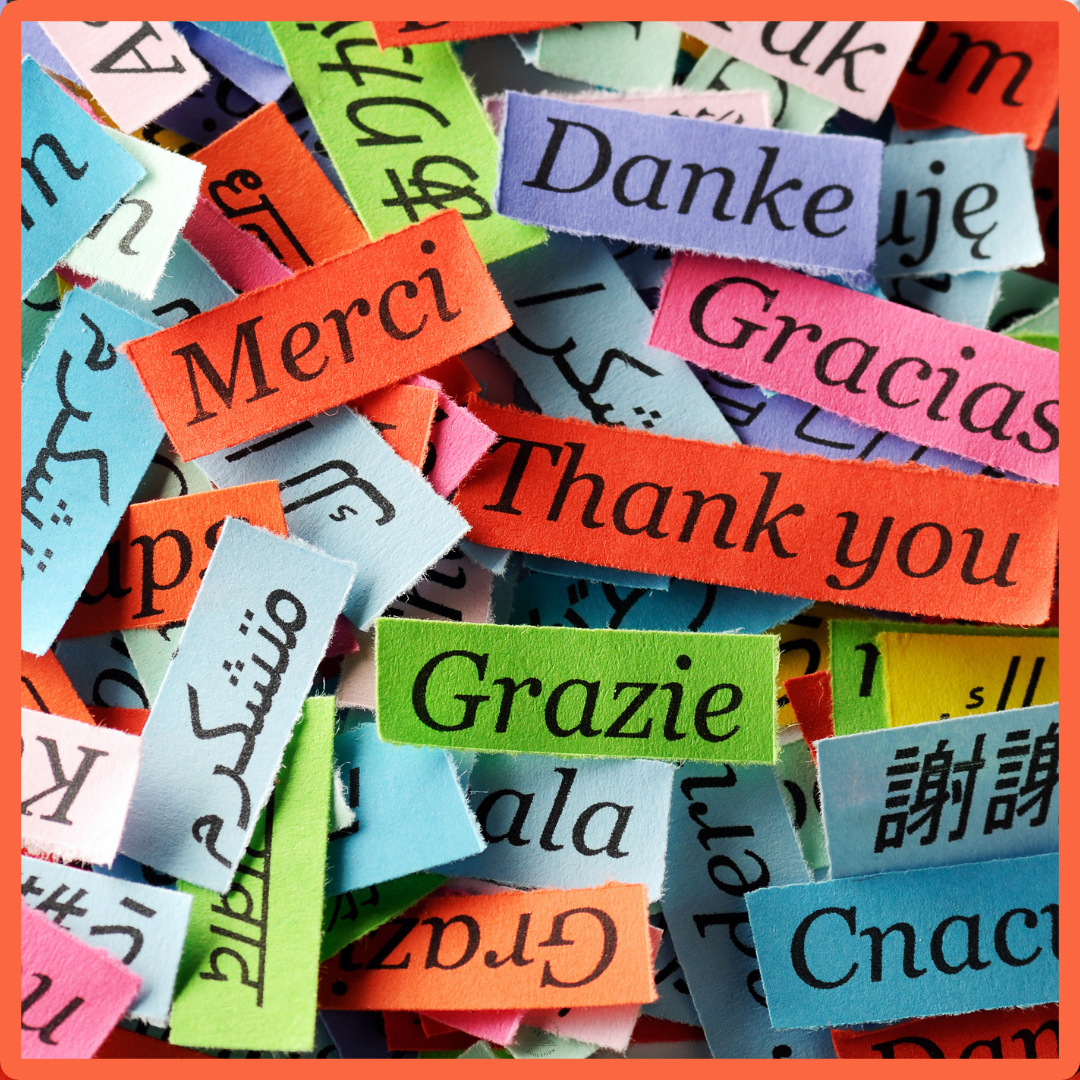
'merci' is one of the first French words anyone learns — it means 'thank you', and it's used constantly. What most learners never find out is that it didn't start out meaning anything like gratitude. Its history runs from the marketplace through the battlefield before it settled into the polite word it is today. Knowing that story gives the word something to hold onto.
A word with history
'Merci' comes from Latin, and its meaning has travelled a long way — through ideas of payment, favour, and pity before arriving at 'thank you'. The resource traces that journey and shows how it connects to a familiar English word that still carries the older meaning.
What's included
6-panel etymology comic in PDF format
Title panel, historical-stage panels tracing the word from Latin through to Modern French, a panel on its English relative, and a sources panel
Black-line illustrations, designed to print clearly in black and white
Wrapper page with guidance on how to use the resource and what success looks like
Full sources list, drawn from standard French and Latin etymology references including the Dictionnaire d'étymologie du français (Le Robert), de Vaan's Etymological Dictionary of Latin, and Etymonline
For personal use in home education and tutoring only
Who it's for
This resource is designed first for newcomers to French who find vocabulary hard to acquire and hold on to — often because of memory or retrieval difficulties. It's a supplementary resource. The learner will usually have met 'merci' already, in a lesson or a textbook, but met isn't the same as retained. The aim is to consolidate that earlier learning by giving the word a story, on the principle that a word with a story attached is easier to remember than a word learnt as an isolated item.
It suits a wider range too:
KS3 French learners who want 'merci' to stick
GCSE French learners who want the word to feel less arbitrary
Home-educated children working through French at their own pace
Specialist tuition students, including those with dyslexia or working memory profiles
Parents working alongside their children, whether or not they have French themselves
Adults brushing up their own French, or studying alongside a child
Anyone who loves etymology and the way words travel between languages
Why this exists
'Merci' is so common that learners rarely stop to think about it — which is exactly why it can slip away when it's needed. Giving it a story turns it from a small, easily-forgotten word into one with a shape the learner can recognise. The connection to a word they already know in English gives them an extra anchor. For learners who struggle to retain vocabulary, those anchors are what make a word stay put. The resource is short by design. Six panels, revisited over time in 5-10 minute sessions, work better than a long explanation a learner reads once and forgets.
Originally created to support one of my own children's learning once the school day had ended.
Related resources
The natural pair for 'merci' in L'atelier des mots is 's'il vous plaît' — please and thank you, the two courtesy phrases every French learner needs first. Another everyday politeness word in the range is 'salut', the French greeting, available as a free sample. For more on where everyday French words come from, The Wordhord gathers free word-history posts on French and English vocabulary.
Available now as a PDF download.

'trop' is one of those small French words that does a lot of work — it means 'too much', or 'too', and learners meet it early.
It's also easy to muddle with 'très', which looks and feels similar but means something quite different. Knowing where 'trop' comes from helps fix what it actually means — and where it comes from is more surprising than you'd expect.
A word with history
'Trop' came into French from Latin, and further back from Ancient Greek, where it started life meaning something entirely unrelated to 'too much'. The resource traces the word back through those stages and shows how it connects to two English words that look nothing like it at first glance.
What's included
7-panel etymology comic in PDF format
Title panel, historical-stage panels tracing the word from Ancient Greek through to Modern French, panels on its two English relatives, and a sources panel
Black-line illustrations, designed to print clearly in black and white
Wrapper page with guidance on how to use the resource and what success looks like
Full sources list, drawn from standard French and Latin etymology references including CNRTL, the Dictionnaire de l'Académie française, Littré, and Etymonline
For personal use in home education and tutoring only.
Who it's for
This resource is designed first for newcomers to French who find vocabulary hard to acquire and hold on to — often because of memory or retrieval difficulties. It's a supplementary resource. The learner will usually have met 'trop' already, in a lesson or a textbook, but met isn't the same as retained. The aim is to consolidate that earlier learning by giving the word a story, on the principle that a word with a story attached is easier to remember than a word learnt as an isolated item.
It suits a wider range too:
KS3 French learners who keep mixing up 'trop' and 'très'
GCSE French learners who want the word to feel less arbitrary
Home-educated children working through French at their own pace
Specialist tuition students, including those with dyslexia or working memory profiles
Parents working alongside their children, whether or not they have French themselves
Adults brushing up their own French, or studying alongside a child
Anyone who loves etymology and the way words travel between languages
Why this exists
'Trop' and 'très' are a classic mix-up — two short words, similar shapes, both to do with degree, but one means 'too much' and the other means 'very'. Learnt as isolated items, they're easy to confuse. Giving 'trop' a story — where it came from, what it originally meant, how it ended up meaning excess — gives the learner something to hold on to that 'très' doesn't share. For learners who struggle to retain vocabulary, that distinct story is what keeps the two words apart.
The resource is short by design. Seven panels, revisited over time in 5-10 minute sessions, work better than a long explanation a learner reads once and forgets.
Originally created to support one of my own children's learning once the school day had ended.
Related resources
The natural pairing for 'trop' in L'atelier des mots is 'très' — the word it's most often confused with. Working through both together helps fix the difference between 'too much' and 'very'.
For more on where everyday French words come from, The Wordhord gathers free word-history posts on French and English vocabulary.
Available now as a PDF download.
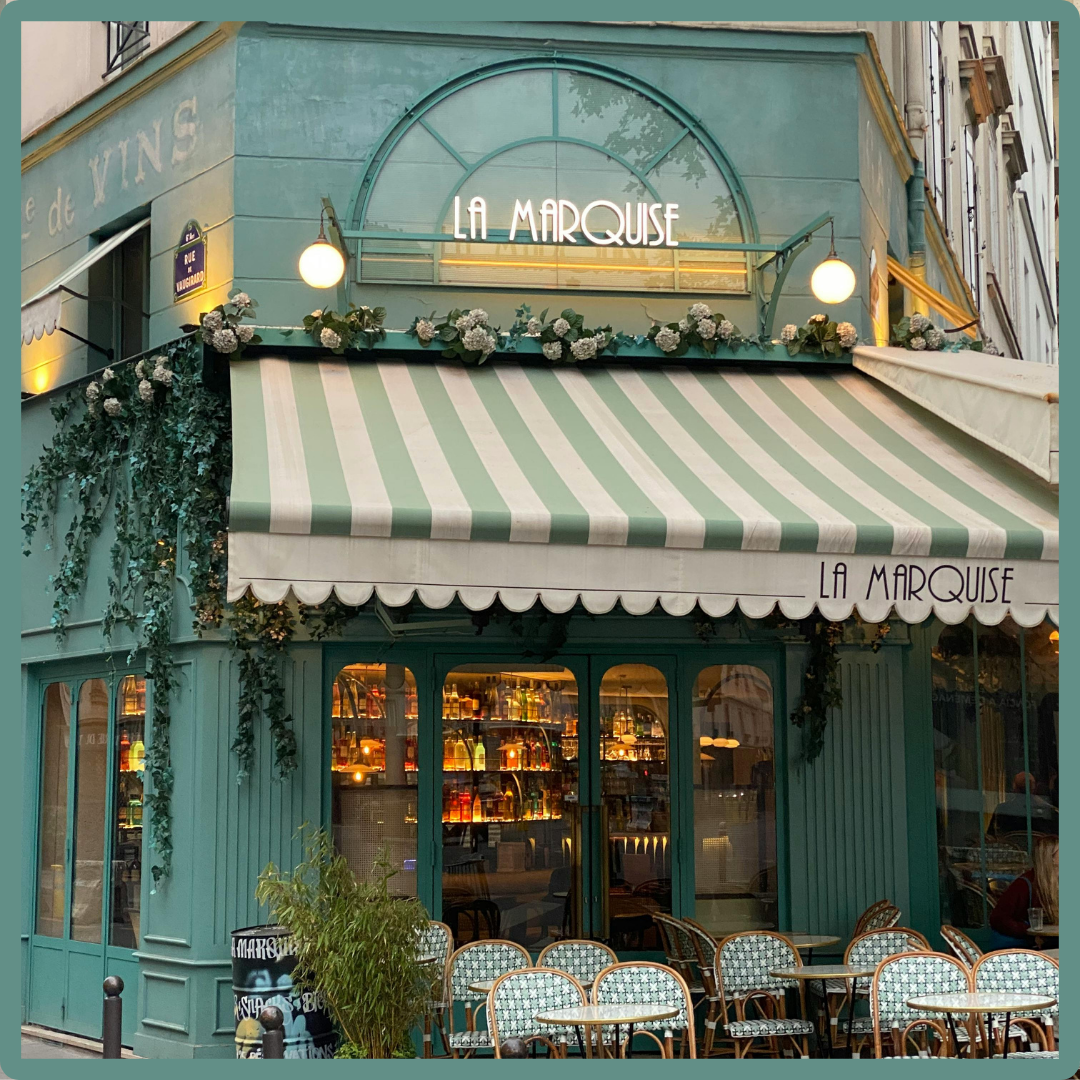
's'il vous plaît' is one of the first things a French learner is taught to say — and almost always learnt as a single block, four little words that mean 'please'.
But it isn't one word. It's a small sentence, and once you can see the pieces inside it, the whole phrase makes more sense — and it's easier to remember why it's spelled the way it is.
A phrase with history
'S'il vous plaît' is built from older French words, and it goes back further still to Latin. The resource takes the phrase apart, shows where each piece came from, and explains how it ended up with its modern spelling — including that small accent that puzzles a lot of learners.
What's included
6-panel etymology comic in PDF format
Title panel, historical-stage panels tracing the phrase from Latin through to Modern French, and a sources panel
A panel breaking the phrase into its parts, showing what each piece means
Black-line illustrations, designed to print clearly in black and white
Wrapper page with guidance on how to use the resource and what success looks like
Full sources list, drawn from standard French and Latin etymology references including the Dictionnaire d'étymologie du français (Le Robert), de Vaan's Etymological Dictionary of Latin, and Etymonline
For personal use in home education and tutoring only.
Who it's for
Designed first for 11-14 year olds, but it suits a wider range:
Anyone who loves etymology and the way phrases are built up over time
KS3 French learners who've met 's'il vous plaît' and want to understand it rather than just memorise it
GCSE French learners who want the phrase to feel less arbitrary
Home-educated children working through French at their own pace
Specialist tuition students, including those with dyslexia or working memory profiles
Parents working alongside their children, whether or not they have French themselves
Adults brushing up their own French, or studying alongside a child
Why this exists
Set phrases like 's'il vous plaît' are usually taught as single blocks to memorise — which works until the learner has to spell them. The apostrophe, the accent, the four separate words crammed together: none of it makes sense if the phrase is just a block of sound. Taking the phrase apart shows the learner that each piece is doing a job, and that the spelling records something real about how the phrase came together. For learners who struggle to retain vocabulary, that logic is what makes the phrase stick.
The resource is short by design. Six panels, revisited over time in 5-10 minute sessions, work better than a long explanation a learner reads once and forgets.
Originally created to support one of my own children's learning once the school day had ended.
Related resources
Another courtesy phrase in L'atelier des mots is 'salut', the everyday French greeting, available as a free sample. And a companion 'merci' resource is on its way — the natural pair to 's'il vous plaît' for any learner building their politeness vocabulary.
For more on where everyday French words come from, The Wordhord gathers free word-history posts on French and English vocabulary.
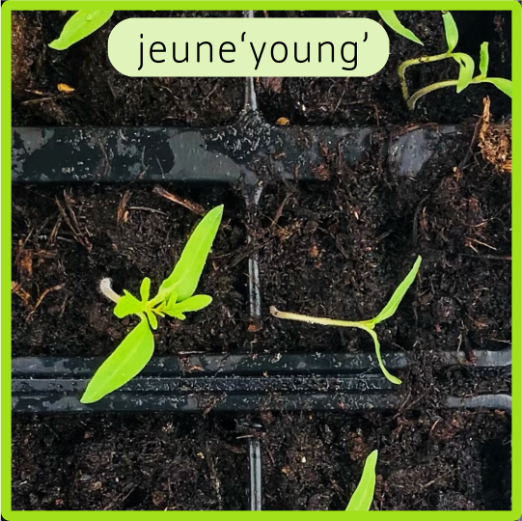
'jeune' is a word French learners meet very early — usually translated as 'young' and left at that.
But the word carries more than its modern translation suggests. It has a long history, and that history connects it to words English speakers already know. Once a learner sees where it comes from, 'jeune' is easier to hold on to.
A word with history
'Jeune' comes from Latin, by way of Old French, and its meaning has shifted across the centuries. The resource traces the word through four historical stages and shows how it connects to two familiar English words.
What's included
6-panel etymology comic in PDF format
Title panel, four historical-stage panels, and a sources panel
Black-line illustrations, designed to print clearly in black and white
Wrapper page with guidance on how to use the resource and what success looks like
Full sources list, drawn from CNRTL, the Dictionnaire de l'Académie française, Littré, and other standard French etymology references
For personal use in home education and tutoring only.
Who it's for
Designed first for tutoring students, but it suits a wider range:
Anyone who loves etymology and the way words travel between languages
KS3 French learners meeting 'jeune' for the first time in lessons or reading
GCSE French learners wanting to understand the word's range of meaning beyond 'young'
Home-educated children working through French at their own pace
Specialist tuition students, including those with dyslexia or working memory profiles
Parents working alongside their children, whether or not they have French themselves
Adults brushing up their own French, or studying alongside a child
This isn't designed for early French learners still building confidence with French at word level. The resource assumes the learner has met the word 'jeune' in some context — a lesson, a textbook, a French children's book — and is ready to look more closely at what it carries.
Why this exists
Vocabulary taught as isolated items rarely sticks for learners who struggle with retention — particularly those with dyslexia. Knowing where a word comes from gives the learner anchors that make it more retrievable when they meet it again. The resource is short by design. Six panels, revisited over time in 5-10 minute sessions, work better than a long explanation a learner reads once and forgets.
Originally created to support one of my own children's learning once the school day had ended.
Related resources
Other words in L'atelier des mots that sit close to 'jeune' include 'vieux, vieil, vieille' (the direct semantic opposite), 'âge' (the conceptual neighbour), and 'an / ans' (age in years).
For the older end of the same semantic field, 'ancien' has its own etymological depth. And for a related sense — new, fresh, at an early stage — 'neuf' is a useful pairing.
For more on where everyday French words come from, The Wordhord gathers free word-history posts on French and English vocabulary.
Available now as a PDF download

‘Lapin’ is a simple word, but its history shows how French vocabulary can change over time. This resource makes that shift clear.
View a free sample of this approach:
Salut (French) – Structured Vocabulary Support (Free Sample)
What It Does
This resource helps learners understand the French word ‘lapin’ and how it became the standard word for ‘rabbit’. It explains how Old French used ‘conin’, and how ‘lapin’ emerged and replaced it, possibly influenced by ‘lapereau’ (a young rabbit). Visuals support clear understanding, helping learners connect meaning with real-world reference.
What Makes It Different
• Shows how words can replace each other over time
• Connects ‘lapin’ with related forms like ‘lapereau’
• Uses etymology to make vocabulary more memorable
• Designed for short, repeatable learning sessions
Originally created to support my own child’s vocabulary retention.
Who It’s For
KS3 learners building core French vocabulary, particularly those who benefit from concrete, image-based learning.
How To Use
Use in short sessions of 5–10 minutes. Start with meaning, then explore the word’s development. Revisit regularly to reinforce recognition.
You May Also Like
âge (French) – Structured Vocabulary Support
très (French) – Structured Vocabulary Support
vieux (French) – Structured Vocabulary Support
bien (French) – Structured Vocabulary Support
Explore more structured vocabulary support in The Forge, and see how meaning connects across languages in The Wordcrafter’s Bench.
© Great Expectations Education
For personal use in home education and tutoring only.

‘Pas’ is one of the most important words in French, but its meaning is not obvious. This resource makes the structure behind it clear.
View a free sample of this approach:
Salut (French) – Structured Vocabulary Support (Free Sample)
What It Does
This resource helps learners understand how ‘pas’ works in French negation. It explains how the word originally meant ‘a step’ and became part of the structure ‘ne … pas’, meaning ‘not even a step’. Over time, ‘pas’ became the strongest part of the negative and is now often used on its own in spoken French. Visuals and examples support learners in recognising and using negative structures accurately.
What Makes It Different
• Explains negation through meaning, not just sentence rules
• Shows how ‘pas’ moved from ‘step’ to ‘not’
• Connects spoken and written French clearly
• Designed for repeated, low-load exposure to support retention
Originally created to support my own child’s vocabulary retention.
Who It’s For
KS3 learners beginning to form negative sentences in French, particularly those who find multi-part structures difficult to remember.
How To Use
Use in short sessions of 5–10 minutes. Start with the core meaning, then explore sentence examples. Revisit regularly to build familiarity.
You May Also Like
âge (French) – Structured Vocabulary Support
très (French) – Structured Vocabulary Support
vieux (French) – Structured Vocabulary Support
bien (French) – Structured Vocabulary Support
Explore more structured vocabulary support in The Forge, and see how meaning connects across languages in The Wordcrafter’s Bench.
© Great Expectations Education
For personal use in home education and tutoring only.

‘Bien’ looks simple, but it carries more than one meaning. This resource makes those meanings clear and connected.
View a free sample of this approach:
Salut (French) – Structured Vocabulary Support (Free Sample)
What It Does
This resource helps learners understand how ‘bien’ works in French as both ‘well’ and ‘good’. It explains its origin from Latin ‘bene’, meaning ‘well’ or ‘in the right way’, and shows how the meaning developed into moral goodness and material value. Visuals and examples support learners in recognising when ‘bien’ is describing actions and when it refers to things of value.
What Makes It Different
• Clarifies the dual role of ‘bien’ as both adverb and noun
• Anchors meaning in the core idea of ‘doing well’
• Uses etymology to connect meanings rather than separate them
• Designed for repeated, low-load exposure to support retention
Originally created to support my own child’s vocabulary retention.
Who It’s For
KS3 learners encountering high-frequency French vocabulary, particularly those who struggle when one word carries multiple meanings.
How To Use
Use in short sessions of 5–10 minutes. Start with the core meaning, then explore examples in context. Revisit regularly to build familiarity.
You May Also Like
âge (French) – Structured Vocabulary Support
très (French) – Structured Vocabulary Support
vieux (French) – Structured Vocabulary Support
anniversaire (French) – Structured Vocabulary Support
Explore more structured vocabulary support in The Forge, and see how meaning connects across languages in The Wordcrafter’s Bench.
© Great Expectations Education
For personal use in home education and tutoring only.

‘Old’ in French is not one word. This resource makes the pattern behind ‘vieux’, ‘vieil’, and ‘vieille’ clear and usable.
View a free sample of this approach:
Salut (French) – Structured Vocabulary Support (Free Sample)
What It Does
This resource helps learners understand how the French word for ‘old’ changes depending on gender and sound. It explains the forms ‘vieux’, ‘vieil’, and ‘vieille’, showing when and why each is used. The etymology links back to Latin ‘vetus’ and ‘vetulus’, reinforcing the stable meaning while clarifying how the forms developed. Visuals and examples support learners in recognising patterns rather than memorising isolated rules.
What Makes It Different
• Explains form changes through sound and structure, not memorised rules
• Connects all three forms into one clear system
• Uses etymology to anchor meaning and reduce confusion
• Designed for repeated, low-load exposure rather than overload
Originally created to support my own child’s vocabulary retention.
Who It’s For
KS3 learners who are beginning to encounter adjective agreement in French, particularly those who find multiple forms difficult to retain.
How To Use
Use in short, guided sessions of 5–10 minutes. Start with meaning, then explore each form through examples. Revisit regularly to build automatic recognition.
Internal Links
Explore more structured vocabulary support in The Forge, and see how word structure connects across languages in The Wordcrafter’s Bench.
You May Also Like
• bonjour (French) – Structured Vocabulary Support
• âge (French) – Structured Vocabulary Support
• très (French) – Structured Vocabulary Support
• maison (French) – Structured Vocabulary Support
© Great Expectations Education
For personal use in home education and tutoring only.

‘Très’ appears simple, but it sits at the centre of how meaning is intensified in French. This resource makes that shift in meaning clear and usable.
View a free sample of this approach:
Salut (French) – Structured Vocabulary Support (Free Sample)
What It Does
This resource helps learners understand how ‘très’ works as an intensifier in French. It explains how the word developed from Latin ‘trans’, meaning ‘across’ or ‘beyond’, into the modern idea of ‘very’. The visuals and examples show how ‘très’ strengthens meaning in everyday phrases such as ‘très bon’. This supports learners in recognising and using the word accurately across different contexts.
What Makes It Different
• Connects ‘very’ to the idea of going ‘beyond’, making the meaning logical
• Shows how intensifiers work, not just what they translate to
• Uses etymology to support long-term retention and understanding
• Built for short, repeatable use rather than memorisation-heavy learning
Originally created to support my own child’s vocabulary retention.
Who It’s For
KS3 learners beginning French, particularly those who need support understanding how words modify meaning rather than simply translating them.
How To Use
Use in short sessions of 5–10 minutes. Start with the meaning, then explore how ‘très’ changes other words. Revisit regularly using simple spoken examples.
Internal Links
Explore more structured vocabulary support in The Forge, and see how word meaning develops across languages in The Wordcrafter’s Bench.
You May Also Like
• bonjour (French) – Structured Vocabulary Support
• âge (French) – Structured Vocabulary Support
• maison (French) – Structured Vocabulary Support
• école (French) – Structured Vocabulary Support
© Great Expectations Education
For personal use in home education and tutoring only.

Understanding ‘grand’ shouldn’t rely on memorising one meaning. This resource helps learners grasp how ‘grand’ works across real contexts, so it sticks.
View a free sample of this approach:
Salut (French) – Structured Vocabulary Support (Free Sample)
What It Does
This resource builds a clear, connected understanding of the French word ‘grand’. Learners explore how it means ‘big’, ‘tall’, ‘older’, and ‘important’, supported by simple visuals and concise explanations. It introduces the wider word family, including ‘grandeur’, ‘agrandir’, and ‘grandiose’, helping learners recognise patterns rather than memorising isolated forms. The focus is on meaning first, with etymology used to support understanding, not as content to learn.
What Makes It Different
• Links multiple meanings of a high-frequency word into one coherent idea
• Uses etymology to support retention without overloading memory
• Builds awareness of word families (‘grand’, ‘grandeur’, ‘agrandir’)
• Designed for short, repeatable sessions rather than one-off teaching
Originally created to support my own child’s vocabulary retention.
Who It’s For
KS2–KS3 learners, particularly those who struggle to retain vocabulary when taught as isolated words. Suitable for parents, tutors, and teachers supporting dyslexic or neurodivergent learners.
How To Use
Use in short, guided sessions (5–10 minutes). Start with the meaning of ‘grand’ in context, then use the visuals to anchor understanding. Revisit over time rather than completing in one sitting.
Explore more structured vocabulary resources in The Forge, and deepen word understanding through The Wordcrafter’s Bench.
More in this series
‘près de’ (French)
‘habite’ (French)
‘salut’ (French)
‘bonjour’ (French)
© Great Expectations Education
For personal use in home education and tutoring only.

Understanding ‘près de’ often breaks down because it is abstract, frequent, and easy to confuse. This resource makes it concrete, visual, and memorable.
View a free sample of this approach:
Salut (French) – Structured Vocabulary Support (Free Sample)
What It Does
This resource supports learners in understanding and retaining the French structure ‘près de’ (‘near to’). It uses clear visuals, simple explanation, and a carefully structured etymological pathway to show how the meaning develops from physical closeness into spatial and figurative use. The aim is not memorisation, but recognition and long-term understanding.
What Makes It Different
• Builds meaning through visual proximity, not translation
• Connects ‘near’ and ‘almost’ through one clear semantic pathway
• Reduces cognitive load by limiting explanation and focusing on one idea
• Designed for short, repeatable use rather than one-off completion
Originally created to support my own child’s vocabulary retention.
Who It’s For
KS3 learners learning core French vocabulary
Dyslexic learners who struggle with abstract or relational language
Parents and tutors supporting vocabulary outside the classroom
How To Use
Use in short, guided sessions (5–10 minutes). Start with the meaning today, then use the images to anchor understanding. Revisit over time rather than completing in one sitting. Avoid testing or requiring explanation recall.
Internal Links
Explore the full system via The Forge, and deepen understanding through The Wordcrafter’s Bench.
Related French Vocabulary Resources
• grand / grande (size and scale)
• habiter (living and location)
• ville (places and environment)
• maison (home and setting)
© Great Expectations Education
For personal use in home education and tutoring only.
Many learners can say ‘j’habite…’ but don’t retain or connect the word beyond that moment. This resource makes ‘habiter’ stick by linking meaning, form and word family.
View a free sample of this approach:
Salut (French) – Structured Vocabulary Support (Free Sample)
What It Does
This resource introduces ‘habiter’ through its core meaning, ‘to live somewhere’, and builds understanding through clear explanation, simple visuals, and a structured word pathway. It connects the verb to related English words such as ‘inhabit’, ‘habitation’, ‘habitat’ and ‘habit’, helping learners see vocabulary as part of a system rather than isolated items. The focus is on recognition, recall and confidence over time.
What Makes It Different
• Meaning-first approach before history or explanation
• Carefully controlled etymology to support memory, not overload it
• Visual sequence designed to anchor understanding without distraction
• Links to familiar English vocabulary to strengthen retention
Originally created to support my own child’s vocabulary retention.
Who It’s For
KS3 learners, particularly those who struggle to retain vocabulary, including dyslexic and neurodivergent learners. Also suitable for tutors and parents supporting French at home.
How To Use
Use in short, guided sessions of 5–10 minutes. Start with the modern meaning, then explore the visuals. Revisit regularly over time rather than completing in one sitting.
Explore more structured vocabulary resources in The Forge, and connect word learning to morphology through The Wordcrafter’s Bench.
You may also be interested in:
• Salut (French) – Structured Vocabulary Support (Free Sample)
• Grand (French) – Structured Vocabulary Support
• Près de (French) – Structured Vocabulary Support
• Chez (French) – Structured Vocabulary Support
© Great Expectations Education
For personal use in home education and tutoring only.
Image: taken in Abbatiale on holiday

Confident French vocabulary isn’t built through memorising lists.
This resource helps learners understand what ‘adorer’ really means — and why it feels stronger than ‘aimer’.
View a free sample of this approach:
Salut (French) – Structured Vocabulary Support (Free Sample)
What It Does
This printable resource supports consolidation of the French verb ‘adorer’. It explains the word’s modern meaning clearly, then shows how its meaning developed over time. Historical context is used to clarify meaning — not as content to memorise.
Designed for short, guided sessions, it strengthens retention through explanation, imagery, and structured discussion.
What Makes It Different
• Focuses on understanding, not memorising
• Clarifies the intensity difference between ‘adorer’ and ‘aimer’
• Uses word history to support meaning, not test recall
• Structured for dyslexic and neurodivergent learners
Originally created to support my own child’s vocabulary retention
Who It’s For
KS3 French learners, GCSE students needing consolidation, tutors, and parents supporting vocabulary at home — particularly helpful for dyslexic and neurodivergent learners.
How To Use
Use in short 5–10 minute guided sessions.
Start with modern meaning. Use the illustrations to prompt discussion. Revisit occasionally over several weeks. This is a consolidation tool, not a teaching-ahead resource.
Explore the full collection in The Forge, or see how this fits within The Wordcrafter’s Bench morphology pathway.
© Great Expectations Education
For personal use in home education and tutoring only.
No results found
No results match your search. Try removing a few filters.
Curious to try my resources? Start here.
This little set of ‘test’ themed resources is a gentle way to try out how I teach spelling, morphology and vocabulary, without committing to full price.
Each one is 75% off for a limited time and works well as a standalone activity or as a taster before diving into the other packs.
Ideal for: home educators, 11+ candidates and anyone wanting a low cost starting point.

This downloadable pack explores the root ‘test’ (from Latin testari, meaning to witness or affirm). It includes a clear set of printable word cards designed for spelling, reading, and vocabulary practice – with a focus on how words are built.
All words in this set contain the root ‘test’ (e.g. attest, protestation, testimony, untestable), and are organised for ease of printing. These cards are not flashcards in the traditional sense – they’re designed to be used within play-based, sensory-rich tasks. Check out a scroll-through of the resource.
Included in the pack:
✅ 36 word cards featuring the root ‘test’
✅ A simple tracker to monitor blending and reading fluency
✅ 40+ activity suggestions using tactile, oral, visual, and movement-based approaches
Examples include:
• Writing with window pens or tracing in salt
• Playing Snakes and Ladders with a word per turn
• Echo reading, silly sentences, and morpheme matching
• Body spelling, hopscotch games, and torchlight hunts
These activities are especially supportive for learners who benefit from movement, repetition, and meaning-driven reading. The tracking sheet allows you to note when a word can be blended or read automatically – helpful for both planning and celebrating progress.

Decode big words like ‘testament’ and ‘protester’ — morpheme by morpheme.
This downloadable literacy pack helps children explore the morpheme ‘test’ (meaning to witness or to examine), using a Structured Word Inquiry (SWI) approach. Through colour-coded cards, clear explanations, and hands-on activities, learners discover how complex words are built — and what they really mean.
Inside the pack:
A complete set of morpheme cards (in both colour-coded and neutral green versions)
A parent guide that explains word parts clearly — including what a linking vowel is and when to drop the ‘e’
A progress tracking table for blending and reading
10+ multi-sensory word-building games and puzzles
Examples of real ‘test’ word families (e.g. testify, protest, testimony, untested, countertestimony)
Check out a scroll-through video of the resource.
Activities include:
Missing morpheme puzzles
Snap! word family edition
Build-your-own definition games
Word wall creation
Card sorting and classification
Designed by a qualified dyslexia and literacy specialist, this pack supports:
Home educators
Learners who thrive on pattern and logic
Spelling confidence through morphology
Older learners revisiting tricky words with purpose

📎 Part of the How Words Workcollection | ✏️ 75% Off | 🎞️ Scroll-through video included
This sample resource introdu ces learners to vocabulary built from the Latin root “testari”, meaning to bear witness. It’s part of my wider How Words Work: Root Study & Vocabulary collection — a series of tools for building spelling confidence and deeper word understanding.
This pack includes structured grids for exploring words like testify, protest, attest, and testimonial, using:
Clear definitions
Synonyms
Sentence prompts
Etymology (word origins)
The word contest is fully modelled as an example, and suggested answers are provided at the end to support independent learning. Illustrating the words is encouraged, particularly for visual memory or neurodivergent learners.
This sample is ideal for:
🟊 Home educators exploring root-based learning
🟊 Children preparing for 11+ exams
🟊 Learners who benefit from structured vocabulary work
🟊 Anyone curious about how words connect
🎞️ A scroll-through video shows the full resource before purchase
💸 Download it for 75% off as part of the test word collection
📄 Pairs well with my Test spelling sheets and word cards
A ready-to-use set of spelling and decoding grids exploring the root test (to bear witness or show evidence).
From test and attest to testimony, protest, and intestacy, this pack offers structured practice with over 30 derived words — all carefully segmented for reading, spelling, and meaning.
Each sheet supports multi-sensory learning, encouraging children to:
▪️ Explore the sounds
▪️ Create the word
▪️ Read, Spell, and Use it in a sentence
Also includes a page of hands-on activity ideas — from tracing and air-writing to chalk play and morpheme sorting.
Perfect for learners exploring morphemes, building vocabulary, or strengthening reading and spelling fluency.
🟩 You’ll get:
• Three printable spelling grids
• Word lists split by morpheme
• Sentence-writing prompts
• Multi-sensory activity suggestions
• Colour-coded versions to support visual memory
Check out the resource on this video.
Designed for home learning or 1:1 support.
Pairs well with the matching “test” jigsaw word cards.