Strawberry – a berry with no straw in it
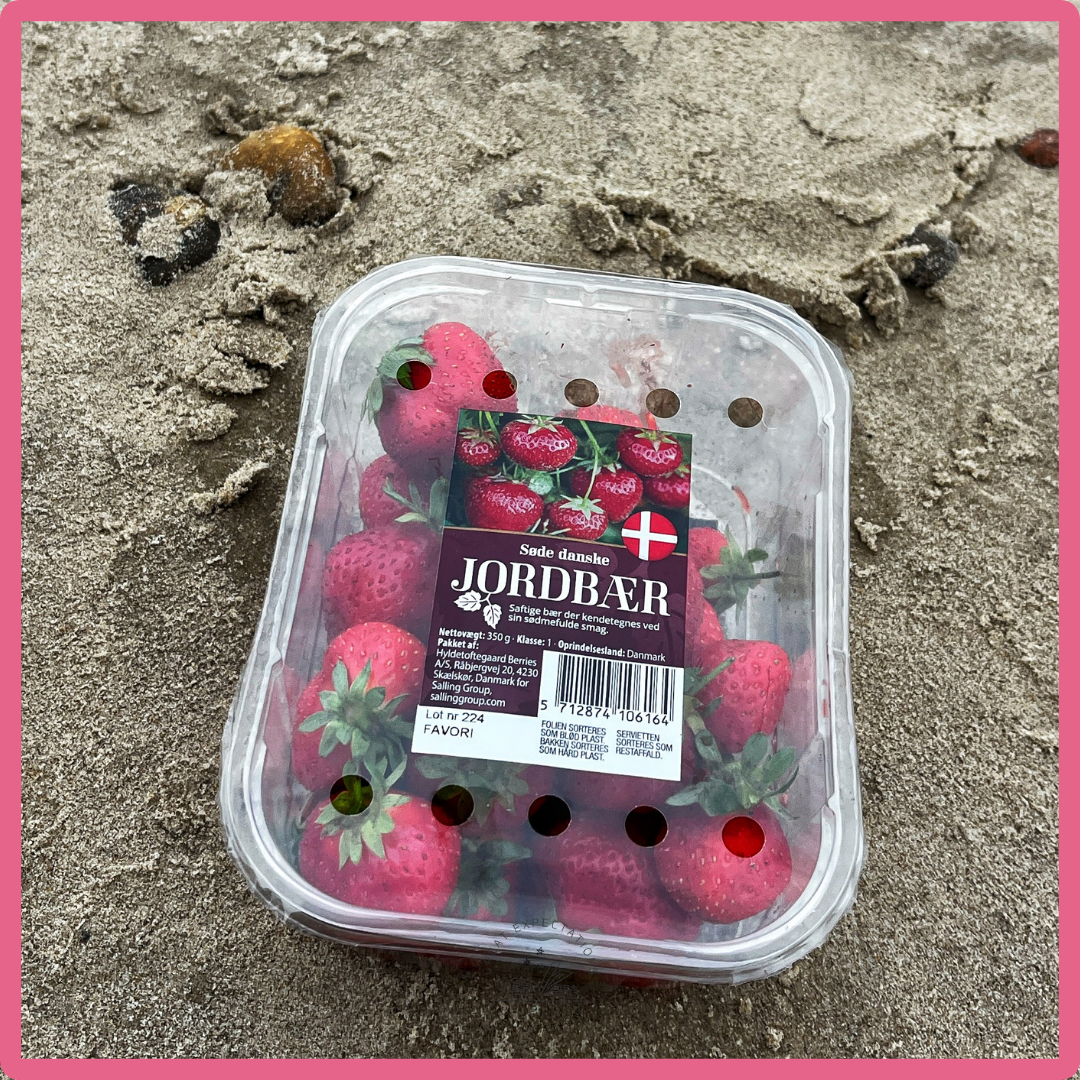
Photographed on the sand where the Skagerrak and Kattegat meet, this punnet of Danish ‘jordbær’ (‘earth berries’) captures what most European languages still call the strawberry: the berry that grows close to the ground. English alone names it for a straw.
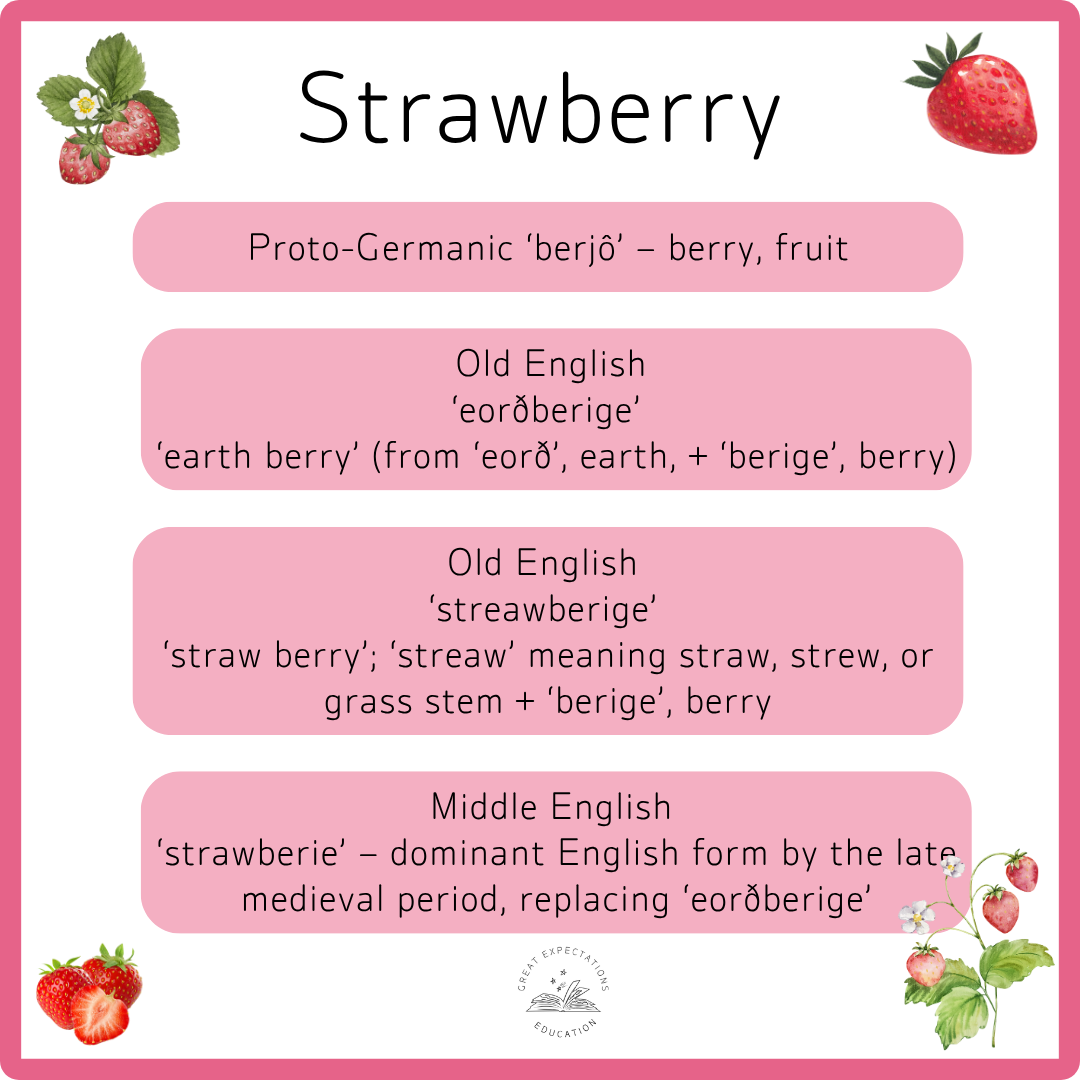
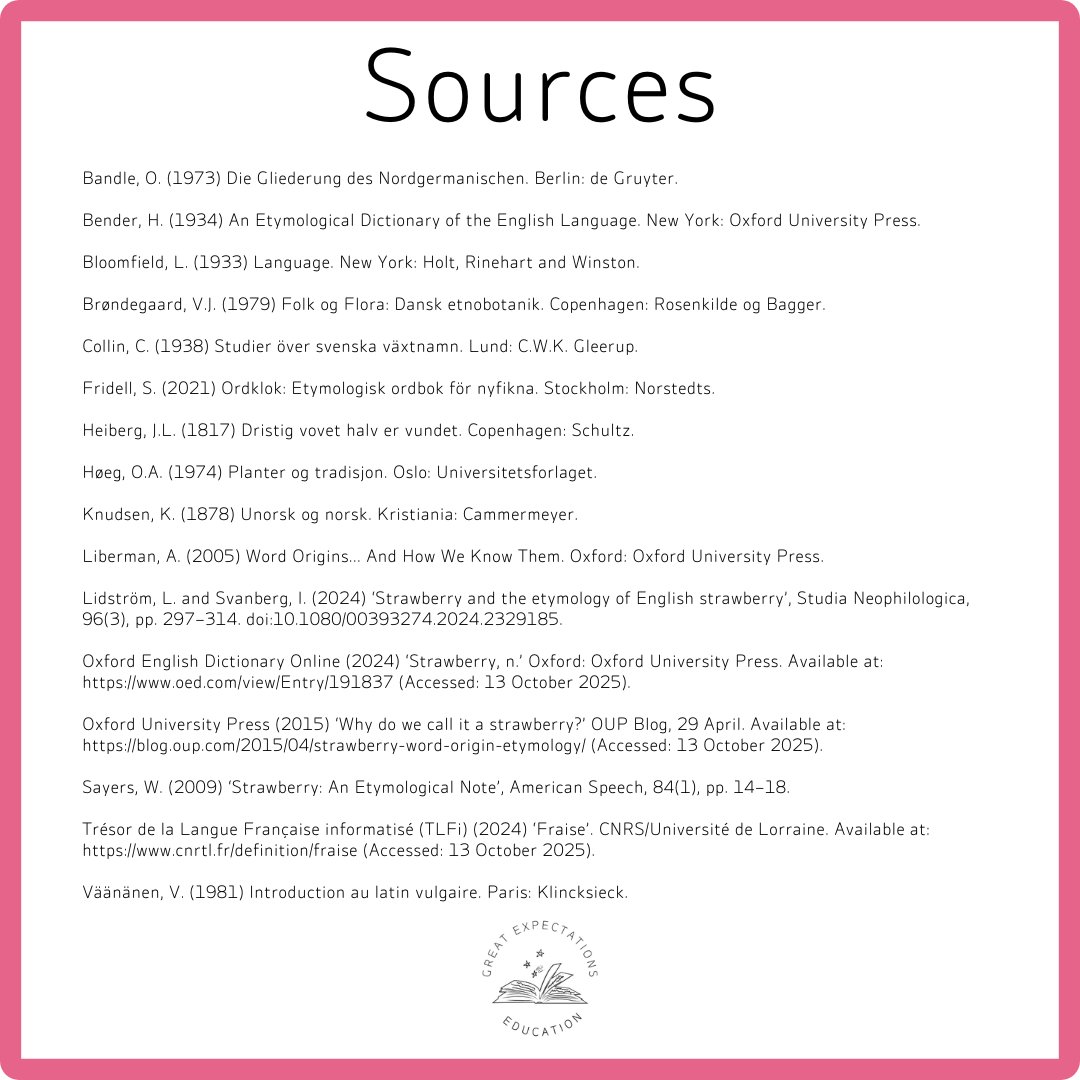
The word ‘strawberry’ first appears in Old English as ‘streawberige’, later replacing ‘eorðberige’ (‘earth berry’). For centuries, scholars puzzled over the ‘straw’ — linking it to runners strewn on the ground, pale seeds, or later straw mulch. Recent research points instead to an older European custom: threading wild strawberries onto a straw of grass, a practical way to gather the soft fruit without crushing it.
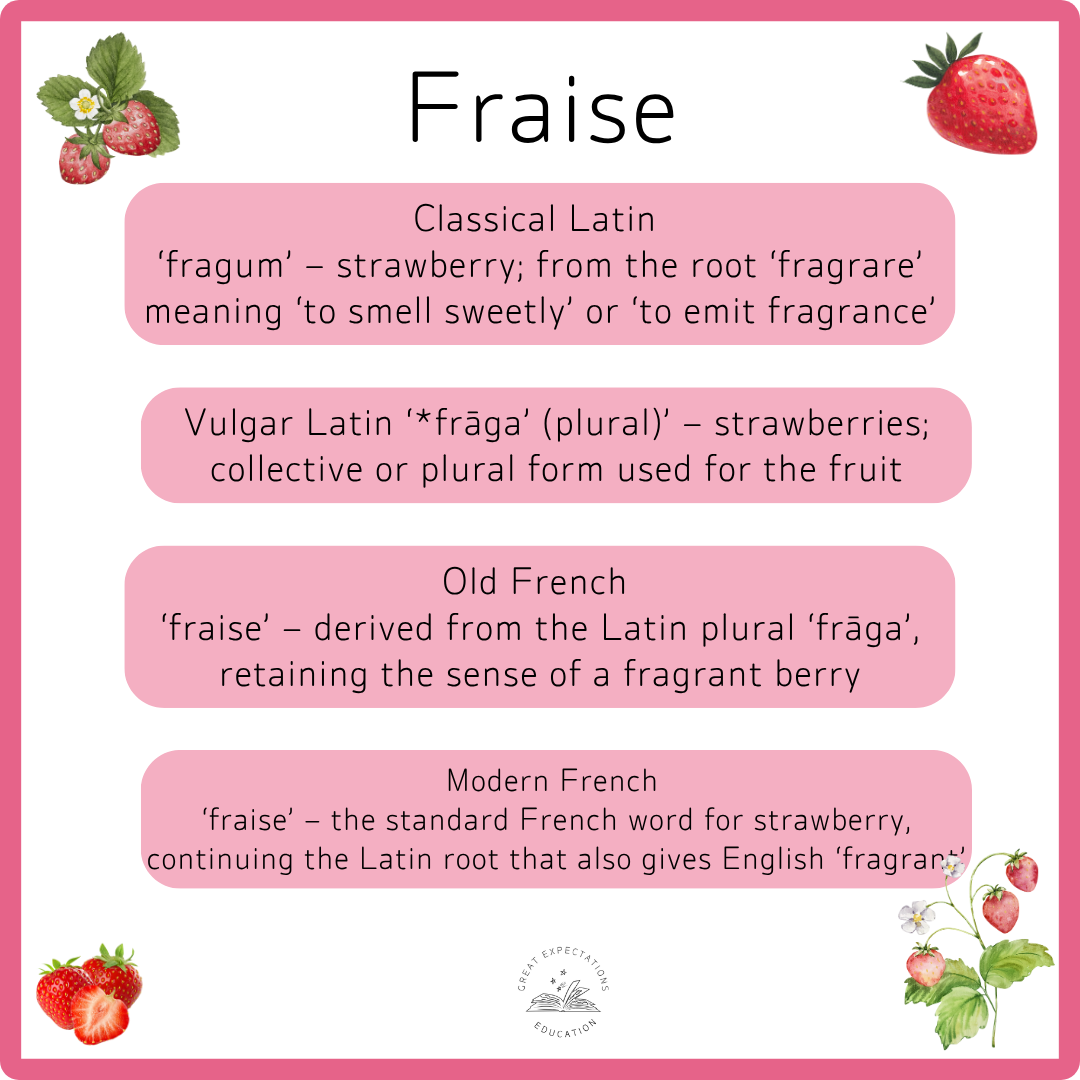
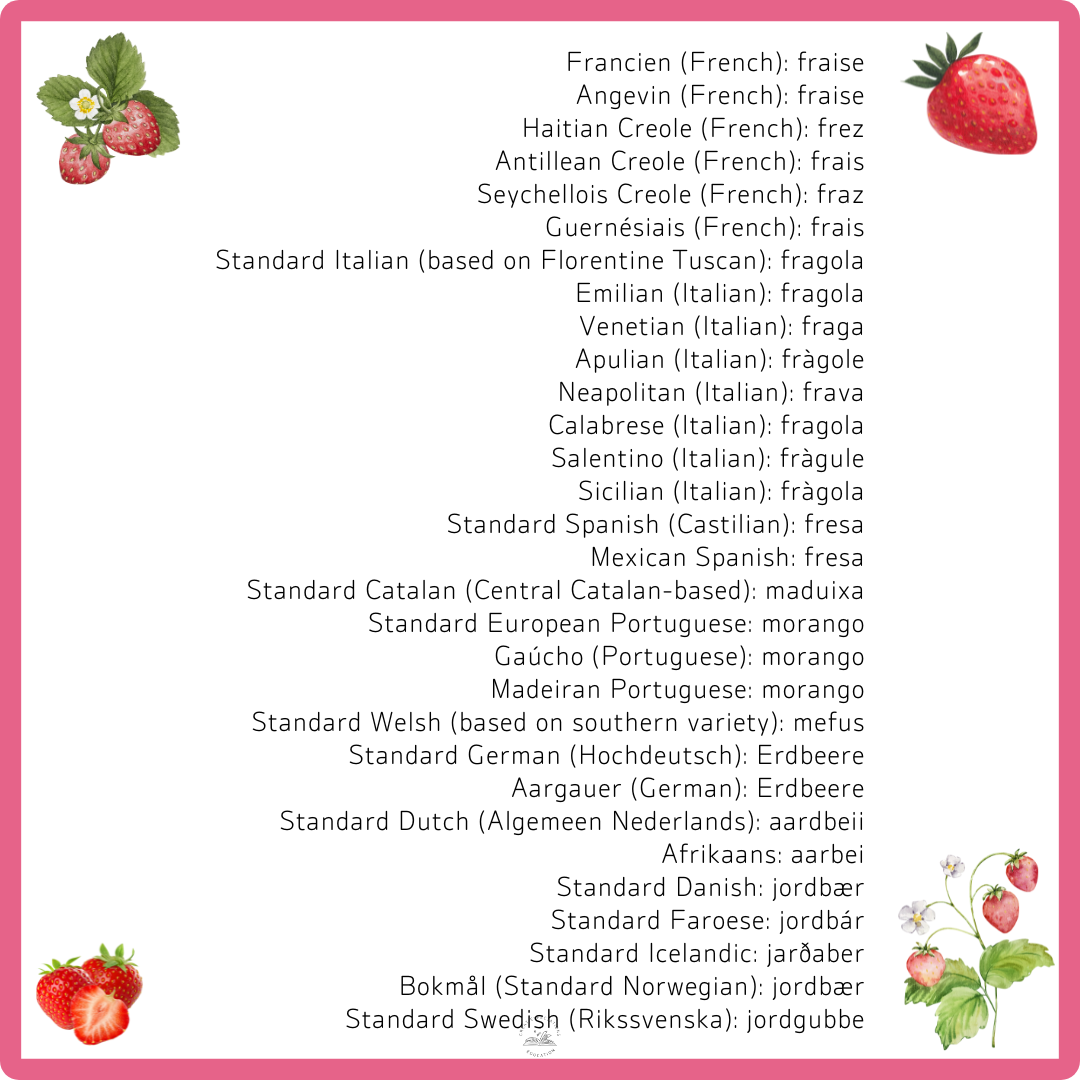
Across Europe, the names vary but share deep roots. German ‘Erdbeere’, Dutch ‘aardbei’, Danish ‘jordbær’, and the Celtic ‘sú talún’ all mean ‘earth berry’. French ‘fraise’, Italian ‘fragola’, and Spanish ‘fresa’ trace back to Latin ‘fragum’, linked to fragrance. English alone preserves a name tied not to the earth or scent, but to a simple act — threading berries on grass stems in summer sunlight.