Mozzarella – a cheese with its name pinched off
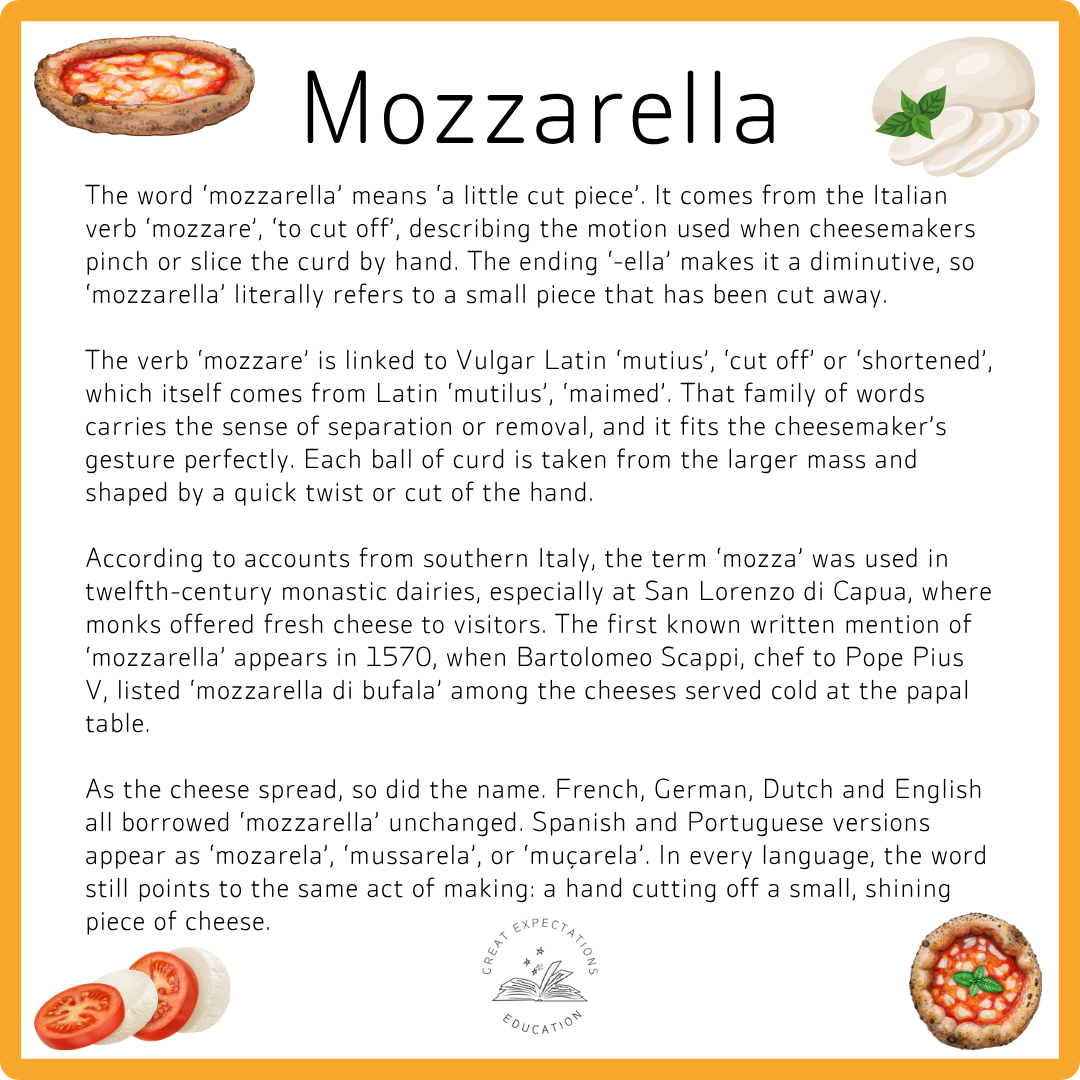
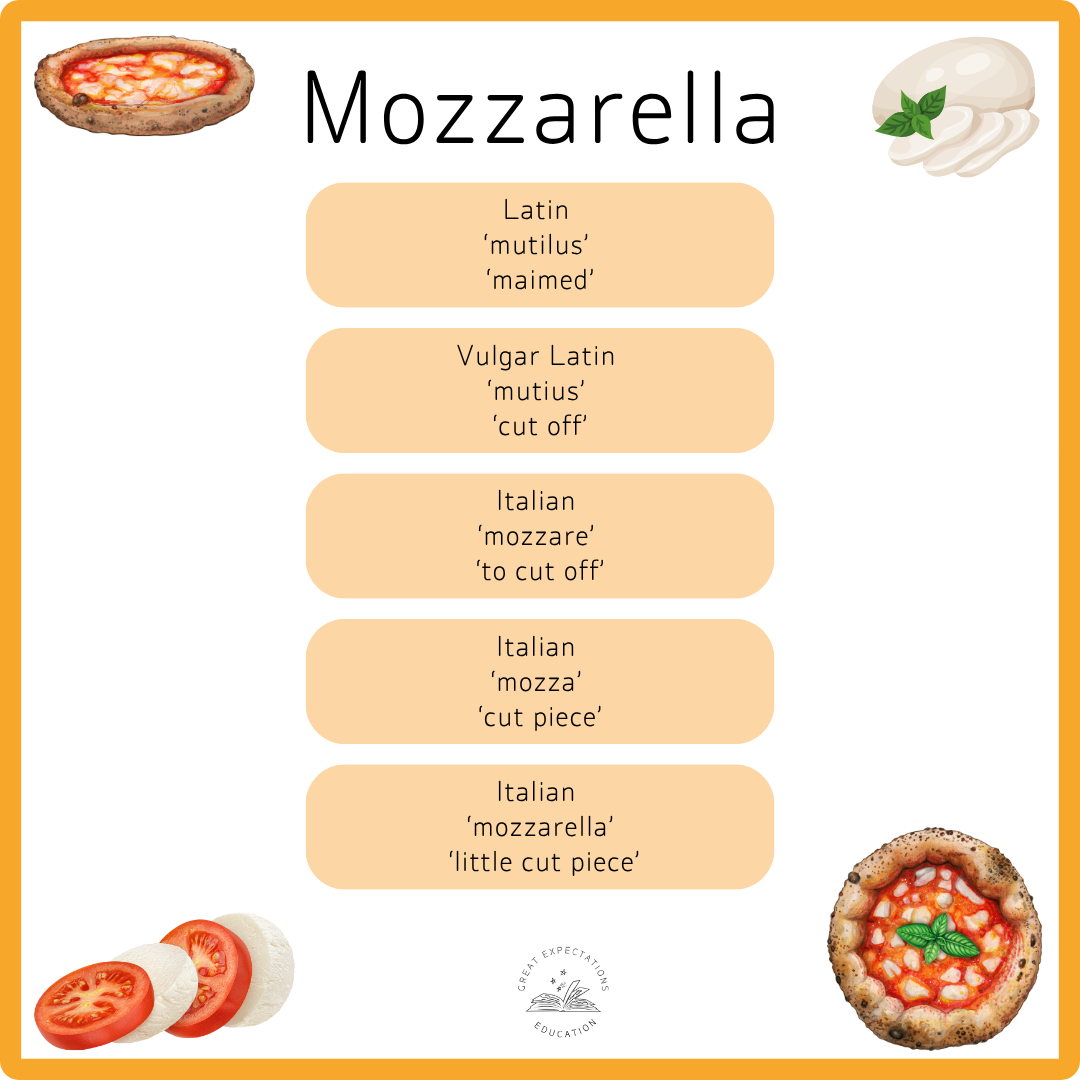
The story of ‘mozzarella’ begins not with a region or a recipe, but with a movement. The Italian verb ‘mozzare’ means ‘to cut off’, describing the motion of the cheesemaker’s hand as the curd is pinched and twisted into shape. Add the ending ‘-ella’, and you get ‘a little cut piece’—a word that captures the rhythm of its making.
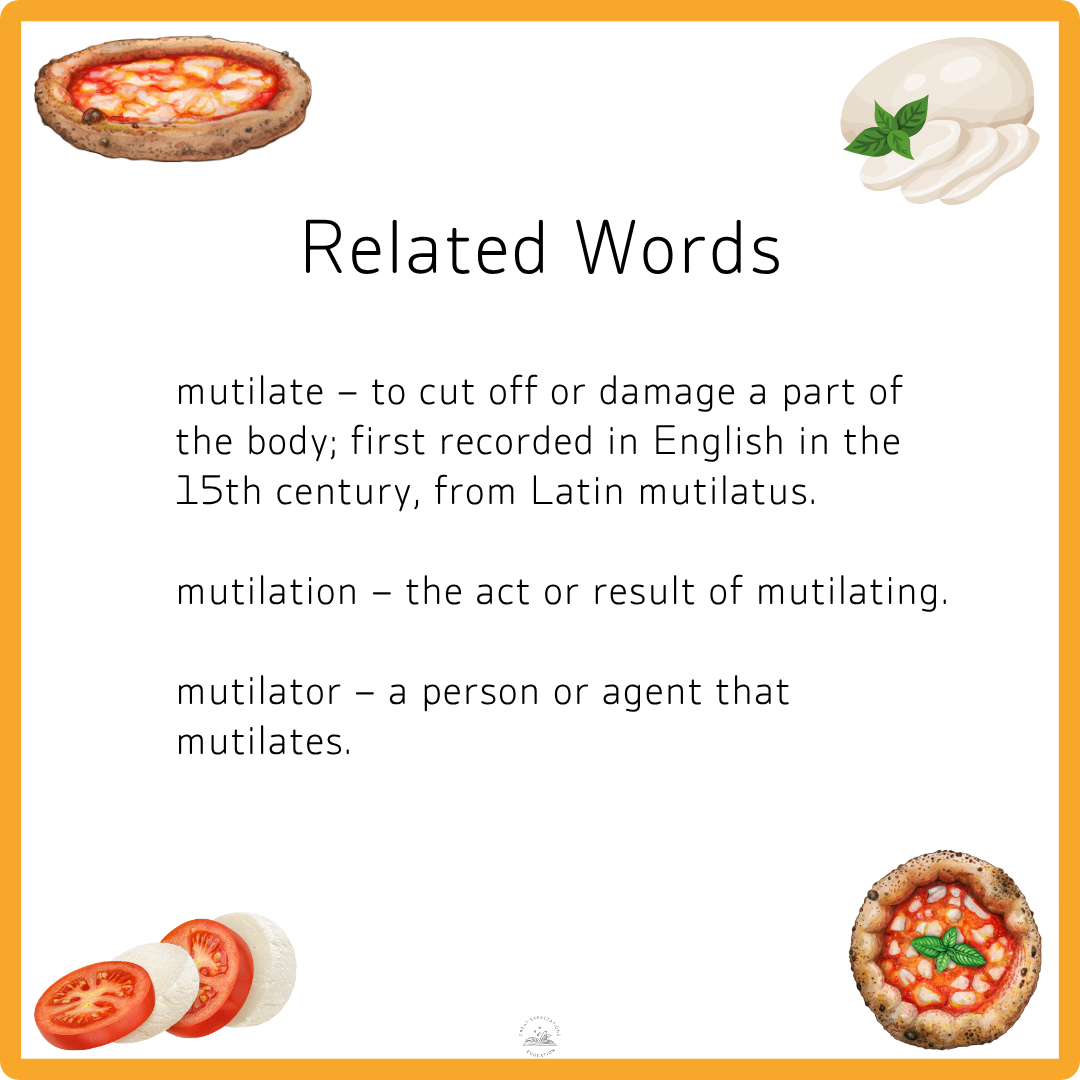
The root reaches back to Latin ‘mutilus’, ‘maimed’ or ‘cut short’, the same source as English ‘mutilate’. Over centuries, that sense of separation softened. What once meant harm became an art: cutting curd, not flesh. Medieval monks at Capua were already offering ‘mozza’ to travellers; by 1570, Bartolomeo Scappi listed ‘mozzarella di bufala’ among the delicacies of the papal kitchen.
When the cheese spread across Europe, the word went too. French, German, Dutch and English borrowed it whole. Spanish and Portuguese reshaped it slightly—‘mozarela’, ‘mussarela’, ‘muçarela’—but never altered its heart. Wherever it’s spoken, the name still carries the gesture: the neat, decisive cut that turns milk into something supple and alive.