Town: the settlement that grew from a fence
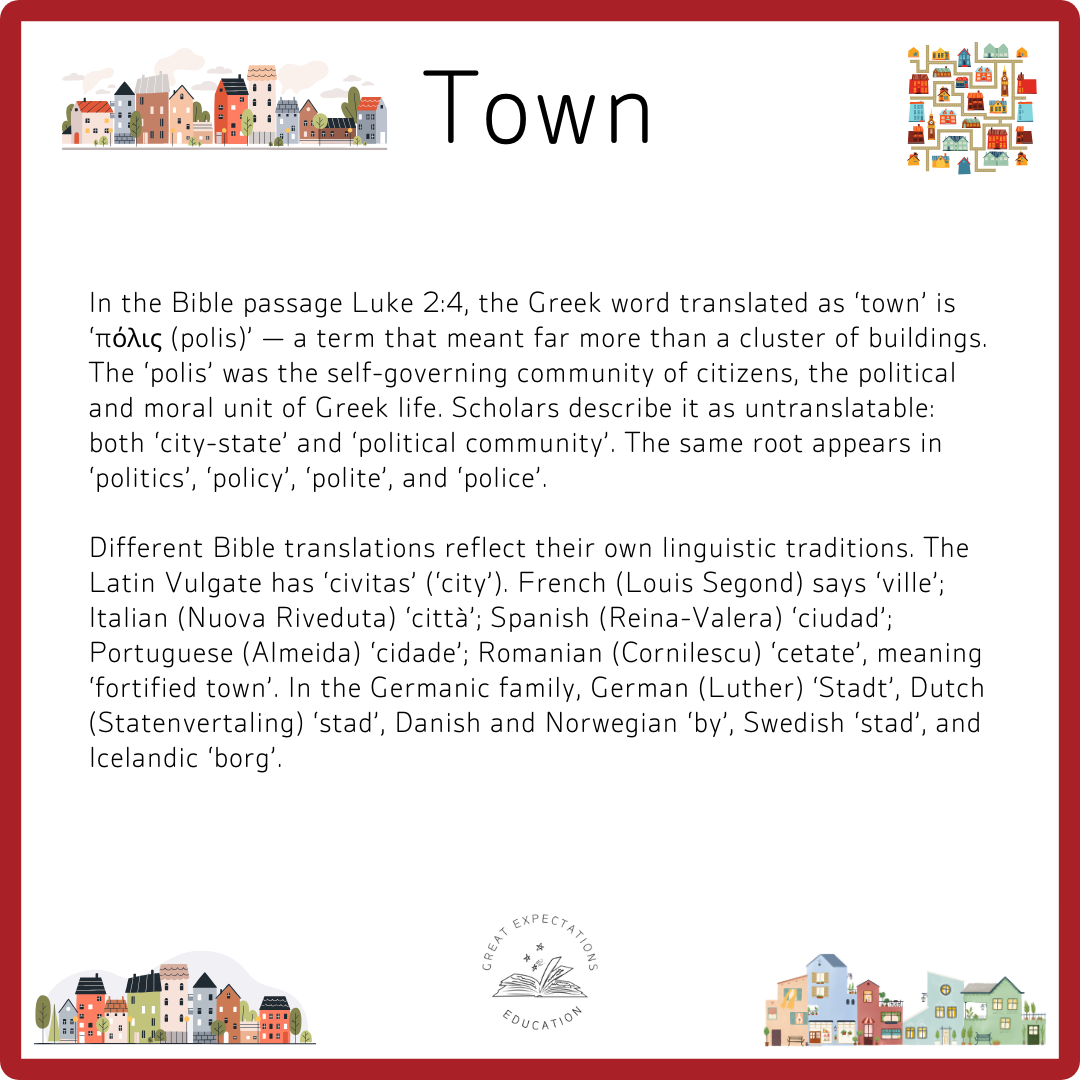
So Joseph also went up from the town of Nazareth in Galilee to Judea, to Bethlehem the town of David. (Luke 2:4)
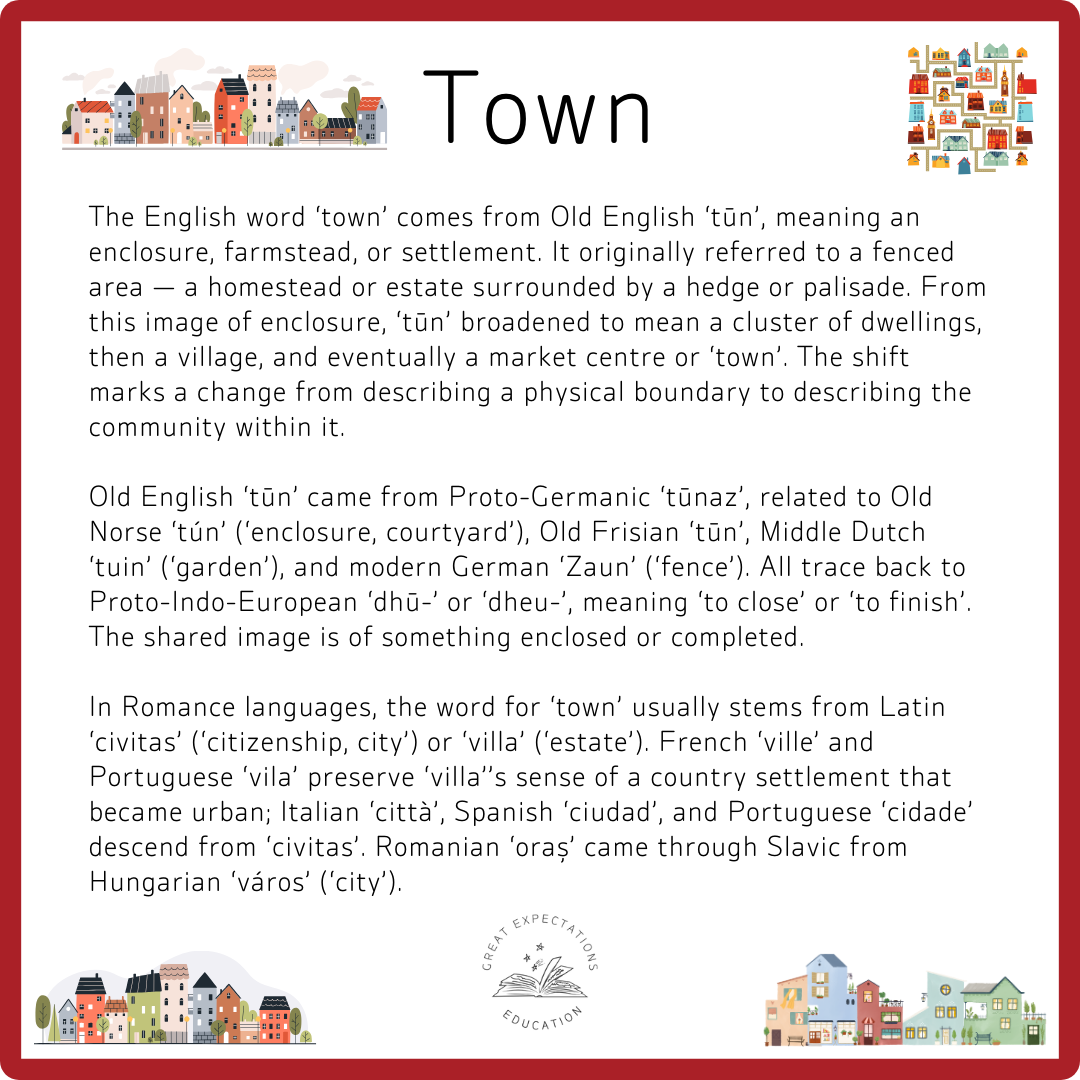
The word ‘town’ in this verse may look ordinary, but its history is anything but. In Old English, a ‘tūn’ was an enclosed homestead, a place marked out by a boundary. Over time it grew into the idea of a village and then a market settlement. In Luke’s Greek, the word is ‘polis’, the term for a whole civic community, not only its buildings. It held together the people, their life, and their shared responsibilities.
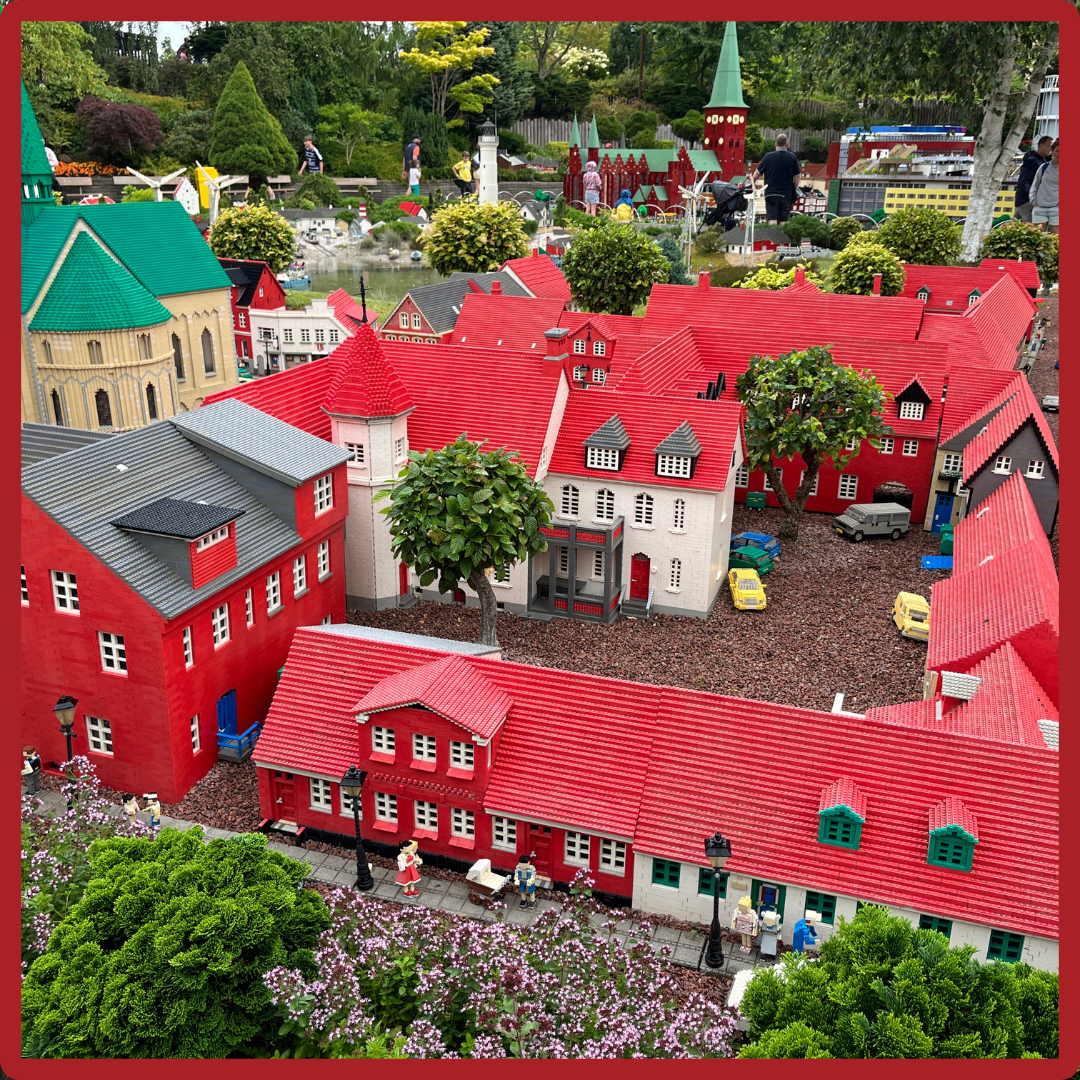
The photograph for this card comes from Miniland in Legoland Denmark. The model shows a Small Danish Town, built as a composite of Billund and other Jutland market towns. Its clustered red roofs, parish church, and enclosed square echo the older meaning of ‘tūn’ as a gathered, bounded place. Even in miniature, it captures how a town forms around shared life rather than size.
Bethlehem was small in the days of Joseph and Mary, yet it carried a story far larger than itself. In that town of David, the one who would draw a new community together entered the world, beginning a work that stretches far beyond any single place or boundary.
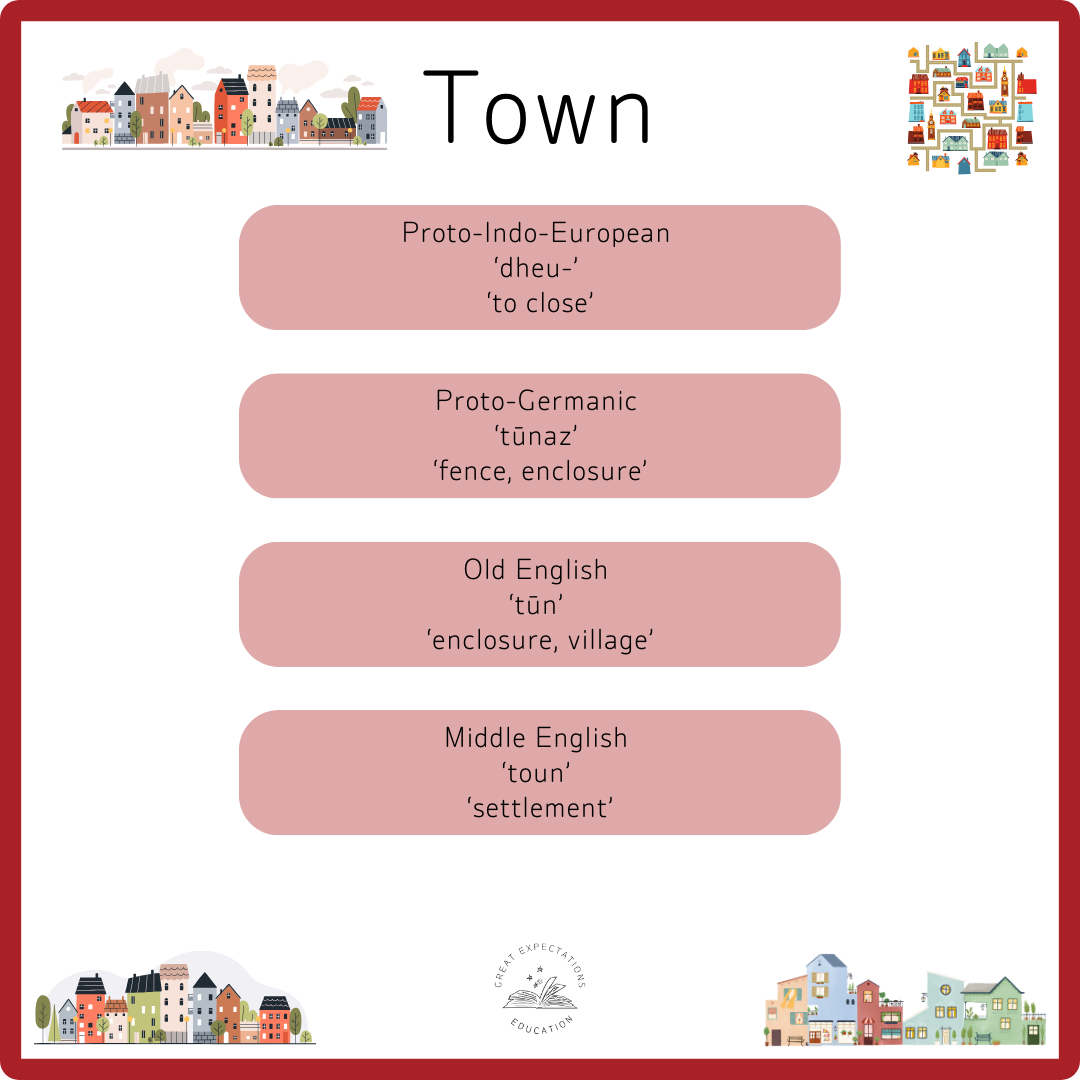
Each word card set begins with an image that captures the theme of the word. The following cards trace its story: a main word card (or two, if extended), a junior version with a paler border, an etymological breakdown showing how the word travelled through time, and a list of sources. Some sets also include cards for related words or translations across other languages. Together they show where each word came from, how it changed, and what it still carries with it.