Census: one mark at a time
‘In those days Caesar Augustus issued a decree that a census should be taken of the entire Roman world. This was the first census that took place while Quirinius was governor of Syria. And everyone went to their own town to register.’ Luke 2.1 to 3
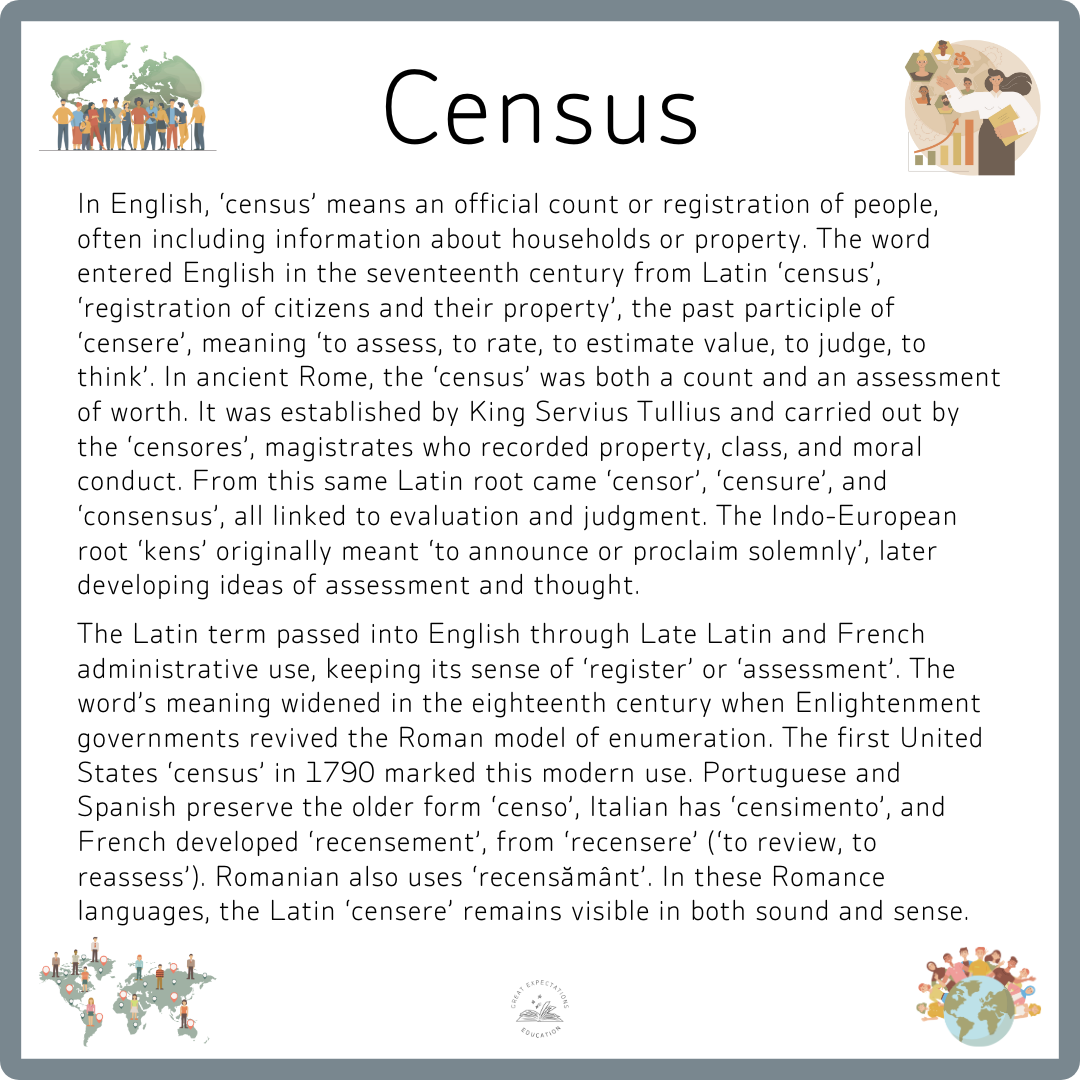
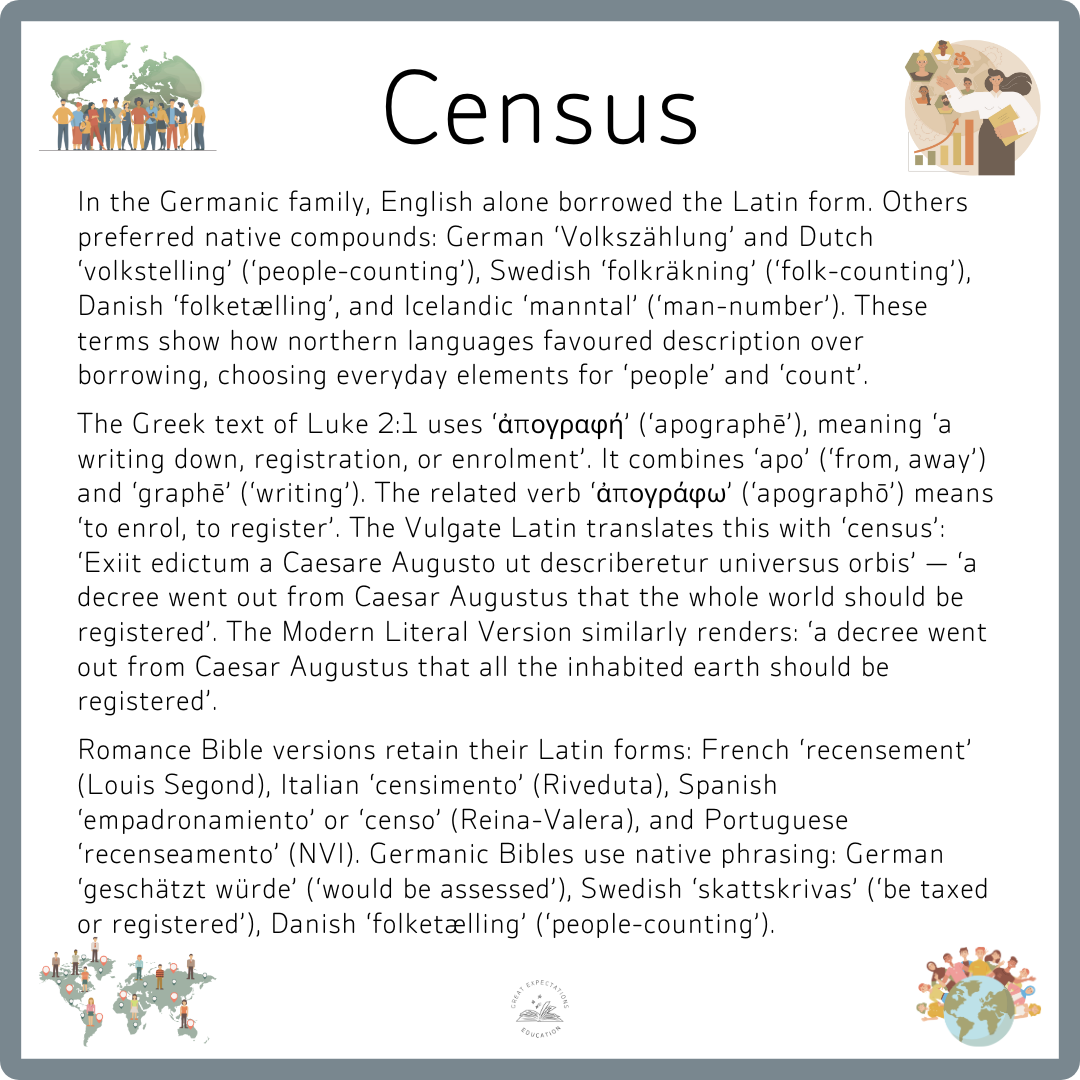
This word card looks at the history of ‘census’, from the Roman system of assessment to the Greek term ‘apographē’, ‘a writing down’. The image shows a line traced through homemade gingerbread sensory salt, a small act of marking and recording. That simple movement echoes the older meaning of the passage, where every household was written into a register and every name mattered. In Luke’s account, the full sweep of empire sits alongside the quiet record of ordinary lives, and both are held within God’s purposes as the story turns toward Bethlehem.
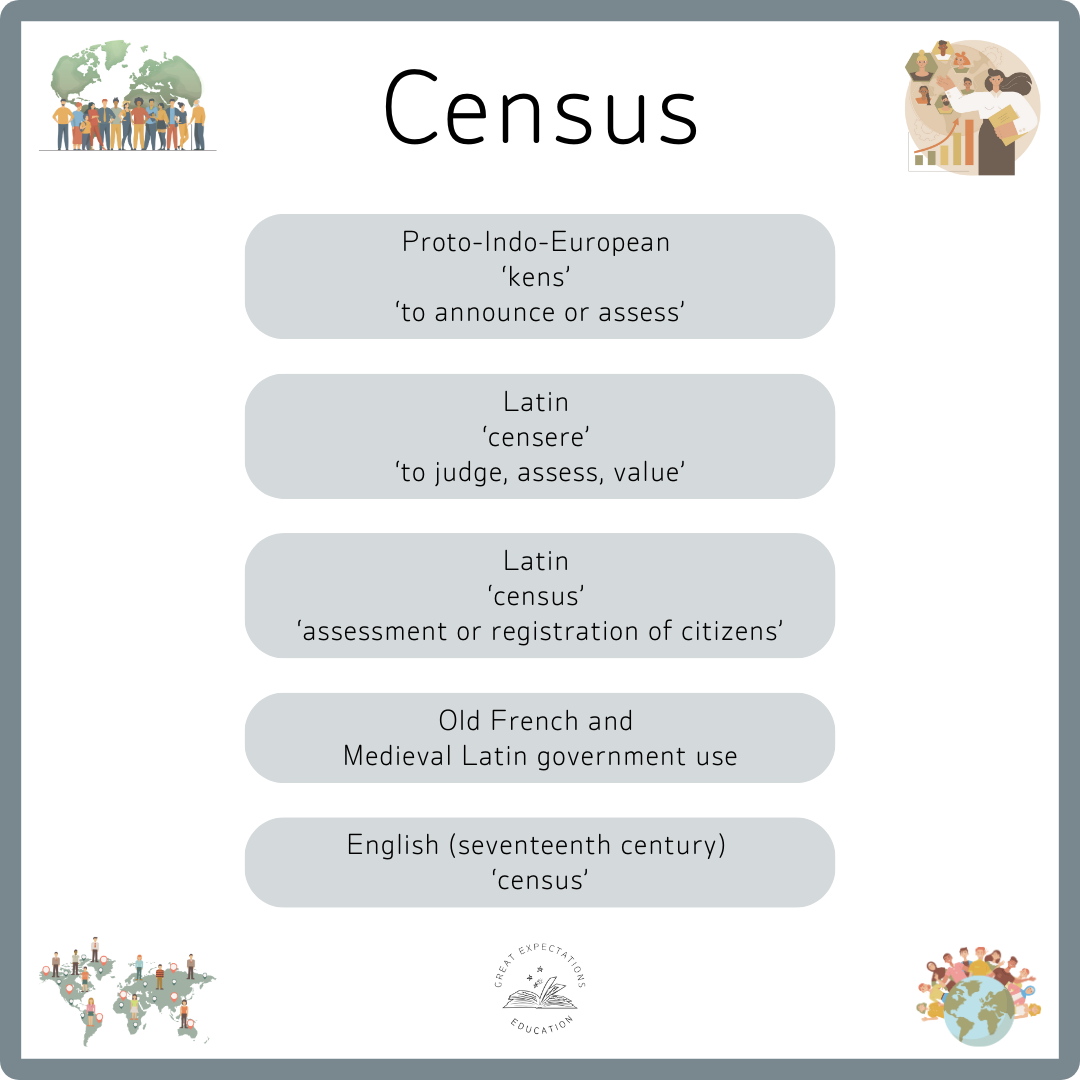
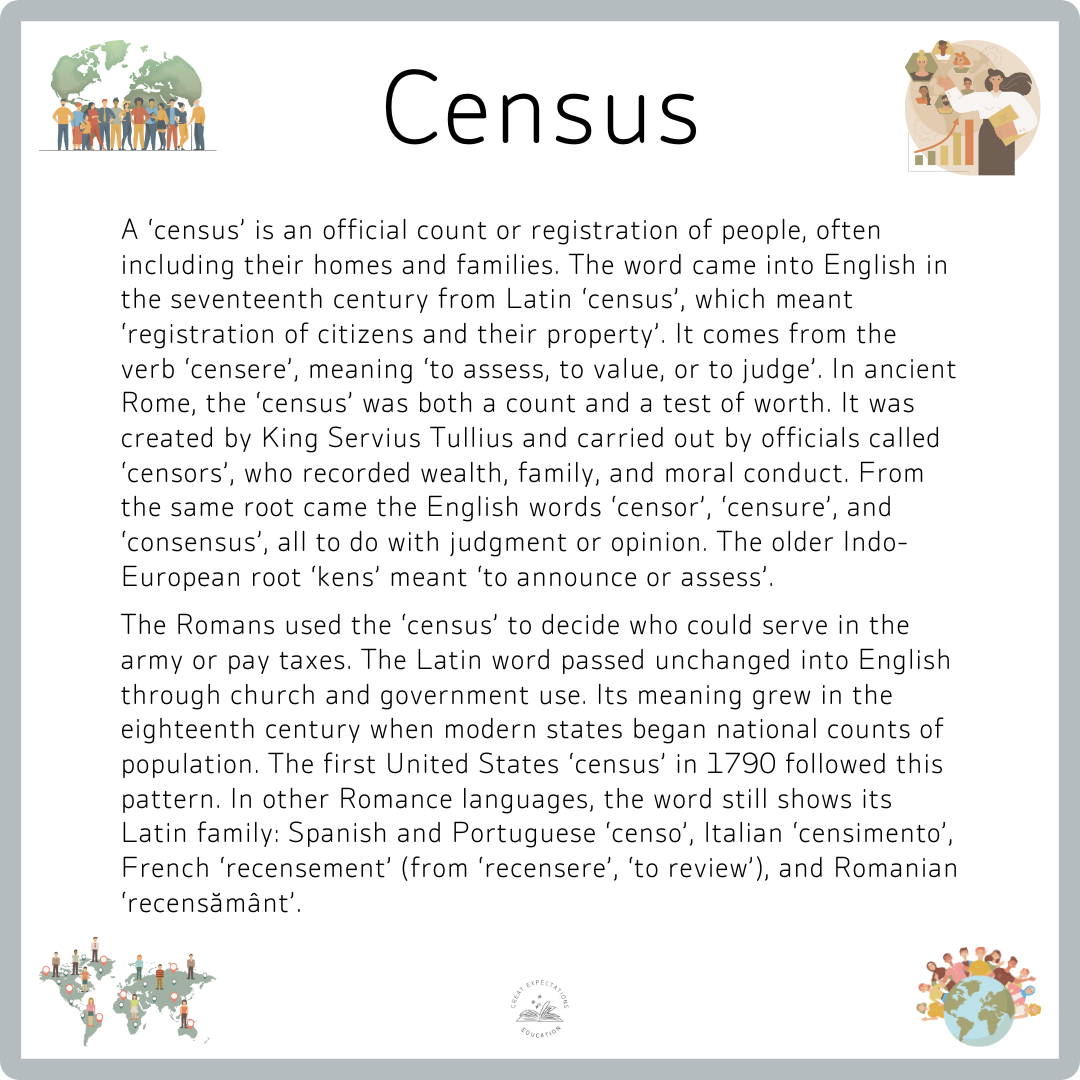
Each word card set begins with an image that captures the theme of the word. The following cards trace its story: a main word card (or two, if extended), a junior version with a paler border, an etymological breakdown showing how the word travelled through time, and a list of sources. Some sets also include cards for related words or translations across other languages. Together they show where each word came from, how it changed, and what it still carries with it.