Manger – from Latin chewing to English crib
‘She wrapped him in cloths and laid him in a manger, because there was no guest room available for them.’ (Luke 2:7)
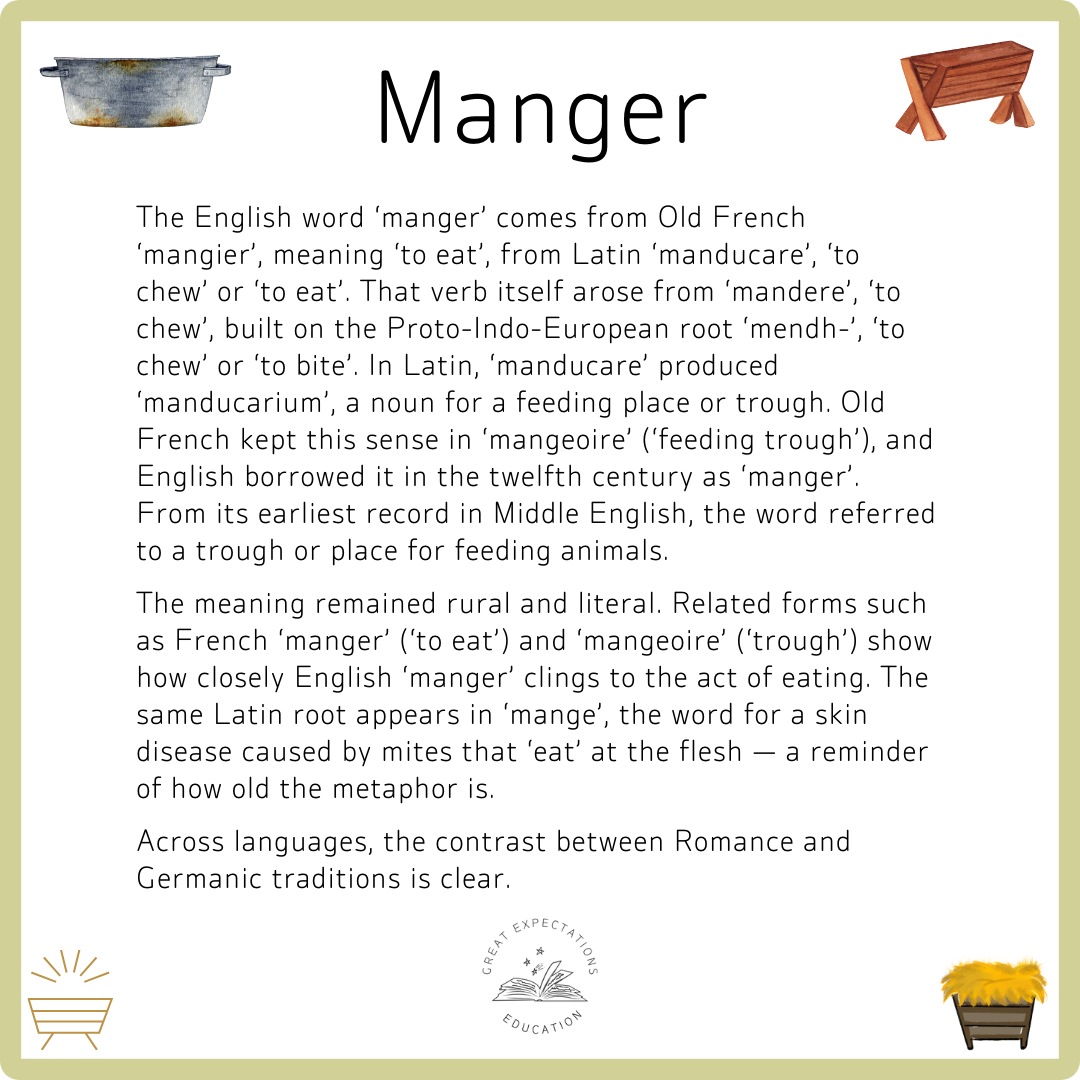
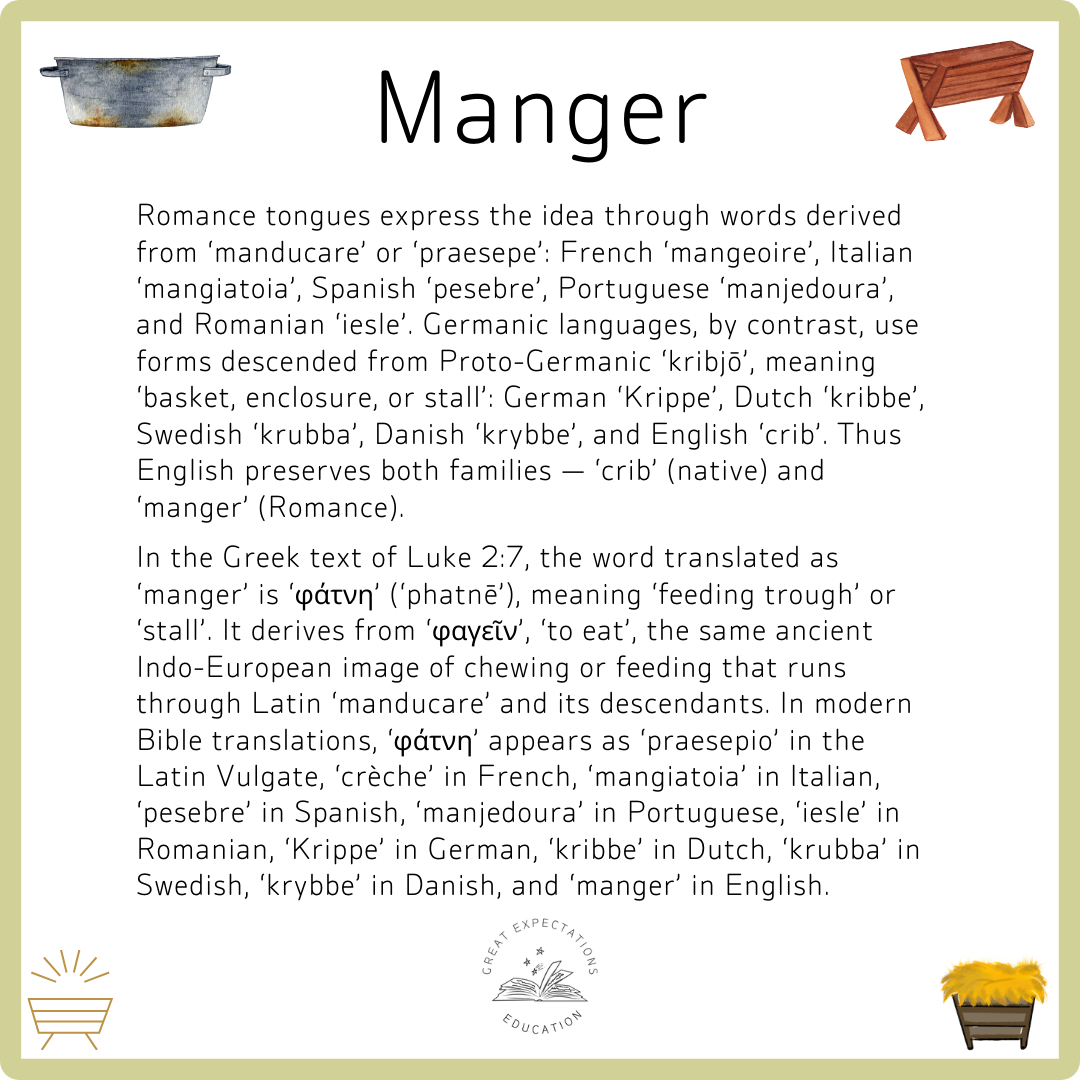
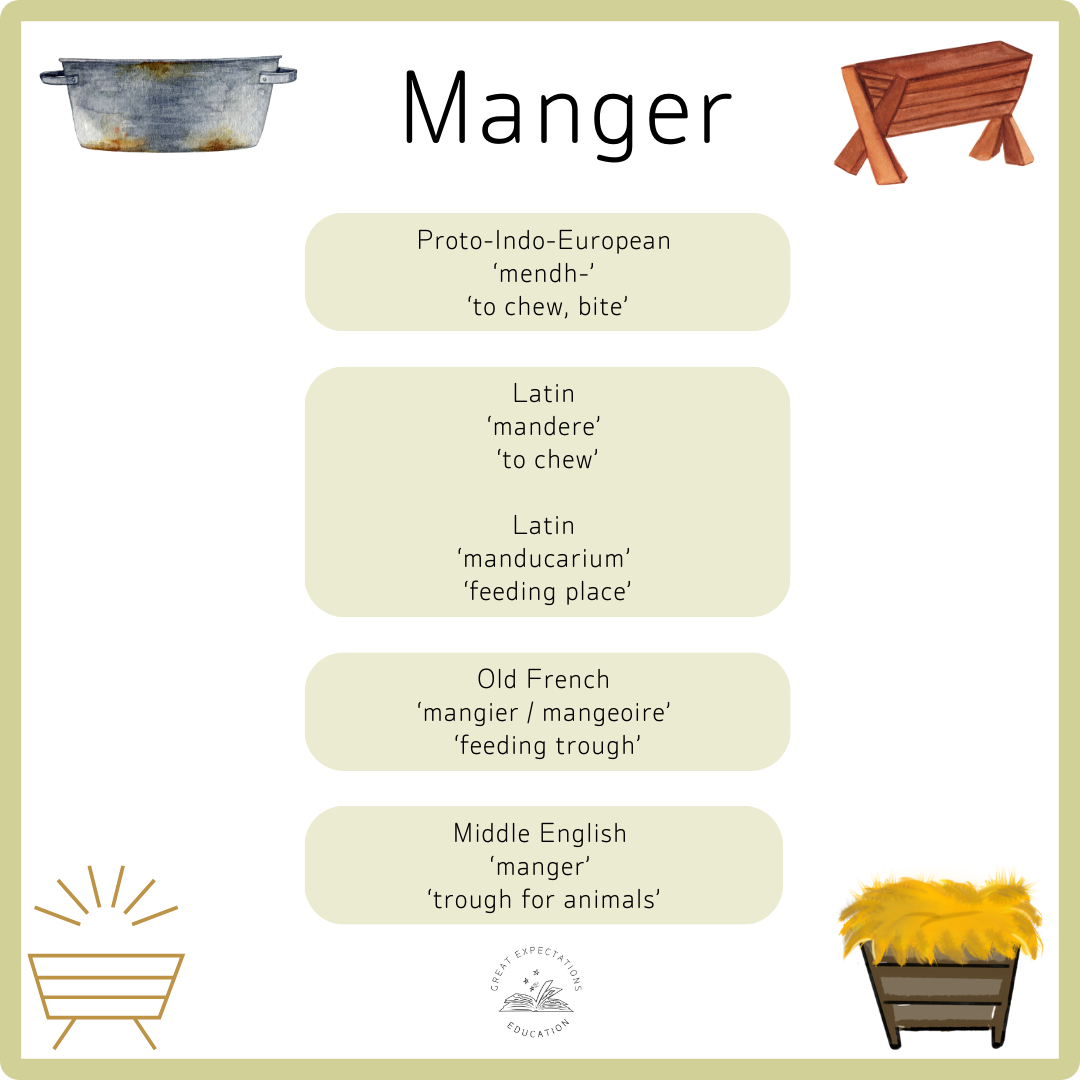
A manger is a feeding trough: a simple structure built to hold hay or grain so that animals can eat together. The English word travelled through Old French from Latin forms built on a very old root meaning ‘to chew’. Other European languages express the idea differently, but they all preserve the same picture — an ordinary place where animals feed.
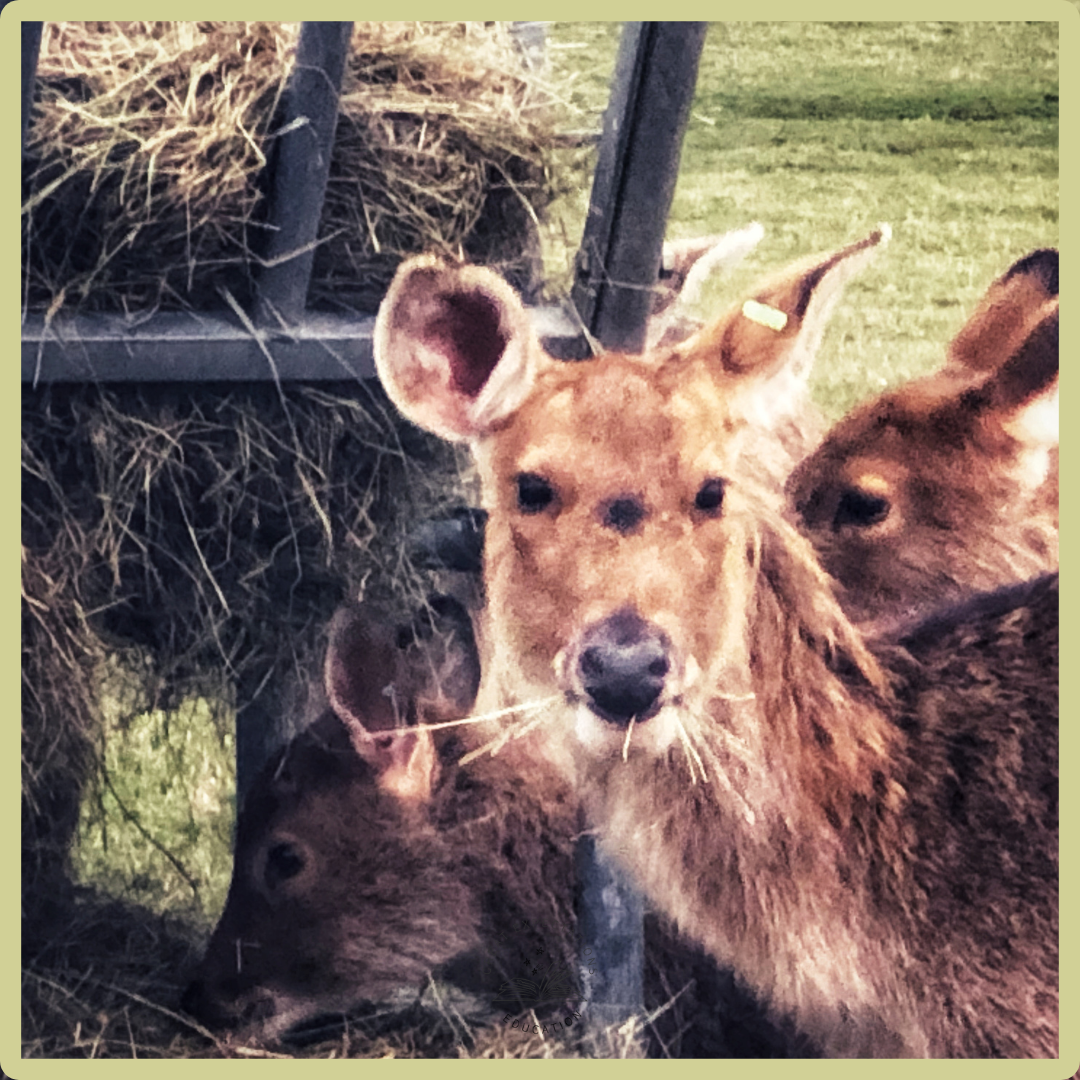
The photograph for this entry was taken at Whipsnade in January 2020. Deer are gathered around a metal feeding rack, their heads dipping into the hay. It shows exactly the kind of setting the word describes: everyday, rural, practical. That ordinariness is part of why the term matters. It reminds the reader that the scene in Luke’s Gospel is grounded in the vocabulary of real agricultural life.
Each word card set begins with an image that captures the theme of the word. The following cards trace its story: a main word card (or two, if extended), a junior version with a paler border, an etymological breakdown showing how the word travelled through time, and a list of sources. Some sets also include cards for related words or translations across other languages. Together they show where each word came from, how it changed, and what it still carries with it.