

clothing (French)
Filters
Filters
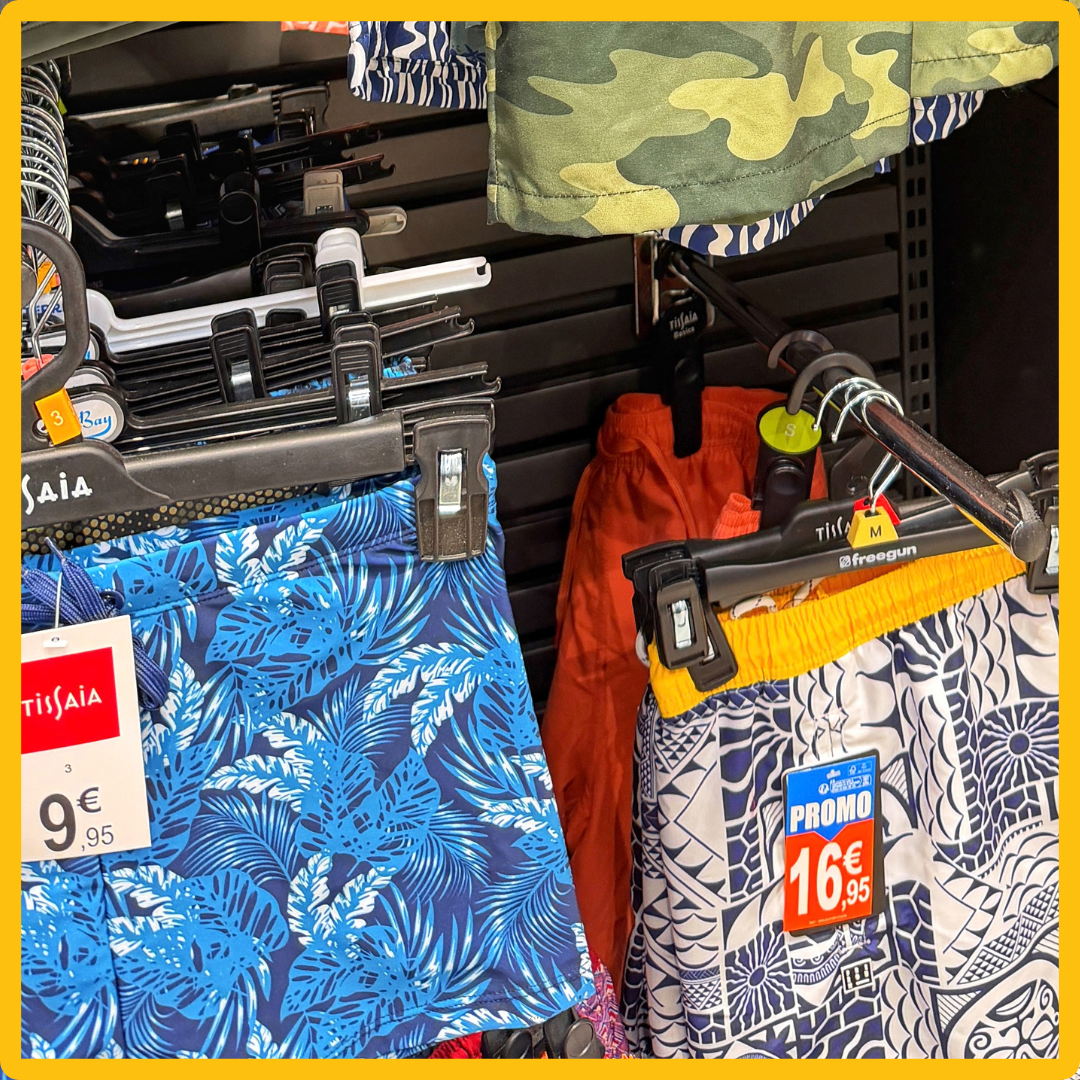
‘Un maillot de bain’ is a swimsuit, and it’s three words: ‘maillot’, ‘de’ and ‘bain’. The last one means ‘a bath’, which is an odd thing to name a swimsuit after until you’ve stood at the edge of a French swimming pool.
This is a 16-card illustrated word-history of ‘maillot de bain’ in black and white, with a sources page and summary pages at the end. Print it as a deck to laminate, punch and clip onto a ring, or print the summary pages and use them as they are.
What’s included
The swimming pool - what the shallow end and the deep end are called in French, and what either has to do with a bath.
Two words, two histories - where ‘bain’ comes from, and what a ‘maillot’ was long before anyone swam in one.
The map - what a swimsuit is called in Italian, Spanish and German, and which of those words share the Latin behind ‘bain’.
A sources page and a short guide for the adult.
For personal use in home education and tutoring only.
Who it’s for
KS3 and KS4 French learners on a holiday, clothes or sport topic
Families heading to a French pool or beach who’d like to read the signs
Learners who hold onto a phrase better once they can see what each word in it does, including dyslexic learners and those in specialist tuition
Home-educated children learning French
Parents learning alongside their child, and adults picking French back up
Why this exists
It’s easy to learn ‘maillot de bain’ as one block to memorise. Split into its three words, each part makes sense, and two of them turn up elsewhere: ‘bain’ at the pool, ‘maillot’ on a football pitch and in the Tour de France. One phrase then links several words a learner may already half-know.
Originally created for my dyslexic son.
How it prints
The 16 cards and the sources page print single-sided. Laminate and trim them, punch the top-left corner and put them on a binder ring. You’ll need a printer, a laminator and a ring, and the deck is yours to build. It goes in a bag or stays on the dinner table, with the history cards ready to shuffle and put back in order. The summary pages at the end need no laminating and go straight from the printer to the table.
Available now as a PDF download.
Today a ‘maillot’ is a swimsuit on the beach or a shirt on a football pitch. Before it meant either, it named something nobody wore to swim: the cloth wrapped round a newborn baby.
This is a 12-card illustrated word-history of ‘maillot’ in black and white, with a sources page and two summary pages at the end. Print it as a deck to laminate, punch and clip onto a ring, or print the summary pages and use them as they are.
What’s included
The dancer - why a garment worn on a theatre stage was given the name of a baby’s wrapping.
The English cousin - an English word for something made of metal, which you’d now most likely see in a museum case.
The map - three more languages with a word from the same Latin, and the different way each one got it.
A sources page and a short guide for the adult.
For personal use only.
Who it’s for
KS3 and KS4 French learners meeting ‘maillot de bain’ in a clothes or holiday topic
Anyone who has watched the Tour de France and wondered about ‘le maillot jaune’
Learners who remember a word better when it comes with a reason, including dyslexic learners and those in specialist tuition
Home-educated children learning French
Parents learning alongside their child, and adults picking French back up
Why this exists
‘Maillot’ gives an English speaker nothing to hold onto. It doesn’t look like ‘swimsuit’, ‘shirt’ or ‘jersey’, and one French word covers all three. ‘Maillot de bain’ tends to turn up with holiday words and a football ‘maillot’ with sport, so it’s easy to learn them as two unrelated words. The history links the beach and the pitch, and the second meaning stops being a separate thing to learn.
I first made these for my dyslexic son.
How it prints
Print the 12 cards and the sources page single-sided, laminate and trim them, punch the top-left corner and clip them onto a binder ring. You build the deck yourself, so you’ll need a printer, a laminator and a ring. The finished deck goes in a bag or stays on the dinner table, ready to be dealt out and put back in order. The two summary pages at the end hold the whole word and need no laminating: print them and they’re ready.
Available now as a PDF download.
No results found
No results match your search. Try removing a few filters.
Curious to try my resources? Start here.
This little set of ‘test’ themed resources is a gentle way to try out how I teach spelling, morphology and vocabulary, without committing to full price.
Each one is 75% off for a limited time and works well as a standalone activity or as a taster before diving into the other packs.
Ideal for: home educators, 11+ candidates and anyone wanting a low cost starting point.

This downloadable pack explores the root ‘test’ (from Latin testari, meaning to witness or affirm). It includes a clear set of printable word cards designed for spelling, reading, and vocabulary practice – with a focus on how words are built.
All words in this set contain the root ‘test’ (e.g. attest, protestation, testimony, untestable), and are organised for ease of printing. These cards are not flashcards in the traditional sense – they’re designed to be used within play-based, sensory-rich tasks. Check out a scroll-through of the resource.
Included in the pack:
✅ 36 word cards featuring the root ‘test’
✅ A simple tracker to monitor blending and reading fluency
✅ 40+ activity suggestions using tactile, oral, visual, and movement-based approaches
Examples include:
• Writing with window pens or tracing in salt
• Playing Snakes and Ladders with a word per turn
• Echo reading, silly sentences, and morpheme matching
• Body spelling, hopscotch games, and torchlight hunts
These activities are especially supportive for learners who benefit from movement, repetition, and meaning-driven reading. The tracking sheet allows you to note when a word can be blended or read automatically – helpful for both planning and celebrating progress.

Decode big words like ‘testament’ and ‘protester’ — morpheme by morpheme.
This downloadable literacy pack helps children explore the morpheme ‘test’ (meaning to witness or to examine), using a Structured Word Inquiry (SWI) approach. Through colour-coded cards, clear explanations, and hands-on activities, learners discover how complex words are built — and what they really mean.
Inside the pack:
A complete set of morpheme cards (in both colour-coded and neutral green versions)
A parent guide that explains word parts clearly — including what a linking vowel is and when to drop the ‘e’
A progress tracking table for blending and reading
10+ multi-sensory word-building games and puzzles
Examples of real ‘test’ word families (e.g. testify, protest, testimony, untested, countertestimony)
Check out a scroll-through video of the resource.
Activities include:
Missing morpheme puzzles
Snap! word family edition
Build-your-own definition games
Word wall creation
Card sorting and classification
Designed by a qualified dyslexia and literacy specialist, this pack supports:
Home educators
Learners who thrive on pattern and logic
Spelling confidence through morphology
Older learners revisiting tricky words with purpose

📎 Part of the How Words Workcollection | ✏️ 75% Off | 🎞️ Scroll-through video included
This sample resource introdu ces learners to vocabulary built from the Latin root “testari”, meaning to bear witness. It’s part of my wider How Words Work: Root Study & Vocabulary collection — a series of tools for building spelling confidence and deeper word understanding.
This pack includes structured grids for exploring words like testify, protest, attest, and testimonial, using:
Clear definitions
Synonyms
Sentence prompts
Etymology (word origins)
The word contest is fully modelled as an example, and suggested answers are provided at the end to support independent learning. Illustrating the words is encouraged, particularly for visual memory or neurodivergent learners.
This sample is ideal for:
🟊 Home educators exploring root-based learning
🟊 Children preparing for 11+ exams
🟊 Learners who benefit from structured vocabulary work
🟊 Anyone curious about how words connect
🎞️ A scroll-through video shows the full resource before purchase
💸 Download it for 75% off as part of the test word collection
📄 Pairs well with my Test spelling sheets and word cards
A ready-to-use set of spelling and decoding grids exploring the root test (to bear witness or show evidence).
From test and attest to testimony, protest, and intestacy, this pack offers structured practice with over 30 derived words — all carefully segmented for reading, spelling, and meaning.
Each sheet supports multi-sensory learning, encouraging children to:
▪️ Explore the sounds
▪️ Create the word
▪️ Read, Spell, and Use it in a sentence
Also includes a page of hands-on activity ideas — from tracing and air-writing to chalk play and morpheme sorting.
Perfect for learners exploring morphemes, building vocabulary, or strengthening reading and spelling fluency.
🟩 You’ll get:
• Three printable spelling grids
• Word lists split by morpheme
• Sentence-writing prompts
• Multi-sensory activity suggestions
• Colour-coded versions to support visual memory
Check out the resource on this video.
Designed for home learning or 1:1 support.
Pairs well with the matching “test” jigsaw word cards.