Praise: words that shine with worth
‘The shepherds returned, glorifying and praising God for all the things they had heard and seen.’ Luke 2:20 (NIV)
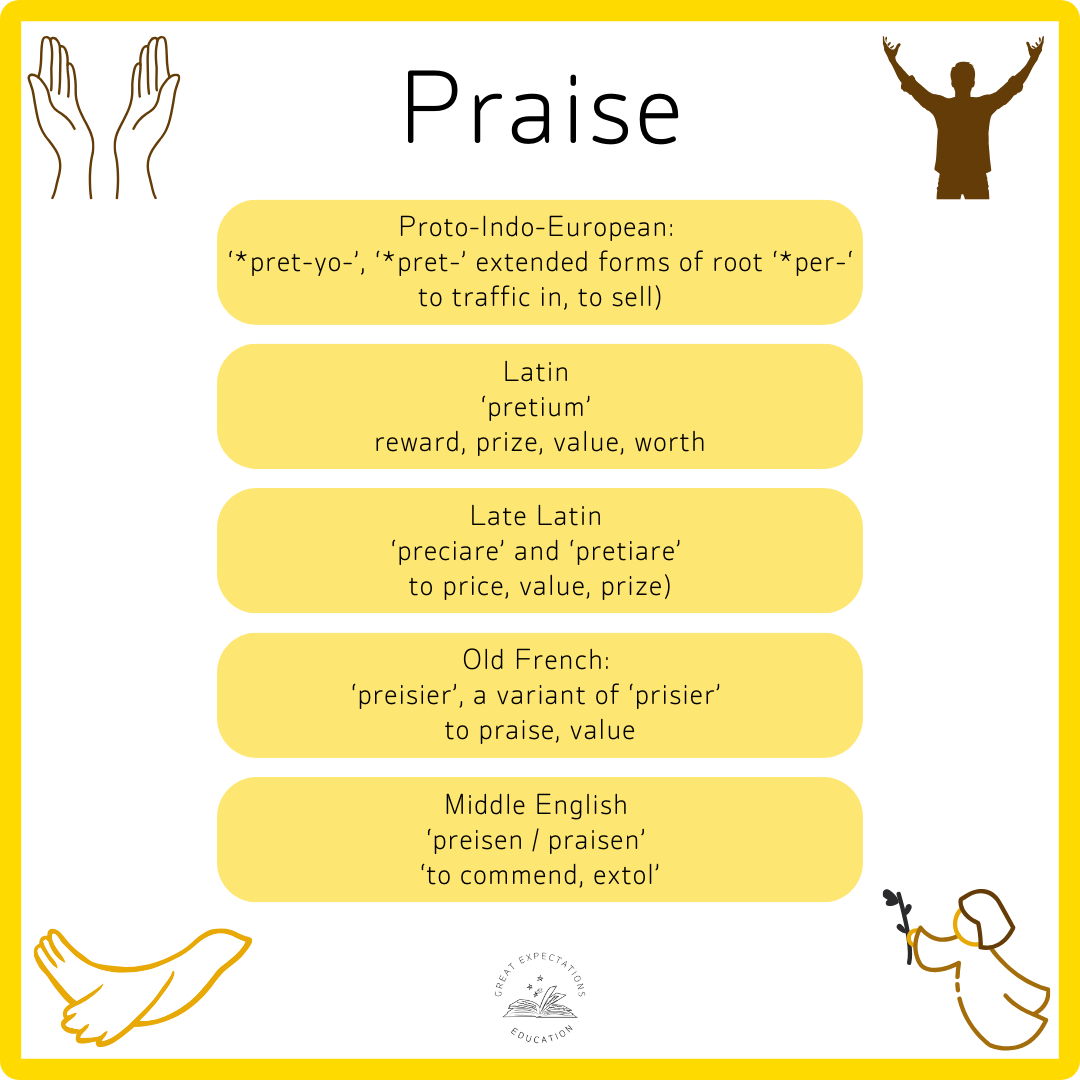
This image of the shepherds’ sky speaks to the heart of the word ‘praise’. In English, it travels from Latin ideas of worth and value, through Old French, into the vocabulary of worship. In Greek, Luke uses ‘aineō’, a verb for speaking well of something with joy. Hebrew adds another layer through ‘halal’, a root that links praise with shining or radiant celebration. ‘Hallelujah’ preserves this in its original form: ‘praise Yahweh’.
The story behind the word draws together valuation, joy and voiced recognition. Exploring it shows how different languages and traditions have understood what it means to praise, and why this response sits so naturally in the opening chapters of Luke.
Each word card set begins with an image that captures the theme of the word. The following cards trace its story: a main word card (or two, if extended), a junior version with a paler border, an etymological breakdown showing how the word travelled through time, and a list of sources. Some sets also include cards for related words or translations across other languages. Together they show where each word came from, how it changed, and what it still carries with it.