Heart – a word shaped by courage, thought and feeling
‘Mary treasured up all these things and pondered them in her heart.’ (Luke 2:19)
This image was taken at an air show in Weston-super-Mare, where a plane traced a heart into the sky. It captures something that language has carried for thousands of years. Across Greek, Latin, Old English and the older Indo-European world, the heart has always meant more than an organ. It has been the place where memory, thought and feeling are held together.
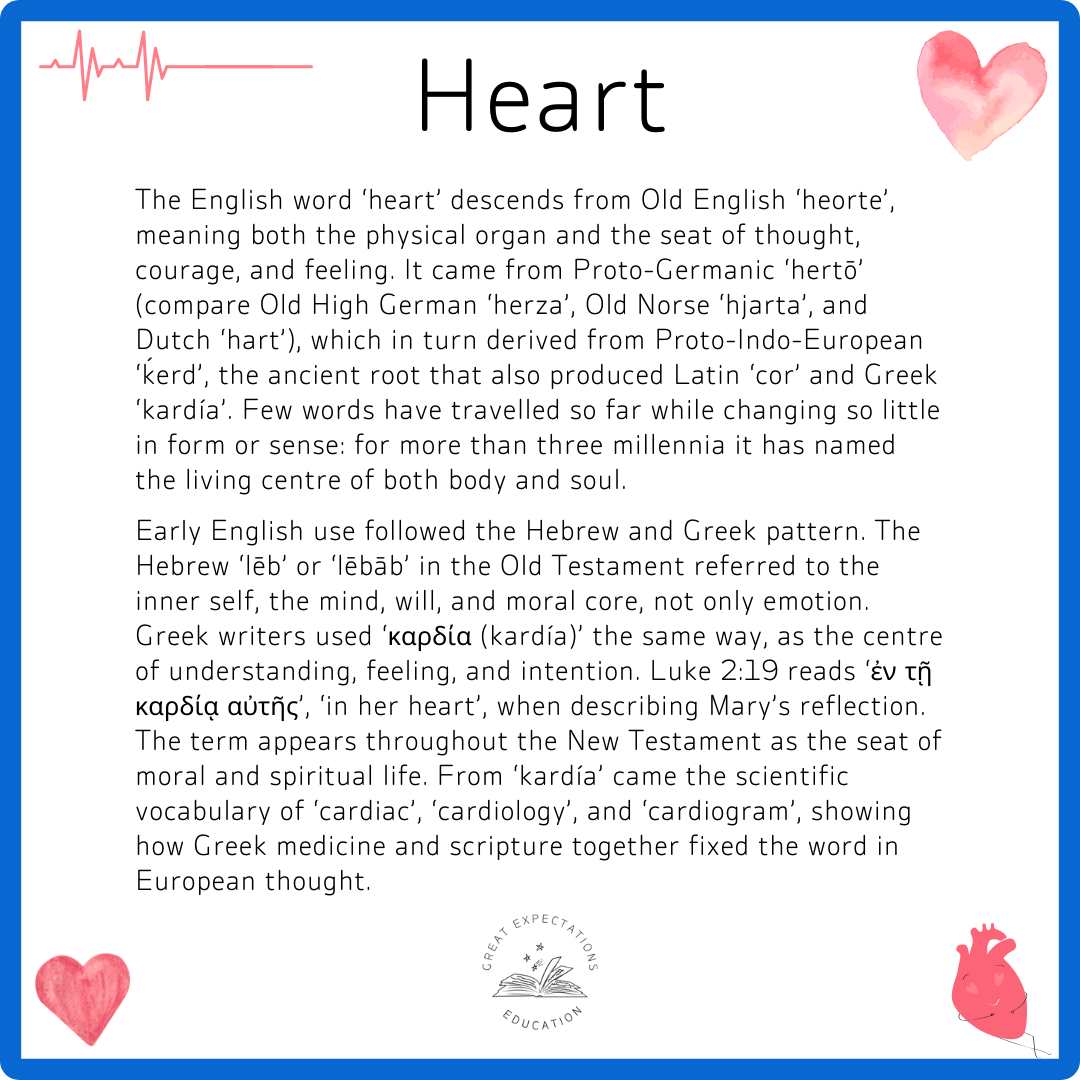
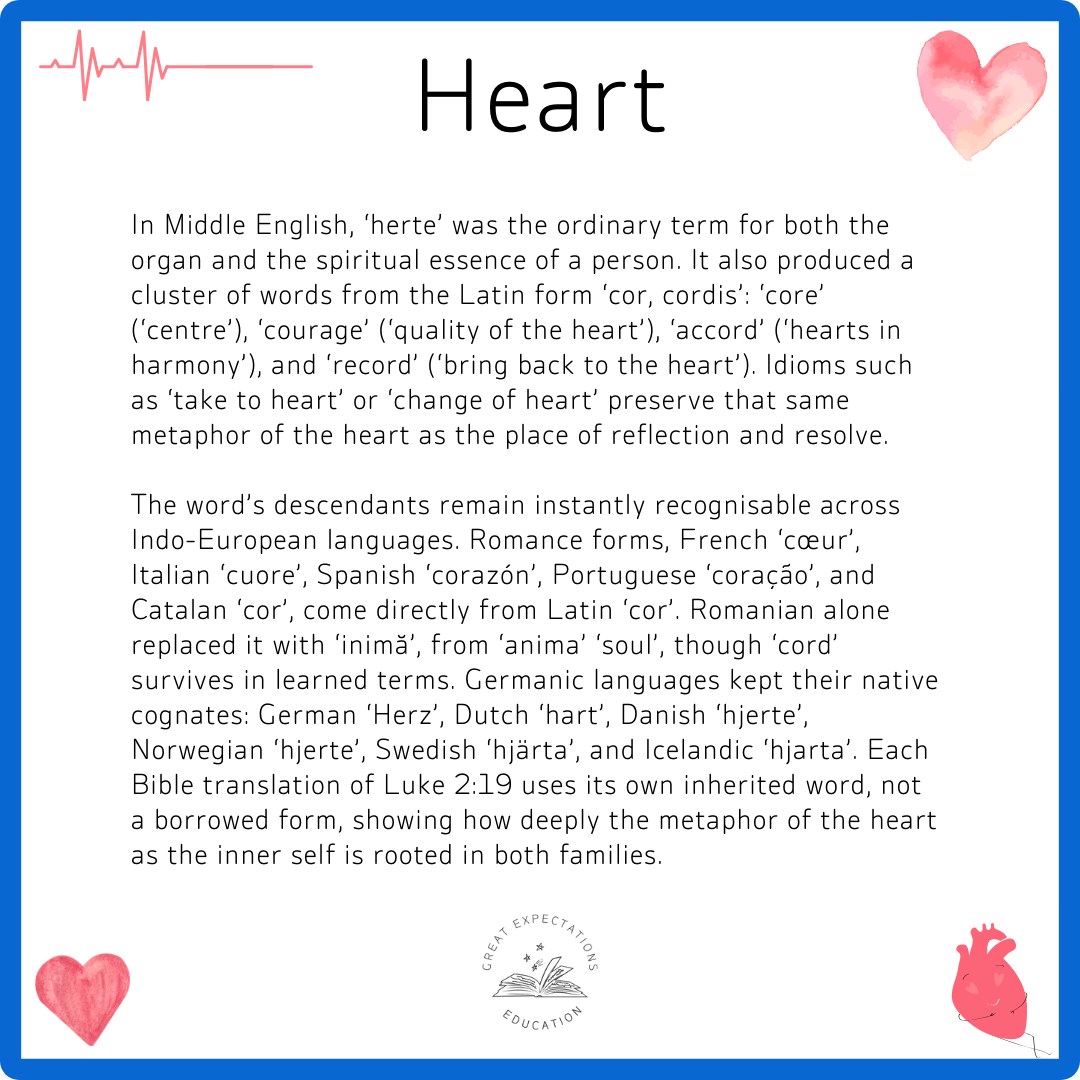
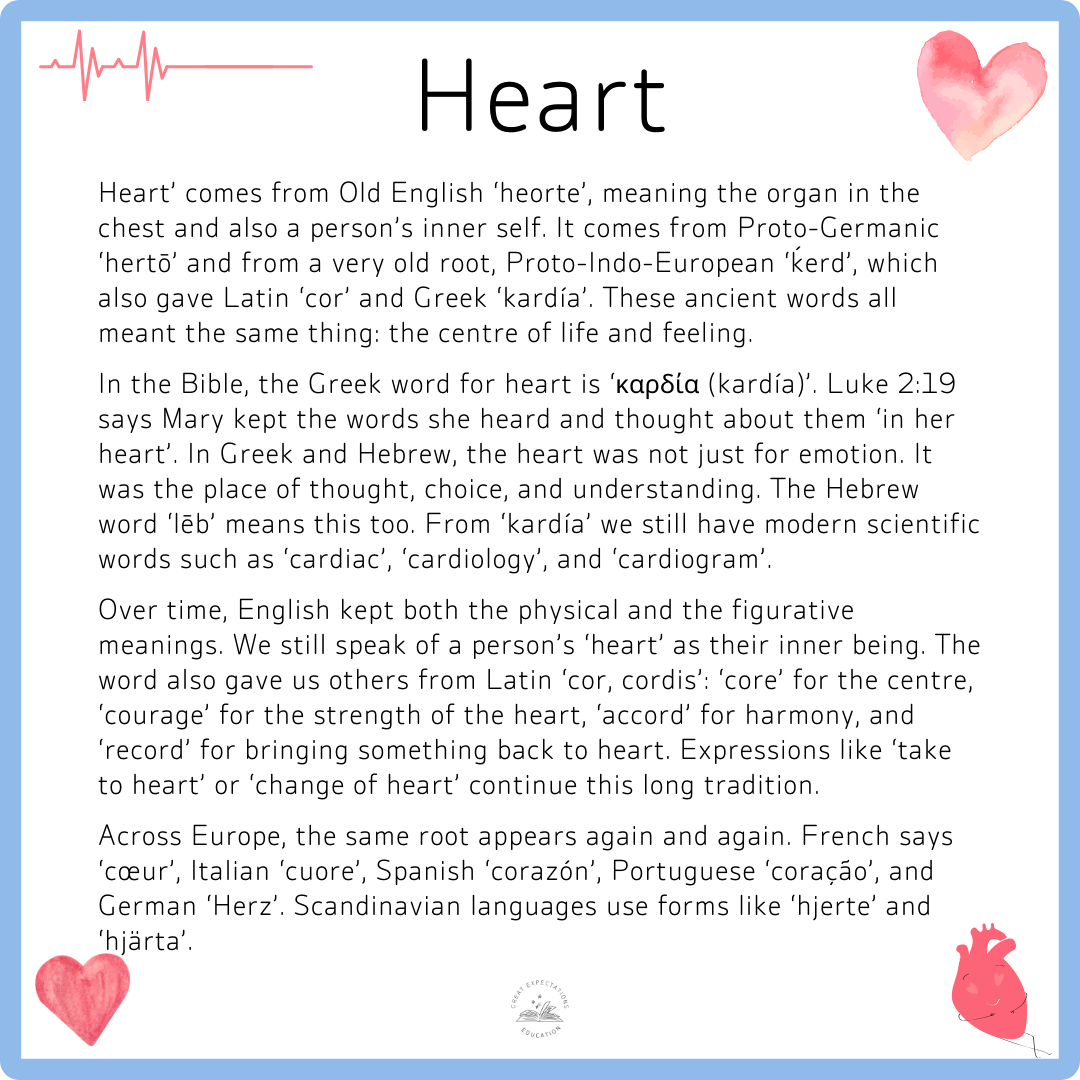
In Luke’s account, Mary reflects on the events unfolding around her and turns them over ‘in her heart’. The Greek word kardía is the same root that later shaped our scientific language of cardiac and cardiology, but in the ancient world it also described the inner self. That double sense runs through all the languages that feed into English, and it survives in the idioms we use every day.
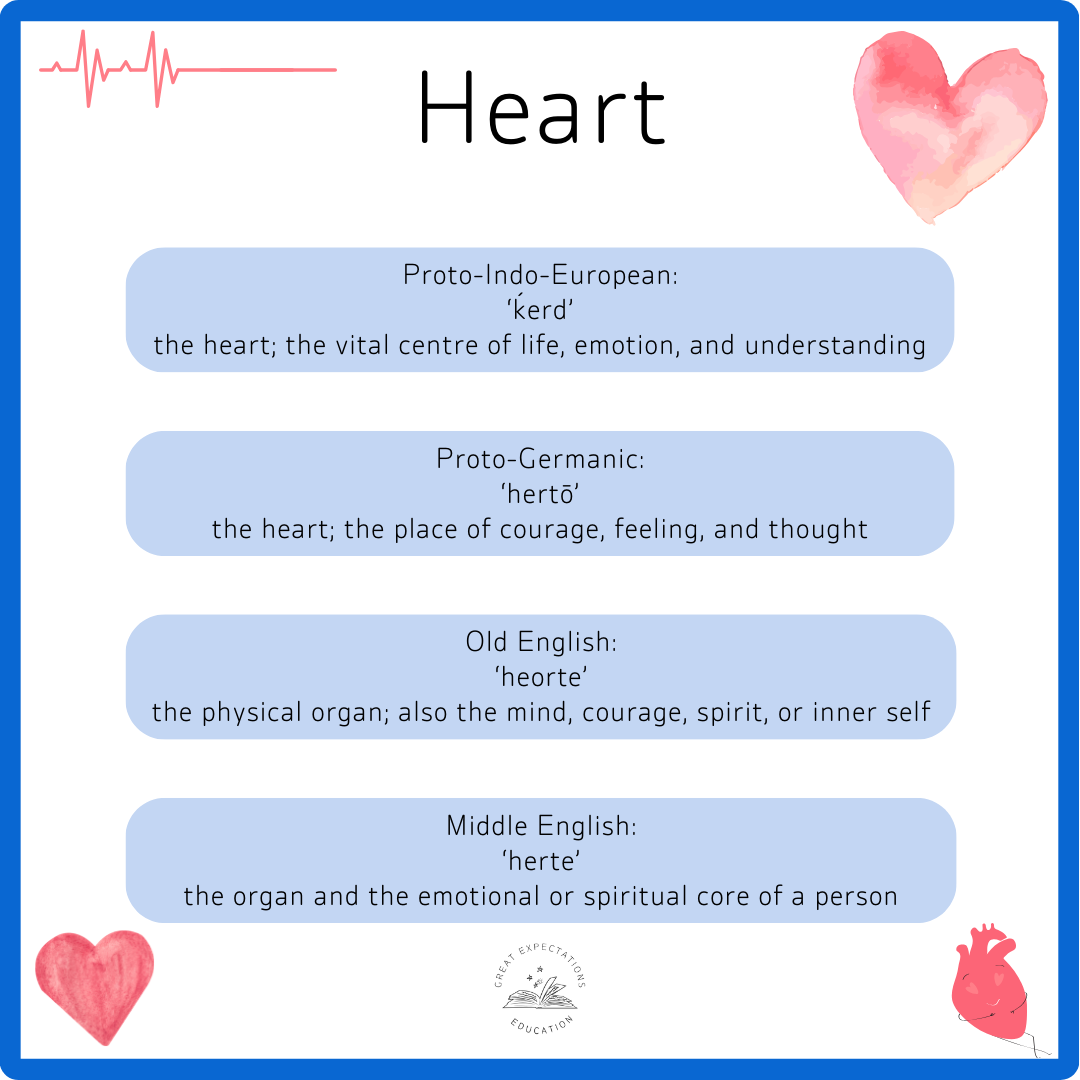
Each word card set begins with an image that captures the theme of the word. The following cards trace its story: a main word card (or two, if extended), a junior version with a paler border, an etymological breakdown showing how the word travelled through time, and a list of sources. Some sets also include cards for related words or translations across other languages. Together they show where each word came from, how it changed, and what it still carries with it.