Poignée: a handle and a handful
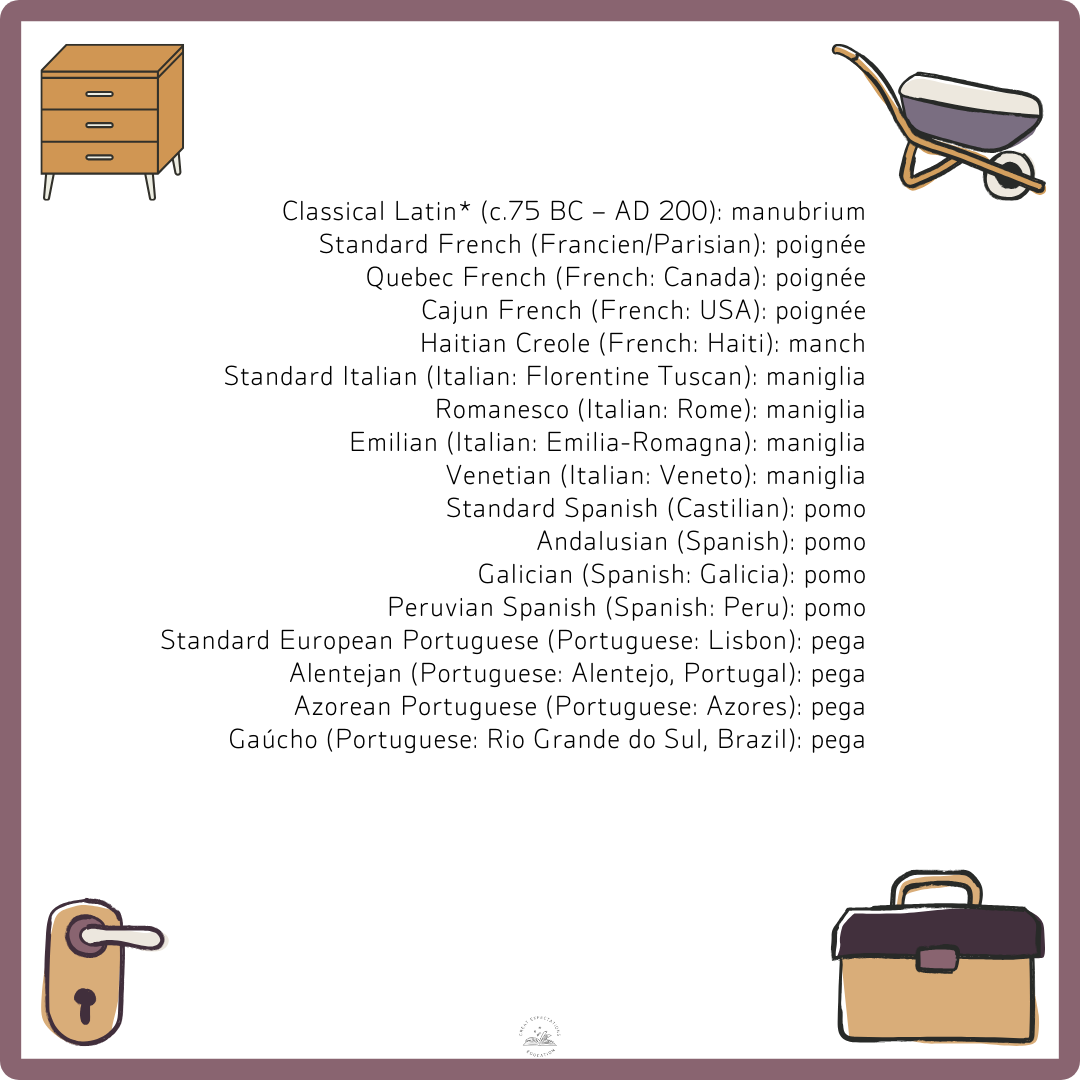
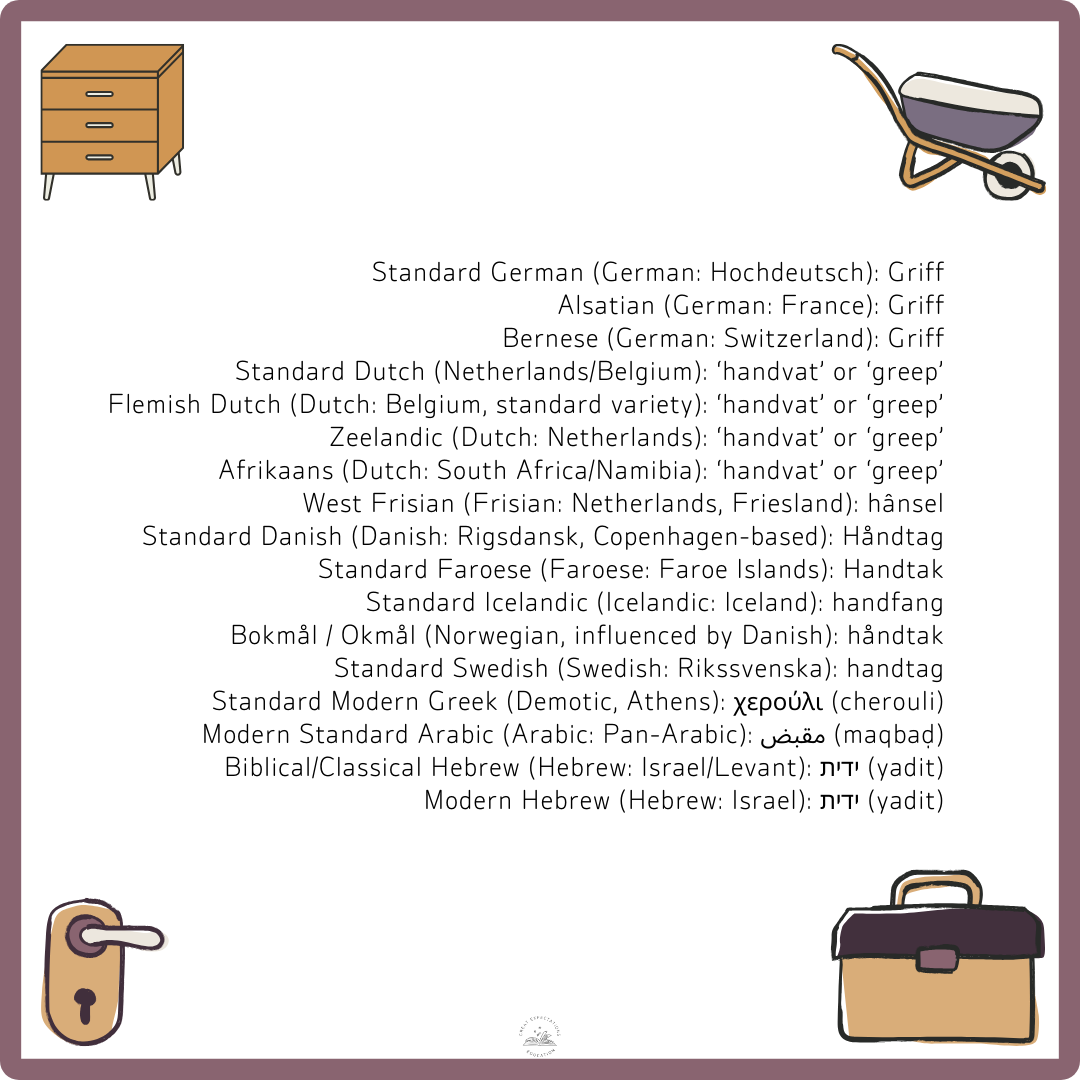
The French word ‘poignée’ names the part of an object that the hand closes around. A door handle. A drawer pull. The grip of a bag or a tool. It is a practical word, shaped by use rather than appearance.
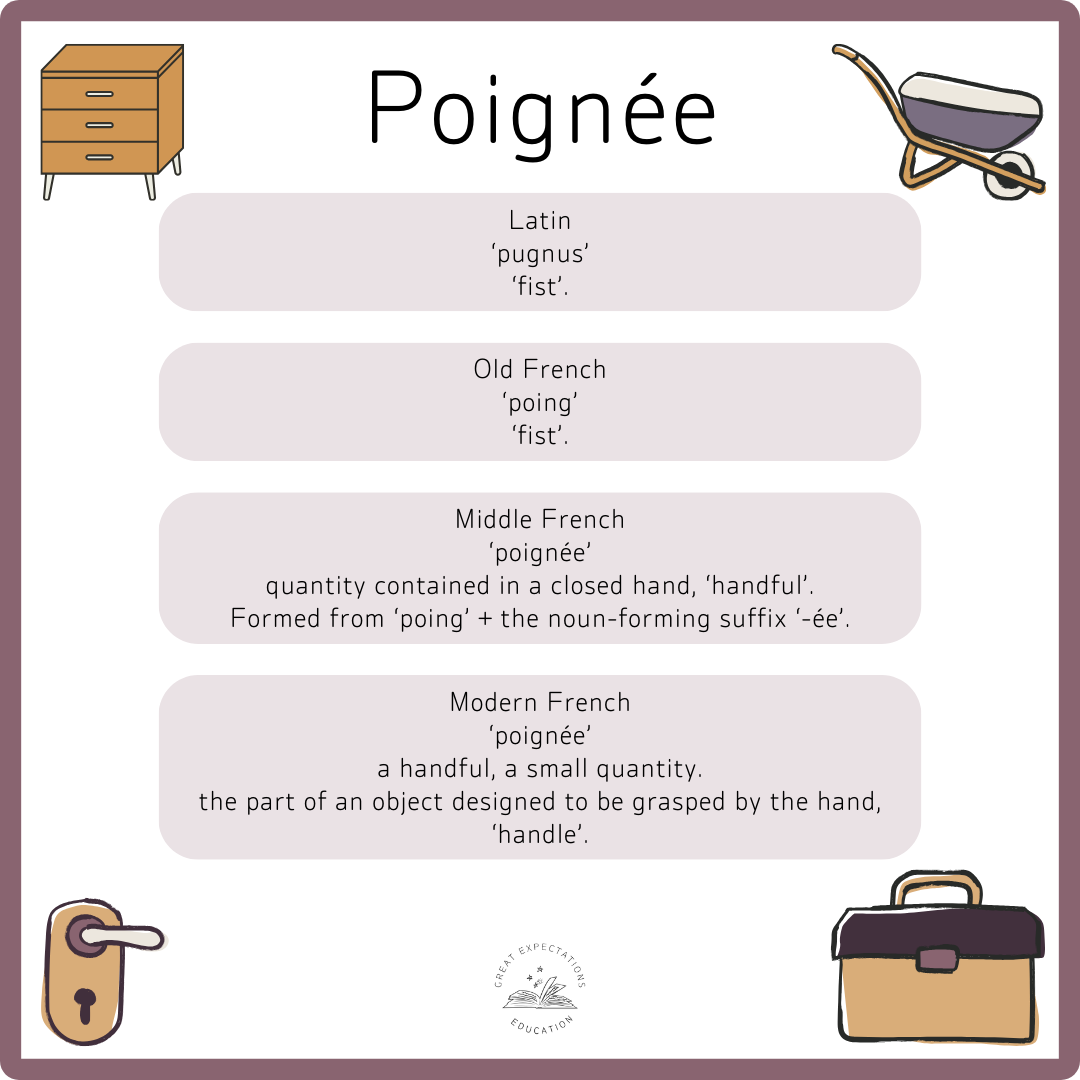
‘Poignée’ comes from ‘poing’, meaning ‘fist’, which itself comes from the Latin ‘pugnus’, also ‘fist’. From the start, the word is anchored in the physical action of the hand closing. Historically, a ‘poignée’ is either what can be held in a closed hand, a handful, or the place designed to receive that grip. The meaning does not depend on size, shape, or decoration. It depends on function.
What makes ‘poignée’ such a satisfying word is its consistency. If something is meant to be grasped in order to open, pull, lift, or carry, French is very likely to call it a ‘poignée’. The same logic applies whether the word is used for a small quantity, ‘une poignée de sel’, or for a solid object like a door handle. The hand remains central.