Glory: a word shaped by light and voice
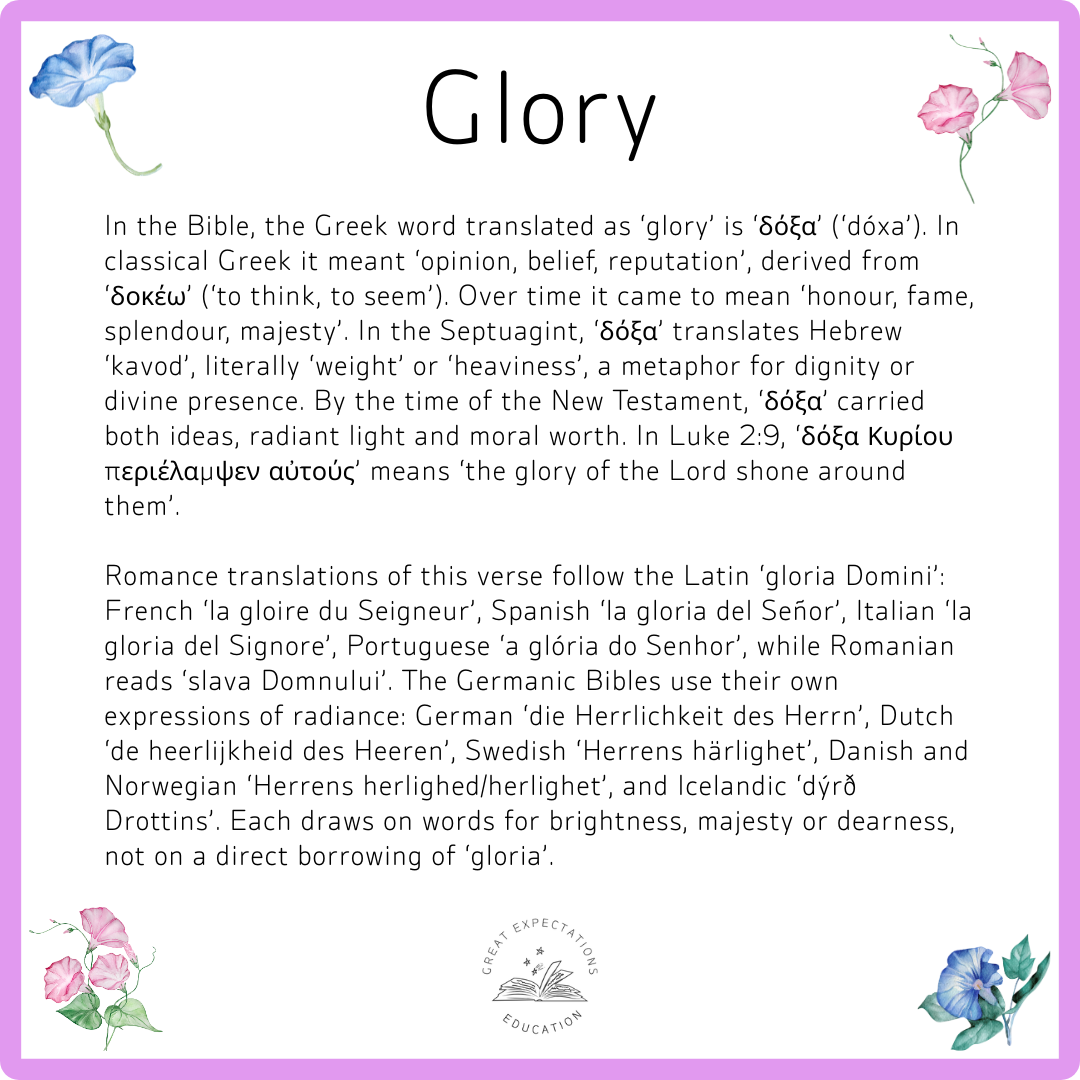
‘And the glory of the Lord shone around them…’ (Luke 2:9)
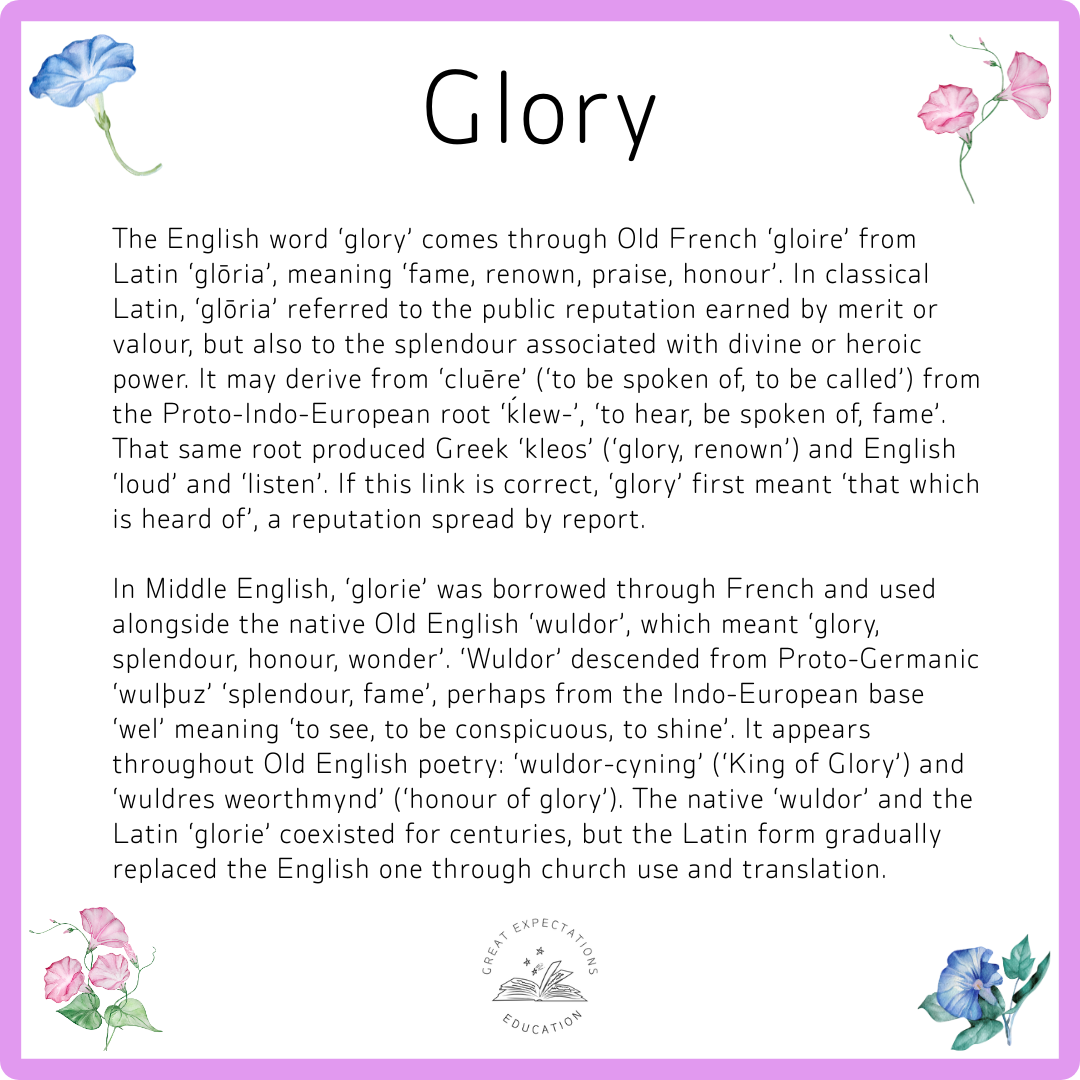
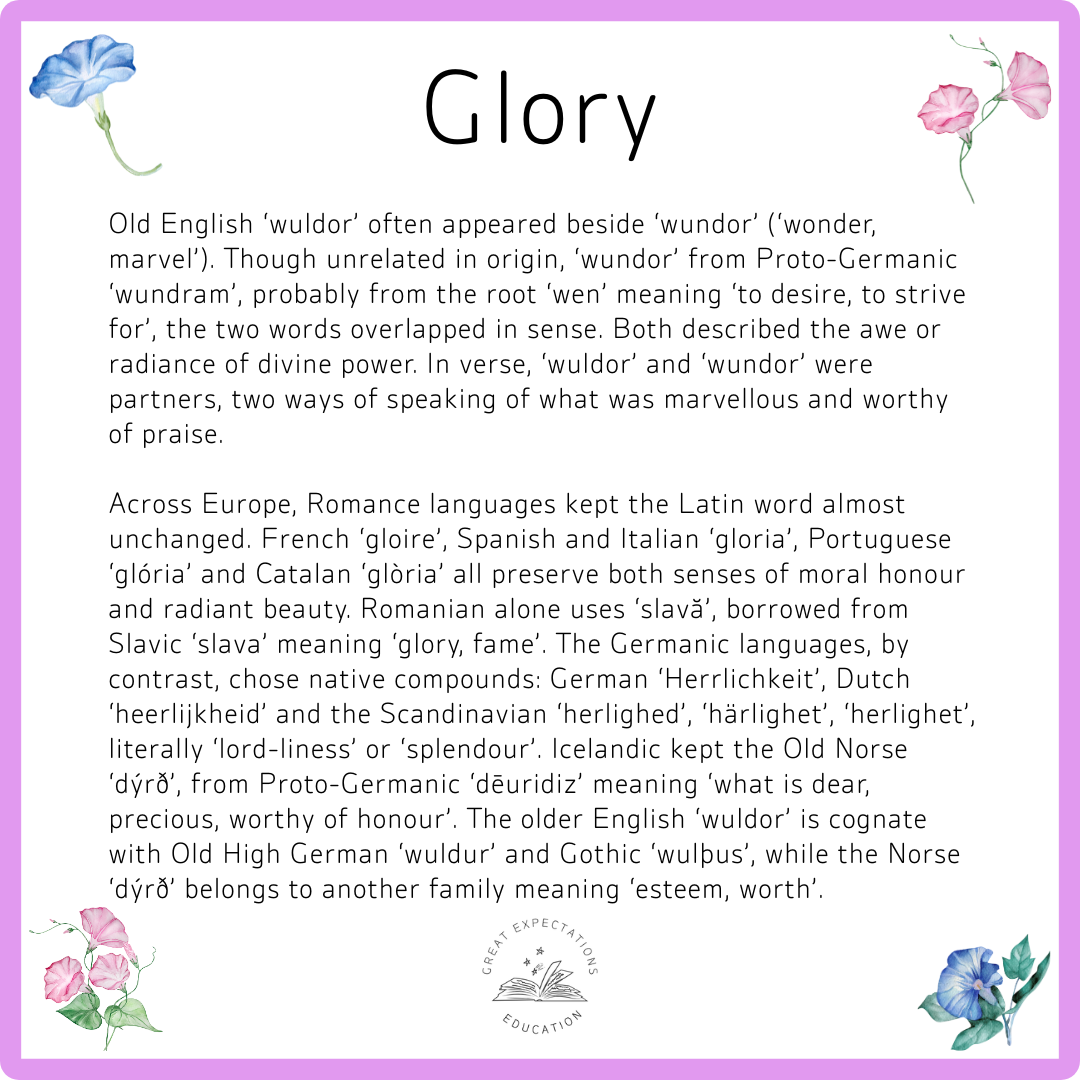
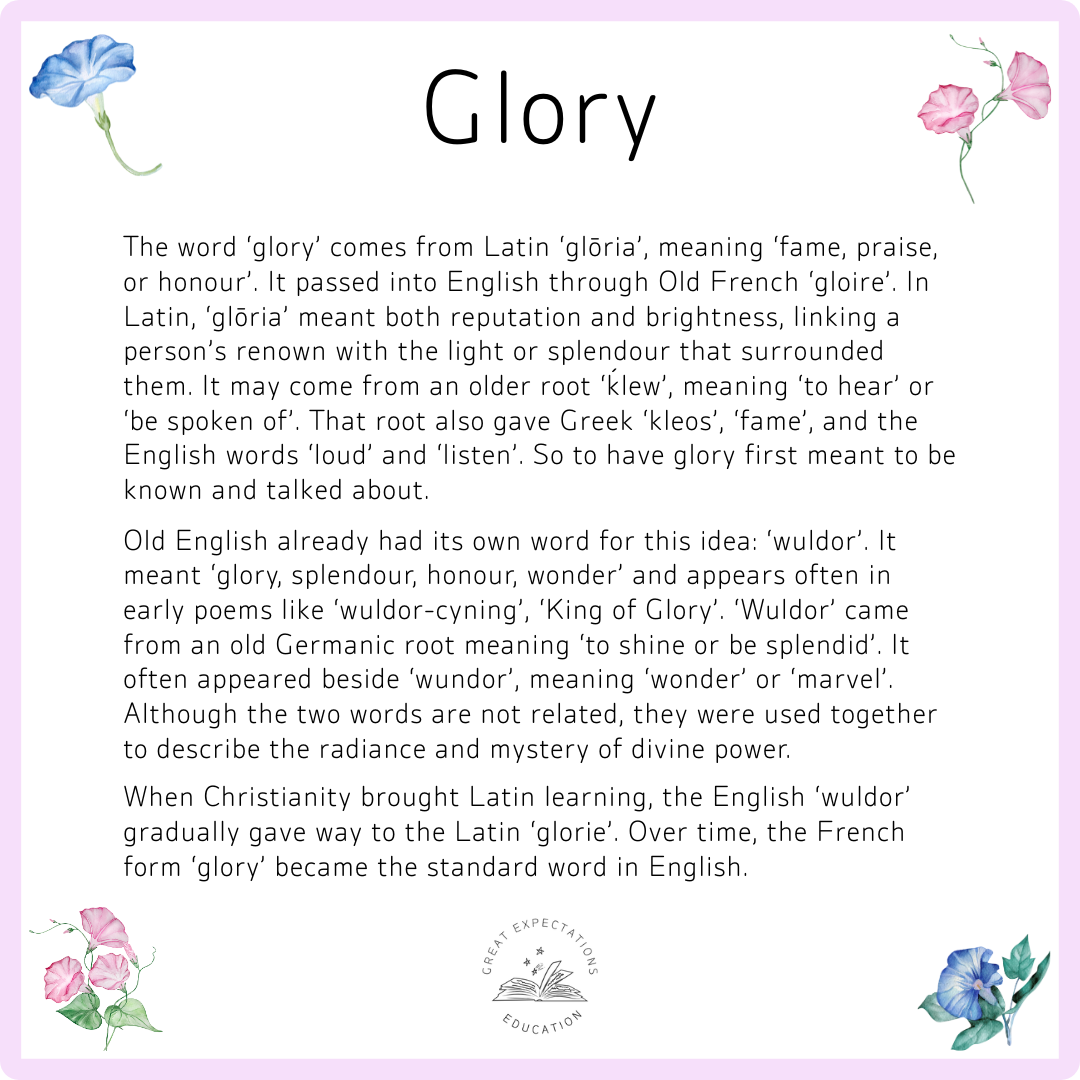
Luke’s nativity scene describes the shepherds surrounded by ‘the glory of the Lord’, a phrase that carries far more history than most readers realise. The English word comes from Latin ‘glōria’, a term that joined two ideas: the radiance of divine presence and the reputation that is heard and spoken of. Its even older root, ‘ḱlew’, meant ‘to hear’, which is why ‘glory’ is linked to the notion of a name that resounds.
Old English once used another word for this concept: ‘wuldor’, a term of splendour and wonder found throughout early poetry and Christian praise. Over time, the Latin form became the standard English word, gathering to itself both the brightness of Hebrew ‘kavod’ and the depth of Greek ‘dóxa’.
The image for this post shows a beach morning glory growing on the coast at La Trinité-sur-Mer. Its gentle radiance is a reminder that the history of ‘glory’ has always intertwined light, honour and the telling of a name.
Each word card set begins with an image that captures the theme of the word. The following cards trace its story: a main word card (or two, if extended), a junior version with a paler border, an etymological breakdown showing how the word travelled through time, and a list of sources. Some sets also include cards for related words or translations across other languages. Together they show where each word came from, how it changed, and what it still carries with it.