Star: a word scattered across the skies
‘The star they had seen went ahead of them until it stopped over the place where the child was.’ Matthew 2:7–9
The Nativity account introduces a guiding star, and the word behind that image carries a long linguistic history. English ‘star’ ultimately comes from the Indo-European root ster-, meaning ‘to scatter’, a picture of the heavens as points of light strewn across the dark.
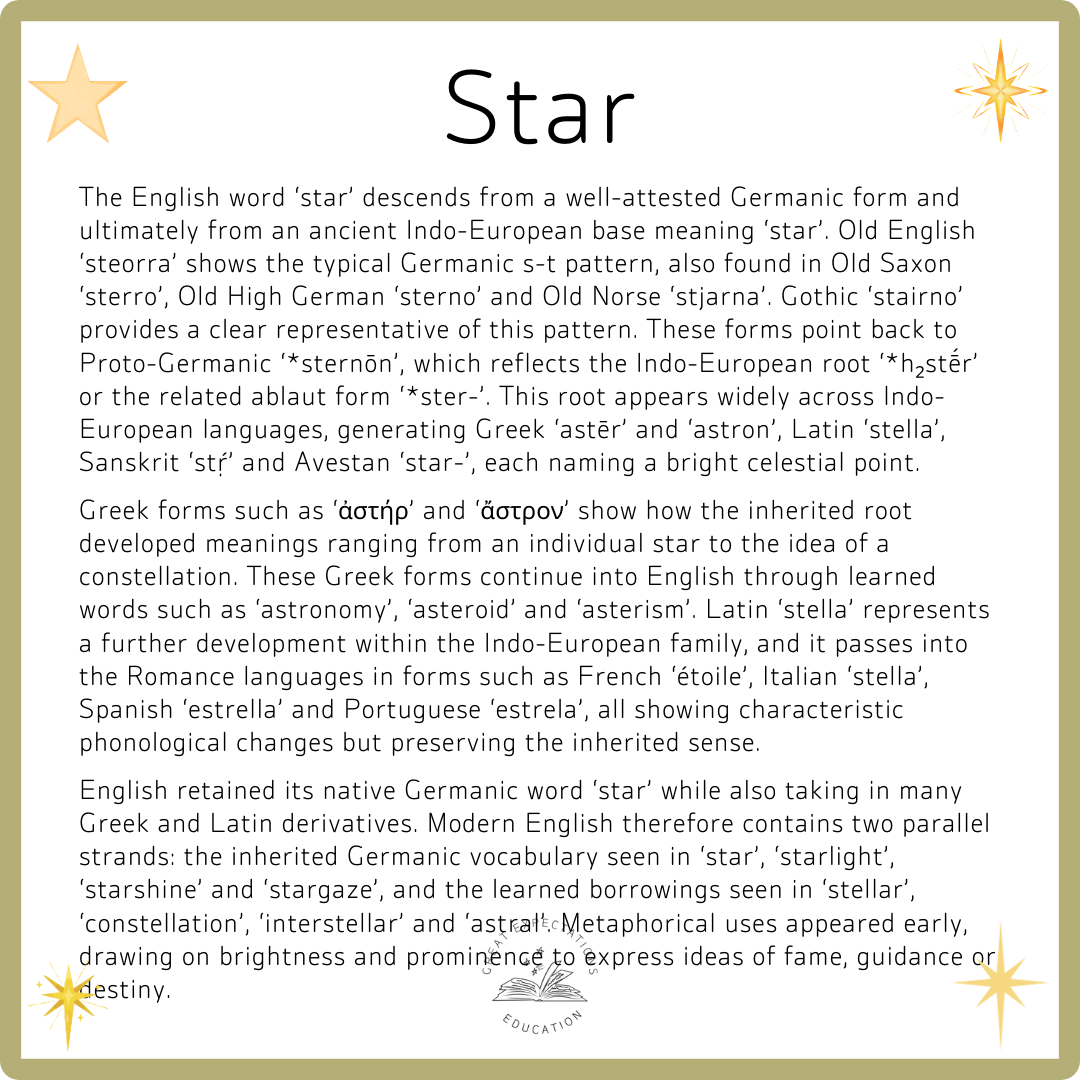
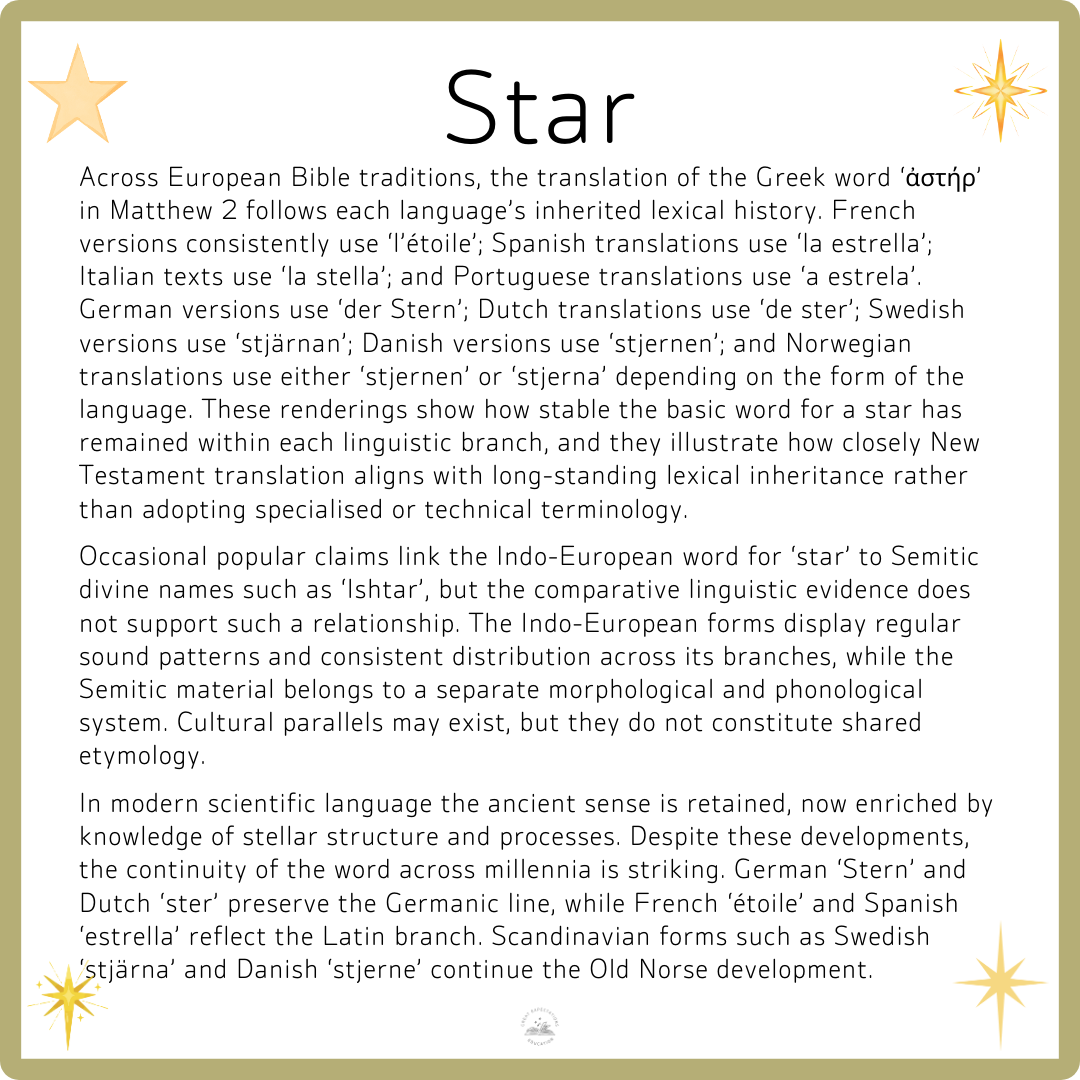
The Greek word in Matthew’s text, ‘astēr’, belongs to the same family as Latin ‘stella’, Old English ‘steorra’, and the many Romance and Germanic forms that developed from them. Scientific terms such as ‘astronomy’ and ‘constellation’ still preserve these earliest meanings.
This piece traces how a word that once described scattered brightness travelled through languages and centuries before appearing in the Nativity story as the sign that drew travellers towards a child.
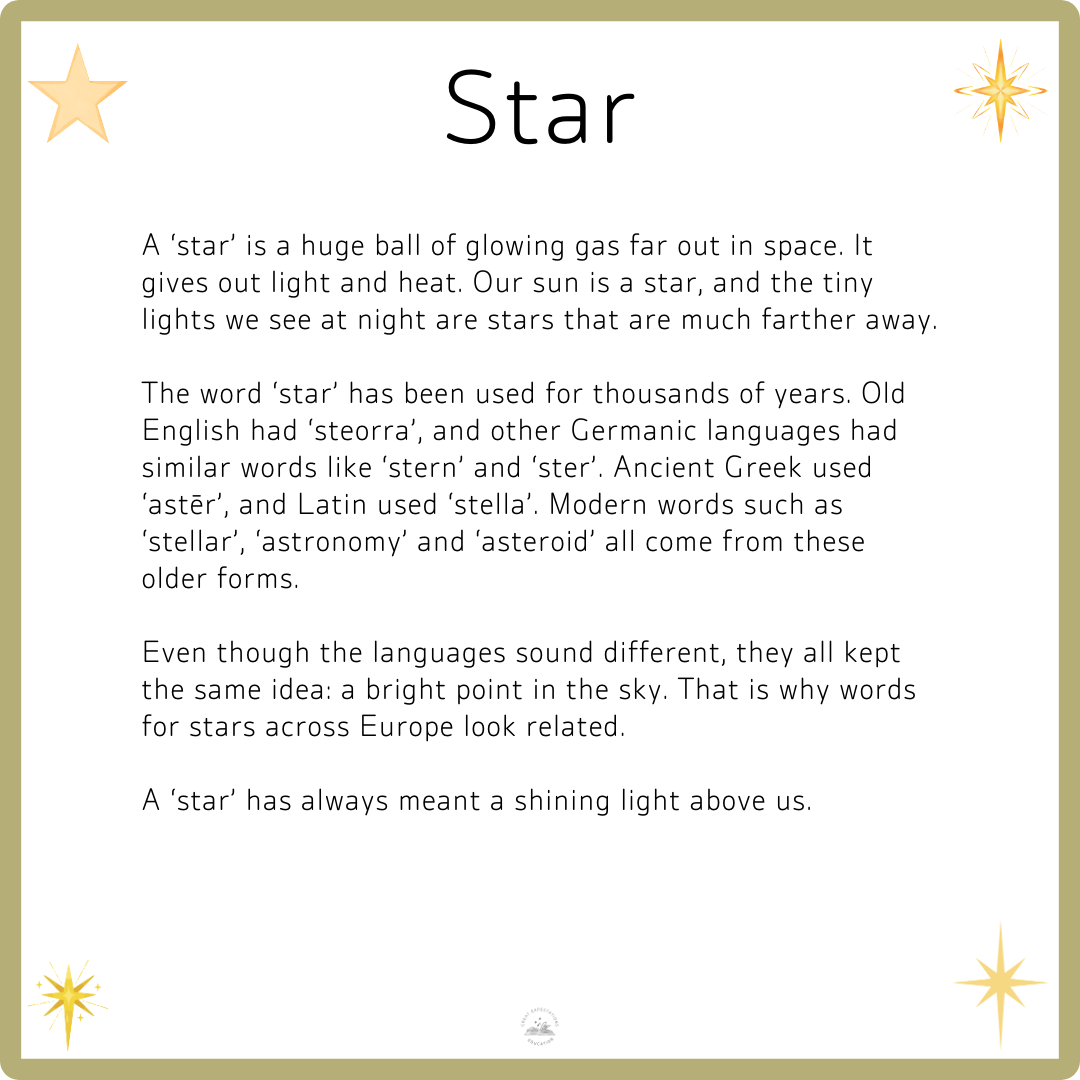
Each word card set begins with an image that captures the theme of the word. The following cards trace its story: a main word card (or two, if extended), a junior version with a paler border, an etymological breakdown showing how the word travelled through time, and a list of sources. Some sets also include cards for related words or translations across other languages. Together they show where each word came from, how it changed, and what it still carries with it.