Sin: a word that never aimed at archery
‘She will give birth to a son, and you are to give him the name Jesus, because he will save his people from their sins.’
The word ‘sin’ is short and old, yet it carries a long history of meaning. The image above, with its forked woodland path, reflects one of Scripture’s most enduring pictures: human beings choosing a way that leads either toward or away from what is right. This word card follows the development of the English term and its counterparts in Greek, Latin and other European languages.
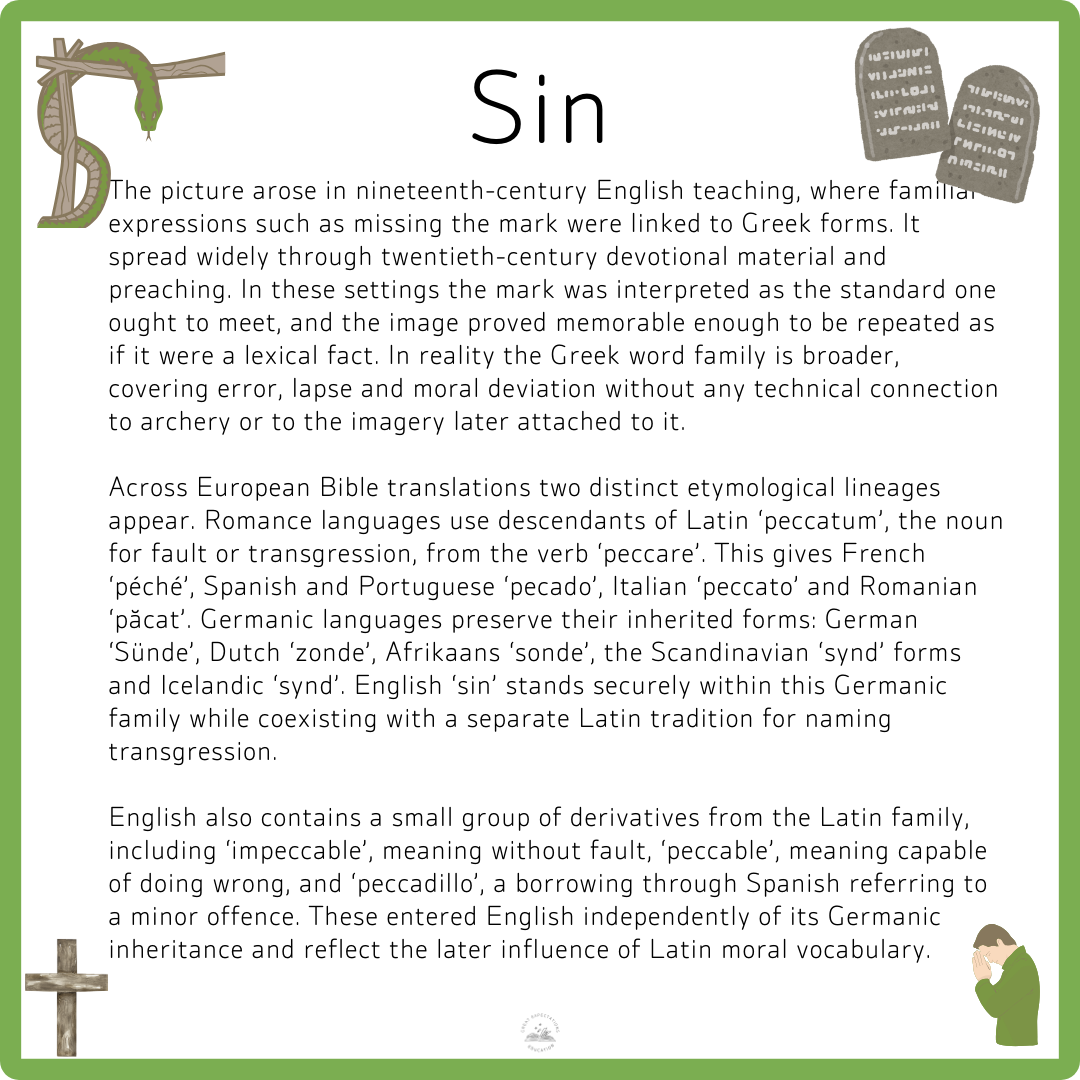
Along the way it corrects a familiar claim often heard in sermons and study guides: the idea that the Greek word for sin began as an archery term meaning to miss a target. The linguistic evidence shows something simpler and broader. The Greek forms describe failing, going wrong or stepping off a proper course. This aligns with the wider biblical pattern without relying on the later metaphor that attached itself to the word.
The card aims to give a clearer sense of how this small, weighty word has travelled through languages and traditions, and why it still matters for understanding biblical vocabulary today.
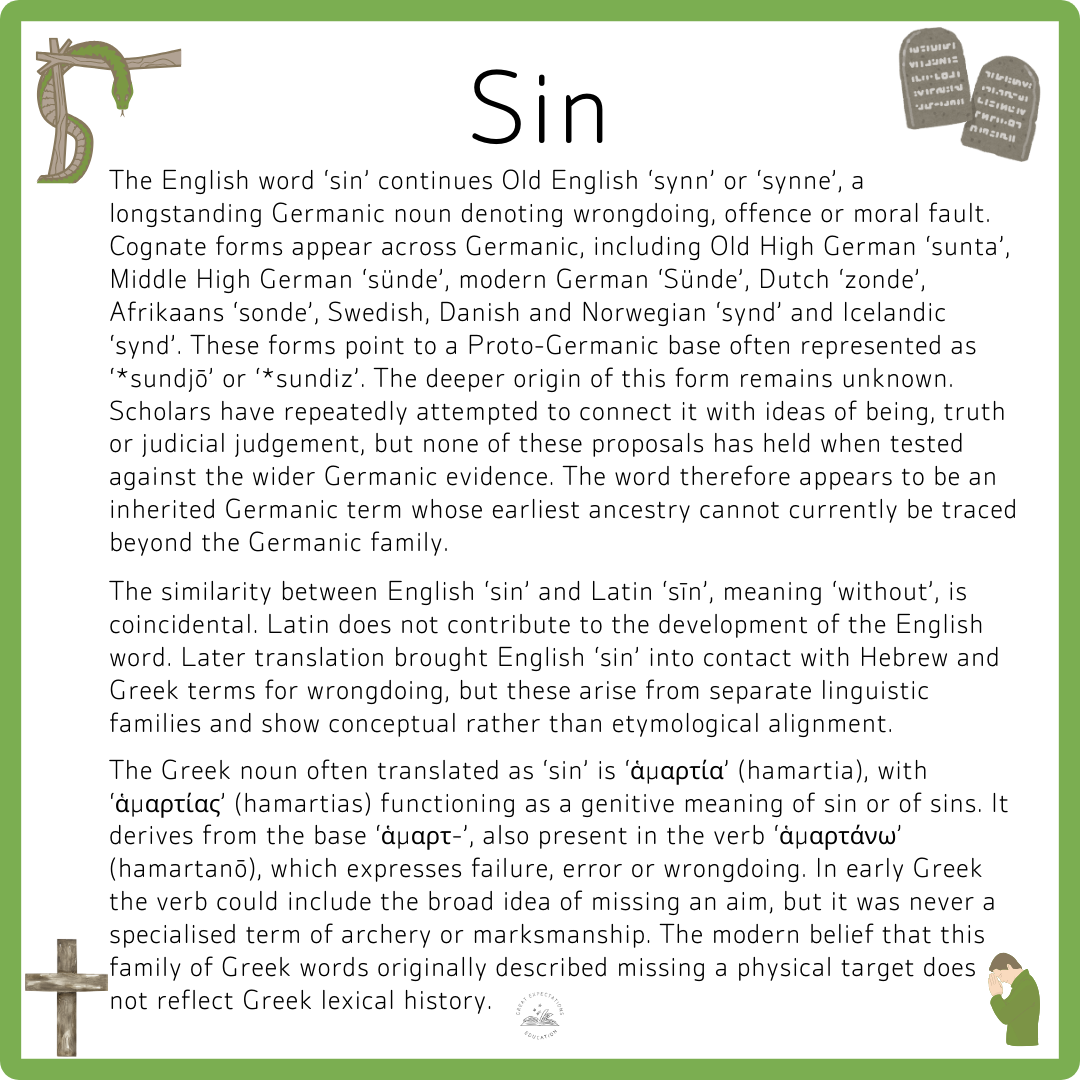
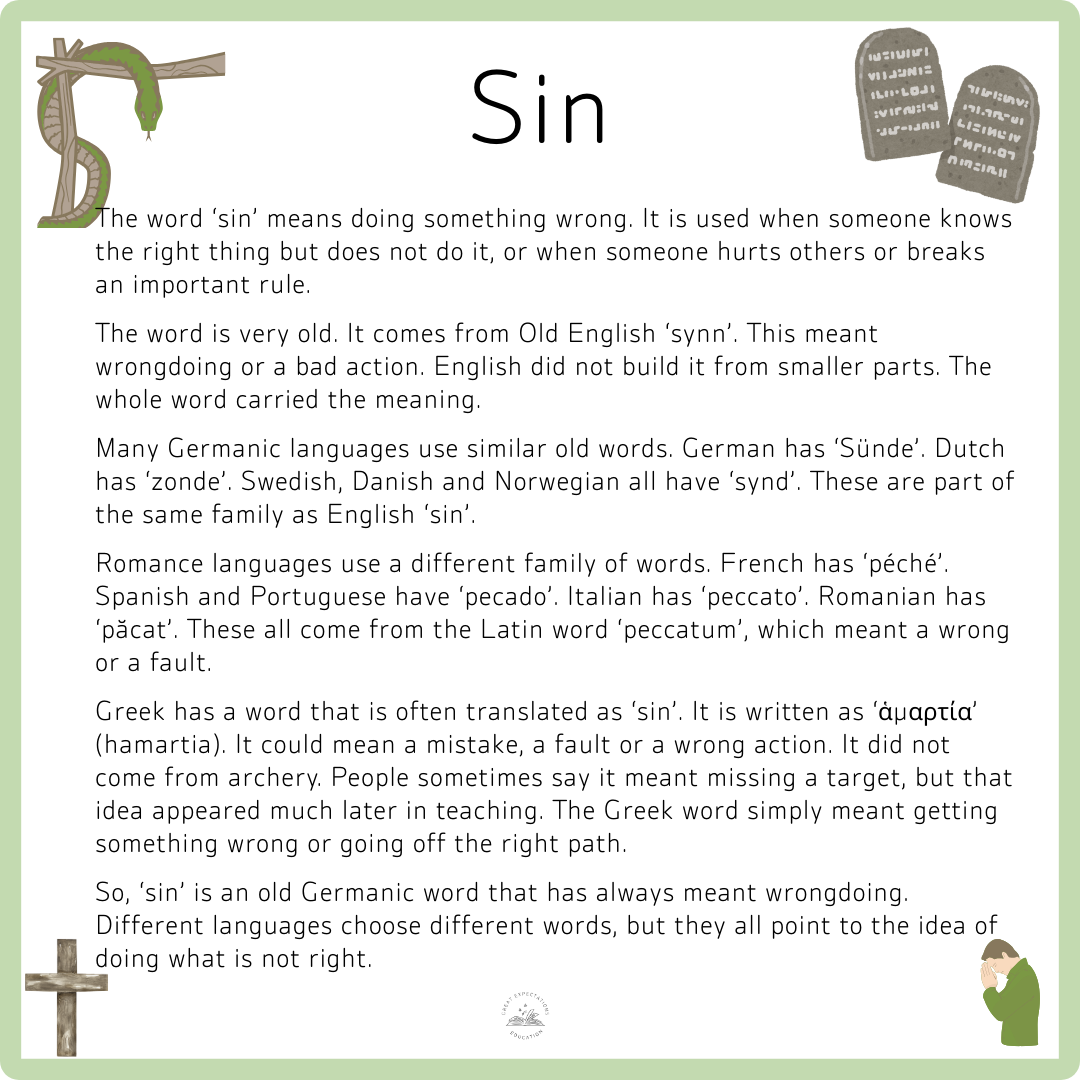
Each word card set begins with an image that captures the theme of the word. The following cards trace its story: a main word card (or two, if extended), a junior version with a paler border, an etymological breakdown showing how the word travelled through time, and a list of sources. Some sets also include cards for related words or translations across other languages. Together they show where each word came from, how it changed, and what it still carries with it.