Birth: the story of bearing and becoming
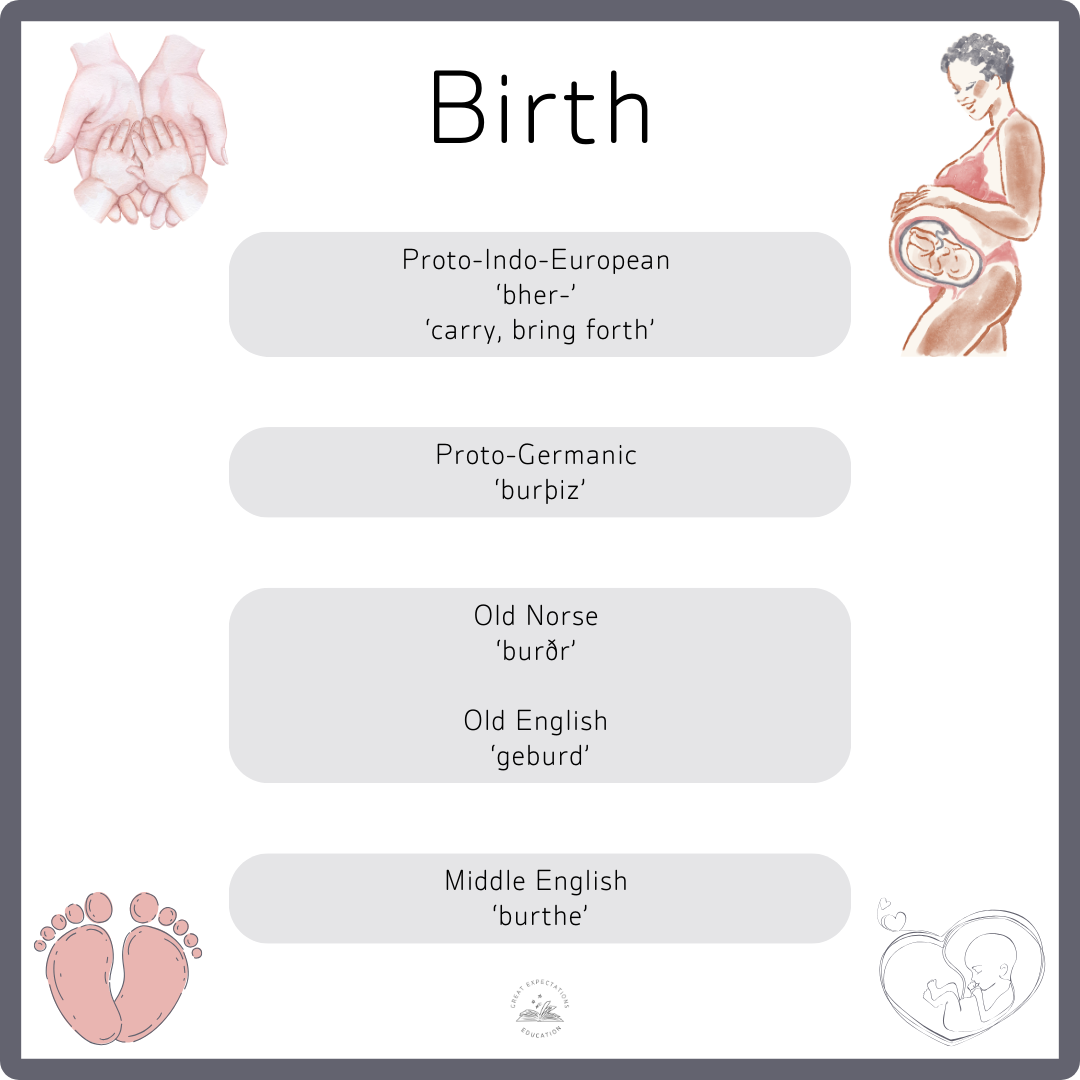
Every so often a word opens a doorway. Birth is one of those words. Its history shows English holding two perspectives at once: the act of carrying life, and the moment that life arrives. The Old Norse ‘burðr’ met Old English ‘geburd’, and from their shared Germanic root came the modern word that balances both meanings.
Tracing the story across languages reveals the same pattern told differently. Romance languages focus on emergence and light, while Germanic languages keep the older image of bearing and bringing forth. Greek adds another strand with ‘τίκτω’, the verb used in Luke 1.31, where Mary is told she will conceive and bear a son.
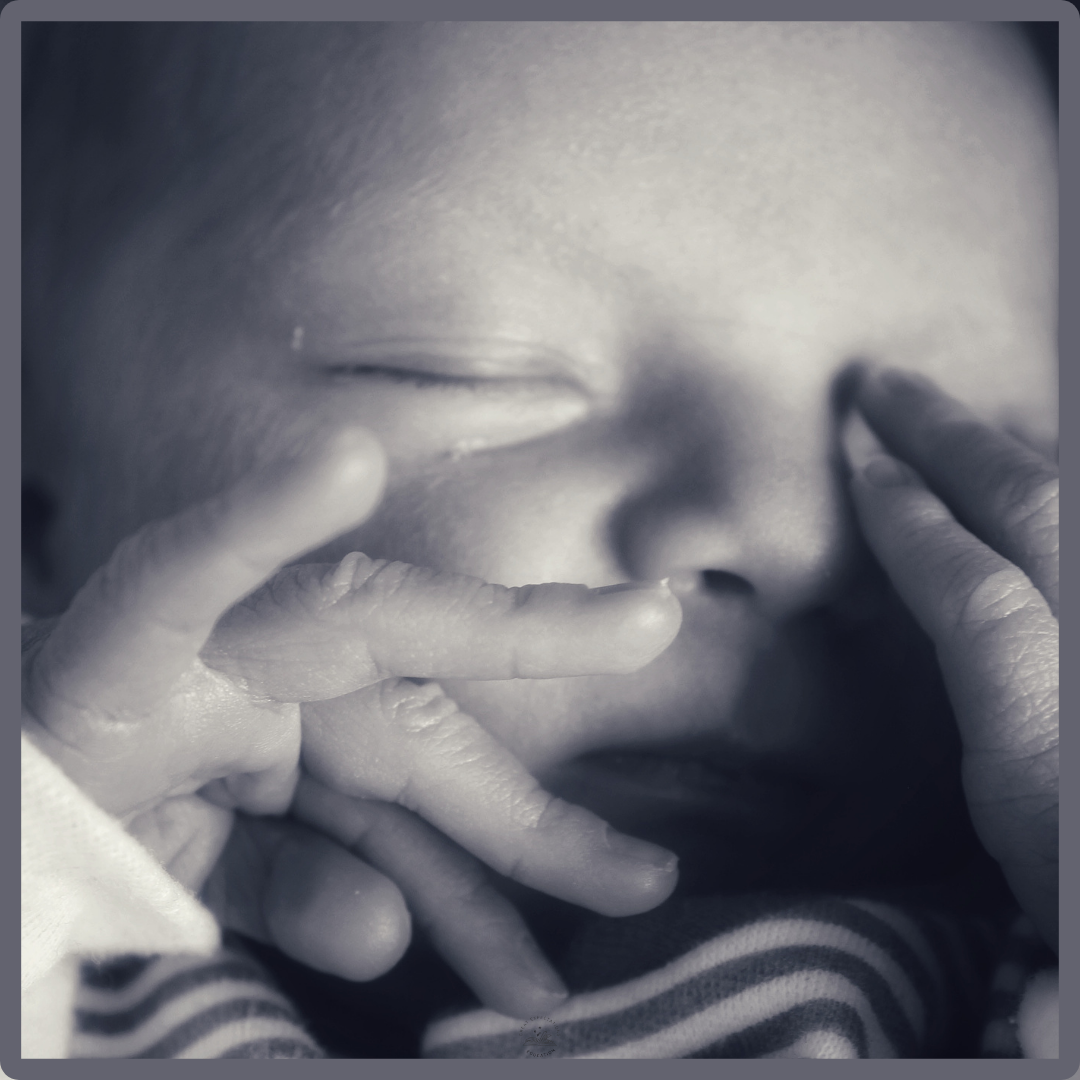
Each word card set begins with an image that captures the theme of the word. The following cards trace its story: a main word card (or two, if extended), a junior version with a paler border, an etymological breakdown showing how the word travelled through time, and a list of sources. Some sets also include cards for related words or translations across other languages. Together they show where each word came from, how it changed, and what it still carries with it.