Stranger – Dwelling Beside, Not Within
By faith Abraham… made his home in the promised land like a stranger in a foreign country; he lived in tents, as did Isaac and Jacob, who were heirs with him of the same promise.’
Hebrews 11 : 9
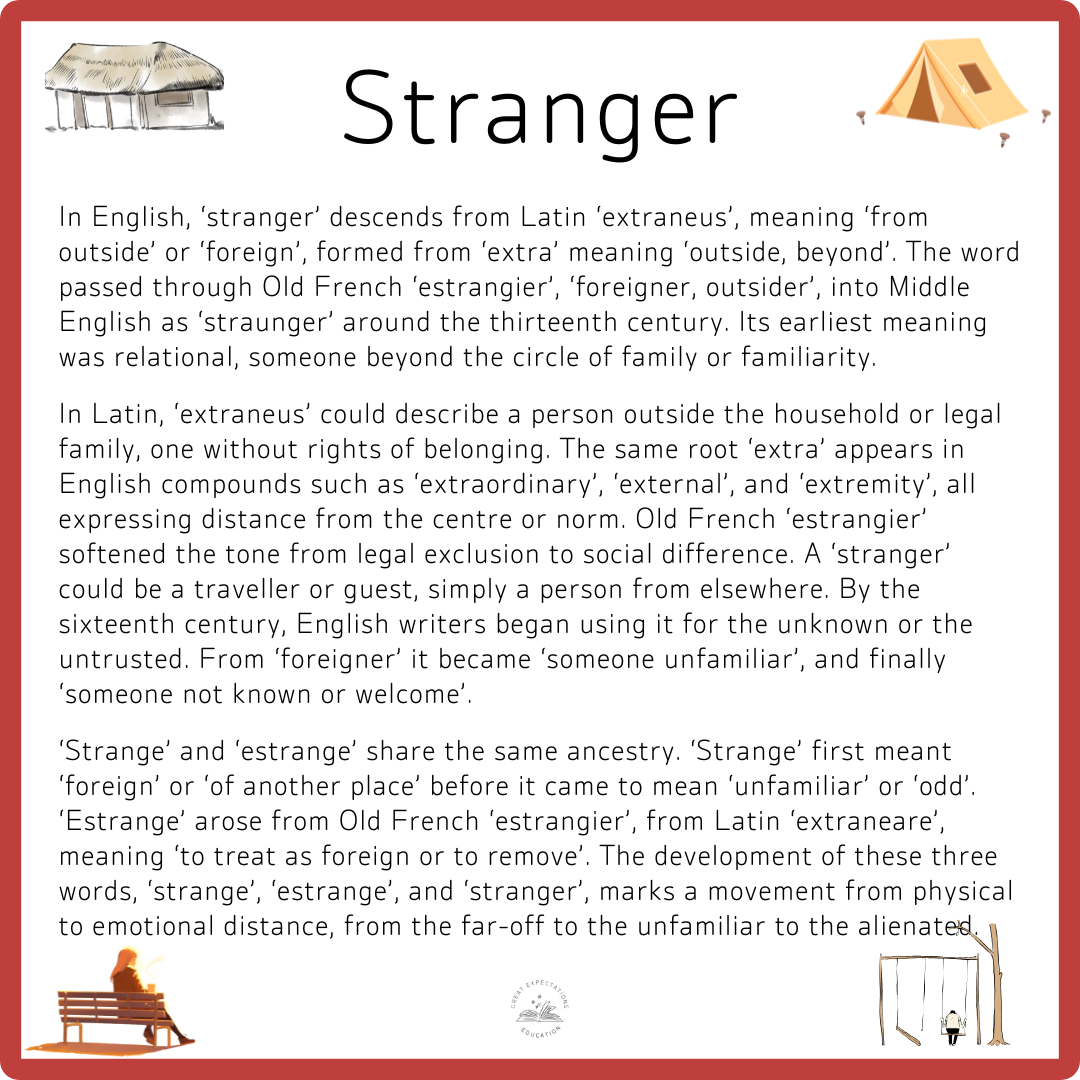
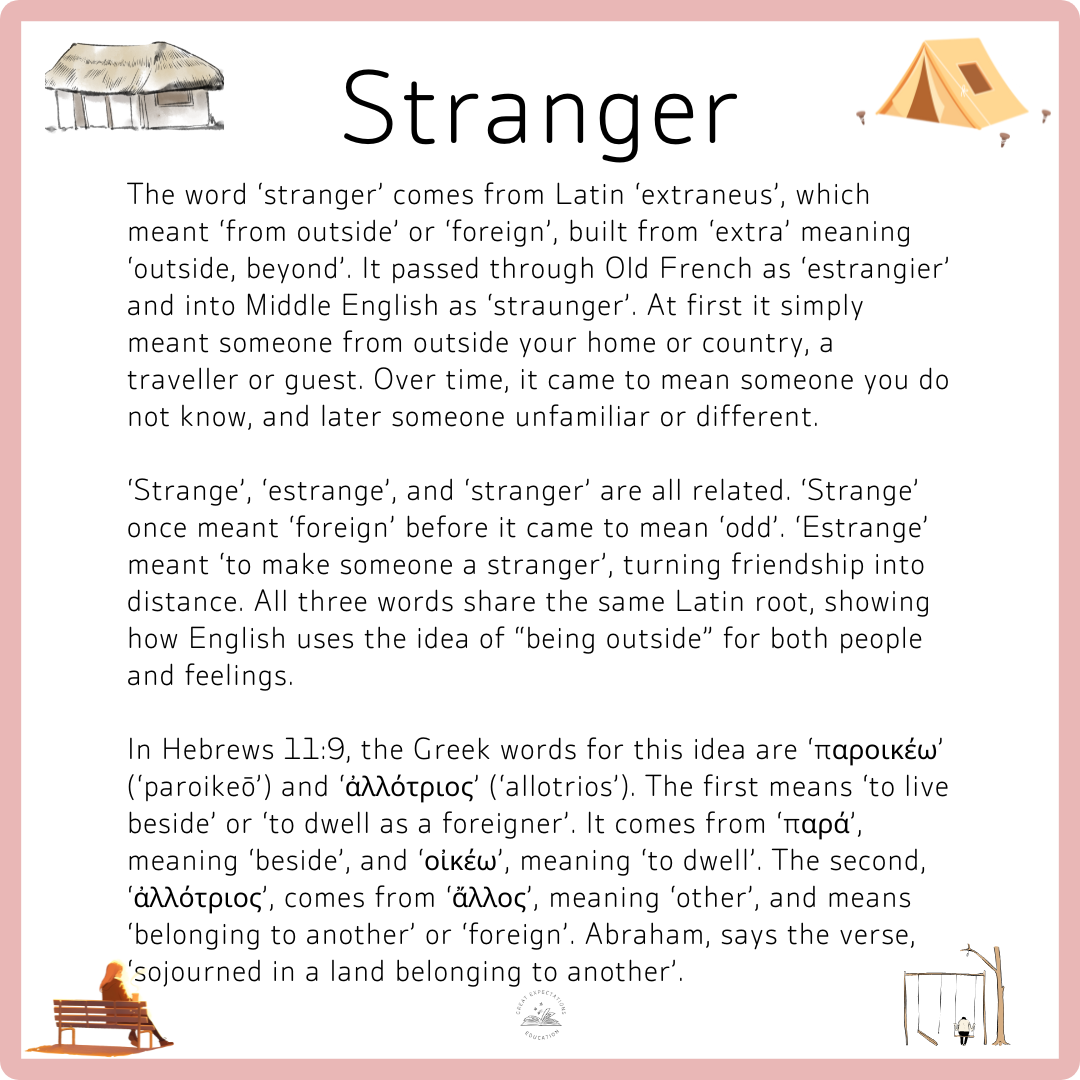
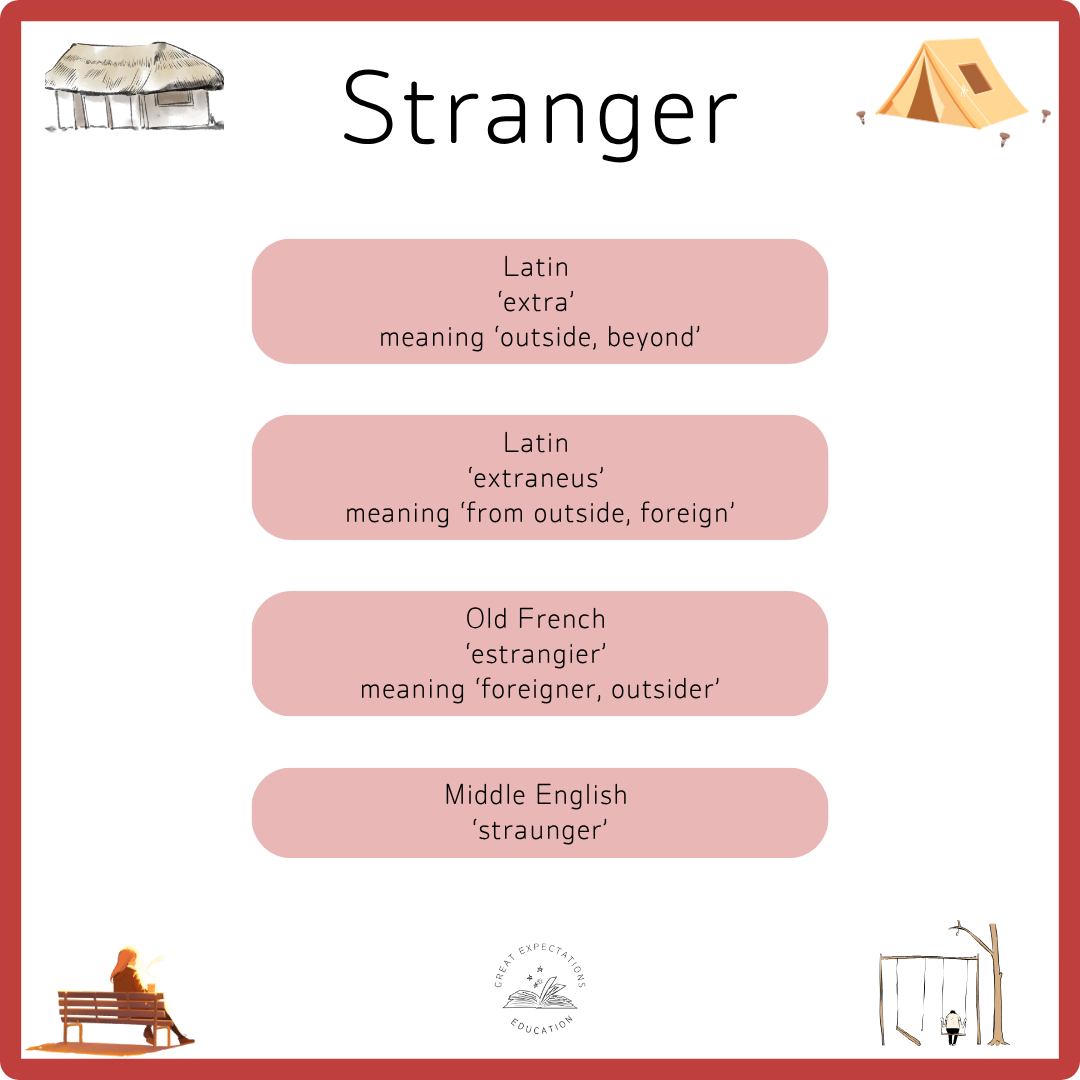
A word for someone from outside. From Latin ‘extraneus’, meaning ‘foreign’ or ‘from beyond’, it passed through Old French ‘estrangier’ to Middle English ‘straunger’. It once meant simply ‘traveller’ or ‘guest’—a person from elsewhere, not yet known. In time it narrowed to mean someone unfamiliar or distant.
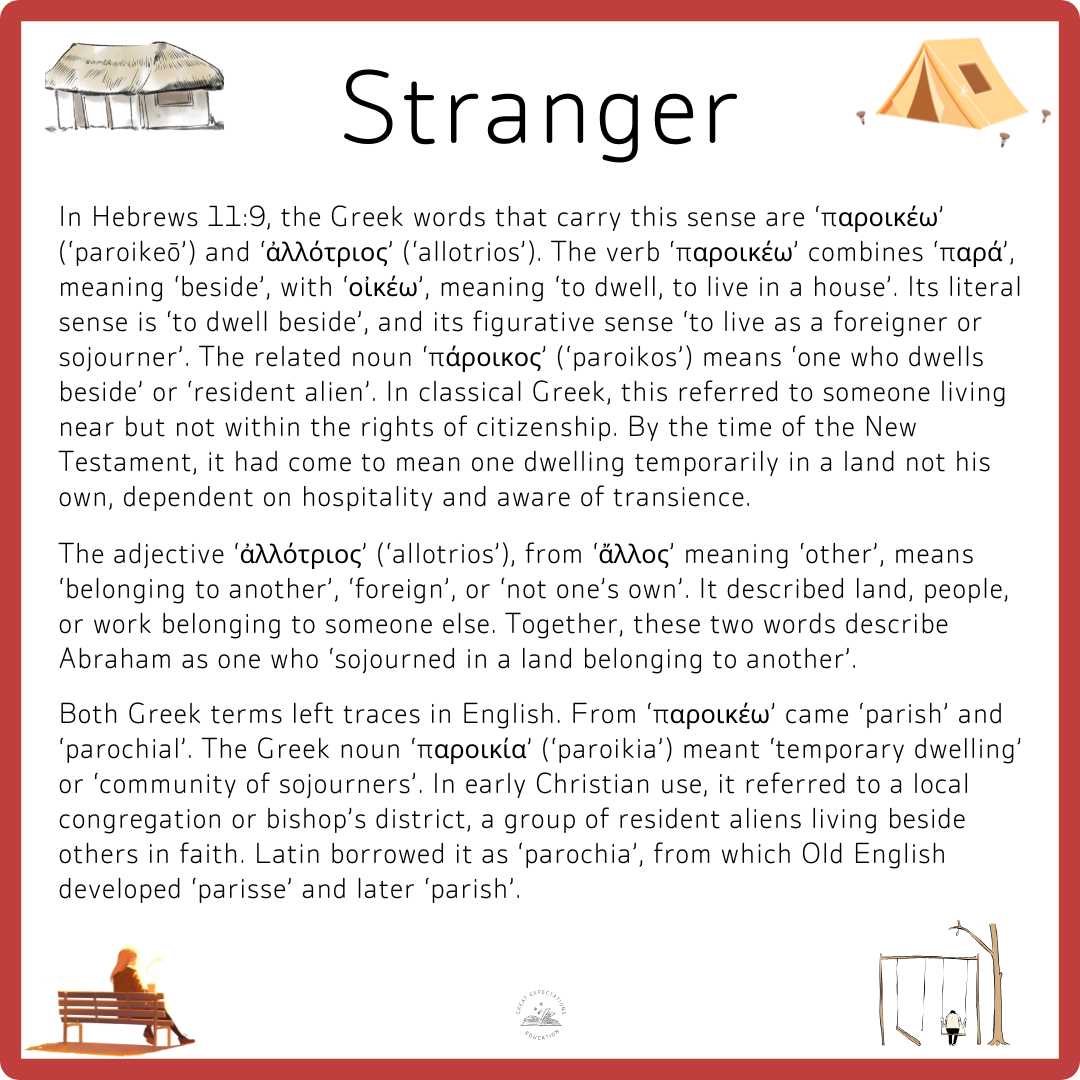
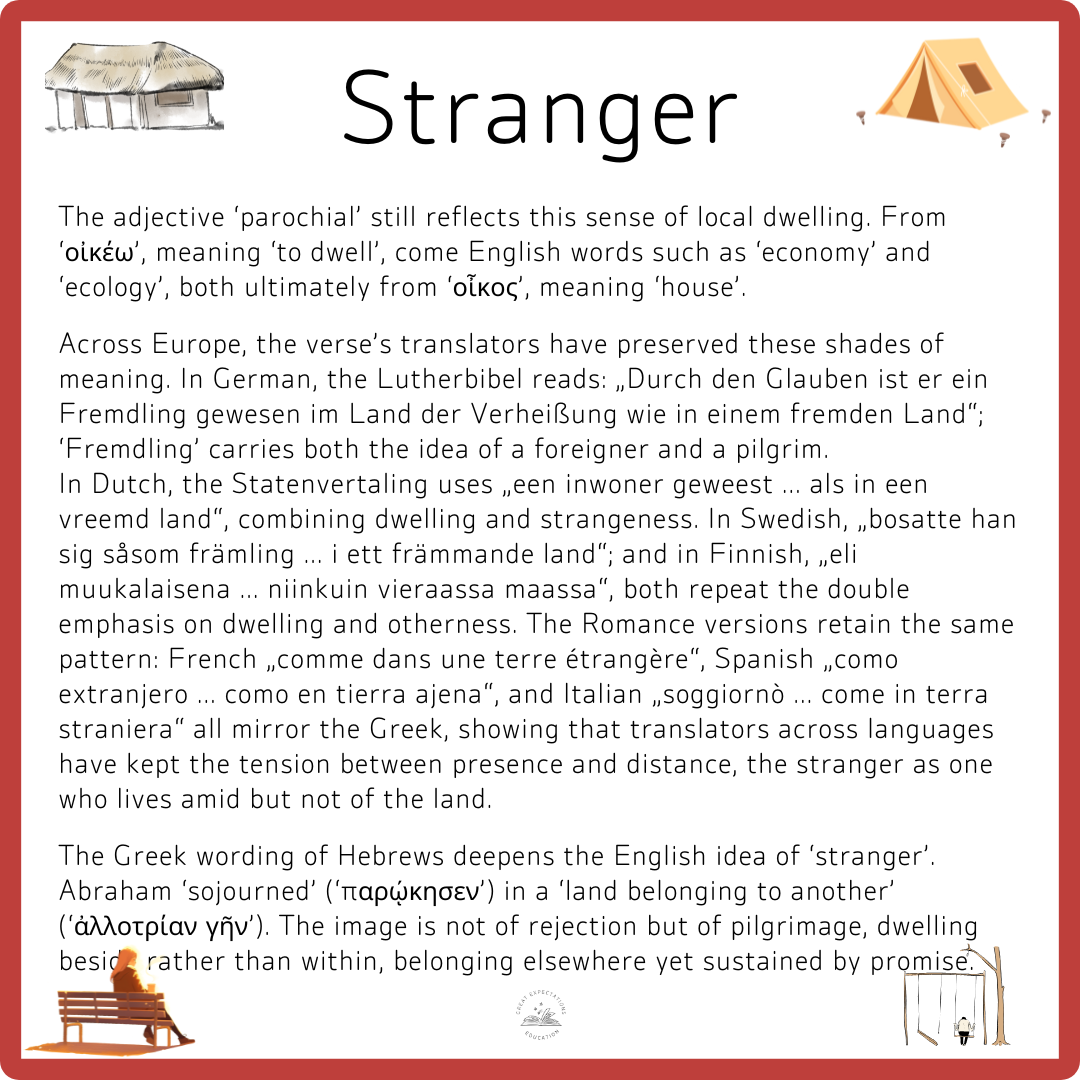
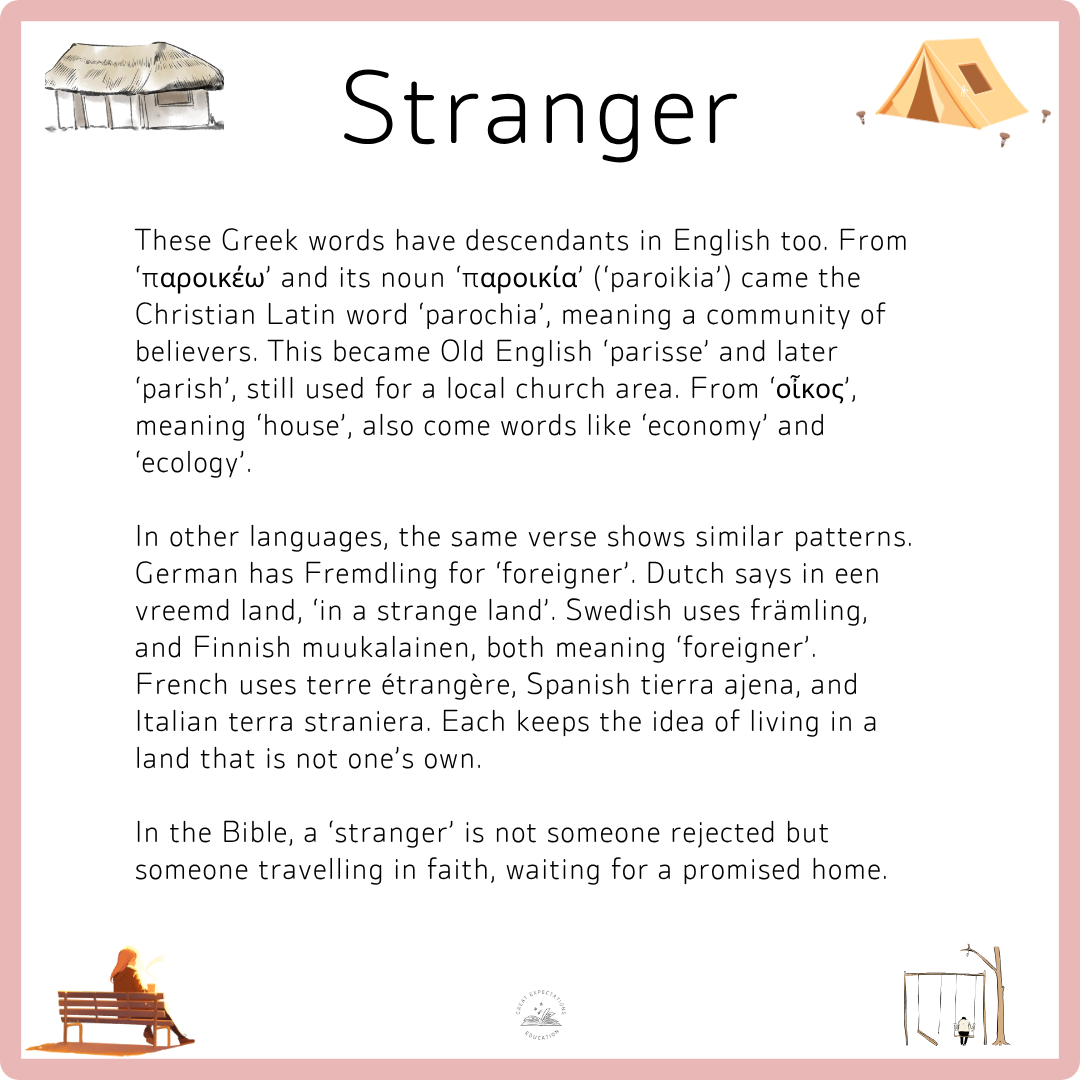
In Hebrews 11:9, the Greek words ‘παροικέω’ (‘paroikeō’) and ‘ἀλλότριος’ (‘allotrios’) describe Abraham living ‘beside’ rather than ‘within’, a foreigner in another’s land. From this same root came ‘parish’, from ‘παροικία’ (‘paroikia’), the early Christian word for a community of sojourners.
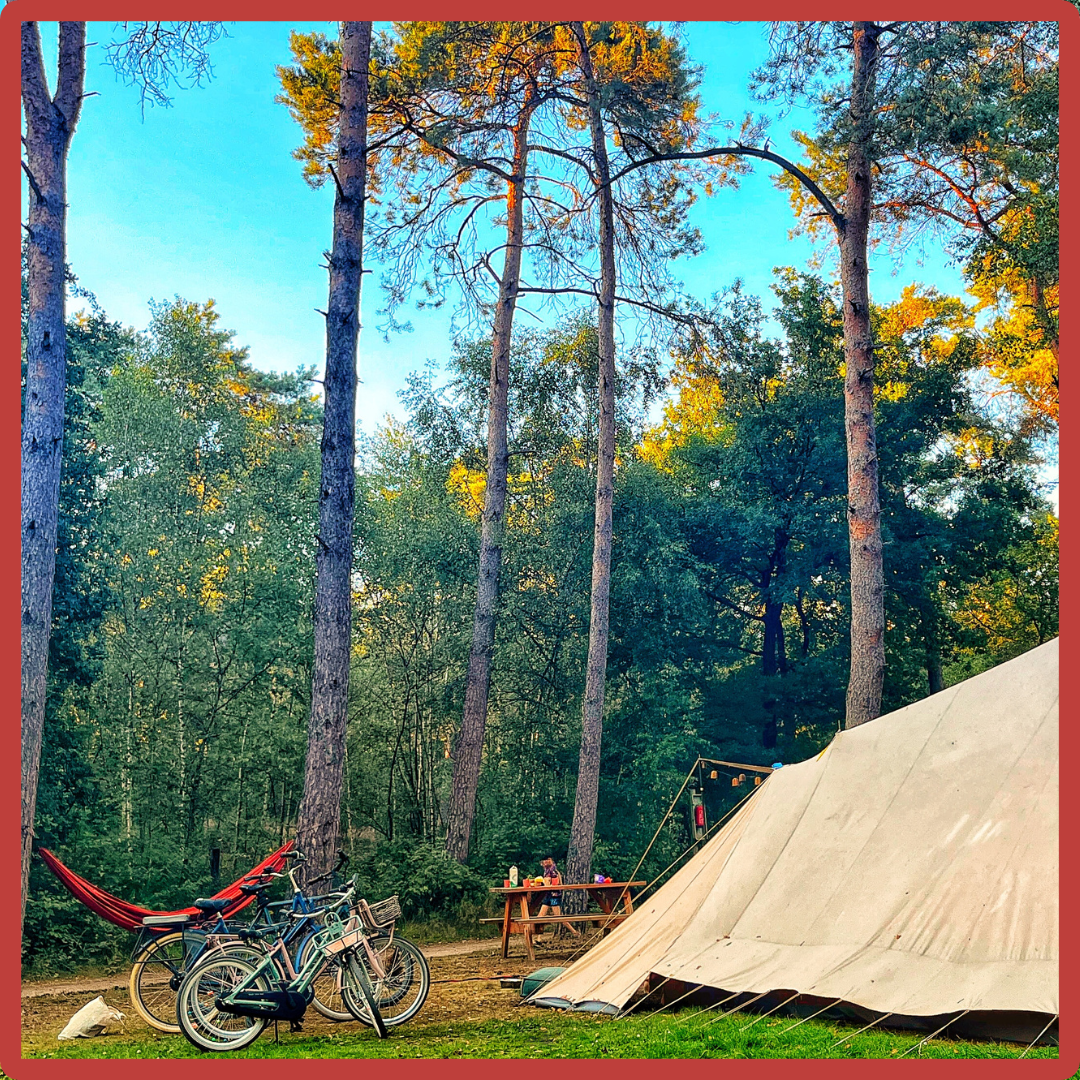
The image shows a camp beneath tall trees in the Dutch Veluwe. The tent, the bicycles, the forest at dusk—all speak of the gentle strangeness of being away from home, dwelling for a while in a place not your own.
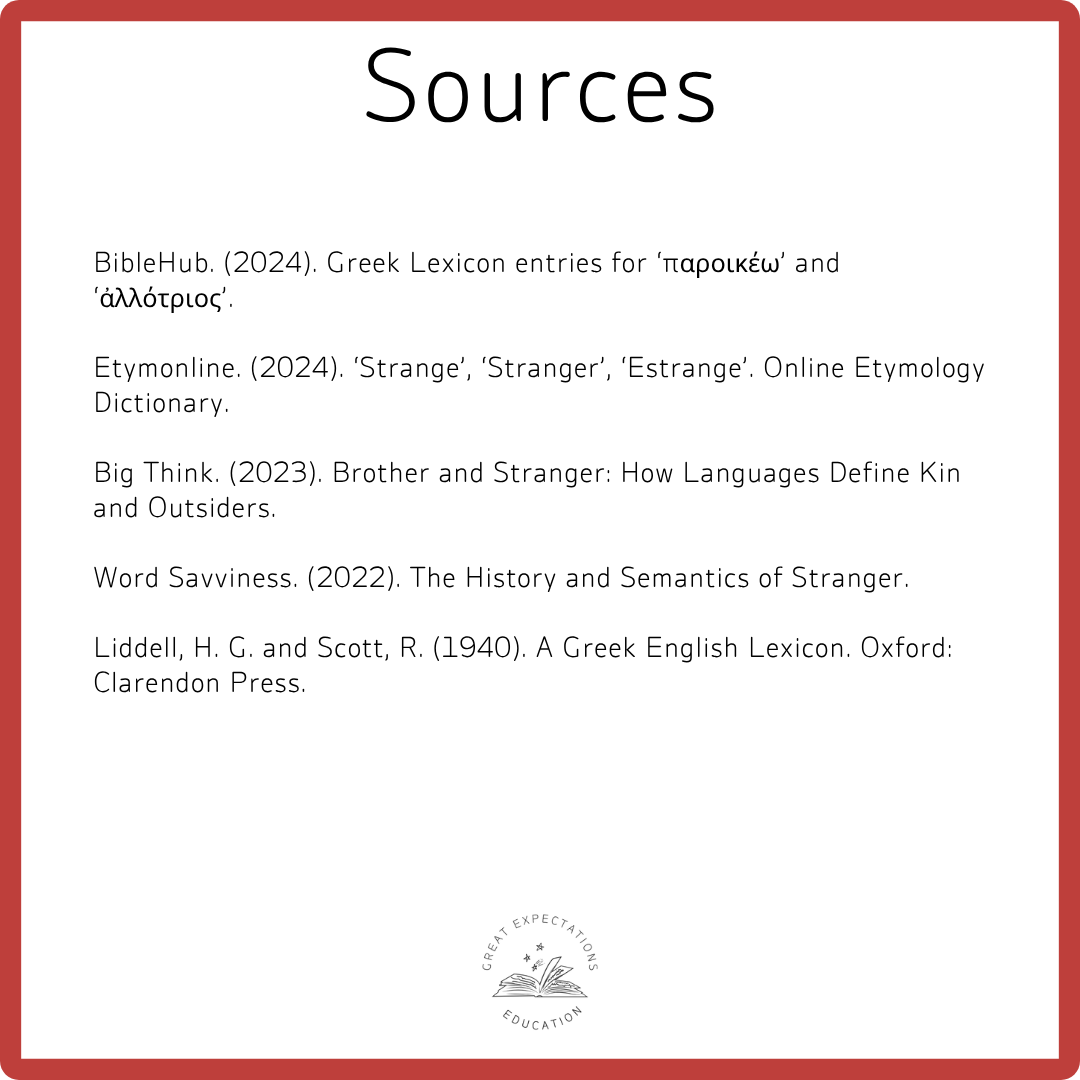
Each word card set begins with an image that captures the theme of the word. The following cards trace its story: a main word card (or two, if extended), a junior version with a paler border, an etymological breakdown showing how the word travelled through time, and a list of sources. Some sets also include cards for related words or translations across other languages. Together they show where each word came from, how it changed, and what it still carries with it.