The Burning of Anger
Hebrews 11 : 27 – ‘He did not fear the anger of the king’
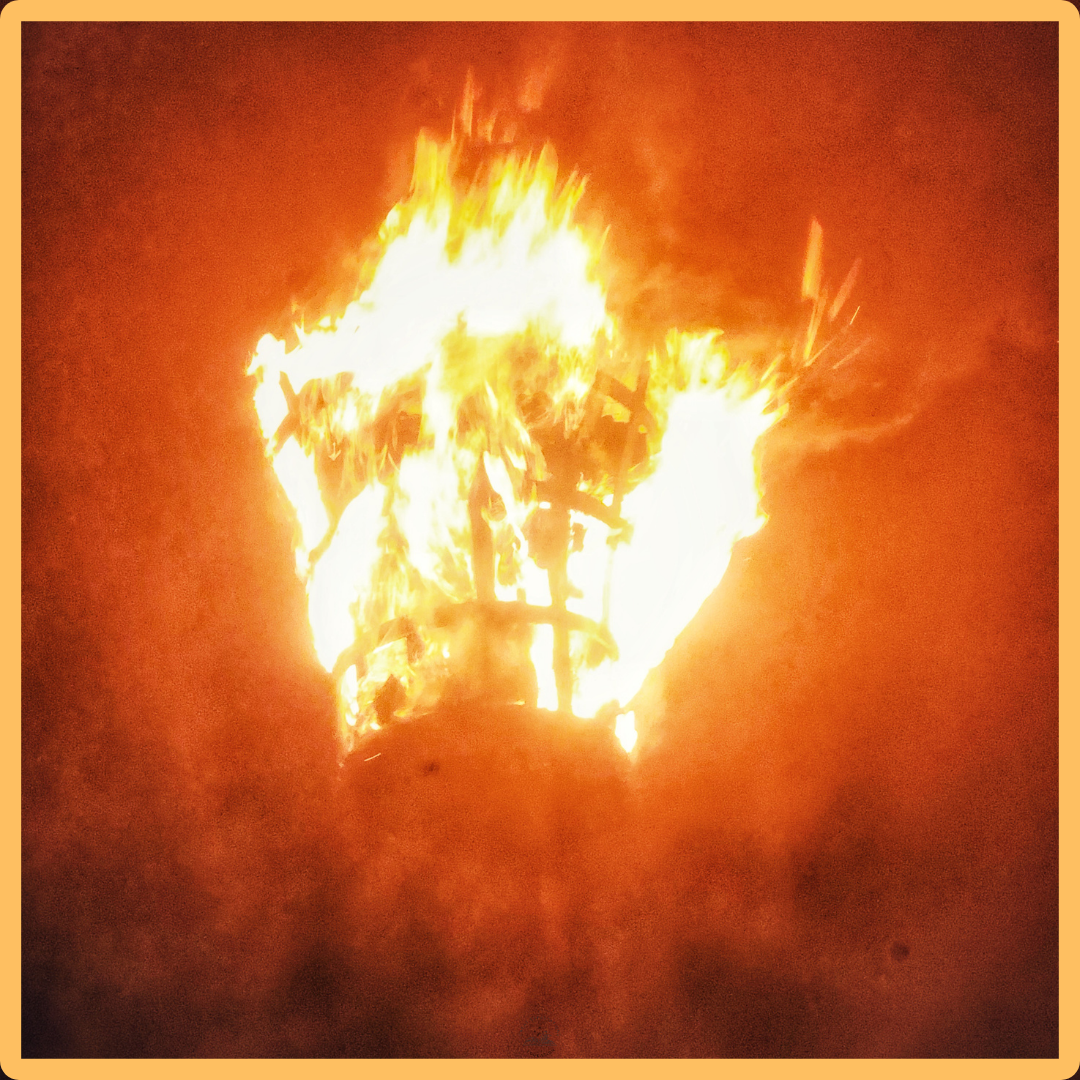
The beacon burns each Christmas Eve, a tower of flame against the night. For our village it marks the beginning of Christmas: carols, neighbours, and a short reading from Scripture.
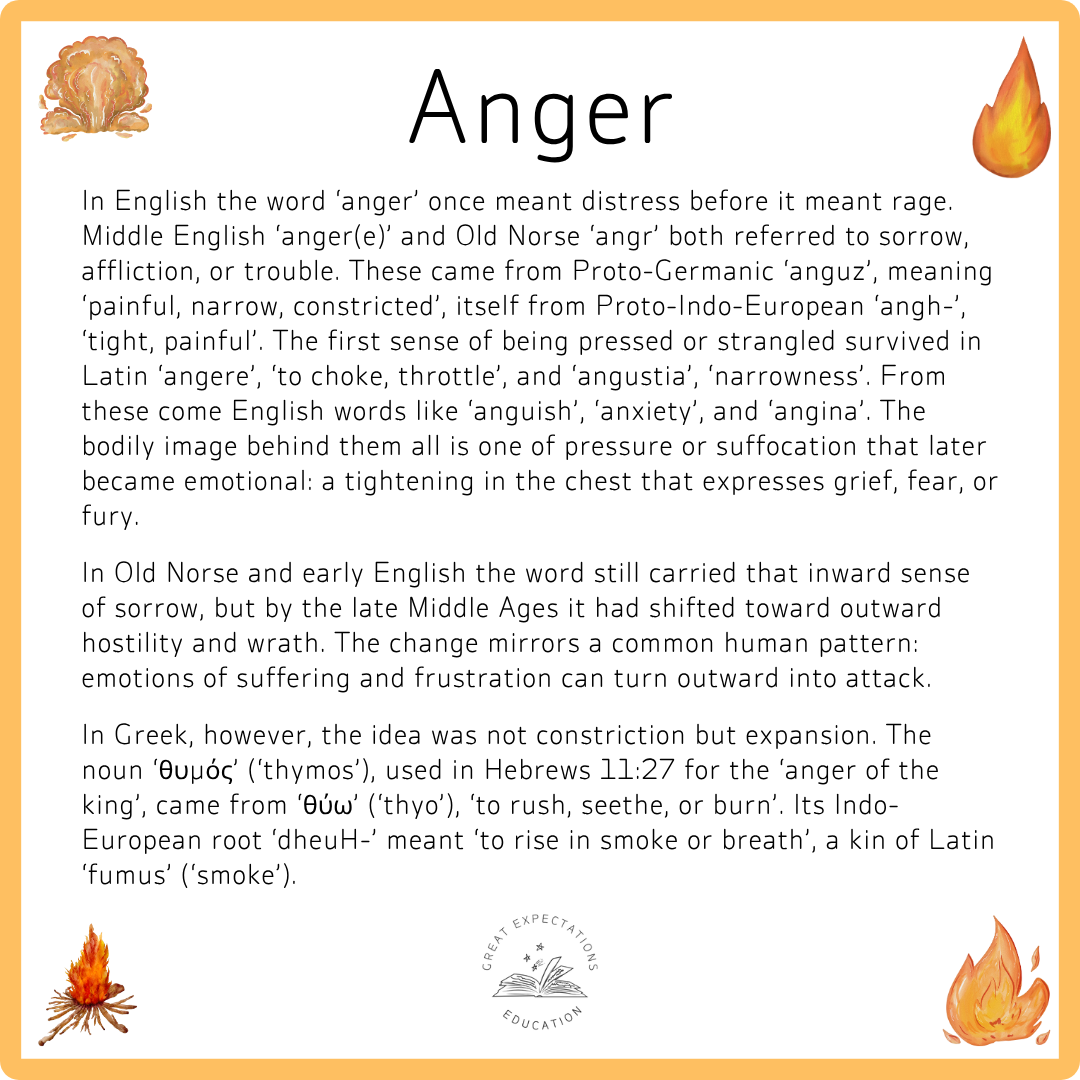
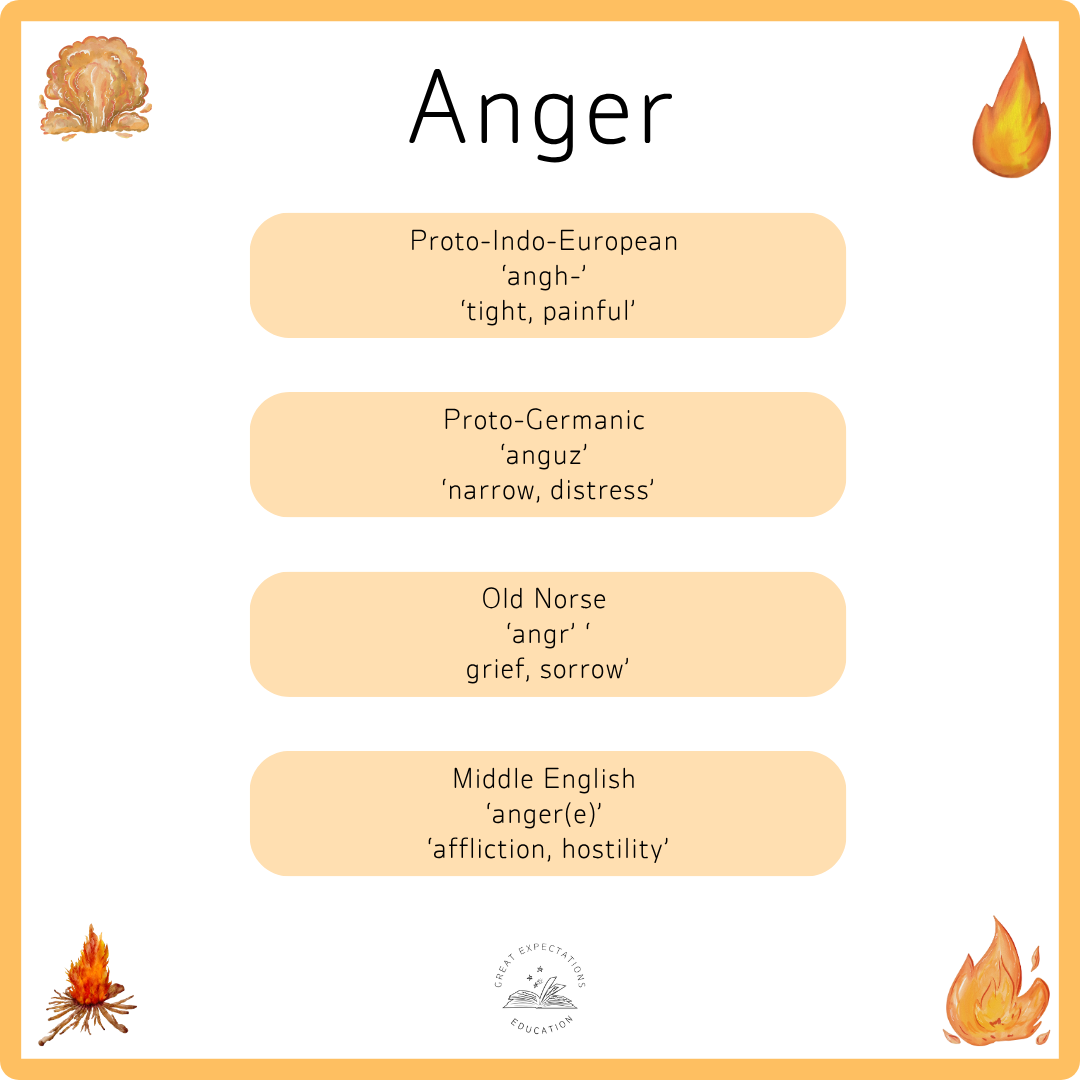
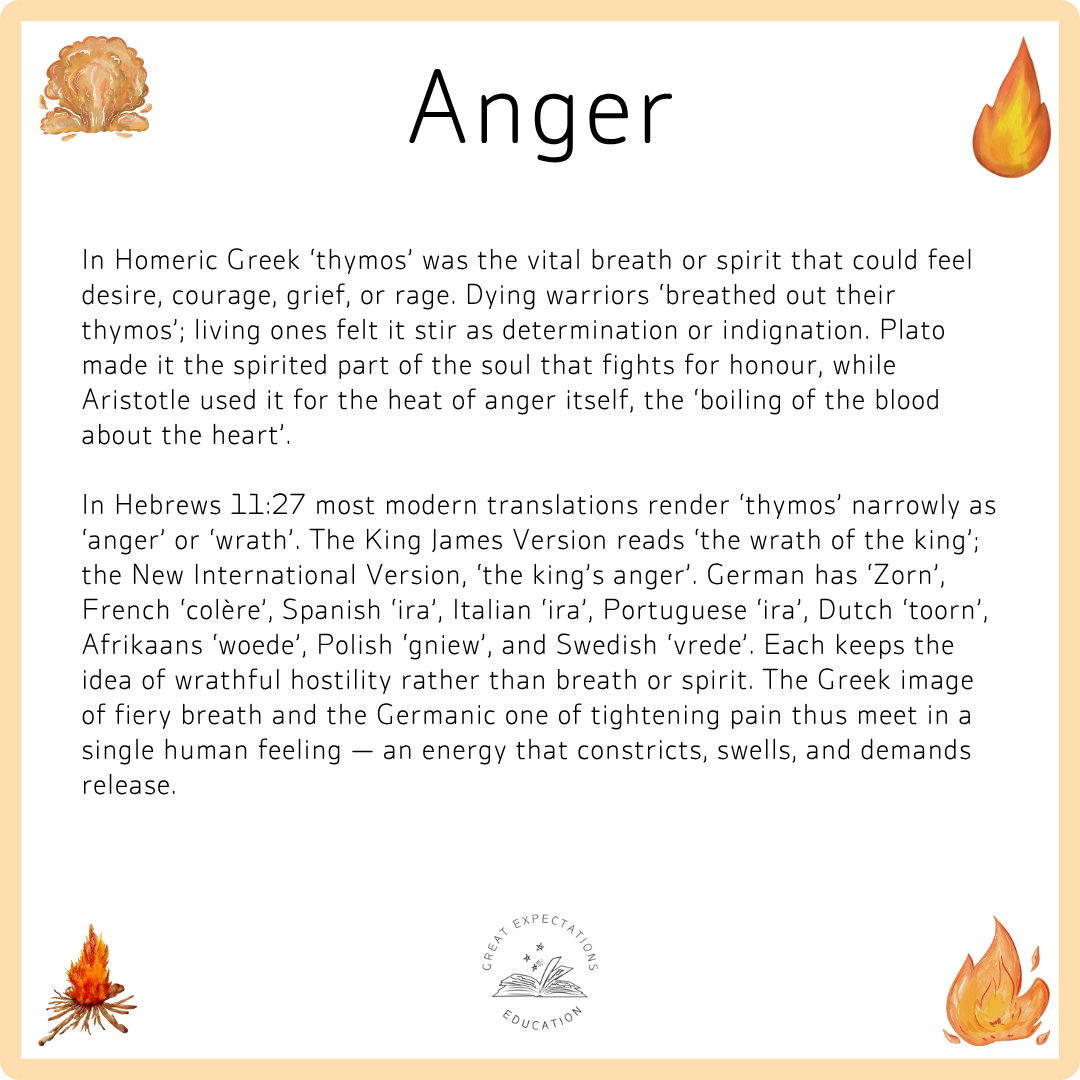
The word ‘anger’ in that verse once meant sorrow. In Old Norse and Middle English it described pain or affliction. Its older ancestor, Proto-Germanic ‘anguz’, meant ‘narrow’ or ‘constricted’, from the deeper root ‘angh-’, ‘tight, painful’. From the same source come ‘anguish’ and ‘anxiety’.
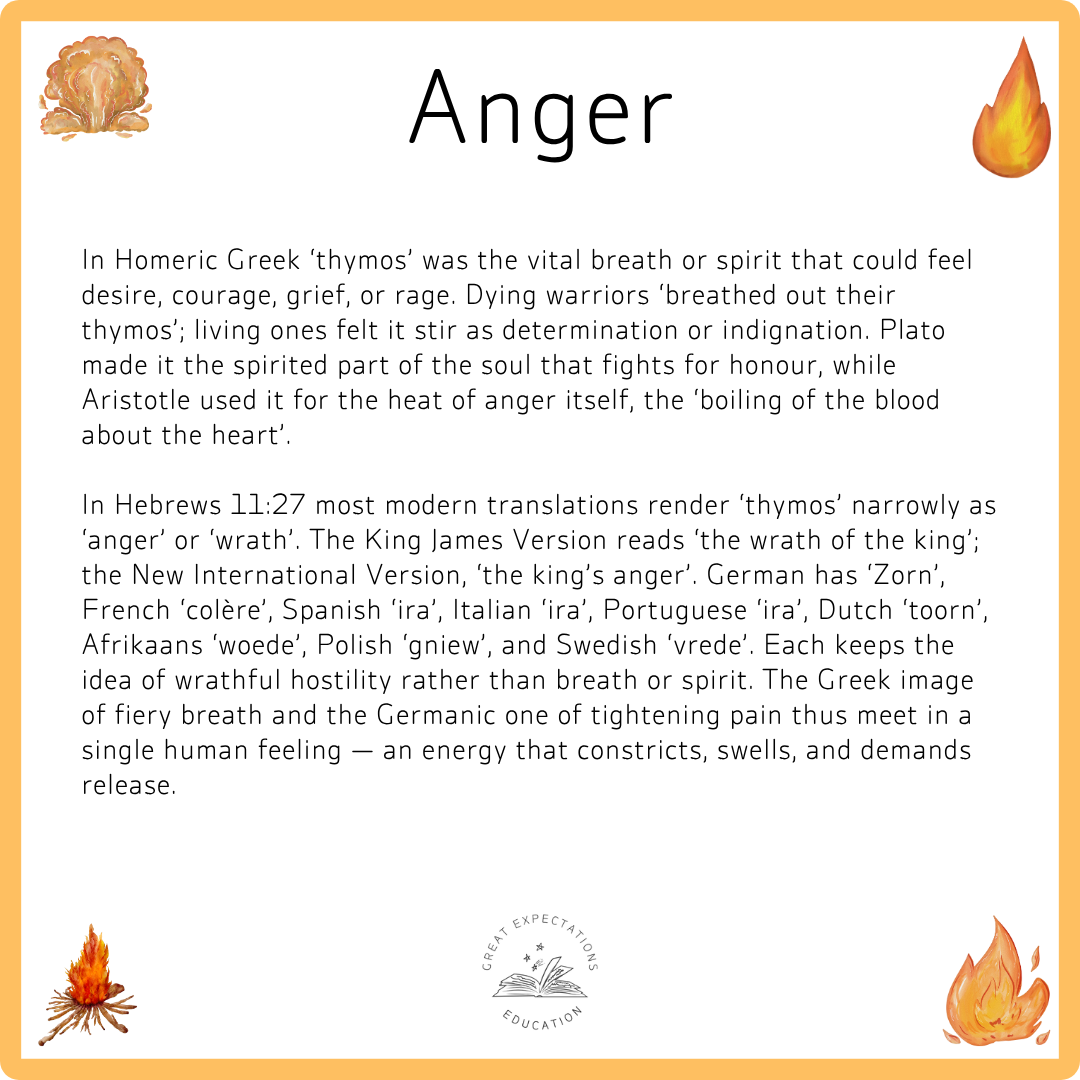
The Greek word, ‘thymos’, used in Hebrews 11:27, came from ‘thyo’, ‘to rush or burn’. It first meant breath or spirit — the life that could blaze as courage or flare as rage.
Set beside the village beacon, the verse feels vivid: human anger as heat and pressure, divine strength as steadiness before the flame.
Each word card set begins with an image that captures the theme of the word. The following cards trace its story: a main word card (or two, if extended), a junior version with a paler border, an etymological breakdown showing how the word travelled through time, and a list of sources. Some sets also include cards for related words or translations across other languages. Together they show where each word came from, how it changed, and what it still carries with it.