Journal: the daily book that kept changing what "the day" meant
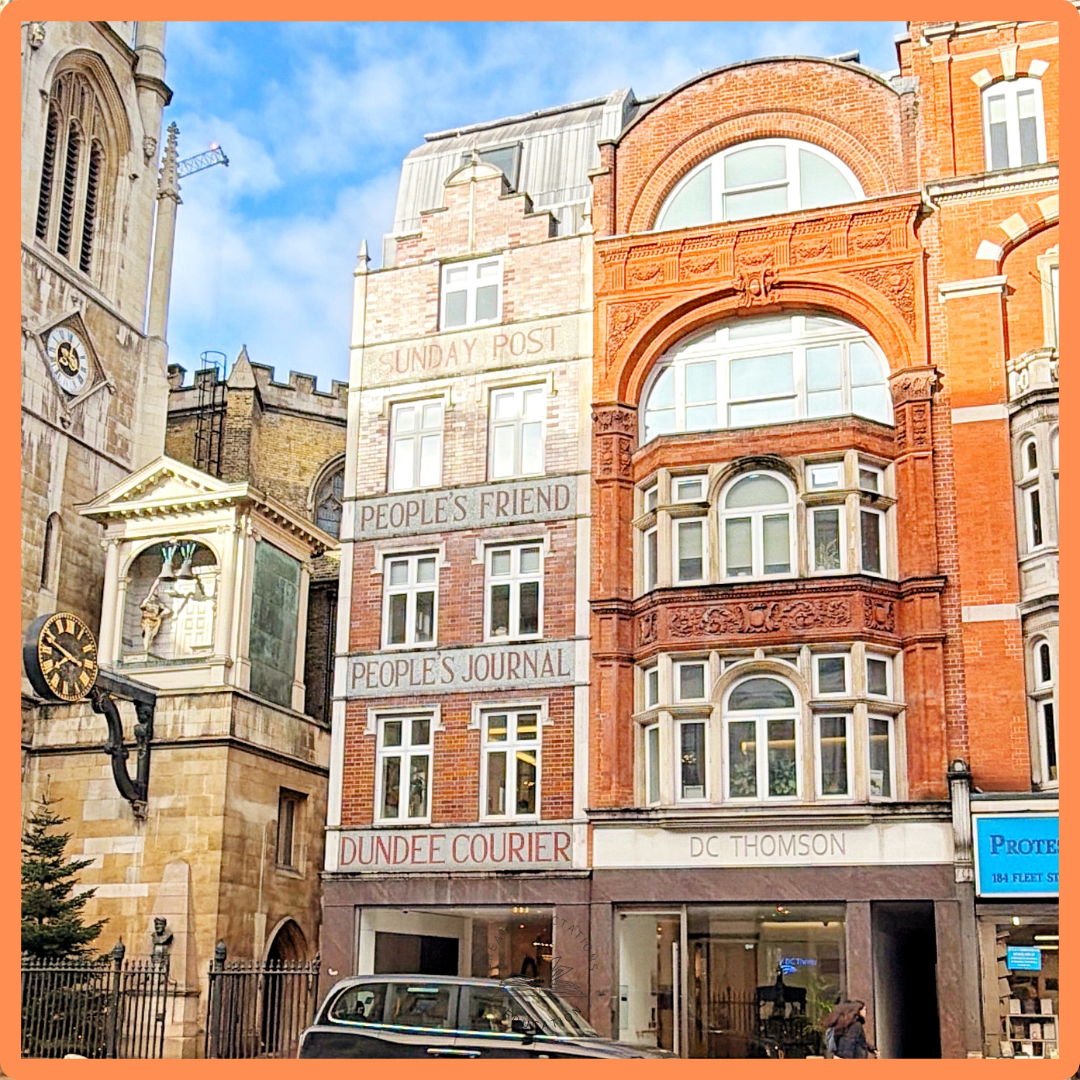
This is a photograph I took on Fleet Street in London - the old DC Thomson building, with the names of its papers painted straight down the brickwork: 'Sunday Post', 'People's Friend', 'People's Journal', 'Dundee Courier'.
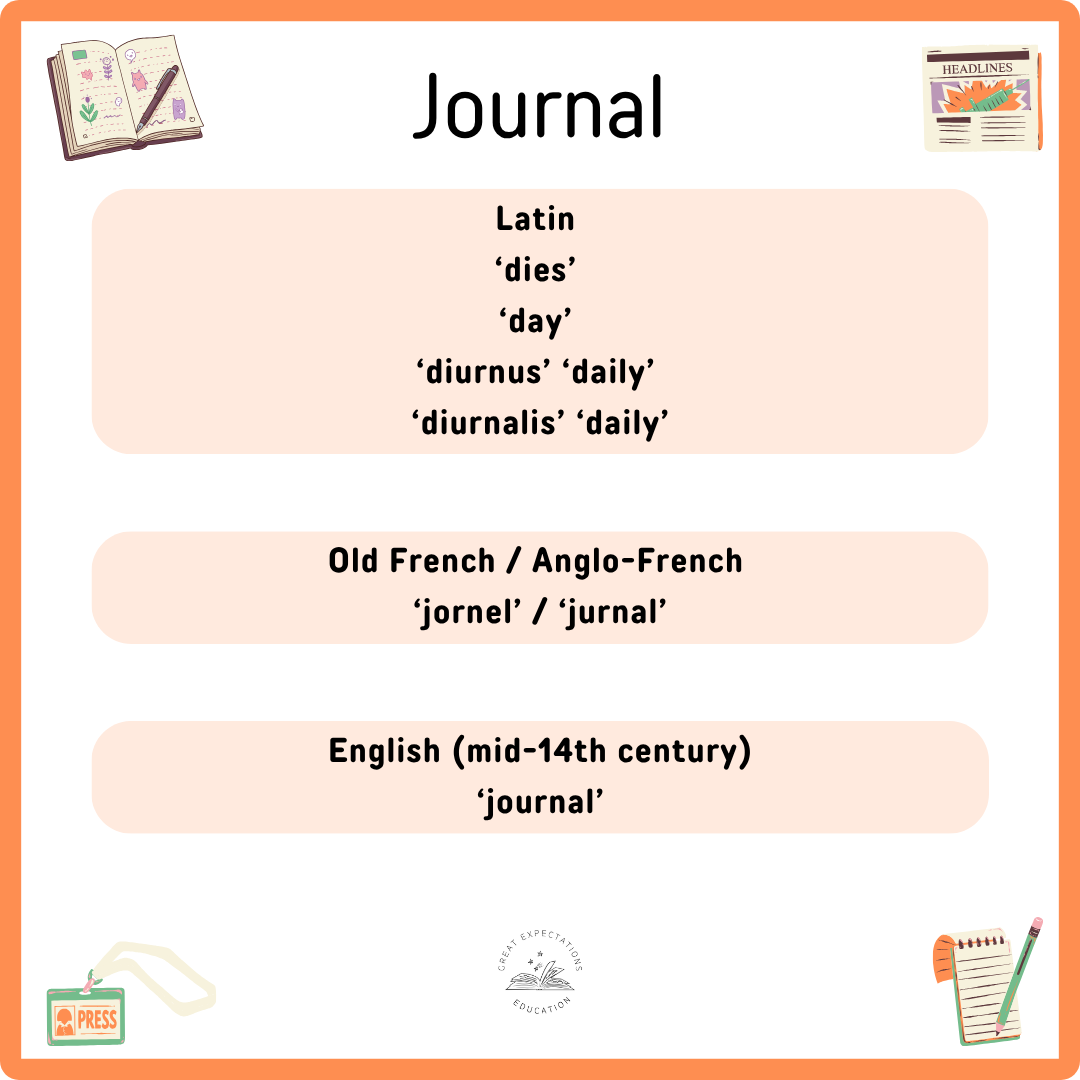
The card traces it back to Latin 'dies', 'day', and its adjective 'diurnalis', 'daily'. What the card doesn't have room to follow is the odd thing that happened next: the word kept its meaning and kept changing its object. It has never stopped meaning 'the daily one'. It has just kept moving house.
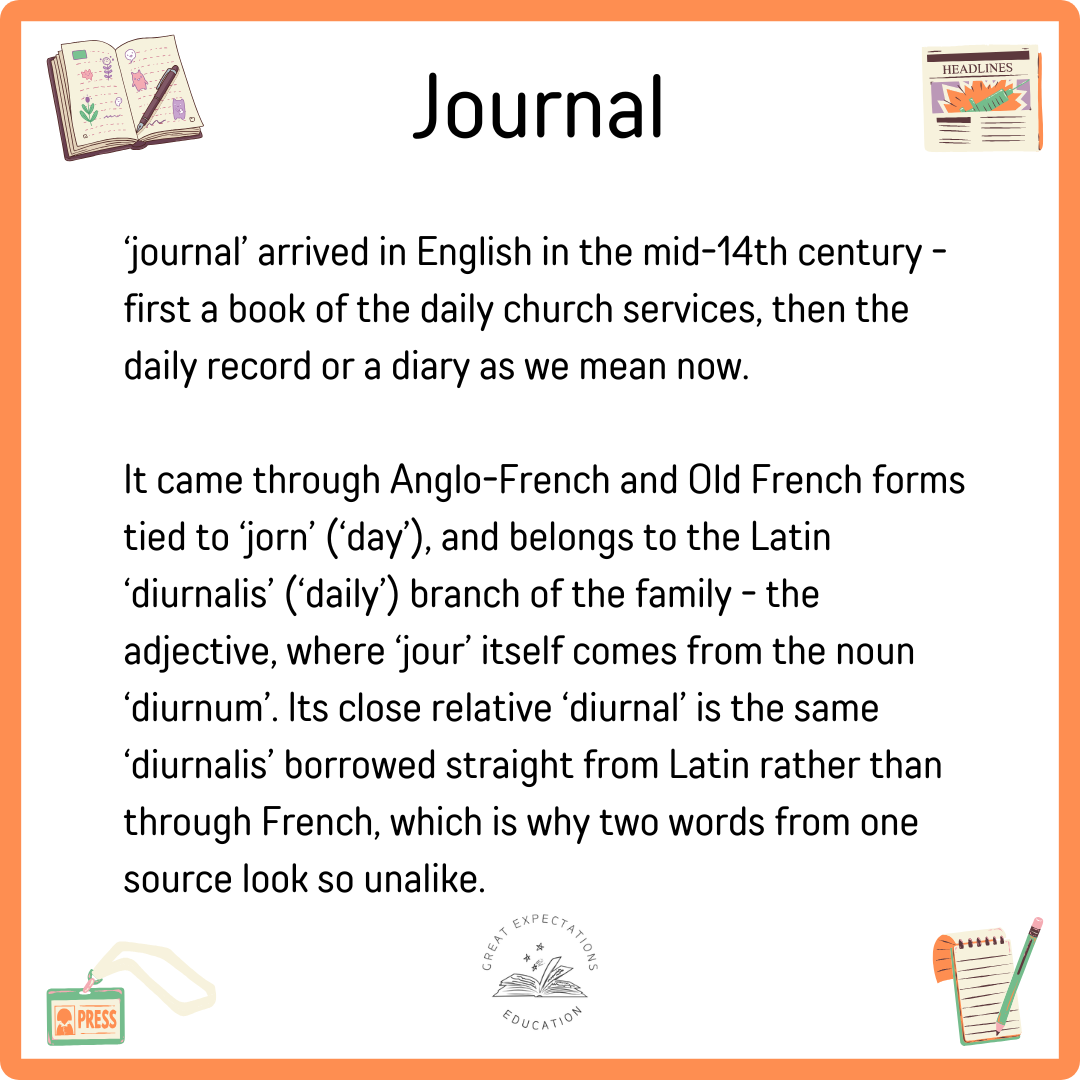
When it first arrived in English, in the mid-14th century, a 'journal' was a book of the daily church services - the prayers and readings set for each day, gathered into one volume so you knew what belonged to today. That's the sense Etymonline gives first: 'book of church services'. Not a diary, not a paper. A book organised by the day, for people whose day was organised by the book.
Then the objects start to shift, and the dates are worth having. By the late 15th century 'journal' had become the book of daily accounts - the day-book, where a business wrote down what happened that day, in and out. Around 1600 it turned inward and became the personal diary, the private daily record we'd recognise now. And in 1728 it settled onto the thing my photograph is really about - the daily publication, the paper. Church office, ledger, diary, newspaper: four different objects across four centuries, and the same word every time, because the thing they all share is the day.
The oldest version of the idea, though, is older than the word. The Romans already had a daily paper of sorts - the 'Acta Diurna', the 'daily acts', official notices carved up and posted in the Forum, begun in 59 BC. Same root, 'diurnus'. So the instinct behind a 'journal' - write down the day, put it where people can see it - runs from a Roman noticeboard to a Fleet Street masthead without ever really changing. Only the material changes: stone, then a bound book, then newsprint.
Which is why 'People's Journal' painted on a wall, next to 'Courier' (one who runs) and 'Post' (the relay-stage where the horses were changed), is a small museum of the daily habit. A courier brings the day's news; the post carried it stage by stage; a journal is simply the day itself, written down and handed round. I like that the building keeps all three up in paint, as if none of them had ever gone out of use.
And they haven't, really. Plenty of us still keep a journal in the c.1600 sense - a daily book - without once thinking that we're doing the same thing a medieval priest did with the day's services, or a Tudor merchant did with the day's takings, or a Roman clerk did with a chisel in 59 BC. The word has carried the habit the whole way. It just kept finding new things to be daily about.
Here's the closing cross-link paragraph, per the Wordhord project-tied convention - it names the siblings and related posts and points people onward. I've built it only from what the card set and the day-family actually contain; I've marked where you'll need to confirm what's live before it publishes.
If the day-family interests you, there's more of it to follow. This 'journal' post has a companion word card in The Wordhord, and its close English relative 'journey' - the same 'jour' meaning a day, and once a day's travel - has its own. The Latin adjective 'diurnal', the same 'diurnalis' borrowed straight from Latin rather than through French, is the doublet that explains why 'journal' and 'diurnal' look nothing alike despite being the same word twice. And the family reaches across the Channel: French 'jour' is in L'atelier des mots, Italian 'giorno' in L'Officina Radice, and Spanish 'jornada' - a day, a day's work, a day's march - in El Taller Raíz, all growing from the same Latin 'dies'. One root, many days.