Shoe: a covering that has barely moved
I ordered new shoes for the oldest two yesterday. They’ve both outgrown what they had. I ordered slightly randomly - knowing there are two younger ones to inherit if I’ve got the sizes wrong.
I’d been looking through old photos and came across one from Stockholm a few years ago. Late October, the evening light fading, shops closing for the night. A shoe-repair shop on a corner in Gamla Stan, the old town, with ‘Bäckmanns Skoservice’ lit up in red neon above the door, the warm interior visible through the window. ‘Sko’ on a Swedish shopfront. ‘Shoe’ in English. The same word - barely changed in over a thousand years - on a street I walked down on holiday.
I’d been thinking about doing a word card for ‘shoe’ for a while. The Bäckmanns photo seemed like the right moment.
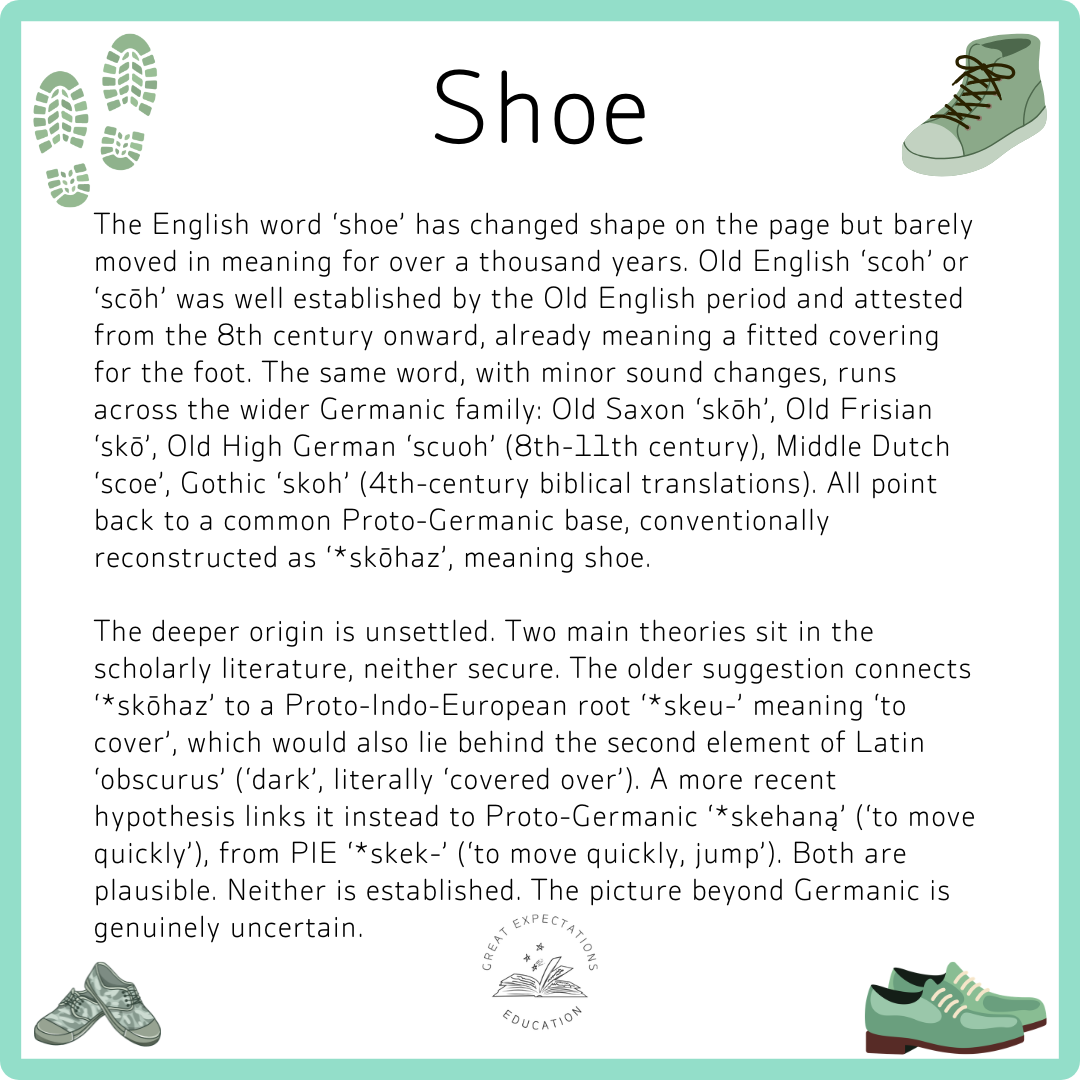
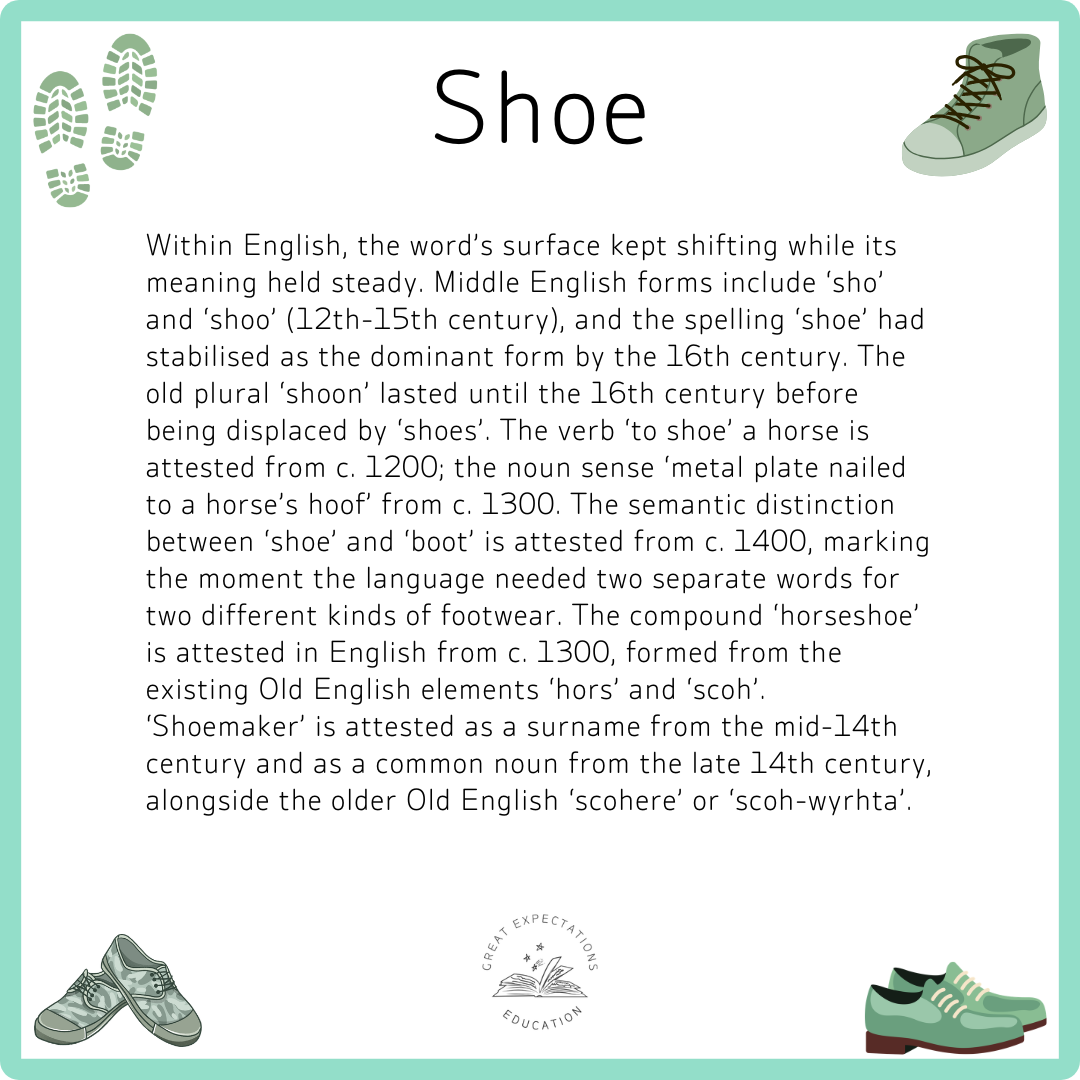
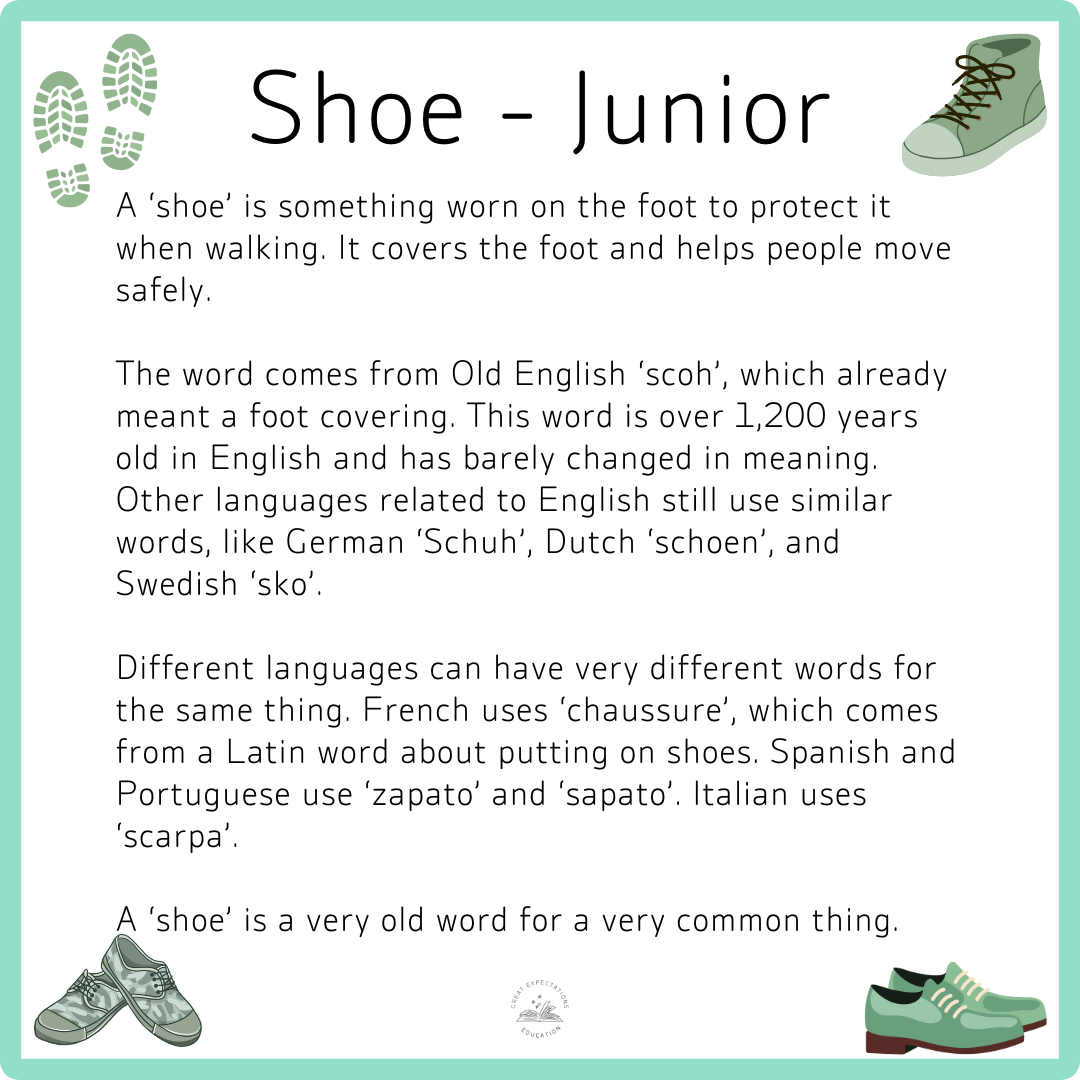
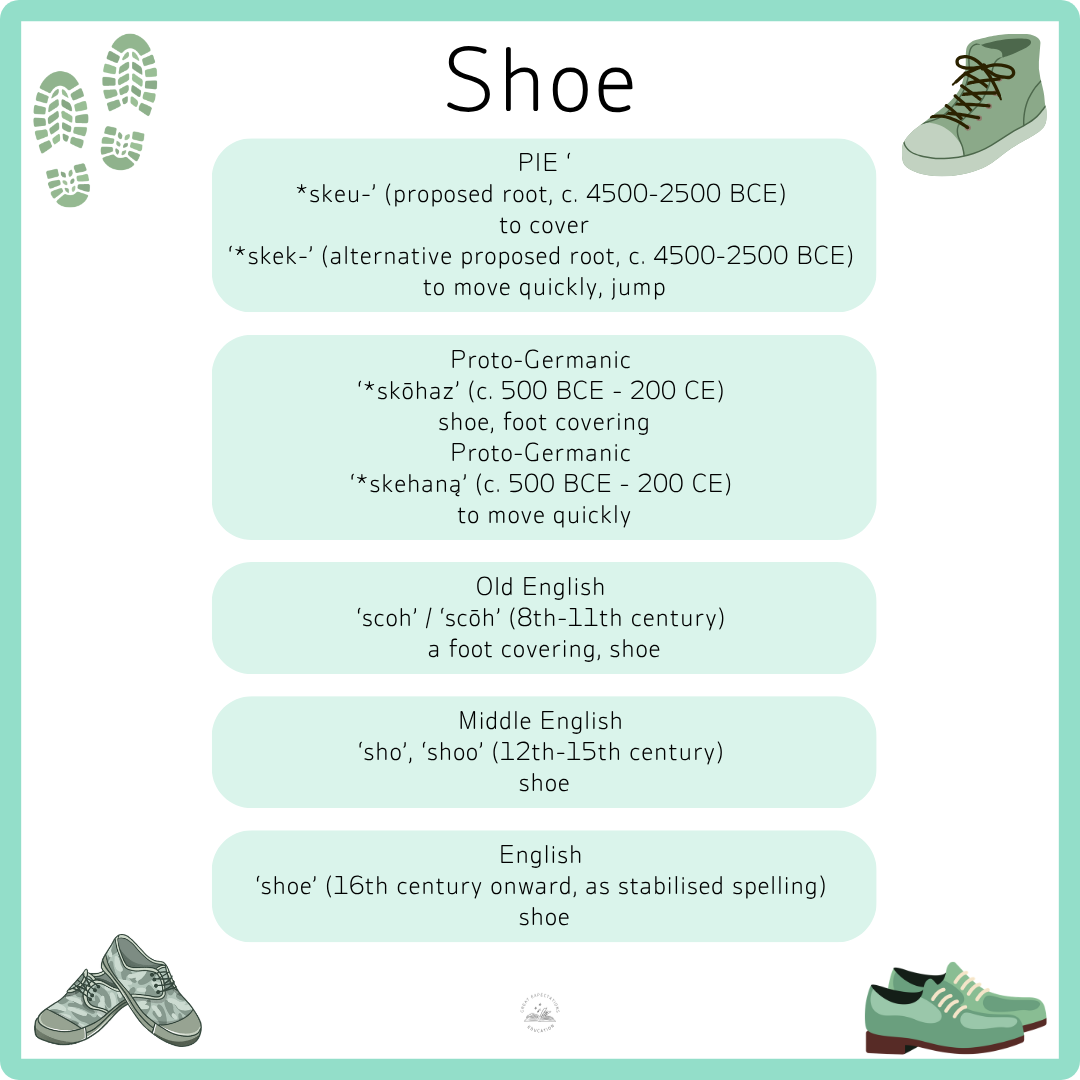
The story of the word turned out to be an interesting one. Not because anything dramatic has happened to it - the opposite. Old English ‘scoh’ meant a fitted covering for the foot. Modern English ‘shoe’ means a fitted covering for the foot. The spelling shifted through ‘sho’ and ‘shoo’ before settling, the plural was ‘shoon’ until it lapsed in the 16th century, the verb ‘to shoe’ a horse appears from c. 1200 - but the meaning held steady throughout. So did the sister-words across Germanic: German ‘Schuh’, Dutch ‘schoen’, Swedish ‘sko’, Danish ‘sko’, Norwegian ‘sko’, Icelandic ‘skór’. Each of them recognisable to the others, and to a speaker of Old English on hearing.
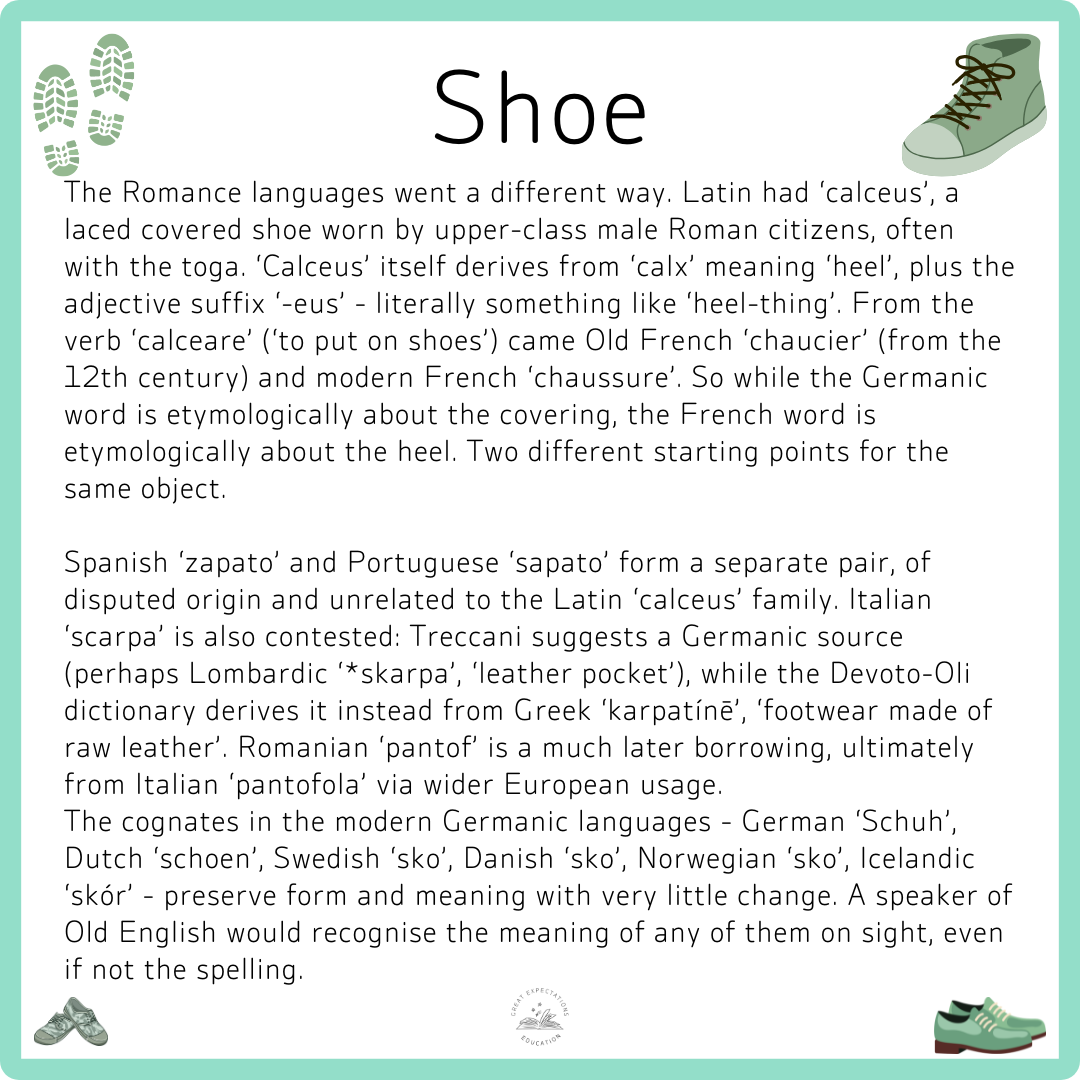
The Romance languages went a different way. Latin had ‘calceus’, a particular kind of laced shoe worn by upper-class male Roman citizens. The word itself comes from Latin ‘calx’ meaning ‘heel’. So while the Germanic word names the covering, the Latin word names the heel. Two starting points for the same object. French ‘chaussure’ descends from a verb ‘calceare’ meaning ‘to put on shoes’ - so the modern French word for footwear is etymologically about the act of putting it on, rather than the thing itself. Italian ‘scarpa’ has a contested origin (possibly Germanic, possibly Greek). Spanish ‘zapato’ and Portuguese ‘sapato’ have separate disputed origins, unrelated to the Latin family.
If you’ve come across the French word ‘seuil’ before, you might recognise a thread. ‘Seuil’ - the doorway threshold - comes from Latin ‘solea’, the sole of the foot or the shoe. ‘Calceus’ and ‘solea’ name different parts of the same object. The Romans had specific words for specific bits.
The full word card is below. The shoes I ordered yesterday should arrive tomorrow.