Seuil: the place where the foot lands
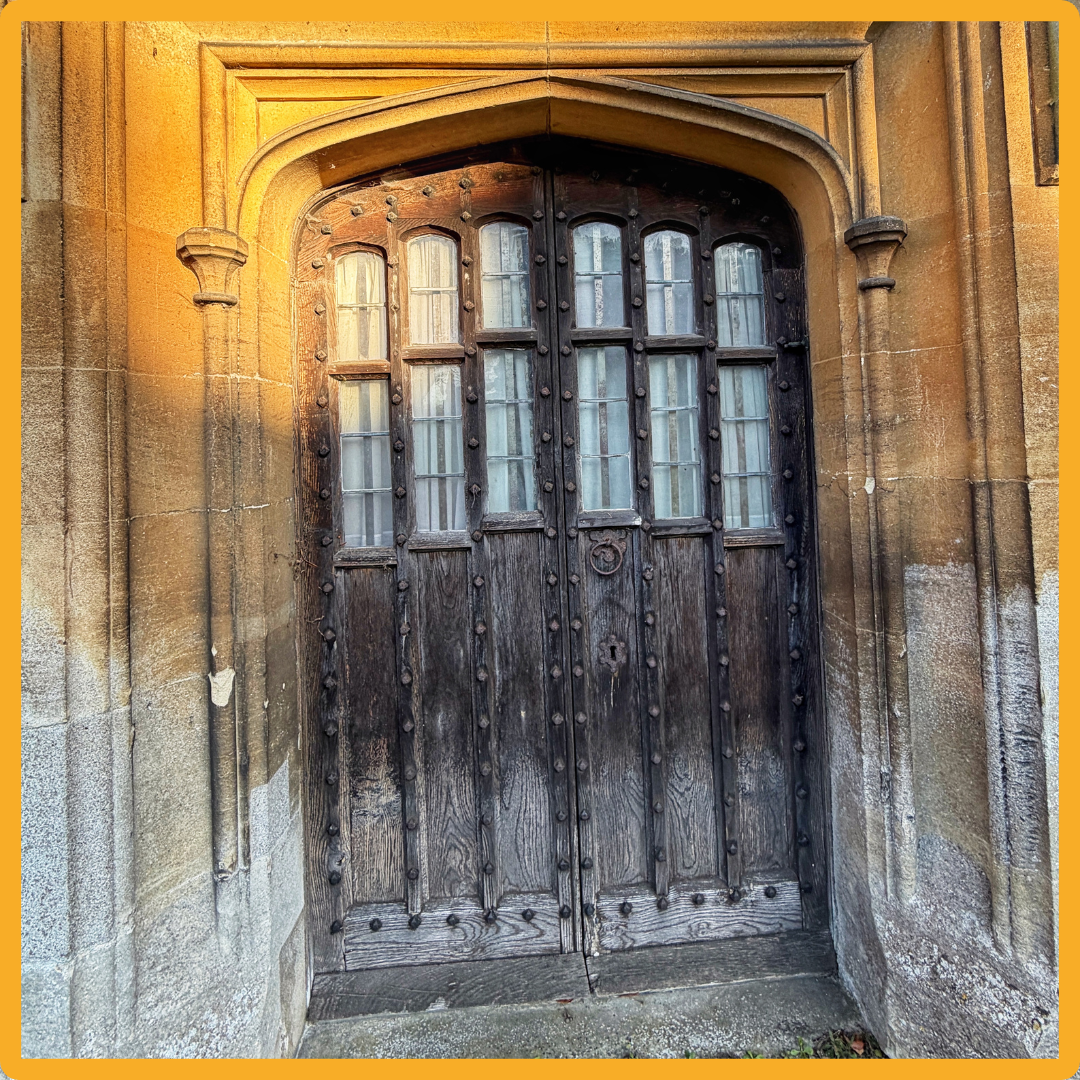
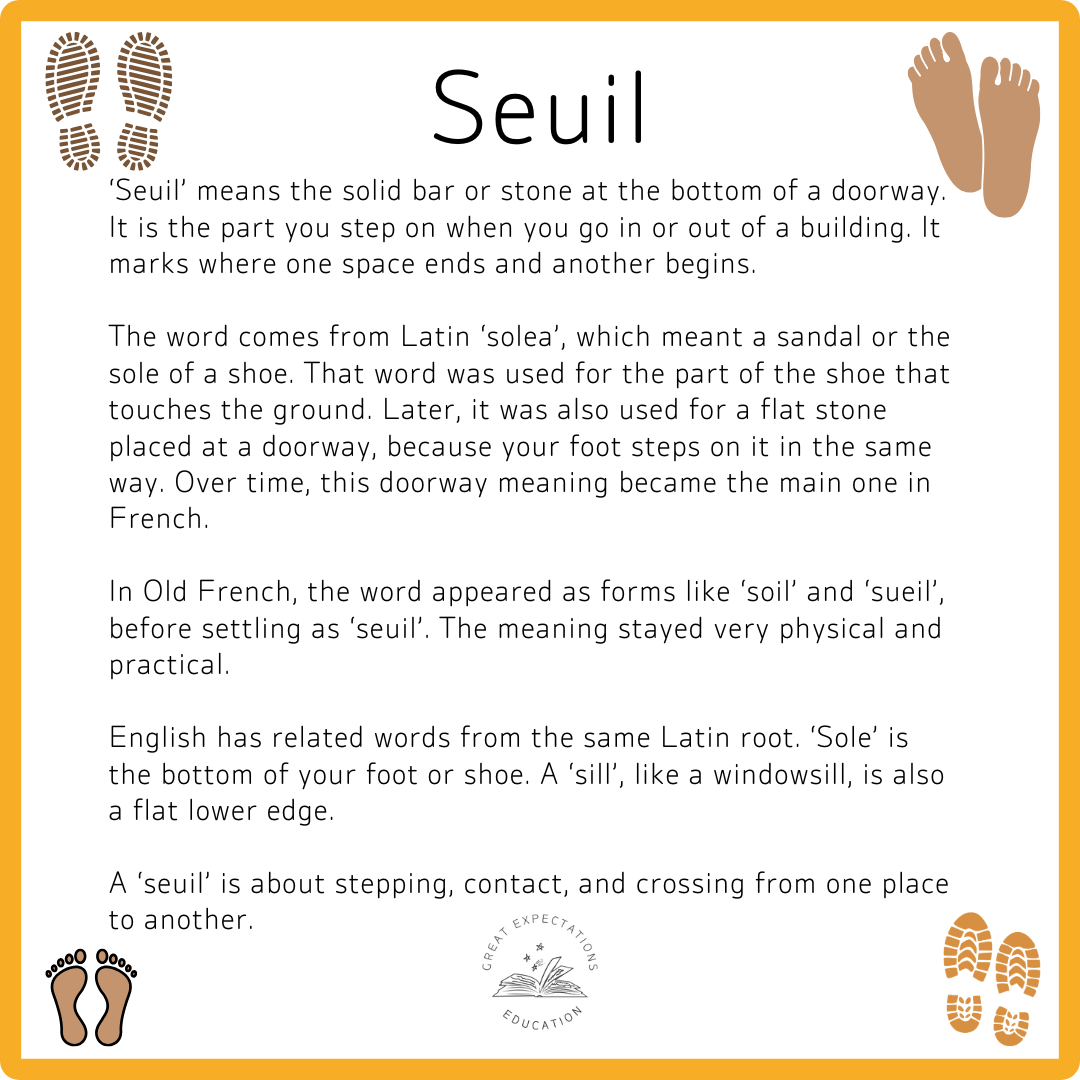
The French word ‘seuil’ names the fixed stone or bar at the bottom of a doorway. The part you step on as you go in or out. It is a practical word, tied to movement and contact rather than decoration or design.
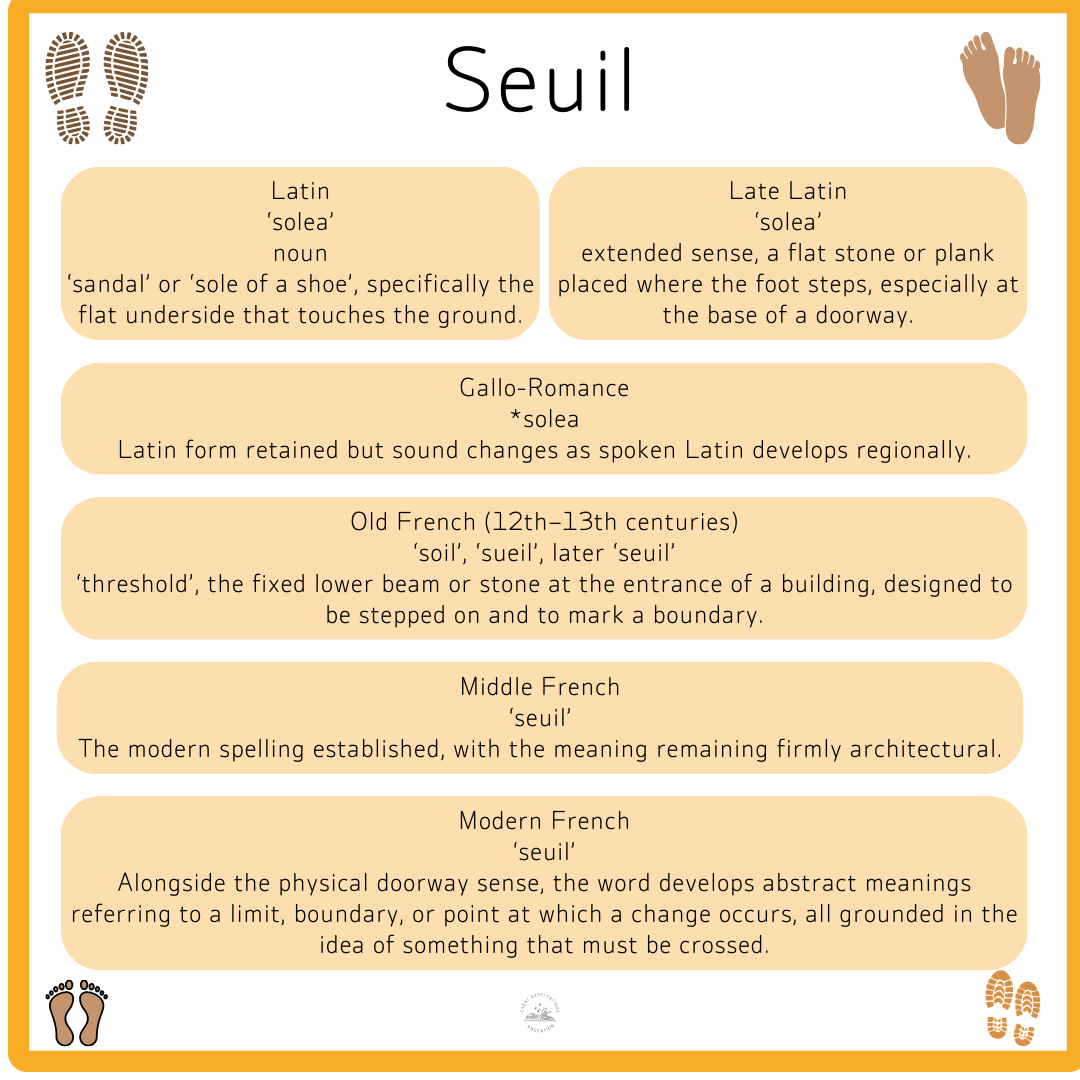
‘Seuil’ comes from Latin ‘solea’, meaning a sandal or the sole of a foot or shoe. From the beginning, the word is grounded in what the body does. The threshold is named not for the door, but for the moment when the sole makes contact with the ground at the point of entry. Historically, a ‘seuil’ is the surface that takes weight and wear as people cross from one space into another.
What makes ‘seuil’ such a useful word is its clarity. It does not describe the doorway, the frame, or the arch above. It names the lower edge that is crossed. Over time, French extended the word to mean a limit or point of change, but the physical sense remains central. Even abstract uses depend on the same idea: something is not yet crossed, then it is.
Like ‘poignée’, ‘seuil’ is a word shaped by the body. It reminds learners that French vocabulary often begins with function and physical experience. You step on a ‘seuil’. That action is the meaning.