Phare: from Pharos to headlamp
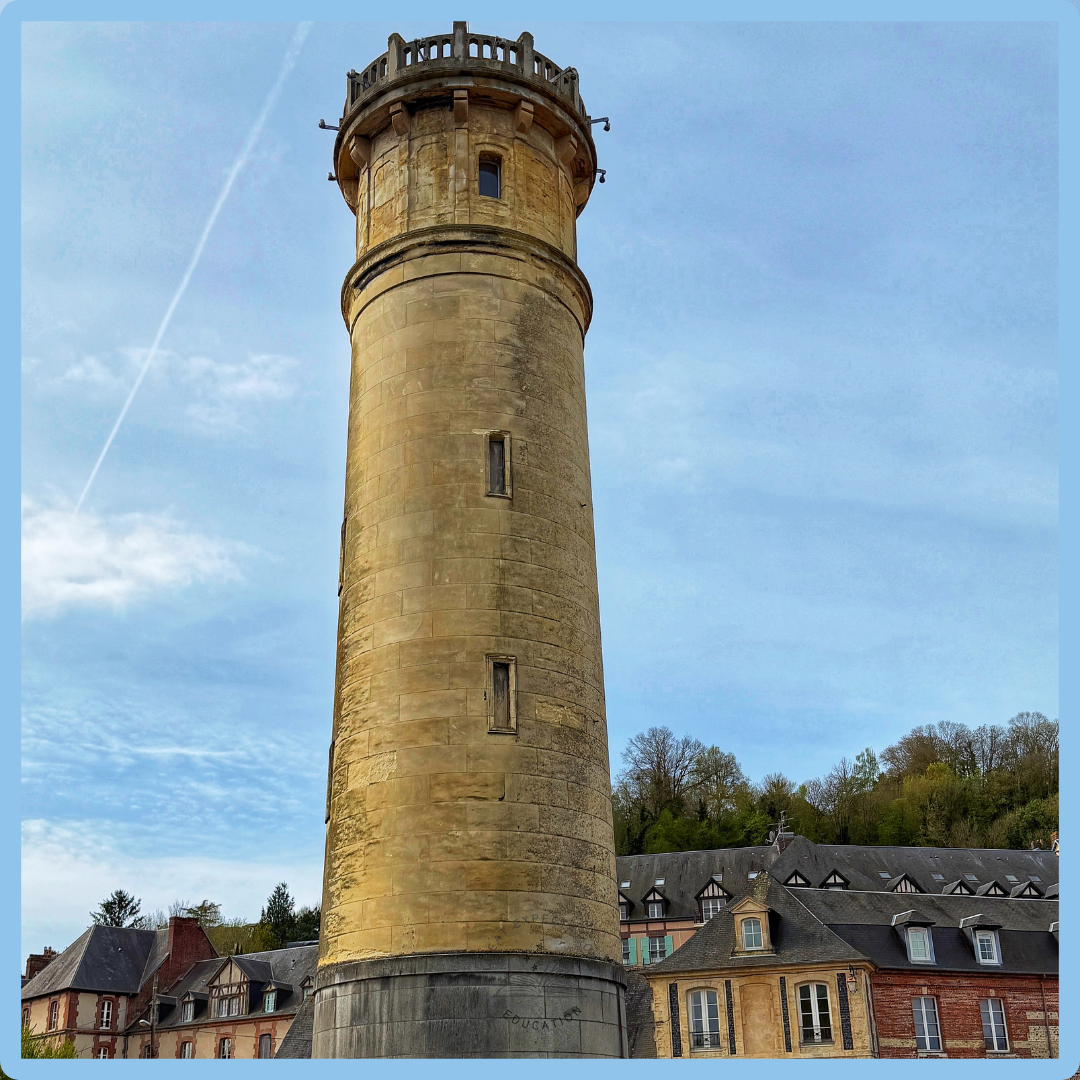
We were in Honfleur last week, staying near the Phare de l'Hôpital. We walked past it every day to get to the car park. It stands at the edge of the town now, in the middle of what could be a square, with houses behind it and the coast some distance ahead. It looks wrong - a lighthouse with no sea. But it was built in 1857 from Caen stone, on the edge of the Seine estuary, when the shoreline was not a fixed line but a shifting zone of tidal channels, mudflats and marshy ground. The lighthouse worked in alignment with the Phare de Fatouville across the estuary. Together, the two lights created a visual axis that guided ships past the Ratier sandbank. The system relied on clear sightlines across open water - which is why the lighthouse sat slightly set back, not on the waterline itself.
Over the following decades, the Seine's sediment and extensive engineering works pushed the navigable channel outward. The tidal edge moved. The lighthouse did not. By August 1908, changes in navigation had made it obsolete, and its light was extinguished for good. What had been a working maritime instrument became a landlocked monument.
I kept seeing the word everywhere. On road signs, on house names, on the tourist information board at the base of the tower itself. 'Phare' is one of those French words that feels self-contained. Masculine noun. Lighthouse. Car headlight. But of course I wondered where it came from straight away. That is how my mind works.
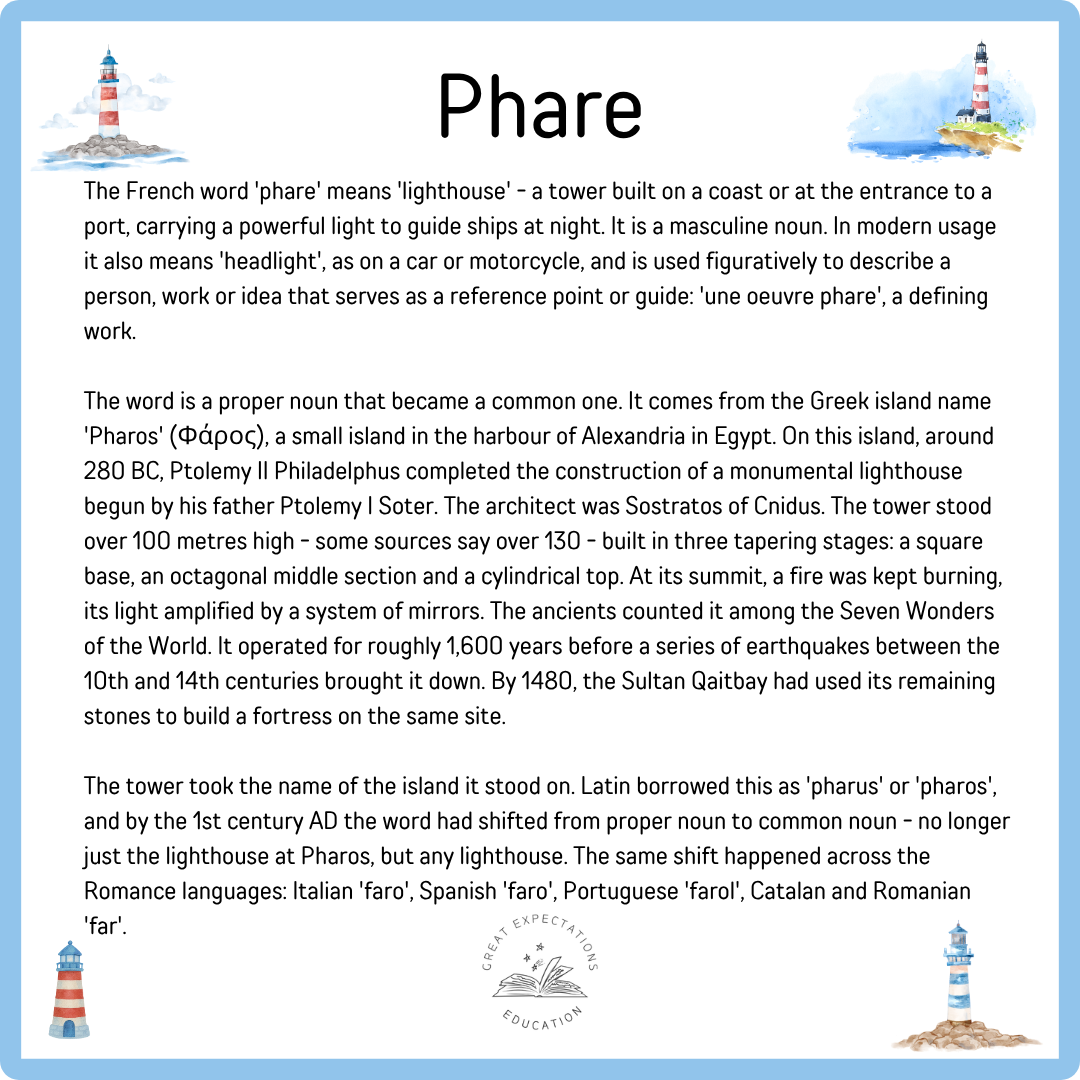
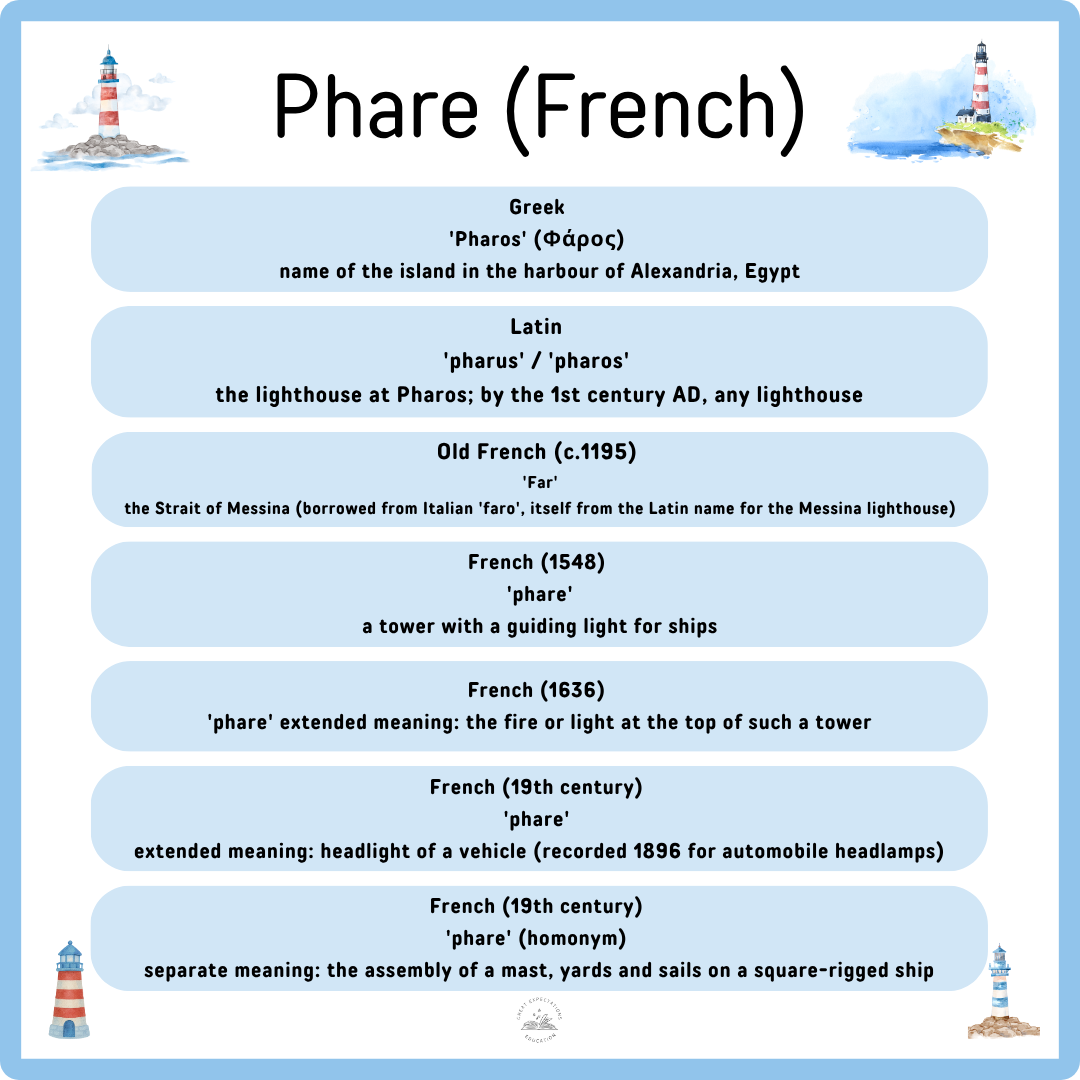
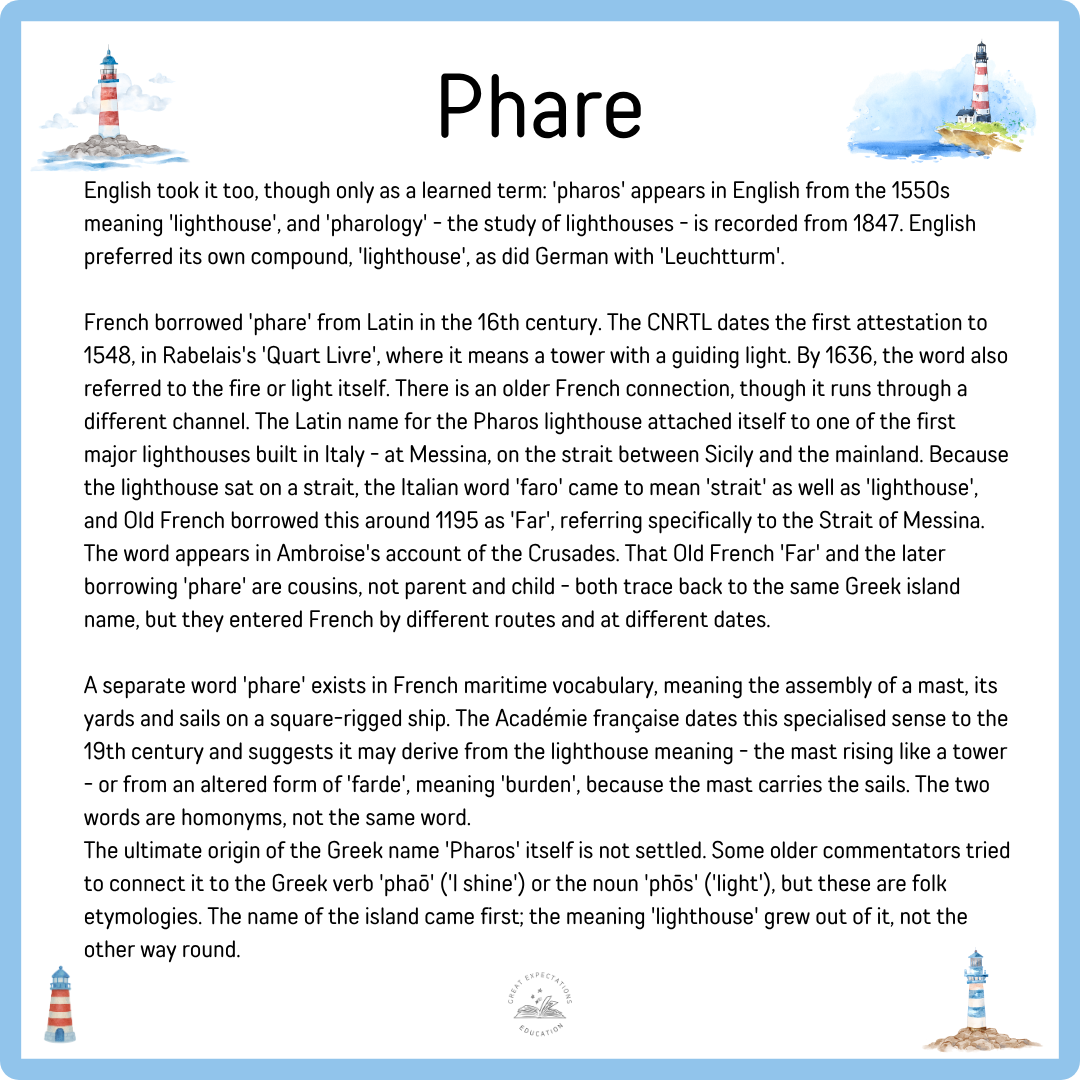
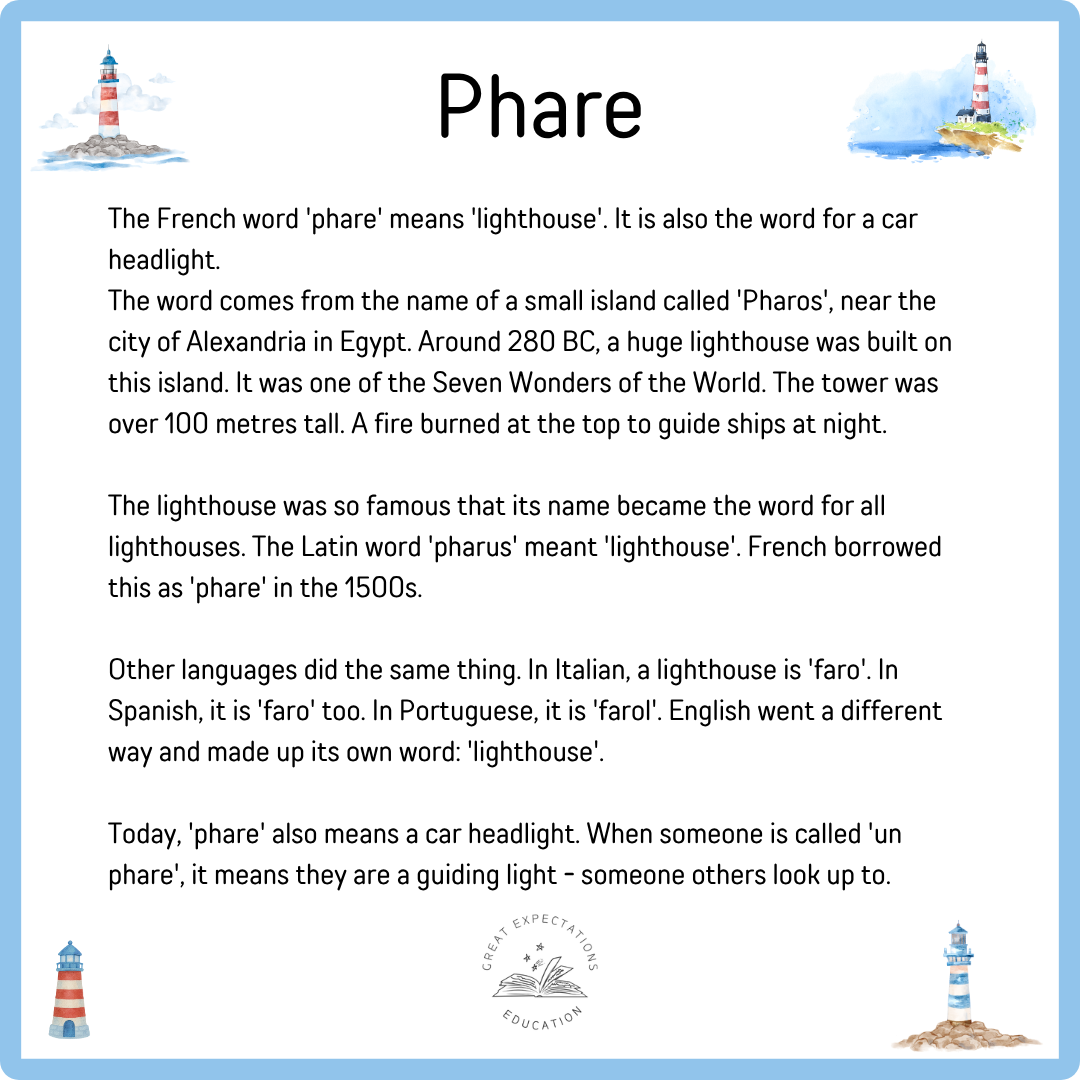
It is hiding a proper noun. 'Phare' traces back to the name of a small Greek island - and to a single building on that island that was so famous it stopped being a name and became a word. The full etymology, with its route through Latin and its unexpected older cousin in Old French, is in the word card below. So are the cognates that make 'phare' useful across Romance languages, which is part of why the word card sits in the Wordhord alongside 'seuil', 'clé' and 'volet'.
A word for a building that guides you. A building that outlasted the water that gave it purpose. And for those familiar with 'My Lighthouse' by Rend Collective - you're welcome for the earworm.