Crocus: the saffron thread beneath spring
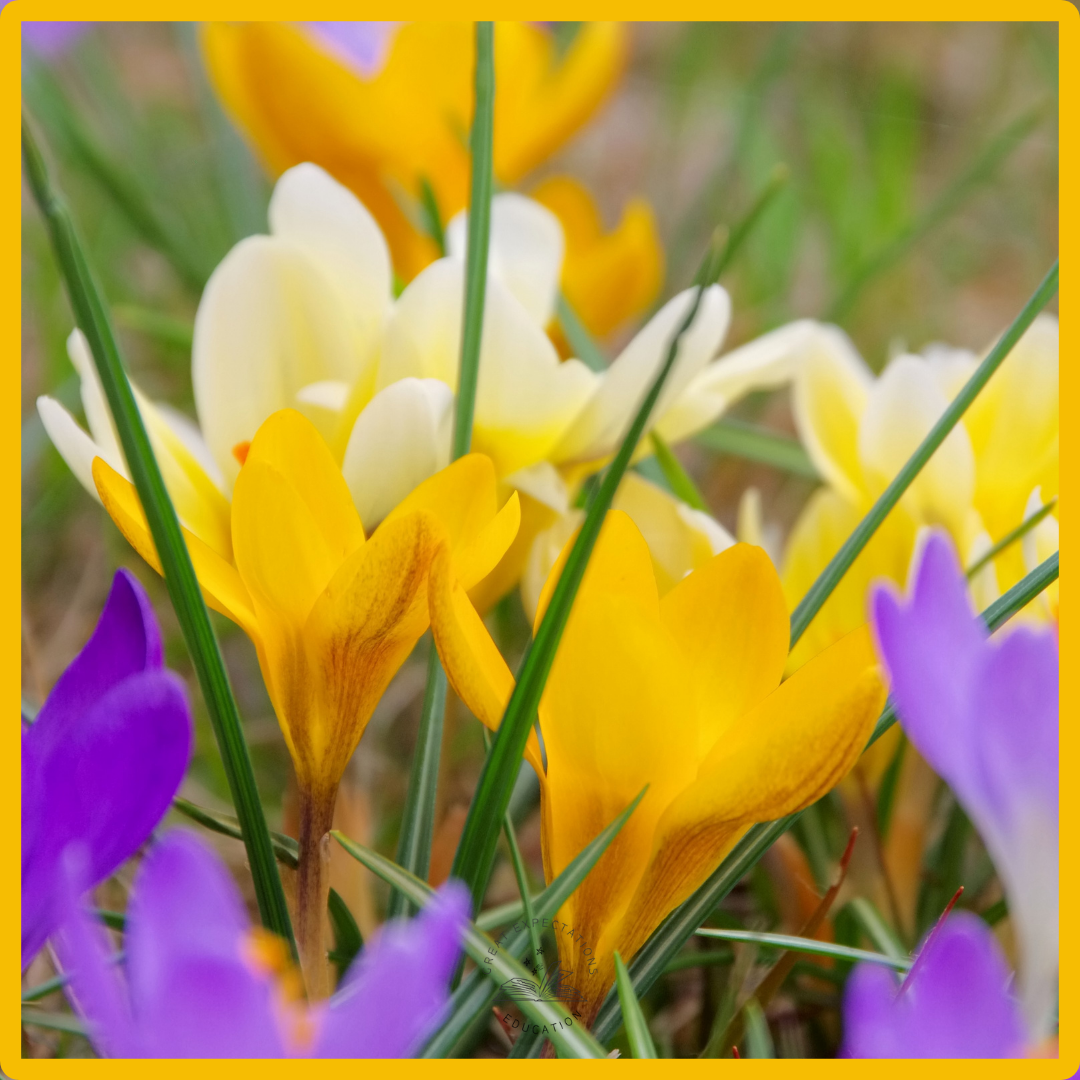
The crocuses are starting to appear in my garden. I hadn’t been looking for them. It has been so cold and wet that the ground felt reluctant to change. Then last weekend the village green shifted almost overnight. A scatter became a field.
At The Forge, when we talk about vocabulary, we often begin with noticing. Noticing what looks simple but is not. ‘Crocus’ feels straightforward. A small spring flower. A children’s painting subject. I had assumed it was one of those transparent English plant names, like ‘buttercup’, something built from familiar parts. It turns out it is not English in that way at all.
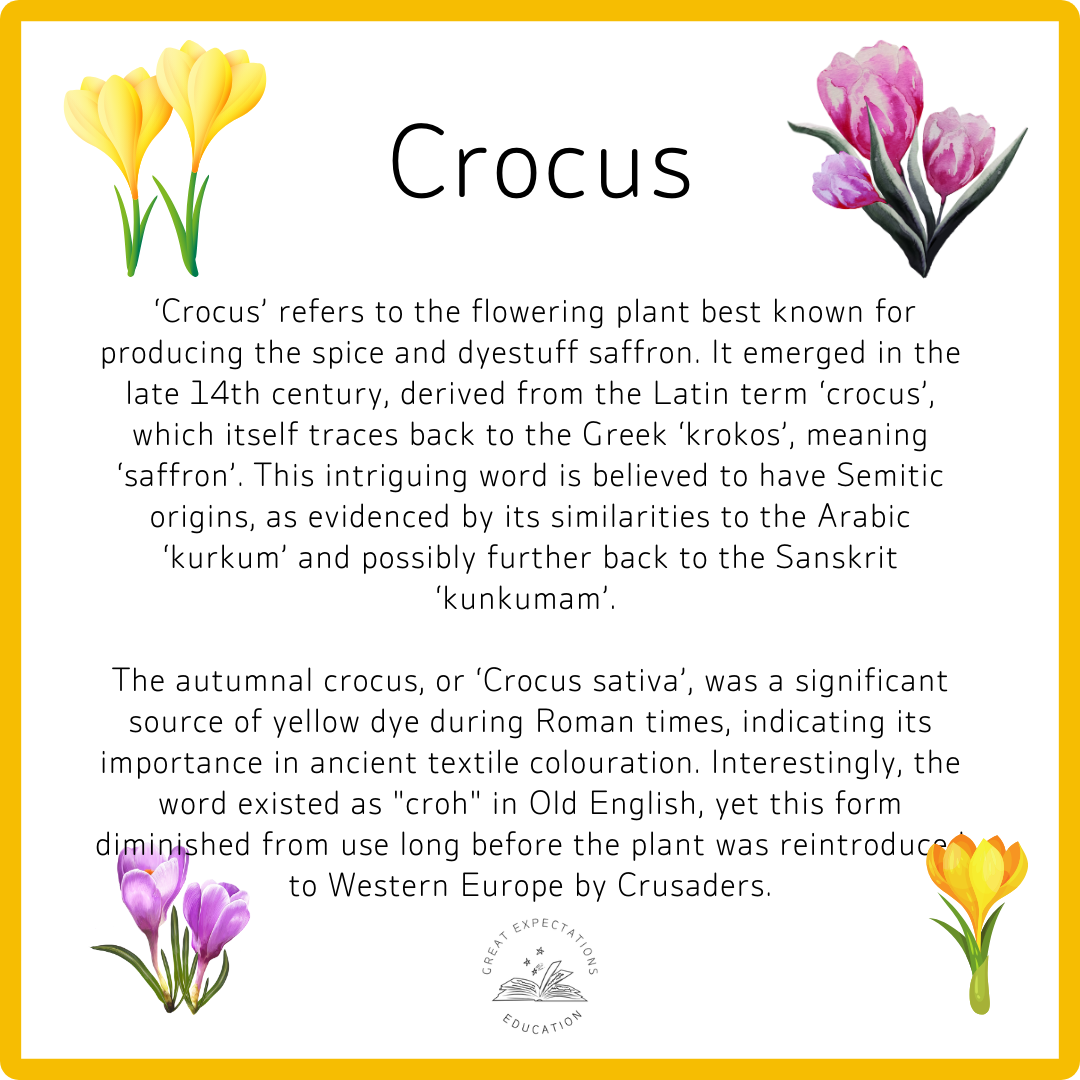
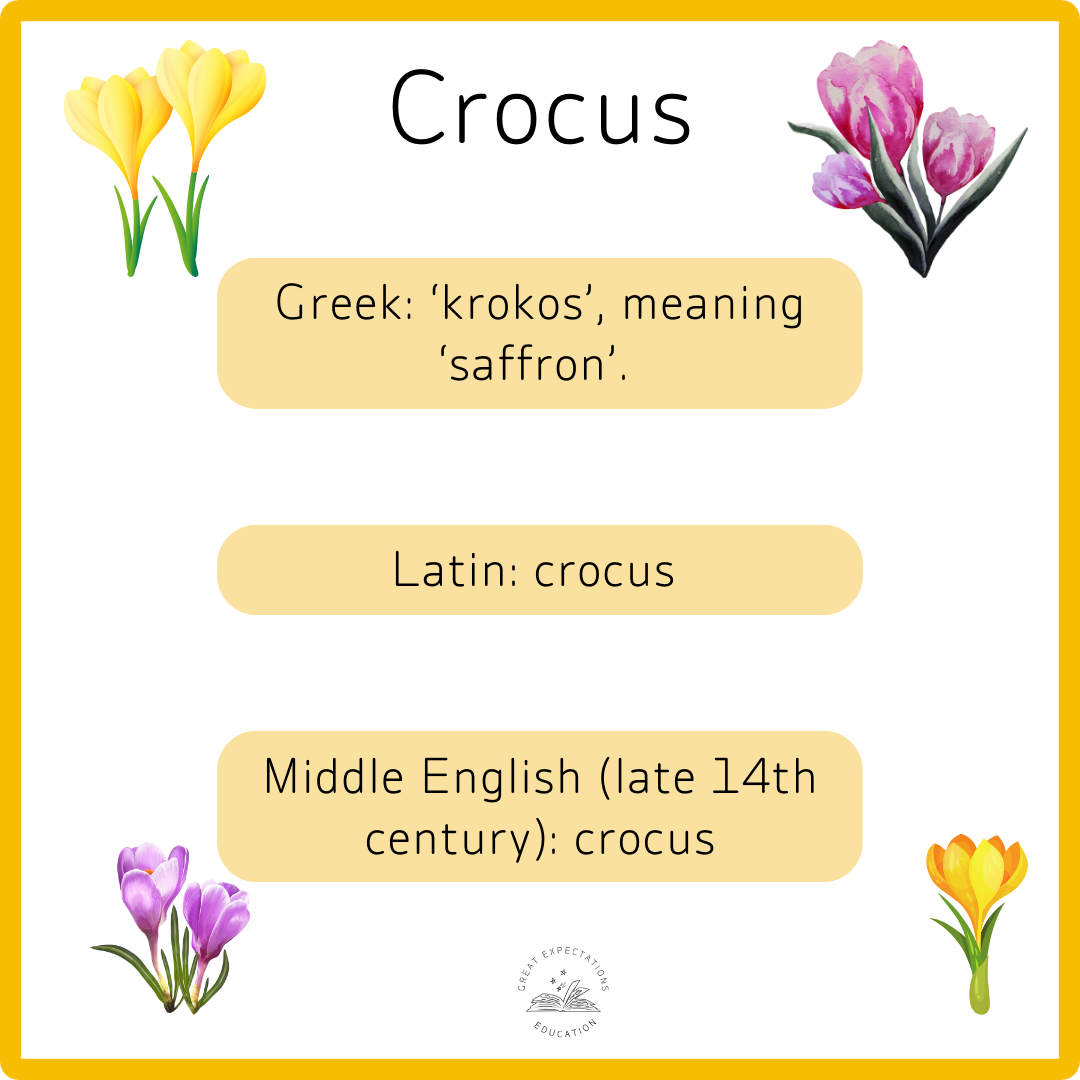
The word entered Middle English in the late fourteenth century as ‘crocus’, taken directly from Latin crocus, which itself comes from Greek krokos, meaning ‘saffron’. The flower and the spice share a name because they share a source. The autumn-flowering Crocus sativus produces the red stigmas that become saffron, once a dye and flavouring so valuable that it travelled along Mediterranean trade routes long before English lawns saw purple petals.
There may be an even deeper layer. Greek krokos is often linked to Semitic forms such as Arabic ‘kurkum’, referring to saffron or turmeric, and possibly further back to Sanskrit ‘kunkumam’, associated with red pigment. The thread is not perfectly straight, but the colour is consistent. Words for dyes move with merchants. They follow value.
Old English once had a related word, ‘croh’, meaning saffron. That form faded, and the cultivated plant itself seems to have disappeared from parts of Western Europe before being reintroduced in the medieval period. The modern ‘crocus’ is therefore not inherited from Old English but borrowed afresh, learned and carried across languages with very little alteration.
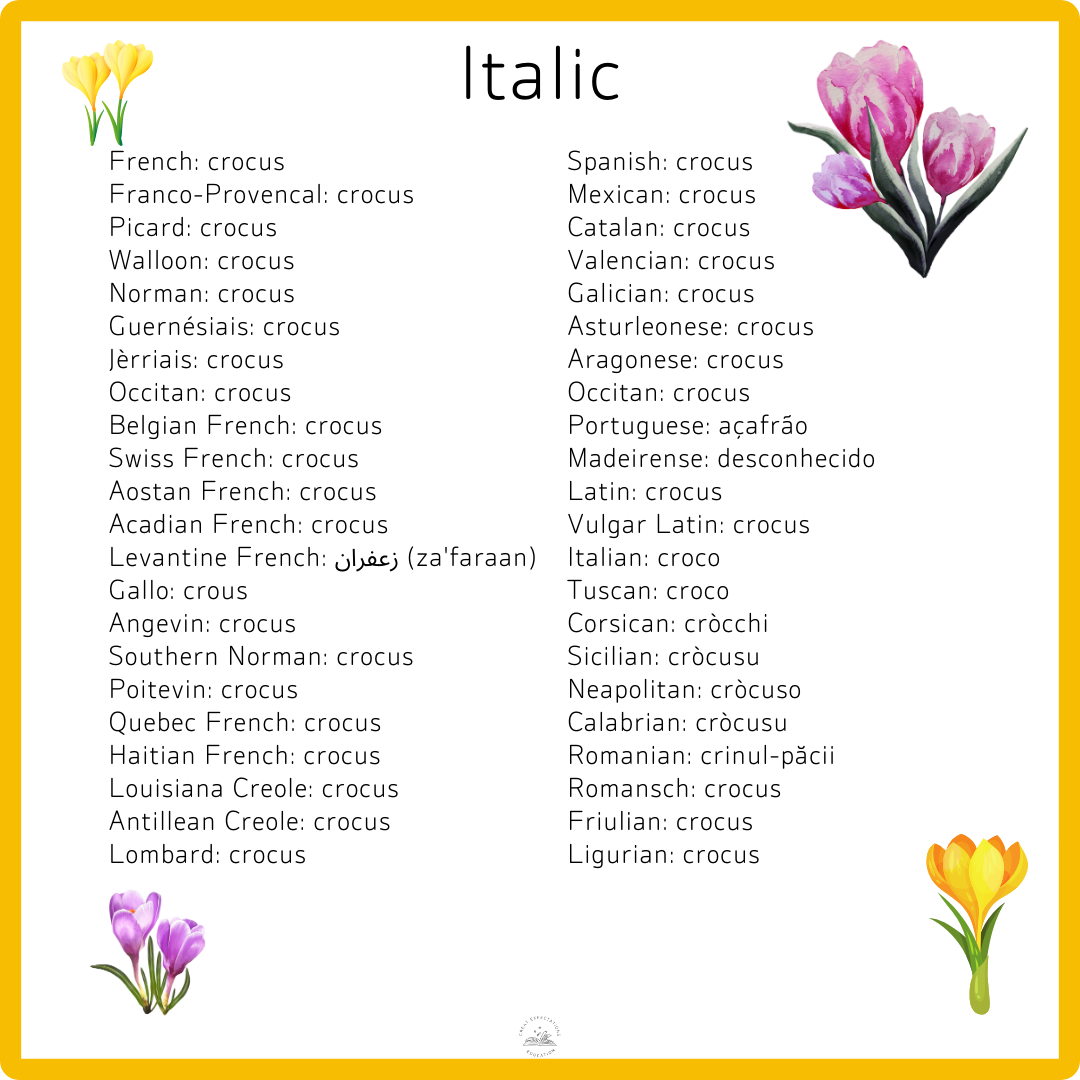
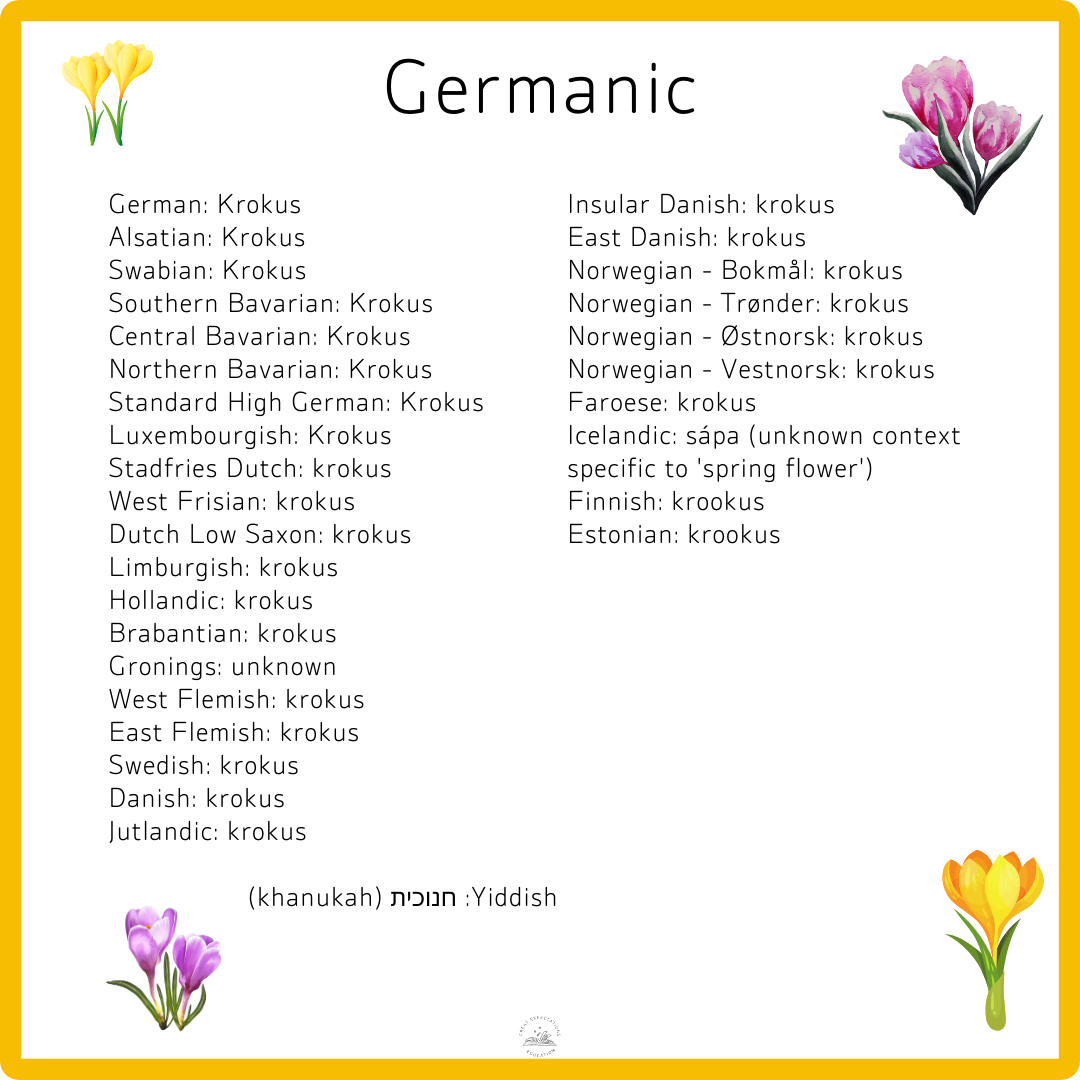
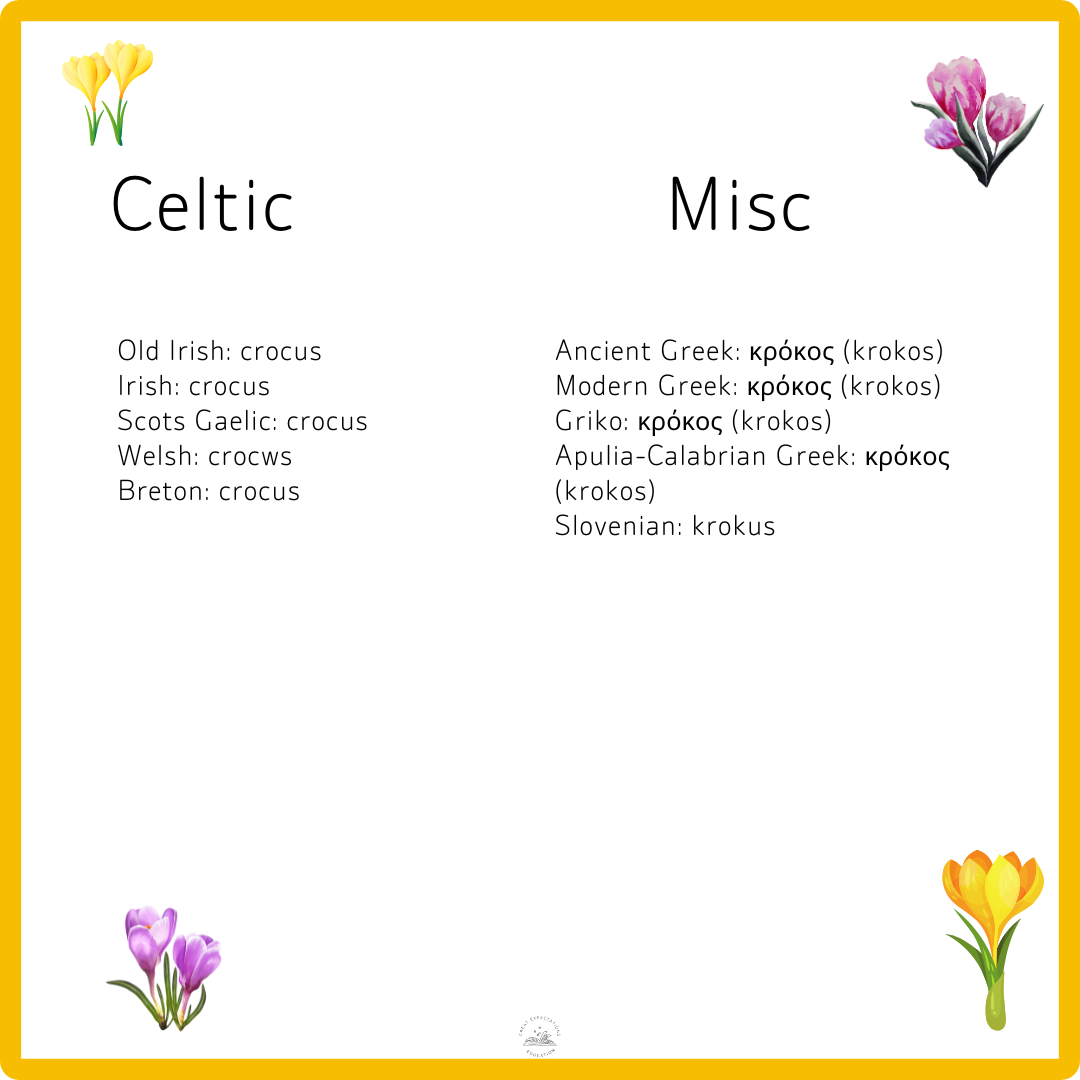
That stability is striking. French keeps ‘crocus’. German has ‘Krokus’. Dutch, Swedish, Danish, Norwegian: ‘krokus’. The consonant frame holds. Even in Modern Greek, krókos still names saffron. When students see that pattern, especially across English, French, and German, something shifts. Borrowed botanical terms often resist internal analysis. They do not decompose into familiar morphemes. They must be learned as whole units, but cross-linguistic parallels provide anchors. This distinction, between opaque borrowings and native compounds like ‘buttercup’, is explored further in the comparative root and vocabulary materials in The Forge.
I had been thinking of crocuses as spring’s first colour. That is true enough. But etymologically they belong just as much to markets and dye vats as to village greens. They sit alongside ‘spice’ in the Wordhord archive, part of the same Mediterranean web of trade and cultivation. They also cluster naturally with ‘Primrose’ and ‘Daffodil’, early bloomers whose names carry different linguistic stories altogether.