Every time someone calls a wet Monday 'dismal', they're using a scrap of medieval superstition without knowing it.
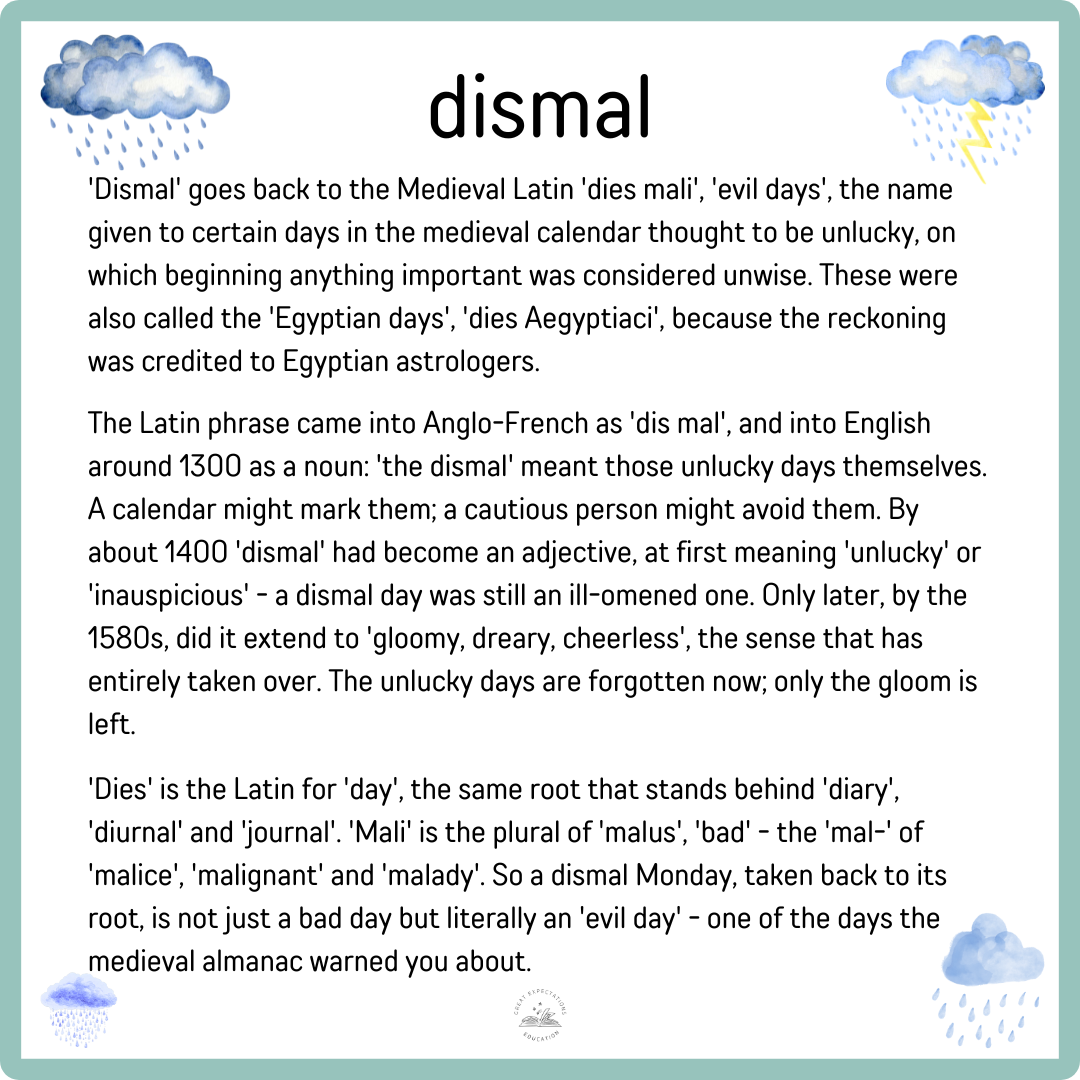
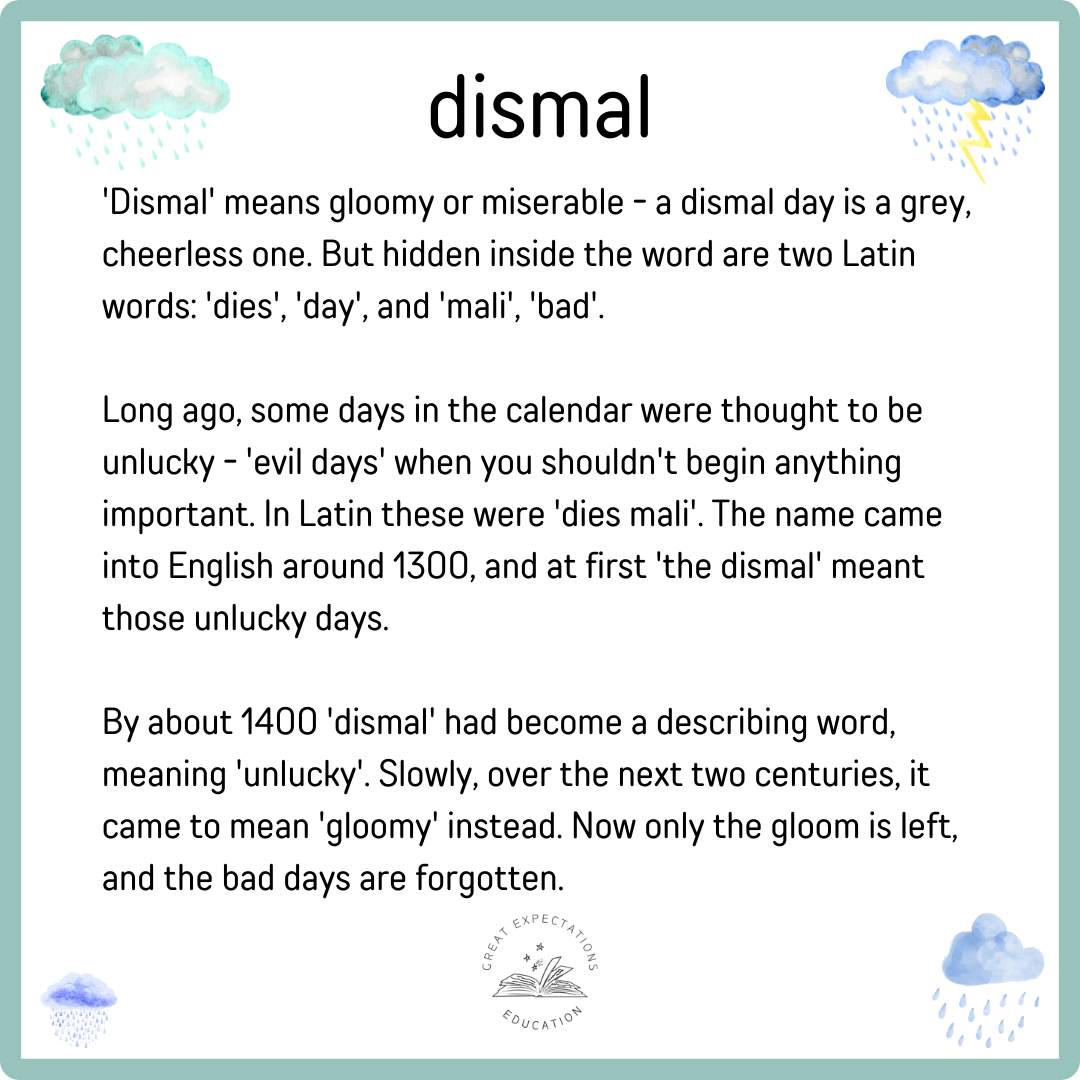
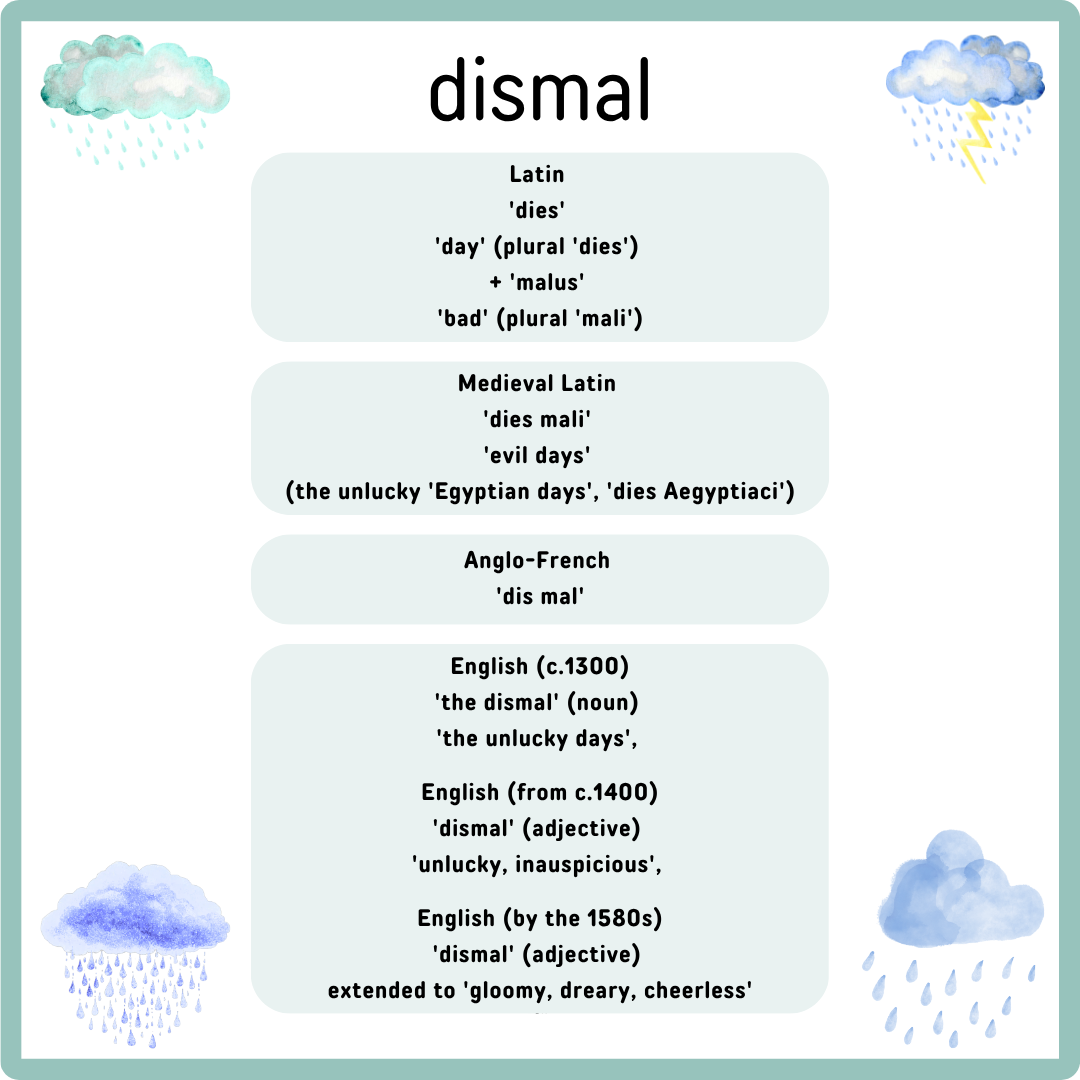
'Dismal' comes from the Latin 'dies mali', 'evil days' - and those weren't just any bad days. Medieval calendars marked out certain days each year as unlucky, days on which beginning anything important was considered unwise. They were sometimes called the 'Egyptian days', because the tradition was fathered onto Egyptian astrologers. The phrase came into English around 1300, and for a while 'the dismal' meant exactly those marked days on the calendar.
What I find striking is how completely the original meaning has evaporated. By 1400 the word had become an adjective, still meaning 'unlucky'; and over the next two centuries it drifted from naming an ill-omened day to describing how a day felt, the superstition underneath it simply dissolving. Nobody using 'dismal' now is thinking about almanacs or Egyptian astrology. The word outlived the belief that made it - which is one of the stranger ways language works: a whole world-view can collapse and leave a single common adjective standing where it used to be.
I like these words for teaching because they carry a small history lesson inside a familiar shell. A child already knows what 'dismal' means; showing them the 'evil days' inside it turns a plain vocabulary word into a door.
It belongs in the wider 'dies' family - the Latin for 'day' - alongside 'diary' and 'diurnal', and, by way of French, 'journal' and 'journey'. Those free English cards are in the Wordhord, the everyday French words from the same root are all through L'atelier des mots, and there's a Compendium post on why word origins help so much with modern languages, dyslexic learners especially.