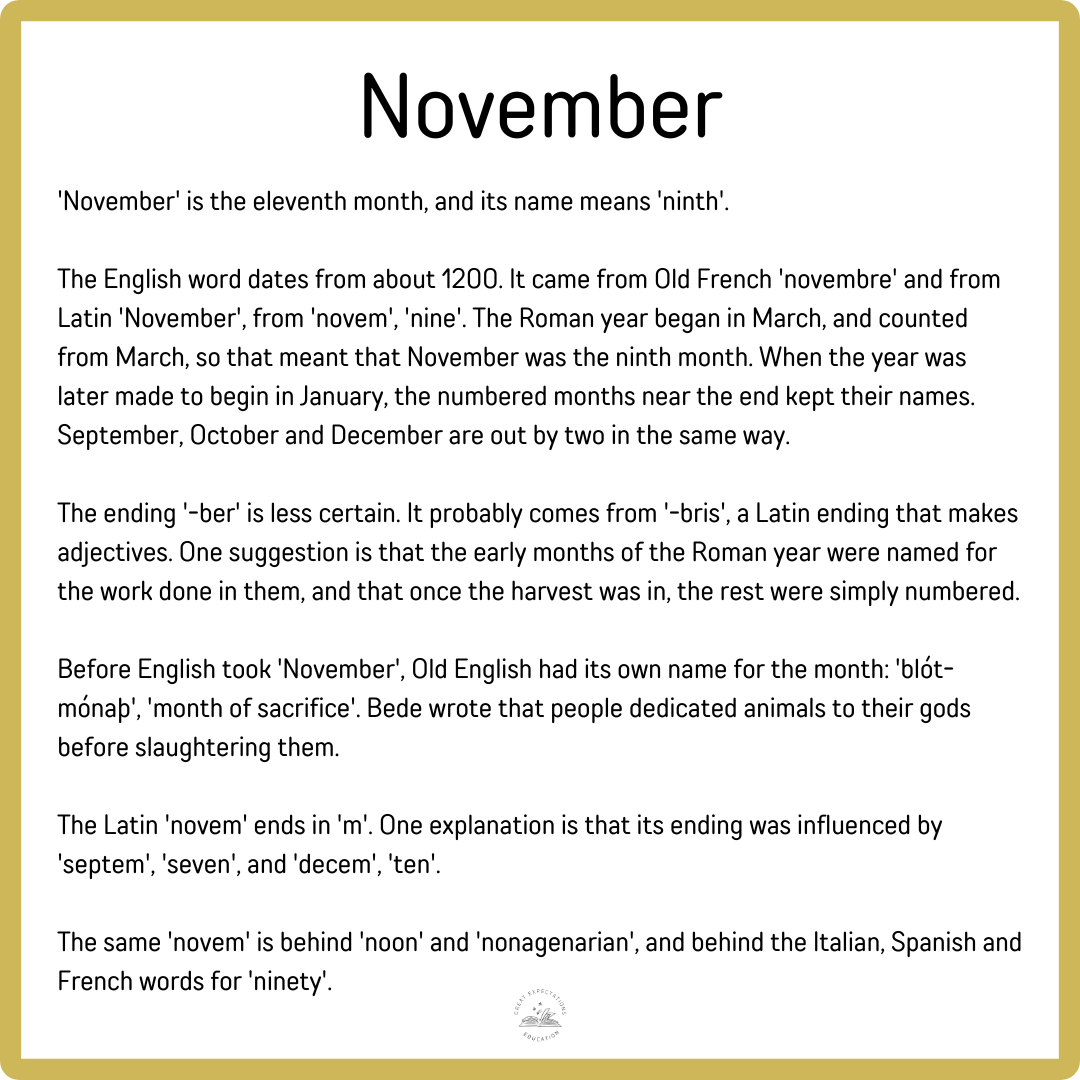
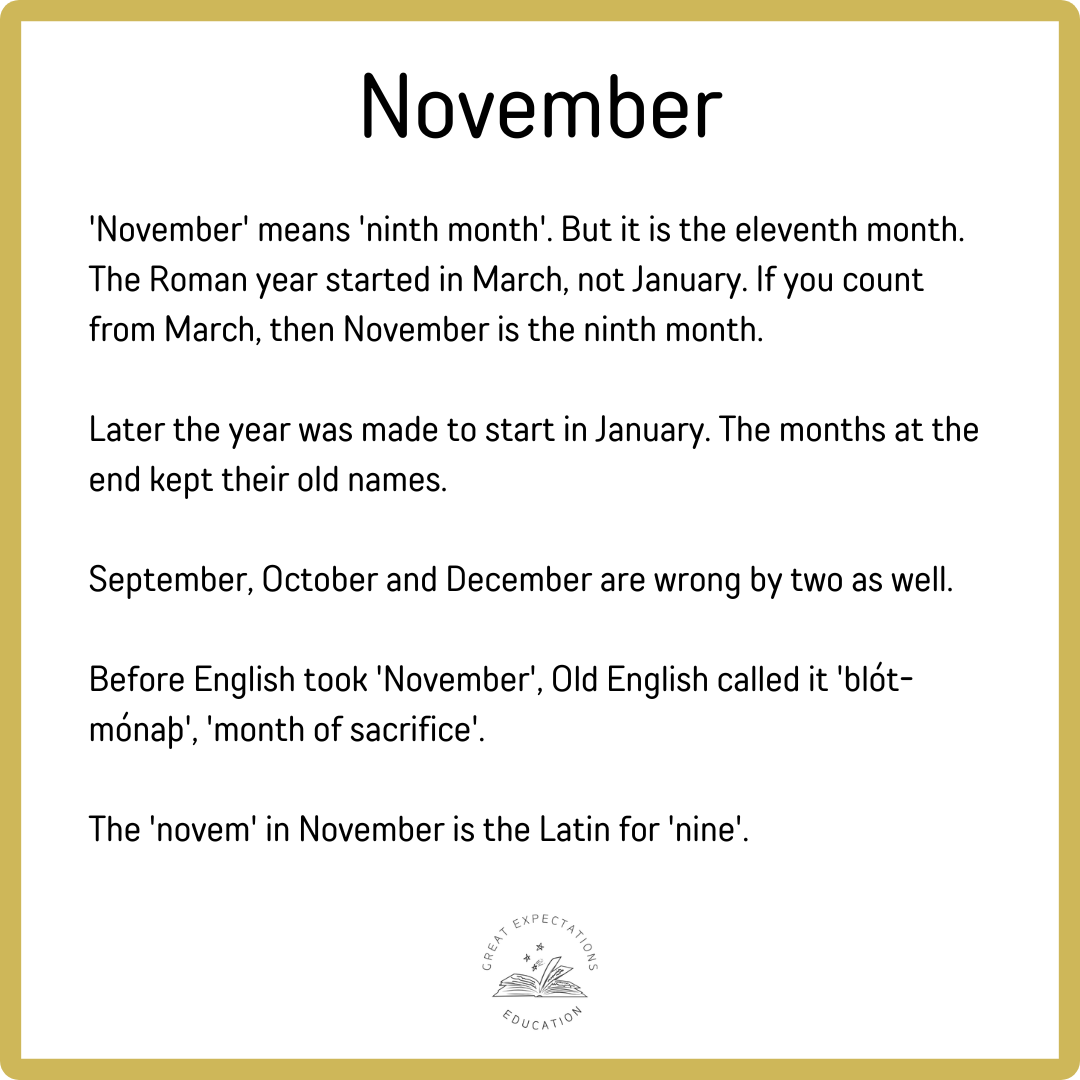
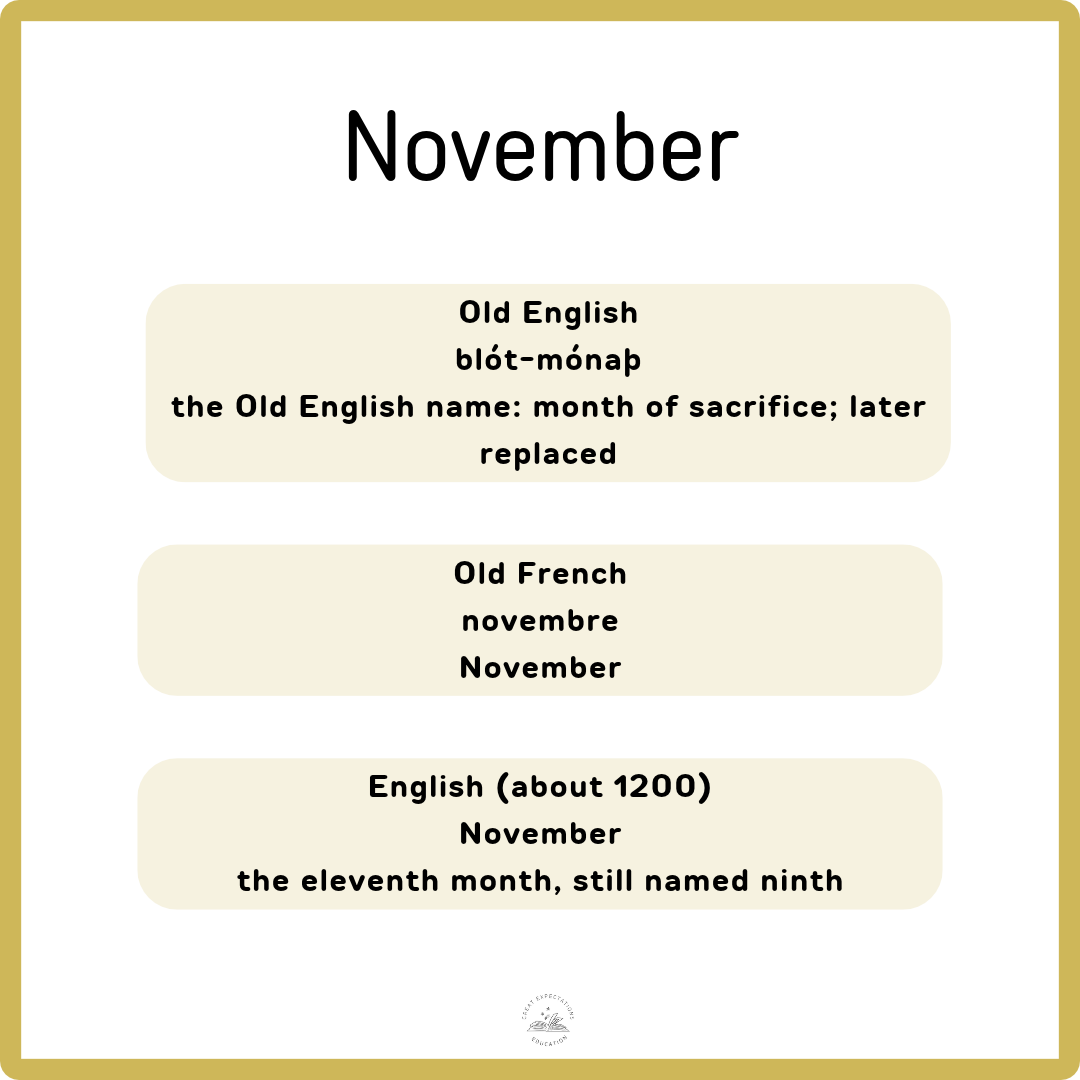
Before English had 'November', it called the month 'blót-mónaþ', the month of sacrifice. Bede wrote that at this time of year people dedicated their animals to their gods before slaughtering them.
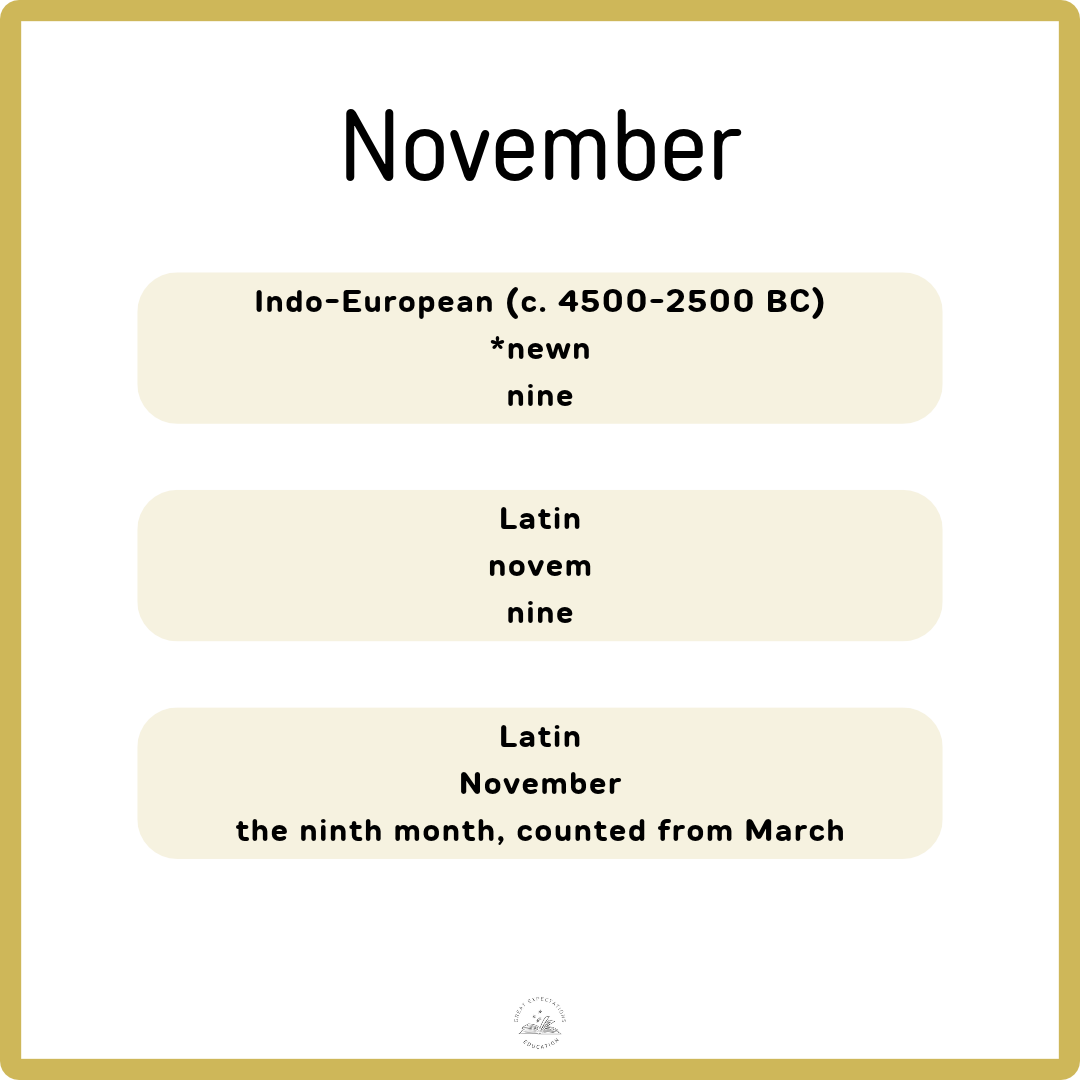
That's a different way of naming a month from the one English ended up with. The Old English name says what people did. The Latin name is a number in a list: 'November', the ninth month counting from March.
The Latin name arrived in English around 1200, through Old French 'novembre' and straight from Latin as well. From then on English used the number, and it kept using the number after the year had been reorganised to start in January, which is why the ninth month now comes eleventh.
Much later, the first French Republic gave the months new names, and the old November fell partly in a month it called 'Brumaire' and partly in one called 'Frimaire'. 'Brumaire' derived from the French word brume, meaning ‘mist’ or ‘fog’, reflecting the foggy weather common in France during autumn. frimas is an Old French word referring to a heavy frost, hoarfrost, or freezing mist. These words were officially used in France from late 1793 until the end of 1805.
The 'novem' at the front of 'November' ends in 'm'. One explanation is that it took that ending from 'septem', 'seven', and 'decem', 'ten', the numbers either side of it.
The same 'novem' is behind the Italian 'novanta', the Spanish 'noventa' and the French 'nonante', all meaning 'ninety', and each has its own resource in L'Officina Radice, El Taller Raíz and L'atelier des mots. The Wordhord cards for 'noon' and 'nonagenarian' are on the same Latin 'novem'.