I'd always half-assumed 'whilst' was the older, grander form and 'while' the worn-down everyday one. It's the other way round: 'while' is the original, and the 't' on 'whilst' was added around 1400. No older form of the word has it.
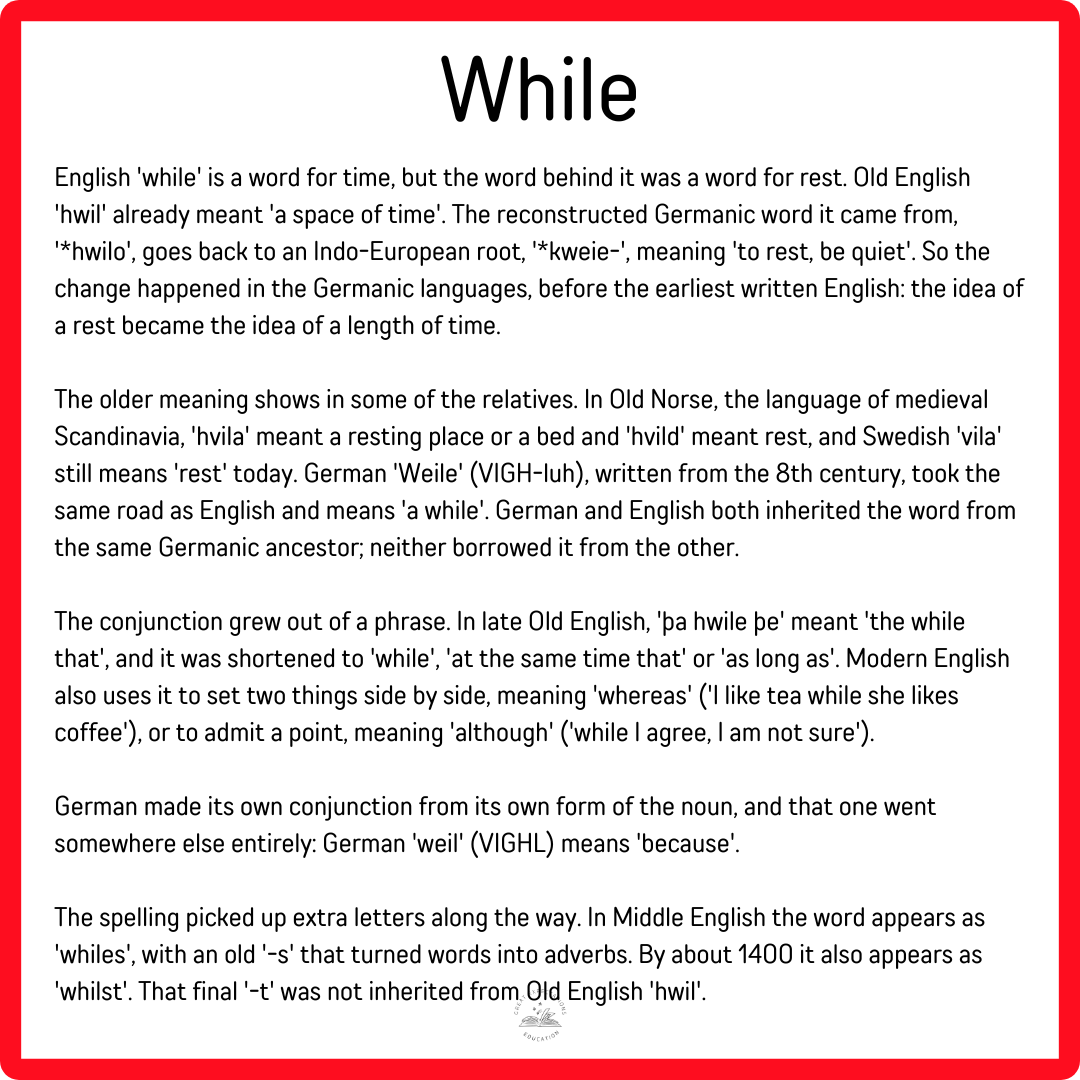
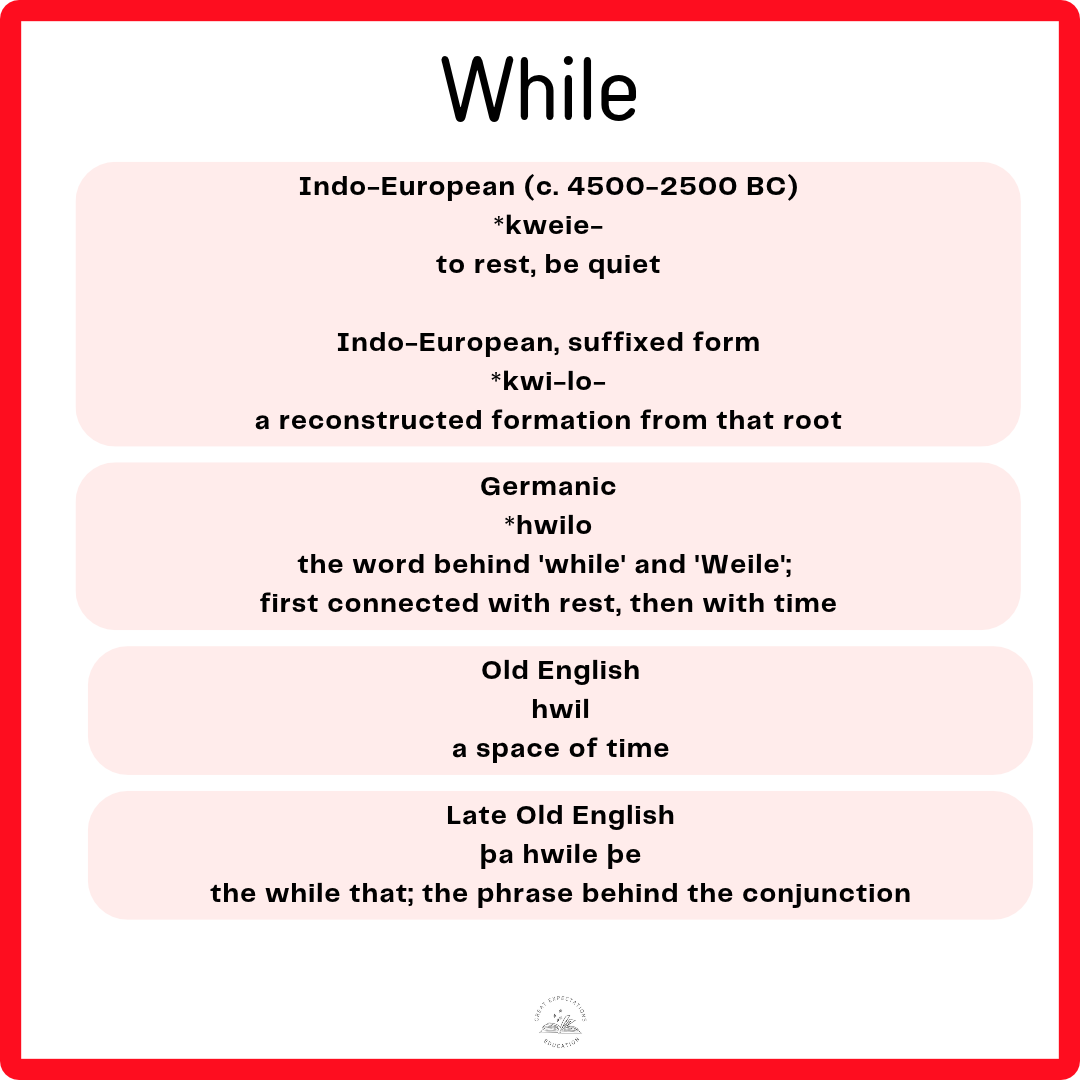
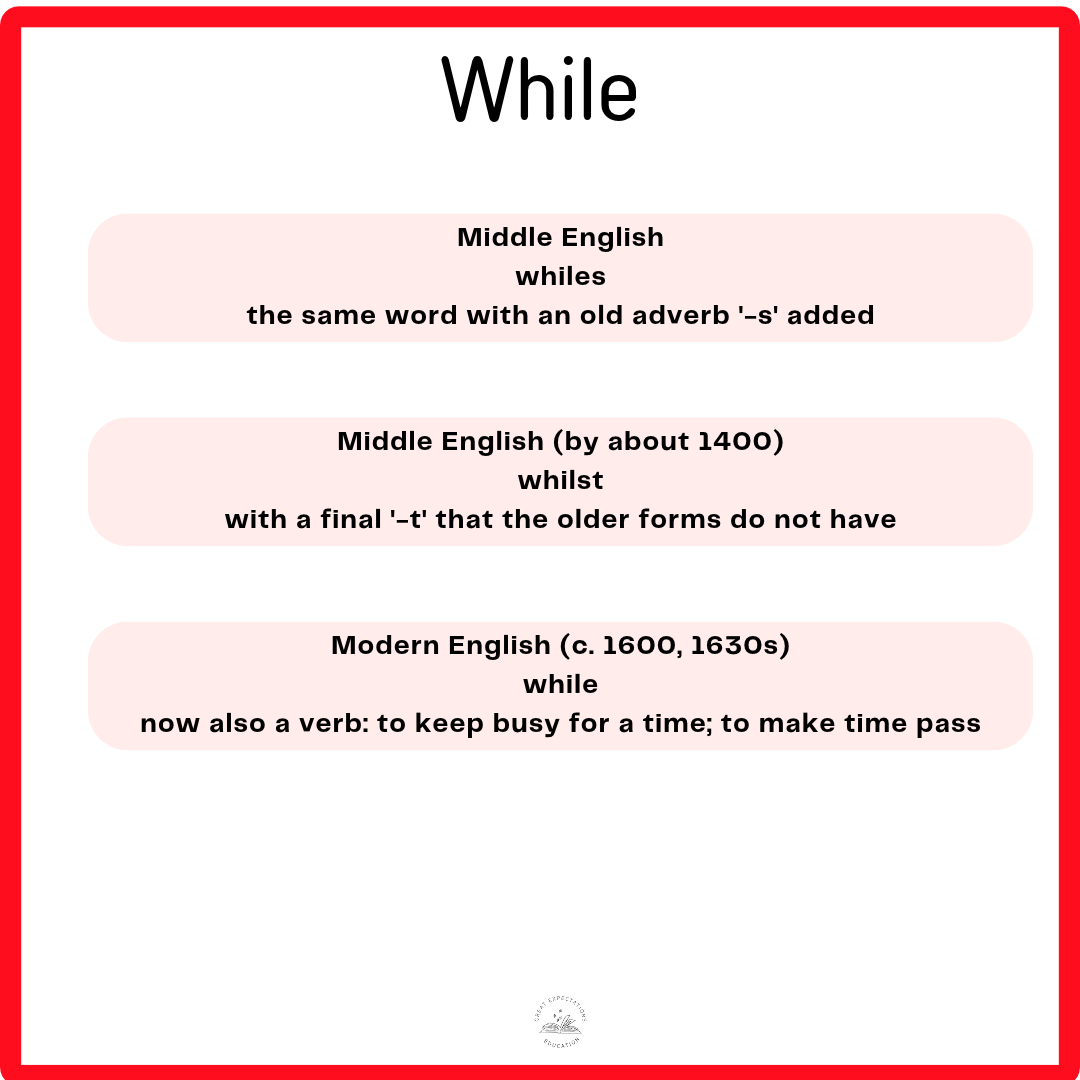
Old English had a noun, 'hwil', a space of time, and a phrase built on it, 'þa hwile þe', 'the while that'. The phrase shrank to 'while', the conjunction we still use for two things happening at once. In Middle English the word also turns up with an '-s' on the end, as 'whiles'. That '-s' was an old way of turning a word into an adverb, a word that tells you when or how something happens.
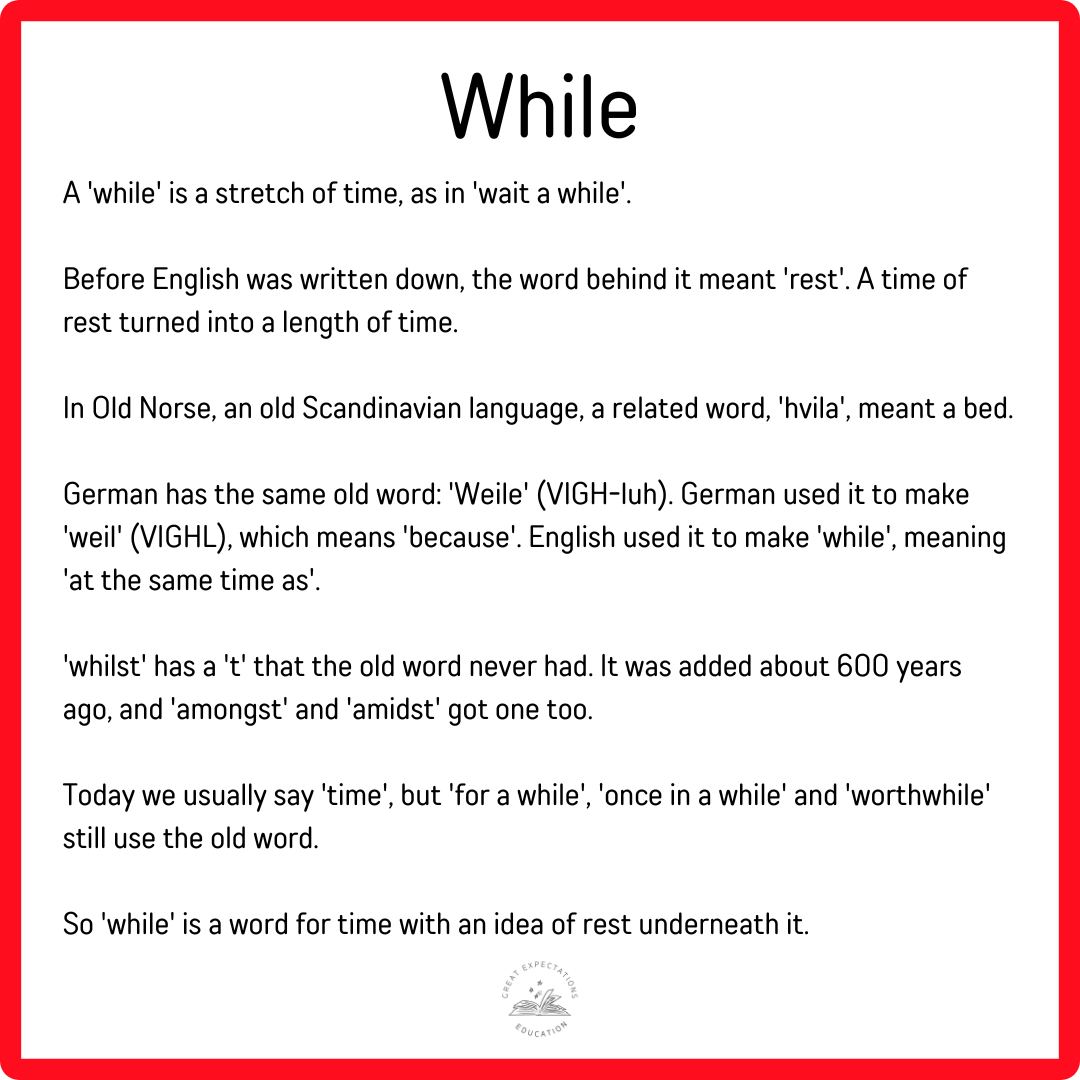
Then, by about 1400, 'whiles' became 'whilst'. Old English 'hwil' has no 't', and neither has its German cousin, 'Weile' (VIGH-luh).
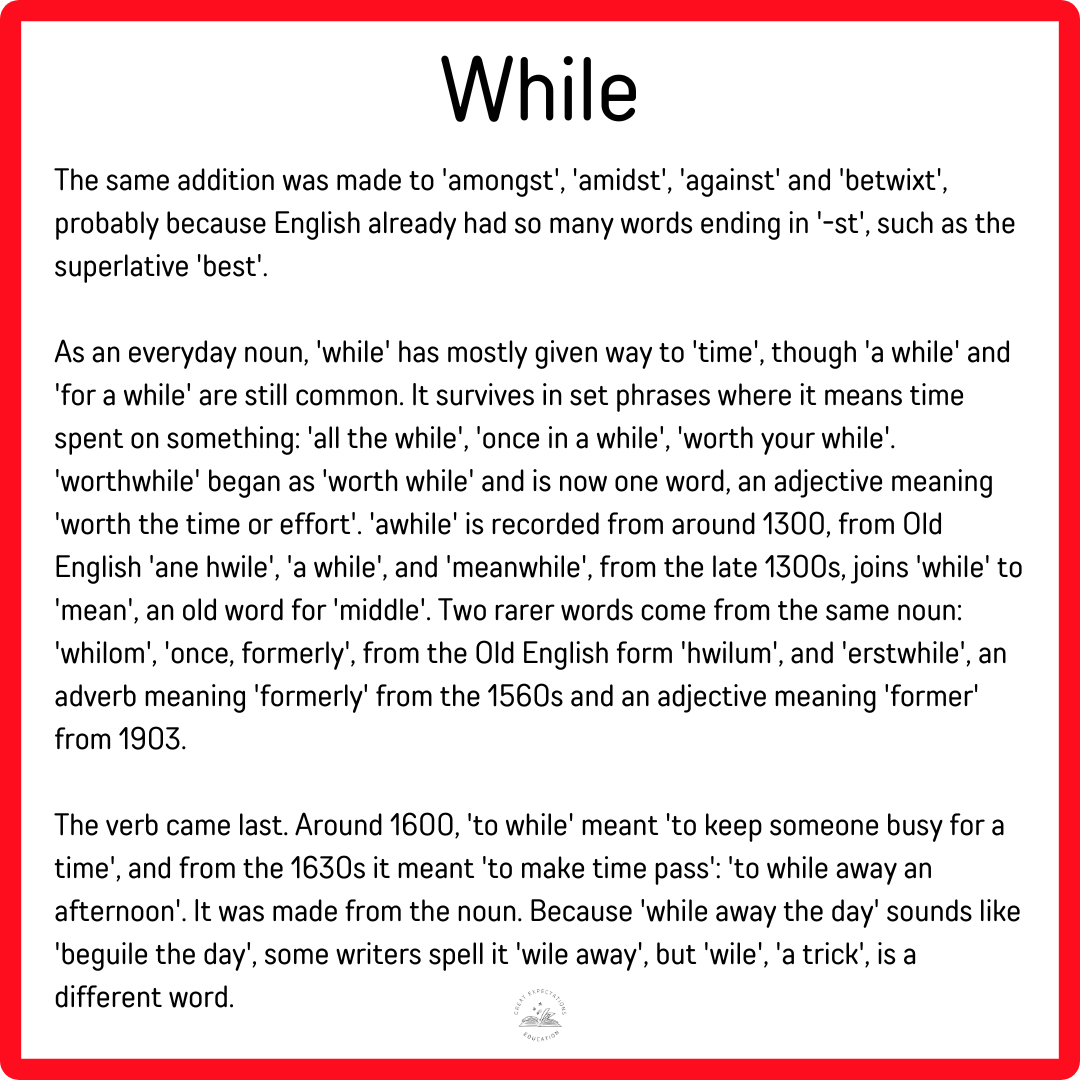
'whilst' wasn't alone. 'amid' had become 'amiddes' in the 1200s, with the same adverb '-s', and from the middle of the 1400s it became 'amidst'. 'among' became 'amongst', and 'betwixt' and 'against' carry the same extra letter. English even had 'alongst', from the 1200s to the 1600s, before dropping it.
Why a 't'? The usual explanation is the superlatives. English has a great many words ending in '-st', 'best' and 'biggest' among them, and words ending in '-s' seem to have been pulled into the same shape.
Children sometimes ask whether 'whilst' is wrong. It isn't: it has been written for more than six hundred years. But the 't' carries no meaning and can't be worked out by taking the word apart. It comes from the word's history, not from an ending anyone can use to build new words, so it's a spelling to learn by looking, and the same goes for 'amongst' and 'amidst'.
The German side of this family is coming to Die Wortwerkbank: 'Weile' itself, 'weil', which went from 'while' to 'because', the 'Langeweile' cards, built on 'a long while', and 'derweil' and 'mittlerweile', two ways of saying 'meanwhile'. The 'while' word card above has the rest of the English story.