For a long time I thought French checkout staff were wishing me a good trip.
Shopping in a supermarket in Calais, I'd get to the till, and the person on the checkout would hand me my receipt and say 'bonne journée'. And every time, I heard 'have a good journey' - I assumed they'd clocked me as an English visitor passing through and were being kind about the drive ahead. It was a good while before it landed that 'bonne journée' simply means 'have a good day', and has nothing to do with travel at all.
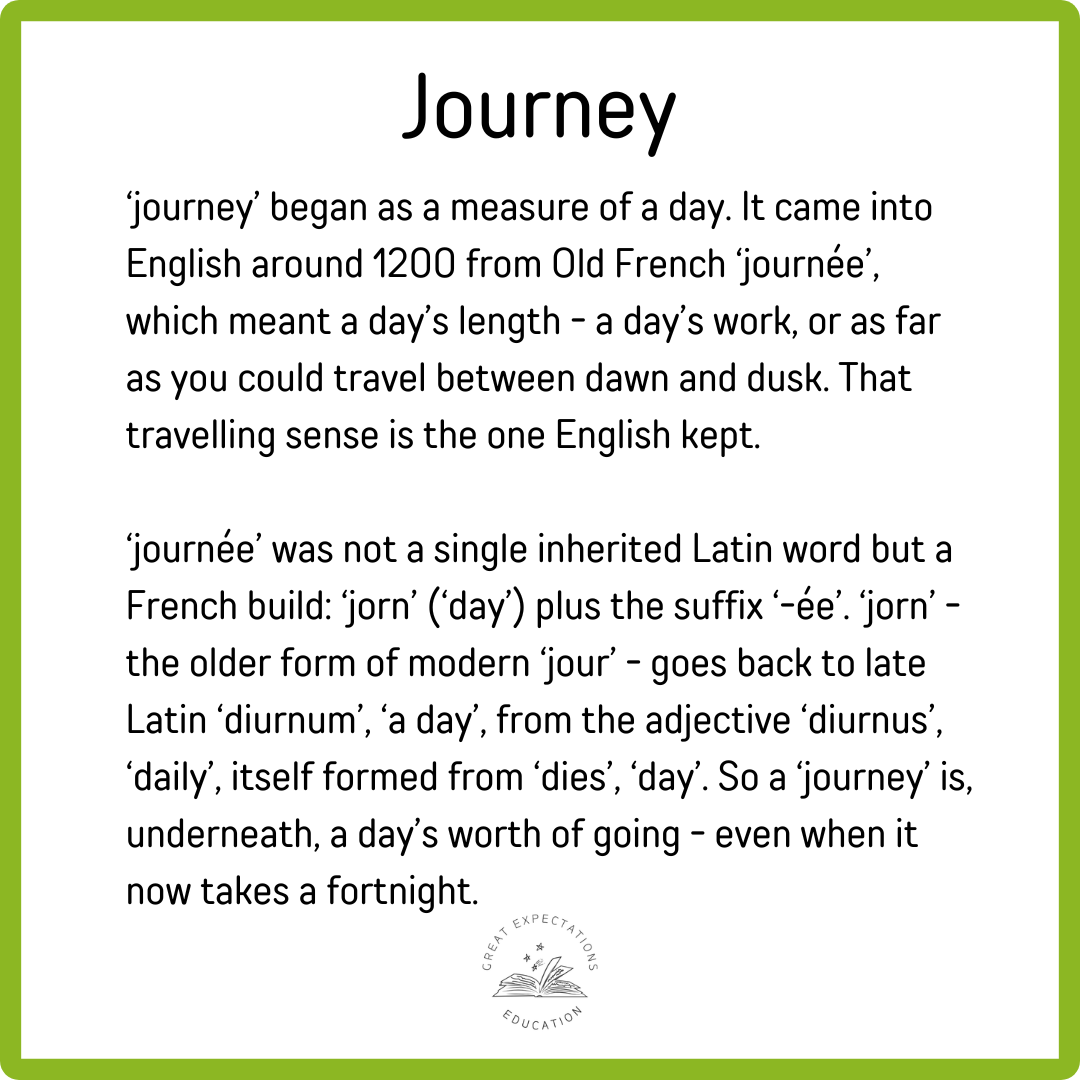
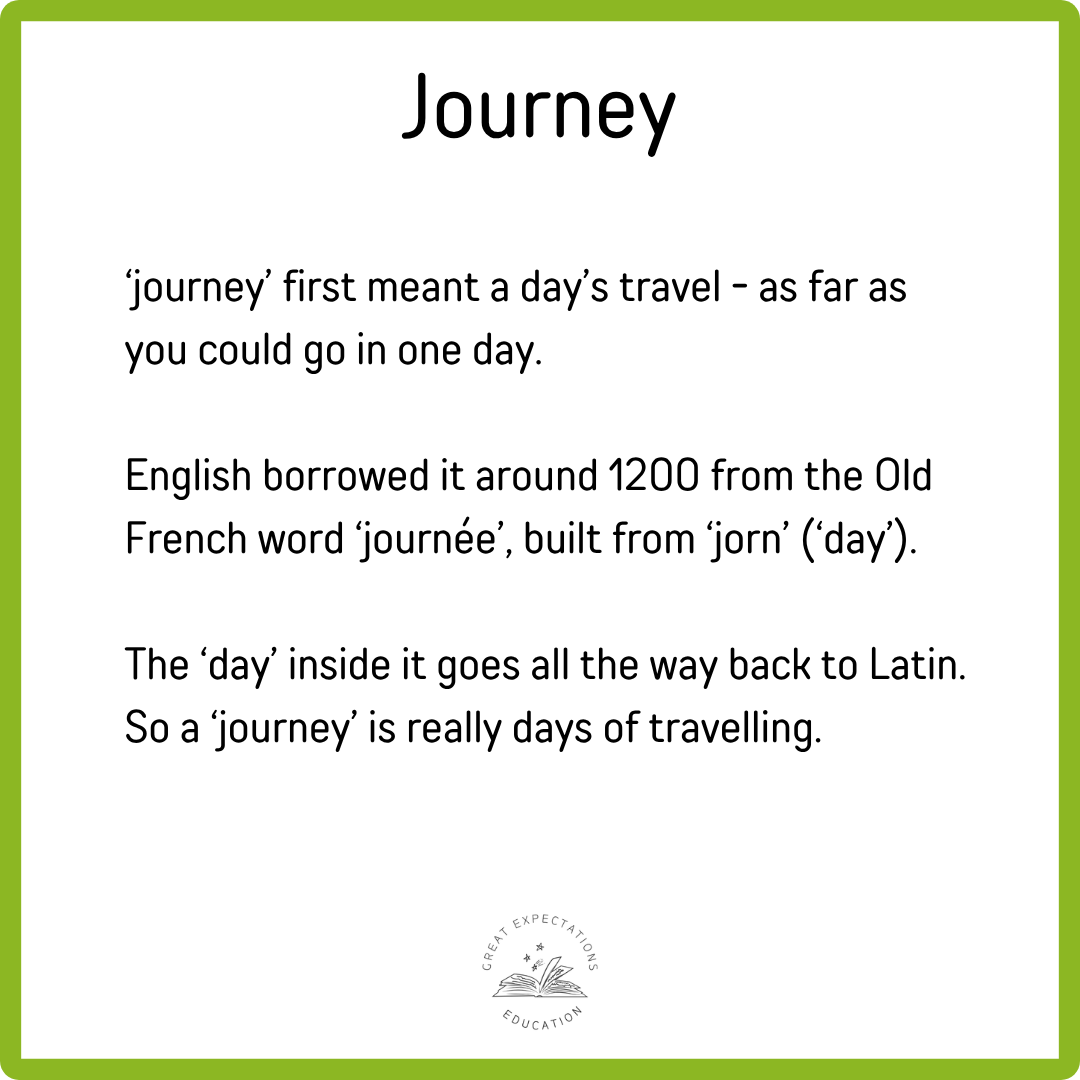
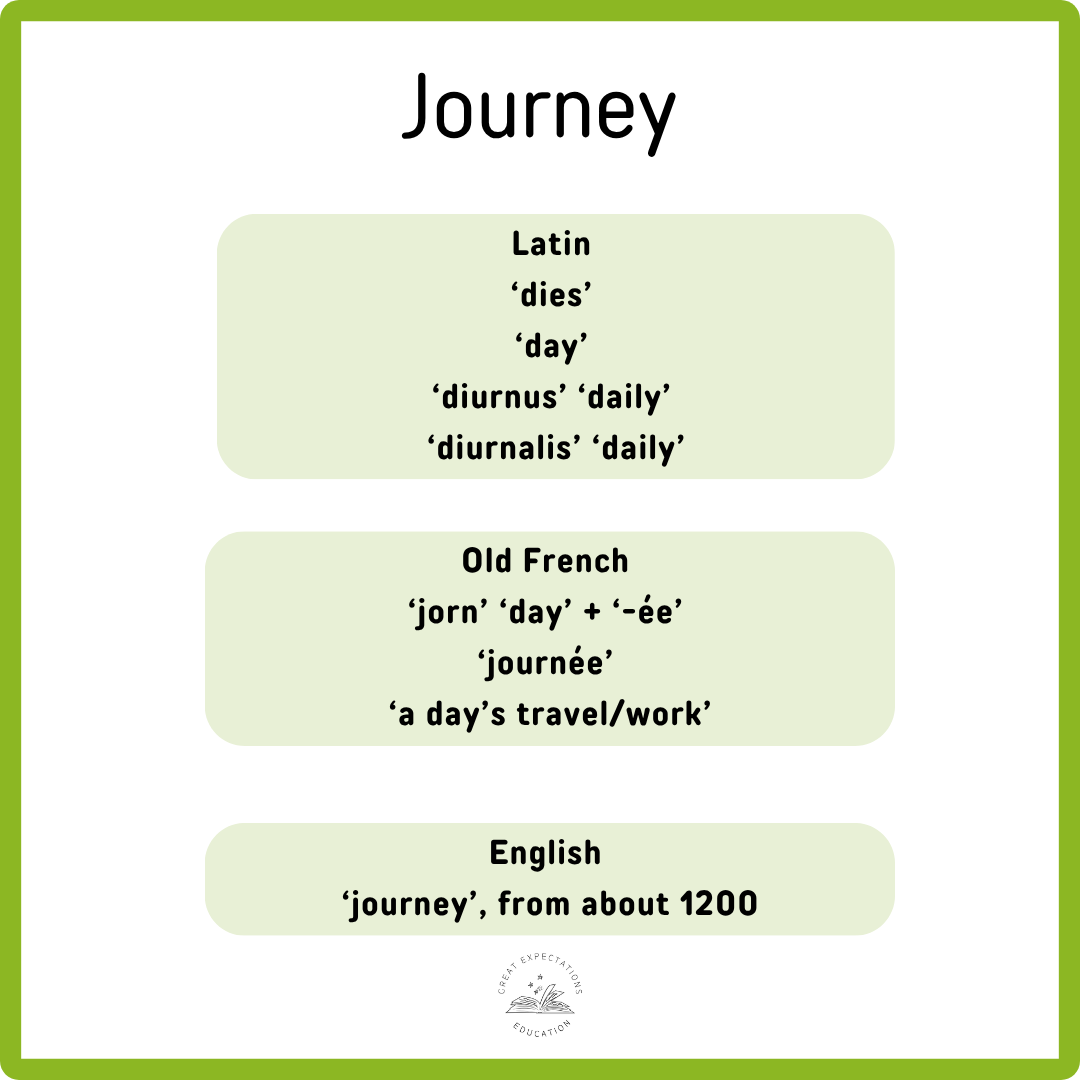
The thing is, I wasn't as wrong as I felt. 'Journée' and 'journey' are the same word. That's the very reason my ear reached for 'journey' - the sound is almost identical, because English borrowed 'journée' wholesale around 1200. The checkout person was saying 'day'; I was hearing 'journey'; and underneath, those are one and the same. My mistake was, etymologically, almost a homecoming.
Here's why the two meanings sit so close. A 'journey' used to have an edge to it, and the edge was nightfall. What Old French 'journée' measured was a day - not a day of the calendar, but a day's worth of something: a day's work, or a day's travel. And a day's travel had a hard limit. Before roads were lit, before you could keep going through the dark, you went as far as the daylight let you and then you stopped. A journey was, quite literally, the distance between dawn and dusk. The day wasn't only when you travelled; it was the unit you measured the travelling in.
I find that a lovely thing to show a child, because it tells you how differently people once thought about distance. We measure it in miles and minutes now, both of them abstractions you can't see. For most of history, distance was measured in days: a place was 'three days' ride' away, or 'a day's walk', or 'a fortnight by sea'. You measured how far by how long, because how long was the thing you felt in your legs. 'Journey' is a fossil of that older way of counting - the day used as a ruler.
And the word has outlived the thing it named. A journey no longer has to fit inside a day; it can take a fortnight, or ten hours in a sealed aluminium tube. The daylight limit is long gone. But the word still says, underneath, 'a day's worth of going', because 'jorn' - the older form of 'jour' inside 'journée' - is the French for day, from Late Latin 'diurnum', from 'diurnus', from 'dies'. Every 'bonne journée' at a French till is quoting the same root I misheard all those years ago.
That's the sort of thing I build these cards around: a plain word with a whole vanished way of living folded inside it. 'Journey' has a crowd of relatives from the same Latin day - 'journal', 'diurnal', 'sojourn' and 'adjourn' among the English ones, all free in the Wordhord, and the everyday French words 'bonjour', 'journée', 'séjour', 'journal' and 'ajourner' in L'atelier des mots. There's a Compendium post too, on why tracing roots like this helps so much with modern languages, and especially with dyslexic learners.
The anecdote also lets the closing land better — it now circles back to 'bonne journée' at the end instead of restating the etymology, so the card doesn't repeat itself.