Snowdrop: a word that falls through winter
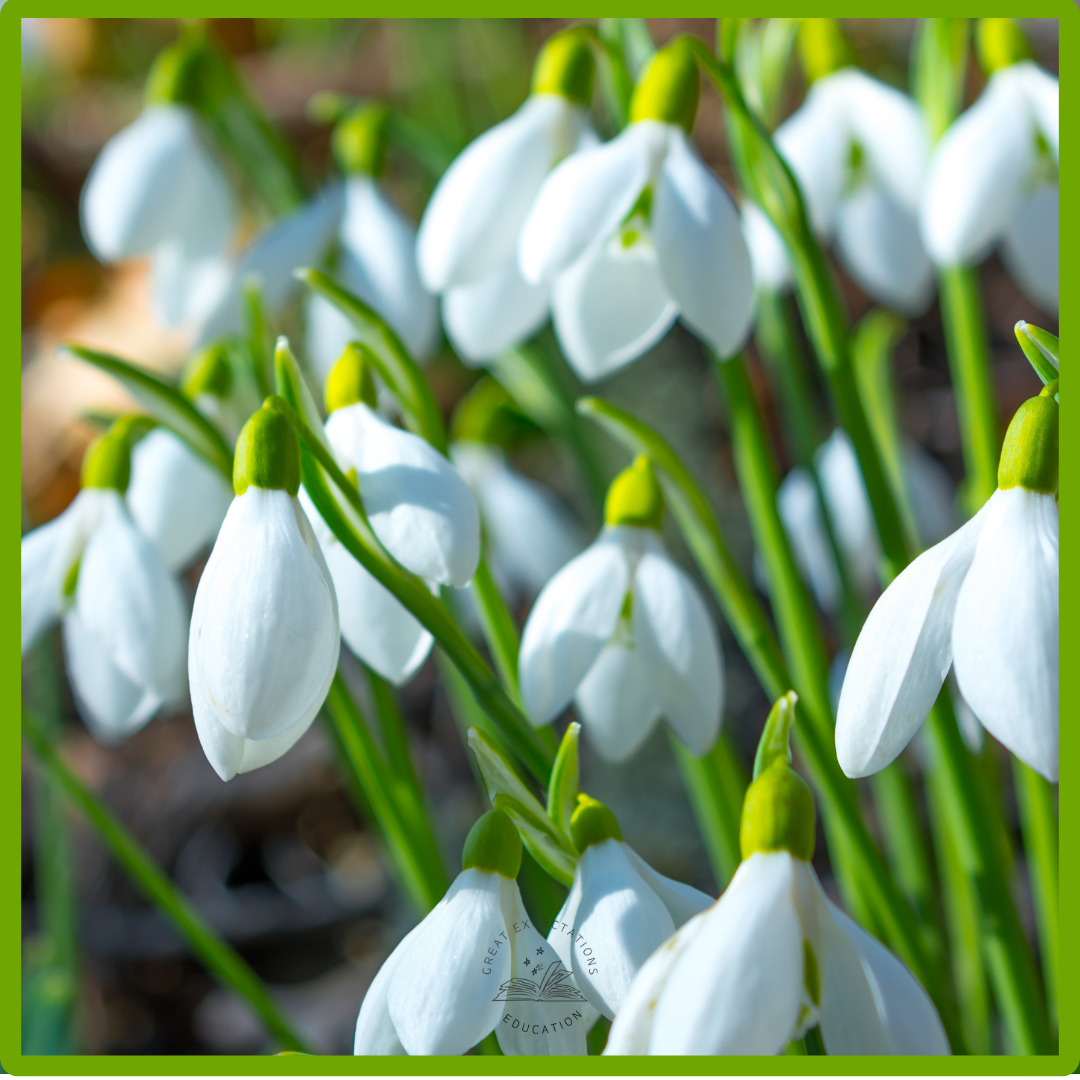
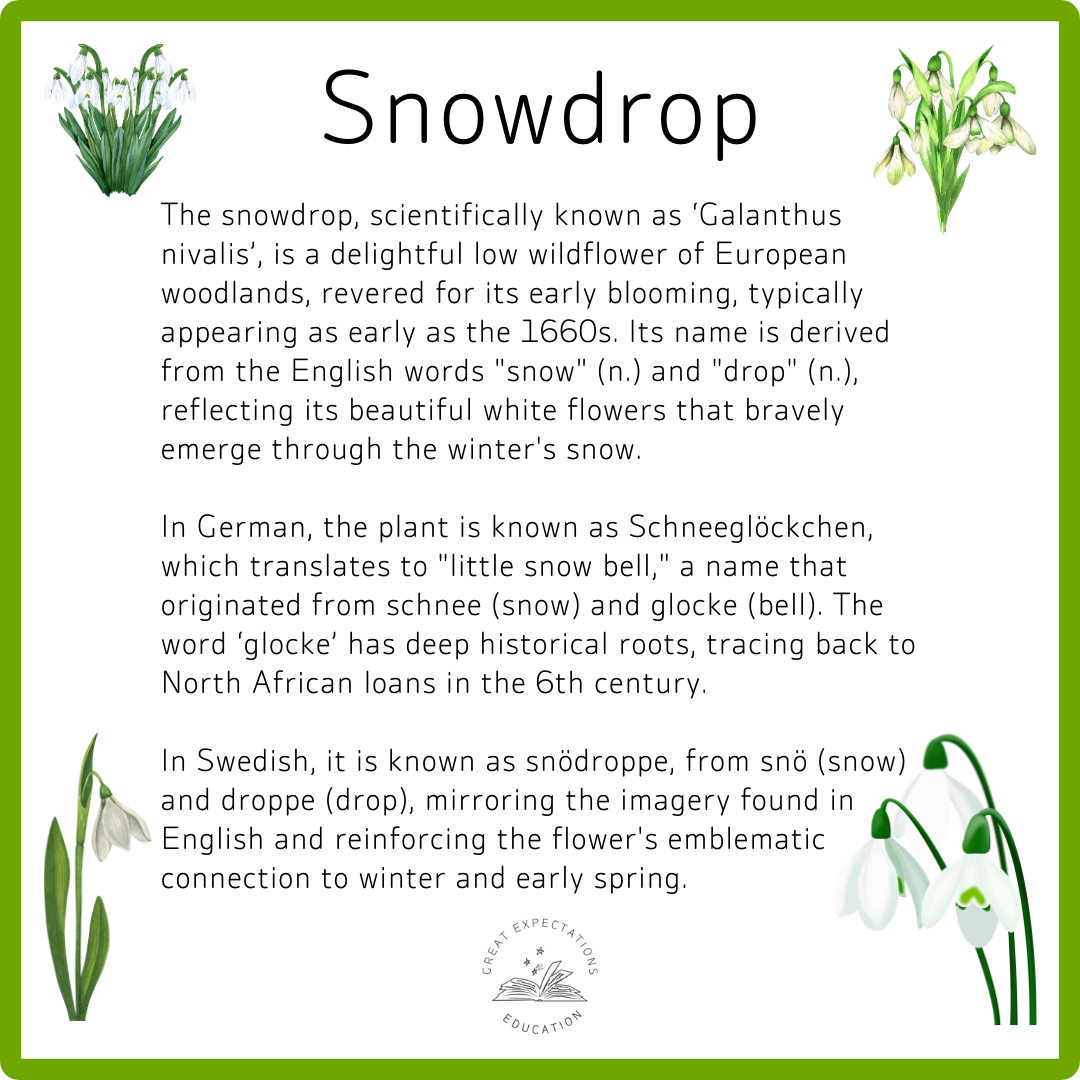
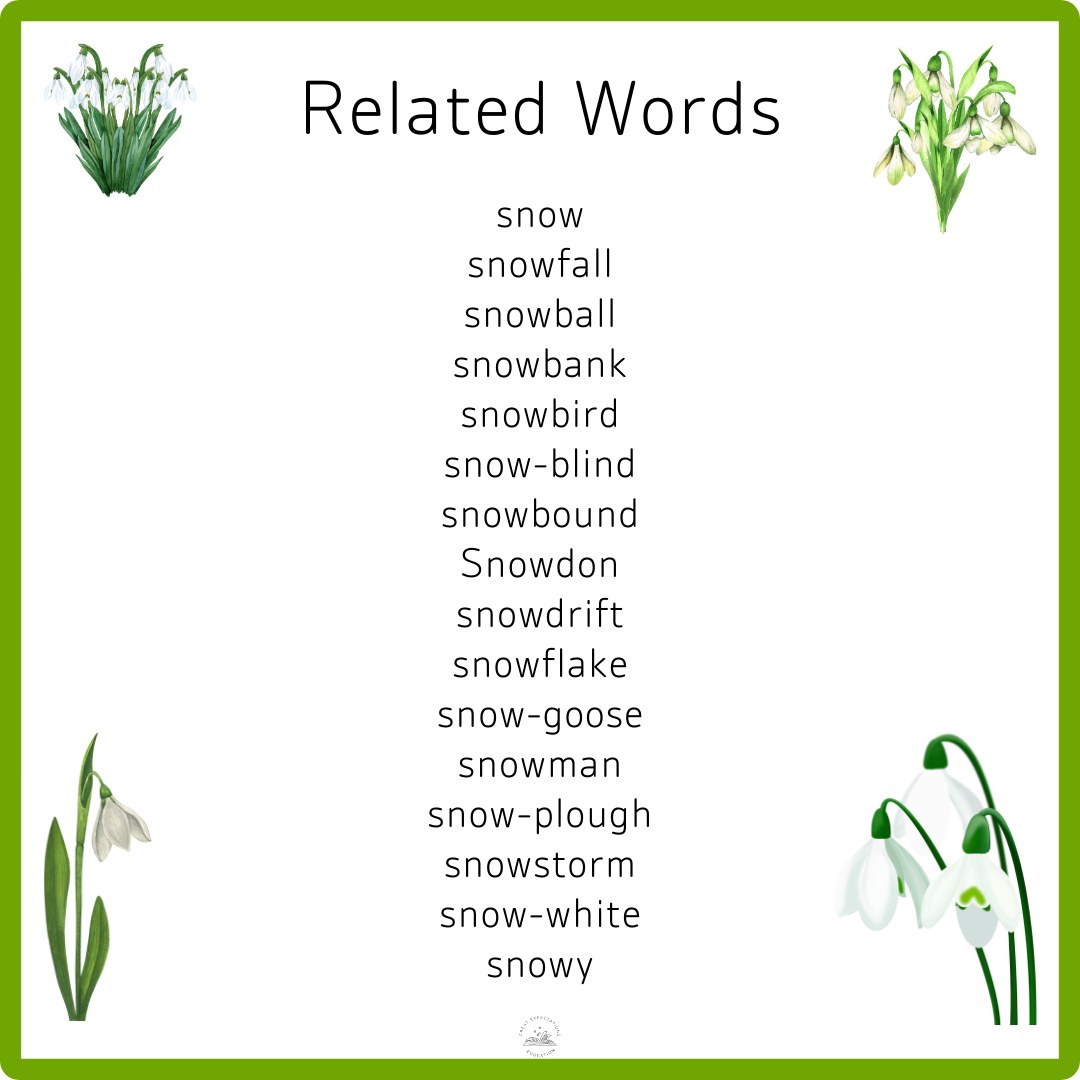
The etymology of ‘snowdrop’ begins with something structurally clear. First recorded in the seventeenth century, the word combines two nouns: ‘snow’ and ‘drop’. It is a compound, and its morphology is transparent. The form mirrors the flower itself — white, pendent, emerging through winter ground. In structured vocabulary instruction, compounds like this offer a visible model of how English builds meaning systematically rather than ornamentally.
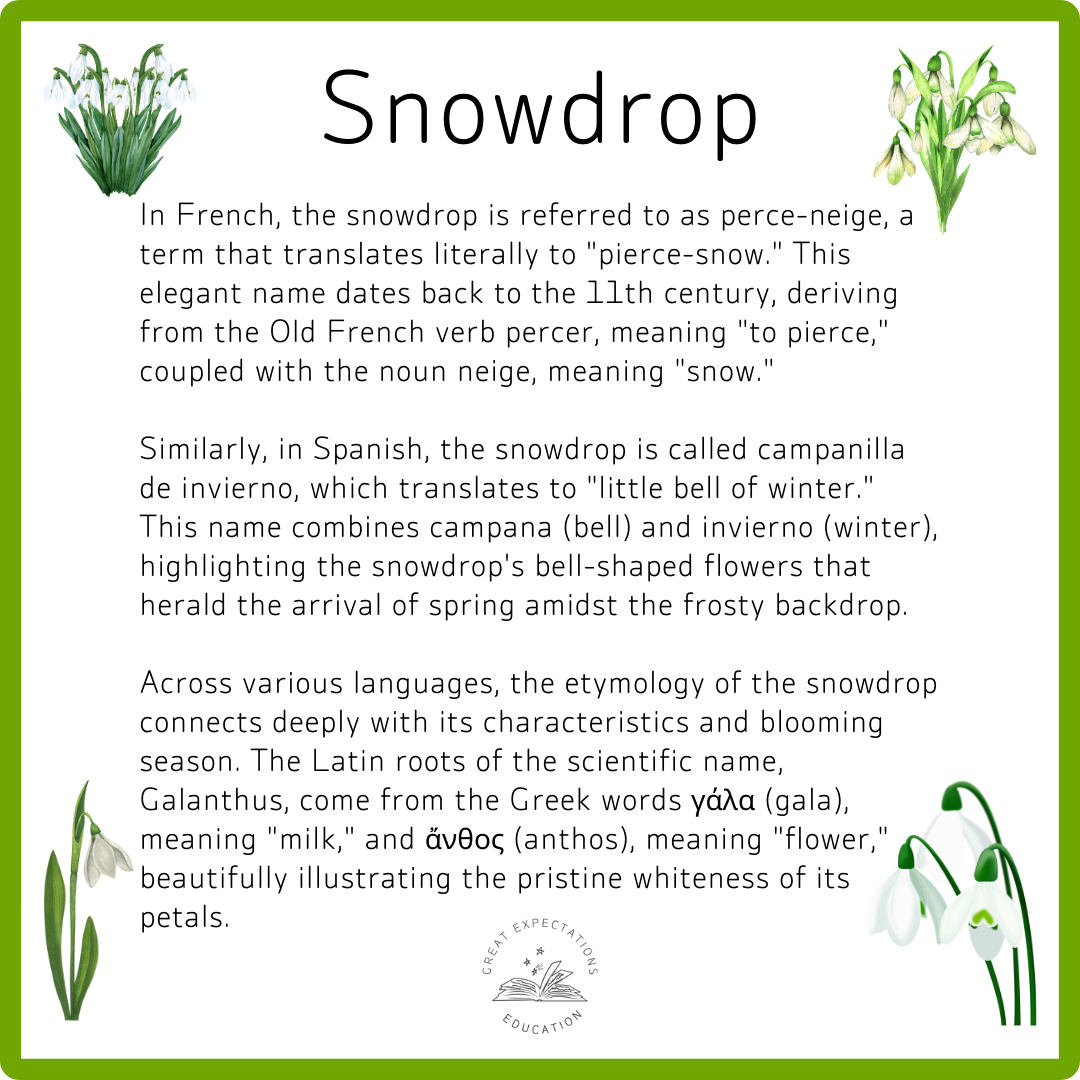
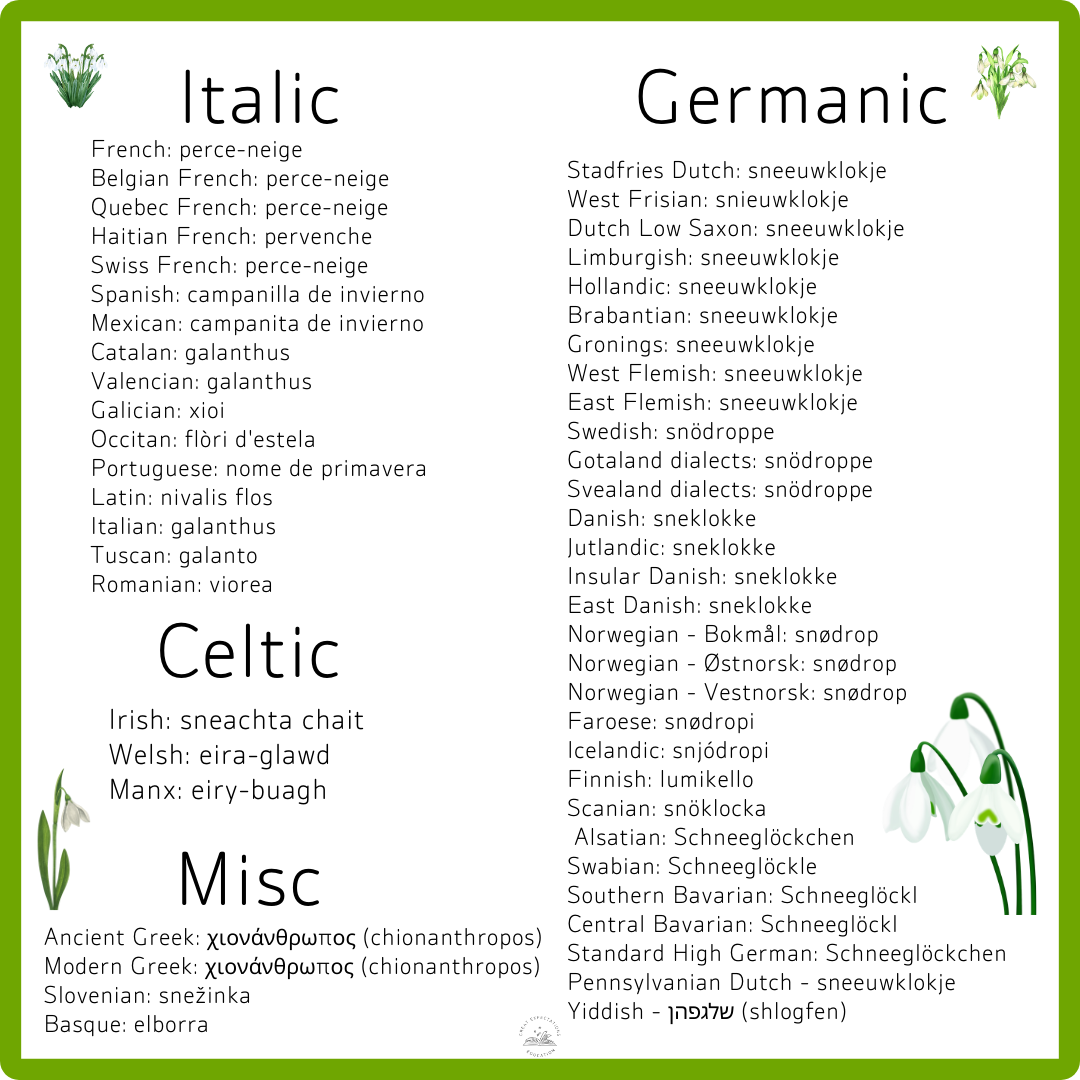
The plant, known scientifically as ‘Galanthus nivalis’, carries its own layered history. From Greek ‘gala’ meaning ‘milk’ and ‘anthos’ meaning ‘flower’, and Latin ‘nivalis’, ‘of the snow’, the naming preserves colour, season and texture. Across languages, speakers have noticed different features.
In German, the flower becomes ‘Schneeglöckchen’, ‘little snow bell’, drawing attention to its shape. Swedish ‘snödroppe’ mirrors the English compound structure. French names it ‘perce-neige’, ‘pierce-snow’, shifting the focus to movement and emergence. Spanish offers ‘campanilla de invierno’, ‘little bell of winter’.
For another winter word, see Frost: a word shaped by winter.