Why is learning a foreign language often so hard for dyslexic learners? Part 1 — phonological processing
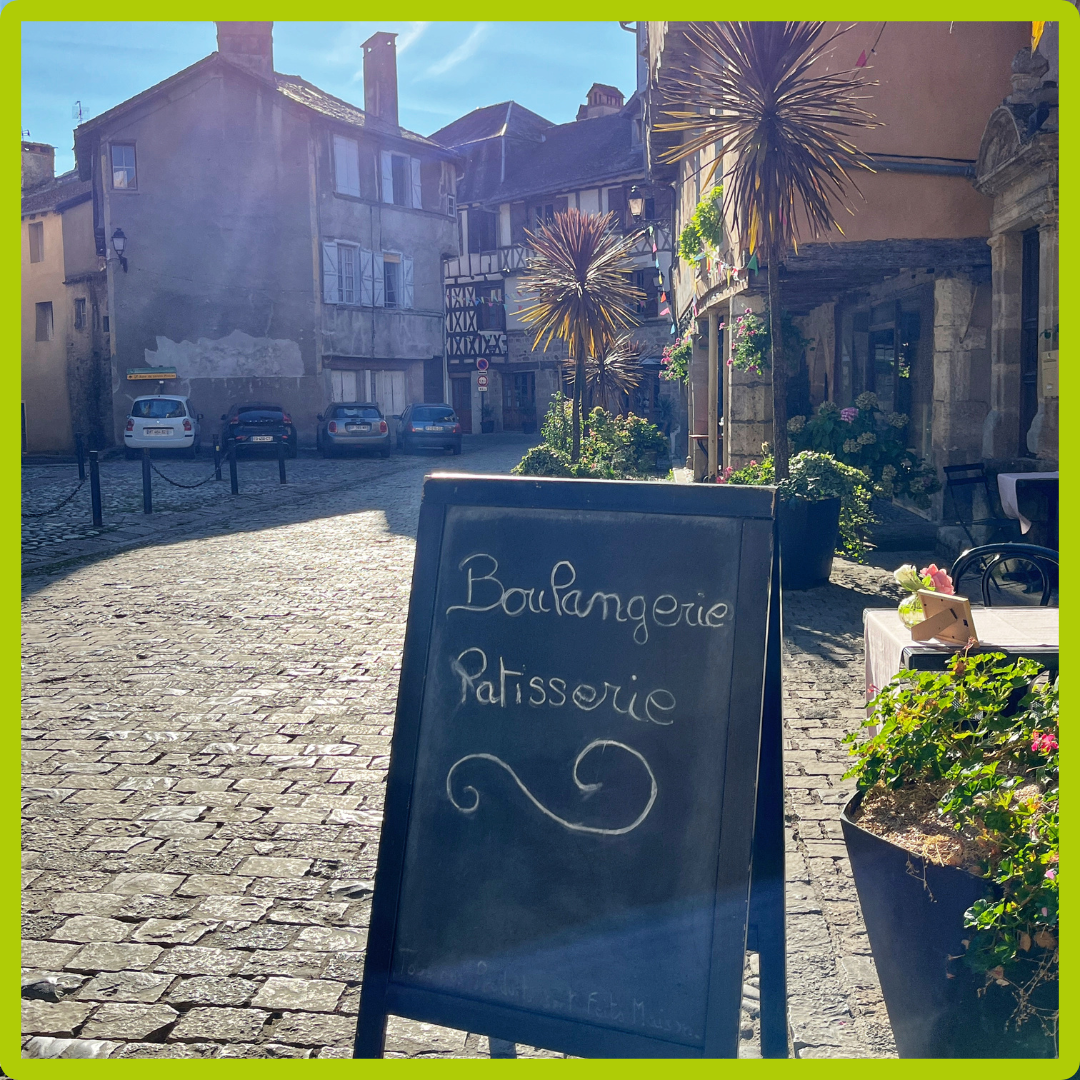

The photo at the top of this post is from a family camping holiday in Beaulieu-sur-Dordogne last summer. Early morning walk to get bread. The rest of them were still asleep and I was taking photos of shop signs, church notices, menus chalked onto blackboards, for the Wordhord. It was etymology work at the time, and not connected to this at all.
This series started in the autumn, when my son began Year 7 and started learning French and German at school. He is dyslexic, and I have been looking into the research on why foreign language learning can be so hard for dyslexic learners, and what the research actually supports as helpful. Several difficulties keep coming up across the literature, and this series walks through them in turn.
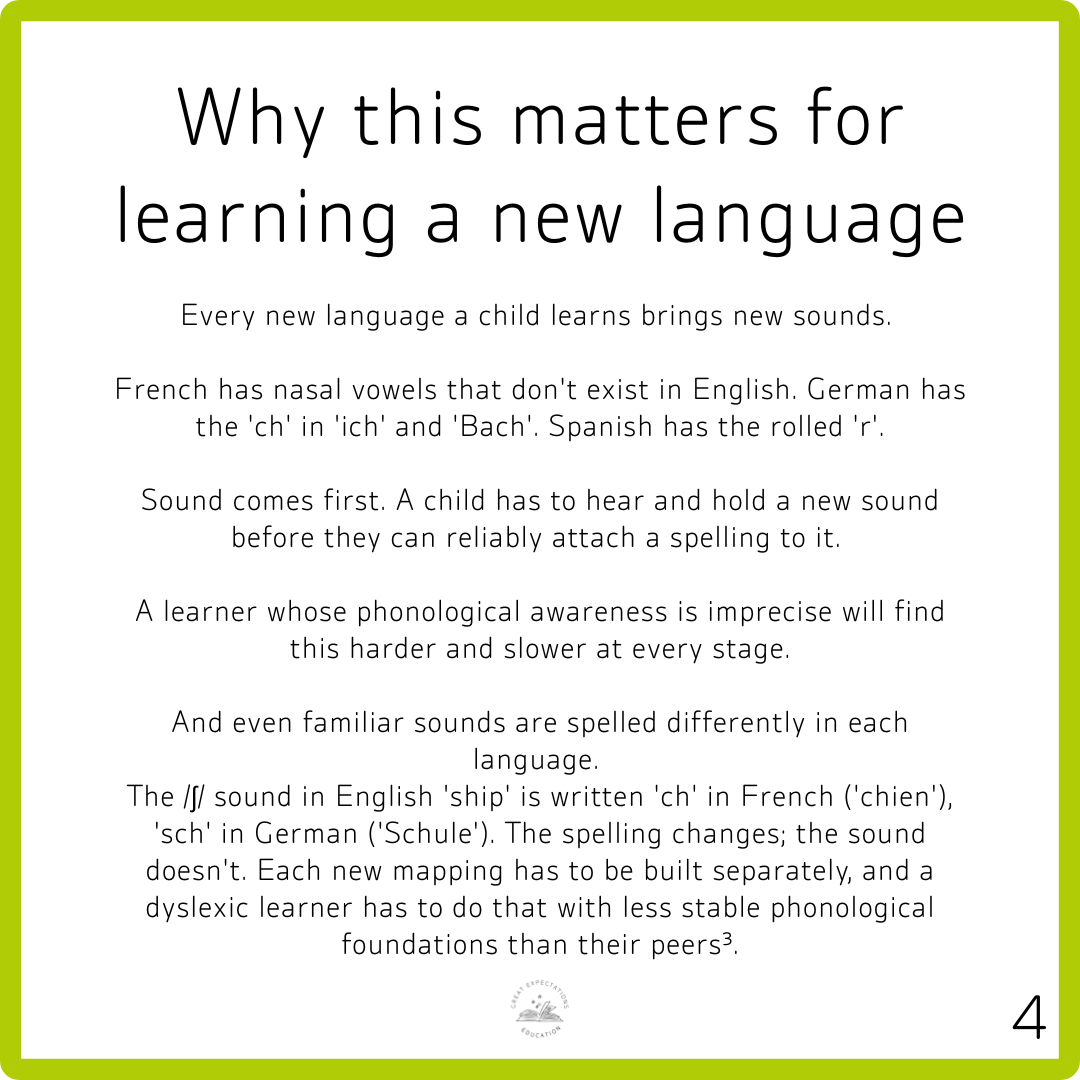
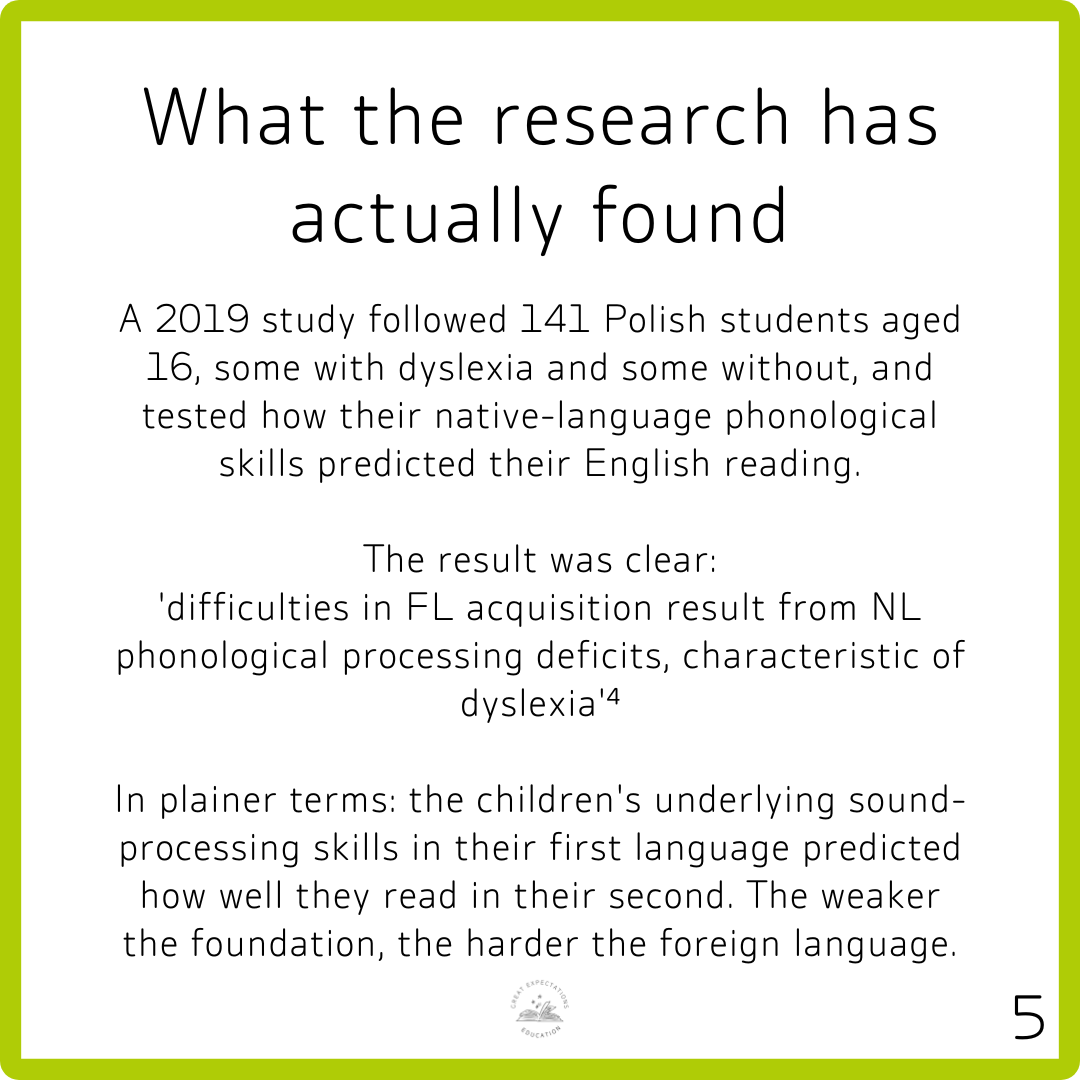
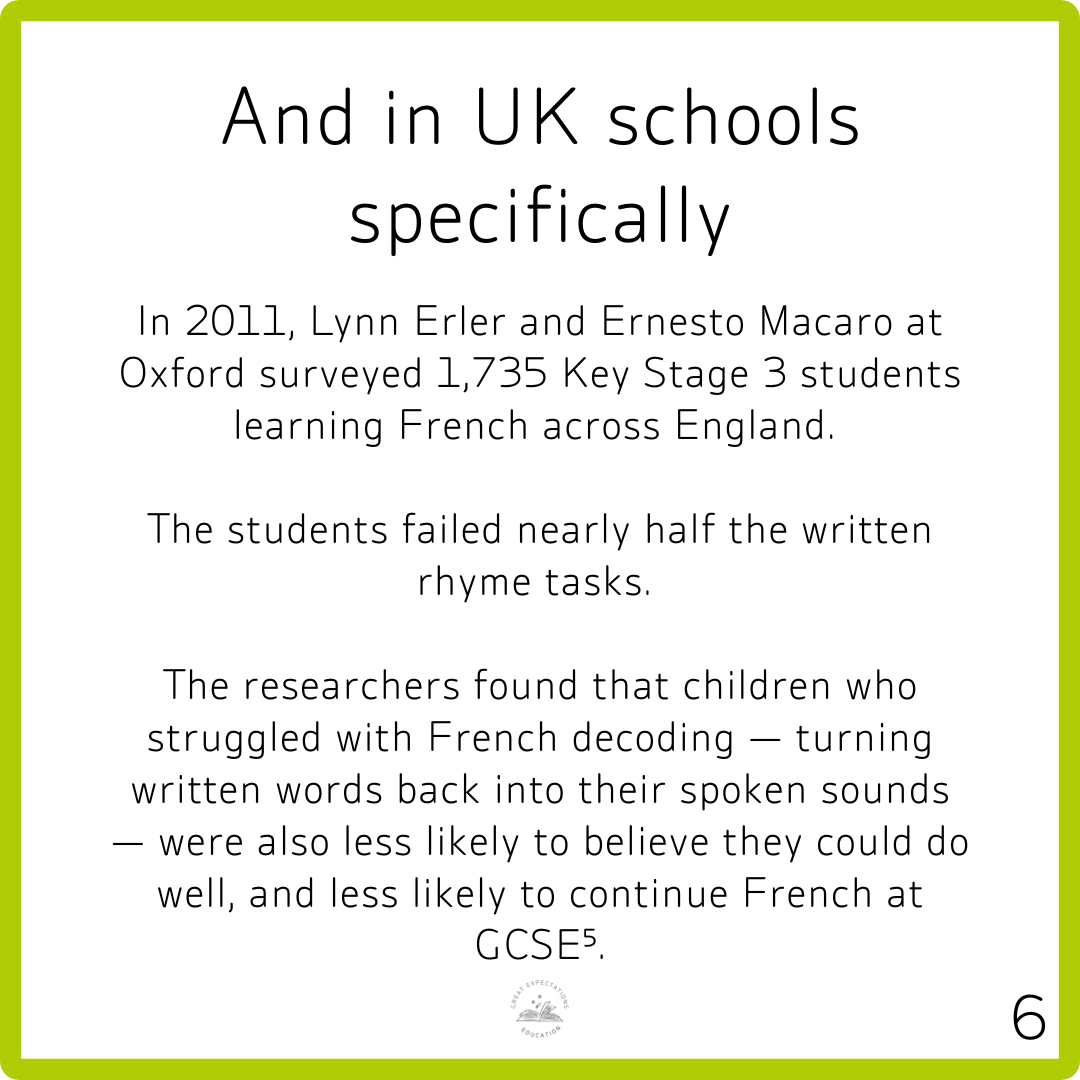
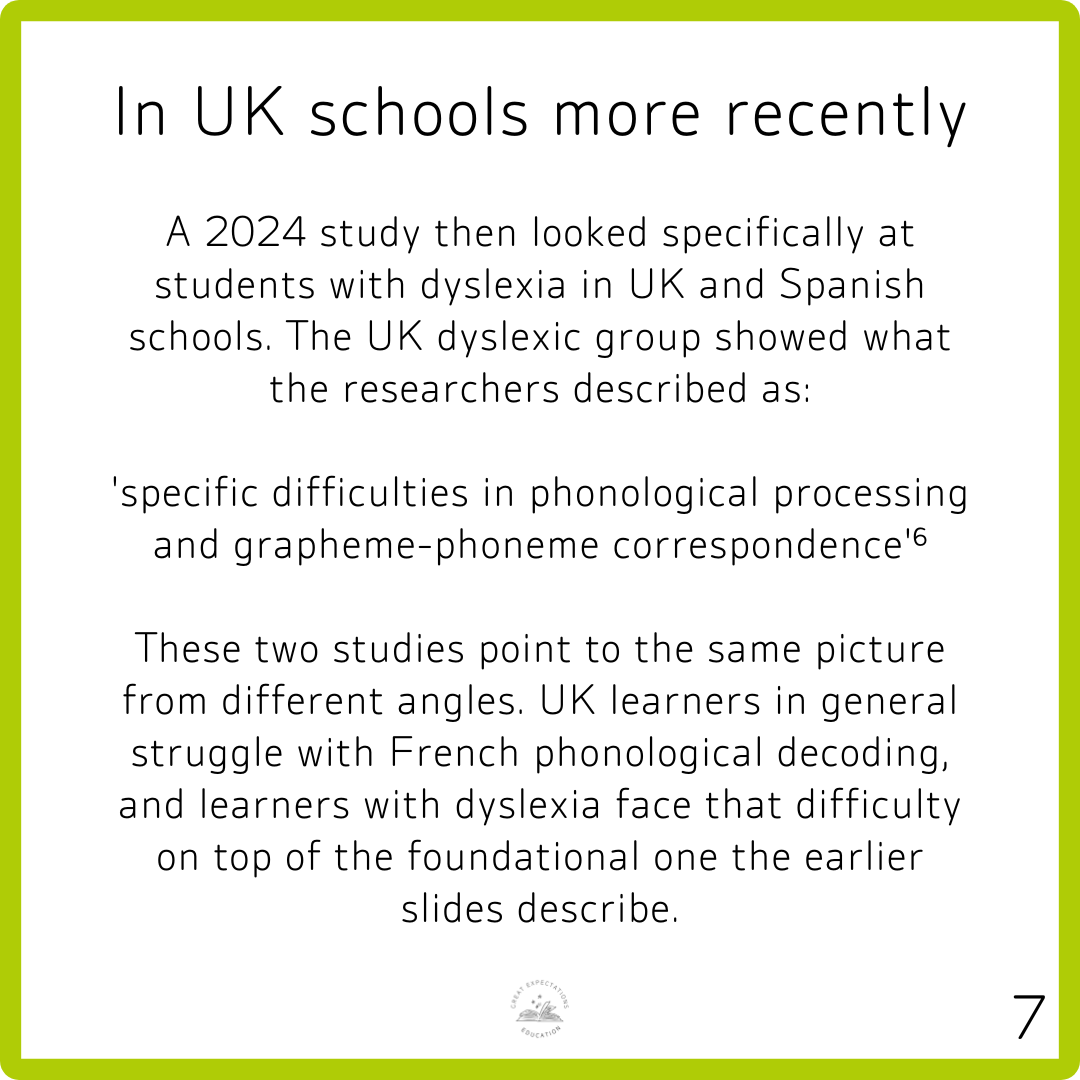
The carousel above covers the first one — phonological processing. What it is, what the research has found, what it looks like in a classroom and at home, and what helps.