Marylebone
The Marylebone Cricket Club is not in Marylebone. It has had its home at Lord's, in St John's Wood, since 1814.
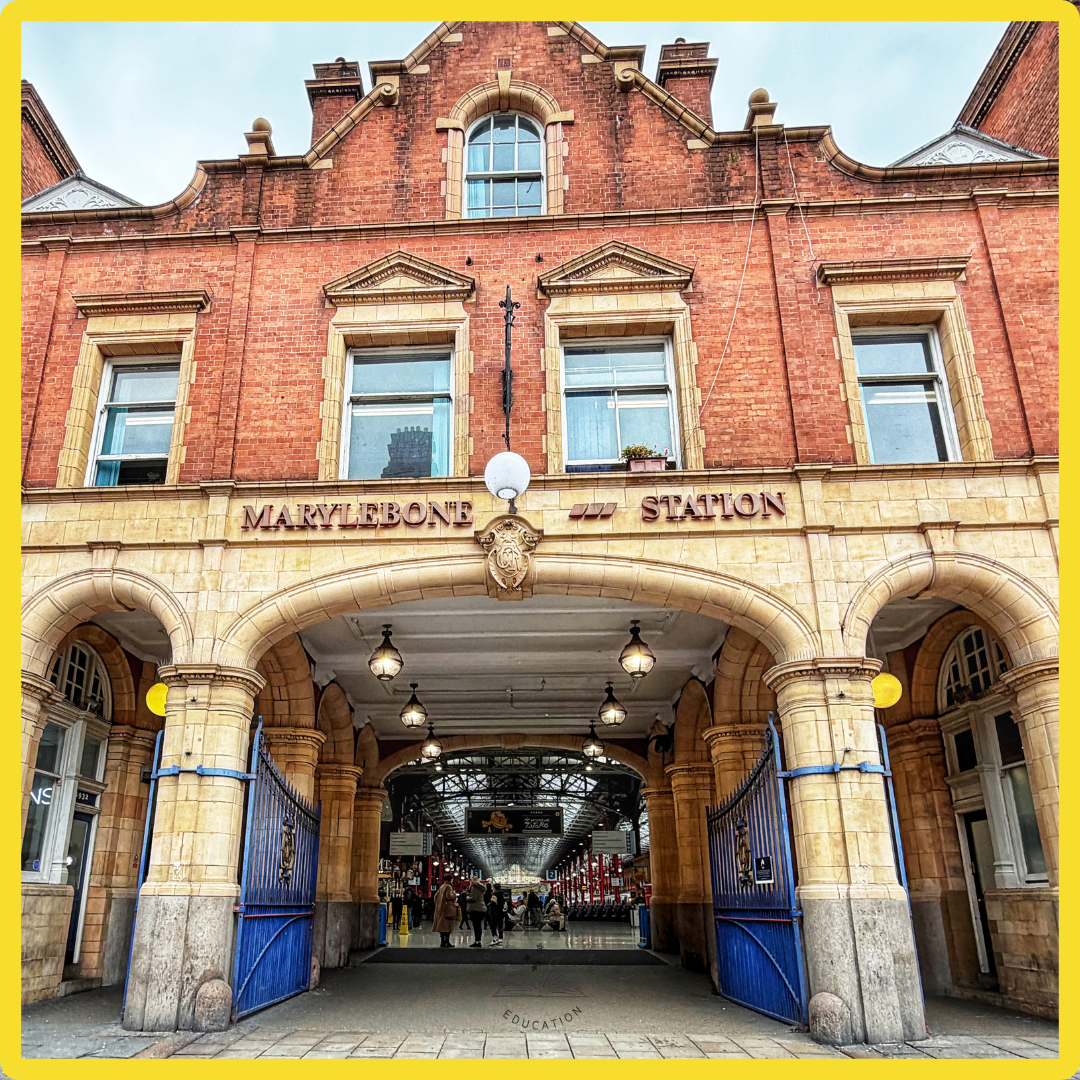
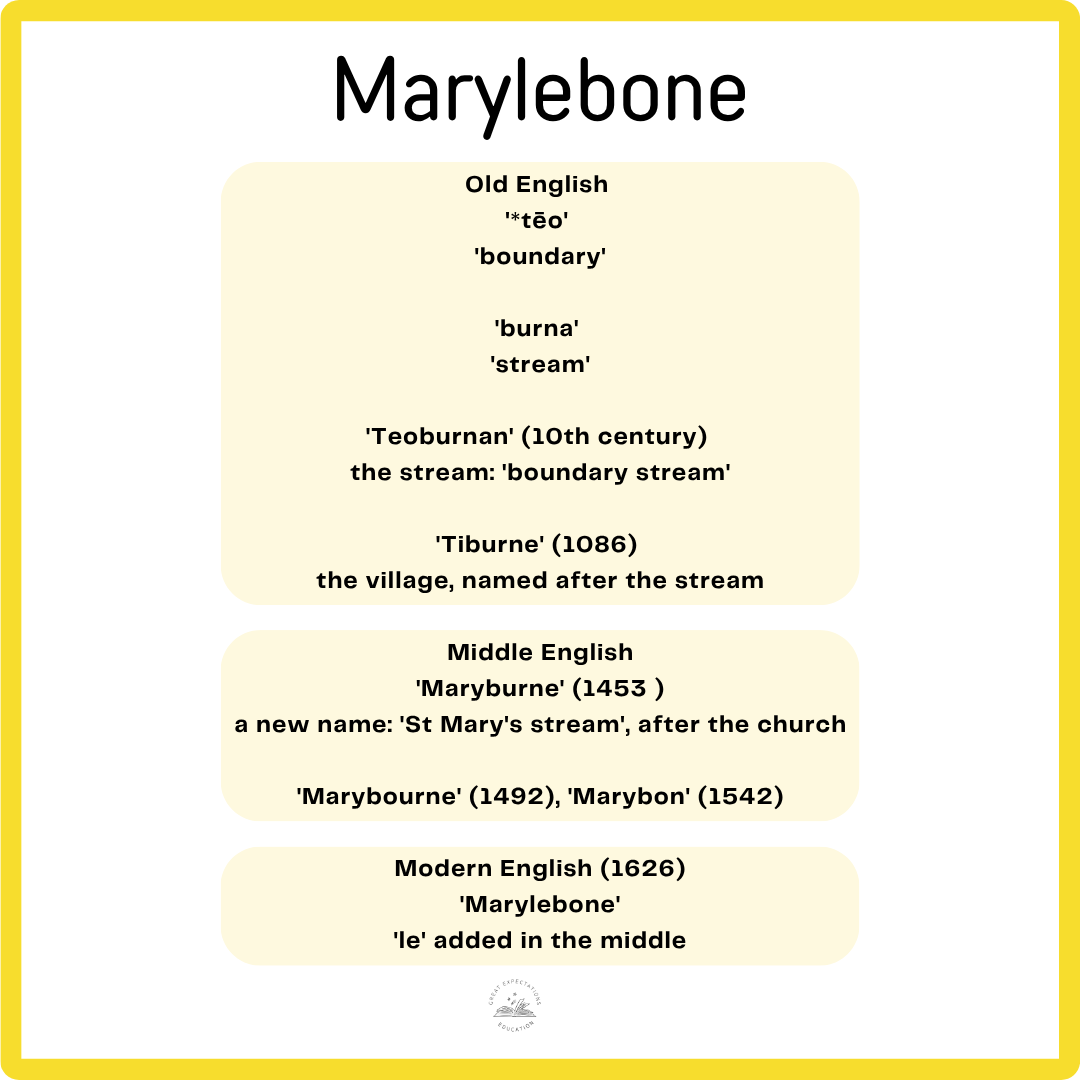
Marylebone's own history is in the word card: a church, a stream, and a 'le' that turned up in the 1600s. This post is about what the name was lent to afterwards, which was a road, a park, a cricket club and a railway station.
For a long time there was little to lend it to. On a map of London from 1593, Marylebone was still a village surrounded by fields, well outside the city. Building had only reached the open fields around it by the 1830s.
The road came first. Between 1756 and 1761 a new road was cut along what was then the northern edge of London, so that travellers could get round the crowded centre. It was called the New Road. The Tyburn, the stream that gave the village its first name, still ran as a clear stream as far as the New Road into the 19th century. The road is Marylebone Road now, and the stream is largely underground.
The park went the other way. Grand terraces went up around a new Marylebone Park, and before long people were calling it the Regent's Park.
The cricket club kept the name longest. Thomas Lord, who was a cricketer, a groundsman and a businessman, took on land near where Marylebone station stands now, for what was then the White Conduit Cricket Club. He laid out a ground there and named it after himself. The club soon changed its name to the Marylebone Cricket Club. It moved twice, first to Regent's Park and then in 1814 to St John's Wood, and each time the ground's name, Lord's, went with it. The club stayed the Marylebone Cricket Club. I haven't yet found out why the club chose the parish name rather than its founder's.
While the Underground station was being planned, it was referred to as either ‘Marylebone’ or ‘Lisson Grove’, where its entrance then was. It opened in 1907 as ‘Great Central’, after the railway company that owned the main-line station next door, and was renamed Marylebone in 1917.