The Phonics Screening Check: What It Is, What It Isn’t, and What to Ask Your School
Something is off with your child’s reading. You can feel it. They’re getting by, mostly — but there’s something effortful about it that doesn’t seem right. You’ve mentioned it to the teacher. You’ve had the reassurance. And now the phonics screening check is a few weeks away, and you’re not sure whether it’s going to tell you anything useful.
Here’s what you need to know.
What the phonics screening check is
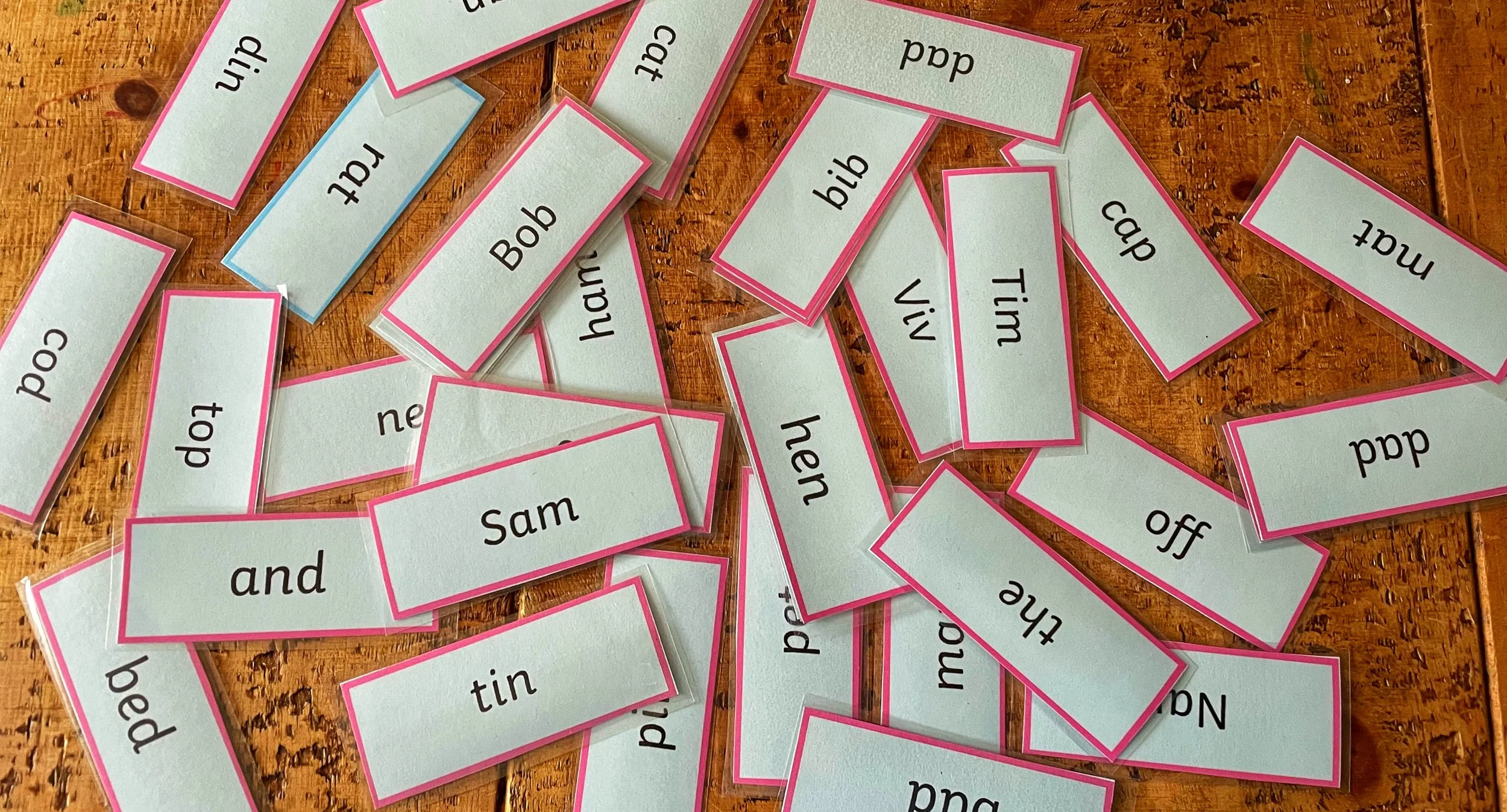
The phonics screening check is a statutory assessment for all children in Year 1 in state-funded schools in England — maintained schools, academies, and free schools. It takes place in the week beginning Monday 8 June 2026. It’s short. The child sits with a teacher they know, in familiar surroundings, and reads 40 words aloud. Twenty of those words are real words. Twenty are pseudo-words - made-up, decodable words that don’t have a meaning. Each pseudo-word appears next to a picture of an imaginary creature, so children know they’re not supposed to recognise it.
The whole thing takes around five minutes.
The pseudo-words are there for a reason. They remove the possibility of the child guessing from memory or context. If a child can decode a made-up word like ‘sprant’ or ‘blif’, it tells the teacher that the phonics mechanism is in place — they’re using letter-sound knowledge to read, not just recognising whole words they’ve seen before. Children are scored out of 40. Since 2014, the threshold mark — the score that counts as meeting the expected standard — has been 32. It isn’t communicated to schools until after all schools have completed the check, though its consistency over more than a decade means it is widely anticipated.
Schools have a statutory duty to report your child’s individual score to you before the end of the summer term.
If your child is absent
If your child is absent during the week of 8–12 June, schools can still administer the check up to Friday 19 June. Schools must report a result for every eligible child — if a child misses the whole window, they are recorded as absent.
What the check can tell you — and what it can’t
The check identifies whether a child can decode words using phonics. That’s all it does. It cannot tell you why a child is finding decoding difficult. It cannot diagnose dyslexia, working memory difficulties, processing speed differences, or anything else. It is a screen - a flag that says ‘this child needs closer attention’, not a conclusion.
Children who don’t meet the expected standard in Year 1 sit the check again in Year 2. In 2025, 80% of Year 1 children nationally met the expected standard. By the end of Year 2, that figure was 89%.
If your child doesn’t meet the standard, headteachers are required under the 2026 assessment and reporting arrangements to ensure those children continue to receive phonics support. What that support looks like in practice varies considerably between schools — it can mean a daily structured intervention or something much lighter. The Department for Education’s guidance — non-statutory, meaning it sets out what schools are expected to do rather than what the law mandates directly — is that schools should tell you what support they are putting in place and how you can help at home.
That guidance doesn’t always translate into a useful conversation.
What you can ask your school
Before the check:
• What phonics programme does the school use?
• At what stage in the programme is my child currently working?
• Are there any specific sounds or sound-spellings they’re finding difficult?
• What is the school doing to provide additional practice for children who are working behind the expected stage?
After the results — which must be given to you before the end of summer term.
If you haven’t heard by mid-July, ask directly. You are entitled to this information.
• What is my child’s score, and what does it mean in terms of where they are in the phonics sequence?
• What specific support will the school put in place in Year 2?
• How will that support be different from what they’ve had so far?
• How will you measure whether it’s working, and when will you review it?
• What can I do at home to support this?
‘We’ll keep an eye on things’ is not an answer.
If your child has SEN, or if you think they might
The headteacher can decide it is not appropriate for a specific child to take the check. If this happens, the school must inform you and explain the decision. Schools should also tell you how they are helping the child to learn to decode using phonics. If your child does take the check but you have concerns beyond decoding — attention, working memory, processing speed, language development — the check result is one piece of information, not the whole picture. A result below the standard doesn’t tell you whether the difficulty is phonological, attentional, language-based, or something else - and that distinction matters for what happens next.
Under the SEND Code of Practice, schools have a duty to identify and support children who may have a learning difficulty or disability. The graduated approach — assess, plan, do, review — is how that should look in practice. You can ask the school what they are doing under this framework and whether they have considered whether your child might benefit from a referral to a specialist. They are not required to refer, but they are required to consider it.
A note for home-educating families
The phonics screening check applies to children in state-funded schools. It does not apply to home-educated children. If you are home educating and your child is the same age as a Year 1 cohort, this check is not something you need to arrange or report on.
What’s coming next
The Curriculum and Assessment Review Final Report, published in 2025, noted that future assessment arrangements are under review. For 2025–26, the check is unchanged. Whether and how it changes in future years remains to be seen — gov.uk will carry updates when they are confirmed.
Where to go from here
If you have specific concerns about your child’s reading development beyond what the phonics check can tell you, a specialist assessment is the next step. A specialist dyslexia teacher or educational psychologist can look at phonological awareness, working memory, and processing speed — and at how your child’s spoken language maps onto their written language, which is often where the picture gets clearer. An EP referral usually goes through school; if school won’t refer, a private assessment is an option — the ‘How to Find an Assessor’ page in the Compendium has more on what to look for. The Compendium also has articles on EHCPs, assistive technology, and navigating the SEND system if you’re further along that road.
I work with children from primary through to A-level and beyond, and I’ve worked with many families who first noticed something wasn’t quite right at exactly this stage. If you’d like to talk through what you’re seeing, the Before the Fire page has details of how consultations work.
Sources
Standards and Testing Agency (2026). Phonics screening check: assessment and reporting arrangements
(ARA). Department for Education. Published 1 October 2024, updated 23 March 2026. Available at: https://www.gov.uk/government/publications/phonics-screening-check-assessment-and-reporting-arrangements-ara
Standards and Testing Agency (2026). 2026 phonics screening check assessment and reporting arrangements. Department for Education. Available at: https://www.gov.uk/government/publications/phonics-screening-check-assessment-and-reporting-arrangements-ara/2025-phonics-screening-check-assessment-and-reporting-arrangements
Department for Education (2025). Phonics screening check attainment: Academic year 2024/25. Explore Education Statistics. Published 9 October 2025. Available at: https://explore-education-statistics.service.gov.uk/find-statistics/phonics-screening-check-attainment/2024-25
Department for Education (2023). The reading framework: Teaching the foundations of literacy. Available at: https://www.gov.uk/government/publications/the-reading-framework-teaching-the-foundations-of-literacy
Department for Education (2023). Phonics screening check: information for parents. Available at: https://assets.publishing.service.gov.uk/media/68c815665e09a4a59af0beb1/Phonics_screening_check_information_for_parents.pdf
Department for Education (2025). Curriculum and Assessment Review Final Report. Available at: https://www.gov.uk/government/publications/curriculum-and-assessment-review-final-report
Department for Education and Department of Health (2015). Special educational needs and disability code of practice: 0 to 25 years. Available at: https://www.gov.uk/government/publications/send-code-of-practice-0-to-25
A note on how this was written: I used AI assistance to pull this article into shape — it helped me stay on task, structure my thinking, and actually finish something I'd been meaning to write for a while. The content, the professional judgements, the evidence-checking, and the opinions are all mine. As is the amount of time it still took.